
Reviewed · COOKING CLASSES
Small-Group Osaka-Style Okonomiyaki Cooking Class
Cooking ramen is one thing. Flipping okonomiyaki is another.
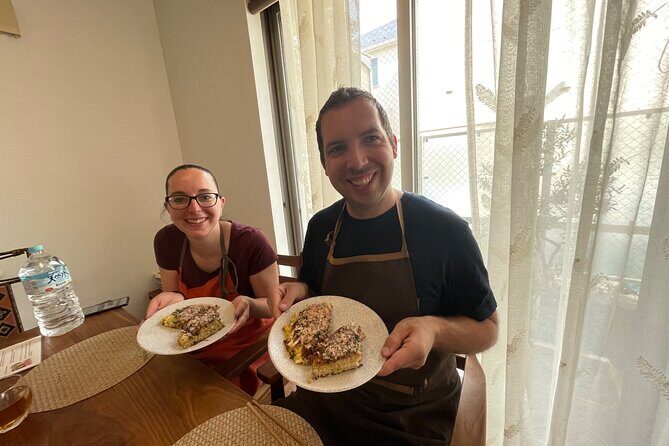
In this small-group class (max five) you go beyond a tourist studio and into a homestay-like kitchen, where Eri teaches Osaka-style okonomiyaki with a focus on making it fluffy and delicious. You’ll also get a real sense of daily-life conversation, not just a script, because the lesson happens in a local home setting.
I love the ingredient flexibility here. You can choose what goes in your okonomiyaki and get help with vegetarian or vegan adjustments. I also love the practical take-home value: you learn Japanese basics like dashi and sauce, plus substitutions you can use when specific ingredients are harder to find back home.
One consideration: it’s only about two hours, so you’ll leave with skills for the core method and one go-to approach—not a long, multi-course cooking marathon. Also, the class meets near Asagaya Station, so you’ll want to get there on time to start smoothly.
In This Review
- Key highlights you’ll care about
- Why Osaka-Style Okonomiyaki Feels Like a Local Kitchen Moment
- Finding the Meeting Point in Asagaya (And Starting on Time)
- Your 2 Hours: From Dashi and Sauce to Fluffy Okonomiyaki
- Layering Your Fillings and Topping Like You Mean It
- While You Wait: Stir-Fried Pork and Kimchi
- Vegetarian and Vegan Options: Real Adjustments, Not Afterthoughts
- What Makes the Substitutions Worth Writing Down
- Value at $150: Why a Small-Group Home Class Can Be Worth It
- Who This Class Suits Best (And Who Might Feel It’s Not for Them)
- Should You Book This Small-Group Okonomiyaki Class in Tokyo?
- FAQ
- Can I choose my fillings and toppings for okonomiyaki?
- How many people are in the group?
- How long is the cooking class?
- What will we cook besides the okonomiyaki?
- Is the class offered in English?
- Where is the class meeting point, and is there a refund if plans change?
Key highlights you’ll care about
- Max 5 people means hands-on attention when you’re mixing, layering, and flipping
- Homestay-like kitchen setting instead of a camera-ready tourist studio
- Fluffy okonomiyaki tips with guidance you can repeat at home
- Substitutions for dashi, sauce, and ingredients so you’re not stuck later
- Vegetarian and vegan options with adjustments during cooking
- Stir-fried pork and kimchi while you wait keeps the meal moving and the smells real
More aprons-on time in Tokyo kitchens
- Ramen & Gyoza Cooking Class in Tokyo with Local Supermarket Visit★ 5.0 · 823 reviews
- Tokyo: Easy Ramen Cooking Experience in Kabukicho, Shinjuku★ 4.6 · 321 reviews
- Ramen and Sushi Cooking Class with Sake Pairing Set in Tokyo★ 5.0 · 291 reviews
Why Osaka-Style Okonomiyaki Feels Like a Local Kitchen Moment
Okonomiyaki has a reputation for being casual food. That’s true. But the difference between okonomiyaki that tastes flat and one that tastes properly pillowy often comes down to method, not magic.
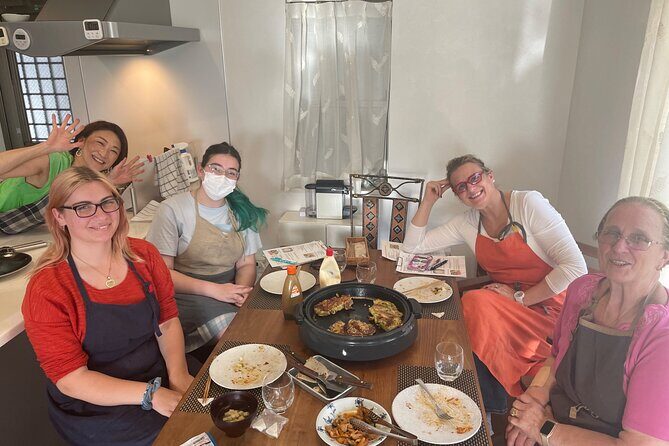
In this class, you’re learning the method in a home setting, not a big shared studio. That matters because it changes the vibe. You’re not just watching someone cook. You’re actively supported as you work through the steps—mixing, layering fillings, and learning how to manage the flip without panicking. And since the group is capped at five, you don’t spend your time waiting your turn.
A big part of the experience is that you can personalize your version. Okonomiyaki can be built with different ingredients, and you’ll get support to make it your way. That’s great if you eat casually but want to leave with confidence, or if you’re picky about textures and toppings.
Finally, the class leans into conversation. Eri’s English is described as good enough to chat and ask questions. Based on that, you can use the lesson time like a mini Q&A about ingredients, local habits, and what actually changes the flavor.
Finding the Meeting Point in Asagaya (And Starting on Time)
Your start point is NewDaysJapan at Asagaya Station (Suginami City). The address is listed as 166-0004 Tokyo, Suginami City, Asagayakita, 3-chōme南3361, and the exact spot is the JR Asagaya Station 2F outside ticket gates concourse area.
This is one of those details that can save stress: show up a little early so you can locate the desk easily. Once you’re there, you’re set up to head to the home kitchen where the class happens.
The session is about two hours, and it ends back at the meeting point. So you’re not signing up for a half-day trip that turns into a moving maze. It’s a contained experience: arrive, cook, eat, return.
And yes, you’ll likely appreciate the location if you’re already staying around central Tokyo. Asagaya is connected enough that getting there isn’t a chore, and it’s listed as near public transportation.
Your 2 Hours: From Dashi and Sauce to Fluffy Okonomiyaki
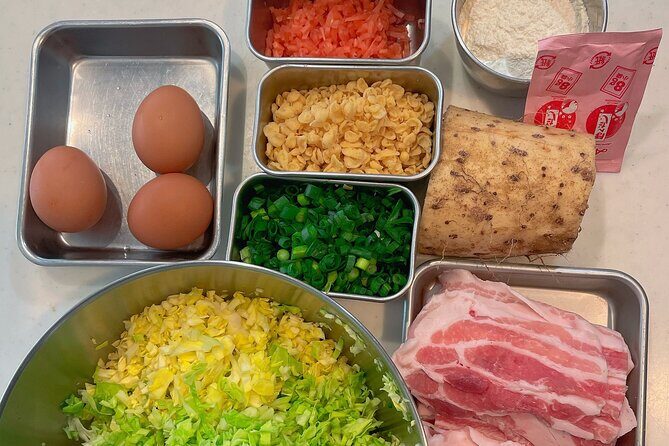
The class starts with the basics you actually need. You’ll get an explanation of Japanese ingredients like dashi and sauce—the flavors that give okonomiyaki its backbone. If you’ve only ever had okonomiyaki in restaurants, this is the part that turns it from street-food memory into something you can reproduce.
Then comes the texture goal: fluffy okonomiyaki. The instructor shares lots of tips to help you nail that. The key idea is that the fluffiness isn’t just luck. It’s tied to technique and how you treat the batter and build the layers before cooking.
Here’s how to think about it while you’re doing it:
- You’re not only assembling ingredients—you’re controlling texture.
- You’re learning when to be gentle and when to be firm.
- You’re practicing the timing and the heat management that make the outside cook while the inside stays tender.
And if you’re the type who likes to understand the why behind cooking steps, this is a friendly moment to ask questions. The class is built to be interactive, not a lecture.
You also learn about substitutions. That’s a big deal because Japanese ingredients don’t always have easy matches everywhere. Instead of leaving you with a long shopping list that disappoints in your local grocery store, you get guidance on what can stand in for the originals.
Layering Your Fillings and Topping Like You Mean It
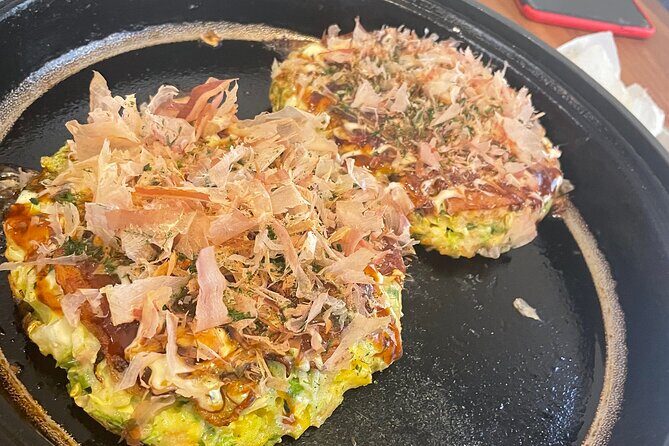
Okonomiyaki in general can be built your way, but this class makes customization feel easy. You get support while you choose fillings and toppings, and you’re encouraged to shape your cooking into something you’ll want to eat later too.
The fun part is the physical process:
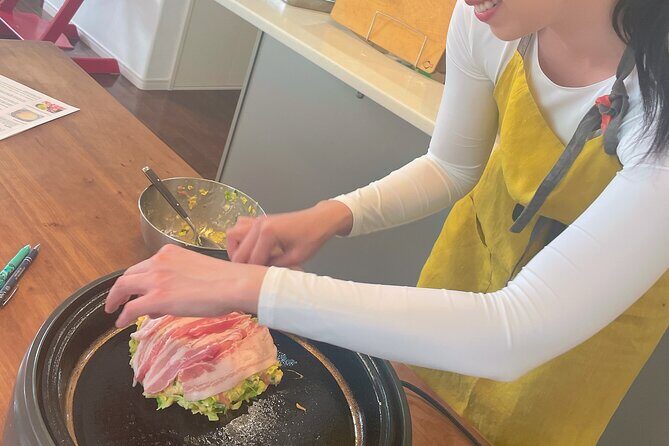
- You learn to layer ingredients in a way that works with the cooking method.
- You learn how to flip after it cooks.
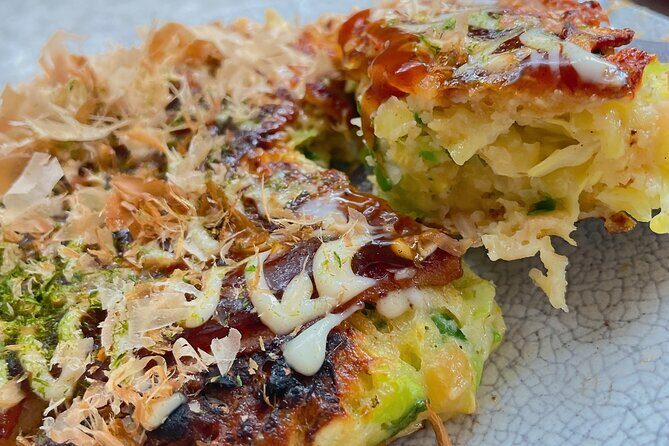
- Then you finish with toppings.
That flipping step can sound dramatic until you do it. In practice, it’s a skill-building moment. It teaches you how to handle the pan and timing so you get a good cook on both sides.
Two details I’d call out as particularly useful:
1) You’re not just told what to do—you’re shown lots of tips.
2) You’re building an approach you can reuse with different fillings later.
One small bonus mentioned by guests: Eri may offer a second recipe as an extra. That’s the kind of gift that turns a “2-hour activity” into something you remember every time you cook at home.
More things to make with your own hands



While You Wait: Stir-Fried Pork and Kimchi
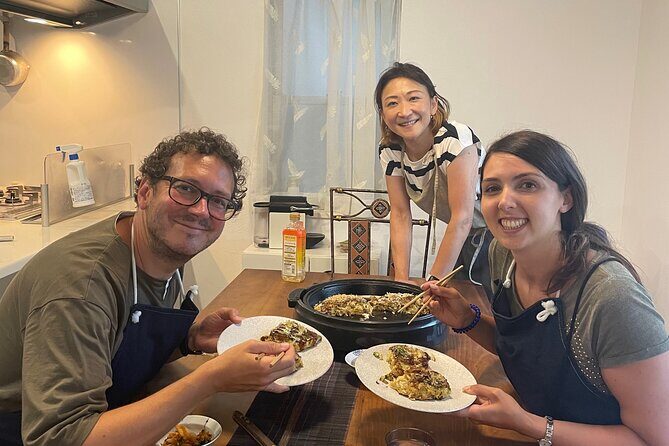
Most cooking classes keep you busy the whole time. This one also does, but it adds an extra food moment while your okonomiyaki is finishing.
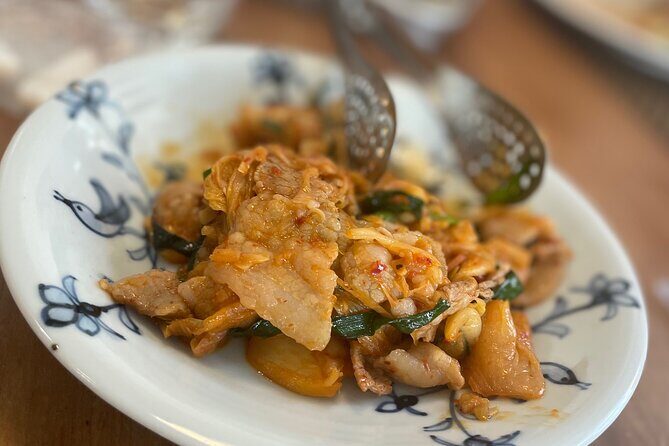
During the waiting time, you’ll make or enjoy stir-fried pork and kimchi. It’s described as savory and something many guests love. Even if your main focus is okonomiyaki, having this side going means you’re not just sitting with your timer. You get another flavor pathway, and the meal feels complete instead of snack-like.
It also helps the rhythm of the class. By the time your okonomiyaki is ready, you’ve already tasted, smelled, and cooked something else—so you’re locked in.
Vegetarian and Vegan Options: Real Adjustments, Not Afterthoughts
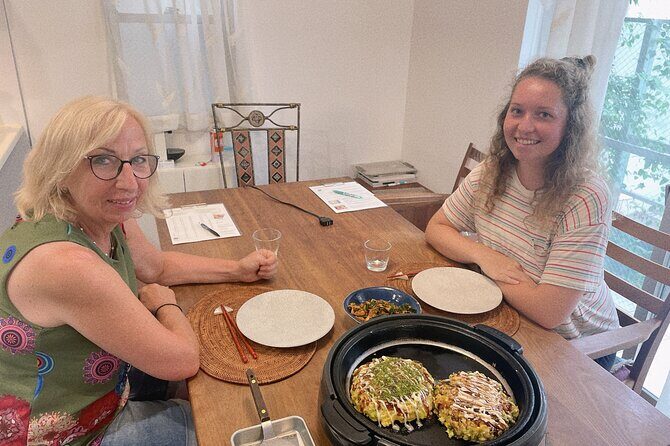
One of the strongest practical benefits is that the class offers vegetarian and vegan options, with adjustments made to accommodate dietary needs.
This is exactly where a cooking class can either help you—or accidentally leave you guessing. Here, the lesson includes changes based on dietary restrictions, which means you’re not just told to remove ingredients and hope for the best.
You’ll also hear about substitutions so your results depend less on whether your local store carries the exact Japanese products. That’s especially helpful if you’re vegan or vegetarian and need ingredient replacements to still get the right flavor profile and texture.
If you’re sensitive about food restrictions, I’d treat this as a conversation-driven class. Ask early, not later. The better the instructor understands your boundaries, the easier it is to make adjustments that actually taste good—not just “acceptable.”
What Makes the Substitutions Worth Writing Down
Plenty of classes teach recipes. Fewer teach how to adapt when reality hits.
This experience is intentionally built around substitution guidance—so you can make it delicious after your trip. You’ll learn about Japanese ingredients like dashi and sauce, and then you’ll get help with what to swap if you can’t find something at home.
That’s valuable for two reasons:
- Flavor survival: You’re not aiming for an identical clone. You’re aiming for the same role in the dish—umami, tang, saltiness, depth.
- Confidence: Next time, you won’t stare at a pantry full of “almost-right” items and guess.
Practical tip for you: take notes during the lesson, especially on substitution suggestions for key ingredients. Even if you don’t cook the same thing right away, those notes will save you later when you finally want to reproduce the results.
And because the group is small, it’s easier to get specific answers if you ask.
Value at $150: Why a Small-Group Home Class Can Be Worth It
At $150 per person, this isn’t the cheapest way to eat okonomiyaki in Tokyo. But it’s not priced like a take-a-ticket tasting either.
You’re paying for several things that can be hard to replicate on your own:
- Small group size (max five), which supports hands-on coaching
- A home-kitchen setup that feels more personal than a tourist studio
- Instruction in technique (especially fluffiness) rather than only ingredients
- English explanations so you can understand the why and ask questions
- Substitution guidance so you can cook later, not just during your trip
- Dietary accommodation options (vegetarian/vegan)
The best value comes when you actually care about learning skills you can reuse. If your goal is just to eat, you might decide it’s too pricey. But if your goal is to return home with a method and confidence, this class can pay off quickly—especially because guests report learning more than one approach, including a second recipe bonus.
Who This Class Suits Best (And Who Might Feel It’s Not for Them)
This class is a strong fit if you:
- Want hands-on cooking with limited group size
- Prefer real-life home atmosphere over studio theatrics
- Eat vegetarian/vegan or need ingredient flexibility
- Like learning practical substitutions you can use outside Japan
- Enjoy food that comes with a story and conversation
It might be less perfect if you:
- Want a very long class or multiple recipes in one sitting
- Don’t want any dietary discussion or ingredient talk
- Are allergic to the idea of cooking in a home setting (tight spaces, shared kitchen rhythm, etc.)
A nice detail from guest experiences: this kind of patience and warmth makes the class work even when someone is bringing a relative. One guest described taking their grandmother, and the instructor was patient and attentive. That says something about the tone: it’s not a rushed, robotic lesson.
Should You Book This Small-Group Okonomiyaki Class in Tokyo?
If you’re in Tokyo and you want more than a meal, I’d seriously consider booking. This is the type of experience where you leave with skills: dashi and sauce basics, how to aim for fluffy okonomiyaki, how to build layers, and how to flip with less fear. On top of that, the substitution guidance is what turns a fun trip moment into an ongoing home-cooking win.
Book it if you enjoy hands-on cooking, want a small-group format, and want a real connection to a Japanese home kitchen. I’d especially recommend it for vegetarians and vegans who want thoughtful adjustments, not compromises.
FAQ
Can I choose my fillings and toppings for okonomiyaki?
Yes. You can choose what to fill in your okonomiyaki, and the instructor will support you as you cook. Adjustments can be made for vegetarian and other dietary restrictions.
How many people are in the group?
The class has a maximum of five travelers.
How long is the cooking class?
It runs for about two hours.
What will we cook besides the okonomiyaki?
While you wait for the okonomiyaki, you’ll also make stir-fried pork and kimchi.
Is the class offered in English?
The instructor’s English is described as good enough, and you’re welcome to ask questions.
Where is the class meeting point, and is there a refund if plans change?
The meeting point is NewDaysJapan near JR Asagaya Station (2F outside ticket gates concourse). For refunds, you can cancel up to 24 hours in advance for a full refund.
Make Something to Take Home

Learn Another Dish: Tokyo Cooking Classes


More Tour Reviews in Tokyo






Fresh reviews from around Tokyo






Cooking Classes, compared.
 ★ 5.0Ramen & Gyoza Cooking Class in Tokyo with Local Supermarket VisitFrom $122823 reviews
 ★ 4.6Easy Ramen Cooking Experience in Kabukicho, ShinjukuFrom $29321 reviews
 ★ 5.0Ramen and Sushi Cooking Class with Sake Pairing Set in TokyoFrom $79291 reviews
 ★ 4.9Wagyu and 7 Japanese Dishes Cooking ClassFrom $67273 reviews
 ★ 5.0Tokyo Washoku 4-hour Cooking Class: From Market to TableFrom $79253 reviews
 ★ 5.0Small-Group Wagyu Beef and 7 Japanese Dishes Tokyo Cooking ClassFrom $72190 reviews
 ★ 5.0Private Home Cooking in Yanaka – Local Flavors in a Warm SettingFrom $122173 reviews
 ★ 5.0Tokyo Sushi Making Experience & Japanese Cooking ClassFrom $59150 reviews
Browse the lists this tour appears in