

Reviewed · ASAKUSA TOURS
Tokyo: Traditional Asakusa Music Show with Dinner
A great night starts with good sound.
This 3-hour Asakusa evening pairs a short history-style look at the neighborhood with a real live shamisen performance over dinner. The setting matters: you start high up at the Asakusa Culture Tourist Information Center for a bird’s-eye view, then you walk through the Sensoji area before settling into an izakaya for music that sounds better when you’re close to it.
I also like the way the evening stays simple and human. You get an English-speaking guide to explain what you’re seeing and what the musicians will play, plus an included welcome drink, so you’re not hunting around for details mid-tour. One thing to plan for: there’s some walking, and the pace may not feel ideal if your legs are tired—one tip you should take seriously is using a cab if you need it.
In This Review
- Key highlights you’ll actually feel
- Asakusa’s viewpoint first: setting the stage before the music
- Walking the Sensoji precinct: seeing the icons in a calmer way
- The izakaya arrival: where the dinner show really starts
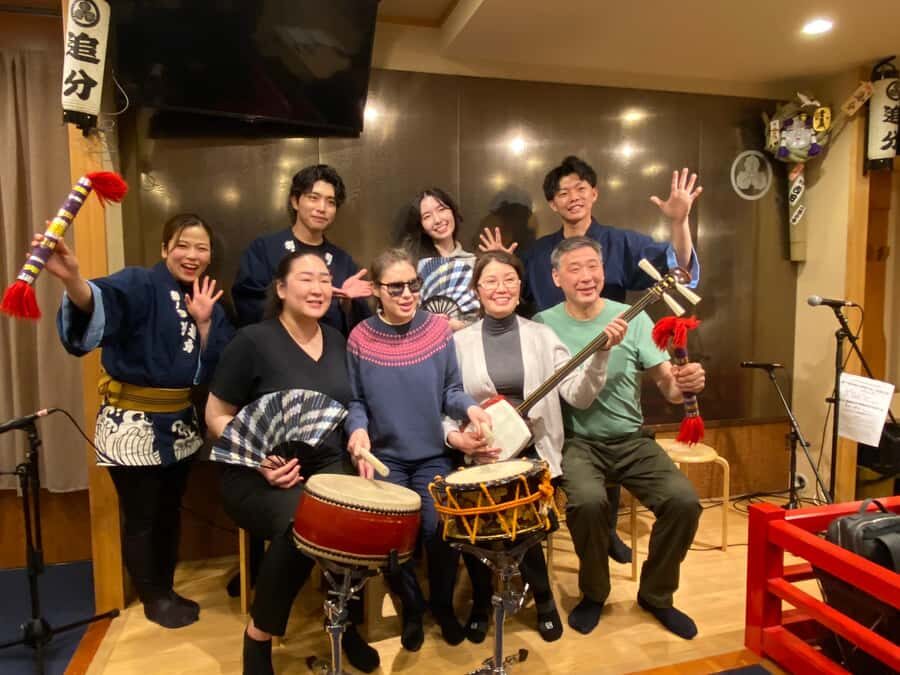
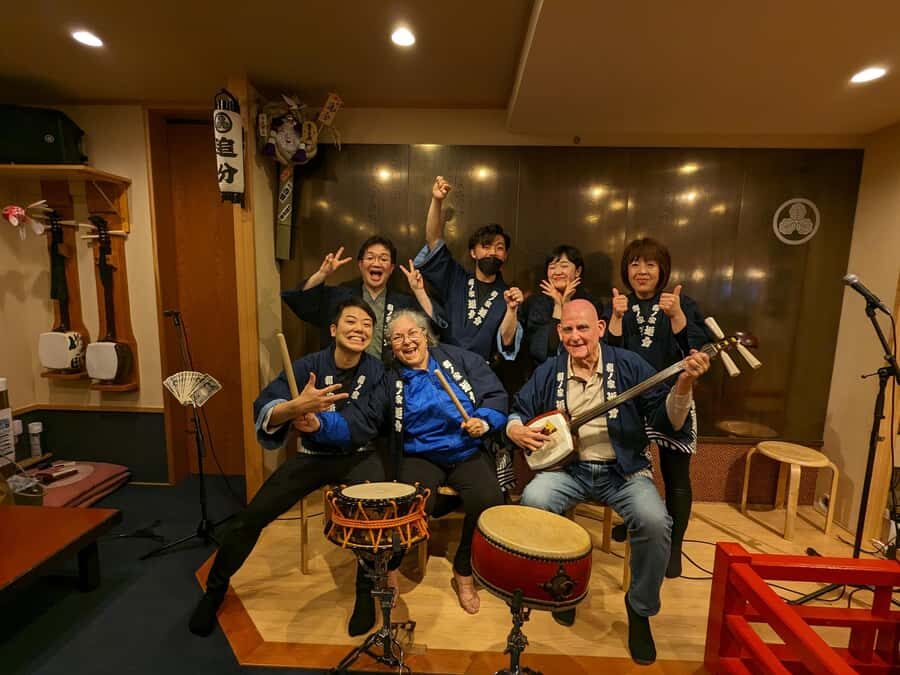
- Dinner with the music: shamisen, drums, and folk singing up close
- The welcome drink: small detail, big payoff
- English guidance that helps you follow both sights and sound
- Price and value: is $140 reasonable for this format?
- Who this tour suits best (and who should skip it)
- Booking checklist: what to know before you go
- Should you book this Asakusa music-and-dinner tour?
- FAQ
- How long is the Asakusa traditional music show with dinner?
- Where do I meet for the tour?
- What’s included with dinner?
- What kind of music and instruments will I hear?
- Is there an English-speaking guide?
- Do I get hotel pickup and drop-off?
- Is free cancellation available?
Key highlights you’ll actually feel
- Panoramic intro from a 7-story Asakusa viewpoint before the music begins
- Sensoji precinct walk timed to help you see Kaminarimon, Nakamise, Hozomon, and the main hall area
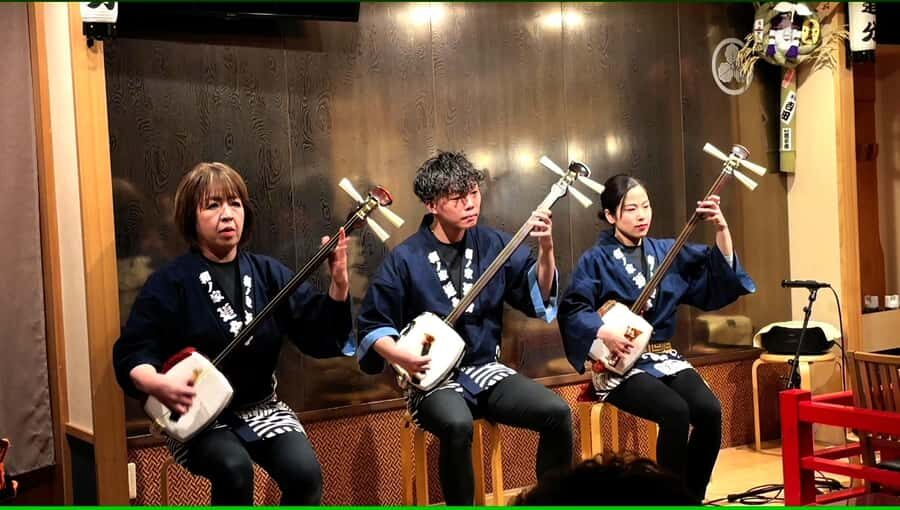
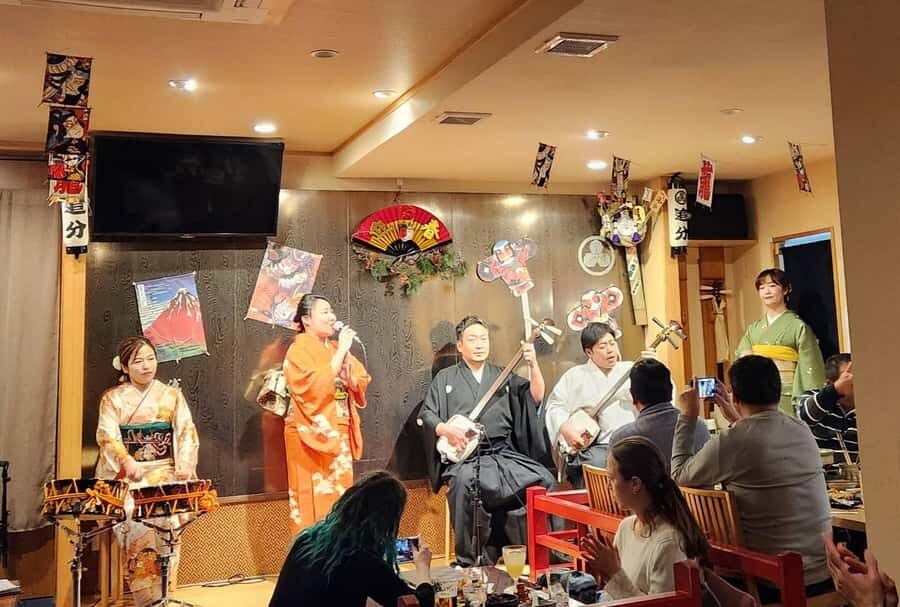
- Live traditional instruments performed right where you’re eating (shamisen, drums, and folk singing)
- Small group format for better listening and smoother pacing
- English-speaking guide who explains both the sights and the music
More mornings around Senso-ji and the old town
- Tokyo: Japanese Dance Cabaret Theater Asakusa-Kaguwa Ticket★ 4.8 · 2,270 reviews
- Tokyo: Asakusa Walking Tour with Sensoji Temple Visit★ 4.8 · 1,583 reviews
- Tokyo Asakusa Rickshaw Tour★ 5.0 · 1,375 reviews
Asakusa’s viewpoint first: setting the stage before the music
You start at the Asakusa Culture Tourist Information Center, basically across from Kaminarimon (the thunder gate). It’s a practical meeting point too: it’s about a 1-minute walk from Tokyo Metro Asakusa Station (Ginza Line) Exit 1, and around 2 minutes from Toei Asakusa Station (Asakusa Line) Exit A4.
The tour begins with a guided bird’s-eye look from the center’s 7-story building. From up there, Asakusa stops feeling like a crowded postcard and starts making sense. You can quickly place key areas before you head into the Sensoji precinct, which makes the later walking more satisfying. Your guide points out major spots while you’re viewing them from above, so you’re not just “passing by,” you’re learning how the area connects.
If you like travel that builds context fast, this opening works. It turns the night into more than dinner and a show. You get a map in your head first, then the streets fill in the details.
Walking the Sensoji precinct: seeing the icons in a calmer way
After the viewpoint, you move on foot. The route is designed around the big Sensoji moments, and the pacing is meant to keep you oriented without turning the night into a race.
As you walk through the temple precinct, you’ll see:
- Kaminarimon (the thunder gate)
- Nakamise shopping street
- Hozomon (treasure gate)
- the area around the main hall
The guide’s job here is key. Instead of leaving you to guess what’s important, you get a short explanation that helps you recognize what you’re looking at. And it’s not just about gates and shopping lanes. Once you’re outside the precinct, there’s also time to notice the more nostalgic, older-feeling parts of Asakusa—described as the kind of atmosphere commoners lived with during the Edo period. Even if you’ve seen temples before, this contrast helps you understand why Asakusa keeps drawing people back.
Practical note: this is not a strictly sit-and-watch tour. There’s some walking, and you may want to be honest with yourself about your energy. One useful suggestion is to consider a cab to the restaurant if you’re likely to feel rushed or worn down by the walking segment. The tour does include moving to the dining location, so it’s smart to plan your comfort early.
The izakaya arrival: where the dinner show really starts
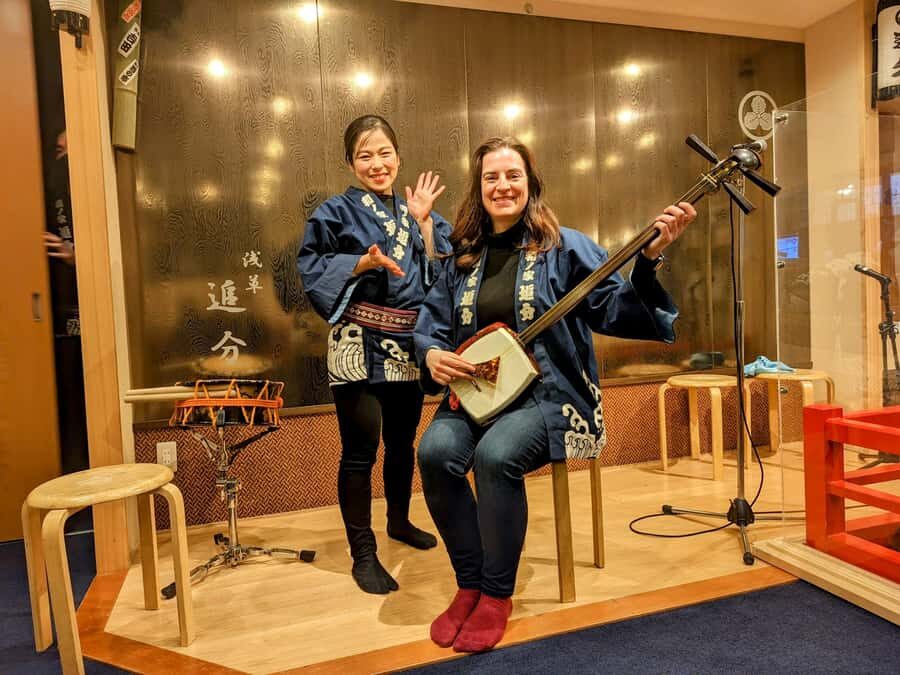
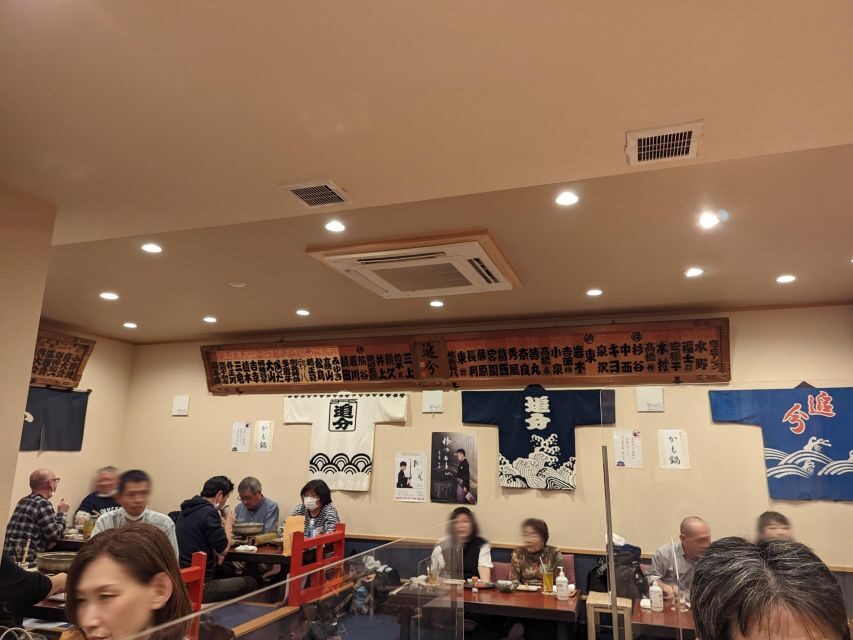
When you reach the restaurant, you’re not just handed food and told to watch. Your guide explains what the musicians will play and what you’ll likely hear next. That small preface changes the whole experience—suddenly the performance has landmarks, not just sound.
I like this part because traditional music can feel intimidating if you don’t know what’s coming. Even basic context helps you catch patterns: how instruments take turns, how rhythm drives the emotion, and how the vocals connect to older folk songs.
The restaurant atmosphere is described as friendly and unassuming, which is exactly what you want for this kind of night. This isn’t meant to feel like a museum demonstration. It’s meant to feel like Japanese evening life—food, conversation, and then music that fills the room when the professionals begin.
Dinner with the music: shamisen, drums, and folk singing up close
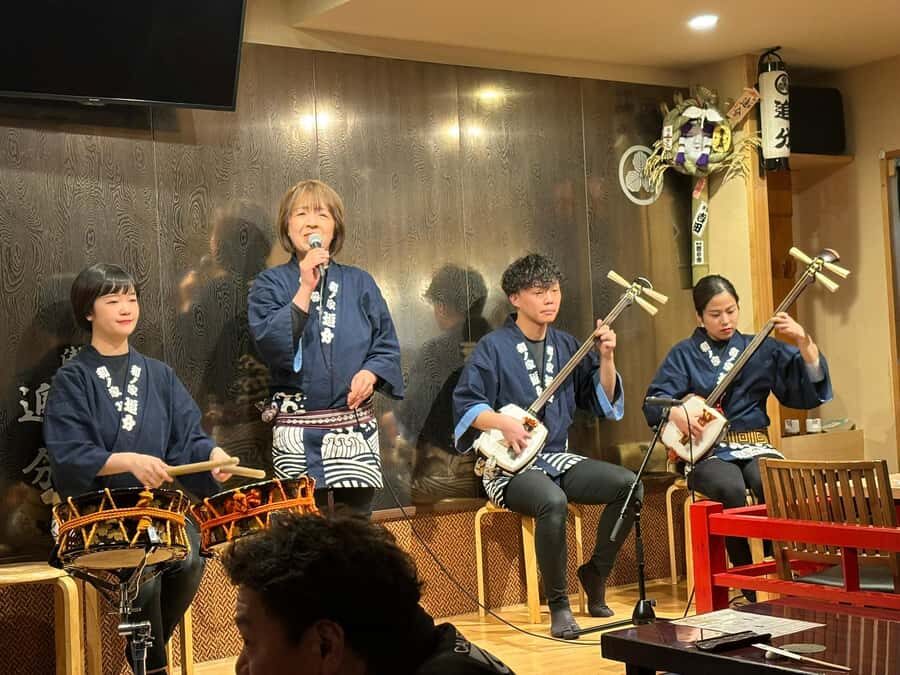
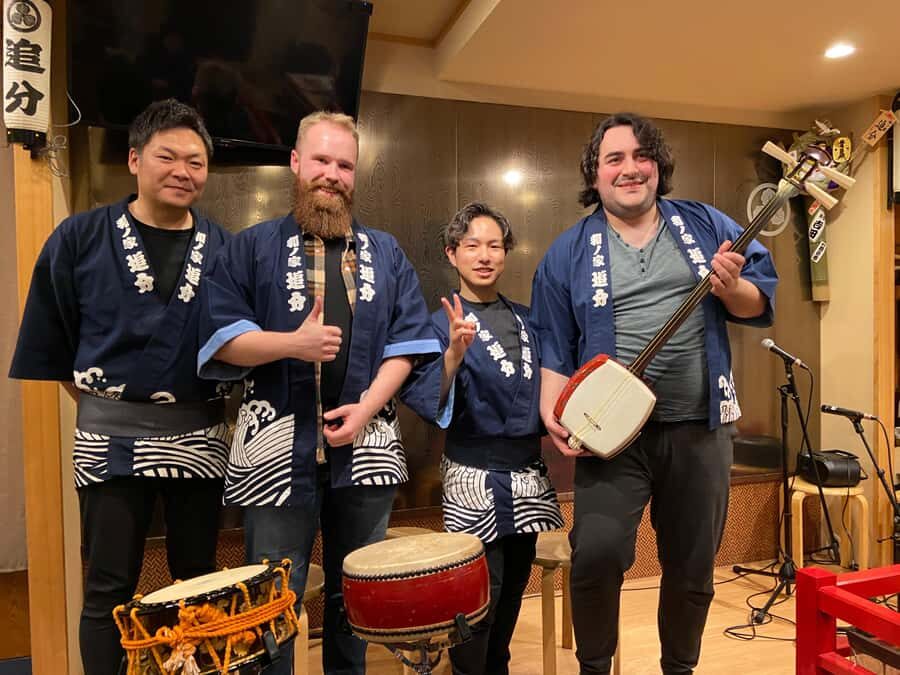
Dinner is included, and the pacing is built around the performance. You’ll enjoy food while you’re at the izakaya, but the evening “crescendo” happens when the award-winning musicians start playing.
This is where the tour earns its price in a way that’s easy to understand. The highlights aren’t vague. You’ll hear:
- Shamisen (a three-string instrument with a strong, expressive sound)
- Drums
- traditional folk songs sung to the accompaniment
Hearing the shamisen up close is a different experience than watching from a distance. The instrument’s bite and texture come through more directly, and you can feel the rhythm rather than only hear it. The drums add pressure and momentum, and the singing ties it together so it doesn’t turn into background sound.
And because you’re in the same space as the musicians, you’re not just consuming. You’re listening in a way that feels attentive, even if you’re still eating.
Worth weighing up alongside this Tokyo pick:



The welcome drink: small detail, big payoff
One welcome drink is included with your tour—choose from beer, sake, cocktail, or soft drinks. I like that the choice is simple and flexible. It means you can match the drink to your own comfort level, whether you want something light or something more traditional like sake.
It also helps you settle in after the walking. You start feeling “in the flow” right when you arrive at the izakaya, not halfway through the meal.
English guidance that helps you follow both sights and sound
The tour includes an English-speaking guide, and that matters because this experience has two learning tracks at once: what you’re seeing in Asakusa and what you’re hearing during the performance.
In the standout feedback for this tour, the guide role comes up again and again. For example, one guide named Akiko is specifically praised for excellent guidance and great knowledge. Even when you don’t get the same guide, the format is designed so you get explanations rather than silence. You’re not stuck guessing what the instruments are or why certain temple elements matter.
That’s the real value here. You’re paying for translation of culture into something you can actually enjoy on the spot.
Price and value: is $140 reasonable for this format?

At $140 per person for about 3 hours, this isn’t a bargain ticket. But it’s not overpriced in a way that feels random, either.
Here’s what you’re getting that helps the price make sense:
- Dinner included
- a welcome drink included
- a live performance by traditional professional musicians
- an English-speaking guide
- a guided intro to Asakusa (viewpoint + explanation)
- a small-group format
The big cost driver is the combination of guided time and live performers. If you’ve ever tried to “DIY” a similar night—find the right restaurant, confirm a live music session, and arrange English-friendly context—it can turn into a lot of work for uncertain results.
So for me, the value question becomes this: do you want a curated, guided night where you can focus on listening and eating instead of searching? If yes, the price starts to feel fair. If you just want low-cost entertainment, you can find cheaper options around Tokyo, but you won’t get the same guided through-line from Asakusa sights to shamisen music.
Who this tour suits best (and who should skip it)
This works especially well if you:
- like traditional performances and want to hear instruments with context
- want an easy evening plan in Asakusa without complicated logistics
- enjoy learning while walking short distances rather than sitting in one place the whole time
- want a small-group experience with an English guide
I’d be more cautious if you:
- strongly dislike walking at night or have mobility limits (the tour does involve strolling through the Sensoji precinct)
- prefer shows where you can stay seated the entire time (this one includes guided movement)
- are looking for a long, slow food tour with lots of stops (this is more about one dinner event plus the music)
Booking checklist: what to know before you go
A few practical points will make your night smoother:
- Plan to start at the Asakusa Culture Tourist Information Center, right across from Kaminarimon.
- Expect a guided viewpoint first, then a walk through Sensoji precinct.
- The restaurant part is the main event, so go with an open mind for live music during dinner.
- Wear shoes that can handle uneven temple-area streets.
- If walking feels like a dealbreaker, consider the simple advice of taking a cab to the restaurant so you still get the music and meal without arriving exhausted.
Also keep in mind that the tour is designed to be ready for your group. There’s mention that time is required to arrange the guide and book the restaurant, though the local provider tries to accommodate last-minute bookings as possible.
Should you book this Asakusa music-and-dinner tour?
If you want a night that blends Asakusa orientation with live traditional music—shamisen, drums, and sung folk melodies—this tour is a smart pick. You’re not paying for an abstract experience; you’re paying for dinner plus a real performance, with an English guide helping you connect the dots from the temple streets to the izakaya sound.
I’d book it if:
- you’ll enjoy learning a little and then listening closely
- you want a guided evening with dinner included
- you care about the “how to appreciate it” part, not just watching from afar
I’d skip or adjust if:
- walking is hard for you and you’re worried about pacing
- you want a self-guided option where you control every minute
If you fit the first group, this is one of those Tokyo nights that feels uniquely local, without being complicated.
FAQ
How long is the Asakusa traditional music show with dinner?
The tour runs for about 3 hours.
Where do I meet for the tour?
Meet in front of the entrance of the Asakusa Culture Tourist Information Center, across from Kaminarimon (the thunder gate). It’s very close to Asakusa Station (Ginza Line) Exit 1 and Toei Asakusa Station (Asakusa Line) Exit A4.
What’s included with dinner?
Dinner is included, along with one welcome drink. The welcome drink options are beer, sake, cocktail, or soft drinks.
What kind of music and instruments will I hear?
You’ll see a live performance featuring traditional instruments such as shamisen and drums, and the program includes traditional folk songs sung with the music.
Is there an English-speaking guide?
Yes. The tour includes an English-speaking guide.
Do I get hotel pickup and drop-off?
No hotel pickup and drop-off is included. The tour starts and ends at the meeting point.
Is free cancellation available?
Yes, you can cancel up to 24 hours in advance for a full refund.
More Dining Experiences in Tokyo

More Tour Reviews in Tokyo






Around Senso-ji: More Asakusa Picks


Fresh reviews from around Tokyo






Asakusa Tours, compared.
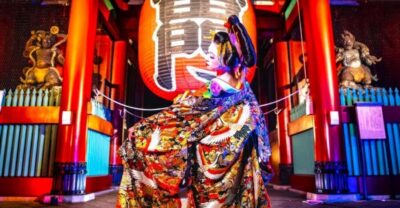 ★ 4.8Japanese Dance Cabaret Theater Asakusa-Kaguwa TicketFrom $492,270 reviews
 ★ 4.7Meiji Shrine, Asakusa, Skytree Bus Tour and CruiseFrom $1221,986 reviews
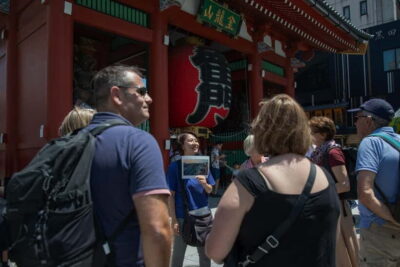 ★ 4.8Asakusa Walking Tour with Sensoji Temple VisitFrom $221,583 reviews
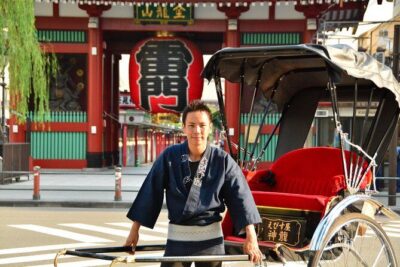 ★ 5.0Tokyo Asakusa Rickshaw TourFrom $421,375 reviews
 ★ 4.5Tokyo Panoramic 1 Day: Meiji Shrine, Asakusa, Odaiba and SKYTREE®From $851,222 reviews
 ★ 4.8Samurai Ninja Museum Asakusa: Samurai Sword Lesson & TourFrom $63306 reviews
Asakusa Sightseeing Tour by RickshawFrom $35195 reviews
Asakusa Kimono Dressing and Matcha ExperienceFrom $56173 reviews
★ 4.8Samurai Ninja Museum Asakusa: Samurai Sword Lesson & TourFrom $63306 reviews
Asakusa Sightseeing Tour by RickshawFrom $35195 reviews
Asakusa Kimono Dressing and Matcha ExperienceFrom $56173 reviews
Browse the lists this tour appears in