
Reviewed · TOKYO
Tasting All Types of Sake with Sommelier
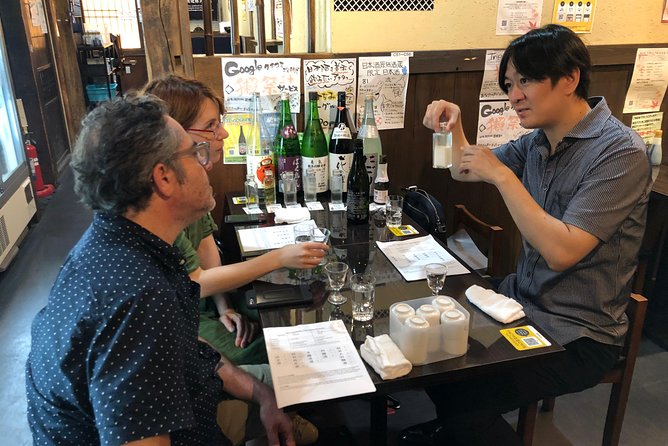
Sake gets easier fast. In Shinjuku, I love how this tasting turns an intimidating bottle into something you can actually order with confidence. You get 6–7 sake tastings led by Aki-san (Akira), plus hands-on guidance for decoding labels and choosing what fits your tastes.
Two things stand out. First, the guide doesn’t just pour and move on—there’s time to ask questions and learn what makes each sake taste different. Second, you walk away with practical takeaways, from reading a sake bottle to figuring out what to pair it with when you’re eating Japanese food. One small catch: this is a drinking-focused experience, so if you tend to drink quickly, plan to slow down and eat beforehand.
In This Review
- Key things to know before you go
- Meeting Aki-san in Shinjuku (and why the timing matters)
- Shinjuku 3-chōme warm-up: context before your first sip
- The sake bar stop near Louis Vuitton Shinjuku
- Learning to decode a sake label (so you can shop later)
- How the tasting is structured: comparing styles, not just drinking
- You’ll learn the “why” behind the taste
- You’ll learn how to drink it correctly
- You’ll get food pairing suggestions that you can use immediately
- The sommelier Q&A: ask what you’re actually curious about
- So what should you drink after the tasting?
- Price and value: is $62.76 worth it?
- Logistics that actually matter (meeting spot, duration, pacing)
- Who this tour fits best
- Should you book this Shinjuku sake tasting?
- FAQ
- How long is the sake tasting tour?
- What time does the tour start?
- Where is the meeting point?
- How many people are in the group?
- How many types of sake will I taste?
- Do I need to print a ticket?
- Is there an expert guide?
- Is it suitable for most people?
- What is the cancellation policy?
- Will I get confirmation after booking?
Key things to know before you go
- Max 12 people keeps the questions from getting swallowed.
- 6–7 different sakes mean you’ll compare styles instead of repeating the same flavor.
- Label decoding tips help you shop for sake without guessing.
- Food pairing guidance gives you restaurant-ready matchups.
- Shinjuku storytelling includes Golden Gai and Kabukicho context while you’re out at night.
- Mobile ticket keeps the check-in simple.
Before you commit, see how this one stacks up against a few Tokyo favourites:
- Mt Fuji and Hakone 1-Day Bus Tour Return by Bullet Train★ 5.0 · 26,383 reviews
- 1-Day Tokyo Bus Tour★ 5.0 · 14,250 reviews
- Tokyo: teamLab Planets TOKYO Digital Art Museum Entry Ticket★ 4.6 · 9,779 reviews
Meeting Aki-san in Shinjuku (and why the timing matters)
This tour meets in Shinjuku, starting at 4:00 pm and ending back at the meeting point. That late-afternoon start is smart. You’re not fighting peak lunch crowds, and you’re still in the daylight window where you can find your bearings. Then, as the session wraps, you’ve got a head start on your Tokyo evening plans.
The meetup is in the Shinjuku area at the address listed for the tour: Frente Shinjuku San-chōme, 3-chōme-4-8 Shinjuku, Tokyo. The tour also keeps it easy to get there by using a near-public-transportation meeting area.
What makes this work well is the guide’s approach. You’re not dropped into a bar like it’s a mystery. You’ll get orientation in the Shinjuku area first, including quick context around Shinjuku 3-chōme. It’s the kind of mini-prep that saves you stress later when you’re trying to return, shop, or meet someone for dinner.
Shinjuku 3-chōme warm-up: context before your first sip
Early on, you spend a few minutes at the initial meeting spots while the guide talks about the neighborhood—especially Shinjuku 3-chōme. That doesn’t sound like a big deal until you’re standing in the middle of Shinjuku and realize how much simpler it is to navigate once you understand the zones.
You’ll also get some conversation about Kabukicho and Tokyo nightlife, including Golden Gai. Even if you’re not planning to bar-hop like crazy, it helps to know what people mean when they talk about these areas. It can also help you decide what kind of night you actually want: something tiny and cozy, or something more straightforward.
The value here is mental. Instead of feeling like you arrived in a giant, confusing blur, you’re learning while you’re walking. And because the tasting is next, your brain is primed to pay attention to taste, not just sights.
The sake bar stop near Louis Vuitton Shinjuku
After the neighborhood talk, you head to the sake bar right next to Louis Vuitton Shinjuku. This is where the pace shifts from sightseeing to tasting.
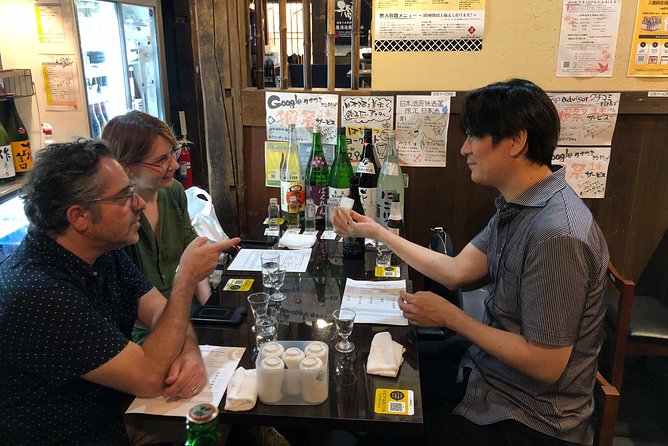
The format is hands-on: the guide serves you all different types of sake, then explains what he feels from each one. That wording matters. You’re not only getting textbook flavor notes—you’re getting comparisons that make sense to a real person drinking in real time.
This is also where the “sommelier” part becomes practical. Instead of treating sake like a single category, you learn how to think about it:
- aroma and flavor differences
- how style changes the feel in your mouth
- and what to expect when you see certain label cues
Because the group is capped at 12 people, you should get a fair shot at questions rather than listening in a crowd where you can’t be heard.
Learning to decode a sake label (so you can shop later)
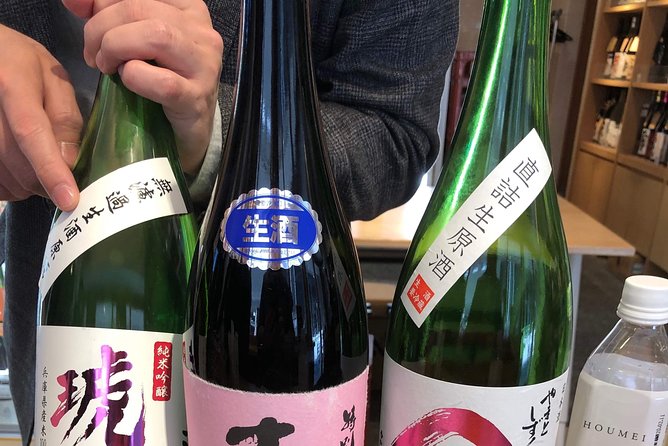
One of the most useful parts of this experience is the label decoding lesson. Sake labels can look like a code from a sci-fi movie, especially when you’re new to Japanese drinks.
You’re taught the top tips for reading a sake label so you can narrow down what you’re buying. The goal isn’t memorizing everything. It’s learning enough that you can walk into a store or scan bottles in a restaurant and make a reasonable choice without guessing.
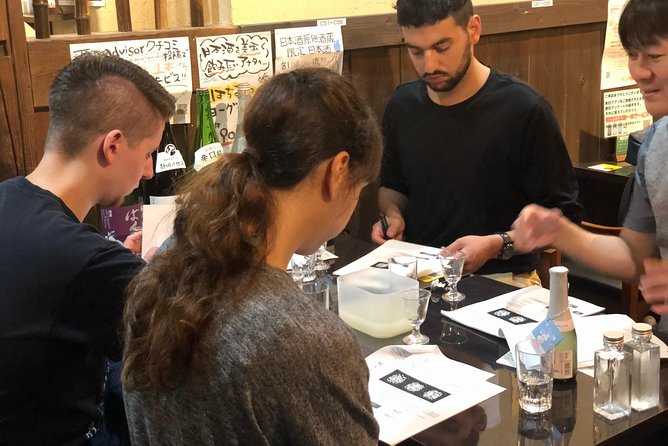
Aki-san (Akira) also uses a pamphlet/handout style guide during the session—this comes up a lot in the feedback. If you like having something in your hands to reference later, this is a big plus. One common takeaway: after the tasting, people feel capable ordering in restaurants because they know what to look for.
Practical tip: when you get the label information, try to connect it to what you just tasted. For example, if you learn a term that points toward a style you liked, write it down mentally. That’s what turns a one-hour tasting into a repeatable skill.





How the tasting is structured: comparing styles, not just drinking
You’ll taste 6–7 types of sake, with explanations and guidance on how to drink them and the best foods to pair with each. In addition, some participants mention a welcome sake at the start, so your total pours may feel like more than just the main 6–7.
Here’s how this structure benefits you:
You’ll learn the “why” behind the taste
Sake can shift dramatically depending on factors like processing, sweetness level, acidity feel, and whether it’s served hot or chilled. When you taste multiple types back-to-back, you can actually detect patterns instead of confusing one pour with the next.
You’ll learn how to drink it correctly
This matters because serving temperature and glassware habits change perception. If you learn what temperature to expect and how to approach each style, you’ll order more confidently at restaurants.
You’ll get food pairing suggestions that you can use immediately
This is where the tasting becomes useful beyond the bar. You’ll hear what foods work best with the different types you’re trying. Even if you don’t memorize every pairing, the lesson helps you think like a sake person.
Also, from the session feedback, Aki-san has covered styles like sparkling sake and has talked through pasteurized and unpasteurized options. Not every bottle in every bar is the same, but learning what these terms mean helps you understand what you’re being offered instead of just nodding politely.
The sommelier Q&A: ask what you’re actually curious about
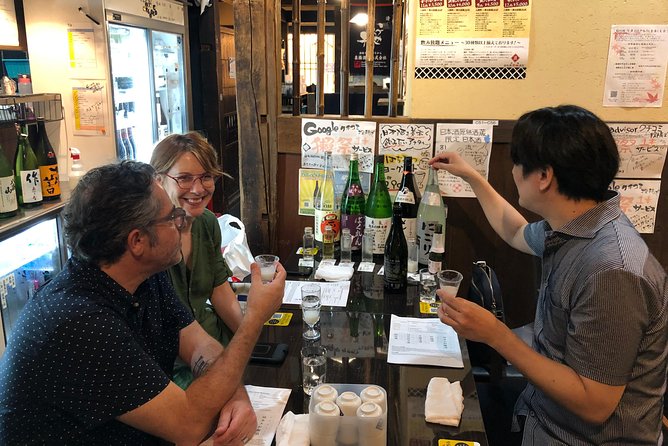
This isn’t a one-way lecture. You get a real chance to ask questions during the tasting. That’s a huge advantage when you’re trying to understand sake as a beginner.
Common questions you can expect to want answered:
- Why does one sake taste dry while another feels sweeter?
- What’s the deal with hot versus cold serving?
- How do I choose a bottle when I like one style but not another?
- What terms on the label should I pay attention to first?
Aki-san is also described as friendly and funny, which might sound like small talk. In practice, it helps a lot. When the guide makes the room comfortable, you’re more likely to ask the questions that really move you from curiosity to confidence.
So what should you drink after the tasting?
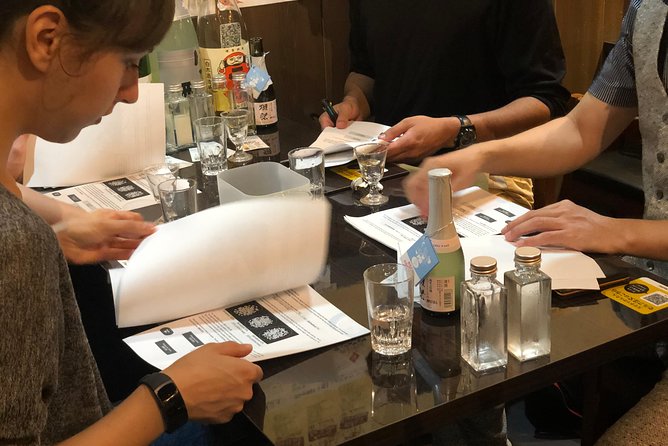
The big payoff is that this tasting is meant to change your ordering habits in Tokyo. By the end, you should be able to walk into a restaurant and think: I know what to look for, and I know what style I’m craving.
A good way to use what you learn:
- If you loved a dry style: look for labels that point toward dry profiles.
- If you liked something smoother or richer: match it to foods that won’t fight that texture.
- If you enjoyed sparkling: seek out similar styles when you see them listed.
Also, if you’re buying sake to bring home, this label knowledge helps you pick something that’s easier to enjoy later rather than a mystery bottle you don’t know how to interpret.
Price and value: is $62.76 worth it?
At $62.76 per person, the headline cost might seem steep if you’re thinking only about alcohol. But the value is tied to what you get alongside the pours:
- a sake sommelier-led session
- 6–7 tastings with explanations
- tips for reading labels
- guidance on how to drink sake
- food pairing suggestions
- time to ask questions
- a small group size (max 12)
For me, the best way to think about the cost is this: you’re not just paying to taste. You’re paying to learn the shortcut. One solid lesson like this can save you from hours of trial-and-error later in Japan—especially if sake is new to you.
If you’re already a sake nerd, you might still enjoy it because you get structured comparisons and a label approach that makes shopping easier. If you’re a total beginner, it’s even more worth it, because you’ll likely leave with practical ordering skills fast.
Logistics that actually matter (meeting spot, duration, pacing)
The tour runs about 1 hour 30 minutes (approx.). Some feedback notes it can feel closer to around two hours, which makes sense if you’re asking questions and tasting at a relaxed pace.
The tour is also designed to be easy to find:
- you meet at a fixed address in Shinjuku
- the bar is near a major landmark (Louis Vuitton Shinjuku)
- the tour ends back at the meeting point
- you get a mobile ticket
One pacing consideration: eat beforehand if you can. Several people mention being careful about drinking too much, and that you’ll enjoy the experience more if your stomach isn’t empty. You don’t need to turn this into a big drinking night—this is a tasting and learning session.
Who this tour fits best
This experience is a strong match if you:
- want to understand sake quickly and practically
- enjoy asking questions and learning from a guide in a small group
- plan to eat Japanese food in Tokyo and want better pairings
- are overwhelmed by sake labels and want a shortcut
It’s also a good family option based on the feedback, including parents who brought kids on a first Japan trip. Still, because it is a tasting, it’s best suited for adults who are comfortable drinking in a guided setting.
If you’re the type who likes a structured, friendly lesson more than wandering in bars alone, this fits your style.
Should you book this Shinjuku sake tasting?
Yes, if you want a fast path from confused to confident. This tour is built for practical learning: label decoding, tasting comparisons, and food pairing guidance all in one small-group session with Aki-san (Akira).
Book it earlier in your trip if you can. That way, the next time you’re choosing sake in a restaurant or shop, you’ll have more chances to use what you learned. And if you’re planning a Shinjuku night anyway, you’ll leave with both flavor knowledge and a bit of local context about areas like Golden Gai and Kabukicho.
FAQ
How long is the sake tasting tour?
It runs for about 1 hour 30 minutes (approx.).
What time does the tour start?
The start time is 4:00 pm.
Where is the meeting point?
The meeting point is Frente Shinjuku San-chōme, 3-chōme-4-8 Shinjuku, Shinjuku City, Tokyo 160-0022, Japan.
How many people are in the group?
The experience has a maximum of 12 travelers.
How many types of sake will I taste?
You will try 6–7 types of sake during the session.
Do I need to print a ticket?
No. It uses a mobile ticket.
Is there an expert guide?
Yes. You’ll enjoy the session with a sake sommelier and can ask questions.
Is it suitable for most people?
The tour notes that most travelers can participate.
What is the cancellation policy?
You can cancel for a full refund if you cancel up to 24 hours in advance of the experience start time.
Will I get confirmation after booking?
Yes. Confirmation is received at the time of booking.
More Tour Reviews in Tokyo



Fresh reviews from around Tokyo






Tokyo, compared.
 ★ 5.0Mt Fuji and Hakone 1-Day Bus Tour Return by Bullet TrainFrom $16326,383 reviews
 ★ 5.01-Day Tokyo Bus TourFrom $12914,250 reviews
 ★ 4.6teamLab Planets TOKYO Digital Art Museum Entry TicketFrom $259,779 reviews
 ★ 4.0Mt Fuji & Hakone Cruise, Drum Show Bullet Train 1 Day from TokyoFrom $1497,413 reviews
 ★ 5.0Shinjuku Food Tour (13 Dishes at 4 Local Eateries)From $866,603 reviews
 ★ 4.4Tokyo Mt Fuji 5th St & Hakone Cruise Bus Tour w/Bullet TrainFrom $1545,024 reviews
 ★ 5.0Flagship 2-Hours Official Street Go-Kart Tour – Tokyo Bay ShopFrom $644,974 reviews
 ★ 4.5From Tokyo: Mount Fuji Full-Day Sightseeing TripFrom $684,970 reviews