
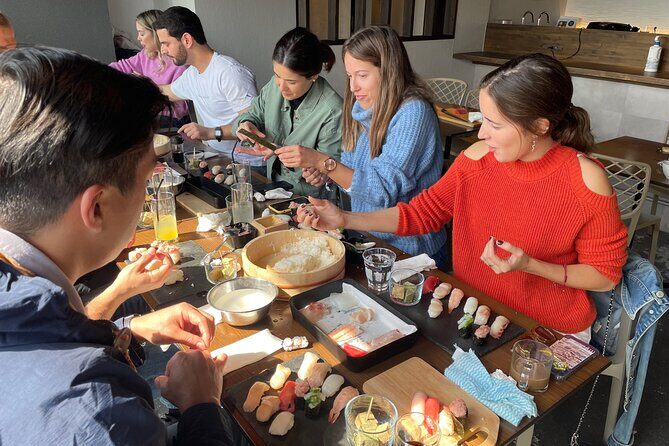
Reviewed · WORKSHOPS
Sushi Making Tokyo Roll and Authentic Japanese Sushi Class
Sushi making in Tokyo feels like a cheat code. This class turns sightseeing calories into real skills, right in Asakusa near Senso-ji. I like the hands-on instruction with clear step-by-step guidance from English-speaking leaders (names like Moe, Ken, Arisa, Jun, and Kazu come up in past classes), and you finish by eating what you make as a full lunch. A fair heads-up: it’s built for visitors—more beginner-friendly and structured than a strict, old-school counter experience.
You’ll learn maki rolls and authentic nigiri at an easy pace, with cultural context woven in as you go. The group stays small (up to 30), so it’s not one of those classes where you watch and hope. One possible drawback is that the style is tourist-friendly; if you want advanced fish-cutting techniques, you may find it a bit too simple.
Still, at about 1 hour 40 minutes, it’s a high-value Tokyo add-on. No cooking background needed, and you don’t just snack—you get proper sushi lunch. Come hungry, bring your camera, and get ready to make something you can actually repeat later at home.
In This Review
- Key takeaways before you book
- Asakusa is the perfect setting for a Tokyo sushi making class
- Finding the meeting point near Kaminarimon and Senso-ji
- What happens during the 1 hour 40 minute class
- Step 1: Sushi culture and basics before hands get busy
- Step 2: Rice and seasoning—where the flavor clock starts
- Step 3: Maki rolls (Tokyo roll-style practice)
- Step 4: Nigiri shaping, step by step
- Step 5: Sit down and enjoy your sushi lunch
- The instructor attention that actually helps you later
- Sushi skills that transfer to your home kitchen
- Rolling technique, not just recipe notes
- Nigiri shaping confidence
- Understanding sushi at a diner level
- Price and value: what $59.69 really includes
- Who this Tokyo sushi making class is best for
- Pair it with your Asakusa day plan
- Should you book this Tokyo roll and sushi class?
- FAQ
- How long is the sushi making class?
- Where does the class start in Tokyo?
- Is hotel pickup or drop-off included?
- Do I need cooking experience?
- What will I learn to make?
- Is there an English-speaking instructor?
- Will I eat what I make?
- How large is the group?
- What is the cancellation window for a full refund?
Key takeaways before you book
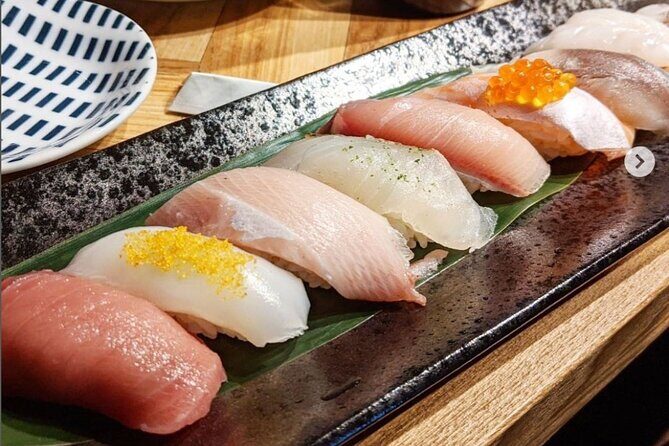
- Asakusa location: steps from Senso-ji, easy to pair with temple time
- Beginner-friendly sushi 101: rolls and nigiri taught step by step
- Small group limit: maximum 30 travelers for real attention at the table
- You eat your work: your sushi and rolls become your lunch
- English-speaking instructors: smooth for international visitors
- Arrive a bit early: the meeting spot can be tricky to find fast
More things to make with your own hands
- Sushi Making Tokyo Roll and Authentic Japanese Sushi Class★ 5.0 · 3,971 reviews
- Tokyo Shinjuku Chopsticks Making Class★ 5.0 · 1,763 reviews
- Chopstick Making Workshop in Ginza★ 4.8 · 1,366 reviews
Asakusa is the perfect setting for a Tokyo sushi making class
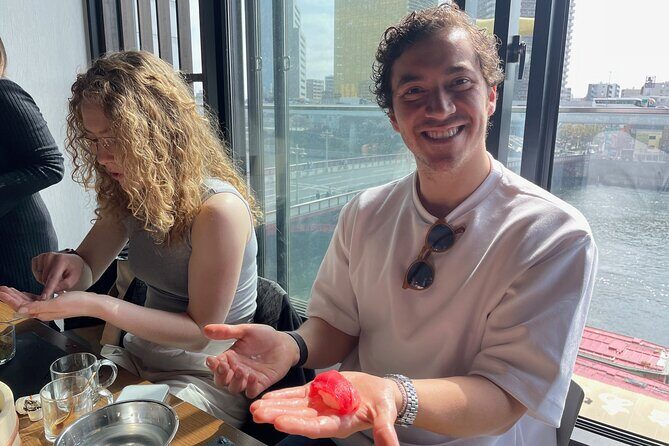
Tokyo has no shortage of sushi meals. The clever move is doing a sushi class in Asakusa, where the streets feel older and the vibe is slower. Meeting near Kaminarimon puts you close to the energy around Senso-ji, so you’re not stacking your day with a long commute. You can do temple time before or after, and the whole day still feels connected.
This is also the kind of experience that changes how you understand what you eat. Instead of guessing why one roll tastes better, you learn what happens before the first bite: rice prep, seasoning balance, knife-and-hand rhythm for nigiri shaping, and how rolling changes the texture. It’s a skill-building lunch, not a show.
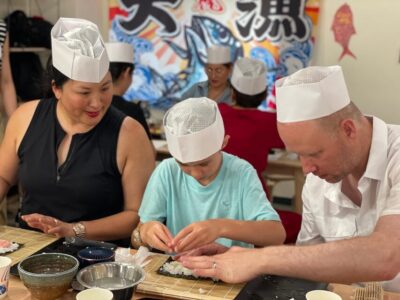
For me, the biggest win is that it’s not just theoretical. You’re at the station making rolls and shaping nigiri while the instructor watches and corrects. And because the class includes enough ingredients for a proper lunch, you leave satisfied, not hungry and caffeinated.
Finding the meeting point near Kaminarimon and Senso-ji
The class starts at 2-chōme-17-9 Kaminarimon, Taito City, Tokyo 111-0034. The plan is to finish back at the meeting point, so you’re not stuck figuring out how to get home from a different part of the city.
Two practical notes help a lot:
1) Arrive early. The area is busy, and the exact address can be a little hard to spot quickly. Plan to get there about 10–15 minutes ahead so you can check in calmly.
2) Use public transport. The tour is listed as near public transportation, and there’s no hotel pickup. That’s normal in Tokyo—often faster than waiting for a van.
You’ll receive confirmation at booking time, and the tour uses a mobile ticket. If you like a clean start, take a screenshot of the address and show it to staff or use it for navigation in your map app.
One more “nice-to-know” for comfort: service animals are allowed. That’s worth checking if you’re traveling with a companion animal.
What happens during the 1 hour 40 minute class
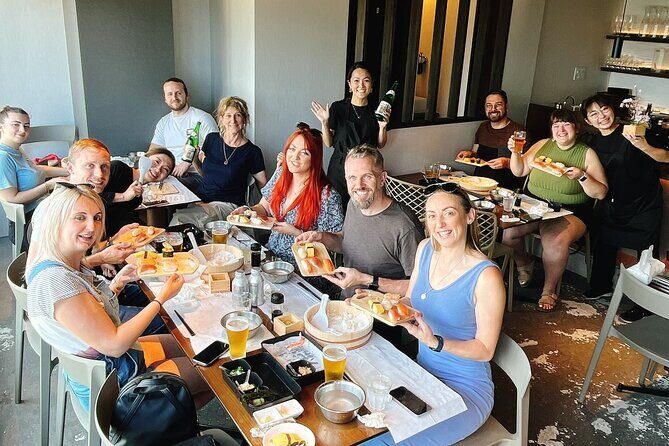
The time on the clock is about 1 hour 40 minutes. That’s long enough to learn the core moves and eat, but not so long that you feel stuck in a classroom. The structure is relaxed and guided, with a clear sequence: a short introduction, hands-on practice, then a seated meal.
Step 1: Sushi culture and basics before hands get busy
Most classes start with a quick orientation so you’re not lost at your work station. Expect an English-speaking instructor to explain what makes sushi sushi, plus cultural context around how sushi is served and what diners notice. This is where you’ll also get a few practical terms so you can order with more confidence later.
From what I’ve seen described in real classes, some sessions use visuals like a short video or a slide-style presentation before table instruction. That helps if you learn better by watching first.





Step 2: Rice and seasoning—where the flavor clock starts
Even if you never touched a sushi board at home, you’ll learn that rice is the engine. You’ll follow the instructor’s direction to work with sushi rice and seasoning in a way that makes the rice taste balanced, not bland. This is exactly the kind of detail that gets overlooked if you only ever buy sushi to go.
Step 3: Maki rolls (Tokyo roll-style practice)
For rolls, you’ll practice rolling technique. This is where hands-on teaching matters because rolling is part pressure, part timing, and part texture. You’ll learn what to do with the nori and what to aim for in the final shape.
A big value here: rolling makes the lesson feel like real progress fast. You can see improvements after each try, and you get enough ingredients to build confidence.
Step 4: Nigiri shaping, step by step
Then comes nigiri—simple looking, tricky to master. You’ll learn how to form nigiri with correct rice placement and how to handle the fish portion (or how the class portion is set up). This is where instructors help most, because small hand adjustments make a big difference.
In past classes, instructors like Ken, Kazu, and Jun have been praised for patient, clear guidance. Even if you’re the type who worries about making a mess, the pace is set so you can keep up.
Step 5: Sit down and enjoy your sushi lunch
After the learning, you eat. This part matters: you’re not just tasting one bite and moving on. You enjoy what you made with your classmates, and yes, it’s described as enough to be a full meal.
Finally, you’ll have a moment to take photos. Sushi is photogenic, and you’ll want proof of your handiwork.
The instructor attention that actually helps you later
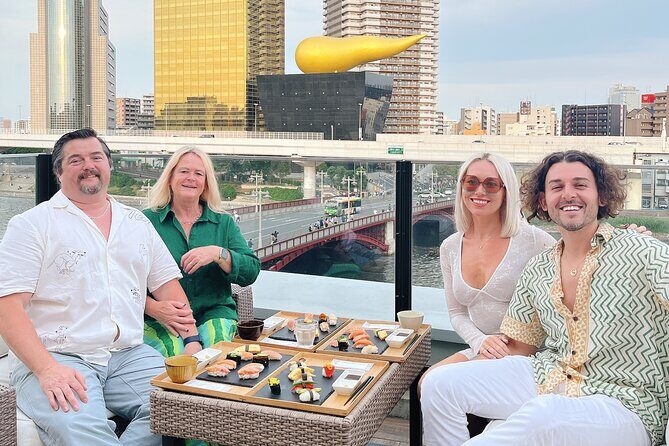
This class isn’t a hands-off demo. It’s set up for personal attention. With a maximum group size of 30, you’re more likely to get corrections when you need them, instead of finishing the lesson with questions you never get answered.
Instructors are friendly and English-speaking, which matters for two reasons:
- You can ask real questions in plain language.
- You can follow technique without guessing at subtle cues.
If you’ve ever watched sushi tutorials at home, you know the hardest part is translating what you see into what your hands do. The class bridges that gap with step-by-step instruction at your table.
Sushi skills that transfer to your home kitchen
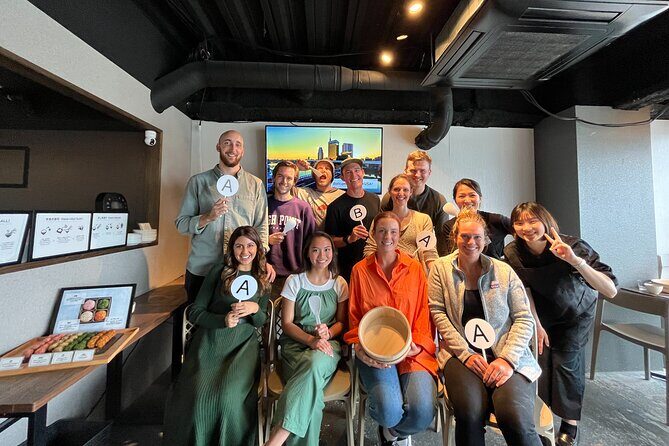
The best part of a sushi class is leaving with habits you can repeat. Here are the practical skills this kind of session focuses on, the ones you’ll feel when you try again later.
Rolling technique, not just recipe notes
Rolls teach consistency: how much filling to use, how to distribute it, and how to keep the roll tight enough without crushing everything. After making a couple rolls, you start to understand how to adjust when your first attempt is too loose or too packed.
Nigiri shaping confidence
Nigiri looks like a simple stack until you try it. The class format helps you practice the motion and timing, so you get comfortable with shaping rice portions and positioning toppings.
Understanding sushi at a diner level
Even if you don’t become a sushi chef, you’ll start noticing what sushi places aim for: the balance of rice and topping, how texture changes across a roll, and how seasoning affects flavor. That makes the next sushi meal more fun, because you’re no longer eating blind.
Price and value: what $59.69 really includes
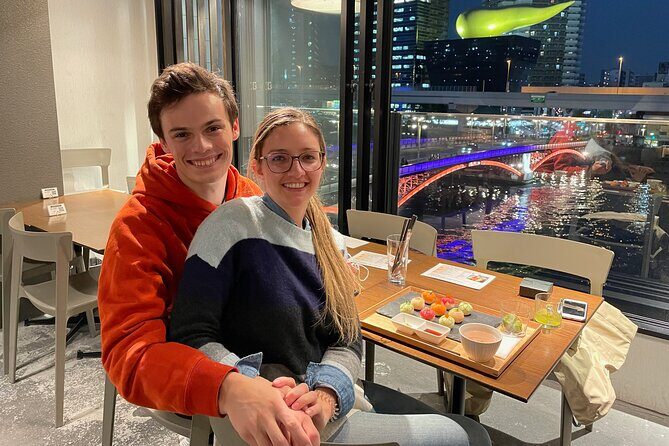
At $59.69 per person, this class can feel like a splurge if you’re thinking only of the cost of food. But it’s closer to paying for a skill session plus ingredients plus a lunch.
What you get is key:
- English-speaking instructor time
- Ingredients for the class and the meal you eat
- A complete activity length (about 1 hour 40 minutes) in a great neighborhood
What you don’t get is also part of the value equation:
- No hotel pickup or drop-off, so you handle your own transit
- No mention of extra alcohol pairings as standard (some classes may add options, but it’s not built into what’s listed)
If you’re comparing this to buying sushi elsewhere, the trade-off is simple: you’re paying for learning and then eating a meal you made. That’s why people love this as a final-day activity or a fun couple-and-family plan in Tokyo.
Who this Tokyo sushi making class is best for
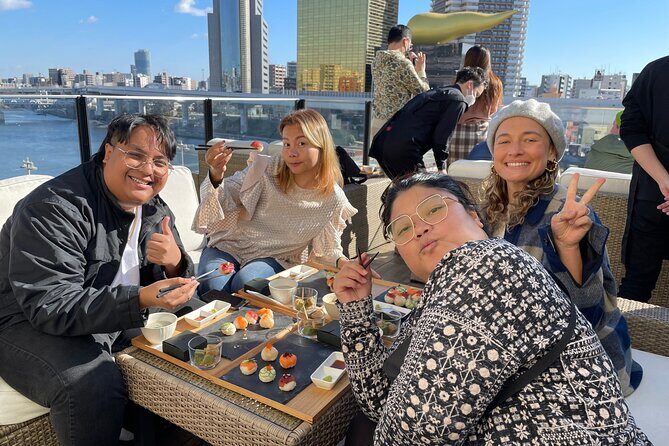
This is one of those tours that works across different travel styles because it’s hands-on and beginner-friendly.
It’s a strong fit if you’re:
- A couple looking for an activity that feels special without being stressful
- A family, because the instructions are clear and the food is the payoff
- Someone who wants to understand sushi beyond taste alone
- A first-time Japan visitor who wants a cultural food lesson without needing prior cooking experience
It may be less ideal if you want:
- Ultra-advanced, highly technical instruction
- A purely traditional, less structured workshop format
- A long, deep practice session focused only on cutting and professional prep
One more note: the class language is English. That’s a huge comfort boost if your Japanese is minimal and you’d rather spend your energy learning sushi than deciphering instructions.
Pair it with your Asakusa day plan
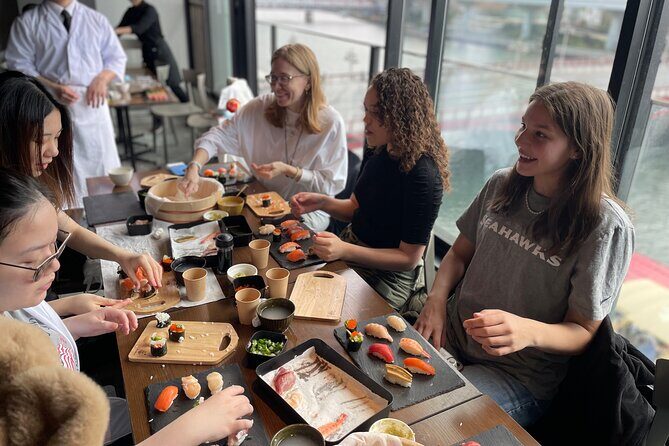
The meeting spot puts you near Senso-ji, which makes it easy to build a simple itinerary. Here’s a workable flow:
- Go earlier to handle temple sights when the streets are easier to walk
- Then use the class as your food anchor—hands on, sit down, eat
- Finish with a final walk and photos while your sushi brain is still switched on
This pacing works because you’re not sprinting across Tokyo. You’re doing one neighborhood, then switching modes from sightseeing to making food.
Should you book this Tokyo roll and sushi class?
Book it if you want a Tokyo experience that gives more than a meal. You’ll leave with maki and nigiri skills, a belly full of sushi you made, and a clearer sense of why sushi tastes the way it does. The English-speaking instruction, small group size, and short duration make it a smart add-on even if you’re busy.
Skip it only if you’re chasing a hardcore, professional-level sushi training vibe or you dislike structured classes. For most people, though, it’s a fun, practical way to learn something real—and then enjoy the results right away.
FAQ
How long is the sushi making class?
The class is about 1 hour 40 minutes (approx.).
Where does the class start in Tokyo?
The meeting point is 2-chōme-17-9 Kaminarimon, Taito City, Tokyo 111-0034, Japan.
Is hotel pickup or drop-off included?
No. Hotel pickup and drop-off are not included.
Do I need cooking experience?
No cooking experience is required.
What will I learn to make?
You’ll learn how to make sushi rolls and authentic nigiri step by step.
Is there an English-speaking instructor?
Yes, the class includes an English speaking instructor.
Will I eat what I make?
Yes. After learning, you sit down to enjoy the sushi and rolls you made.
How large is the group?
The class has a maximum of 30 travelers.
What is the cancellation window for a full refund?
You can cancel up to 24 hours in advance for a full refund. If you cancel less than 24 hours before, the amount paid is not refunded.
Make Something to Take Home



More Tour Reviews in Tokyo



Fresh reviews from around Tokyo






Workshops, compared.
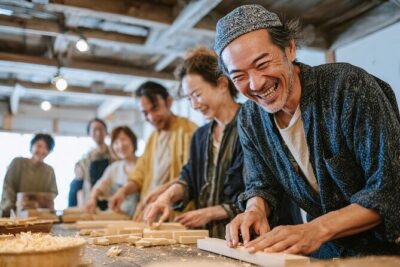 ★ 5.0Tokyo Shinjuku Chopsticks Making ClassFrom $201,763 reviews
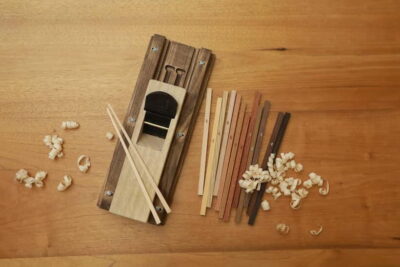 ★ 4.8Chopstick Making Workshop in GinzaFrom $251,366 reviews
 ★ 5.0Tokyo Sushi Making Class in Tsukiji with Professional ChefFrom $491,177 reviews
 ★ 5.0Ramen & Gyoza Cooking Class in Tokyo with Local Supermarket VisitFrom $122823 reviews
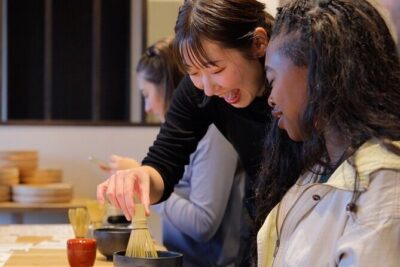 ★ 5.0Matcha Making Class in Tokyo with Authentic Japanese Sweets SetFrom $21744 reviews
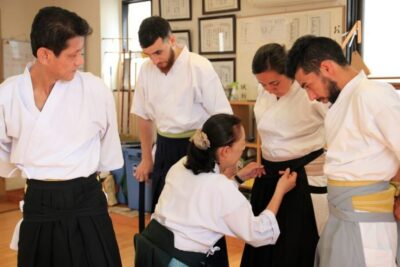 ★ 5.0Samurai Sword & Archery Class from Samurai DescendantFrom $193603 reviews
 ★ 4.9Tsukiji Fish Market Sushi Making Class with Pro ChefFrom $63506 reviews
 ★ 5.0Tokyo Chopstick Making Workshop with ArtisanFrom $26466 reviews
Browse the lists this tour appears in