
Reviewed · SHINJUKU BAR HOPPING
Tokyo: Shinjuku Food Tour (13 Dishes at 4 Local Eateries)
Shinjuku eats are hiding in plain sight. This 3-hour Shinjuku walking tour is built like a shortcut: you bounce between Omoide Yokocho, Kabukicho, and Shinjuku Golden Gai while a guide gives you the what, where, and why behind each stop.
I love the setup that makes it easy to eat well without the constant decisions. Tastings are included (so you do not stop and pay), and you get a mix of styles across 13 dishes at 4 local eateries, plus two complimentary drinks.
One possible drawback: the depth of dish-by-dish explanation can vary by guide. If you want extra detail on what you are eating and how to handle it, ask early and stay curious.
In This Review
- Key highlights to look for
- Shinjuku’s food map starts in the alleys
- Price and value: $86.22 feels fair when food is included
- Your tasting game plan: 4 eateries, 13 dishes, zero menu stress
- Stop 1: Omoide Yokocho and the tiny-izakaya maze
- Stop 2: Kabukicho without the chaos overload
- Stop 3: Shinjuku Golden Gai and the post-war bar alleys
- How the guide makes it work (and who you might meet)
- Drinks, pacing, and group size: a comfort checklist
- What you should eat like a local (without overthinking it)
- Where you start and end, and how to plan your night
- Who this tour fits best
- Should you book the Shinjuku Food Tour with 13 dishes?
- FAQ
- How many dishes are included?
- How long is the tour?
- Where does the tour start and end?
- Are drinks included?
- Do I need to pay for food during the tour?
- How many people are in the group?
- Is there a mobile ticket?
- Is gratuity included in the price?
- Is it easy to get to the meeting point?
- Can I cancel and get a refund?
Key highlights to look for

- 13 dishes, 4 eateries so you get real range without menu math
- Omoide Yokocho, Kabukicho, Golden Gai in one night’s loop
- 2 included drinks with alcohol and non-alcohol options
- Small group size (max 12) for better movement through tight alleys
- Guides like May, Hoshi, and Agathe are often praised for clear English and sharing local food know-how
- Street-stall to izakaya to gastrobar tasting variety keeps the meal from feeling repetitive
Different nights, same neon: more Shinjuku crawls
- Tokyo: Shinjuku Food Tour (13 Dishes at 4 Local Eateries)★ 5.0 · 6,603 reviews
- Tokyo Bar Hopping Tour in Shinjuku (All-You-Can-Drink + Dinner)★ 5.0 · 3,587 reviews
- Tokyo: Shinjuku Food Tour (15 Dishes and 4 Eateries)★ 4.9 · 2,033 reviews
Shinjuku’s food map starts in the alleys
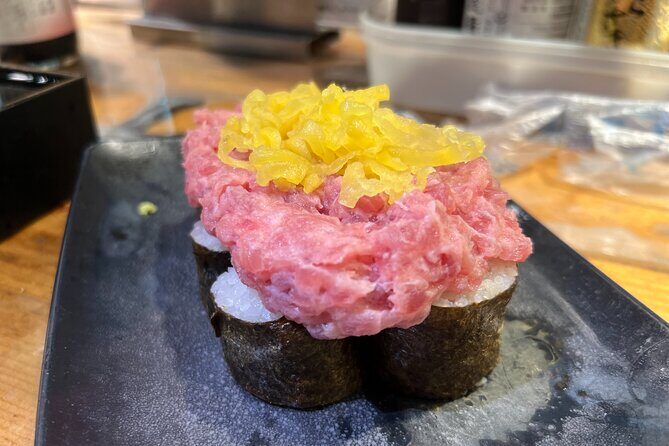
Shinjuku can feel like sensory overload at first. But this tour uses that chaos in your favor. Instead of wandering and guessing, you follow a route that takes you into the areas where local eating culture is concentrated, especially around narrow lanes and tiny storefronts.
What makes this work for you is the structure. You are not paying one dish at a time, and you are not stuck staring at menus while everyone else is already eating. You also get the story behind the neighborhoods as you go, which turns a simple snack crawl into a night with context.
And yes, it’s designed for real people. One reason it holds such a strong rating is that the experience is social (you are walking together) but not a large crowd (it caps at 12), so you can still ask questions.
Price and value: $86.22 feels fair when food is included
At $86.22 per person for about 3 hours, the headline number is easy to eyeball. The better question is what you are actually buying: a professional expert guide, guided walking through multiple districts, and 13 tastings spread across 4 eateries. When food is included, the value math gets simple fast.
Two drinks are also part of the deal, and that matters more than you might think in Tokyo. In many neighborhoods, once you start paying per stop, the night can climb quickly. Here, the goal is to let you eat a broad set of Japanese favorites without worrying about the running total.
The other hidden value is guidance. You are not just getting food; you are learning how people in the area actually order, eat, and move through small spaces. That helps after the tour too, because you will have an easier time picking your next meal on your own.
Your tasting game plan: 4 eateries, 13 dishes, zero menu stress
This tour is set up as a guided progression: a stall bite, an izakaya stop, a traditional dining stop, and a gastrobar. That mix is the point. You get street-level flavors, classic izakaya vibes, and a more modern bar-food feel within a single evening.
Because all tastings are included, the biggest advantage is mental relief. You do not need to decide which dish is worth it or whether you can pronounce it correctly. You can focus on taste and texture—then ask your guide what you are trying if something catches your interest.
One more practical detail: the itinerary includes breaks in the walking rhythm. Each featured area comes with time to sit, eat, and absorb the atmosphere rather than constant standing and hustling. Still, it is a walking tour, so wear shoes you trust.
Stop 1: Omoide Yokocho and the tiny-izakaya maze
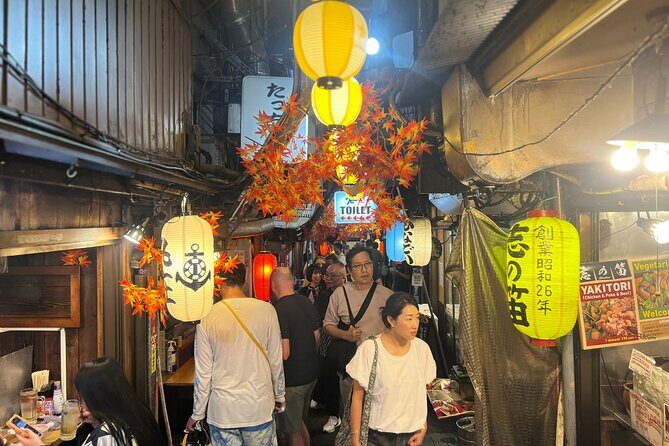
Your first big mood shift is Omoide Yokocho, the lane known for narrow corridors packed with small izakayas and food stalls. This is the kind of place where the space does the storytelling. You feel how Tokyo dining can be intimate, close, and very local.
Why this stop is smart for you: it gives you a fast start with the right atmosphere. Instead of beginning at a polished tourist area, you step into a classic Tokyo alley food scene where the energy is all about casual bites and quick conversations.
What to watch for is how crowded it can feel. The alleys are tight, and lines can form around the small eateries. If you get claustrophobic in narrow spaces, go in expecting it and plan to move slowly. Your guide will keep the group moving, but you still want to feel comfortable physically.
Other plates worth crossing Tokyo for


Stop 2: Kabukicho without the chaos overload
Kabukicho is Tokyo’s best-known entertainment district, and it has a reputation that can scare some first-timers. This tour helps you see it with better context. You get an explanation of the different establishments and you also visit a traditional Japanese restaurant during this stretch.
What I like about this part for your trip is the balance. Kabukicho is famous, but it is also easy to misread as pure noise. With a guide, you start to understand what the area is and how it fits into the city. You are not just looking at neon; you are learning how the local nightlife economy works.
The dining stop here matters too. It breaks up the walking and gives you a proper sit-down moment. If you have ever tried to navigate Kabukicho at night alone, you already know the challenge: it is hard to choose where to eat. A guided visit reduces that decision fatigue.
Stop 3: Shinjuku Golden Gai and the post-war bar alleys
Golden Gai is famous for its maze of narrow alleys and small bars—over 200 tiny spots in a compact area. It also carries a strong sense of history, including preserved post-war architecture.
This is a great stop if you want a Tokyo night that feels specific, not generic. You are not just eating; you are absorbing why people come here and what kind of nightlife culture you are seeing. It’s the opposite of a big, uniform bar district.
Two practical notes: first, Golden Gai alleys can be very small and a little noisy. Second, the experience works best if you keep an open mind. Some places here are more about atmosphere and chatting than about big, formal meals. Since the tour includes tastings at the related eateries, you get to experience the vibe without having to commit to an entire night in one bar.
How the guide makes it work (and who you might meet)
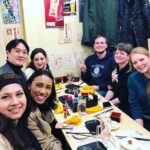
A tour like this lives or dies by the guide, and the feedback for this one is unusually consistent. Many guides are praised for strong English, friendliness, and practical ordering help.
Names that show up often include May, Agathe, Hoshi, Lloyd, Igor, Kei, and Elena. While you should not assume any specific guide every time, the pattern is clear: the best departures feel like a mix of food coaching and local storytelling.
If your priority is learning, ask questions while you eat. In particular, ask:
- What part of this dish is the key flavor?
- How do locals typically eat it?
- What should I try if I like this but want something different?
You will get more out of the experience if you treat it like a conversation, not just a line-up of tastings.
Drinks, pacing, and group size: a comfort checklist
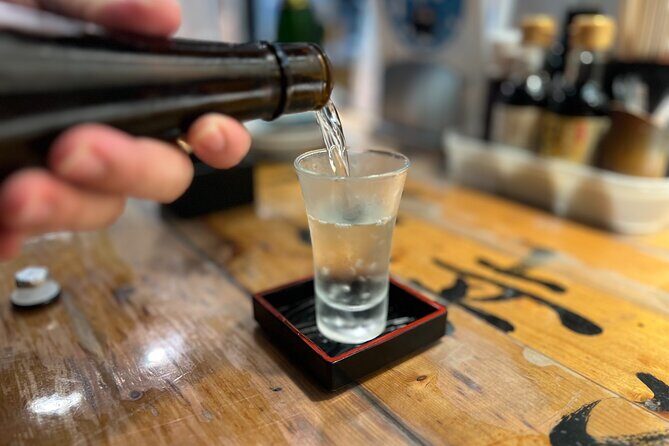
You receive two complimentary drinks, with both alcoholic and non-alcoholic options. That setup is helpful if you do not drink, or if you just want one drink with your food and stay clear-headed for the rest of the night.
Group size is capped at 12, and that is a big deal in Shinjuku. Smaller groups move better through tight lanes and you are more likely to get personal help if you have questions or dietary needs. Still, 12 people is enough that you should plan for a bit of crowding during the alley sections.
Pacing also matters. The tour is about 3 hours, so it needs momentum, but the route is designed to give you time at each stop. You should expect a steady walk and short waits rather than long, slow wandering.
Practical tip: if mobility is a concern, tell your operator ahead of time. One guide was noted as coordinating extra help for a mobility situation, which suggests there is room for problem-solving when you communicate early.
What you should eat like a local (without overthinking it)
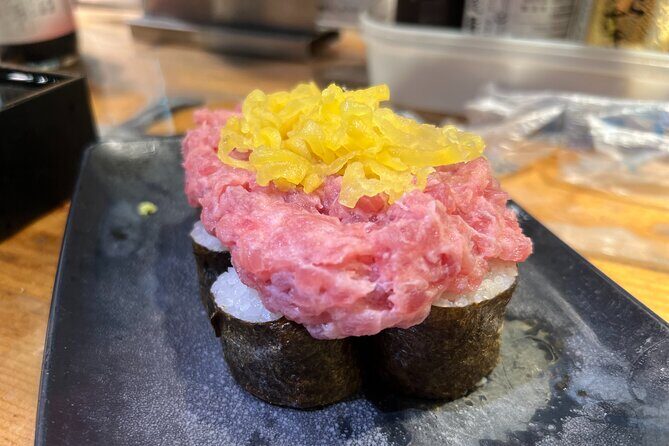
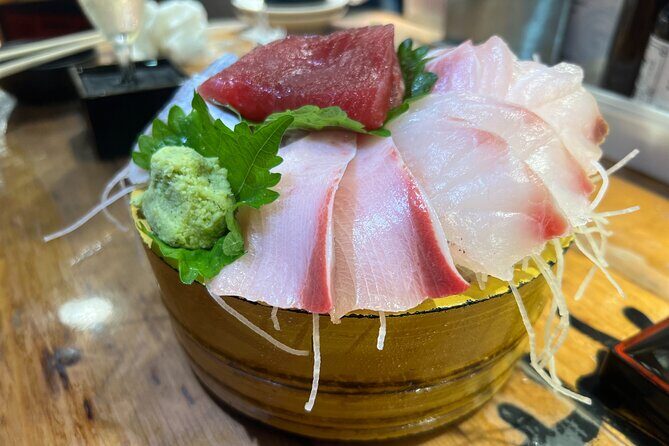
This tour is about range: street-stall style bites, classic izakaya fare, a traditional restaurant moment, and gastrobar flavors. That means you will likely get a mix of textures—something crisp or fried, something savory and saucy, and possibly a sweet near the end.
If you see an unfamiliar item, you do not need to freeze. A guide is there to help you understand what you are being offered and how to approach it. One recurring theme in the experiences shared is that the guide will often encourage you to try without pressure, even when the food is new for you.
And if you are the type who needs structure, here’s a simple method:
- Eat one dish slowly.
- Ask what makes it special.
- Move on and let the rest of the night surprise you.
Tokyo rewards curiosity, and this tour is designed to gently push you beyond your usual comfort menu.
Where you start and end, and how to plan your night
The tour begins at AOKI Shinjukunishiguchi Honten (1-chōme-8-5 Nishishinjuku). It ends near the Southeast Exit of JR Shinjuku Station. If you would rather not navigate back alone, you can ask your guide to escort you back to Starbucks near the start area.
This end location is practical. Shinjuku Station is massive, but being dropped near a major exit usually makes your next hop easier, whether you go to your hotel, meet friends, or head to another neighborhood.
Timing-wise, you’re looking at roughly 3 hours, which is long enough to feel like a full meal journey but short enough to still do something else afterward. If you want a smooth second act, plan something with flexible timing afterward, like a casual drink or dessert somewhere nearby.
Who this tour fits best
This is a strong fit if you:
- Want a fast, guided introduction to Shinjuku food areas
- Like trying different kinds of Japanese eating in one evening
- Prefer small-group walking over solo wandering
- Benefit from English-speaking help with ordering and figuring out what you are eating
It is also a good option for solo travelers. You get social momentum without needing to join a big party group. And because you are eating at multiple local spots, you do not get stuck in one narrow experience.
Who should think twice:
- If your top priority is ultra-detailed explanations for every single dish, you might find the experience varies by guide.
- If you hate crowding in small lanes, you may want a more spacious neighborhood route.
Should you book the Shinjuku Food Tour with 13 dishes?
I think you should book it if you want the best kind of Tokyo souvenir: food memories you did not plan but will be glad you had. The value is solid because tastings, drinks, and a real guide are built into the price. And the route covers three areas that are hard to understand without context—Omoide Yokocho, Kabukicho, and Golden Gai.
My call: book this when your goal is to eat widely and learn how to eat smartly in Shinjuku. If you are extremely detail-oriented about food theory, plan to ask questions as you go. Otherwise, this is an efficient way to make Shinjuku feel less confusing and much more delicious.
FAQ
How many dishes are included?
You get 13 Japanese dishes across 4 local eateries.
How long is the tour?
The tour lasts about 3 hours.
Where does the tour start and end?
It starts at AOKI Shinjukunishiguchi Honten in Nishishinjuku and ends near the Southeast Exit of JR Shinjuku Station.
Are drinks included?
Yes. The tour includes 2 complimentary drinks, with both alcoholic and non-alcoholic options.
Do I need to pay for food during the tour?
No. The tastings are included, so you do not have to stop and pay for each food item.
How many people are in the group?
The tour has a maximum of 12 travelers.
Is there a mobile ticket?
Yes. The tour uses a mobile ticket.
Is gratuity included in the price?
No. Gratuity is optional and not included.
Is it easy to get to the meeting point?
Yes. The meeting point is described as near public transportation.
Can I cancel and get a refund?
Yes. You can cancel for a full refund if you cancel at least 24 hours in advance. If you cancel within 24 hours, the amount paid is not refunded.
More Tours in Tokyo


More Tour Reviews in Tokyo




Shinjuku After Hours: The Other Crawls
Fresh reviews from around Tokyo






Shinjuku Bar Hopping, compared.
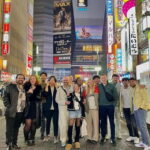
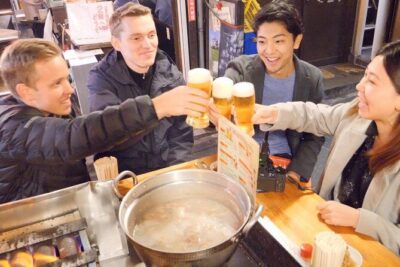 ★ 5.0Tokyo Bar Hopping Tour in Shinjuku (All-You-Can-Drink + Dinner)From $1063,587 reviews
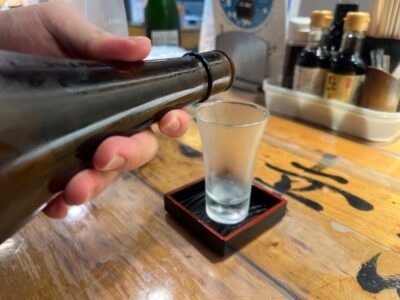 ★ 4.9Shinjuku Food Tour (15 Dishes and 4 Eateries)From $852,033 reviews
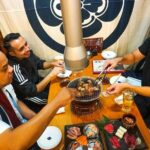
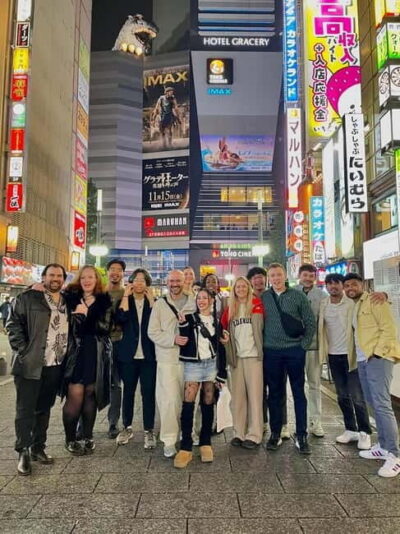 ★ 4.9Shinjuku Local Bar and Izakaya Guided Walking TourFrom $341,794 reviews
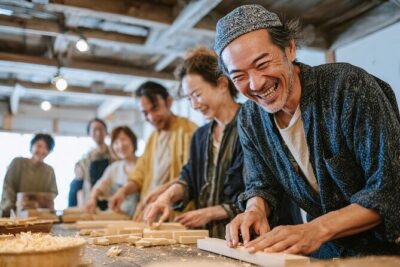 ★ 5.0Tokyo Shinjuku Chopsticks Making ClassFrom $201,763 reviews
 ★ 5.0Tokyo Shinjuku Sumo Show & Experience with PhotoFrom $791,750 reviews
 ★ 5.0Tokyo Night Foodie Tour in Shinjuku – Seasonal Sushi, Wagyu BeefFrom $1111,161 reviews
 ★ 4.8Sumo Show and Experience in ShinjukuFrom $691,001 reviews
 ★ 5.0Shinjuku Local Bar & Izakaya Crawl TourFrom $39890 reviews
Browse the lists this tour appears in