
Reviewed · CALLIGRAPHY EXPERIENCES
Sumi-e (ink painting) experience in Tokyo
Learning ink art in Tokyo is calmer than you think.
This Sumi-e experience is built around getting your hands moving fast: you’ll start with tool basics, then make your own bamboo-style ink drawing, and you’ll learn how to look at Sumi-e so it makes sense instead of feeling random. The class keeps you practical and focused, with a short Q&A at the end.
I especially like that the instructor teaches with clear steps and real materials (including the calligraphy tools), so you’re not just watching. I also like the small group size, capped at 9 travelers, which makes it easier to ask questions while you’re working. One drawback to consider: it’s a tight 60-minute session, and if you miss the meeting time, you may get a quick message and lose your spot.
In This Review
- Key takeaways before you book
- Where this Sumi-e class fits in Tokyo
- Price and what you actually get for $65.15
- Meeting at JR Asagaya Station: how not to lose time
- The 60-minute flow: tools, practice, and Q&A
- Your first marks: learning the tools for Sumi-e bamboo
- Ink art tips you can use even after the class
- If you prefer watercolor: Mt. Fuji as your painting subject
- Ballpoint pen shortcuts: quick scenery practice
- Colored pencils on postcard paper: realistic study in a small time
- Small groups, real attention: what the limit of 9 means
- Pickup offered and how to plan your arrival
- Who this is best for
- What to bring and what to expect on the day
- Should you book this Sumi-e experience?
- FAQ
- What is the duration of the experience?
- Where do we meet?
- How far is the walk to the venue?
- What is included in the price?
- What should I choose when I book?
- Is pickup offered?
- How many people are in the group?
- What is the subject for the watercolor option?
- What paper size is used for the colored pencil option?
- Is it refundable if I cancel?
- Is confirmation provided after booking?
Key takeaways before you book
- 60-minute hands-on practice that moves from tools to your own finished ink work
- Asagaya Station meetup with a short walk to the venue (you’re not wandering across Tokyo)
- Choose your format after booking: Sumi-e, watercolor (Mt. Fuji), ballpoint pen, or colored pencil
- Tools included (calligraphy supplies are part of the price)
- Max 9 people so you get real attention, not a crowded demo
- Confirmation comes within 48 hours of booking, subject to availability
More ink on paper
- Tokyo: Calligraphy on Kanji Fan & Scroll with Drink★ 5.0 · 210 reviews
- Let’s experience calligraphy in YANAKA, Taito-ku, TOKYO !!★ 5.0 · 127 reviews
- Tokyo: Calligraphy Workshop & Original T-Shirt Creation★ 4.9 · 105 reviews
Where this Sumi-e class fits in Tokyo
Tokyo can feel intimidating if you’re not sure where to start. This experience is refreshingly direct: it’s not a day-long arts-and-crafts quest. It’s one focused session near JR Asagaya Station, which is a great setup if you want something creative without spending your whole day commuting.
Asagaya is also a nice choice because it’s not all tourist-photo landmarks. Instead of trying to squeeze culture into a checklist, you get to slow down for an hour and learn a skill that’s very Tokyo-casual: small, precise, and done with patience.
Price and what you actually get for $65.15
At $65.15 per person for about 1 hour, the value mostly comes from what’s included. You’re not paying for a lecture. You’re paying for guided instruction plus calligraphy tools, and you get time to actually draw, not just learn the concept.
Also, the class is capped at 9 people, which matters. In a bigger class, you’d spend most of the time waiting your turn. Here, the format supports quick feedback while you’re making marks.
If you can do it during a time when you’re not rushing between major sightseeing stops, it feels even better value-wise. You’ll get a “I made something” moment that doesn’t depend on spotting the perfect view.
Meeting at JR Asagaya Station: how not to lose time
The meeting point is the ticket gate of JR Asagaya Station, about 5 minutes before the class start. From there, you’ll walk together to the venue, about 5 minutes on foot.
That “walk together” detail is important. It reduces the annoying part of finding the place, especially when you’re dealing with station exits and signage that can be tricky if you’re arriving in a hurry. Still, plan to arrive early enough that you can confirm you’re at the right gate and get counted.
One heads-up from a real-world scenario: because the session is short, late arrivals can become a no-show situation. If you think you might run behind, message quickly rather than assuming it’ll be fine. In at least one case, the instructor sent a brief follow-up after someone didn’t turn up, and the result was disappointing.
The 60-minute flow: tools, practice, and Q&A
This class runs for about 60 minutes. The rhythm is simple, and that’s a good thing.
- You gather, then walk 5 minutes to the venue
- The instructor explains the tools and how to use them
- You learn tips on how to write well
- You draw while learning (not after the fact)
- You get a Q&A at the end so questions don’t get swallowed by the schedule
Because the time is tight, you’ll feel the pacing. That’s actually helpful. You get coaching while your hand is still figuring things out, and you don’t spend your whole hour waiting for someone else’s demonstration.





Your first marks: learning the tools for Sumi-e bamboo
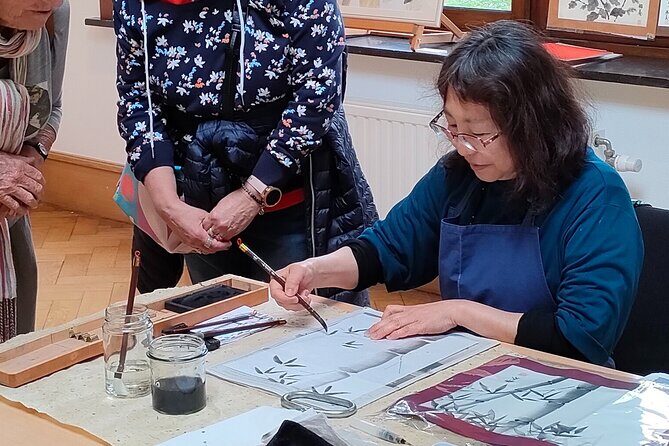
If you choose Sumi-e (ink painting), the session starts with a basic bamboo drawing. Bamboo is a smart first subject. It gives you repeated strokes, direction changes, and a chance to practice spacing without being overwhelmed by complicated shapes.
You’ll also learn how to look at Sumi-e. That matters more than people expect. If you only focus on copying, ink art can feel like a random accident. When you learn what to pay attention to, your marks start to look intentional—even if you’re still learning control.
Expect a guided approach to getting your ink and brush handling under control. The “tips on how to write well” part is not just poetic. It’s the practical guidance that helps you avoid common beginner problems, like pressing too hard or losing the flow of your strokes.
Ink art tips you can use even after the class
Even without extra time, you’ll pick up a few principles that stick. Here are the kinds of takeaways this class is built to teach:
- Observation first: learning how to look at Sumi-e improves your drawing choices immediately
- Stroke confidence: bamboo practice gives you repetition without boredom
- Less forcing, more guiding: ink responds to how you move, not just what you copy
If you’ve ever tried calligraphy or ink painting and ended up frustrated, this approach can be the relief you want. The goal isn’t perfection. It’s building an understanding of how ink behaves and how a simple subject can still carry style.
If you prefer watercolor: Mt. Fuji as your painting subject
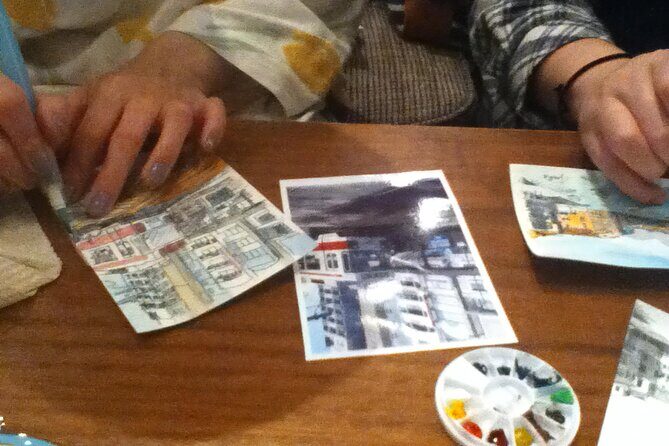
Not everyone wants ink only. You can choose watercolor painting. In that version, the instructor selects a photo of a Japanese landscape—Mt. Fuji—as the subject for your painting.
The instructor teaches you how to paint your own favorite scenery. That line is key: it sounds like you’ll start with a provided reference, but you still get a way to personalize your work. For many beginners, that balance is ideal. You’re not staring at a blank page thinking, What do I even paint?
Watercolor has different demands than ink. Here, you’ll focus on the look and feel of a scene using the photo reference. Even in an hour, having a subject picked for you removes decision fatigue and helps you get to brushwork sooner.
Ballpoint pen shortcuts: quick scenery practice
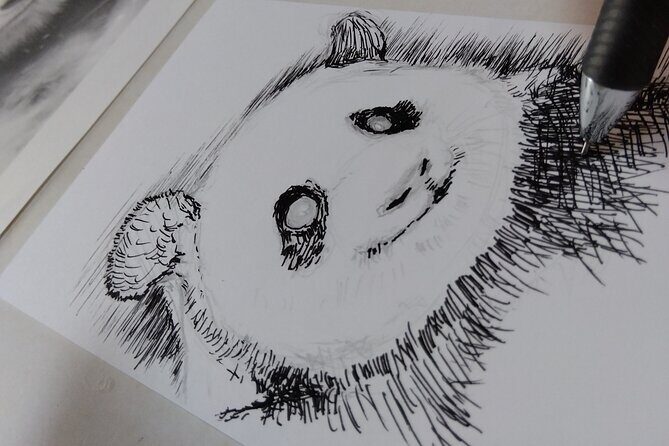
There’s also ballpoint pen drawing. This version asks you to draw a scenery drawing using a photo of a Japanese landscape chosen by the instructor as the subject. You’ll learn shortcuts for rough finishing.
That “rough finishing” concept is beginner-friendly. Ballpoint pen can make people freeze because there’s no forgiving erase button. Shortcut-based teaching is the antidote. Instead of trying to perfectly render everything, you learn how to suggest details quickly so the drawing reads well without consuming the whole hour.
This format is also a strong option if you want a lighter commitment. Pen drawing can feel less fussy than ink or watercolor, and it’s easier to practice on your own later with the supplies you already have.
Colored pencils on postcard paper: realistic study in a small time
If you choose colored pencil drawings, the instructor teaches you how to draw realistically using colored pencils. This is done on postcard-size paper, which keeps the scale manageable.
Card-size art is a smart move for beginners. It reduces the intimidation factor and pushes you to make confident choices about shape, color, and shading without sprawling across a big sheet.
The realistic angle matters too. Instead of only coloring inside outlines, you’ll learn how to build a convincing look. That makes it more satisfying if you enjoy the “how did they get that texture?” side of drawing.
Small groups, real attention: what the limit of 9 means
The class has a maximum of 9 travelers. In practice, that usually means you can see the instructor when they explain technique and you can ask questions without feeling like you’re interrupting a line of people.
It also changes the pace. You’ll spend less time waiting for the group to move and more time working at your own station. For a one-hour creative session, that’s huge.
The instructor also leads a Q&A, so if you’re stuck—ink behavior, stroke pressure, color choices—you can ask and adjust before the time runs out.
Pickup offered and how to plan your arrival
The experience lists pickup offered. If pickup is available when you book, it can save you time and stress, especially if your day already includes other plans.
If you’re not using pickup, the good news is it’s near public transportation and the meeting point is clearly defined. You’ll meet at a specific spot inside the station area, then walk five minutes.
For planning, I’d treat this like a “start on time or miss the magic” activity. The session is not long enough to absorb delays.
Who this is best for
This class is a good fit if you want:
- A hands-on art experience without a full half-day commitment
- Guided instruction with materials provided
- A small, structured session where you finish something
It’s also a strong choice for travelers who like authentic activities but don’t want to be dragged around all day. You’ll get a skill and a souvenir-style outcome, even if you’re a total beginner.
If you’re the kind of person who loves picking up a new craft—something you can repeat later at home—this will feel satisfying.
What to bring and what to expect on the day
The tour includes calligraphy tools and a guide, so you don’t need to track down supplies in Tokyo.
You should bring a normal curious attitude and expect to get your hands working. Ink, pen, and watercolor each have their own feel, but the class is designed so most people can participate.
One more practical point: since you’re meeting inside the station area, confirm your route ahead of time and arrive early. It’s not about being perfect. It’s about not wasting your one hour on confusion.
Should you book this Sumi-e experience?
If you want a short, practical art class with real guidance, I think it’s worth booking. The combination of tools included, a tight 60-minute schedule, and a small group size makes it more likely you’ll leave with something you feel proud of.
Book it especially if:
- You’re curious about Sumi-e but don’t know where to start
- You like structured practice rather than open-ended art
- You want an authentic Tokyo activity that’s easy to fit into a sightseeing day
Skip or reconsider if:
- You hate time-pressure and worry about being on time
- You want a longer, more expansive class session (this is intentionally brief)
Overall, this is the kind of experience that gives you a skill you can remember. And it’s a great antidote to the “I did Tokyo, now what” feeling.
FAQ
What is the duration of the experience?
It runs for about 60 minutes.
Where do we meet?
You meet at the ticket gate of JR Asagaya Station, about 5 minutes before the meeting time.
How far is the walk to the venue?
After gathering, you’ll walk together to the venue for about 5 minutes.
What is included in the price?
Calligraphy tools and a guide are included.
What should I choose when I book?
You choose what you want to do ahead of time by email: Sumi-e (ink painting), watercolor painting, ballpoint pen drawing, or colored pencil drawing.
Is pickup offered?
Pickup is listed as offered, so you can check availability when booking.
How many people are in the group?
The experience has a maximum of 9 travelers.
What is the subject for the watercolor option?
The instructor selects a photo of Mt. Fuji as the subject for the watercolor painting.
What paper size is used for the colored pencil option?
It’s done on postcard-size paper.
Is it refundable if I cancel?
This experience is non-refundable and cannot be changed for any reason.
Is confirmation provided after booking?
You receive confirmation within 48 hours of booking, subject to availability.
More Tour Reviews in Tokyo



Brush and Ink: More Calligraphy Hours
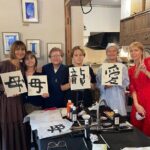
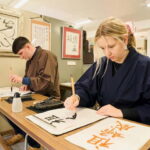
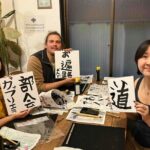

Fresh reviews from around Tokyo






Calligraphy Experiences, compared.
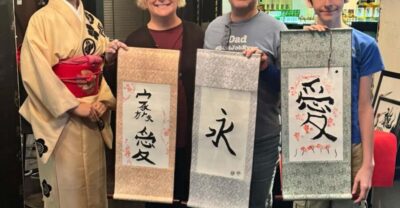 ★ 5.0Calligraphy on Kanji Fan & Scroll with DrinkFrom $53210 reviews
 ★ 5.0Let’s experience calligraphy in YANAKA, Taito-ku, TOKYO !!From $75127 reviews
 ★ 4.9Calligraphy Workshop & Original T-Shirt CreationFrom $30105 reviews
★ 5.0Calligraphy Workshop & Original T-Shirt CreationFrom $3380 reviews
★ 4.9Calligraphy Workshop & Original T-Shirt CreationFrom $30105 reviews
★ 5.0Calligraphy Workshop & Original T-Shirt CreationFrom $3380 reviews
 ★ 5.0Calligraphy Culture SHODO Experience in TokyoFrom $3366 reviews
 ★ 5.0Tokyo Asakusa:Calligraphy & Make T-shirt ActivityFrom $5862 reviews
 ★ 5.0Asakusa Calligraphy Workshop Craft Your Own Art in TokyoFrom $4054 reviews
 ★ 5.0Tokyo Japanese Calligraphy Experience with a Master ArtistFrom $9235 reviews
Browse the lists this tour appears in