
Reviewed · SAMURAI & NINJA EXPERIENCES
Tokyo: Samurai Sword & Archery Class from Samurai Descendant
Samurai training, minus the tourist gloss. This 3-hour class at Toyama-ryu Bizen-kai in Machida lets you practice katana technique and try traditional Japanese horseback archery side-by-side, taught by an instructor who focuses on real form, not performance. I especially love the hands-on flow—quick history, then Iai and gekken drills, then sparring and cutting with feedback. I also like that the horseback archery portion uses a proper horseback-archery setup, so you feel how different it is from video-game archery.
One possible drawback: the session is intense and safety rules are strict, so it’s not for everyone. The class also isn’t designed as casual sightseeing, and several health and mobility limitations apply, including restrictions for wheelchair users and people with certain medical conditions.
In This Review
- Key highlights to look for
- Entering Toyama-ryu Bizen-kai in Machida
- The Samurai timeline lesson that changes how you see the tools
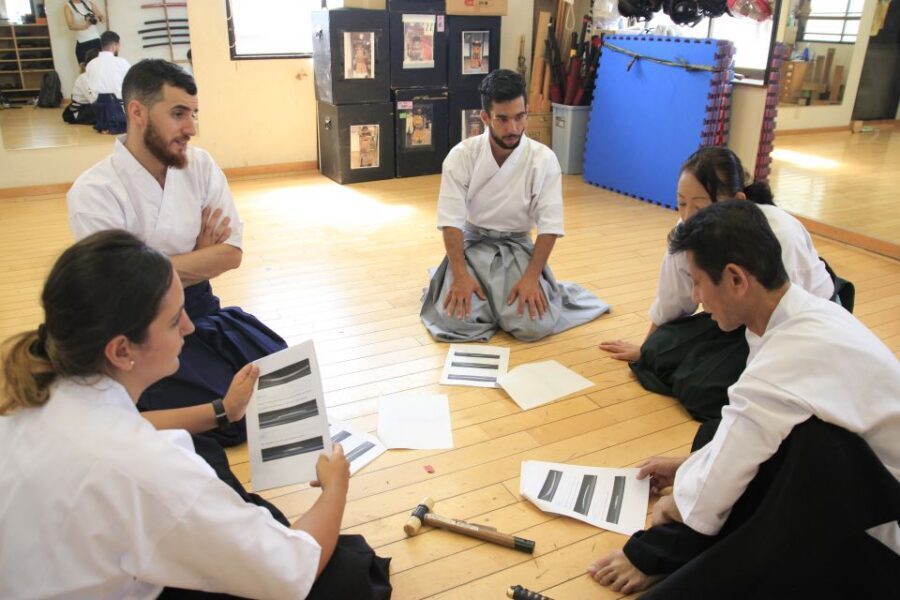
- Iai lesson: your first cut is about control
- Gekken timing and sparring with a practice sword
- The hard part: slashing multiple targets while moving
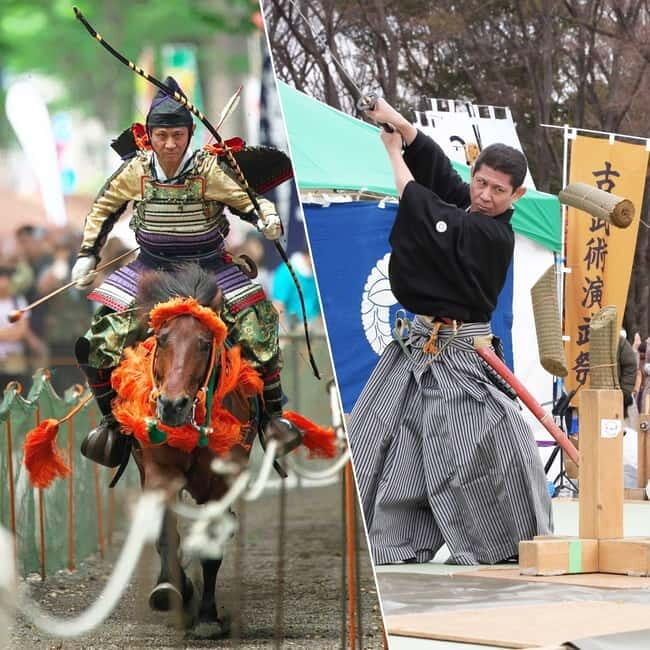
- Horseback archery tryout with a real mounted-archery bow
- Seeing Toyama-ryu 7th grade live demonstration
- What about the matchlock gun?
- Training clothes, camera tips, and the practical do’s
- Who this class is perfect for
- Who should skip it
- Price in context: is $193 worth it?
- Quick advice to get the most out of your session
- Should you book Samurai Descendant in Tokyo?
- FAQ
- How long is the Tokyo samurai sword and archery class?
- Where do I meet for the class?
- Is the class private or shared?
- What languages are offered?
- Is training wear and a practice sword included?
- What should I bring?
- Is alcohol allowed?
- Who is the class not suitable for?
Key highlights to look for
- Iai basics with a mock sword so you learn the right handling and swing mechanics early
- Gekken timing plus sparring using a practice sword, not just waving a katana around
- Target slashing while moving—harder than it looks, and you’ll feel it in your muscles
- Horseback-archery longbow experience using a real bow style meant for mounted form
- Toyama-ryu tradition shown live with a demonstration tied to the school’s lineage
- Small-group format (up to 15) for more coaching and fewer students waiting around
More blades, bows and dojo hours
- Tokyo: Samurai Ninja Museum Guided tour and Experience★ 4.6 · 1,010 reviews
- Tokyo: Samurai Sword & Archery Class from Samurai Descendant★ 5.0 · 603 reviews
- Best Samurai Experience in Tokyo★ 5.0 · 458 reviews
Entering Toyama-ryu Bizen-kai in Machida
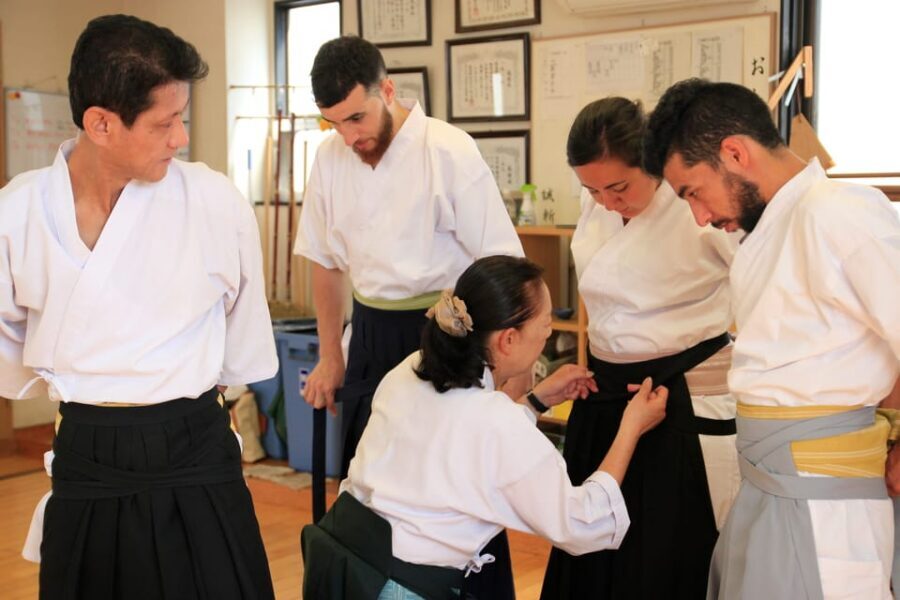
If you like Japan that feels real, this starts in the right place: a dojo setting at Toyama-ryu Bizen-kai, a short walk from JR Machida Station. It’s on the third floor, and you’ll take the stairs at the back between a sword shop and the vending machines on the first floor. That tiny “where do I go?” detail matters. Show up on time, and you’ll get into the rhythm faster.
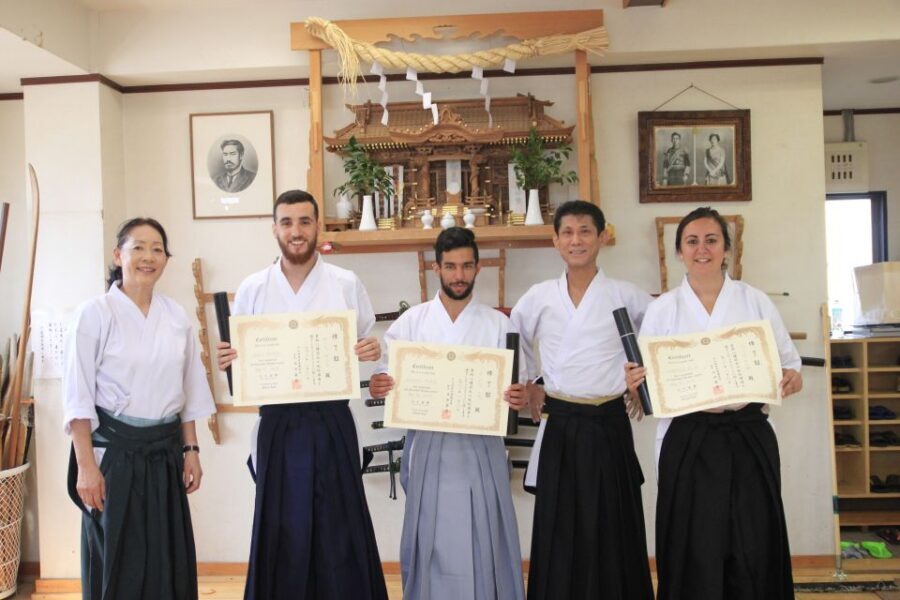
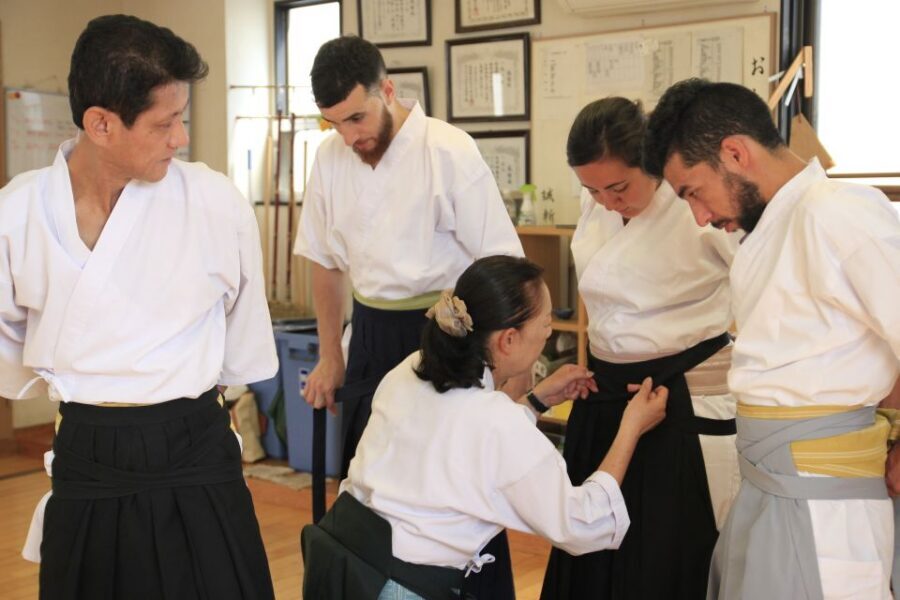
The class is built for training, not entertaining. You’ll be given training wear, and it’s worth taking that part seriously. This isn’t a costume event; the clothes help you move correctly and keep the session safer and more focused. Before you go, make sure you share your height and weight with the organizer so they can size the uniform.
You’ll also hear a short lecture before practice. The point isn’t long speeches. It’s to give you context for what you’re about to do with your body—how the samurai’s toolkit evolved and why the drills feel the way they do.
The Samurai timeline lesson that changes how you see the tools
The history talk is one of the most useful parts of the morning (or afternoon). It frames the weapons in a timeline, which makes the training feel like a living system instead of random techniques.
You’ll learn the broad progression: for about a thousand years, the bow was a main weapon; around 450 years ago, matchlock guns became more powerful; and about 400 years ago, after a civil war era ended, the sword became the dominant battlefield weapon. Even if you know samurai history already, this quick sequence helps you understand why both disciplines are treated with such seriousness today.
This is also where the instructor’s perspective matters. The dojo is run as a school of Toyama-ryu, and the session is guided by Yoshioki Sumida. People in the class described him as exact about safety and form, with corrections delivered kindly but clearly. You’re not just learning moves. You’re learning the why behind the moves.
Iai lesson: your first cut is about control

Your training starts with Iai (often thought of as drawing and cutting practice). In this class, you learn correct technique while using a mock sword. That choice is smart for beginners. It lets you focus on body mechanics—stance, grip, timing, and the clean path of the blade—without the extra intimidation factor.
What I like about this stage is how it trains you to stop guessing. You get hands-on coaching on how to hold the sword correctly and how to swing it with intent. The class also includes things like checking blade line, which is exactly the kind of detail that movie swordplay never gets right.
If you’re picturing a chaotic flurry of cuts, plan for something more disciplined. Iai is where you learn what should happen before power even enters the equation. That’s how you end up able to do harder slashes later.
Gekken timing and sparring with a practice sword
Next comes gekken. This part shifts from solo technique into the messy reality of distance, timing, and reaction.
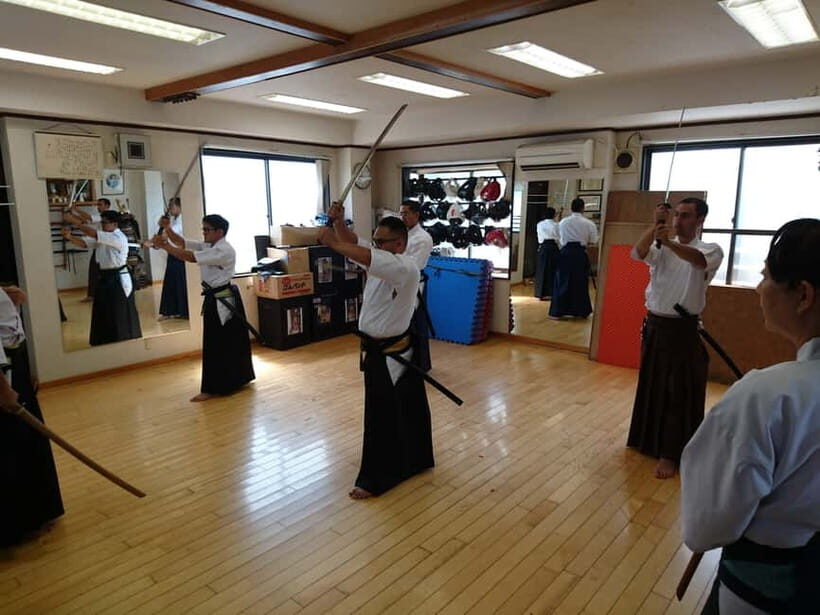
You’ll learn attack and defense timing, then spar with a practice sword. Sparring sounds scary if you’re new, but the class is structured so you’re guided through fundamentals first. Safety and proper form are part of the curriculum, and you’re taught what to do—and what not to do—so you can improve without sloppy habits.
This is also where the “real dojo” feeling really clicks. The environment expects focus. You’ll be doing repeat rounds with corrections, not just one-off photo moments. The effort ramps up, and yes, you may feel sore afterward. That’s not a flaw. It’s your body learning a new skill set.
If you want a practical takeaway, this is it: you’ll leave with a clearer sense of how swords training actually works—timing, distance, and control—rather than the exaggerated swings most people associate with samurai movies.
More things to make with your own hands


The hard part: slashing multiple targets while moving
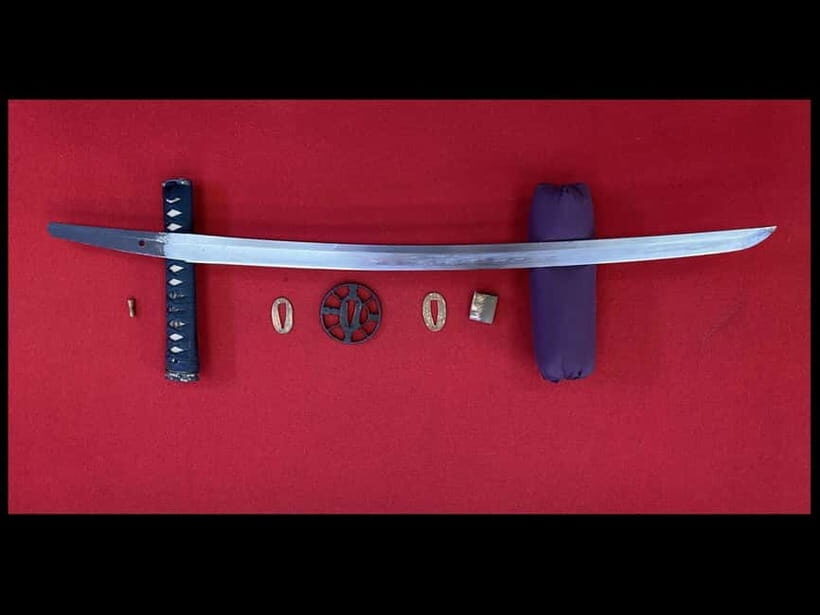
One of the standout claims in the class description is slashing multiple targets while moving. That’s genuinely hard. Standing still for a cut is already challenging; moving while maintaining correct sword path and balance adds a whole new layer of difficulty.
In the class flow, this comes after you’ve built a foundation with Iai and then worked the timing side with gekken. That sequencing matters. It’s one reason the experience tends to feel worth the money. You’re not just jumping to the biggest stunt. You’re earning it.
Expect coaching that’s focused on the mechanics: your stance shift, your cut angle, your follow-through, and how you stay stable through the motion. If you do it right, it feels controlled. If you do it wrong, you’ll likely hear corrections quickly. That’s how you improve fast.
Horseback archery tryout with a real mounted-archery bow
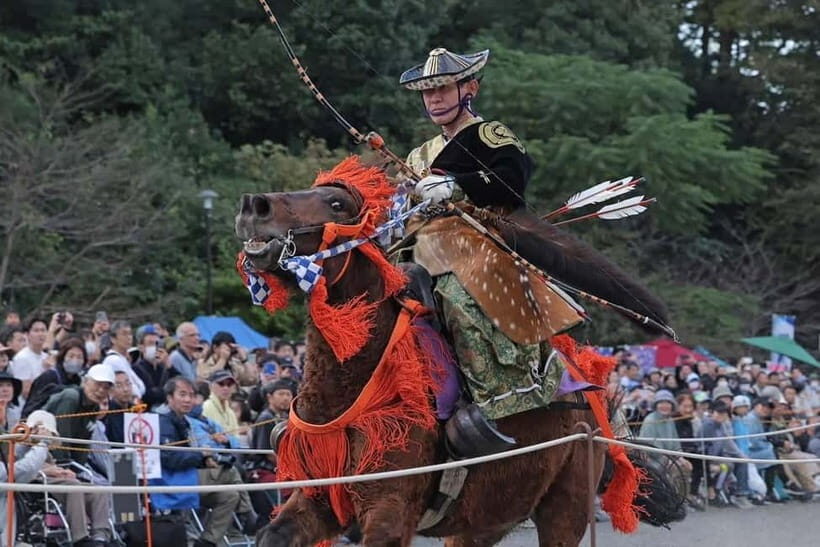
Then comes the curveball that makes this class different: you’ll try shooting arrows using a real horseback archery bow. Even if you’re a decent archer, this style can feel unfamiliar because it’s designed around mounted posture, draw mechanics, and the kind of balance you use when your body isn’t perfectly still.
The bow used here is the horseback-archery type, not just a generic target bow. You’ll practice under instruction so you learn the basic handling and shooting sequence.
One practical consideration: at least one left-handed participant noted that the archery setup is oriented for right-handed use, so it might feel awkward at first if you shoot left-handed. If that’s you, it’s worth mentioning it when you communicate with the organizers so they know what to prepare.
Seeing Toyama-ryu 7th grade live demonstration
Between hands-on blocks, you’ll also see a live demonstration related to Toyama-ryu. The class description points to a demonstration of Toyama-ryu 7th grade, and the overall session style is very “school” and less “show.”
This part is useful because it gives you a reference point. After you’ve done drills yourself, you can look at the demonstration and understand what the techniques are aiming for: clean lines, timing, and disciplined control.
Demonstrations also help you connect the earlier lecture to what you’re seeing with your own eyes. When the bow and sword are shown in a dojo context, they stop being “cool weapons” and start being training systems tied to tradition.
What about the matchlock gun?
The class description also mentions the chance to hold an antique matchlock gun. If that’s included in your session, it’s one of those “Japan, but make it historical” moments. It’s not about firing it. It’s about feeling the weight and handling reality of older weapons.
Even if you’re not a firearms person, it’s a good reminder that the samurai timeline isn’t just swords everywhere forever. Technology shifts—and the training adapts.
Training clothes, camera tips, and the practical do’s
You’ll get training wear provided, and you’ll want to wear it correctly. You should also be ready for a physical workout. Sword and archery training uses muscles most people rarely use in daily life.
Bring what you’re allowed to bring: a camera and drinks. Alcohol and drugs aren’t allowed, which keeps the training environment serious and safe.
Photo advice that comes up in real classes: if you plan to film the bow and arrow portion, consider using a camera with a wider lens. Watching the technique later can help you spot what your body was doing versus what you thought it was doing.
Who this class is perfect for
This is best for you if you want a real instruction-based experience in Tokyo. You’ll likely enjoy it most if you:
- Like structured learning where you get corrected on form
- Want hands-on practice with both swordsmanship and traditional Japanese archery
- Prefer a dojo setting over a staged tourist show
- Don’t mind a bit of physical effort
It also suits couples and solo travelers who want a shared activity with coaching. A small group size helps keep the pace active and the attention on you.
Who should skip it
This class isn’t for everyone, and the limitations are clearly stated. It isn’t suitable for pregnant women, people with back problems, mobility impairments, wheelchair users, or those with heart problems. It’s also not for people with epilepsy or visually impaired people, and children under 18 are listed as not suitable in the program’s restrictions.
Even if you’re curious, take the rules seriously. Safety and proper training mechanics are part of the culture here, not optional add-ons.
Price in context: is $193 worth it?
At $193 per person for 3 hours, this is not a bargain. But it’s also not random. Here’s why it can still feel like good value—if it matches what you want.
You’re paying for:
- Instruction from a master instructor (Yoshioki Sumida) plus support staff
- A small-group dojo environment (up to 15)
- Multiple skill blocks: Iai, gekken/sparring, target slashing, horseback-archery bow practice
- Training wear and a practice sword
- A tradition-based demonstration linked to Toyama-ryu
If you’ve ever done “katana experiences” that mostly show you a cut and send you off with a few pictures, you’ll feel the difference here quickly. The class is designed for actual practice time and coaching. That’s the value equation.
Quick advice to get the most out of your session
A few small moves will make a big difference:
- Arrive early enough to get your bearings. People also mention there may be a demonstration beforehand, so being prompt helps.
- Tell the instructor about your dominant hand (especially if you’re left-handed for the archery portion).
- Listen hard during Iai and blade-line coaching. Those details make later drills easier.
- Treat it like training, not like a show. Your effort will match what you take home.
Should you book Samurai Descendant in Tokyo?
Book it if you want a serious, hands-on Tokyo samurai sword and archery experience that feels like dojo training. The combination of Iai basics, gekken sparring, difficult moving target slashes, and horseback-style longbow shooting is unusual, and the small-group setting makes the instruction practical.
Skip it if you’re looking for light entertainment, or if you fall into the listed safety/health categories. Also skip if you’re not comfortable with a workout-style session where you’ll repeat drills and focus on form over posing.
If your goal is authentic practice and real tradition taught by Yoshioki Sumida at Toyama-ryu Bizen-kai, this is the kind of Tokyo experience that tends to stick with you long after the photos fade.
FAQ
How long is the Tokyo samurai sword and archery class?
The experience lasts about 3 hours.
Where do I meet for the class?
Meet at Toyama-ryu Bizen-kai (戸山流備前会 BIZENKAI), about a 10-minute walk from JR Machida Station. The dojo is on the third floor.
Is the class private or shared?
It is a shared class.
What languages are offered?
The instructor provides Japanese and English.
Is training wear and a practice sword included?
Yes. Training wear and a practice sword are provided.
What should I bring?
Bring a camera and drinks.
Is alcohol allowed?
No. Alcohol and drugs are not allowed.
Who is the class not suitable for?
The experience lists restrictions for pregnant women, people with back problems, mobility impairments, wheelchair users, people with heart problems, people with epilepsy, and visually impaired people. It also lists children under 18 years, though it mentions children under 18 may participate with parental permission and supervision, so you should confirm with the organizer before booking.
Make Something to Take Home

More Tour Reviews in Tokyo






The Way of the Sword, Continued
Fresh reviews from around Tokyo






Samurai & Ninja Experiences, compared.
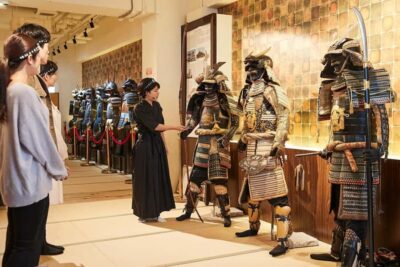 ★ 4.6Samurai Ninja Museum Guided tour and ExperienceFrom $271,010 reviews
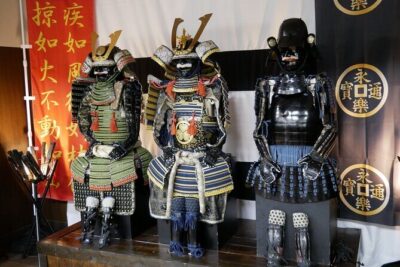 ★ 5.0Best Samurai Experience in TokyoFrom $65458 reviews
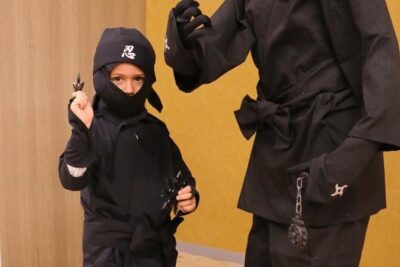 ★ 5.0Ninja Experience (Family Friendly) at Samurai Ninja Museum TOKYOFrom $47441 reviews
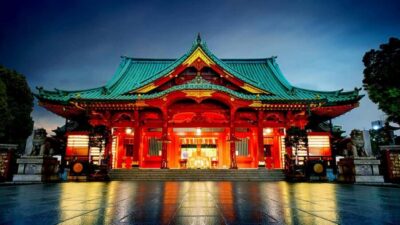 ★ 4.6Samurai Entertainment Night Show in Kanda ShrineFrom $41417 reviews
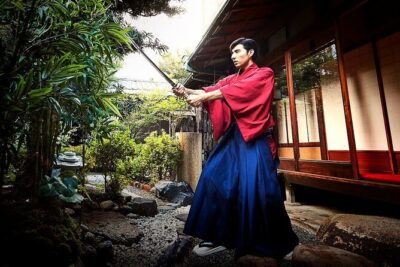 ★ 5.0Tokyo Sword Experience – includes Museum Ticket/Ninja ExperienceFrom $84314 reviews
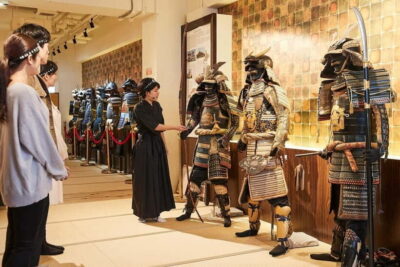 ★ 4.8Samurai Ninja Museum Asakusa: Samurai Sword Lesson & TourFrom $63306 reviews
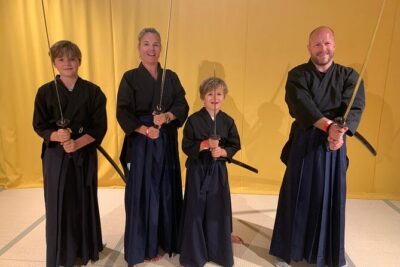 ★ 5.0Samurai Sword Experience (Family Friendly)at SAMURAI MUSEUM TOKYOFrom $65168 reviews
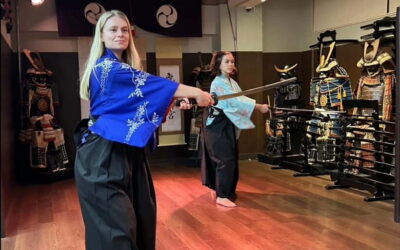 ★ 4.9Best Samurai ExperienceFrom $63124 reviews
Browse the lists this tour appears in