
Reviewed · TOKYO
Geisha Entertainment Experience in Tokyo
Geisha entertainment in Tokyo can feel a bit intimidating.
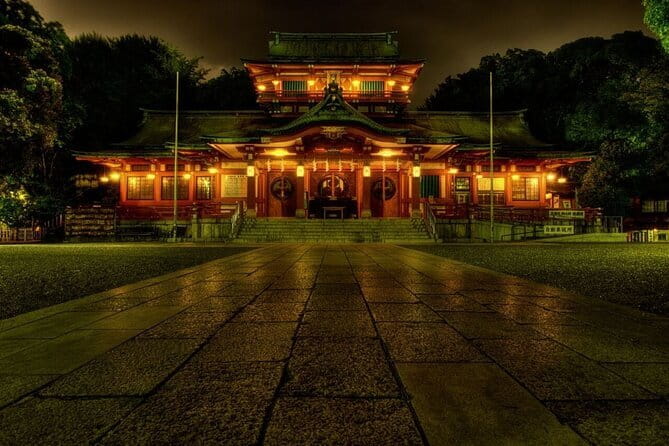
This one is set up for real people, with an ozashiki style show at Fukagawa Odori Gekijyo on the grounds of Tomioka Hachimangu Shrine, a 400-year-old landmark tied to Edo-era Fukagawa. You get the performance, but you also get the food and the explanations that help it make sense.
Two things I especially like: the way the show pairs classical arts (dancing plus shamisen) with food, so the evening is comfortable and enjoyable even if you know little Japanese tradition. And the meal options are very Tokyo in spirit—especially Fukagawa Meshi, the rice cooked with clams in savory broth, which shows up in the TAKE courses.
One thing to consider: finding the venue can be tricky even with a link. Give yourself a little buffer, and if your English support is limited in the room, having Google Translate ready is a smart backup plan.
In This Review
- Key things to know before you go
- Tomioka Hachimangu and the Fukagawa connection
- The show itself at Fukagawa Odori Gekijyo
- Choosing MATSU, TAKE, UME, and the TAKE with hire car
- MATSU course (about 70 minutes)
- TAKE course (about 45 minutes)
- UME course (about 30 minutes)
- TAKE course with hire car included (up to 5 hours after)
- Food and matcha: what you’re really paying for
- Fukagawa Meshi (clams rice) in TAKE
- Edo kaiseki with Fukagawa Meshi in MATSU
- Japanese sweets and matcha in UME
- Tea-culture context you’ll pick up
- Timing: how long you’ll be tied to the experience
- Value check: is $82.24 worth it?
- Etiquette and practical tips that make the night smoother
- Who should book (and who might want a different style of experience)
- Should you book this geisha entertainment experience in Tokyo?
- FAQ
- How long is the geisha entertainment experience?
- What’s included in the MATSU course?
- What’s included in the TAKE course?
- What’s included in the UME course?
- Does the UME course include the ozashiki geisha entertainment experience?
- Is there a hire car option?
- What time does the geisha experience start on the hire car option?
- Is a mobile ticket used?
- Can I shoot a period drama-style short movie?
- What happens if I cancel?
Key things to know before you go
- Tomioka Hachimangu location: the venue sits within the shrine precincts, tying the show to Edo-era Fukagawa.
- Ozashiki entertainment format: a party-like atmosphere with dance, shamisen, and games built in.
- Course-based timing: UME is about 30 minutes, TAKE about 45, MATSU about 70.
- Food follows the theme: Edo kaiseki with Fukagawa Meshi, or clams rice set, or Japanese sweets with matcha.
- Optional hire car after the 12:00 show: one TAKE course includes a driver who can speak English, plus up to 5 hours of free exploration.
Before you commit, see how this one stacks up against a few Tokyo favourites:
- Mt Fuji and Hakone 1-Day Bus Tour Return by Bullet Train★ 5.0 · 26,383 reviews
- 1-Day Tokyo Bus Tour★ 5.0 · 14,250 reviews
- Tokyo: teamLab Planets TOKYO Digital Art Museum Entry Ticket★ 4.6 · 9,779 reviews
Tomioka Hachimangu and the Fukagawa connection
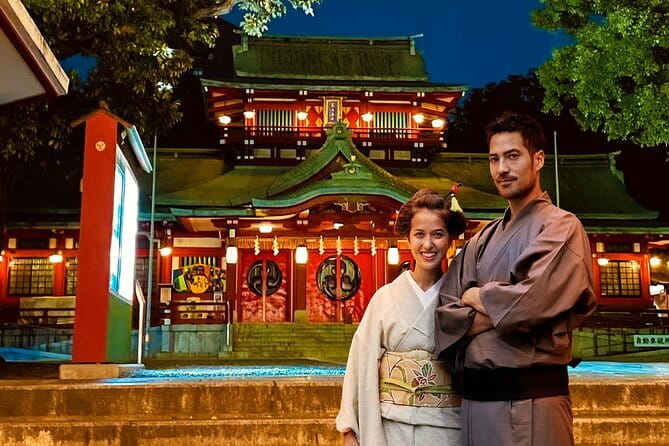
You’re not just going to a theater. You’re stepping into a place with context. The show facility is located on the grounds of Tomioka Hachimangu Shrine, built about 400 years ago, and it has long symbolized Fukagawa during the Edo period. That matters because geisha entertainment here doesn’t feel like a generic performance for visitors. It’s framed as part of the same old cultural environment people have visited for generations.
Practically, this also helps you pace the experience. Even if your plan is short, you’re still arriving in a real Tokyo setting, not a strip-mall dinner room. If you like the idea of culture that’s tied to place, you’ll likely enjoy how the shrine setting adds calm before the show.
The show itself at Fukagawa Odori Gekijyo
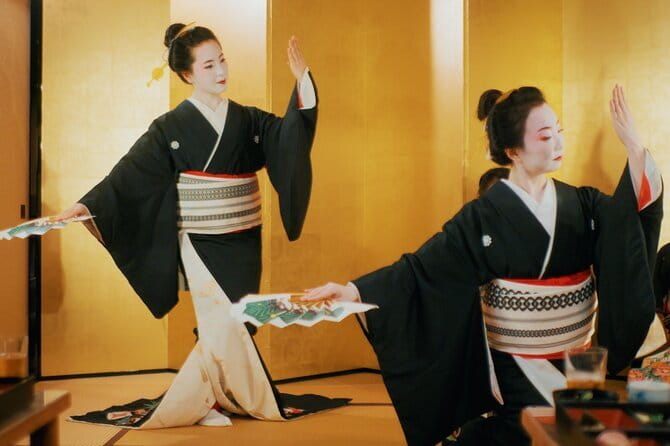
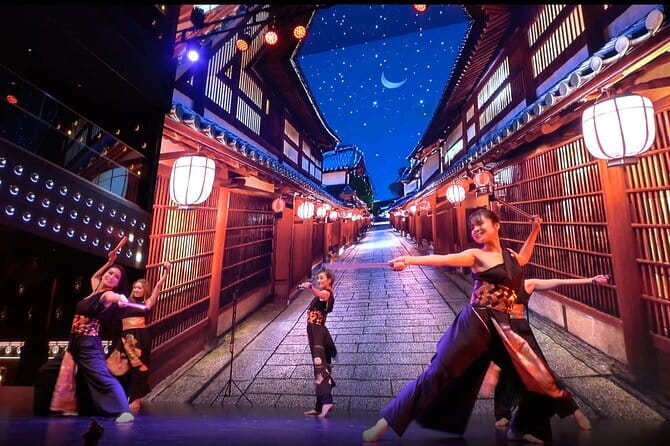
The performance happens at Fukagawa Odori Gekijyo and centers on traditional performing arts. Expect the basics: geisha dance plus shamisen (that three-string instrument that gives the music its punch). But what makes this show work for most visitors is the way it’s structured like a friendly, guided ozashiki party.
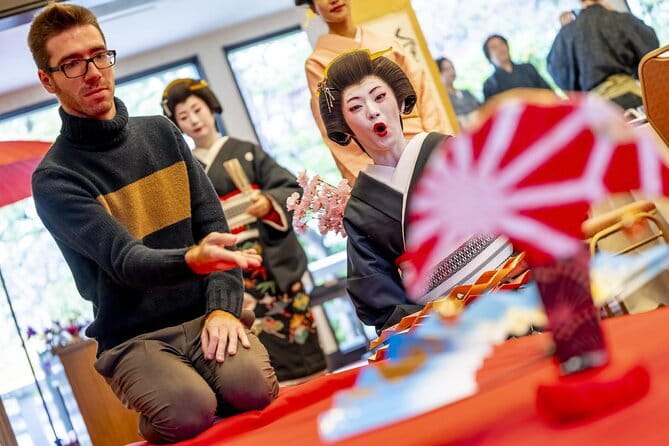
You’re not sitting in total silence, hoping for the best. This is built as a social format where you can watch, listen, and participate in the mood. Some courses also include games, and the atmosphere is described as cozy and traditional, with hosts who explain what’s happening during the show.
Language support varies by situation. In my view, that’s normal for a live show. The key is that the experience is designed for non-Japanese speakers, and the entertainment is translated during the performance in many cases. Still, it’s smart to be ready with a translation app, because one guest experience noted the English translator was away during their show.
Choosing MATSU, TAKE, UME, and the TAKE with hire car
This experience comes in multiple course options, and your choice changes not just the food but the entire feel and timing.
MATSU course (about 70 minutes)
MATSU is the longest, and it’s the best match if you want a fuller meal experience. You get admission, the geisha entertainment experience, and then Edo kaiseki cuisine with Fukagawa Meshi, plus a drink. You also receive a souvenir.
If you’re the type who likes a complete “event” (performance plus a proper sit-down meal), MATSU is the one.





TAKE course (about 45 minutes)
TAKE is shorter and more straightforward. You get the admission and the geisha entertainment experience, plus Fukagawa Meshi with a side-dish set, and a souvenir.
If you want to see the geisha performance without turning it into a long dinner, TAKE is usually the sweet spot.
UME course (about 30 minutes)
UME is the fastest option. You’ll still attend the admission and the performance structure, but instead of the full food-and-drink courses, you get Japanese sweets and matcha, plus a souvenir.
UME is a good fit if you’re trying to keep your day tight and you mainly want the performance and the tea moment.
TAKE course with hire car included (up to 5 hours after)
This is the standout upgrade. After your geisha experience starts at 12:00, you get up to 5 hours to explore Tokyo on your own using a hire car. The driver can speak English.
Important practical note: this option is only stated for the TAKE course with hire included. If you want performance plus a longer flexible Tokyo block, this is the best way to do it without battling trains on your own schedule.
Food and matcha: what you’re really paying for
Let’s talk food, because this isn’t just a snack attached to a show. The meal choices are tied to the cultural theme of Fukagawa and Edo-era tastes.
Fukagawa Meshi (clams rice) in TAKE
Fukagawa Meshi is rice cooked with clams in a savory broth. It’s specific, not generic “Japanese dinner.” That specificity is one reason the value can feel fair even at a set price. You’re paying for a curated pairing: classical entertainment plus local food that matches the place.
Edo kaiseki with Fukagawa Meshi in MATSU
MATSU includes a traditional course meal (Edo kaiseki) along with Fukagawa Meshi, and you also get a drink. Kaiseki is all about presentation and pacing—small portions with intentional variety. When that comes alongside a performance in an ozashiki setting, it turns the whole experience into a proper event instead of just watching from your seat and grabbing a quick bite.
Japanese sweets and matcha in UME
If you choose UME, you’re basically choosing the tea side of Japanese tradition. Multiple experiences mention a connection to tea ceremony traditions and the history of geisha and tea. Even if you don’t expect a full tea ceremony lesson, you can expect the sweets-and-matcha portion to be part of the cultural storytelling.
Tea-culture context you’ll pick up
The best part for many visitors is the understanding piece. Guests describe learning about the geisha tradition and the history of geisha and tea in Japan, and the staff tone is described as peaceful and welcoming. That means the food isn’t only for taste—it’s also part of the lesson.
Practical tip: if you have dietary needs, you’ll want to check what’s possible before you go. The courses are clearly defined, but the data you have here doesn’t list allergy options.
Timing: how long you’ll be tied to the experience
Your time commitment depends on the course:
- Matsu: about 70 minutes
- Take: about 45 minutes
- Ume: about 30 minutes
That’s refreshingly clear. You’re not guessing whether this will run long, and it helps you build a plan around it.
If you choose the TAKE course with hire car, the show starts at 12:00, and you then have up to 5 hours afterward to explore. That block can help you cover Tokyo highlights you’d otherwise feel rushed about, or it can give you room to go off-script if you find something you want to see nearby.
For the other courses, you’ll still likely want to plan the rest of your day loosely. This is a sit-and-watch experience with a meal component, so treat it as a main event.
Value check: is $82.24 worth it?
At about $82.24 per person, this isn’t cheap. But it can be good value because you’re not paying for one thing. You’re paying for several:
- admission to the geisha entertainment program
- the performance itself (dance plus shamisen, with explanations in an ozashiki atmosphere)
- a course-linked cultural food component (Edo kaiseki with Fukagawa Meshi, or Fukagawa Meshi set, or sweets and matcha)
- a souvenir included with the experience
Also, this type of entertainment can be hard to replicate on your own without a guide and a set structure. A fixed event like this helps you avoid the stress of trying to find something similar last-minute.
Another value angle: it’s commonly booked about 21 days in advance on average, which suggests the time slots aren’t endless. If your Tokyo dates are set, planning ahead helps you lock in the course you actually want.
Etiquette and practical tips that make the night smoother
You’ll feel more comfortable if you treat the room like a shared performance space, not a show you dominate with photos. Keep your phone use calm and follow what staff indicate.
A few practical notes that matter:
- Bring patience for translation gaps. In one documented experience, the English translator was away, and guests used Google Translate to keep up. That’s a smart idea even if you expect translation.
- Do a “find the place” approach. Even with links, the venue can be difficult to reach. Give yourself time and double-check the address info. If you’re prone to arriving exactly on time, shift your plan 15–20 minutes earlier.
- Go with the course, not against it. If you choose UME but keep expecting a full dinner, you’ll feel underfed. If you choose MATSU but hate long meals, you might feel dragged. Match the course length to your day.
Who should book (and who might want a different style of experience)
This geisha entertainment experience is a strong fit if you want:
- a guided cultural performance that’s paired with food or tea
- an ozashiki style atmosphere where you can actually follow along
- a clear, short time block (especially UME or TAKE)
- the chance to experience Fukagawa Meshi, a locally specific Tokyo dish
It may be less ideal if you’re hoping for a super long immersive night, or if you prefer experiences where you control the itinerary moment to moment. This is structured. That’s also why it’s relaxing.
If you’re traveling with someone who wants both culture and comfort, this tends to work well because the pacing includes food and a friendly party tone rather than only sitting and watching.
Should you book this geisha entertainment experience in Tokyo?
I’d recommend it if your goal is a well-timed, culturally framed evening with real Tokyo food and a show format designed for visitors. The shrine setting at Tomioka Hachimangu, the focus on dance and shamisen, and the way the meal options connect directly to Fukagawa make this feel like more than a quick performance stop.
Book it especially if:
- you want Fukagawa Meshi (TAKE or MATSU)
- you’d rather have a guided tea-and-sweets moment (UME)
- you want the convenience of a performance plus up to 5 hours in a hire car afterward (TAKE with hire included)
Skip it if you hate structured events, need very flexible timing, or are extremely sensitive about translation in the room.
FAQ
How long is the geisha entertainment experience?
The duration depends on the course: MATSU is about 70 minutes, TAKE is about 45 minutes, and UME is about 30 minutes.
What’s included in the MATSU course?
MATSU includes the admission fee, performance, ozashiki geisha entertainment experience, kaiseki cuisine with Fukagawa Meshi, a drink, and a souvenir.
What’s included in the TAKE course?
TAKE includes the admission fee, performance, ozashiki geisha entertainment experience, Fukagawa Meshi set with a side dish, and a souvenir.
What’s included in the UME course?
UME includes the admission fee, the performance, Japanese sweets and matcha, and a souvenir.
Does the UME course include the ozashiki geisha entertainment experience?
The information states that the ozashiki geisha entertainment experience is included except for the UME course.
Is there a hire car option?
Yes. The TAKE course (hire included) provides up to 5 hours to explore Tokyo after the geisha experience, and the hire car driver can speak English.
What time does the geisha experience start on the hire car option?
For the TAKE course with hire included, the geisha experience starts at 12:00.
Is a mobile ticket used?
Yes, the experience uses a mobile ticket.
Can I shoot a period drama-style short movie?
There is an optional period drama-style short movie shoot by a professional cameraman, but it is not included.
What happens if I cancel?
The experience is non-refundable and cannot be changed for any reason.
More Tour Reviews in Tokyo



Fresh reviews from around Tokyo






Tokyo, compared.
 ★ 5.0Mt Fuji and Hakone 1-Day Bus Tour Return by Bullet TrainFrom $16326,383 reviews
 ★ 5.01-Day Tokyo Bus TourFrom $12914,250 reviews
 ★ 4.6teamLab Planets TOKYO Digital Art Museum Entry TicketFrom $259,779 reviews
 ★ 4.0Mt Fuji & Hakone Cruise, Drum Show Bullet Train 1 Day from TokyoFrom $1497,413 reviews
 ★ 5.0Shinjuku Food Tour (13 Dishes at 4 Local Eateries)From $866,603 reviews
 ★ 4.4Tokyo Mt Fuji 5th St & Hakone Cruise Bus Tour w/Bullet TrainFrom $1545,024 reviews
 ★ 5.0Flagship 2-Hours Official Street Go-Kart Tour – Tokyo Bay ShopFrom $644,974 reviews
 ★ 4.5From Tokyo: Mount Fuji Full-Day Sightseeing TripFrom $684,970 reviews