
Reviewed · WORKSHOPS
Traditional Japanese Knife Sharpening Class
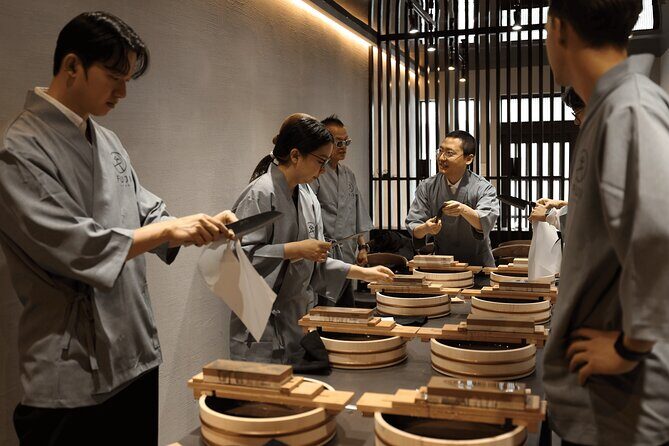
Razor sharp starts with slow strokes. This hands-on Japanese knife sharpening class in Tokyo turns a tricky topic into something you can actually do, with time built for whetstones of different grits. I love that you get everything provided, so you are not stuck hunting for gear before you learn.
Two things really make it click for me: you learn the why behind sharpening (knife history and Japanese theories), and you also get coaching as you sharpen. The instruction is led by names like Charlie or Timothy, and their explanations are clear enough to follow even if your Japanese is limited.
One thing to consider: at $98.53 per person, it is not a casual souvenir stop. If you are just curious about knives and do not plan to keep practicing at home, you may feel the price more than the skill.
In This Review
- Key things I’d highlight before you book
- From Tokyo Skytree to the Sharpening Bench
- What You Actually Get at the Sharpening Setup
- Whetstones 101: Grits, Angles, and Patience
- The Japanese Knife Mindset: Steel and Edge Theory
- Practicing on Your Blade: From Dull to Cutting-Ready
- Using What You Learn Back Home (Without Buying Everything Twice)
- Instructors Matter: Charlie and Timothy’s Step-by-Step Teaching
- Price and Value: Is $98.53 Fair for a Skill?
- Who This Class Fits Best (and Who Might Hesitate)
- Should You Book This Japanese Knife Sharpening Class?
- FAQ
- FAQ
- How long is the Japanese knife sharpening class?
- What is the group size for this experience?
- Do I need to bring a knife or sharpening equipment?
- Will I take anything home?
- Where do I meet, and where does it end?
- Is the meeting area near public transportation?
- Is it possible to get a refund if I cancel?
Key things I’d highlight before you book
- Max 6 people means you get real attention, not just a demo.
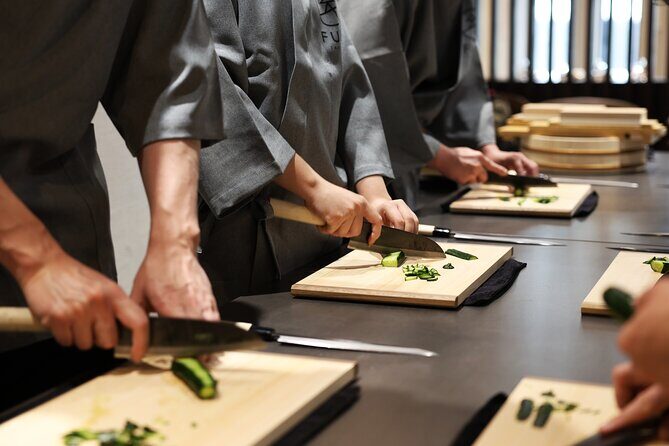
- No equipment shopping: stones, tools, and guidance are part of the deal.
- Whetstones in multiple grits so you learn more than one “correct” method.
- Knife history plus sharpening theory so your technique has a reason.
- You leave with a freshly sharpened knife you can use right away.
More things to make with your own hands
- Sushi Making Tokyo Roll and Authentic Japanese Sushi Class★ 5.0 · 3,971 reviews
- Tokyo Shinjuku Chopsticks Making Class★ 5.0 · 1,763 reviews
- Chopstick Making Workshop in Ginza★ 4.8 · 1,366 reviews
From Tokyo Skytree to the Sharpening Bench
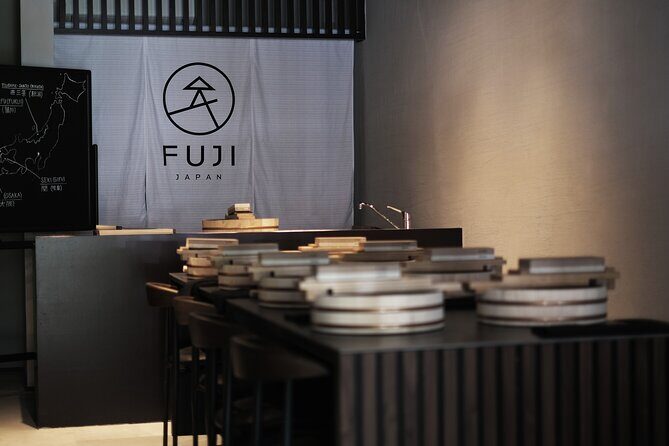
This experience is built around Tokyo’s Nishiasakusa area, starting at 1-chōme-9-8 Nishiasakusa in Taito City and ending back at the same meeting point. You also get a stop that connects the class to Tokyo Skytree, which helps it feel like more than just sitting in a workshop.
The class itself runs about 2 hours, so it fits well into a day when you want one focused activity instead of a long, multi-stop tour. The short format also helps you stay in “do mode,” not “watch mode,” which is exactly what sharpening needs.
What You Actually Get at the Sharpening Setup
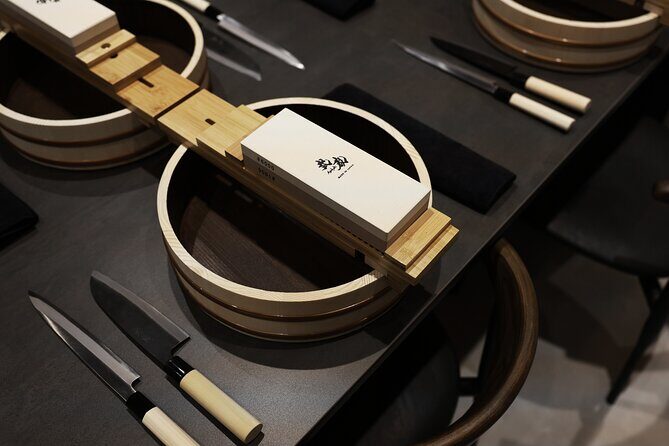
The big promise here is simple: you do not need to source equipment. That matters because Japanese sharpening gear can be confusing, and buying the wrong stone or accessories is a common way people waste money.
In this class, you get the stones and the tools you need on-site, and you practice the process step by step. You then take home a freshly sharpened knife—not just a certificate—so the lesson has a payoff you can feel in your kitchen.
You also get a mix of “head knowledge” and “hand skills.” The theory portion covers knife history and Japanese sharpening theories, then the practical portion uses those ideas while you work on a blade.
Whetstones 101: Grits, Angles, and Patience
If you have ever sharpened on your own, you know the frustration: you can end up with a sharper-looking edge that still will not cut right. This is where learning with whetstones of varying grits helps. Different grits do different jobs—coarser work for shaping and refining, and finer grits for polishing toward a better cutting edge.
Even if the class does not spell out every engineering detail, the payoff is practical. You learn how to work with the stones, how to control your technique, and how to build an edge gradually instead of trying to force results in one pass.
Sharpening angle is another “silent” key in Japanese methods. In a short class, you will not memorize every number, but you can learn the feel of consistent contact. That consistency is what turns sharpening from random effort into repeatable skill.
The Japanese Knife Mindset: Steel and Edge Theory
One reason this class stands apart from a basic tutorial is that it includes knife history and Japanese sharpening theory. That part is not just trivia. It helps you understand why Japanese knives often behave differently than the knives you are used to.
The theory also connects to materials, since steel type affects how an edge is formed and how it behaves during use. The course covers different types of steel and sharpening ideas tied to them. For you, that means less guesswork later. You are not only copying a method—you understand what you are trying to accomplish with the edge.
If you care about cooking tools, this is the kind of background that keeps you from treating sharpening like a one-time chore. You start to treat it like part of knife ownership.





Practicing on Your Blade: From Dull to Cutting-Ready
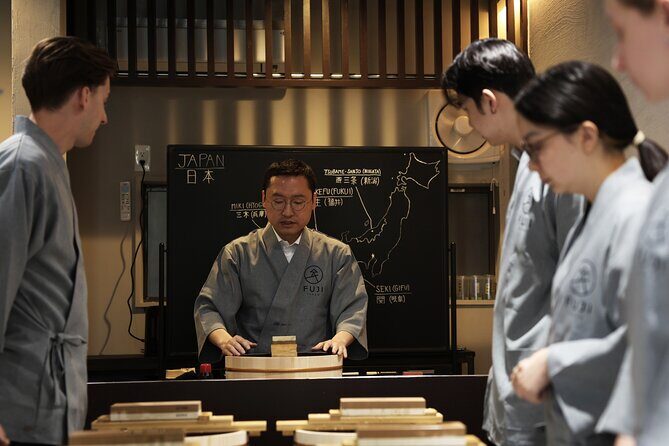
This is where you earn the money you pay. The class is built around actually sharpening, not just watching someone else work.
A key moment in the experience is starting with a blade that is truly dull. You work your way toward an edge that can perform. One vivid example from the experience: you can end up with a knife that cuts through paper in ways that feel dramatic compared to where you start.
You also learn the polishing technique, meaning you are not just chasing a bite. You refine the edge so it feels right in cutting. That is important for daily kitchen use, because a “sharp enough” knife that is rough on the edge can feel less smooth with slicing.
Using What You Learn Back Home (Without Buying Everything Twice)

I like that the class teaches a skill you can recreate at home. That is the difference between an entertaining workshop and an actually useful one.
Here is how you can think about taking it home after the session:
- You should know which stone grit is meant for which stage, so you do not jump straight to the finish.
- You should understand the basics of edge building, so you can troubleshoot if results are inconsistent.
- You should leave with confidence that sharpening is a learnable habit, not a mysterious craft reserved for pros.
One practical advantage of being taught with proper technique is that you are less likely to damage a knife. Many home attempts fail because people apply the wrong pressure or move too inconsistently. The coaching you get here helps you avoid the common mistakes.
And because you take a sharpened knife home, you get an immediate reference point. You can compare the before/after edge and connect the sensation of cutting to the steps you learned.
Instructors Matter: Charlie and Timothy’s Step-by-Step Teaching
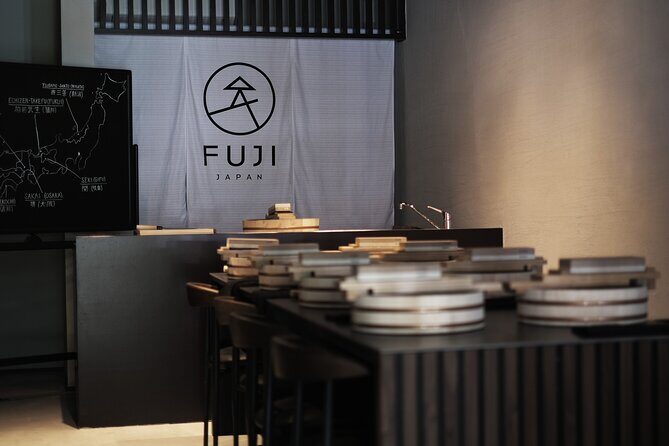
Small group size is great, but teaching style is what makes that size matter. This class is led by instructors such as Charlie and Timothy, and the teaching approach shows in how clearly they guide the process.
The teaching style that tends to work best for sharpening is slow, structured, and friendly to questions. In this experience, questions are handled directly, and explanations are given in a way that lets you practice without guessing.
If you are the type who wants to understand the “why,” the class is built for you. If you just want the how, it is still well paced, and you are given hands-on time to work.
Price and Value: Is $98.53 Fair for a Skill?

$98.53 sounds specific, and that is because you are paying for more than a demo. You are paying for:
- A small-group, hands-on lesson for about 2 hours
- Instruction that covers theory, tools, and technique
- Whetstones and equipment provided so you do not need to buy gear first
- A knife you sharpen and can take home, so the result is tangible
If you were to buy a basic sharpening setup on your own, the cost can creep up quickly—especially if you end up with the wrong stone. Here, you avoid that guesswork. You also avoid the common problem where people buy stones and then feel too confused to use them correctly.
So the value depends on you. If you love cooking and want a practical skill, this is a strong value. If you are mainly looking for a quick cultural activity and will never sharpen again, you may not get your money’s worth.
Who This Class Fits Best (and Who Might Hesitate)
This class fits best if:
- you cook often and notice when your knife starts feeling dull
- you want a hands-on skill, not just sightseeing
- you respect tools and want to understand how Japanese sharpening theory connects to real edges
- you like small-group instruction where you can ask questions
You might hesitate if you are only interested in knives as a souvenir, since you are paying for a working lesson. You might also reconsider if you have zero interest in practicing at home afterward, because that is what makes sharpening stick.
Should You Book This Japanese Knife Sharpening Class?
I think this is an easy yes if you want one practical Tokyo activity that ends with real results. The mix of theory plus hands-on whetstone practice, the small group (max 6), and the fact that you take home a sharpened knife make it feel like more than a one-off workshop.
Book it if you like learning skills you can reuse. Skip it if you only want a quick cultural stop and you are not likely to sharpen again.
FAQ
FAQ
How long is the Japanese knife sharpening class?
It runs for about 2 hours.
What is the group size for this experience?
The class has a maximum of 6 travelers.
Do I need to bring a knife or sharpening equipment?
No. Everything you need is provided, including the whetstones and tools used during the lesson.
Will I take anything home?
Yes. You can take home the knife you sharpened during the session.
Where do I meet, and where does it end?
You meet at 1-chōme-9-8 Nishiasakusa, Taito City, Tokyo 111-0035, Japan, and the activity ends back at the meeting point.
Is the meeting area near public transportation?
Yes, it is near public transportation.
Is it possible to get a refund if I cancel?
You can cancel for a full refund up to 24 hours in advance of the experience start time. If you cancel less than 24 hours before, the amount you paid is not refunded.
Make Something to Take Home



More Tour Reviews in Tokyo



Fresh reviews from around Tokyo






Workshops, compared.
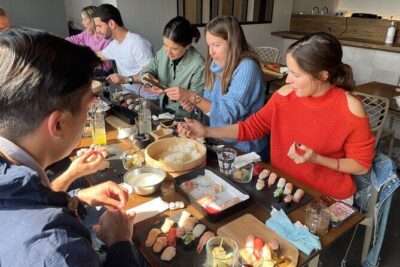 ★ 5.0Sushi Making Tokyo Roll and Authentic Japanese Sushi ClassFrom $593,971 reviews
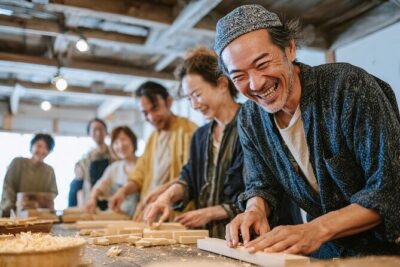 ★ 5.0Tokyo Shinjuku Chopsticks Making ClassFrom $201,763 reviews
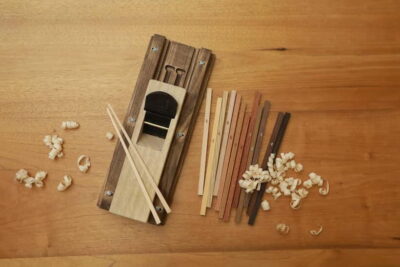 ★ 4.8Chopstick Making Workshop in GinzaFrom $251,366 reviews
 ★ 5.0Tokyo Sushi Making Class in Tsukiji with Professional ChefFrom $491,177 reviews
 ★ 5.0Ramen & Gyoza Cooking Class in Tokyo with Local Supermarket VisitFrom $122823 reviews
 ★ 5.0Matcha Making Class in Tokyo with Authentic Japanese Sweets SetFrom $21744 reviews
 ★ 5.0Samurai Sword & Archery Class from Samurai DescendantFrom $193603 reviews
 ★ 4.9Tsukiji Fish Market Sushi Making Class with Pro ChefFrom $63506 reviews
Browse the lists this tour appears in