

Reviewed · MT FUJI DAY TRIPS
From Tokyo: Mount Fuji Full-Day Sightseeing Trip
Mt. Fuji looks different every stop.
This day trip is built like a greatest-hits reel: you start at Kawaguchiko for classic lake-and-mountain photos, then hop up to Arakurayama for the famous pagoda viewpoint, and finish at Mt. Fuji 5th Station for a close look at the mountain itself. I also like the fact that the tour guide helps you squeeze more out of limited time—groups I saw led by guides like Sophie, Evita, and Annie were quick with clear directions and small culture notes. The main drawback is also the biggest one: visibility depends on weather, and if conditions are rough you may spend part of the day at 4th/1st station or nearby alternatives.
You’ll be moving all day, but in a smart sequence.
The big win is variety. You get reflective views at the lake, shrine-and-pagoda scenery, the eerie spring-water ponds at Oshino Hakkai (yes, you can taste the water), and then real altitude at Fuji. A consideration: it’s a long day with crowding risk (especially around peak seasons), and some stops require stairs or walking, so don’t treat it like an effortless ride-and-sit tour.
In This Review
- Key Points at a Glance
- The Bus Ride That Actually Gets You There
- Pickup and Drop-Off: Shinjuku/Tokyo Station Area Without the Hotel Hassle
- Oishi Park at Kawaguchiko Lake: Fuji’s Postcard Angle
- Arakurayama Sengen Park and Chureito Pagoda: The Walk With the Big Payoff
- The Hikawa Clock Shop Stop: A Useful Time Break (Not Just a Detour)
- Oshino Hakkai: Eight Ponds, Fuji Water, and a Calmly Strange Stop
- Mt. Fuji 5th Station (About 2,300m): Close Views, Cold Air, and a Crowded Finish
- When 5th Station Is Closed: The Itinerary Swap You Should Expect
- Weather Is the Real Boss: How to Think About Visibility
- Timing, Crowds, and Walking: How to Pace Yourself
- Price and Value: What You’re Actually Paying For
- Who This Tour Fits Best (and Who Might Want Another Plan)
- Should You Book This Mt. Fuji Full-Day Trip?
- FAQ
- What is the total duration of this Mt. Fuji full-day tour?
- What are the main stops you visit during the day?
- Is food included in the price?
- Where do you get picked up and dropped off?
- What languages does the guide speak?
- Do you always reach Mt. Fuji 5th Station?
- What happens if the weather is cloudy or visibility is low?
- Is luggage allowed, and can unaccompanied minors join?
- In winter, do you still do the 5th Station plan?
Key Points at a Glance
- Multiple Fuji viewpoints in one day, not just one photo stop
- Oshino Hakkai’s spring-water ponds plus the chance to taste Fuji water
- Arakurayama Sengen Park and Chureito Pagoda views, including spring cherry blossoms if timing lines up
- Mt. Fuji 5th Station at about 2,300m for that close-to-the-action feeling
- A guide who keeps things organized, with clear meeting instructions and group pacing
- Weather-dependent results, with itinerary swaps if access is limited
Other routes to the mountain, compared
- Mt Fuji & Hakone Cruise, Drum Show Bullet Train 1 Day from Tokyo★ 4.0 · 7,413 reviews
- Tokyo Mt Fuji 5th St & Hakone Cruise Bus Tour w/Bullet Train★ 4.4 · 5,024 reviews
- From Tokyo: Mount Fuji Full-Day Sightseeing Trip★ 4.5 · 4,970 reviews
The Bus Ride That Actually Gets You There
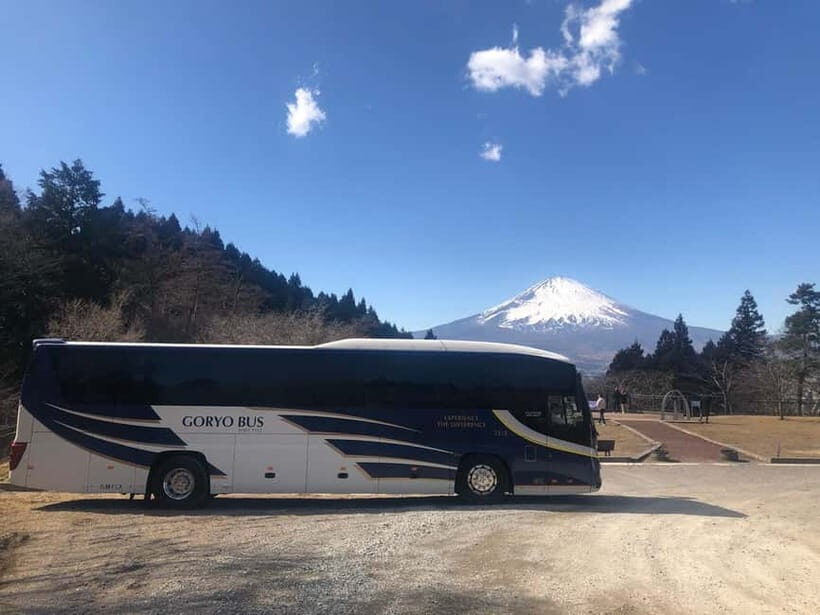
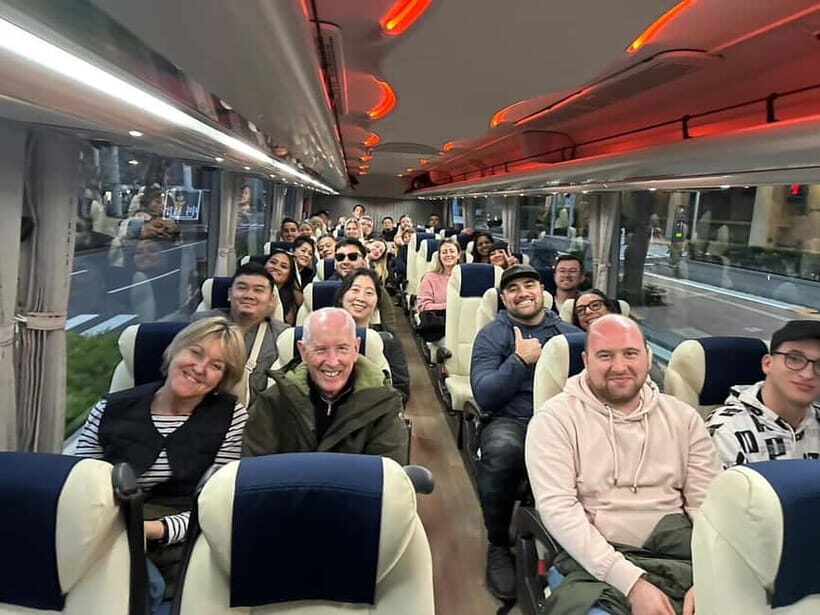
Let’s start with the real issue: getting out of Tokyo and up to Fuji takes time. This tour runs about 10 hours total, with roughly 2 hours each way by coach. The bus is described as 3-star safety air-conditioned, which matters because the temperature can shift fast once you’re up near Fuji. In cold months, that “warm transport” factor shows up in the feedback—people were glad the bus wasn’t miserable after the Fuji air.
What I like about this setup is that it’s not asking you to figure out trains, transfers, and timing. You show up at the pickup point, you follow the plan, and you’re on the mountain circuit before the day gets away from you. The cost also reflects this. At $68 per person, you’re paying for the bus, the guide, and entry fees for the included sites—not just for transit.
Two practical notes before you commit:
- You can’t bring luggage or large bags, and unaccompanied minors aren’t allowed.
- Road conditions can cause 2–3 hour delays, so build a little slack into your Tokyo schedule the rest of the day.
Pickup and Drop-Off: Shinjuku/Tokyo Station Area Without the Hotel Hassle
This tour is designed for easy access from central Tokyo. You choose from two starting locations around Shinjuku and the Tokyo Station area—including the Yaesu side at Sumitomo Mitsui Bank, and the Shinjuku Nishiguchi Branch location.
One thing you should plan for: meeting points can be tricky in dense transit areas. A few people mentioned that it was easy to miss the correct exit or that the meeting place was not obvious right away. My advice: arrive early enough to re-check the exact pickup spot, and take a screenshot of the meeting details so you’re not stuck in the wrong side of the station maze.
Oishi Park at Kawaguchiko Lake: Fuji’s Postcard Angle
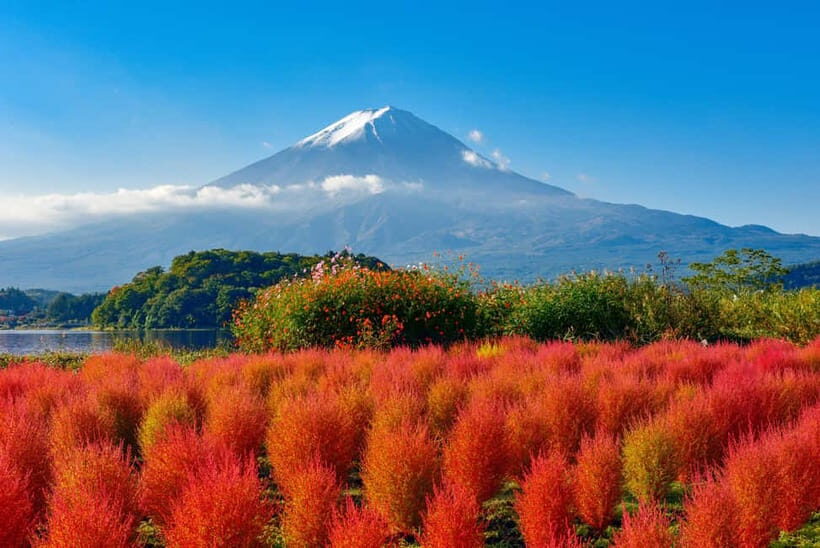
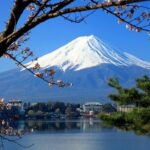
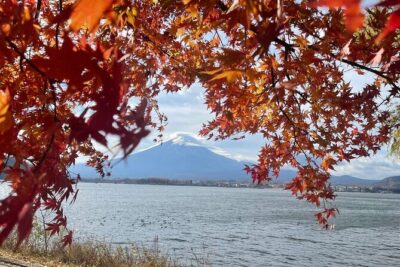
Your first real stop is Kawaguchiko Oishi Park, with about 30 minutes on the ground. This is where you get the classic composition: Lake Kawaguchi in the frame with Mt. Fuji in the background. Even when the mountain isn’t perfectly clear, the lake setting often still gives you a calm, scenic payoff.
Why this stop matters: it sets your expectations for the day. You’re seeing Fuji from a distance, at an angle that’s built for photography and orientation. If you’re the type who likes to plan shots, this is where you can decide whether you’re going to prioritize lake reflections, skyline framing, or just chasing clarity.
Practical tip for your limited time here: pick your photo spot fast. Thirty minutes goes by quickly once people start queueing for the best angles, checking phones, and adjusting clothing against wind off the water.
Arakurayama Sengen Park and Chureito Pagoda: The Walk With the Big Payoff
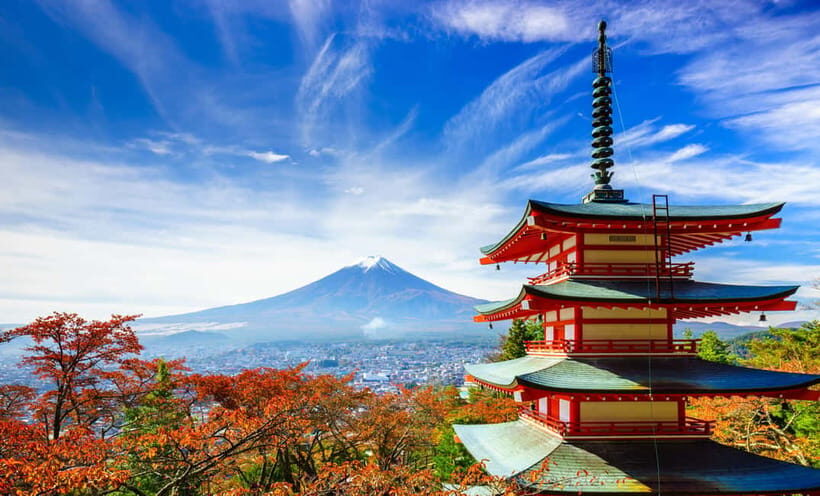
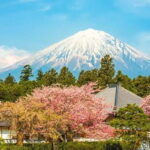
Next you head to Arakurayama Sengen Park in Fujiyoshida. You get about 75 minutes, plus a stop at the Chureito Pagoda area (photo, walk, and sightseeing). This is the spot people remember because the view is dramatic: the pagoda sits above the city, with Mt. Fuji layered behind it when visibility cooperates.
The tour also notes that in spring you can admire cherry blossoms, which can add a second reason to love this stop beyond the Fuji shot. Even if it’s not cherry blossom season, the park’s viewpoint style is key. You’re moving from lake-level perspective to something higher and more “lived-in,” with the city and the mountain in one frame.
A fair drawback: this part of the day can involve stairs and walking, and it’s one of the reasons people say you should be ready to move. If you’re traveling with someone who walks slowly, you’ll want to go at a pace that works for them and don’t count on rushing through every viewpoint.
Worth weighing up alongside this Tokyo pick:

The Hikawa Clock Shop Stop: A Useful Time Break (Not Just a Detour)
After the Arakurayama area, there’s a stop at Hikawa Clock Shop. The schedule lists a visit with free time and sightseeing/walking. This isn’t the main headline like Fuji or Oshino Hakkai, but that’s kind of the point. It helps break up the day so you’re not constantly in photo mode or constantly in crowds.
This is also one of your chances to reset: grab a drink if you want something other than air and adrenaline, use restrooms if available, and check whether the next stop needs cash or snacks. Since food and drinks aren’t included on the tour, these small pauses can matter more than you think.
Oshino Hakkai: Eight Ponds, Fuji Water, and a Calmly Strange Stop
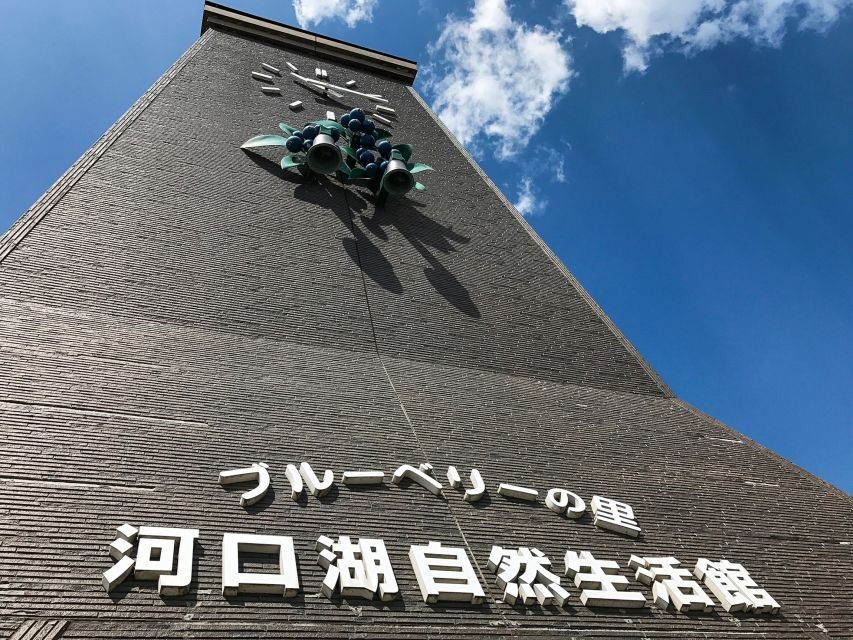
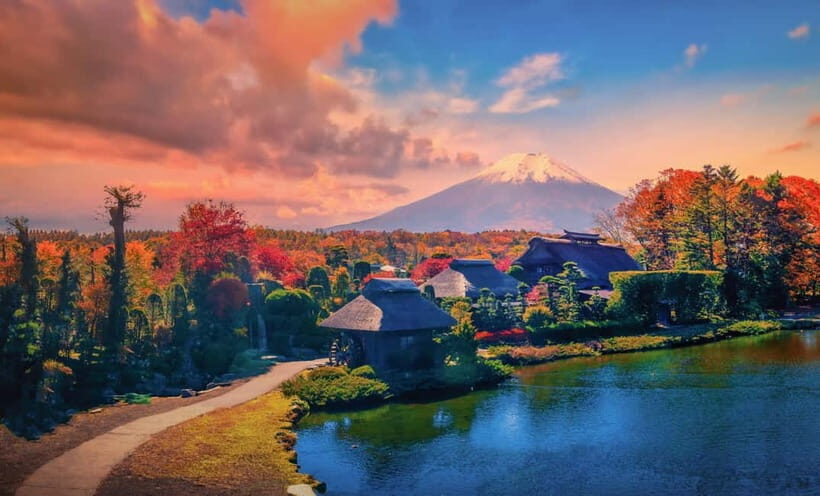
Then you arrive at Oshino Hakkai, one of the best-known stops in the Fuji area. You get about 80 minutes, and the schedule includes lunch there.
Here’s what makes Oshino special: you can see eight different lakes/ponds formed around the Fuji area’s springs. The tour also includes the headline detail—you can taste the water from Mt. Fuji. That’s not a random gimmick; it’s part of the area’s identity. It’s the kind of sensory experience that makes the day feel more like a place you visited than a checklist you completed.
Why you’ll probably enjoy this stop: it slows the tempo. After pagoda stairs and viewpoint chasing, Oshino Hakkai gives you water sounds, reflective surfaces, and a more human-scale setting. It’s also one of the better places for photos that aren’t only about the mountain silhouette.
One scheduling reality: because lunch is part of this stop and lines can form, you’ll likely have less control over exactly when you eat and when you browse. If you care about food timing, go early within that 80-minute window.
Mt. Fuji 5th Station (About 2,300m): Close Views, Cold Air, and a Crowded Finish
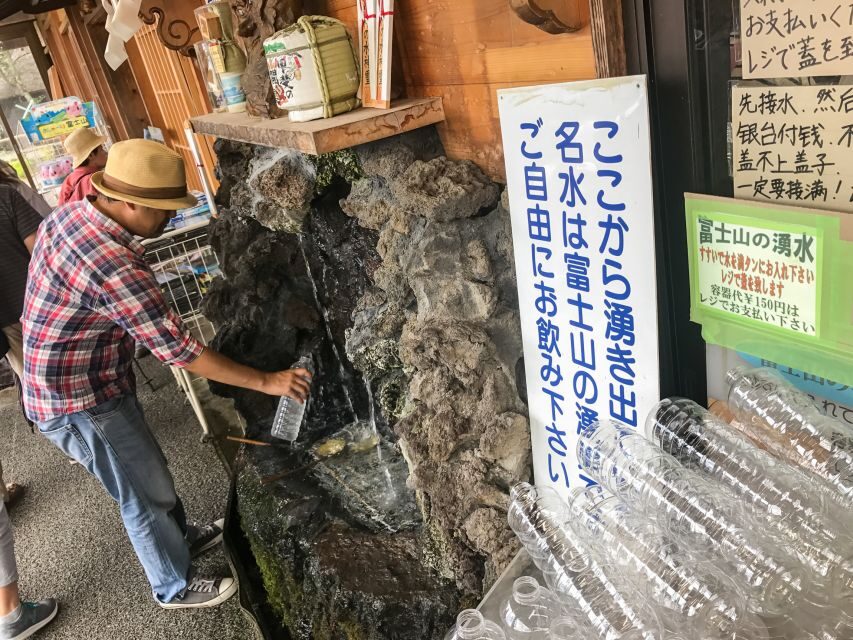
The final big sightseeing moment is Mt. Fuji 5th Station, listed at about 2,300 meters. You get around 40 minutes plus a photo stop and time for sightseeing.
This is where the tour earns its name. At 5th Station you’re no longer “looking at Fuji,” you’re surrounded by it. You can get a very close view of the mountain’s top region when visibility is clear. You’ll also find special food and souvenir shopping options, though the tour doesn’t include food—so expect to pay out of pocket.
Crowds and weather are the two things to respect here:
- Visibility is not guaranteed, and clouds can roll in fast.
- It can be very cold, especially in winter or early mornings.
The feedback I saw repeatedly comes down to this: people were happy they hit multiple Fuji angles, but they were also grateful the guide timed the 5th station attempt when the mountain was visible. That timing skill can matter more than extra time. If Fuji is shy that day, you’ll still likely come away feeling you did the right things at the right moments.
When 5th Station Is Closed: The Itinerary Swap You Should Expect
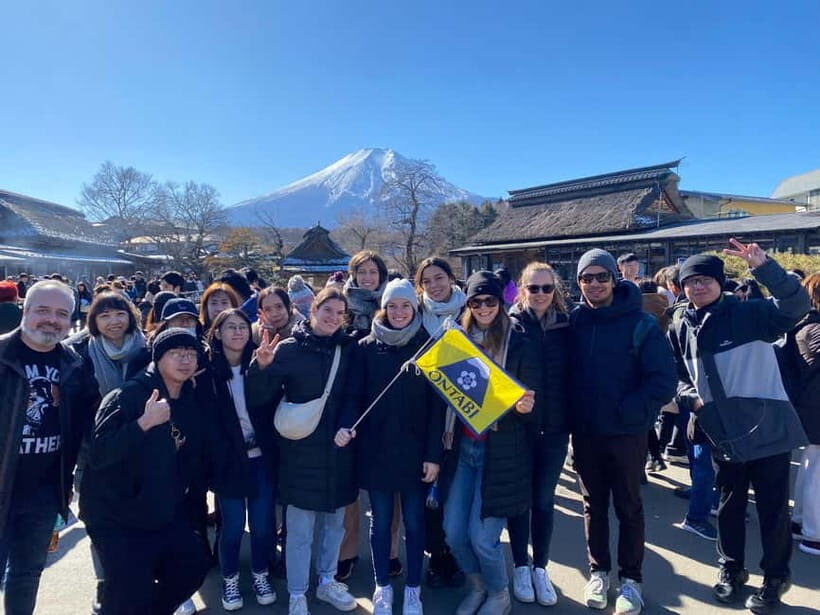
One of the most important parts of this tour is the contingency plan. The tour notes that if the road to Mt. Fuji 5th Station is closed due to unexpected weather or traffic, the route may change to Mt. Fuji 4th Station, Mt. Fuji 1st Station, or Lake Yamanakako Hana no Miyako Park (and specifically notes the diamond Fuji option in winter).
This affects your day in two ways:
- You might lose some of the altitude payoff of 5th Station.
- You still get Fuji exposure and viewpoints, just through a different access point.
Also, plan for possible itinerary changes/cancellations due to force majeure or major traffic shifts. The tour states you’ll be informed if the tour is canceled by at least 2 PM the day before, but day-of route changes can still happen.
Weather Is the Real Boss: How to Think About Visibility
Here’s the honest truth you should go in with: panoramic views are dependent on weather, and you’re not guaranteed to see Mt. Fuji clearly. That risk shows up in the range of results—some days people get clear sightlines at multiple stops, and other days clouds swallow the mountain early and you have to make peace with a “still beautiful, just not crystal” outcome.
What you can control:
- Choose clothing that handles cold and wind.
- Keep your camera ready, but don’t burn all your energy trying to will clarity.
- Understand the tour is designed to maximize chances—so even if one viewpoint fails, another might work.
When visibility is good, the payoff can feel almost unfair in the best way. When it’s bad, you’re still going to see lakes, springs, shrines, and a sense of place around Fuji.
Timing, Crowds, and Walking: How to Pace Yourself
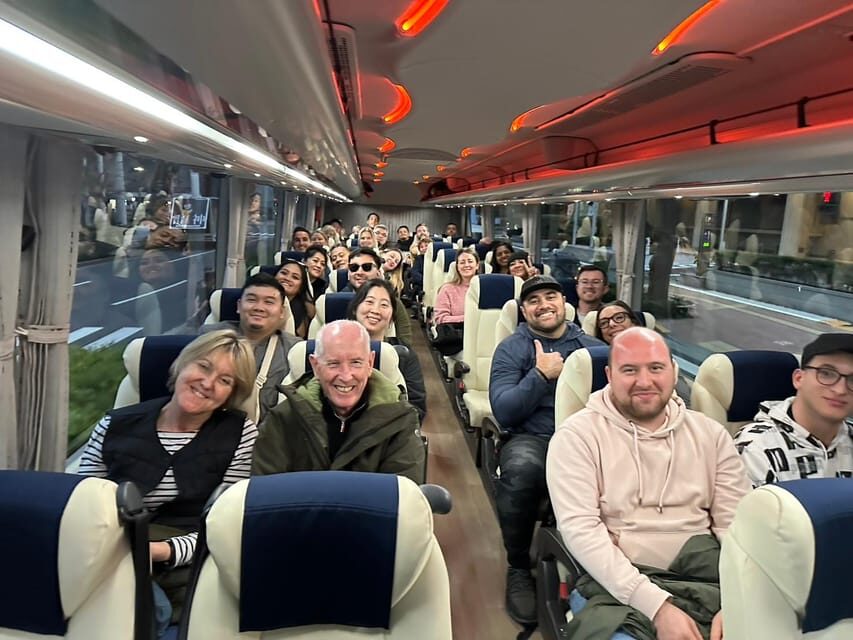
This is where many people either enjoy the day or feel rushed. The tour is packed with stops, and each stop has a set time window. Total time on the road plus sightseeing means you’ll be walking and moving through crowds at peak moments.
Some people noted:
- Long walking stretches and lots of stairs.
- Photo queues and limited restroom access at busier times.
- The importance of deciding whether you want to spend more time buying souvenirs/food or taking photos.
My practical advice: set your own priorities for the day.
- If photos are your #1 goal, treat every viewpoint like a short sprint, then step back and enjoy the place afterward.
- If you want balance, aim to use the middle stops for “unstructured time” and save souvenir browsing for when lines are shortest.
Price and Value: What You’re Actually Paying For
At $68, the deal is mostly about time and logistics.
You’re paying for:
- Round-trip coach from the Tokyo/Shinjuku area
- Professional guide in English and Chinese (including Mandarin/Cantonese mentioned)
- Entry fees for the sightseeing spots
- A full-day schedule that hits multiple Fuji-adjacent highlights
You’re not paying for:
- Food and drinks (you’ll need to budget for lunch and snacks)
- Anything you buy at shops
So is it good value? For most people, yes, because the price buys you a curated day with minimal decision-making. If you enjoy planning and DIY transit, you might spend less by going on your own—but you’ll also spend more time coordinating, and you’ll still deal with weather uncertainty and crowds.
Who This Tour Fits Best (and Who Might Want Another Plan)
This works especially well if you:
- Want one day to cover multiple “Fuji looks” without switching trains
- Like a guide-led day with historical/cultural context and practical tips
- Prefer organized timing over rolling the dice on buses and connections
It may be less ideal if you:
- Need lots of time for resting or slow pacing
- Hate crowds or stairs
- Are traveling with luggage/large bags (you can’t bring them)
Should You Book This Mt. Fuji Full-Day Trip?
If you want the classic Fuji region highlights in a single day, this is a strong option. The biggest reason to book is the structure: you don’t just do one view. You hit Kawaguchiko, Arakurayama/Chureito Pagoda, Oshino Hakkai, and Mt. Fuji 5th Station, with smart contingency planning if the road access changes.
Book it when:
- You’re flexible on weather results and happy to chase chances for clear views
- You don’t want to manage transfers and ticketing yourself
- You’re ready to walk and move through timed stops
Skip it or consider a lighter alternative if:
- You want a slow, low-stress day
- You’re traveling with limited mobility
- You strongly dislike unpredictable weather outcomes
FAQ
What is the total duration of this Mt. Fuji full-day tour?
The tour runs for about 10 hours, including travel time by coach.
What are the main stops you visit during the day?
You visit Oishi Park (Kawaguchiko area), Arakurayama Sengen Park with the Chureito Pagoda viewpoint, Hikawa Clock Shop, Oshino Hakkai (including lunch), and Mt. Fuji 5th Station.
Is food included in the price?
No. The tour does not include food and drinks.
Where do you get picked up and dropped off?
Pickup and drop-off are available at two locations around Shinjuku and the Tokyo Station area. The listed options include Yaesu (Sumitomo Mitsui Bank) and Shinjuku Nishiguchi Branch. Your exact meeting point can vary by booking option.
What languages does the guide speak?
The tour provides a live guide in Chinese and English. The tour also states professional guide availability for English/Mandarin/Cantonese.
Do you always reach Mt. Fuji 5th Station?
Not always. If access is limited, the itinerary may be changed to Mt. Fuji 4th Station, Mt. Fuji 1st Station, or Lake Yamanakako Hana no Miyako Park.
What happens if the weather is cloudy or visibility is low?
Visibility depends on the weather, so panoramic views of Mt. Fuji are not guaranteed. The schedule may still shift to match road and access conditions.
Is luggage allowed, and can unaccompanied minors join?
No. Luggage or large bags are not allowed, and unaccompanied minors aren’t allowed.
In winter, do you still do the 5th Station plan?
In winter, the tour may go to 4th Station/Mt. Fuji 1st Station or Lake Yamanakako Hana no Miyako Park to see the diamond Fuji sunset view.
More Full-Day in Tokyo
More Tour Reviews in Tokyo






The Fuji Shortlist: Other Days Out to the Mountain
Fresh reviews from around Tokyo






Mt Fuji Day Trips, compared.
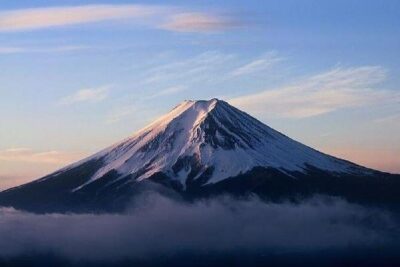 ★ 4.0Mt Fuji & Hakone Cruise, Drum Show Bullet Train 1 Day from TokyoFrom $1497,413 reviews
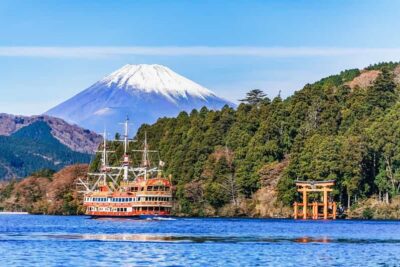 ★ 4.4Tokyo Mt Fuji 5th St & Hakone Cruise Bus Tour w/Bullet TrainFrom $1545,024 reviews
 ★ 4.7Mt. Fuji Tour, Hakone Ropeway, Owakudani, Lake AshiFrom $544,002 reviews
 ★ 5.0Private Tour to Mt. Fuji and Hakone (Fully Licenced Operator)From $4971,910 reviews
 ★ 4.9Mount Fuji Full-Day Private Tour from Tokyo (Customizable)From $3931,470 reviews
 ★ 4.0Mt Fuji & Hakone Cruise, Drum Show Bus 1 Day from TokyoFrom $1221,287 reviews
 ★ 4.2From Tokyo: Mt. Fuji & Hakone Tour w/ Return by Bullet TrainFrom $1171,278 reviews
 ★ 5.0Mt Fuji Private Tour with English Speaking DriverFrom $415861 reviews
Browse the lists this tour appears in