
Reviewed · TOKYO
Manga Lesson with a Professional Japanese Manga Artist in Nakano
Turning plain paper into manga is oddly fun.
This 2-hour class in Tokyo’s Nakano is interesting because you’re not just watching manga techniques—you’re doing them step by step with a professional artist. I love that you’re taught with real manga tools (including screen tone and specialized pens), and you’ll get structured guidance even if you’ve never drawn manga before.
The other big win for me is the finished drawing to take home. You’ll work through the full process, from pencil draft to inking, black fills, white highlights, and screen tones, so your souvenir doesn’t feel half-done. One consideration: the studio is in a non-touristy area, and you may need a little patience to confirm the exact spot if local instructions are light on English.
If you like hands-on creativity, this is a high-value way to spend a Tokyo afternoon—especially for couples, families, and manga fans who want something more personal than a photo stop.
In This Review
- Key Things to Know Before You Go
- Manga Lesson in Nakano: a real skill session, not a quick craft
- What you’ll draw in 2 hours: from pencil draft to screen tones
- The tools that make it feel authentic: dip pens, ink, and tone texture
- The teacher factor: learning from Nao’s step-by-step coaching
- How the lesson runs at Manga School Nakano (and what you’ll do first)
- Price and value: why $67.77 can make sense
- Who this experience suits best in Tokyo
- Practical tips: how to have a smoother first attempt
- Should you book Manga School Nakano?
- FAQ
- FAQ
- How long is the manga lesson?
- Where does the class take place?
- Is this lesson private?
- What’s included in the price?
- Do I need to know how to draw manga beforehand?
- What will I be able to take home?
- Will I use tools like ink and screen tones?
- Is instruction available in English?
- Are drinks included?
Key Things to Know Before You Go
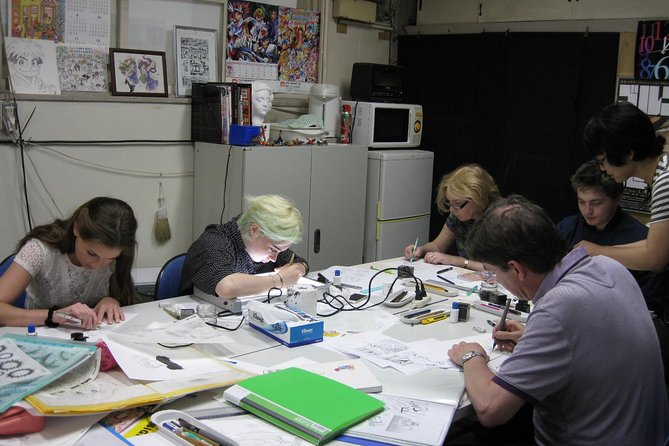
- Private, tailored instruction for your skill level, with no pressure and room to ask questions
- Full manga workflow: pencil draft, inking, black areas, white highlights, then screen tones
- Professional tools included, including screen tone materials, ink, and specialized pen nibs
- A take-home artwork you can keep as a real souvenir, not just practice sheets
- English guidance without interpreters so you can follow the steps clearly
- Family-friendly and multi-level when you come as a group of different ages or abilities
Before you commit, see how this one stacks up against a few Tokyo favourites:
- Mt Fuji and Hakone 1-Day Bus Tour Return by Bullet Train★ 5.0 · 26,383 reviews
- 1-Day Tokyo Bus Tour★ 5.0 · 14,250 reviews
- Tokyo: teamLab Planets TOKYO Digital Art Museum Entry Ticket★ 4.6 · 9,779 reviews
Manga Lesson in Nakano: a real skill session, not a quick craft
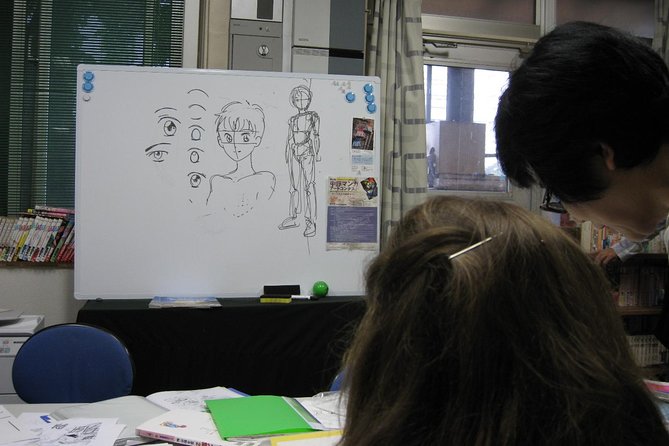
Tokyo has plenty of cultural activities, but this one feels closest to what manga artists actually do: create panels, commit to lines, and build up shading and texture. The setting is Manga School Nakano in the Nakano area—an everyday Tokyo neighborhood with better “local life” vibes than the most tourist-loaded parts of the city.
What makes it land is the pacing. You get a brief lecture on techniques and the history of manga, then you immediately translate that into drawing. In other words, it’s not just background talk while you wait for supplies.
And yes, the experience is friendly to beginners. The instructor guides you through the steps, corrects your work, and helps you get to a finished piece by the end. The vibe matches what I’d call efficient and stress-free: you’ll feel busy, but not lost.
What you’ll draw in 2 hours: from pencil draft to screen tones
The class is built around a clear manga production sequence. You’ll start with a pencil-style sketch (a draft), then move into clean inking. That matters because many beginners think the goal is “good drawing,” but manga is process-driven: first you plan, then you commit with ink.
Here’s the workflow you can expect:
- Pencil drawing (draft): build proportions and the character pose
- Inking: the teacher helps you ink over the final lines, erasing pencil marks once done
- Black parts (filling): add the bold, high-contrast areas manga is known for
- Corrections: fix mistakes before texture goes in
- White ink highlights: add shine or emphasis where it belongs
- Screen tone pasting: finish with gray texture, effects, and tone patterns
This final stage—screen tones—is where many first-timers feel the biggest “it looks like manga now” moment. It’s not just decoration; it’s part of how the comic language creates mood, depth, and focus.
For beginners, there’s support with references. You can choose manga-style reference images to copy, with the instructor helping as you go. That reduces the scary blank-page problem and lets you spend your energy on learning the steps that make manga look right.
The tools that make it feel authentic: dip pens, ink, and tone texture
One reason I’d prioritize this class over a generic drawing workshop: you actually get to work with tools that mimic how manga gets made. The materials aren’t treated like “extra props.” They’re used as part of the teaching.
You’ll use supplies such as:
- Screen tone (gray textures and effects)
- Manga inks
- Manga pens and specialized pen nibs (three types are mentioned)
- Manga paper designed for this kind of inking and finishing
If you’ve only drawn with ballpoint pens or digital tools, this is where the experience becomes memorable. The nib choice changes your line feel and your control, and the instructor can point out what to adjust when a line looks too thick, too weak, or inconsistent.
Also, because white ink and screen tones are part of the full sequence, you won’t finish with a flat, “outline-only” drawing. You’ll get contrast and texture, which is the difference between a sketch and something that reads like manga on the page.
The teacher factor: learning from Nao’s step-by-step coaching
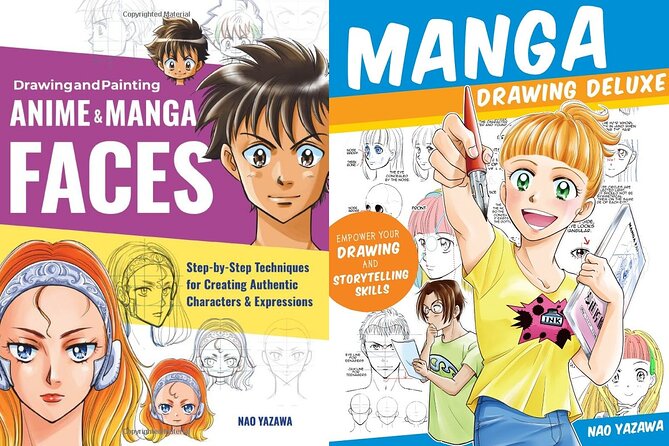
A huge share of the praise centers on the teacher experience, especially when Nao Yazawa is the instructor. The consistent themes in the feedback are patience, clarity, and tailored support for different ages and levels.
In a class like this, those traits matter more than you’d think. Manga is easy to admire and hard to replicate without guidance. The teacher doesn’t just tell you what to do—she helps you correct what you did, one step at a time, so your drawing evolves instead of stalling.
A big plus: you can get instruction in English without needing an interpreter. That helps you follow technique explanations and corrections fast, which makes the two hours feel like it’s really working for you.
And if you come with mixed group levels—say a teen who draws a lot and a parent who’s never done manga—the class structure supports that. The instructor can adjust pace and guidance so each person reaches a completed piece.





How the lesson runs at Manga School Nakano (and what you’ll do first)
The session starts when you arrive at Manga School Nakano. You’ll meet your instructor, then get a short orientation that covers techniques and the history of manga. It’s a nice pairing: you learn a little context, then you immediately apply it with your own character drawing.
After that, you’ll begin the practical work:
- Tool familiarization: learn what each tool does and how it fits into the process
- Step-by-step drawing: you work along with instruction and demonstrations
- Instructor corrections: the teacher reviews and adjusts your lines as you go
- Finishing touches: black fills, white highlights, then screen tones
The class is private for your group, so you’re not competing for attention. That’s especially helpful if you want to ask a question about a specific line, expression, or tone placement.
One more detail that helps the class feel efficient: you’re expected to walk out with a finished drawing. That shapes everything—what you pick to draw, how long you spend on each stage, and how the instructor supports you through corrections so you don’t run out of time.
Price and value: why $67.77 can make sense
At $67.77 per person, the first question is simple: what do you get for the money?
You get three things that are hard to replicate cheaply:
- A professional manga artist instructor (not just someone facilitating a craft)
- Tools included (ink, screen tones, specialized pens, and the materials for finishing)
- A completed take-home artwork created with guidance through the full manga process
Two hours is long enough to actually learn. You’re not just “trying” tools for five minutes. You’re using them to build a finished piece, which is why the class works as a souvenir.
Could you buy supplies and do it alone? Sure, but beginners usually struggle with sequence and technique. Here, the instructor handles the hardest part: knowing what to do first, second, and third, and correcting things before you get too far.
It also tends to be a good value for families because it’s structured entertainment that produces a real result—something kids and teens can point to later, not just a temporary activity.
Who this experience suits best in Tokyo
This manga lesson is a great fit if you:
- are a manga fan who wants more than browsing manga shops
- want a hands-on creative activity that works even without art training
- travel as a family with different ages and skill levels
- want a private session rather than a crowded group class
- like learning with practical steps, not long lectures
It can also work well for couples who want a shared activity with a personal artifact at the end. And for solo travelers, the setup is designed so you’re not stuck in a big group environment—your instruction can stay focused.
One more thing I appreciate: the class isn’t limited to one style of beginner. The instructor can tailor teaching whether you’re brand new or you already draw and want refinement. The process-based teaching helps both kinds of students.
Practical tips: how to have a smoother first attempt
A few things will help your session go smoothly, even if you’re nervous about drawing.
- Arrive with time to settle in. The studio is in Nakano, and the meeting point is a specific building location. If you’re using a phone map, give yourself buffer time to find the entrance.
- Don’t overthink your sketch. The process starts with a draft for a reason. The best outcome usually comes from following the step sequence and letting corrections happen.
- Focus on lines and contrast. Manga style is about clarity. Watch what the instructor does with line thickness, black fills, and placement of highlights.
- Expect the screen tones to change everything. If you’ve never used them, treat them as the “final read” of the page.
Also note: drinks are not included. If you’ll want something, plan to grab water nearby before you head into the class.
Should you book Manga School Nakano?
If you want a Tokyo experience you can bring home—literally—a finished manga drawing—this is a strong choice. The class stands out because it combines professional instruction with real manga materials and a complete production workflow. You’re likely to feel proud of the result because you’ll get guided corrections instead of just doing a craft project.
Book it if you’re coming as a fan, a beginner, or a family group that wants a shared creative activity with a concrete ending. Consider it a little less if you’re very sensitive to finding a specific studio location in a non-touristy neighborhood, or if you strongly prefer English-heavy explanations and detailed written instructions ahead of time.
FAQ
FAQ
How long is the manga lesson?
The class runs about 2 hours.
Where does the class take place?
The meeting point is at Japan, 165-0026 Tokyo, Nakano City, Arai, 2-chōme713 南国ビル.
Is this lesson private?
Yes. Only your group participates, and it can be booked as private tuition for solo travelers or for groups.
What’s included in the price?
A professional manga artist and the manga tools are included.
Do I need to know how to draw manga beforehand?
No. The lesson welcomes all skill levels, and the instructor adjusts the teaching for beginners and for people who already draw.
What will I be able to take home?
You’ll take home the finished manga drawing as a souvenir.
Will I use tools like ink and screen tones?
Yes. You’ll use manga tools such as screen tone, manga pens and ink, and specialized pen nibs.
Is instruction available in English?
You can receive precise guidance in English without interpreters.
Are drinks included?
No, drinks are not included.
More Tour Reviews in Tokyo



Fresh reviews from around Tokyo






Tokyo, compared.
 ★ 5.0Mt Fuji and Hakone 1-Day Bus Tour Return by Bullet TrainFrom $16326,383 reviews
 ★ 5.01-Day Tokyo Bus TourFrom $12914,250 reviews
 ★ 4.6teamLab Planets TOKYO Digital Art Museum Entry TicketFrom $259,779 reviews
 ★ 4.0Mt Fuji & Hakone Cruise, Drum Show Bullet Train 1 Day from TokyoFrom $1497,413 reviews
 ★ 5.0Shinjuku Food Tour (13 Dishes at 4 Local Eateries)From $866,603 reviews
 ★ 4.4Tokyo Mt Fuji 5th St & Hakone Cruise Bus Tour w/Bullet TrainFrom $1545,024 reviews
 ★ 5.0Flagship 2-Hours Official Street Go-Kart Tour – Tokyo Bay ShopFrom $644,974 reviews
 ★ 4.5From Tokyo: Mount Fuji Full-Day Sightseeing TripFrom $684,970 reviews