
Reviewed · SHIBUYA TOURS
Tokyo Bike Tour: Shibuya, Harajuku & Hidden Gems
Tokyo looks different from a bike seat. This 3-hour small-group cycling tour is built for efficient sightseeing, mixing the obvious highlights with secret backstreets you’d never stumble into on foot. You get an experienced cyclist guide based in Shibuya, and the whole point is to cover more ground without feeling rushed.
I especially like two things. First, the riding plan is designed for first-time Tokyo visitors: start in easy-to-find area near Yoyogi and Shinjuku, then connect Shibuya, Harajuku, and Aoyama by bike instead of buses or trains. Second, the guide’s English is practical and local—people consistently mention Taichi as friendly, patient, and full of details that go beyond standard landmark facts.
One possible drawback: you do need to feel comfortable cycling in city traffic and handling occasional narrow or crowded areas. The tour assumes a typical cycling speed of about 15 km/h, and it’s not suitable if you can’t ride a bike confidently (or if you’re outside the height/age limits).
In This Review
- Key Things You’ll Love on This Tokyo Bike Tour
- Why Cycling Shibuya, Harajuku, and Aoyama Beats Walking
- Meeting at Umayamichi Park (and What to Bring)
- The Pacing: 3 Hours, Photo Stops, and City-Speed Cycling
- Yoyogi Park to Shibuya: Getting Your Tokyo Bearings Fast
- Shibuya Crossing and Hachikō: The Famous Spots, With Context
- Harajuku and Omotesando: Street Culture Without the Train Hassle
- Aoyama and Gaien: Cemetery Quiet, Ginkgo Shade, Stadium Views
- Safety and Traffic Rules: What You Need to Know Before You Start
- Price, Value, and What’s Included in the $63
- Who This Tour Fits Best (and Who Should Skip It)
- Should You Book This Tokyo Bike Tour?
- FAQ
- Where do we meet for the Tokyo Bike Tour?
- How long is the tour?
- What’s included with the price?
- How big is the group?
- Is the guide an English speaker?
- What kind of riding is expected?
- Does the tour run in rain?
- What should I bring, and what should I avoid?
Key Things You’ll Love on This Tokyo Bike Tour
- Small group (up to 6) for a calmer ride and more Q&A
- English guide who cycles, so safety coaching is real, not just lecture
- Shibuya Crossing plus quieter lanes that change the feel of the neighborhood
- Photo stops at major points like Hachikō Statue and the ginkgo avenue
- Aoyama Cemetery and Meiji Jingu Gaien Ginkgo Avenue for a slower, leafy pause
- Real flexibility when someone needs a change, including a walking option for uncomfortable riders
More to do within sight of the Crossing
- Official Street Go-Kart in Shibuya★ 5.0 · 3,435 reviews
- Tokyo: Street Kart Experience in Shibuya★ 4.9 · 1,484 reviews
- Shibuya Meltdown Nightlife Tour: All-You-Can-Drink Bar Hopping★ 5.0 · 1,058 reviews
Why Cycling Shibuya, Harajuku, and Aoyama Beats Walking
Tokyo neighborhoods are close on a map, but walking between them can eat your time fast. This tour solves that problem by turning travel time into sightseeing time. You’ll move through Shibuya, Harajuku, Aoyama, and Gaien without public transport, so you spend less time waiting and more time seeing.
It also helps that these areas are made for wandering. On a bike, you get the flow of the streets—the smells, storefront rhythm, and street-level energy—without getting stuck in slow crosswalk-to-crosswalk loops. And when your guide steers you onto side roads, the city starts to feel personal.
Just as important: you’re not doing this alone. The guide is an experienced cyclist who stays focused on safe routes and communication, so you can concentrate on enjoying the moment rather than constantly figuring out where to go next.
Meeting at Umayamichi Park (and What to Bring)
You’ll meet at Umayamichi Park, next to Freshness Burger. It’s a very practical meeting point for this part of Tokyo, and the location is close to the Shinjuku/Yoyogi area—walkable and easy to orient yourself around.
Before you roll, plan on a short safety briefing (about five minutes). Then you’ll start with a warm-up segment that includes a quick look at scenery while the group gets settled. That matters, because Tokyo cycling isn’t just about staying upright—it’s about understanding how to move through intersections and crowded pockets calmly.
Bring:
- Comfortable clothes and closed-toe shoes
- Drinks (Tokyo’s air can be sneaky, even when you think you’re fine)
- Comfortable gear for light walking during photo pauses
Not allowed includes headphones, smoking, and umbrellas, plus open-toed shoes and oversize luggage. The tour also lists restrictions like weapons/sharp objects, alcohol/drugs, and littering—standard rules, but it’s worth scanning so you don’t get surprised at the start.
The Pacing: 3 Hours, Photo Stops, and City-Speed Cycling
This is not a full-day bike adventure where you ride for hours on end. It’s a three-hour circuit with frequent photo stops and short scenic segments. You’ll stop often enough to catch the vibe and take pictures, but not so much that the ride becomes a parking-lot shuffle.
The tour expects you to comfortably ride at about 15 km/h. That’s a normal cycling pace, but it does mean you should feel steady in a moving pack and during turns and crossings. If you’re an occasional bike rider, you’ll likely be okay. If you’ve never ridden in traffic, it may feel like a lot—especially around the busiest nodes.
The good news: the guide sets the tone. People have noted that the guide stays patient and confident, and that safety guidance is active throughout—not just at the beginning.
Yoyogi Park to Shibuya: Getting Your Tokyo Bearings Fast
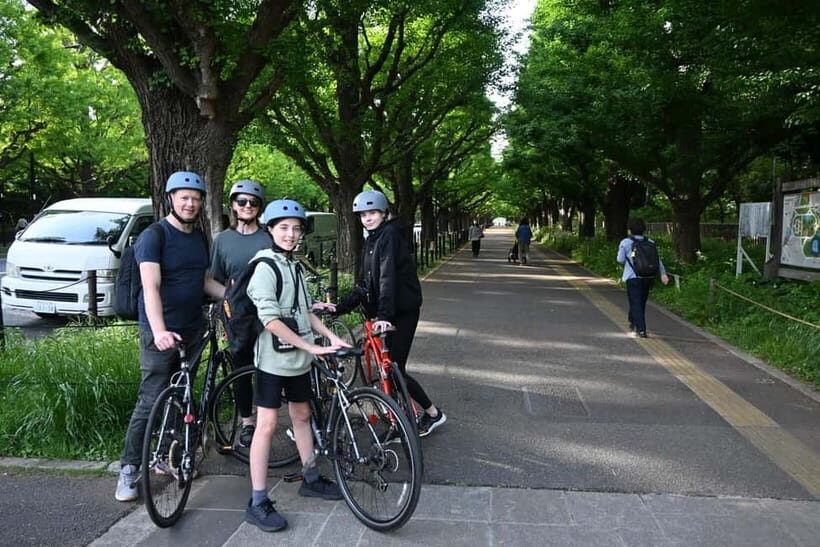
After the briefing, you’ll head toward Yoyogi Park for a photo stop and scenic views on the way. This is a nice early rhythm-setter. You start with a less chaotic feeling than the busiest commercial streets, and you get your first real slice of Tokyo street life without going straight into sensory overload.
From there, you’ll connect into Shibuya with a couple of longer scenic stretches that keep you moving while still stopping for views. The tour includes both planned photo stops and small “secret stop” moments along the way, which are essentially your guide’s way of showing you the city’s texture—quiet lanes, angle-perfect street scenes, and practical shortcuts.
More colour: other Harajuku wanders


Shibuya Crossing and Hachikō: The Famous Spots, With Context
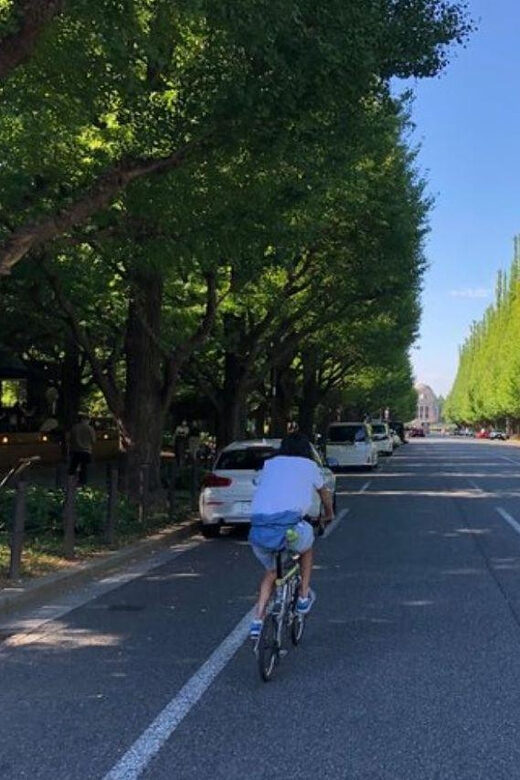
Yes, Shibuya Crossing is a bucket-list stop. But the difference here is how you get there: you arrive by bike through streets that show the area’s layout, not by emerging from a train platform like everyone else.
You’ll have a guided component plus time to walk a bit and take photos. The ride approach matters, because it helps you see how the neighborhood funnels people—where the energy builds, and where it calms down a block later.
Next up is the Hachikō Statue. It’s one of those places that looks simple until you stand there. The guide’s walking and explanation help you understand why the spot matters in Tokyo culture, and you’ll also get time to frame photos without rushing.
Harajuku and Omotesando: Street Culture Without the Train Hassle
Once you move into Harajuku, you’re in the zone where Tokyo’s youth style and fashion energy shows up loud and clear. You’ll hit a photo stop and enjoy short scenic segments, which is enough time to feel the vibe without turning the tour into a shopping sprint.
Then comes Omotesando, one of Tokyo’s signature boulevard-style areas. This is where you’ll likely appreciate the bike part most. Walking here can feel like endless stop-start. Cycling keeps your momentum while still letting you pause for pictures at the right moments.
The tour also includes another secret stop in this stretch, which typically signals one of two things:
1) a quieter side street where the atmosphere changes fast, or
2) a viewpoint angle that makes the famous street look more interesting than it does straight-on.
Either way, you get more variety than you would from a strict landmark list.
Aoyama and Gaien: Cemetery Quiet, Ginkgo Shade, Stadium Views
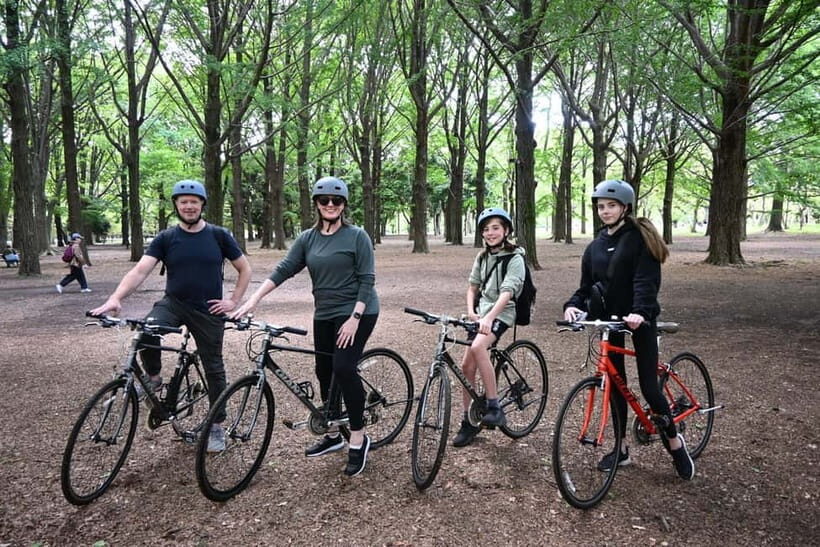
The later part of the route shifts gears. You’ll spend time in Aoyama, including Aoyama Cemetery. A cemetery might sound like a weird tourism stop, but here it works because it changes the pace. It’s a calm pocket in the middle of Tokyo’s motion, and photo time plus guided walking gives you a chance to slow down and look carefully.
After Aoyama, you’ll visit Meiji Jingu Gaien Ginkgo Avenue for photos. This is the kind of place where the street turns into a natural corridor. Even if you’re not a big “forest walk” person, ginkgo avenues have a way of making you look up and notice details you’d miss elsewhere.
Then you’ll end with Japan National Stadium for a brief photo stop. It’s short, but it’s a strong way to close the loop—another recognizable landmark, with a Tokyo street approach that makes it feel like part of the city, not a distant monument.
You’ll circle back to Umayamichi Park to finish the ride.
Safety and Traffic Rules: What You Need to Know Before You Start
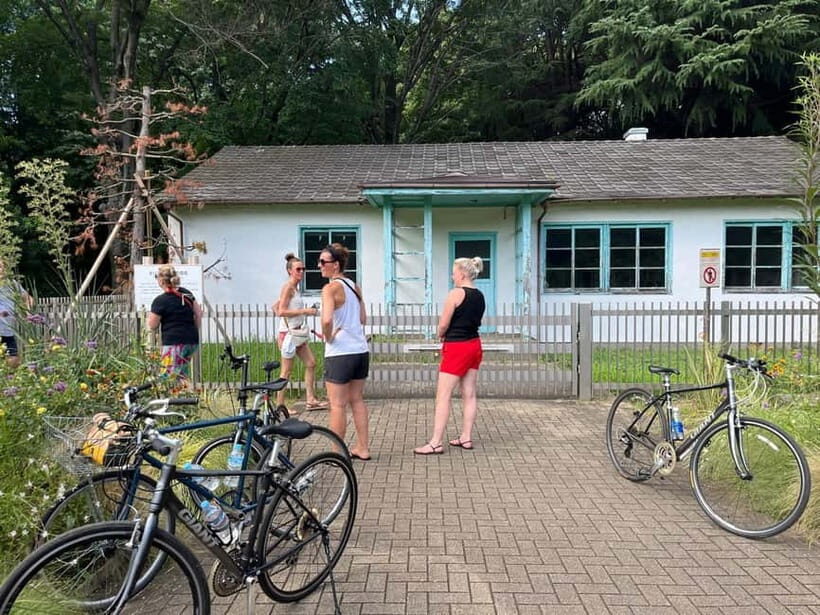
Tokyo street cycling is doable, but it’s not the same as biking on a quiet suburban lane at home. Your guide will keep the group safe, but you still need to follow instructions and stick to the riding plan.
The tour expects you to be comfortable:
- cycling on city streets
- crossing at traffic lights
- handling occasional narrow or crowded areas
The guide will actively manage the ride, and multiple riders have praised Taichi for handling traffic confidently and keeping people calm. One review also mentioned an adjustment when two riders felt uneasy; the group shifted to walking for those participants, and it still worked well.
That flexibility is a big deal. It means the tour isn’t just rigid. But you should still show up knowing the core activity is bike riding.
Weather is also part of safety. The tour proceeds in light rain, but it may be canceled if weather changes suddenly. If you’re traveling in a rainy season, plan your day so you have some breathing room.
Price, Value, and What’s Included in the $63
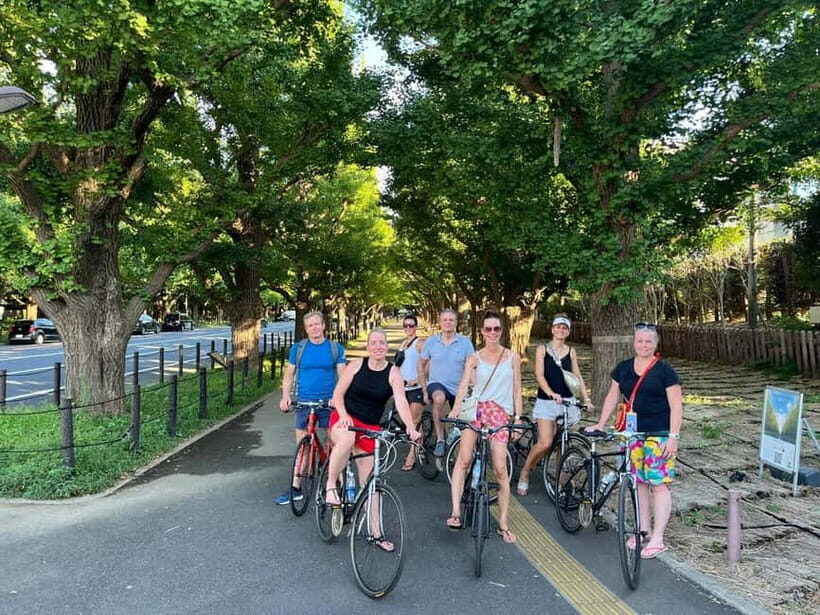
At $63 per person for 3 hours, this tour is priced like a full guided experience rather than a casual ride. You’re paying for three things:
- a small-group setup (max 6)
- an English-speaking guide who also cycles
- equipment: bicycle and helmet
And then there’s the less obvious value: time. Tokyo neighborhoods can drain your energy when you’re stuck moving slowly or waiting for transport. This route is designed to make your sightseeing more efficient, which is what first-time visitors usually need most.
If you want to see Shibuya and Harajuku plus Aoyama without spending your whole trip trying to solve logistics, the math usually works out in your favor.
Who This Tour Fits Best (and Who Should Skip It)
This is ideal if you:
- are a first-time Tokyo visitor and want a high-output city introduction
- feel comfortable cycling around intersections and busy streets
- want more than landmark photos—side streets and local context matter to you
- like short photo breaks and guided walking moments mixed into the ride
It’s not suitable if you:
- can’t ride a bike
- are pregnant (per the tour’s rules)
- are under 13 or over 75
- don’t fit the height range (below 155 cm or above 200 cm)
- have trouble with the kind of pacing that expects about 15 km/h cycling speed
If you’re unsure about traffic comfort, the walking adjustment described in real feedback is encouraging—but you should still evaluate your own comfort before booking.
Should You Book This Tokyo Bike Tour?
If you want Shibuya Crossing, Hachikō, Harajuku streets, Omotesando, and Aoyama/Gaien landmarks in one smooth loop—and you’d rather ride than fight Tokyo’s walking time—this tour is a very practical choice. The small group size and the guide’s cycling focus help keep it from feeling chaotic.
Book it if you’re the type who likes learning how a city works, not just collecting photos. The quiet stops, the scenic detours, and the guide’s local English all add up to a tour that feels like Tokyo, not like a checklist.
Skip it if city biking sounds stressful or if you’re not confident riding at a steady pace in traffic. No tour can remove that reality. But if you’re willing to sit in the saddle and follow instructions, you’ll get a memorable, efficient way to experience this part of Tokyo.
FAQ
Where do we meet for the Tokyo Bike Tour?
You meet at Umayamichi Park, at the park next to Freshness Burger.
How long is the tour?
The tour lasts 3 hours.
What’s included with the price?
The tour includes a bicycle and a helmet.
How big is the group?
It’s a small group, limited to 6 participants.
Is the guide an English speaker?
Yes, the tour has a live guide in English.
What kind of riding is expected?
You should be comfortable riding in city traffic and at a typical cycling speed of around 15 kilometers per hour. You’ll also cross at traffic lights and handle occasional narrow or crowded areas.
Does the tour run in rain?
The tour can proceed in light rain, but it may be canceled if the weather changes suddenly for safety.
What should I bring, and what should I avoid?
Bring comfortable shoes, clothes, and drinks. Avoid sandals or flip flops, open-toed shoes, umbrellas, headphones, and large luggage.
More Tour Reviews in Tokyo






More Harajuku to Wander
Still in Shibuya? Keep Going



Fresh reviews from around Tokyo






Shibuya Tours, compared.
 ★ 5.0Official Street Go-Kart in ShibuyaFrom $763,435 reviews
 ★ 4.9Street Kart Experience in ShibuyaFrom $741,484 reviews
 ★ 5.0Shibuya Meltdown Nightlife Tour: All-You-Can-Drink Bar HoppingFrom $1061,058 reviews
 ★ 5.0Shibuya Official Street Go-Kart in Shibuya AnnexFrom $69972 reviews
 ★ 5.0Shibuya Food Tour (13 dishes and 4 Eateries)From $77770 reviews
 ★ 5.0Best of Shibuya Food TourFrom $217612 reviews
 ★ 4.8Shibuya Highlights Walking TourFrom $19601 reviews
 ★ 4.7Premium Go-Kart Tour with Tower & Shibuya CrossingFrom $116528 reviews
Browse the lists this tour appears in