
Tokyo makes more sense by bike. This 3-hour ride strings together big-name sights and quieter corners of central Tokyo, with guide storytelling that helps you connect the dots fast. I especially like the English-speaking guides (you may even get one of the friendly pros people mention like Naoki or Tam) and the smooth, safe feel of high-quality Bianchi/Fuji cross bikes.
The second thing I really appreciate is how flexible the effort level is. You can choose the regular bike or an e-bike option, which makes it easier to enjoy parks, palaces, and Shibuya without arriving cooked.
One consideration: parts of the route mix bike paths with stretches where you’re riding around normal traffic. If you tense up in traffic, or you’re not confident on a bike, this might feel stressful rather than fun.
In This Review
- Key highlights worth caring about
- Why this 3-hour Tokyo highlights ride is such a smart first-day plan
- Meeting near the Commodore Perry statue and getting rolling without stress
- The early landmarks: Zojo-ji Temple, Hibiya Park, and Imperial Palace scale
- Chidorigafuchi break time: where the tour lets you catch your breath
- Tokyo Station, Akasaka Palace, and the New National Stadium: modern Tokyo with official context
- The guided story stop and Aoyama’s cathedral: where the route gets personal
- Shibuya Crossing and Tower Records: the finish line you’ll remember
- Regular bike or e-bike: choosing the right effort level without guessing
- Safety reality check: what the route demands from you
- Cost and value of the $45 price (and the small extras to budget)
- Who should book this Tokyo bike highlights tour (and who should skip it)
- FAQ
- How long is the Tokyo bike or e-bike highlights tour?
- Where is the meeting point?
- What language are the tours offered in?
- Are bikes and a guide included in the price?
- Do I need to bring a helmet?
- Is there an e-bike option?
- What should I bring to the tour?
- What is not allowed during the tour?
- Is the tour refundable if I cancel?
Key highlights worth caring about
- Bianchi/Fuji cross bikes plus e-bikes so you can match the ride to your stamina
- English-speaking local guides who add real context at each photo-and-walk stop (names like Naoki, Tam, KJ, and Atsu come up often)
- A compact route that hits major landmarks like Tokyo Station and Shibuya Crossing in just 3 hours
- Short guided moments (often about 15 minutes) that keep you moving and still learning
- Plenty of photo stops built into the plan, including Ōte-mon Gate and Tower Records Shibuya
- Bike insurance and a mini pouch on the bike for phone/wallet/keys, so you travel lighter
More of Tokyo by bike
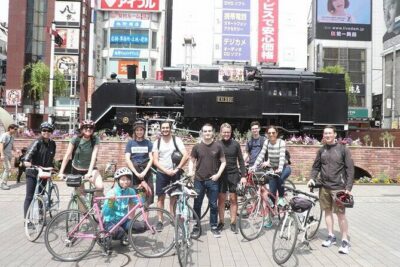
- Tokyo Guided Small-Group Biking Tour★ 5.0 · 1,250 reviews
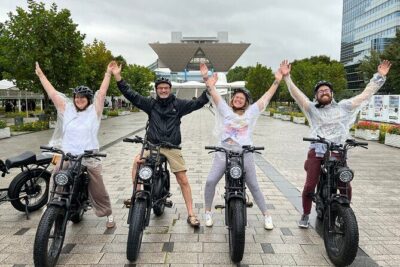
- Tokyo Great Cycling Tour★ 5.0 · 811 reviews
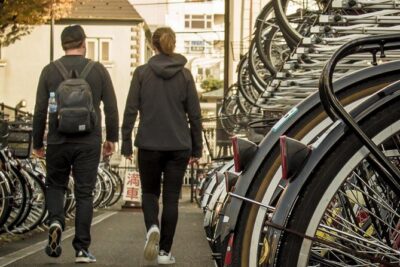
- Tokyo Top Highlights 3h Guided E-bike Tour★ 5.0 · 714 reviews
Why this 3-hour Tokyo highlights ride is such a smart first-day plan
Tokyo is huge. Even if you have a map app, you still waste time figuring out transit, walking distances, and where the neighborhoods actually connect. This tour is designed for momentum: in about three hours you can get oriented, see both old and new Tokyo, and build a short list of what you want to return to.
The route also makes practical sense. You start near a major landmark, then move through parks and official areas, and finish in the most famous modern scene in the city. That pacing matters because Tokyo’s rhythm changes fast from one district to the next.
Meeting near the Commodore Perry statue and getting rolling without stress
You meet at the statue of Commodore Perry, around a 3-minute walk from Daimon Station (A6 exit). That location is handy because it’s close to a real transport hub, so arriving is straightforward.
From there, the setup is part of the value. You get a high-quality bike, and you have a small mini pouch on the bike for phone, wallet, and keys. Bike insurance is included too, which is the kind of small detail that makes the experience feel more secure when you’re mixing in traffic.
One more practical point: helmets cost extra if you don’t bring one. Helmets are available on site for ¥1,000 cash per unit, so if you want to avoid a last-minute stop, plan to have cash ready.
The early landmarks: Zojo-ji Temple, Hibiya Park, and Imperial Palace scale
The tour’s opening sequence balances atmosphere and big-picture Tokyo. You start with the Commodore Perry statue, then head to Zojo-ji Temple, where you’ll get a photo stop plus a visit and a guided tour segment (about 15 minutes). Zojo-ji is a classic Tokyo temple stop, and the time allocation is just right: long enough to feel the place, short enough to keep energy for the rest of the day.
Next comes Hibiya Park for a quick stop. It’s brief by design, a breather that helps you shift from temple energy to the more formal, open areas ahead.
Then you reach the Tokyo Imperial Palace. You’ll do a photo stop and a guided visit segment (about 15 minutes). The key value here isn’t just the postcard factor—it’s the contrast. Tokyo can feel all hard edges and speed, but these official grounds give you a sense of space and form, and your guide’s stories help you read what you’re seeing.
You also stop at the Ōte-mon Gate, with a photo stop and short visit (about 5 minutes). That time chunk works well because gates and monumental entrances can look similar from a distance—your guide helps you notice what matters so your photos don’t look like random buildings.
Chidorigafuchi break time: where the tour lets you catch your breath
At Chidorigafuchi, you get a break plus a photo stop and visit segment (about 5 minutes). This is a small window, but it’s exactly the kind of pause that makes the whole ride feel doable.
Here’s the practical takeaway: you’re not just sightseeing while pedaling. You’re getting timed rest so the pacing stays relaxed, even if you’re not a serious cyclist. In fact, many people describe the experience as well paced, and that’s a big reason a 3-hour tour feels complete instead of rushed.
Bigger sweeps: other Tokyo city tours

Tokyo Station, Akasaka Palace, and the New National Stadium: modern Tokyo with official context
The ride continues to Tokyo Station, another photo-and-visit stop (about 10 minutes). Tokyo Station can be a chaotic place if you wander on your own, but on a bike tour it becomes a landmark you can actually place on your mental map.
Then there’s State Guest House Akasaka Palace for a photo stop (about 10 minutes). Stops like this are valuable because they show a side of Tokyo that visitors often walk past without noticing. The guided time you get on either side of the photo moments helps you understand what these spaces are and why they’re part of the city’s identity.
The tour also includes New National Stadium for a photo stop and visit (about 10 minutes). You’ll get a feel for Tokyo’s modern infrastructure in a short but focused segment. It’s not a long stadium tour; it’s more like a visual marker that helps you connect the neighborhood grid to major events and venues.
The guided story stop and Aoyama’s cathedral: where the route gets personal
Some of the best moments on bike tours come from the parts that aren’t just famous. This route includes a hidden gem stop with a guided tour (about 15 minutes). Since it’s specifically guided, you’re not just looking; you’re learning how locals think about that spot and what to notice as you ride through the area.
After that, you’ll reach Aoyama St. Grace Cathedral for a short photo stop and sightseeing (about 3 minutes). The stop is quick, but that’s normal for a bike highlights route. It keeps you moving while still giving you a clean shot opportunity.
Then the tour moves toward Cat Street, with a visit (about 5 minutes). Cat Street is a great example of why bike touring works in Tokyo: you can get close enough to feel the vibe of a neighborhood without spending an hour walking and backtracking.
Shibuya Crossing and Tower Records: the finish line you’ll remember
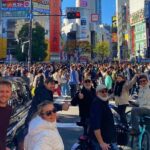
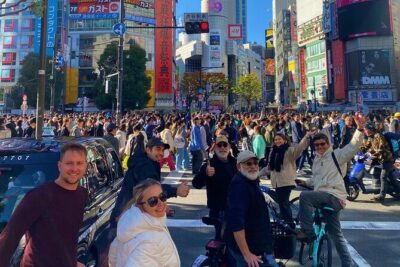
Next up is Shibuya Crossing for a photo stop and guided tour (about 10 minutes). This is a peak moment, and the best part is that you’re arriving on a bike, not sprinting through crowds from a subway exit. Your guide’s timing helps you experience it in a way that feels more manageable.
After crossing, you stop at Tower Records Shibuya for a short sightseeing/photo moment (about 3 minutes). It’s a small stop, but it anchors the area in real-world Tokyo culture, not just street photography.
Finally, you end at Bell of Peace. For me, a calm endpoint matters. It gives you a clear finish and lets you wrap your head around everything you just saw, instead of turning straight into another long transit mission.
Regular bike or e-bike: choosing the right effort level without guessing
This tour works for both cyclists and casual riders, but the bike choice changes the experience.
- Regular cross bikes (Bianchi or Fuji): great if you’re comfortable riding for a few hours and staying alert around occasional road traffic.
- E-bike option: a smart move if you don’t cycle often or you don’t want the ride to turn into leg day. The tour specifically recommends e-bikes if stamina is limited.
One detail I love from the ride feedback: the e-bikes can make the whole day feel effortless, including small hills. That means you can keep your focus on the sights and your guide’s stories instead of thinking about where your energy will run out.
Safety reality check: what the route demands from you
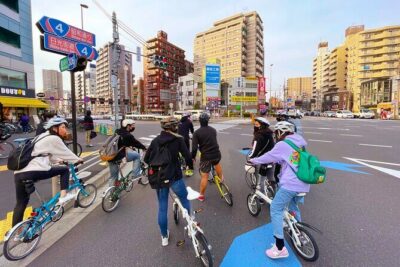
Bike tours in Tokyo can feel easier than in some cities, and people often note that traffic is light on the days they ride. Still, this route isn’t a full car-free bike path loop. You should expect some segments where you’re riding near normal traffic and moving between sidewalks and roadway.
So I’d treat this tour as best for riders who can:
- keep steady balance at city speed,
- obey guide instructions quickly,
- handle short bursts of busier street sections.
If you’re the type who freezes when cars appear, choose the e-bike and take the guide’s pace seriously. Also note the clear limitations: it’s not suitable for people who can’t ride a bike, and it’s not listed for children under 12, pregnant women, or people with back problems.
Cost and value of the $45 price (and the small extras to budget)
At $45 per person for 3 hours, this is priced like an active city tour, not a basic walking tour. You’re paying for a few things that add up fast on your own: a local guide, a quality bike (or e-bike), and bike insurance.
What you may need to budget separately:
- Helmets: +¥1,000/unit if needed
- Child seat: +¥3,000/unit (if applicable; also note the tour isn’t suitable for children under 12)
In plain terms, the value is strongest if you want to avoid piecing together transit plus entrance tickets plus route planning. The tour also includes a phone/wallet/keys pouch on the bike, which is a small convenience that feels big when you’re moving through Tokyo quickly.
Who should book this Tokyo bike highlights tour (and who should skip it)
Book it if you want:
- a fast way to get oriented in Tokyo without spending the day hopping trains,
- a mix of temples, parks, official areas, and modern Tokyo in one route,
- a guide-led ride with plenty of photo stops and short guided explanation windows.
Skip it if:
- you can’t handle road riding or you’re not confident on a bike,
- you have a back issue that makes sitting uncomfortable for a few hours,
- you’re traveling with a child under 12 (the tour isn’t suitable),
- you’re pregnant and looking for a low-stress option (also not listed as suitable).
If you’re deciding between regular bike and e-bike, I’d rather you choose comfort. The ride stays enjoyable when you can focus on the city, not on your breathing.
FAQ
How long is the Tokyo bike or e-bike highlights tour?
It runs for 3 hours.
Where is the meeting point?
Meet at the statue of Commodore Perry, about a 3-minute walk from Daimon Station A6 exit.
What language are the tours offered in?
The tour guides speak English and Japanese.
Are bikes and a guide included in the price?
Yes. You get an English-speaking guide and a high-quality bike (Bianchi and Fuji cross bikes, or an e-bike option depending on what you select).
Do I need to bring a helmet?
Helmets are not included. You can get a helmet on site for ¥1,000 cash per unit.
Is there an e-bike option?
Yes. Choose the e-bike option if you aren’t comfortable riding long distances or don’t have much stamina.
What should I bring to the tour?
Bring comfortable shoes, water, and comfortable clothes.
What is not allowed during the tour?
Smoking, alcohol and drugs, and littering are not allowed.
Is the tour refundable if I cancel?
Free cancellation is available up to 24 hours in advance for a full refund.
If you want the fastest, friendliest way to get your bearings and see both classic and modern Tokyo in a single shot, this is a strong pick. Just be honest about your comfort with bike riding near traffic, and plan for the helmet option if you need one.
Tokyo on Two Wheels
More Tours in Tokyo



More Tour Reviews in Tokyo




Fresh reviews from around Tokyo






Cycling Tours, compared.
 ★ 5.0Tokyo Guided Small-Group Biking TourFrom $1061,250 reviews
 ★ 5.0Tokyo Great Cycling TourFrom $99811 reviews
 ★ 5.0Tokyo Top Highlights 3h Guided E-bike TourFrom $63714 reviews
 ★ 5.0Tokyo West-Side Cycling & Food TourFrom $99214 reviews
 ★ 5.03-Hour Bike/E-Bike Tour of the City’s HighlightsFrom $63209 reviews
 ★ 5.0Small Group Cycling Tour in TokyoFrom $66184 reviews
 ★ 5.03-Hour Tokyo Private E-Bike Tour Starting from Your HotelFrom $145117 reviews
 ★ 5.0Tokyo downtown bicycle tour Tokyo Backstreets Bike TourFrom $65117 reviews
Browse the lists this tour appears in