
Reviewed · CYCLING TOURS
Tokyo: 3-Hour Bike/E-Bike Tour of the City’s Highlights
Tokyo is big, and this tour helps you cut through it. You’ll glide between major landmarks on a bike or pedal-assist e-bike, with a guide keeping the route tight and the story clear. The payoff is seeing several of Tokyo’s most famous places—Zojo-ji, the Imperial Palace area, and Shibuya Crossing—without the usual wandering around train lines and street grids.
Two things I really like: you get bike rental included and you ride with a guide who handles the navigation, plus your stops are short but well-chosen, so you cover a lot in about 3 hours. For example, the route quickly strings together historical sights in Minato and Chiyoda, then pivots into the fashion neighborhoods and major crosswalk energy around Shibuya.
One possible drawback: you’re biking through real traffic and crowded streets at times. If you feel nervous riding in tight lanes or near crossings, go in with a calm plan and listen carefully to how your guide wants you to move.
In This Review
- Key highlights at a glance
- Bike tour meet-up: from Perry to a fast start in Shibakoen
- Stop 1: Zojo-ji Temple and that iconic Tokyo Tower backdrop
- Stop 2: Imperial Palace area with the big-picture context
- Stop 3: Tokyo Station’s Marunouchi frontage for a red-brick reset
- Stop 4: Kokyo Otemon Gate for classic gate-photo energy
- Stop 5: Akasaka Palace (State Guesthouse) and the shift to quiet formality
- Stop 6: Japan National Stadium, built for sports history
- Stop 7: Aoyama Street for design-minded Tokyo street edges
- Stop 8: Shibuya Cat Street for shopping grit and vintage vibes
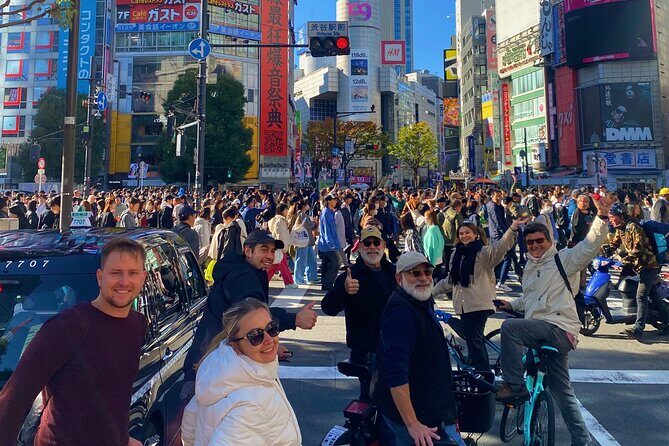
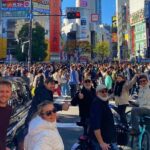
- Stop 9: Shibuya Crossing, the world-famous chaos you can actually ride through
- Ending near Yoyogi Park and Harajuku: keep your momentum
- Price and what you’re really paying for
- Guides, safety, and the rhythm of riding in traffic
- Who this tour fits best (and who should skip it)
- Should you book this Tokyo bike/e-bike highlight tour?
- FAQ
- How long is the Tokyo bike/e-bike highlights tour?
- Is this tour private?
- What bike options do you get?
- Is the helmet included?
- Is a raincoat provided?
- What are the main stops on the route?
- Are there entrance fees at the stops?
- What if the weather is bad?
- Where does the tour start and end?
Key highlights at a glance
- A 3-hour route that hits Tokyo’s biggest names without backtracking
- Bike rental included, with a helmet available to rent for ¥1000 (cash required)
- Guided navigation and safety support, with guides positioned to keep the group together
- Free admission listed for the main stops you’ll see
- Rain plan built in, including raincoats on rainy days
- Finish near Yoyogi Park and Shibuya, so you can keep exploring right after
More of Tokyo by bike
- Tokyo Guided Small-Group Biking Tour★ 5.0 · 1,250 reviews
- Tokyo Great Cycling Tour★ 5.0 · 811 reviews
- Tokyo Top Highlights 3h Guided E-bike Tour★ 5.0 · 714 reviews
Bike tour meet-up: from Perry to a fast start in Shibakoen
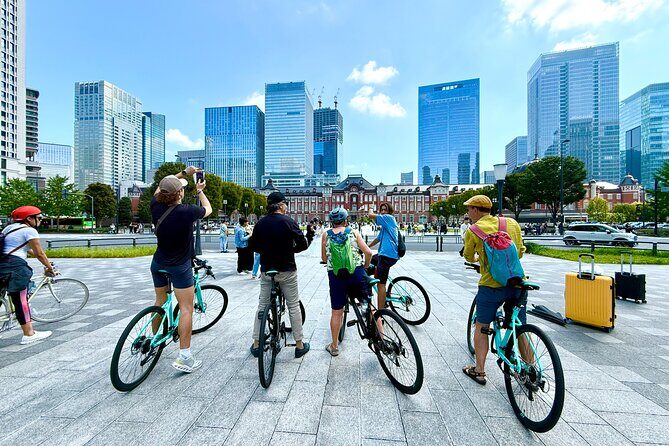
The tour begins at the Statue of Commodore Perry in Shibakōen (Minato City). It’s a good starting point because you’re in a central pocket—right where Tokyo’s mix of old and new starts showing quickly.
Once you meet your guide and get your bike, you’re not just handed wheels and told good luck. You get a quick setup that matters: a mini pouch on the bike for your phone, wallet, and keys, plus a clear sense of how the ride will work as a group. If the day is wet, you’ll get a raincoat on rainy days, which is a big deal in Tokyo when weather changes fast.
The e-bike/pedal-assist option is the secret weapon for this kind of route. Even so, the tour still expects moderate physical fitness. The riding time isn’t extreme, but you’ll be moving. You’ll also want to be comfortable enough to pedal steadily through city conditions—especially later when the route pulls you into Shibuya’s energy.
A practical tip: bring any needed cash ahead of time. Helmets are not included, and the helmet rental is listed as ¥1000, with payment handled with cash on the activity date.
Stop 1: Zojo-ji Temple and that iconic Tokyo Tower backdrop
Zojo-ji is where the tour flexes its “Tokyo history meets skyline” skill. This Buddhist temple complex is closely tied to the Tokugawa era and is described as a religious center and resting place for warlords. In plain terms: it’s not just a pretty stop; it’s a place where Tokyo’s power history shows up in stone and ceremony.
You’ll have about 5 minutes here, with free admission listed. That short time is intentional. This is a photo-and-orientation stop: look around, get a feel for the temple grounds, and connect it to what you’ll see next. Next to Tokyo Tower, Zojo-ji has the advantage of giving you a rare city blend—ancient temple atmosphere with a modern landmark right beside it.
How to get the most in such a short stop: don’t try to do everything. Pick one or two angles, get your shots, and then move on. The tour’s value is the chain of stops, not lingering at one spot for a full hour.
Stop 2: Imperial Palace area with the big-picture context
Next up is the Imperial Palace—Japan’s Emperor’s residence—and the tour uses this stop to ground you in Tokyo’s core identity. The palace grounds are a symbol that’s hard to appreciate if you only see it from distance on a crowded bus.
You’ll pause around 15 minutes with free admission listed. That extra time (vs. some other stops) is helpful because the Imperial Palace area rewards attention to layout and perspective. You’re not just looking at buildings; you’re learning where the center of authority sits in the city’s geography.
A subtle benefit: if you do this early in your trip, you start understanding why so many Tokyo areas feel arranged around the palace and its surrounding channels and access points. Even if you later choose to explore on foot, that mental map helps.
Stop 3: Tokyo Station’s Marunouchi frontage for a red-brick reset
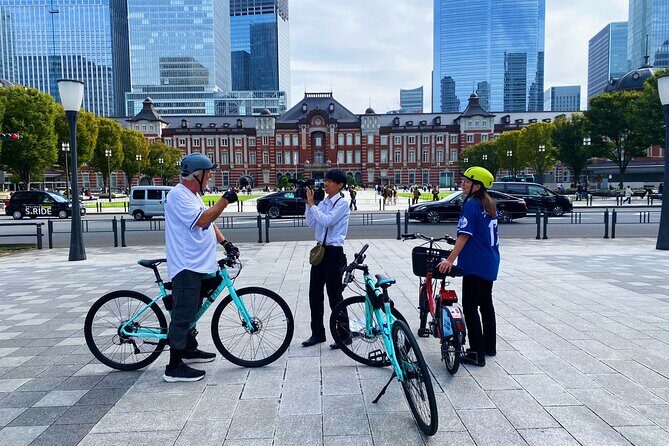
Tokyo Station can feel like a blur when you’re rushing through platforms. From the bike, it becomes something else. You get a quick look at the station’s red-brick facade—opened in 1914—and its blend of modern transportation with old-style architecture.
The stop is about 10 minutes with free admission listed. You’re likely to see the facade and the station’s public face, not a deep interior visit. That’s fine. The point here is orientation: once you know what Tokyo Station looks like from the street, you stop feeling lost when you pass it later on your own.
One practical note: don’t expect this to be your one “station moment” for the whole trip. Treat it like a visual bookmark, then let the ride carry you forward.
Bigger sweeps: other Tokyo city tours

Stop 4: Kokyo Otemon Gate for classic gate-photo energy
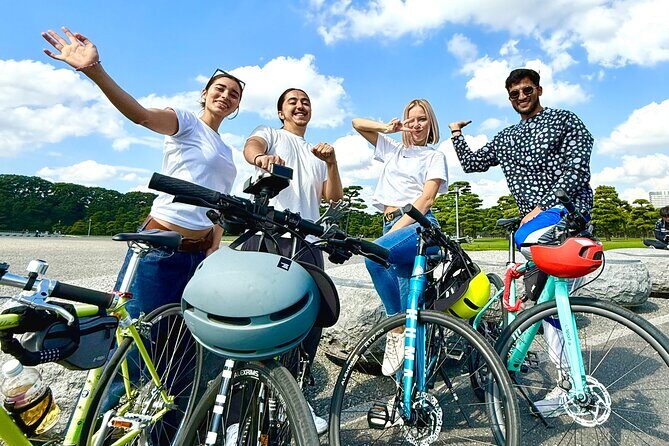
From there, the tour targets another strong Imperial Palace image: Kokyo Otemon Gate, described as the main entrance gate. You’ll have around 10 minutes with free admission listed.
This is one of those spots where a quick pause works because the gate is built for photos. The “why it matters” is simple: gates in Japan are often about thresholds—where public space turns formal. Looking at the gate after you’ve already seen Tokyo Station and the wider palace context makes the transition feel clearer.
If you’re trying to photograph without frustration, do it early in your pause. The longer you wait, the more people arrive.
Stop 5: Akasaka Palace (State Guesthouse) and the shift to quiet formality
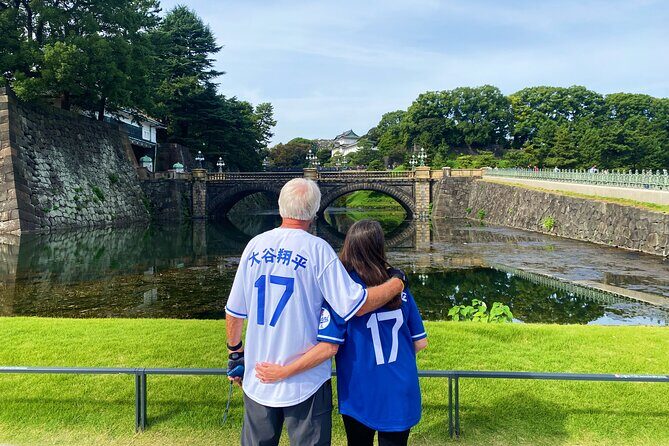
Akasaka Palace, also known as the State Guesthouse, is a change in mood. The tour describes it as originally built as a royal villa and now used for state purposes.
You’ll stop for about 5 minutes with free admission listed. Expect it to be more of a “brief look and learn” moment than a lingering visit. Still, this kind of stop is useful because it helps you notice how Tokyo’s neighborhoods carry layers of function—royal and ceremonial spaces mixed with normal city life around them.
The main value is perspective. Without a guide, it’s easy to miss why some streets feel calmer or more controlled than others.
Stop 6: Japan National Stadium, built for sports history
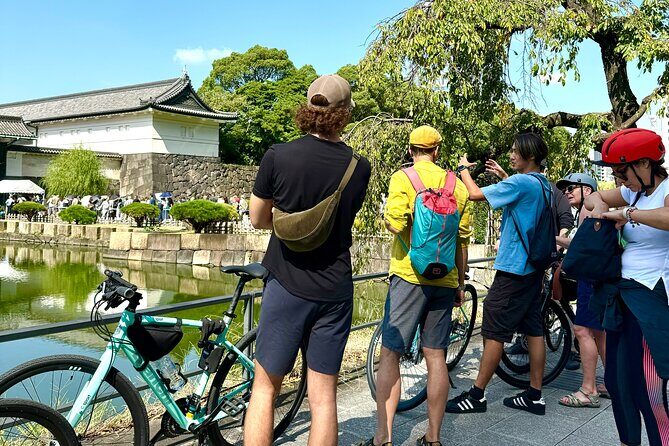
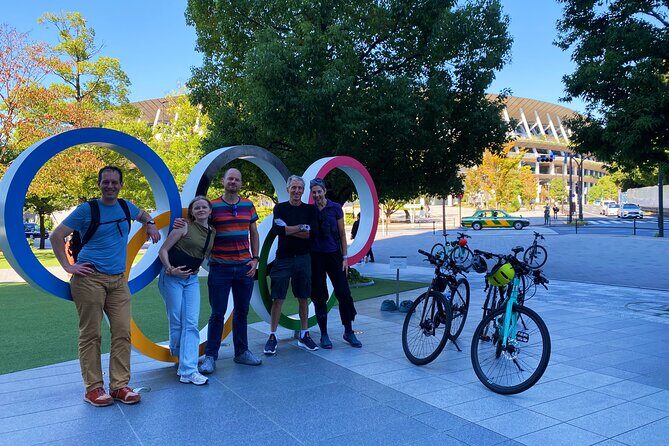
You’ll roll to Japan National Stadium, the site associated with the 2020 Tokyo Olympic and Paralympic games.
The stop is about 15 minutes with free admission listed. A longer pause here makes sense. A stadium isn’t just a building; it’s part of Tokyo’s modern identity, and it’s a useful anchor when you’re thinking about how the city presents itself globally.
If you’re a sports fan, this is a satisfying checkpoint. If not, it still gives you a break from “old Tokyo” and a shift into the era where Tokyo hosted large-scale international events.
Stop 7: Aoyama Street for design-minded Tokyo street edges
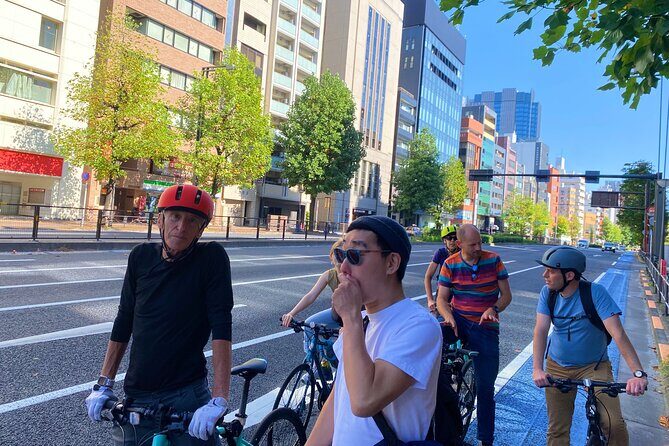
Aoyama Street is where the tour turns into fashion-and-architecture mode. The description points to high-end fashion brands and distinctive architecture.
The stop is 5 minutes with free admission listed. That’s short, but it works because Aoyama’s appeal is in quick visual impressions—street lines, storefront design language, and how the neighborhood feels when you ride through it.
How to enjoy it on a tight schedule: look forward while riding, then use your brief stop to turn your head and scan. Trying to “inspect” every building won’t fit the time. The guide’s value is picking the sections worth noticing.
Stop 8: Shibuya Cat Street for shopping grit and vintage vibes
Then you’re in Shibuya, moving into Shibuya Cat Street—famous for the latest fashion brands alongside vintage shops.
This stop is 5 minutes with free admission listed. Cat Street is one of those places where even a short look tells you a lot about youth culture and street style. The tour doesn’t ask you to shop; it asks you to see the street personality.
A good move here is to be mentally ready for crowds. Cat Street is busy, and you’ll be on a bike among people. Stay alert, keep your speed gentle, and follow your guide’s pacing.
Stop 9: Shibuya Crossing, the world-famous chaos you can actually ride through
Finally, you reach Shibuya Crossing and ride through it. This is the headline sight. Even if you’ve seen it on video, it hits differently when you’re physically there with the bike under you.
The stop is about 5 minutes with free admission listed. This is another “do it right now” moment—don’t treat it like a sightseeing marathon. The energy is the point.
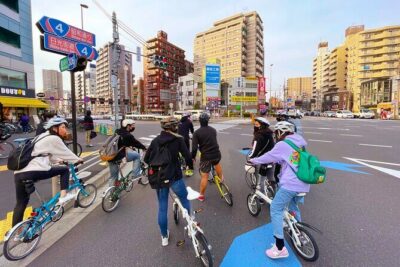
Some guides are especially good at making this moment feel manageable. Past groups have been advised on how to handle the traffic flow and crowd behavior, and the ride is designed so the guide can keep the group together. If you’re biking for the first time, this is where a calm attitude pays off. Listen, watch, and keep your hands steady.
If your schedule allows, consider choosing a time window that matches how you want Shibuya to feel—daytime is energetic and daytime clear; later can feel more dramatic. The tour option you choose will affect that.
Ending near Yoyogi Park and Harajuku: keep your momentum
The tour ends at Bell of Peace in Udagawacho, Shibuya (near Harajuku). The route also notes that the finish is close to Yoyogi Park and about a 10-minute walk to Shibuya Station, plus it mentions ending in the Jinnan area, good for shopping and dining.
This ending matters more than you might think. Many city highlights tours end somewhere inconvenient, forcing you to backtrack. Here, you land in an area where you can keep going immediately—either toward Yoyogi Park for a breather or toward Shibuya for your next meal and people-watching.
If you’re building a Tokyo itinerary, this tour is a strong “first pass.” You get the big anchors, then you return on your own to whatever neighborhoods you liked most.
Price and what you’re really paying for
At $63.01 per person for a roughly 3-hour private bike/e-bike tour, the value comes from what’s bundled.
Included:
- Use of bicycle (and the e-bike/pedal assist option is part of the product feel)
- In-person guide (English/Japanese)
- Raincoat on rainy days
- Mini pouch for phone/wallet/keys
- Bike insurance
- Helmet rental availability for an extra fee
Not included:
- Helmet rental (¥1000, cash on the day)
- Food and drink
Here’s the practical way to think about it: you’re paying for a guide-led route and the bike itself. In a city like Tokyo, the guide’s real service is reducing wasted time—time spent figuring out where to go next, which streets are safest, and how to move efficiently between distant landmarks.
If you only want one or two sights, a paid bike tour might feel like overkill. But if you want a quick map of Tokyo’s major highlights and neighborhoods in one outing, this price starts looking fair.
Guides, safety, and the rhythm of riding in traffic
The best part of this tour isn’t just where you go. It’s how the ride happens.
Across guide examples—Naoki, Hiroto, Sho, Rin, Rinto, Kei, Casey, and Shao—you’ll notice a consistent pattern: guides explain things clearly and help the group stay organized. Some have been praised for sharing stories that connect history to what you’re seeing, and others for communicating well in English (with Japanese support too).
For safety, you should expect active group management. Guides are described as riding in front and back to keep spacing and help everyone move together. There’s also mention of guides walking riders through basic road rules and how to stay safe when traffic and crowds get intense.
What this means for you:
- If you can handle short rides and you’re willing to follow instructions, you’ll likely feel relaxed fast.
- If you’re very anxious about bikes in crowded city areas, be honest with yourself and plan for a slower, careful ride style.
Who this tour fits best (and who should skip it)
This tour makes the most sense for you if:
- You have limited time and want multiple Tokyo landmarks in one outing
- You want a guided route so you don’t waste your day figuring logistics
- You’d rather ride past neighborhoods on wheels than spend the day on trains and on foot
- You’re okay with short stops where photos and quick looks are the main goal
It may not be the best fit if:
- You strongly dislike biking through busy streets
- You want long museum-style time at each landmark
- You don’t like riding continuously for around 3 hours, even on an e-bike
Should you book this Tokyo bike/e-bike highlight tour?
If your goal is seeing a lot fast—Zojo-ji to the Imperial Palace area, then Tokyo Station, then Aoyama to Shibuya Crossing—this is a smart booking. You’ll get a structured route, free admission stops listed for the main sights, and a guide who helps you feel oriented rather than overwhelmed.
Book it if you want your Tokyo highlights in one shot, with less stress and less guesswork. Skip it if you want deep, slow visits or if biking near crowds makes you tense. For most time-crunched first-timers, this is one of the quickest ways to get your bearings and decide what you’ll explore next.
FAQ
How long is the Tokyo bike/e-bike highlights tour?
It’s about 3 hours total, and the total duration includes travel time between stops.
Is this tour private?
Yes. It’s listed as a private tour/activity, so only your group participates.
What bike options do you get?
The tour includes use of a bicycle, and the experience is commonly offered with e-bike/pedal assist style riding.
Is the helmet included?
No. Helmets are not included, but you can rent one for ¥1000. You need to bring cash on the activity date.
Is a raincoat provided?
Yes. A raincoat is included on rainy days.
What are the main stops on the route?
The tour highlights include Zojo-ji, the Imperial Palace area (including Kokyo Otemon Gate), Tokyo Station Marunouchi Ekimae Hiroba, Akasaka Palace (State Guesthouse), Japan National Stadium, Aoyama Street, Shibuya Cat Street, and Shibuya Crossing, ending near Yoyogi Park/Harajuku.
Are there entrance fees at the stops?
The listed admission for each stop is shown as free.
What if the weather is bad?
The experience requires good weather. If it’s canceled due to poor weather, you’ll be offered a different date or a full refund.
Where does the tour start and end?
It starts at the Statue of Commodore Perry in Shibakōen (Minato City) and ends at the Bell of Peace in Udagawacho (Shibuya), near Yoyogi Park and Harajuku.
Tokyo on Two Wheels

More Tours in Tokyo




More Tour Reviews in Tokyo




Fresh reviews from around Tokyo






Cycling Tours, compared.
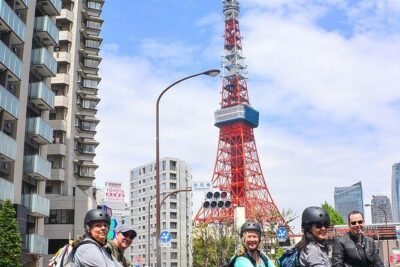 ★ 5.0Tokyo Guided Small-Group Biking TourFrom $1061,250 reviews
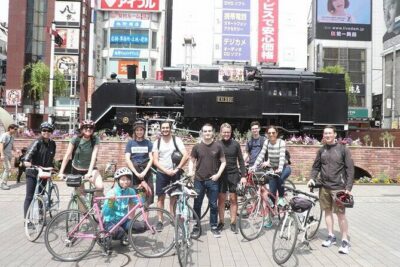 ★ 5.0Tokyo Great Cycling TourFrom $99811 reviews
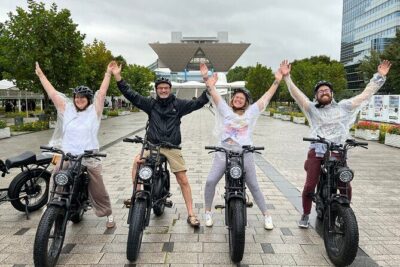 ★ 5.0Tokyo Top Highlights 3h Guided E-bike TourFrom $63714 reviews
3-Hour Bike or E-Bike City Highlights TourFrom $45435 reviews
★ 5.0Tokyo Top Highlights 3h Guided E-bike TourFrom $63714 reviews
3-Hour Bike or E-Bike City Highlights TourFrom $45435 reviews
 ★ 5.0Tokyo West-Side Cycling & Food TourFrom $99214 reviews
 ★ 5.0Small Group Cycling Tour in TokyoFrom $66184 reviews
 ★ 5.0Tokyo downtown bicycle tour Tokyo Backstreets Bike TourFrom $65117 reviews
 ★ 5.03-Hour Tokyo Private E-Bike Tour Starting from Your HotelFrom $145117 reviews
Browse the lists this tour appears in