
Reviewed · CYCLING TOURS
Tokyo Cherry Blossoms blooming spots E-bike Tour, 3hrs
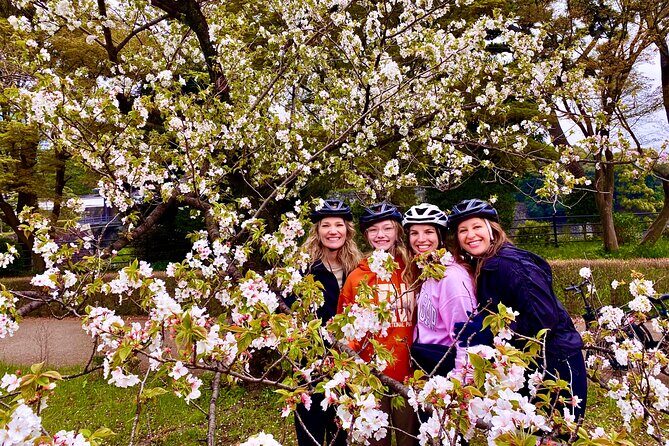
Sakura season in Tokyo moves fast. This 3-hour e-bike cherry blossom tour is a smart way to see the classic spots without turning your day into a sweaty scavenger hunt.
You start near Kanda station and roll through the spring bloom on electric assist, with a certified guide and planned stops at major blossom areas like Chidorigafuchi and Yasukuni Shrine. The best part is the mix of quick photo moments and short walks where you can actually slow down and look around.
I love two things here: you get easy transport that lets you cover more ground, and the guides add context so the blossoms feel connected to Tokyo, not just pretty trees. The only real catch is simple: you must be able to ride a bicycle. If riding isn’t your thing, this isn’t the tour to force.
In This Review
- Key Highlights You’ll Notice Right Away
- Why an E-bike Sakura Tour Beats the Usual Walk-and-Wait
- Getting Set at the Kanda Base Without Feeling Rushed
- The First Bloom Stop: Chidorigafuchi Photos With a Quick Look Around
- Yasukuni Shrine: A Short Dismount That Changes the Mood
- Sotobori Park: Riding the Blossom Lined Outer Moat View
- Hibiya Park: A Pass-By Moment That Still Counts
- Kensei Kinenkan: A Final Photo-and-Observe Break
- The Tour Experience You’re Really Paying For: Guide + Route Design
- What Happens If Sakura Isn’t in Peak Bloom
- What to Bring (So You Don’t Get Caught Off Guard)
- Who This Tour Fits Best
- Should You Book This Tokyo Cherry Blossoms E-bike Tour?
- FAQ
- How long is the Tokyo Cherry Blossoms E-bike tour?
- How much does the tour cost?
- Where does the tour start?
- Is the group size small?
- What cherry blossom stops are included?
- Do I need to pay admission at the stops?
- What’s included in the price?
- Is food or drinks included?
- What if cherry blossoms are not in peak bloom?
- Do I need to be able to ride a bicycle?
Key Highlights You’ll Notice Right Away
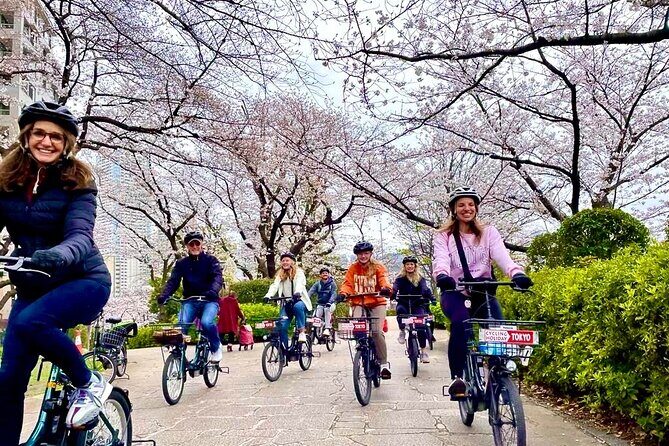
- E-bikes handle the work: electric assist makes the route feel doable, even if you’re not training for the Tour de France.
- Small group feel: up to 6 people means less stop-and-go chaos and smoother navigating through busy areas.
- Multiple blossom stops: you hit well-known parks and shrine grounds, with short time blocks for photos and strolling.
- Guide-led context: people like Take, Jenny, Kenta, and Yoshihisa (Yoppi) are known for being fun and informative.
- Flexible approach when sakura is late: if blooms aren’t peak, the team may adjust to keep the experience worthwhile.
More of Tokyo by bike
- Tokyo Guided Small-Group Biking Tour★ 5.0 · 1,250 reviews
- Tokyo Great Cycling Tour★ 5.0 · 811 reviews
- Tokyo Top Highlights 3h Guided E-bike Tour★ 5.0 · 714 reviews
Why an E-bike Sakura Tour Beats the Usual Walk-and-Wait
Cherry blossoms in Tokyo are gorgeous, but they’re also time-sensitive. Between crowds, long walks, and the fact that you’re usually moving from one area to the next, “just go see sakura” can turn into wasted daylight.
This tour solves that by doing two practical things well. First, the e-bike gives you momentum. You glide between stops instead of spending the day on transit lines and foot traffic. Second, you’re not just snapping random trees from a sidewalk. You’re hitting planned places where you can actually stop, dismount, and see the scenery up close.
And because cars can’t access some of the paths you ride, you get a route that feels more direct and calmer than the main streets. It’s the difference between watching Tokyo from the outside and moving through it like you belong there for a few hours.
Getting Set at the Kanda Base Without Feeling Rushed
Your meeting point is at Cycling Holiday Tokyo near Kanda station (JR Yamanote Line / Tokyo Metro). It’s the kind of start that helps you get oriented fast—especially if this is your first day in the city.
You’ll be issued your rental e-bike and helmet, and you’ll be able to leave luggage (just not valuables) during the tour. That matters if you’ve got a daypack plus a couple of bags and don’t want to lug everything into parks and busy streets.
One small bonus: the base is listed as having a traveler’s point with free Wi-Fi, which is handy if you want to check maps, find the right photo angle, or confirm your bearings before you roll out.
Timing is also friendly. The whole tour runs about 3 hours, with short stops (mostly 5–15 minutes) that keep the day moving while still giving you chances to see and photograph blossoms.
The First Bloom Stop: Chidorigafuchi Photos With a Quick Look Around
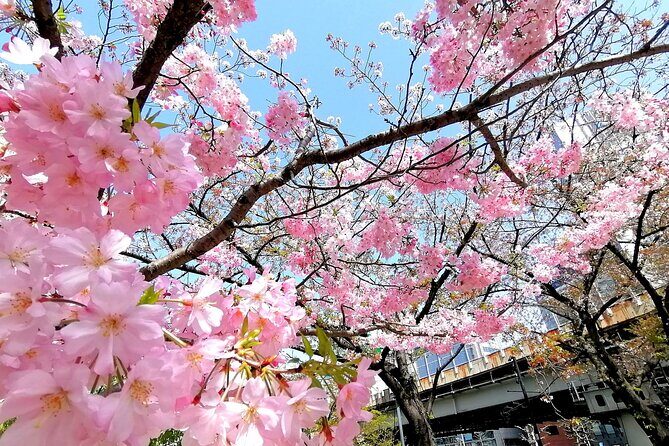
You’ll start with Chidorigafuchi, where your time is about 10 minutes. This stop is designed for the kind of sakura moment you actually came for: finding a good sightline, taking your photos, and seeing what the trees look like up close before moving on.
On an e-bike tour, the trick is to use your dismount time well. Don’t spend it overthinking settings on your camera. Instead, find a spot where you can see multiple trees at once, snap a few quick angles, and then take one slow minute to look without the phone.
Also, this stop is listed as free admission. That means you can keep your budget calm and focus on enjoying the scenery.
Yasukuni Shrine: A Short Dismount That Changes the Mood
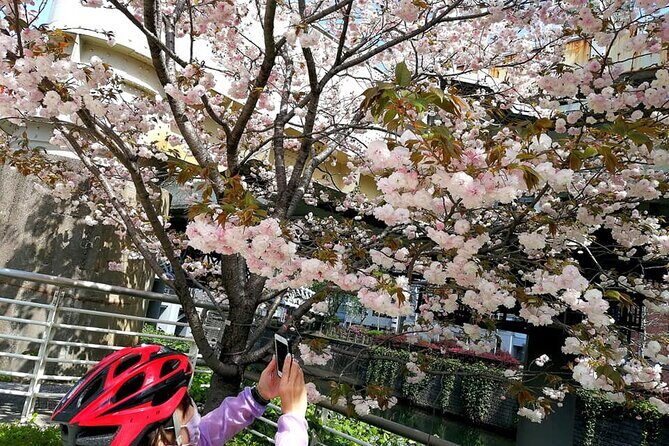
Next up is Yasukuni Shrine, with about 15 minutes on foot. This is your first longer stroll, and that extra time makes a real difference. It’s the place where the experience shifts from “look as we pass” to “pause and absorb.”
Because you get off the bike here, you’ll have a better chance to notice how people are using the space during cherry blossom season—where they stand, how they take photos, and what feels most photogenic to you.
Another plus: no admission ticket is listed for this stop. It’s also a free stop time in the schedule, so you get more value without extra costs stacking up.
Worth weighing up alongside this Tokyo pick:
Sotobori Park: Riding the Blossom Lined Outer Moat View
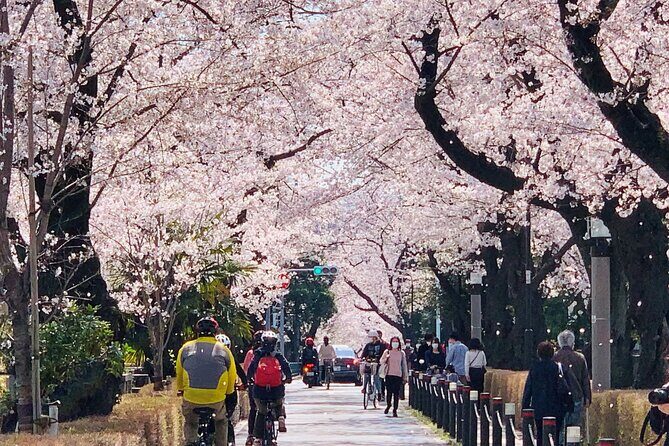
Then you roll to Sotobori Park for about 10 minutes. This one is different from the shrine stop: you can see cherry blossoms along the SOTOBORI outer moat while riding.
That’s a smart design for an e-bike tour. When blossoms line a route, you don’t always want to stop every few meters. A riding view lets you experience the continuity of the scenery instead of getting only isolated trees.
Practical tip: if you’re photographing from the bike, keep your shots simple. Aim for fewer, stronger photos—especially since you’re moving. Save your detailed close-ups for the dismount moments.
Admission here is also listed as free, which keeps the overall cost feeling cleaner and more predictable.
Hibiya Park: A Pass-By Moment That Still Counts
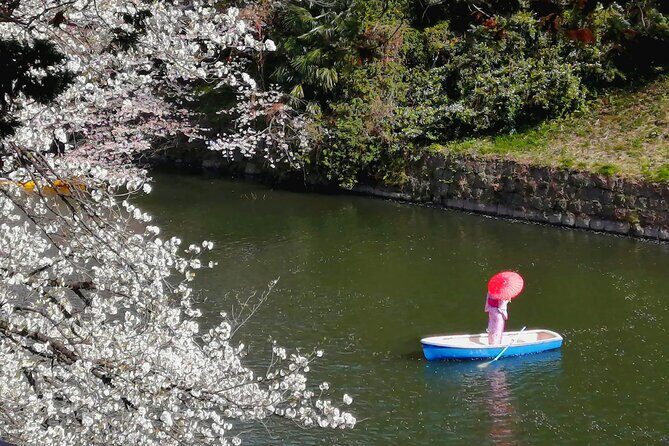
Hibiya Park is brief—around 5 minutes—and the format is more of a pass-by while looking at blossoms in the park. You might feel like “five minutes won’t do much,” but on this kind of tour that’s exactly the point.
Short park passes help you hit several iconic areas without turning the day into a marathon. You’re collecting impressions across multiple neighborhoods, not trying to win a single location with one long stop.
If your goal is photos, this is still useful. Even a quick pass can get you a wide shot and a different scene than the spots with longer walking time.
Kensei Kinenkan: A Final Photo-and-Observe Break
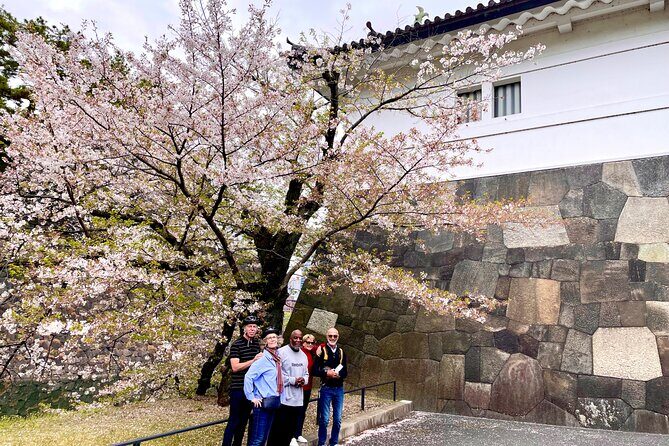
Your last scheduled stop is Kensei Kinenkan, with about 10 minutes on foot. This is another dismount moment, giving you a calmer finish and a chance to slow down for the final set of pictures.
By now, you’ll likely have the rhythm down: look, frame, snap a few, then step back and just watch for a minute. If you’re traveling with family or mixed comfort levels with bikes, this final stop is also where the tour often feels the most “vacation-like” rather than “logistics-like.”
Again, admission is listed as free for this stop, so you’ll spend time enjoying instead of budgeting time to ticket lines.
The Tour Experience You’re Really Paying For: Guide + Route Design
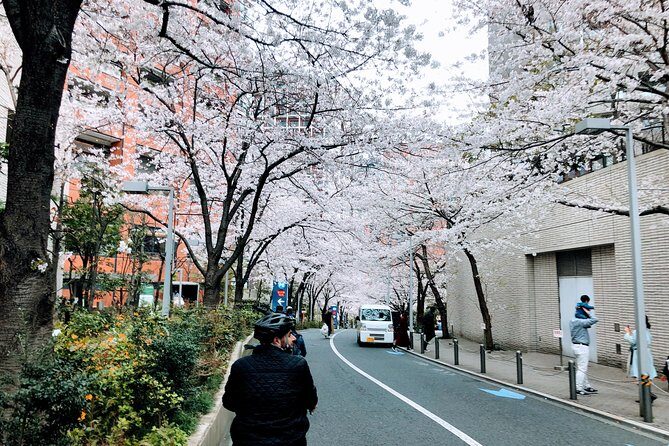
The price is $64.57 per person for about three hours, and that sounds almost too easy until you break down what’s included.
You get:
- e-bike rental and helmet
- a guide
- insurance
- the ability to store luggage during the tour
You’re not paying separately for the bike, and you’re not paying separately for a guided route plan that gets you to multiple blossom zones in a controlled time window. That’s the real value here: time saved, effort reduced, and better use of Tokyo’s spring energy.
And the guides seem to understand what visitors need. Multiple guides called out in feedback are described as being polite, fun, and informative, with the kind of storytelling that helps you connect what you’re seeing to the city around you.
Names that show up in feedback include Take, Jenny, Kenta, Kay, and Yoshihisa (Yoppi). If you get one of them, you’re likely to get a tour that feels more like a guided walk through Tokyo’s meaning rather than a simple transport service.
What Happens If Sakura Isn’t in Peak Bloom
Cherry blossoms don’t always obey calendars. Sometimes they’re late, or the peak window passes before you arrive.
One advantage of this tour format is that the team has shown flexibility. If blossoms aren’t where they should be at peak, you may be offered a modified experience—with adjustments such as switching to a more regular e-bike route option.
That matters because it protects your day. You’re still on an e-bike, still seeing Tokyo, still getting the guide experience. You’re not stuck standing around wishing for better weather and better timing.
What to Bring (So You Don’t Get Caught Off Guard)
This tour includes helmets and the bike, but it doesn’t include everything you might want.
Bring:
- towels and sunscreen in summer
- warm clothes and gloves in winter
- your own rain gear if weather looks iffy
Also, this experience requires good weather. If it’s canceled due to poor weather, you’ll be offered another date or a full refund.
Since stops are short, you’ll want to be comfortable enough to move quickly. You don’t want your jacket zippers, bag straps, or shoes turning into a mini project during the day.
Who This Tour Fits Best
This is a strong choice if you want:
- a classic sakura highlight circuit
- an easy way to move between multiple parks and shrine grounds
- a guide who explains more than just where to stand for a photo
It’s especially good for people who aren’t confident on long bicycle days or who don’t want to overthink routes. Electric assist keeps it smoother, and the small group size (maximum 6) makes the whole thing easier to manage.
There are two clear limitations. First, you need the ability to ride a bicycle; if you cannot, you can’t join. Second, there’s a minimum height of 147 cm and minimum age of 12.
If you have a teen or adult who can ride and you want an efficient spring day in Tokyo, this tour is built for you.
Should You Book This Tokyo Cherry Blossoms E-bike Tour?
I think you should book it if your top priority is seeing multiple sakura areas in one half-day, with less walking and more guidance than you’d get going solo.
Choose it when:
- you want a structured route with planned stops
- you like photo opportunities but don’t want to spend hours searching
- you’d benefit from a small group setting
Skip it if:
- you’re not comfortable riding a bike
- you want long, slow time in just one single blossom location (this is more “hit the highlights efficiently” than “linger for hours in one park”)
If you’re traveling in late March through April, or any time cherry blossom timing is uncertain, this format is still a good bet because you’re not betting only on perfect peak bloom—you’re also getting a guided Tokyo ride that’s designed to deliver.
FAQ
How long is the Tokyo Cherry Blossoms E-bike tour?
The tour lasts about 3 hours.
How much does the tour cost?
It costs $64.57 per person.
Where does the tour start?
It starts at Cycling Holiday Tokyo near Kanda station, at 3-chōme-8-6 Uchikanda, Chiyoda City, Tokyo 101-0047, Japan.
Is the group size small?
Yes. The maximum group size is 6 people per booking, and there is a minimum of 2 per booking.
What cherry blossom stops are included?
The tour includes Chidorigafuchi, Yasukuni Shrine, Sotobori Park, Hibiya Park, and Kensei Kinenkan.
Do I need to pay admission at the stops?
Admission tickets are listed as free for the stops mentioned (Chidorigafuchi, Yasukuni Shrine, Sotobori Park, Hibiya Park, and Kensei Kinenkan).
What’s included in the price?
The price includes the e-bike rental, helmet rental, guide, and insurance. You can also leave luggage (except valuables) during the tour.
Is food or drinks included?
No. Food and drinks are not included.
What if cherry blossoms are not in peak bloom?
The experience depends on conditions. Based on adjustments mentioned in feedback, the team may modify the outing (for example, switching to a more regular e-bike tour) if blossoms are not in bloom as expected.
Do I need to be able to ride a bicycle?
Yes. If you cannot ride a bicycle, you cannot join the tour.
Tokyo on Two Wheels

More Tours in Tokyo




More Tour Reviews in Tokyo




Fresh reviews from around Tokyo






Cycling Tours, compared.
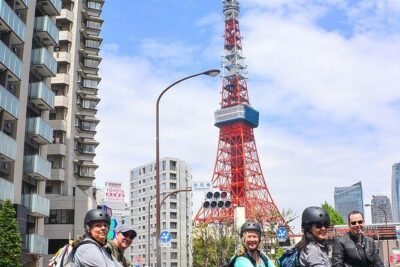 ★ 5.0Tokyo Guided Small-Group Biking TourFrom $1061,250 reviews
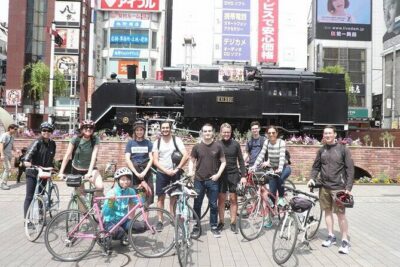 ★ 5.0Tokyo Great Cycling TourFrom $99811 reviews
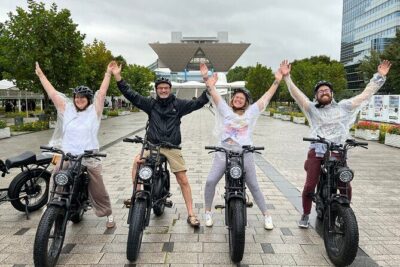 ★ 5.0Tokyo Top Highlights 3h Guided E-bike TourFrom $63714 reviews
3-Hour Bike or E-Bike City Highlights TourFrom $45435 reviews
★ 5.0Tokyo Top Highlights 3h Guided E-bike TourFrom $63714 reviews
3-Hour Bike or E-Bike City Highlights TourFrom $45435 reviews
 ★ 5.0Tokyo West-Side Cycling & Food TourFrom $99214 reviews
 ★ 5.03-Hour Bike/E-Bike Tour of the City’s HighlightsFrom $63209 reviews
 ★ 5.0Small Group Cycling Tour in TokyoFrom $66184 reviews
 ★ 5.03-Hour Tokyo Private E-Bike Tour Starting from Your HotelFrom $145117 reviews
Browse the lists this tour appears in