
Reviewed · TOKYO
Old Town Tokyo: Shinagawa-Juku Walking Tour
Shinagawa has a slow, old soul. This 3-hour Old Town Tokyo walk traces Edo-era Shinagawa-Juku along the Old Tokaido Road, using back alleys and local landmarks so you do not waste time guessing your way. You also get context as you go, not a lecture dumped at the start.
I like two things a lot. First, it is a small group with a maximum of 8, so your guide can actually be heard and questions are easy. Second, hot drinks (coffee or tea) are included, which helps when the pace is stop-and-start in real city weather.
One drawback to consider: it is walking, with no lunch included, so you’ll want comfy shoes and a simple food plan before or after.
In This Review
- Key highlights you’ll feel fast
- Shinagawa-Juku: Edo-era Tokyo on foot
- Kitashinagawa to Shimbamba: easy logistics, smart pacing
- Stop 1: Shinagawa-Ura Park and the old fishing shore
- Stop 2: Kyu-Tokaido Street, the Edo-to-Kyoto travel engine
- Hozenji Temple’s quiet alleyways and the well
- Shotokuji Temple in seasonal light, plus an unusual fence
- Ebara Jinja Shrine and the rain-prayer legend by the Meguro River
- Shinagawa Shrine finale: mini-Fuji and post-town protection
- What makes the guide matter: Charlotte’s real-world help
- Price and value: what you get for $94.88
- When to go, and how to plan your day
- Who this Shinagawa-Juku walk is for
- Should you book this Shinagawa-Juku walking tour?
- FAQ
- How long is the Shinagawa-Juku walking tour?
- How big is the group?
- What is the price per person?
- Where do you meet and where does the tour end?
- Is the guide English-speaking?
- Are hot drinks included?
- Is lunch included?
- Are admission fees included for the stops?
- What happens if weather is bad?
Key highlights you’ll feel fast
- Max 8 people keeps the tour conversational, not rushed
- Hot coffee or tea included to keep you going between stops
- Edo-to-Kyoto Tokaido Road focus helps the area make sense
- Temple and shrine variety without long travel time
- Shinagawa Shrine plus the mini-Fuji gives a memorable finale
- Route ends at Shimbamba after starting at Kitashinagawa, so you cover more ground
Before you commit, see how this one stacks up against a few Tokyo favourites:
- Mt Fuji and Hakone 1-Day Bus Tour Return by Bullet Train★ 5.0 · 26,383 reviews
- 1-Day Tokyo Bus Tour★ 5.0 · 14,250 reviews
- Tokyo: teamLab Planets TOKYO Digital Art Museum Entry Ticket★ 4.6 · 9,779 reviews
Shinagawa-Juku: Edo-era Tokyo on foot
The fun of this walk is that it slows Tokyo down. You start in the Kitashinagawa area and spend the next few hours moving through streets that feel more like an old post-town than a modern commuter hub. The key is the “why” behind each place. Instead of only looking at buildings, you learn how Shinagawa fit into travel between Edo and Kyoto along the Tokaido Road.
Two ideas shape the whole experience. One is that Shinagawa was tied to movement. People traveling the road needed inns, shops, and services, and the area grew around that demand. The other idea is that local belief and daily life ran alongside transportation. You see temples branching off the main route, shrines connected to the post-town, and even evidence of the shore’s older fishing past.
This is also a practical tour for people who dislike getting lost in older city neighborhoods. You are walking on footpaths and side streets, but you’re following a plan with an English-speaking guide. That means you spend less time “where am I?” and more time noticing details like old lanes, quiet corners, and the way religious sites sit inside residential areas.
Kitashinagawa to Shimbamba: easy logistics, smart pacing
The tour starts at Kitashinagawa Station (1 Chome-1, Kitashinagawa, Shinagawa City) and ends at Shimbamba Station (2-chōme-18-1, Kitashinagawa, Shinagawa City). The start is one stop from major Shinagawa Station, so you’re not stuck out in the countryside.
You’re in the street for about 3 hours, and the schedule is paced around shorter stops plus one longer temple/shrine segment at the end. Most of the listed places have free admission, with Shinagawa Shrine included, so you’re not hit with surprise entry fees as you walk.
A couple more things matter for comfort. This is a small-group format (up to 8), and it includes coffee or tea. That is not just a nice touch. It helps you keep a steady pace while moving between spots and gives you a break that feels natural instead of forced.
Transport fees and hotel pickup/drop-off are not included. You’ll just want to plan your own route to Kitashinagawa, then think of Shimbamba as your “walk-to” finish point. Since the end is near public transportation, you should be able to head back toward your next stop without drama.
Stop 1: Shinagawa-Ura Park and the old fishing shore
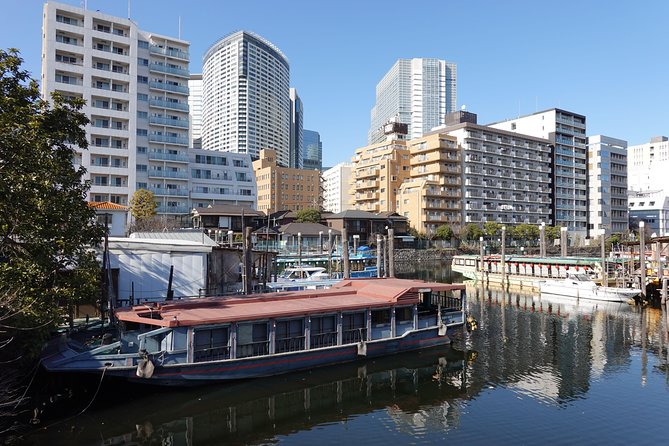
You begin with Shinagawa-Ura Park, and it sets the tone quickly. In Edo times, the shore near Shinagawa was used for fishing, and a small but prosperous fishing village grew up there. Even though commercial fishing is no longer the point, the area keeps a nostalgic feel.
This first stop is useful because it gives you a lens before the big road story. When you later hear about travelers moving along the Tokaido Road, it helps to remember that Shinagawa was not only a transport node. It was also a place where people depended on the shoreline and local work.
Time here is short (about 15 minutes), so treat it like a warm-up. Walk slowly, notice how the space feels, and let your guide connect the dots between shore life and post-town life. It’s the kind of start that helps you stop thinking of Tokyo as one uniform city.
Stop 2: Kyu-Tokaido Street, the Edo-to-Kyoto travel engine
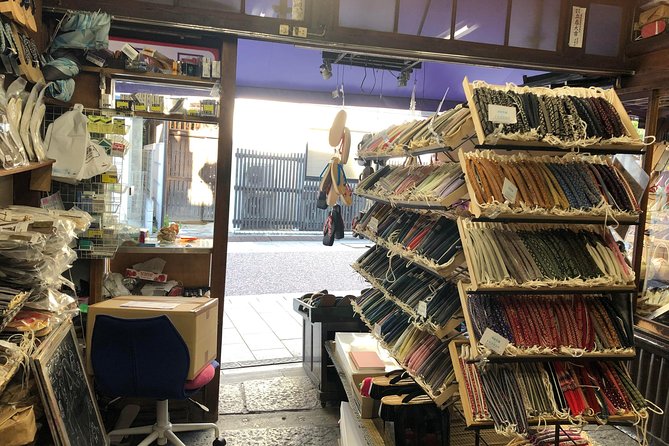
Next comes Kyu-Tokaido Street, where the tour really starts to feel like a story with momentum. Your guide explains that the Kyu-Tokaido Road was the first stop for people traveling from Tokyo to Kyoto. It was lively, packed with inns and shops meant to serve travelers with what they needed along the way.
You’ll appreciate this stop more if you picture the travelers. They were not tourists with smartphones and maps. They needed meals, lodging, supplies, and directions, and that kind of service business tends to leave a physical imprint on neighborhoods.
A standout detail here is that this area survived fires better than many other places. That matters in Tokyo. Fires shaped what is still here, which streets look the way they do, and what visitors can experience today. So when you walk this stretch, you are seeing a survival story layered into the everyday street scene.
You’ll spend around an hour here, so it is not just a quick photo stop. You can slow down, watch how shopfronts and small street patterns work together, and get a feel for how post-town life may have functioned.
Possible drawback: since it is one longer segment, it can feel like a lot of street time if you prefer lots of variety. If that is you, keep your attention on what your guide points out, because that is what turns a long street walk into something meaningful.





Hozenji Temple’s quiet alleyways and the well
After the road section, the tour shifts into side streets where you start finding the calmer, tucked-away places. Hozenji Temple is reached through smaller streets and alleyways off the main route, the kind of lanes where local temples and old houses sit close to everyday homes.
The atmosphere here is about contrast. You move from the travel-focused street into quieter corners where greenery covers old houses and you can spot a water well in the middle of a residential area. That detail alone is a reminder that history in Tokyo is not only monuments. It is also daily infrastructure and the way community spaces are arranged.
This stop is brief (around 10 minutes), but it works as a reset. It helps you understand why temples in these areas are not isolated sights. They are part of the neighborhood rhythm.
A good tip: bring your attention for small textures. In a short time, you’ll get more by noticing the feel of the lane, the layout around the well, and how the temple sits within the surrounding streets than by chasing only landmark photos.
Shotokuji Temple in seasonal light, plus an unusual fence
Next is Shotokuji Temple, accessed from Shinbaba Street. Your guide points out why it is especially pretty in autumn, surrounded by maple trees. Even if you are not traveling in fall, it is still a strong stop because it shows you how seasonal planning influences what people notice and photograph in Tokyo.
Shotokuji also has an unusual fence, another detail that helps you remember the place after you move on. This is the kind of stop that works well on a walking tour because it gives a quick “aha” moment without needing much time.
Time here is very short (about 5 minutes). So if you like slow wandering, you may want to pause a bit longer on your own at the next lull in the tour. For this one, follow your guide’s lead, take in the maple-fence-temple mix, then keep going.
Ebara Jinja Shrine and the rain-prayer legend by the Meguro River
The tour then moves to Ebara Jinja Shrine, located next to the Meguro River. Your guide shares that the shrine has been worshipped since 709, and it is connected to the dragon god. People come to pray for rain, linking the sacred space directly to real needs.
There is also a historical note tied to the river. You learn that in 1062 they took water from the nearby river, tying faith and local survival to the landscape you can still see today. Even if you do not focus on the legend details, the payoff is that the shrine feels like it belongs to the place, not pasted onto it.
This stop is around 10 minutes, so you’re not stuck in one spot. Still, it gives you a different type of Tokyo experience: quiet, worship-focused space inside an area you’re already walking through for road and temple context.
Practical thought: if the weather is hot or humid, shrine shade and the short stop length can be a welcome change of pace after the longer street segment.
Shinagawa Shrine finale: mini-Fuji and post-town protection
The final big stop is Shinagawa Shrine. It is the longest segment (about 50 minutes) and it’s a strong ending because it ties together the post-town theme.
Shinagawa Shrine was founded in 1187 as a guardian for the nearby post-town. That “guardian” idea matters. It explains why shrines like this were not just religious sites. They were part of how communities supported safety, order, and the daily life around the road system.
One standout feature is the fujizuka, a mini-Fuji built for worshippers who did not have the strength or money to climb Mt. Fuji. It is a powerful reminder that people adapt devotion to their own reality. Instead of viewing the mini-Fuji as a novelty, your guide frames it as practical compassion, which makes the site feel warmer.
This stop is also where the pace feels most relaxed. Plan to look around rather than just take one quick photo. Since it is included (admission included for the shrine), you’re not watching the clock for ticket lines. You can simply spend that time absorbing the shrine’s role as the tour’s thematic wrap-up.
What makes the guide matter: Charlotte’s real-world help
Small-group tours live or die by the guide. In this case, the experience leans hard on clear explanations and friendly guidance.
One guide name you may hear is Charlotte. Her approach is described as friendly and grounded, with strong context not just on history and culture, but also on how the subway system fits into getting around. That kind of knowledge is practical. After the walk, you’re more likely to navigate Tokyo’s train network without stress, because you understand where key lines and stations sit relative to the neighborhoods you just saw.
Even if you are not the kind of person who asks lots of questions, a good guide changes your senses. You notice the reasons behind alley patterns. You can connect what you saw at the road to what you see at the shrines and temples. And you stop treating the neighborhood as random streets.
Price and value: what you get for $94.88
At $94.88 per person, this is not a budget walk. But it can be good value if you care about getting the story right and you want a small-group format.
Here’s the value breakdown from what’s included:
- An English-speaking guide
- Coffee and/or tea (hot drinks)
- Most stops are free admission, with Shinagawa Shrine included
- A 3-hour guided walk that covers multiple parts of the Shinagawa-Juku area
What is not included is also important: lunch and transport fees are extra. If you already have a plan for food and you’re comfortable getting yourself to Kitashinagawa, the price feels more reasonable because the tour itself supplies the guidance and the drink.
One more thing: the tour is often booked about a month in advance. That suggests steady demand, which usually means the route and guide format are dependable. Still, with a max of 8 people, you get a reason to book sooner if your dates are fixed.
When to go, and how to plan your day
This walk is weather-dependent in the sense that it needs good conditions to run smoothly. If rain or poor weather cancels it, you’re offered a different date or a full refund. That’s a key detail because you’ll be outdoors for the full 3 hours.
Season can also change what you notice. Shotokuji Temple is called out as especially pretty in autumn because of maple trees. If you are traveling during fall, this tour gives you a very specific place to enjoy that seasonal color.
For timing, think about pairing it with Shinagawa-area sightseeing. Since the start is near Shinagawa Station (one stop away) and the end is at Shimbamba Station, you can wrap up and continue your Tokyo day without backtracking across the city.
Quick comfort advice:
- Wear shoes made for uneven sidewalks and narrow lanes.
- Dress in layers if your day flips between warm sun and cooler shade near rivers and temples.
- If you hate carrying stuff, keep your bag small so you can move easily through crowded street segments.
Who this Shinagawa-Juku walk is for
This tour fits best if you want Edo-era Tokyo without turning it into a scavenger hunt. You’ll probably enjoy it if you like:
- History explained through real places (not only museum facts)
- Quiet temples and shrines inside a working modern city
- A guide who can also help with practical city movement
It is also a strong match if you dislike large group noise. With a small group size, you can hear your guide and stay engaged at each stop.
One caution: if you are looking for a “big ticket” attraction with dramatic scale, this is more about local texture and context than about landmark size. The reward is in the details and in understanding the road network behind Shinagawa-Juku’s past.
Should you book this Shinagawa-Juku walking tour?
Yes, you should book it if you want a guided walk that actually makes Shinagawa feel connected: fishing-era shoreline, the Tokaido post-town travel corridor, and the temples and shrines that shaped daily life nearby. The small group size, the included hot drinks, and the English-speaking guide make it a comfortable way to see an older Tokyo pocket without getting lost.
Skip it only if you know you will be unhappy walking for 3 hours, or if you need lunch fully included and want minimal extras. If you can handle a morning or afternoon outdoors and plan your meal, this tour is a solid use of time in Tokyo’s Shinagawa area.
FAQ
How long is the Shinagawa-Juku walking tour?
The tour lasts about 3 hours.
How big is the group?
The group is limited to a maximum of 8 travelers.
What is the price per person?
The price is $94.88 per person.
Where do you meet and where does the tour end?
You start at Kitashinagawa Station (1 Chome-1, Kitashinagawa) and end at Shimbamba Station (2-chōme-18-1, Kitashinagawa).
Is the guide English-speaking?
Yes, the tour includes an English-speaking guide.
Are hot drinks included?
Yes. Coffee and/or tea are included, and hot drinks are provided during the walk.
Is lunch included?
No, lunch is not included.
Are admission fees included for the stops?
Most stops have free admission. Shinagawa Shrine is listed as admission included.
What happens if weather is bad?
The experience requires good weather. If it is canceled due to poor weather, you are offered a different date or a full refund.
More Tour Reviews in Tokyo



Fresh reviews from around Tokyo






Tokyo, compared.
 ★ 5.0Mt Fuji and Hakone 1-Day Bus Tour Return by Bullet TrainFrom $16326,383 reviews
 ★ 5.01-Day Tokyo Bus TourFrom $12914,250 reviews
 ★ 4.6teamLab Planets TOKYO Digital Art Museum Entry TicketFrom $259,779 reviews
 ★ 4.0Mt Fuji & Hakone Cruise, Drum Show Bullet Train 1 Day from TokyoFrom $1497,413 reviews
 ★ 5.0Shinjuku Food Tour (13 Dishes at 4 Local Eateries)From $866,603 reviews
 ★ 4.4Tokyo Mt Fuji 5th St & Hakone Cruise Bus Tour w/Bullet TrainFrom $1545,024 reviews
 ★ 5.0Flagship 2-Hours Official Street Go-Kart Tour – Tokyo Bay ShopFrom $644,974 reviews
 ★ 4.5From Tokyo: Mount Fuji Full-Day Sightseeing TripFrom $684,970 reviews