
Reviewed · ASAKUSA TOURS
Tokyo Asakusa Temple & Shrine Walking Tour with Local Guide
First-time Asakusa can feel like sensory overload. That’s exactly why this short guided walk works so well: you get an easy route through the key sights, plus the why behind what you’re seeing.
I especially like the small-group size (max 8) and the guide’s steady, practical handling of temple and shrine etiquette. You’ll learn what to do and when to do it, so you don’t spend your trip guessing.
One drawback to consider: it’s a compact 2-hour loop, so you’ll be on your feet for a full morning/afternoon stretch, including time in busy temple-area sidewalks.
In This Review
- Key highlights worth your attention
- Why Asakusa is a great first temple day in Tokyo
- The 2-hour walking loop: what you’ll actually do
- Starting at Azumabashi Bridge: the skyline view and the “gateway to old Tokyo” feeling
- From the nearby landmark to the Thunder Gate approach
- Kaminarimon to Nakamise: how to handle the shop street without getting overwhelmed
- Hozomon Gate: architectural meaning you’ll miss on your own
- Sensoji Temple: Tokyo’s oldest major Buddhist temple, explained in plain language
- The rituals that turn sightseeing into participation: temizu, prayer, and omikuji
- Asakusa Shrine: the spiritual counterpart to the temple landmark
- Value check: is $19.82 worth it for this kind of guide-led day?
- What the guide experience looks like in real life
- Who should book this tour?
- Should you book? My take on the call
- FAQ
- FAQ
- How long is the Tokyo Asakusa Temple & Shrine Walking Tour?
- What is the price per person?
- How big is the group?
- Is admission included for Sensoji Temple?
- What rituals can I participate in?
- Where does the tour start?
- Is the tour suitable for most travelers?
Key highlights worth your attention
- Max 8 travelers: easier pacing, more questions, less shoulder-to-shoulder stress
- Temizu, prayer, and omikuji: hands-on shrine/temple ritual you can’t really fake
- Sensoji + Asakusa Shrine: you see the big draw and the sacred companion site
- Small “don’t-get-lost” navigation: your guide leads the line between landmarks
- Nakamise Shopping Street stop: snacks and crafts without turning it into a scavenger hunt
More mornings around Senso-ji and the old town
- Tokyo: Japanese Dance Cabaret Theater Asakusa-Kaguwa Ticket★ 4.8 · 2,270 reviews
- Tokyo: Asakusa Walking Tour with Sensoji Temple Visit★ 4.8 · 1,583 reviews
- Tokyo Asakusa Rickshaw Tour★ 5.0 · 1,375 reviews
Why Asakusa is a great first temple day in Tokyo
Asakusa is one of those Tokyo neighborhoods where the past feels close enough to touch. The big temple and shrine sit right in the middle of daily life, and the streets around them are built for walking—slow walking if you like food and photos, fast walking if you’re trying to beat the crowd peaks.
What makes this tour feel smart is that it’s not only about ticking off famous buildings. You also get the rituals that visitors often skip because the steps aren’t obvious. So instead of standing at the edge thinking, I guess I should do something, you’re guided through temizu cleansing, prayer customs, and omikuji fortune-telling in a way that makes sense.
I also like the “blend” angle. Asakusa is a place where Shinto and Buddhism show up in the same area, and your guide explains how those traditions coexist in everyday worship. That turns the sights into something you understand, not just something you photograph.
The 2-hour walking loop: what you’ll actually do
This is an easy-format tour: about 2 hours, a guided path between landmarks, and the whole thing ends back at the meeting point. Admission isn’t a separate headache in the key stop—Sensoji admission is free—but the real value is the guide in your ear the whole way.
Because it’s small-group and capped at eight, the pace is practical. You’re not stuck waiting behind a slow group, and you’re not being rushed like you’re in a conveyor belt. If you like learning in motion—seeing something, stopping, and getting context—this format fits well.
You’ll also have a mobile ticket, which helps keep things simple on arrival. And since the meeting spot is near public transportation, you can connect from wherever you’re staying without planning your whole day around a complex commute.
Starting at Azumabashi Bridge: the skyline view and the “gateway to old Tokyo” feeling
You begin at a very recognizable spot near Azumabashi Bridge, where you get an opening view across the Sumida River area. The bridge is more than a photo stop. Your guide frames it as a gateway into the older parts of Tokyo—an introduction to how this neighborhood grew and why people have long gravitated here for worship and festivals.
When you start with a viewpoint, the rest of the day clicks. The streets you’ll walk later make more sense because you’ve already oriented yourself. You’re not just following directions; you’re learning the logic of where you are.
This first segment is also a good moment to gauge your comfort level. If you want to slow down for photos, do it here. Once you reach the main temple lanes and shops, you’ll probably be in “move-with-the-line” mode.
From the nearby landmark to the Thunder Gate approach
After the river view, you’ll walk past a modern-looking landmark and get a quick local context on Asakusa before the tour hits the most iconic stretch. That transition matters. It helps you shift your brain from I’m looking at buildings to I’m walking through a religious district with rules, rhythms, and stories.
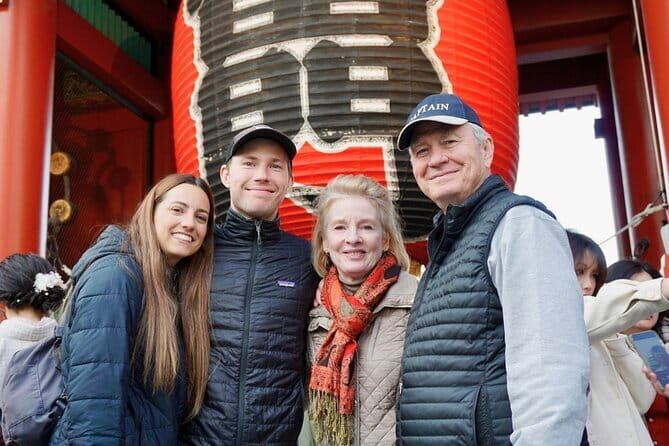
Then you’ll head toward Kaminarimon, the Thunder Gate, one of Tokyo’s most recognizable silhouettes. Your guide explains what makes it legendary—especially the famous 700kg red lantern—and why this gate’s story includes repeated reconstructions after fires. That detail changes how you see the gate: it’s not only a symbol; it’s a survivor.
And yes, it’s called Thunder Gate in part because of the name Kaminarimon and what it represents in Japanese culture. Even if you’ve seen the gate in photos before, hearing the reasoning behind the name makes it feel less like a postcard and more like a living landmark.
Tokyo at walking pace, a few more ways
Kaminarimon to Nakamise: how to handle the shop street without getting overwhelmed
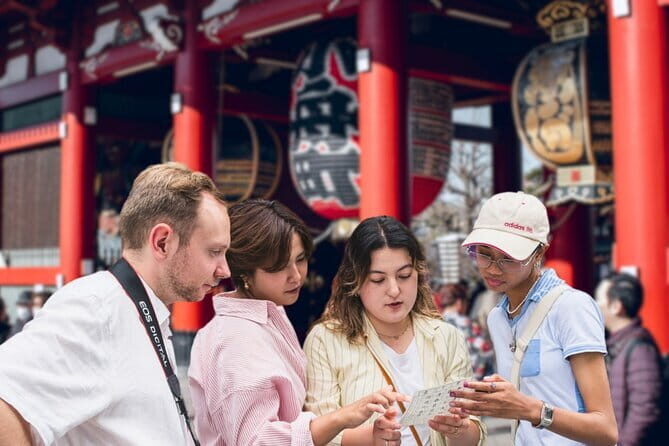
Next comes the walkway experience that most first-timers find both exciting and chaotic: the approach filled with shops. You’ll stroll along the street lined with traditional stands selling snacks, souvenirs, and crafts.
Here’s the practical advantage of having a guide: you’re not guessing what to buy or what to ignore. You can focus on the fun stuff while your guide handles the flow. They’ll share where the shop street comes from and why it exists as part of temple visits, not just as a commercial zone.
A few tips that make this stop work better for you:
- If you’re hungry, this is the place to grab a snack, but plan to share. Portions can be small and it adds up fast.
- If you want souvenirs, treat this as your browse window. Your guide can help you avoid turning your walk into a detour maze.
- If you’re trying to keep photos clean, pick one direction to shoot from and don’t zigzag too much.
Your time here is short by design. That keeps the day from turning into endless shopping and helps you reach the inner temple steps and rituals without rushing.
Hozomon Gate: architectural meaning you’ll miss on your own
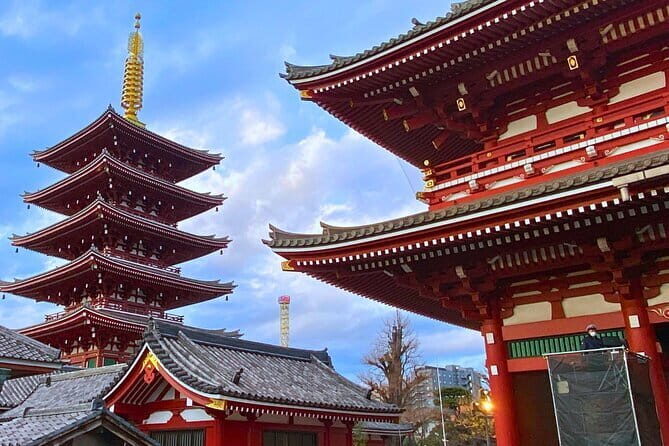
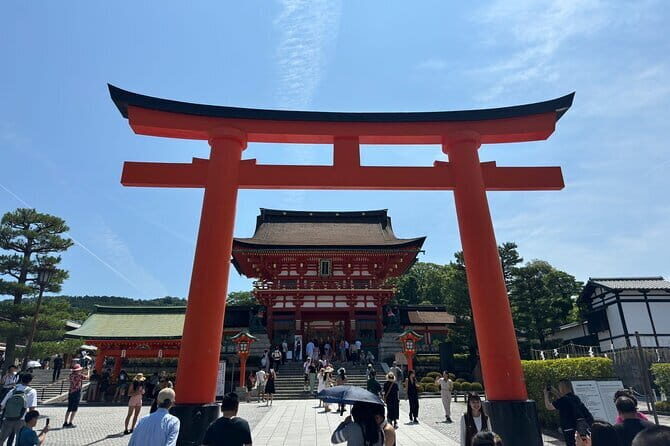
As you move deeper, you’ll pass Hozomon Gate. This gate matters because it acts as an important cultural property protecting the temple grounds. Your guide explains architectural features and symbolism—stuff you’d usually have to research beforehand, or just not notice at all.
Gates like Hozomon are a big deal in Japanese temple design: they’re thresholds. Standing there with context makes you feel the transition from street life into a more sacred space. You’re not only entering a complex; you’re crossing a line in how you’re expected to behave.
If you like details, this is one of the stops that rewards paying attention. Take a slow look at the gate and let your guide’s explanation reset how you view “just another entrance.”
Sensoji Temple: Tokyo’s oldest major Buddhist temple, explained in plain language
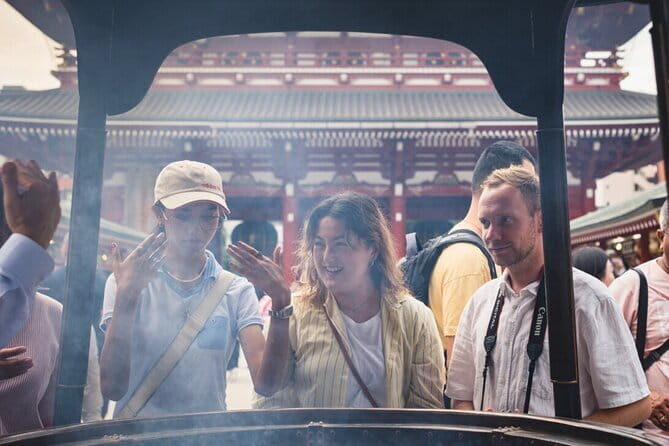
This is the core stop: Sensoji Temple, Tokyo’s oldest and most famous Buddhist temple. Your guide walks you through its historical and cultural significance and ties it back to the rituals you’ll see and do.
Even when you think you know Sensoji from pictures, you’ll probably be surprised by how quickly a guide can help you decode what you’re looking at. A temple like this is built to be read over time—where people pray, where they pause, and how worship moves through the space.
And since this tour is designed as a walking loop, you don’t get stuck staring at one area for too long. You’re guided to the moments that matter most: landmarks for photos, quiet points to listen, and the route that leads into the ritual experience without confusion.
The rituals that turn sightseeing into participation: temizu, prayer, and omikuji
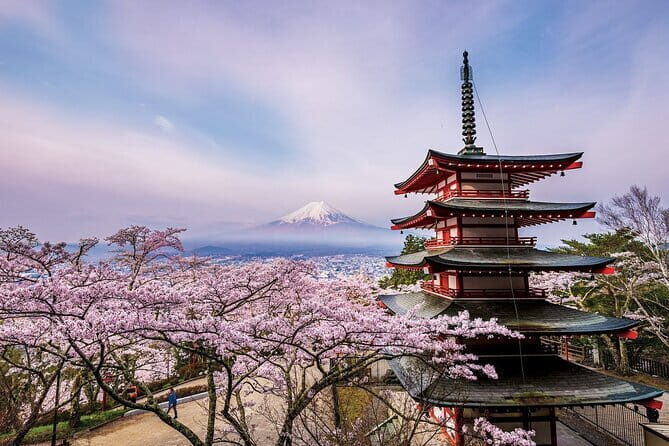
What you might not realize before you go is that temple and shrine visits aren’t only about looking. They’re about doing, in a respectful order.
This tour includes the most common “first timer” ritual moments:
- Temizu cleansing: you’ll learn how to do the hand cleansing ritual properly. It’s simple, but the steps are easy to get wrong if you’re guessing.
- Prayer: your guide explains what’s expected so you can participate without feeling awkward.
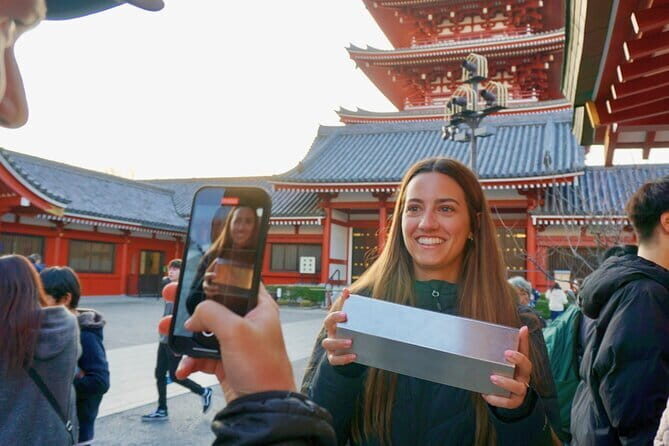
- Omikuji fortune-telling: you’ll take part in getting your fortune slip and learn how the ritual is done.
This is one of the tour’s most praised aspects because it saves you from the awkward: watching others while trying to figure out what to copy. Your guide helps you follow the flow so you can actually join the tradition.
It also helps that you learn the connection between Shinto and Buddhism right in the neighborhood where both show up. That turns the experience into a cultural lesson you can carry beyond Asakusa.
Also, practical note: the tour includes participation in the rituals, but you’ll still be responsible for personal spending like snacks or souvenirs you choose to buy.
Asakusa Shrine: the spiritual counterpart to the temple landmark
Along with Sensoji, this tour also includes time at Asakusa Shrine. Even if you’re mainly here for the big temple draw, the shrine visit is what rounds out the day.
In an area where Shinto and Buddhist traditions overlap in visible ways, adding the shrine visit helps you understand the neighborhood as a whole spiritual zone, not a single “main attraction.” It gives you a second sacred viewpoint—different symbols, different worship rhythm, same overall feeling of reverence.
If you’re traveling with someone who doesn’t love purely historical explanations, this part often lands well. Rituals are the universal language of participation: you can participate, watch, and feel the meaning without needing advanced background knowledge.
Value check: is $19.82 worth it for this kind of guide-led day?
At $19.82 per person for about 2 hours and a small group of 8, the value is in three places:
First, you’re paying for navigation through a tight area. Asakusa is famous, which means signage gets crowded, and people crowd the main lanes. Your guide keeps you moving in the right direction so you spend less time stopping and restarting.
Second, you’re paying for ritual coaching. Temizu and omikuji participation are included, and those are exactly the moments where DIY often feels confusing or awkward.
Third, you’re paying for explanation. Your guide connects what you see—Kaminarimon, the 700kg lantern story, Hozomon Gate symbolism, the shop street origins—to why it matters culturally.
If you love learning while walking and you’re the type who wants to understand temple etiquette rather than just follow crowds, this is a solid deal.
If your travel style is pure free-roam with zero structure, you might prefer to do Asakusa on your own with a map. But even then, you’d still likely want someone to show you what to do during the rituals.
What the guide experience looks like in real life
A standout theme in the feedback is guide quality under pressure. One account praised a young guide from the UK who was especially good at handling the day’s energy—explaining clearly even as the area gets busy and people keep moving.
That’s what you want from a local guide here: not only knowledge, but calm direction. When you’re walking between temple gates and shop streets, you don’t need a lecture. You need timing, context, and simple instructions you can follow on the spot.
Who should book this tour?
This tour is a great fit if:
- You want Sensoji and Asakusa Shrine without worrying about route planning
- You’re curious about rituals and want to do them correctly
- You prefer a small-group feel over a large crowd tour
- You like short, focused walks with frequent “stop and learn” moments
You might skip it if you:
- Want a longer, slower day with extra free time for browsing
- Are comfortable doing temple etiquette without guidance
- Plan to spend most of your day shopping and eating in Asakusa on your own schedule
Should you book? My take on the call
If your goal is a smart, well-paced introduction to Asakusa, I’d book it. The mix of major landmarks (Thunder Gate and Sensoji), a second spiritual stop (Asakusa Shrine), and hands-on rituals is hard to recreate well on your own—especially if you want to avoid feeling lost or unsure.
This tour also works well when you only have a couple of hours and you want maximum clarity. It’s not trying to turn Asakusa into a marathon. It’s designed for visitors who want to see the sights and understand the moment, without spending your trip studying beforehand.
FAQ
FAQ
How long is the Tokyo Asakusa Temple & Shrine Walking Tour?
It runs for about 2 hours.
What is the price per person?
The price is $19.82 per person.
How big is the group?
The tour is capped at a maximum of 8 travelers.
Is admission included for Sensoji Temple?
Sensoji Temple admission is listed as free for this tour stop.
What rituals can I participate in?
You can participate in temizu cleansing, prayer, and omikuji fortune-telling as part of the experience.
Where does the tour start?
The meeting point is Burger King Asakusa Azumabashi, 111-0034 Tokyo, Taito City, Kaminarimon, 2-chōme 206 クロスビルロイヤルパレス.
Is the tour suitable for most travelers?
The information says most travelers can participate, and it’s near public transportation. The tour is a walking format, so you should be comfortable walking for about 2 hours.
More Tours in Tokyo




More Tour Reviews in Tokyo




Around Senso-ji: More Asakusa Picks


Fresh reviews from around Tokyo






Asakusa Tours, compared.
 ★ 4.8Japanese Dance Cabaret Theater Asakusa-Kaguwa TicketFrom $492,270 reviews
 ★ 4.7Meiji Shrine, Asakusa, Skytree Bus Tour and CruiseFrom $1221,986 reviews
 ★ 4.8Asakusa Walking Tour with Sensoji Temple VisitFrom $221,583 reviews
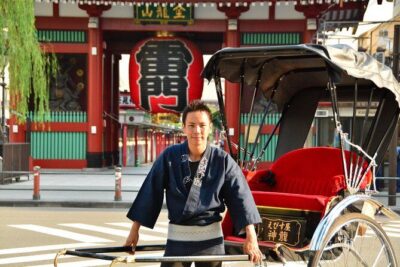 ★ 5.0Tokyo Asakusa Rickshaw TourFrom $421,375 reviews
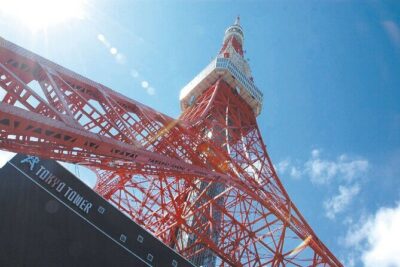 ★ 4.5Tokyo Panoramic 1 Day: Meiji Shrine, Asakusa, Odaiba and SKYTREE®From $851,222 reviews
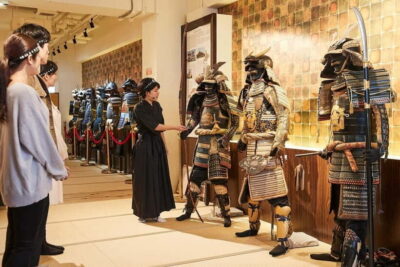 ★ 4.8Samurai Ninja Museum Asakusa: Samurai Sword Lesson & TourFrom $63306 reviews
Asakusa Sightseeing Tour by RickshawFrom $35195 reviews
Asakusa Kimono Dressing and Matcha ExperienceFrom $56173 reviews
★ 4.8Samurai Ninja Museum Asakusa: Samurai Sword Lesson & TourFrom $63306 reviews
Asakusa Sightseeing Tour by RickshawFrom $35195 reviews
Asakusa Kimono Dressing and Matcha ExperienceFrom $56173 reviews
Browse the lists this tour appears in