
Reviewed · ASAKUSA TOURS
Tokyo: Asakusa Walking Tour with Sensoji Temple Visit
Asakusa brings old Tokyo to your feet. This walking tour takes you straight to Sensō-ji and the Thunder Gate, then threads you through classic shopping lanes like Nakamise with a live English guide translating what you’re seeing into something that makes sense. I love how the route balances big, iconic sights with smaller local moments, and I love the pace that leaves room for photos and questions. The only real drawback is that this area gets crowded, so bring comfy shoes and show up on time at Kaminarimon.
You’ll also get the “how to look” part—what details matter at the temple, how to handle the incense-burning area respectfully, and how the Buddhist and shrine side of Asakusa connect in the same neighborhood. A few guides, like Aya, Keiko, Glenda, and Hiroko, come up repeatedly in guest comments for clear English and thoughtful explanations, including family-friendly pacing when kids are on the tour.
For the price—$22 for 2 hours—this is strong value in Tokyo terms. You’re paying for direction in a part of the city that can feel confusing at first, especially if you want to understand what you’re looking at without slowing your whole trip down.
In This Review
- Key highlights you’ll feel on the walk
- Why Asakusa is worth your limited time in Tokyo
- Meeting at Kaminarimon: start where the story begins
- Kaminarimon and the Thunder Gate: the photo moment with context
- Sensō-ji Temple: what to watch for during the guided visit and free time
- The guided portion: look with intent
- The free time: use it smart, not long
- Nakamise Street: the classic shopping lane that still feels local
- Asakusa Shrine stop: the shrine side of the neighborhood
- Hoppy Street and Shin-Nakamise: where the tone changes
- Finish at Azuma Bridge: a clean endpoint for lunch and next steps
- Price and pacing: why $22 feels fair
- Who should book this Asakusa walking tour
- A realistic heads-up before you go
- Should you book this tour?
- FAQ
- How long is the Asakusa walking tour with Sensō-ji Temple?
- Where is the meeting point?
- What are the main stops on the tour?
- Is the tour guided in English?
- Is the tour wheelchair accessible?
- Can I cancel for a full refund?
- Can I reserve now and pay later?
- What if I arrive late?
Key highlights you’ll feel on the walk
- Sensō-ji and Kaminarimon first so you understand Asakusa’s core fast
- Nakamise and Shin-Nakamise shopping lanes for classic snacks, crafts, and everyday Tokyo life
- Incense-burning ritual time plus a chance to pause for photos at the temple
- Asakusa Shrine photo stop that adds the shrine side of the neighborhood
- Hoppy Street visit for a more local street-scene break between the major sights
- Finish at Azuma Bridge so you can keep moving toward lunch and the next area
More mornings around Senso-ji and the old town
- Tokyo: Japanese Dance Cabaret Theater Asakusa-Kaguwa Ticket★ 4.8 · 2,270 reviews
- Tokyo: Asakusa Walking Tour with Sensoji Temple Visit★ 4.8 · 1,583 reviews
- Tokyo Asakusa Rickshaw Tour★ 5.0 · 1,375 reviews
Why Asakusa is worth your limited time in Tokyo
If Tokyo sometimes feels like it’s all speed and steel, Asakusa is the counterweight. It’s one of the places where tradition still feels like part of daily life, not just a museum setup. The reason this tour works is simple: it focuses on the big spiritual anchor—Sensō-ji (Asakusa Kannon)—then layers in the streets that grew up around it.
The touch that makes it more than sightseeing is the explanation. Instead of just pointing at the sights, your guide connects temple architecture, festival culture, and street history so you’re not wandering in a fog of names. And that matters, because Asakusa’s icons are very visual—but the meaning takes a translator.
Meeting at Kaminarimon: start where the story begins
You’ll meet in front of the Kaminarimon Gate—on the left side—near the Tokiwado Kaminari-okoshi Honpo shop. Your guide will be holding a sign, so you don’t need to guess.
This first step is practical: arriving at the Thunder Gate area puts you right in the action, rather than spending your first minutes hunting for the group. It also sets expectations. Kaminarimon isn’t just a landmark; it’s the entrance marker that helps you orient the whole district.
One important consideration: don’t be late. The tour information is direct that the guide can’t wait long for late arrivals, because it throws off timing for everyone else. If you’re using trains, give yourself buffer time—Asakusa is busy enough that even getting from station to gate can take longer than you expect.
Kaminarimon and the Thunder Gate: the photo moment with context
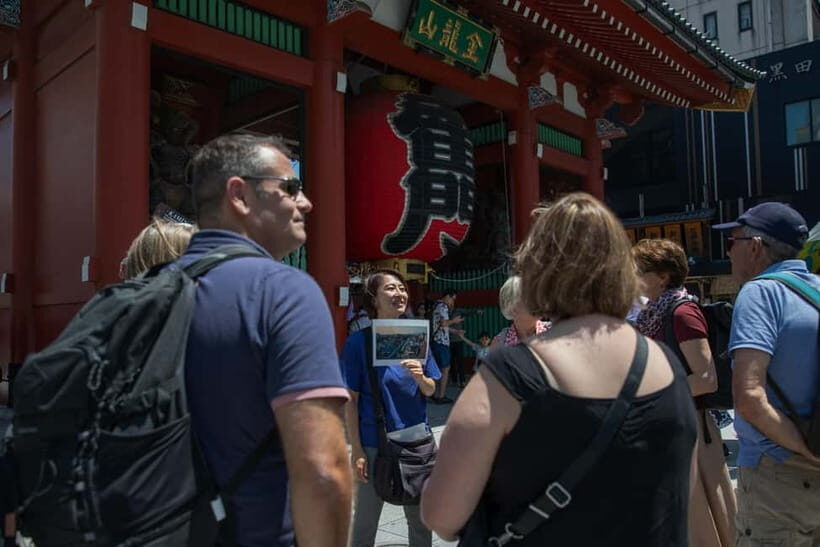
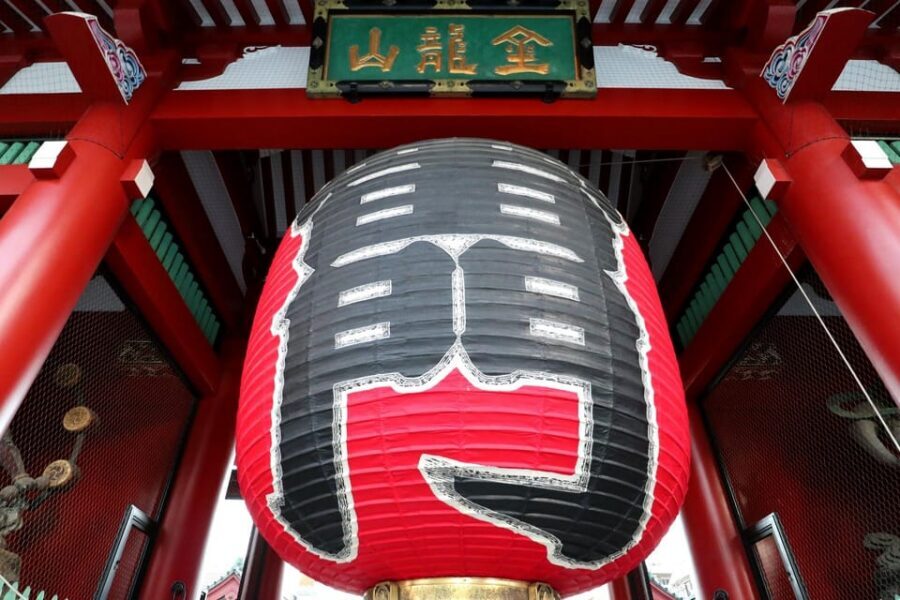
The walk kicks off with a guided look at Kaminarimon, the imposing Thunder Gate. This is the kind of gateway that looks powerful from every angle, but without context, you might not know what you’re seeing beyond the obvious.
In a good tour like this, your guide’s job is to make the gate feel connected to the temple you’re about to enter. That means you learn what the gate represents and why it’s such a signature entry point for Asakusa’s spiritual life. You’ll also get a quick rhythm for the rest of the tour—where to pause, where to stand for photos, and when the group is moving.
Sensō-ji Temple: what to watch for during the guided visit and free time
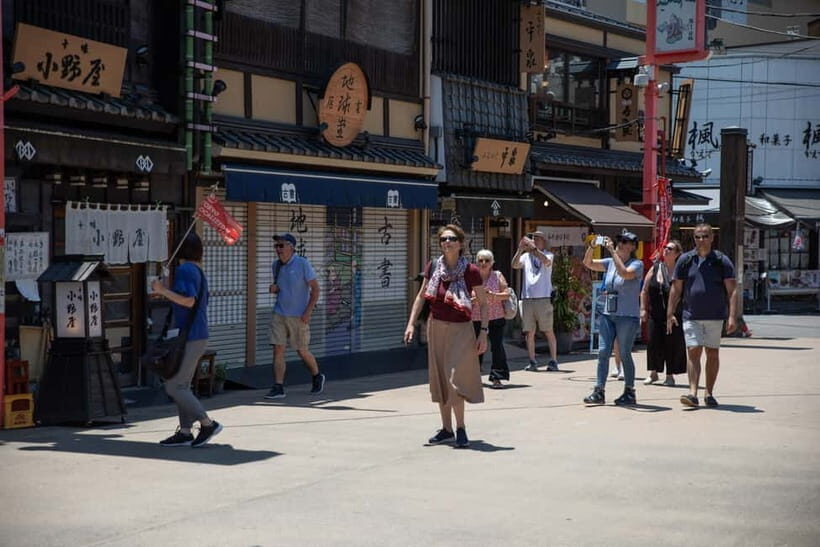
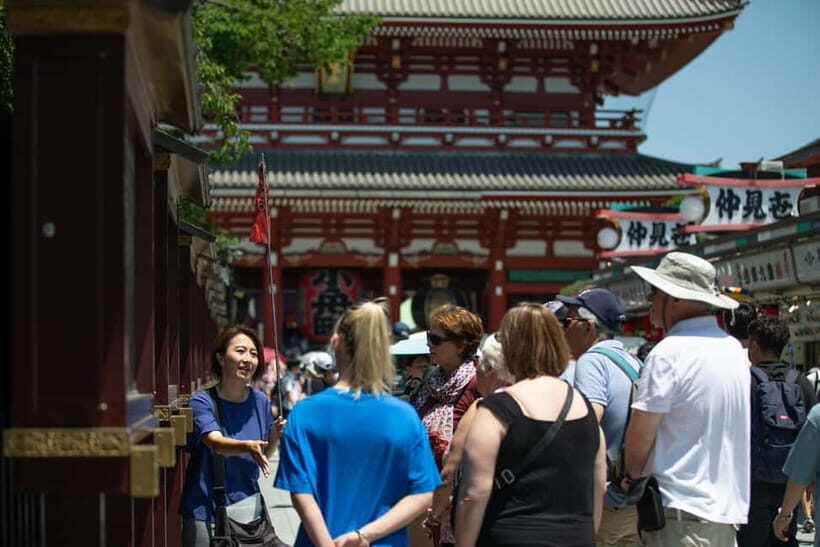
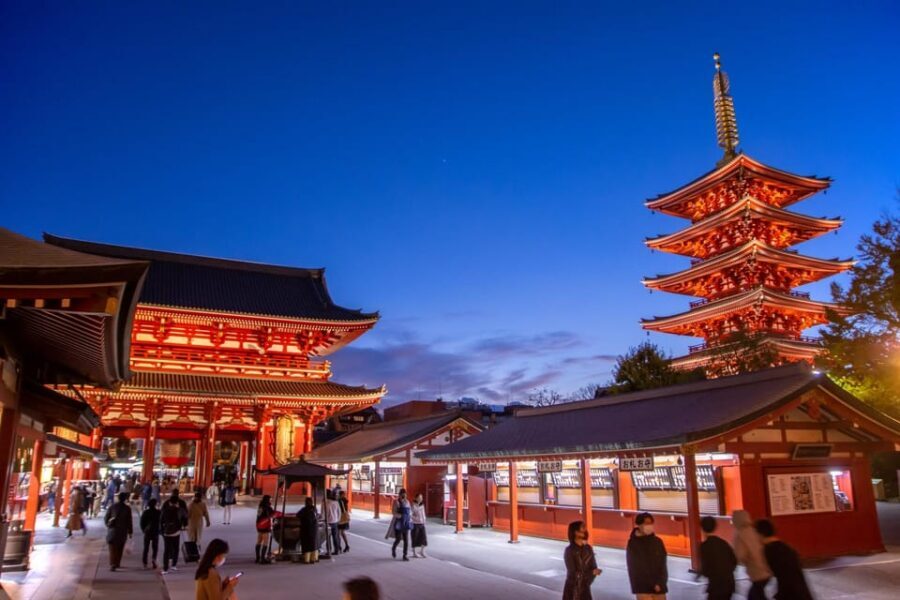
This is the main event: Sensō-ji Temple, described as Tokyo’s oldest Buddhist sanctuary (and part of what makes Asakusa so historically grounded). Your guide takes you through the temple with stop-and-look direction, including time for photos and a stretch of free time.
Tokyo at walking pace, a few more ways
The guided portion: look with intent
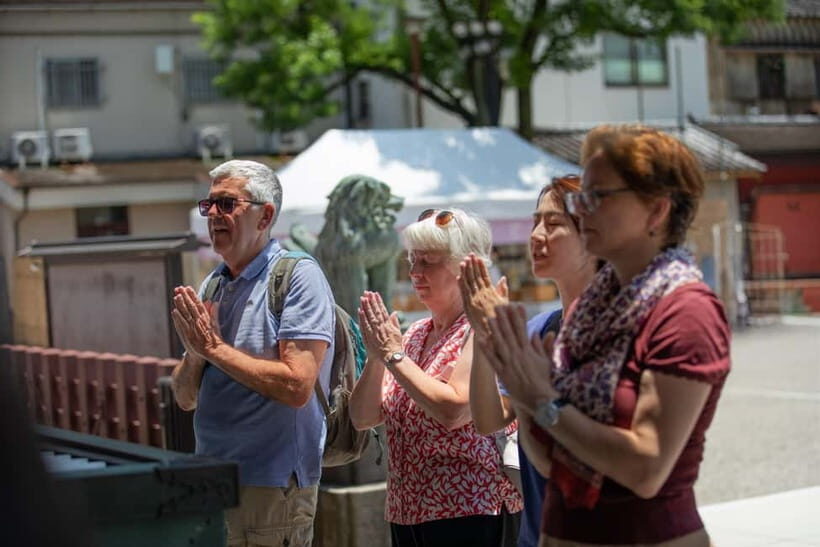
You can expect a guided walkthrough that points out meaningful details around the temple grounds. The tour also includes an opportunity tied to the incense area—so you can take part in the ritual atmosphere in a respectful way rather than just hovering around the crowds.
Here’s the practical advice: when incense is involved, plan to slow down. Smells and smoke don’t linger politely, and you’ll enjoy it more if you give yourself space instead of pushing forward for the perfect shot. Let the group set the pace, then step back when you need a breather.
The free time: use it smart, not long
You get about 30 minutes of free time at the temple. That’s enough to:
- take a few photos without rushing,
- wander to see details from different angles,
- and reset before continuing deeper into the neighborhood.
It’s also the point where a guide’s tips pay off. Instead of trying to figure out where to go next, you’ll know what to prioritize in the moment and what can wait.
Nakamise Street: the classic shopping lane that still feels local
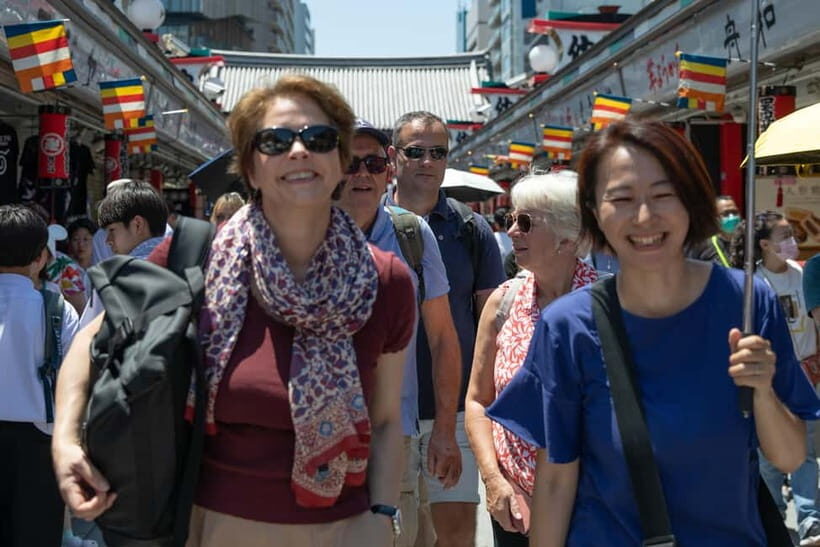
After Sensō-ji, the tour moves into Nakamise Shopping Street, one of Japan’s older shopping stretches. This is where Asakusa becomes more than a temple district. It turns into a living street—snacks, small souvenirs, traditional crafts, and the everyday hustle of people grabbing something for later.
The value of having a guide here is that you’re not just window-shopping. You can ask what’s worth trying, what makes sense as a gift, and what you’ll want to buy now versus saving for later. In fast-changing Tokyo neighborhoods, this kind of direction keeps you from falling into the tourist-trap pattern of buying the first thing that looks cute.
Also, Nakamise can be narrow and packed. A guided group helps you move efficiently through the busiest stretches without turning it into a stress test. And because the tour keeps you moving, you get the full street experience without spending your entire afternoon stuck in one chokepoint.
Asakusa Shrine stop: the shrine side of the neighborhood
The tour also includes a photo stop and visit at Asakusa Shrine. This is a meaningful contrast to Sensō-ji. Instead of staying only in the Buddhist setting, you get a chance to see the shrine side of Asakusa’s spiritual landscape.
If you’ve ever wondered why these places can feel so close yet different, this is your answer in walking form. Your guide helps connect what you’re seeing—how the shrine atmosphere differs from the temple atmosphere, even though both are part of the same cultural neighborhood.
Expect the shrine portion to be shorter than the big temple visit, but it’s deliberately included so your mental map of Asakusa isn’t one-note.
Hoppy Street and Shin-Nakamise: where the tone changes
Next up is Hoppy Street, followed by a visit to Shin-Nakamise Shopping Street (浅草新仲見世商店街). These stops are less about one single iconic building and more about the street vibe.
This is where the tour becomes useful for real trip planning. After Sensō-ji and Nakamise, it’s easy to feel like you’ve “seen” Asakusa. These later street stops prove you haven’t. They show you the continuation—another set of shops, another feel of the neighborhood, and more ways to explore without needing extra tickets or complicated logistics.
One reason I like the structure here: it prevents the common problem where people come to Asakusa, take a few temple photos, buy a couple snacks, and then call it done. By keeping the walk going into these additional lanes, you walk away with a stronger sense of what Asakusa looks like beyond its biggest postcard.
Finish at Azuma Bridge: a clean endpoint for lunch and next steps
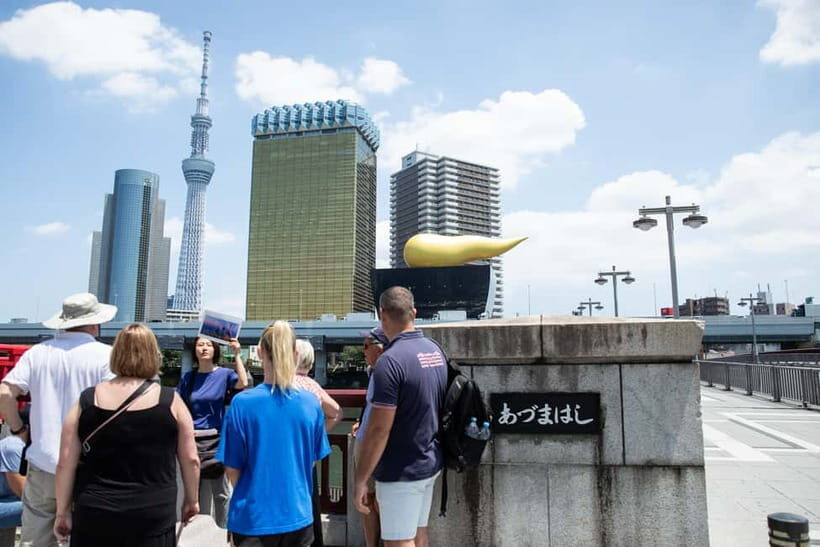
The tour finishes at Azuma Bridge. That matters more than it sounds. In big cities, tours that dump you somewhere random can leave you stuck figuring out the next move. Ending at a known point gives you a straightforward place to regroup.
From there, you’re set up to go for lunch in the area or to head toward your next Tokyo neighborhood. The timing also works well as a morning activity—2 hours is short enough that you don’t lose your whole day to walking, but long enough that the morning feels complete.
Price and pacing: why $22 feels fair
At $22 per person for 2 hours, you’re not just paying for entry to major sights. You’re paying for a live English guide, guided stops, and the smoothing of a busy route you’d otherwise experience at random.
In Tokyo, a good guide does two things:
1) saves you time by pointing you to what matters,
2) saves you mental energy by explaining what you’re looking at.
This tour hits both. The pacing includes short guided segments (then pauses for photos/free time), so you don’t feel dragged along. And multiple guides mentioned in guest feedback—like Paulina, Hikoro, Polina, Loc, Mei, Rio, and Aya—get noted for being attentive to questions and keeping the group moving at an understandable speed.
Who should book this Asakusa walking tour
This tour is a good fit if you:
- want a first-timer-friendly orientation to Asakusa,
- care about understanding what you’re seeing, not just collecting photos,
- like short structured walking days more than freeform wandering,
- and want an English guide through a neighborhood that can be confusing when signage and crowds blur together.
It’s also a solid choice for families with kids, since some comments highlight guides adjusting pacing so children stay engaged and everyone can hear the guide clearly.
A realistic heads-up before you go
Asakusa is popular. That’s not a complaint—it’s the reason the streets feel alive—but it does mean:
- plan for crowds near the temple and shopping lanes,
- wear shoes you’re comfortable standing in for a couple of hours,
- and keep an eye on where the group is when you stop for photos.
Also, incense and temple etiquette can be a sensory thing. Give yourself room and follow your guide’s cues.
Should you book this tour?
I think this is a smart booking for most people visiting Tokyo for the first time, especially if you want a high-impact old-town experience in a compact time window. At $22 with a live English guide and multiple major stops—Sensō-ji, Kaminarimon, Nakamise, Asakusa Shrine, Hoppy Street, and a finish at Azuma Bridge—you’re paying for clarity and momentum, not just motion.
If you hate crowds or you’re the type who prefers totally unstructured wandering with no guidance, you might feel boxed in by the walking flow. But if you want to understand Asakusa quickly and then keep exploring with a better mental map, this is one of the easiest “yes” choices you can make.
FAQ
How long is the Asakusa walking tour with Sensō-ji Temple?
It lasts 2 hours.
Where is the meeting point?
Meet in front of the Kaminarimon Gate (left side), near the Tokiwado Kaminari-okoshi Honpo shop. The guide will hold a sign.
What are the main stops on the tour?
You’ll see Kaminarimon, Nakamise Shopping Street, Sensō-ji Temple, Asakusa Shrine, Hoppy Street, Shin-Nakamise Shopping Street, and finish at Azuma Bridge.
Is the tour guided in English?
Yes, it includes a live English guide.
Is the tour wheelchair accessible?
Yes, the activity is wheelchair accessible.
Can I cancel for a full refund?
You can cancel up to 24 hours in advance for a full refund.
Can I reserve now and pay later?
Yes. The option is reserve now & pay later, with payment due later.
What if I arrive late?
Please do not be late. The guide cannot make other guests wait long for late arrivals.
More Tours in Tokyo




More Tour Reviews in Tokyo




Around Senso-ji: More Asakusa Picks


Fresh reviews from around Tokyo






Asakusa Tours, compared.
 ★ 4.8Japanese Dance Cabaret Theater Asakusa-Kaguwa TicketFrom $492,270 reviews
 ★ 4.7Meiji Shrine, Asakusa, Skytree Bus Tour and CruiseFrom $1221,986 reviews
 ★ 5.0Tokyo Asakusa Rickshaw TourFrom $421,375 reviews
 ★ 4.5Tokyo Panoramic 1 Day: Meiji Shrine, Asakusa, Odaiba and SKYTREE®From $851,222 reviews
 ★ 4.8Samurai Ninja Museum Asakusa: Samurai Sword Lesson & TourFrom $63306 reviews
Asakusa Sightseeing Tour by RickshawFrom $35195 reviews
Asakusa Kimono Dressing and Matcha ExperienceFrom $56173 reviews
Asakusa Temple & Shrine Walking Tour with Local GuideFrom $30105 reviews
★ 4.8Samurai Ninja Museum Asakusa: Samurai Sword Lesson & TourFrom $63306 reviews
Asakusa Sightseeing Tour by RickshawFrom $35195 reviews
Asakusa Kimono Dressing and Matcha ExperienceFrom $56173 reviews
Asakusa Temple & Shrine Walking Tour with Local GuideFrom $30105 reviews
Browse the lists this tour appears in