
Reviewed · TSUKIJI FISH MARKET TOURS
Tokyo: Tsukiji Fish Market Food and Walking tour
Tsukiji feels like controlled chaos—until you get a guide. I love the no set menu style, because you pick what you want and pay only for what you actually order. I also like how guides such as Benjamin and Jim (plus Rie, Haydn, and Minori) make the maze manageable, steering you toward solid stalls and fair prices. One possible drawback: the tour starts with a temple stop, which can feel like a detour if you only want seafood food-and-nothing-else.
This is a short, focused walk: about 2 hours total, for up to 10 people, and the pace can shift to match what your group wants to see and sample. You’ll start at Starbucks Coffee by Tsukiji Station, and you’ll end back at the same meeting point, so the day stays simple.
One more thing I’d plan for: while market entry is included, foods and drinks are not. Expect to pay in cash for samples, and it’s smart to bring yen based on the kind of eating you want to do (some guides’ routes can mean around 10,000 yen for small tastings).
In This Review
- Key highlights you’ll feel on the ground
- Why Tsukiji is easier with a food-and-walking guide
- Finding the meeting point near Tsukiji Station (and why it helps)
- Stop 1: Tsukiji Hongwanji Temple gives you a calm reset
- Stop 2: Tsukiji Fish Market—history while you walk and snack
- Stop 3: Tsukiji Jogai Market for street-food tasting
- How the no set menu plan works (and what to budget)
- Guide style is the secret ingredient
- Pace, crowds, and what you should physically expect
- Price and value: why $30 can make sense here
- Should you book this Tsukiji Fish Market food and walking tour?
- FAQ
- How long is the Tsukiji Fish Market Food and Walking tour?
- What does the $30 price include?
- Do I get a set menu on this tour?
- How many people are in the group?
- Where do I meet the tour?
- Does the tour end at the meeting point?
- Is free cancellation available?
- FAQ
- Is the tour near public transportation?
- Are service animals allowed on this tour?
- Do I need to bring payment for food?
- Will I be able to try a variety of foods?
- Do I need to get separate tickets for the market and temple?
Key highlights you’ll feel on the ground
- No set menu tastings: you choose the stalls and dishes, then pay as you go
- A small group route: up to 10 people, so you actually move with less stress
- Temple first, market second: Tsukiji Hongwanji Temple gives you a calm reset before the crowds
- Sushi and ingredient talk while you eat: learn what’s in local dishes and why they’re used
- Good-deal guidance at the stalls: guides point out what’s worth it and what to skip
- Short and practical: about 2 hours, mostly walking and standing, not an all-day hike
Still hungry? More Tsukiji breakfasts and market walks
- Tokyo Tsukiji Fish Market Food and Culture Walking Tour★ 5.0 · 3,184 reviews
- Tokyo: Tsukiji Fish Market Food and Walking tour★ 5.0 · 1,724 reviews
- Tokyo: Tsukiji Fish Market Guided Walking Tour★ 4.9 · 1,397 reviews
Why Tsukiji is easier with a food-and-walking guide
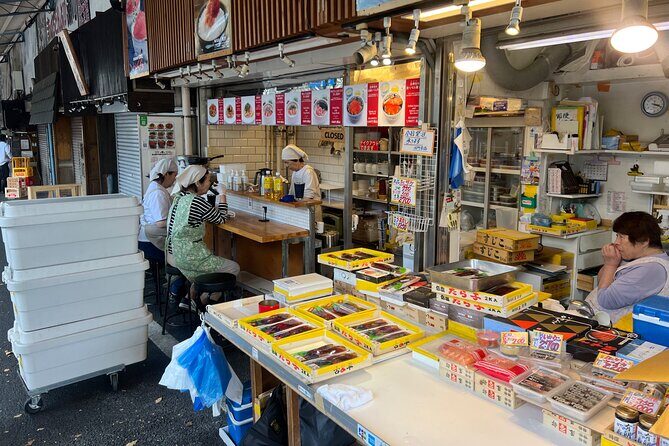
Tsukiji is one of those places that looks straightforward on a map, then hits you with noise, lines, counters, and more smells than you can process at once. A guide helps because they don’t just translate signs—they help you read the market.
Here’s what I love about this tour format: you’re not locked into a fixed menu where every person gets the same thing. Instead, you’re walking through real stalls and street-food counters, and you’re choosing your own path through the seafood world. That choice matters because Tsukiji food can range from mild and familiar to bold options like sea urchin or eel. If you want to go adventurous, you have that freedom.
And the guide piece is not fluff. People leading this tour—names you’ll hear like Benjamin, Jim, Rie, Haydn, and Minori—are repeatedly praised for making the market feel easier to navigate. They’re also known for pointing out what feels like a deal versus what’s mostly hype. That’s huge value in a place where it’s easy to overpay just because you’re standing there confused.
Finding the meeting point near Tsukiji Station (and why it helps)
You’ll meet at Starbucks Coffee by Tsukiji Station (Tsukiji, Chuo City). The tour uses a mobile ticket, so you don’t waste time hunting down paperwork before you start walking.
Starting near transit is more than convenience. Tsukiji mornings can be chaotic even for locals, and you want your first 10 minutes to be calm. When the meeting point is clear and close to a station, you avoid the common stress that turns a food outing sour.
You’ll also appreciate the tour length. About 2 hours means you get market time without the fatigue that comes from long, nonstop wandering.
Stop 1: Tsukiji Hongwanji Temple gives you a calm reset
Before the seafood chaos, you visit Tsukiji Hongwanji Temple (築地本願寺) for about 30 minutes. It’s included, so you’re not deciding whether it’s worth the stop.
What makes this part work for many people is timing. You get a brief pause before the market crush—an architectural break that lets you reset your pace and your expectations. One review note did flag this as a surprise for someone who wanted to jump straight to food, so be honest with yourself: if you’re impatient and only want eating, you might feel slightly “off schedule” at the start. But if you like a moment of quiet before the main event, this temple stop can be a nice contrast.
Also, the guide helps here. Even if you’re not hunting for a cultural deep cut, the explanations turn the temple from a quick photo stop into a meaningful entry point to the neighborhood’s character.
Stop 2: Tsukiji Fish Market—history while you walk and snack
Next comes the Tsukiji Fish Market area for about 1 hour, with entry included. This is the part most people picture: the seafood energy, the counters, and the feeling that you’ve stepped into a workplace, not just a sightseeing stop.
Even without getting lost in details, you’ll hear context about Tsukiji as a major seafood hub—especially its connection to the famous tuna auction legacy. That context matters because it changes how you look at what you’re seeing. You’re not just thinking I’m looking at fish; you’re understanding how the market works and why certain items and setups exist where they do.
During this section, the guide’s job is practical. They help the group move through tight spaces, and they steer you toward stalls where the food is worth it. People in the feedback repeatedly say guides make the market manageable and stress-free, and that you can try a little of everything without spending the whole time in decision paralysis.
You should expect standing and short bursts of walking. Reviews also suggest the activity isn’t overly strenuous overall—more “busy and sensory” than physically hard—but comfortable shoes are non-negotiable.
Tokyo at walking pace, a few more ways
Stop 3: Tsukiji Jogai Market for street-food tasting
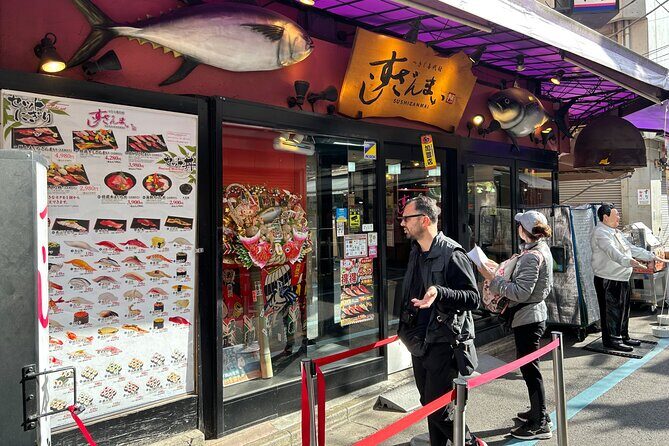
After the main market visit, you walk through Tsukiji Jogai Market for about 30 minutes. Entry is included here too.
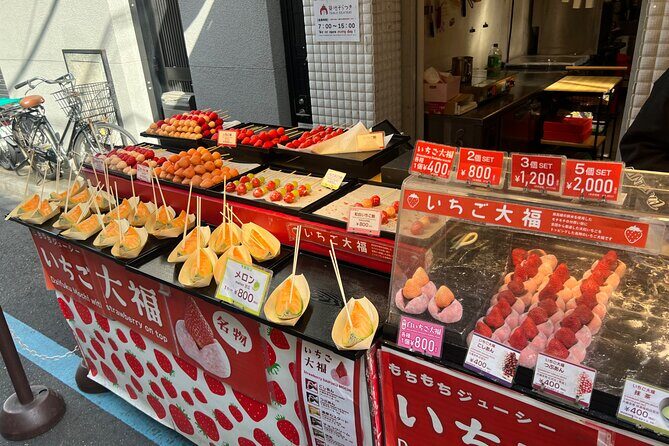
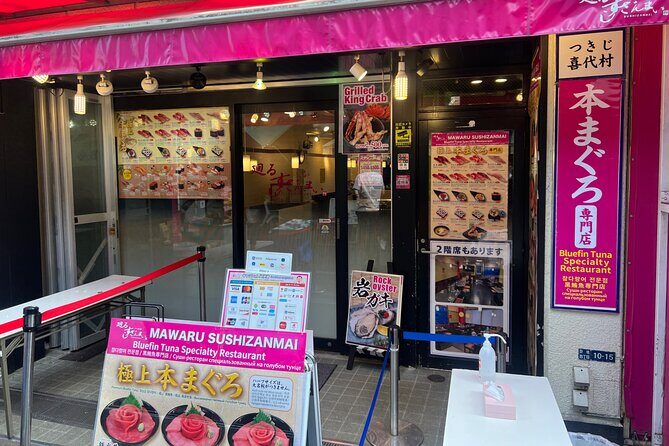
This is where you get the street-food feeling: lots of small stalls, lots of choices, and the sense that you can taste a range of the neighborhood’s flavors in a compact amount of time. Expect food options like fresh seafood, fruit, Japanese omelets, fried fish cakes, and more.
The “choose your own” style becomes real here. This is the moment to decide how adventurous you want to be. Some people report being encouraged to try items like sea urchin and eel, and they’re glad they did—because the guide didn’t just toss it at them; they guided them to good options and helped frame what they were tasting.
If you’re traveling with mixed preferences, this stop can work well because you can adapt on the fly. Want something lighter? You can. Want something savory and intense? You can do that too.
How the no set menu plan works (and what to budget)
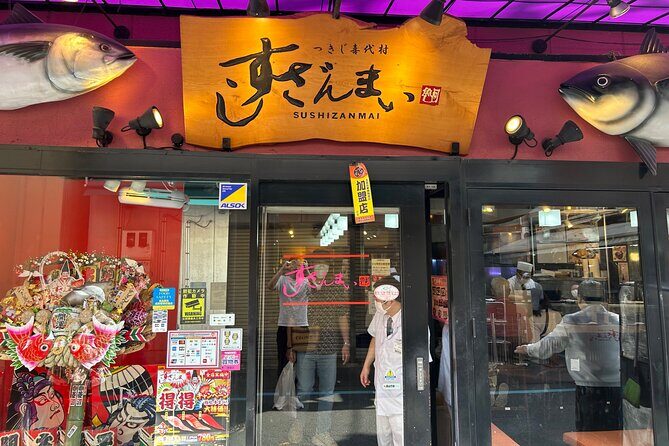
The tour price is $30 per person, and the value is that your guide time plus market admissions are covered. But the key detail is simple: foods and drinks are not included.
You’re buying what you want to eat as you go. So think of the $30 as paying for:
- the guide (including market navigation and cultural context),
- entry into Tsukiji Hongwanji Temple,
- entry into the Tsukiji Fish Market area,
- entry into Tsukiji Jogai Market.
Then you budget separately for food.
Based on the advice people share from this experience, I’d plan to bring cash and expect to spend for samples. One review specifically noted you may need around 10,000 yen because stalls take cash for samples. Whether you spend exactly that depends on your appetite and how many tastings you choose—but having yen ready prevents awkward delays.
Practical tip: decide your tasting strategy before you arrive at counters. In a place this busy, your best move is to ask the guide what’s worth trying first, then add 1–2 more items based on what looks best in that moment. This keeps you from eating too much of the wrong things—or missing the best stuff because you got indecisive.
Guide style is the secret ingredient
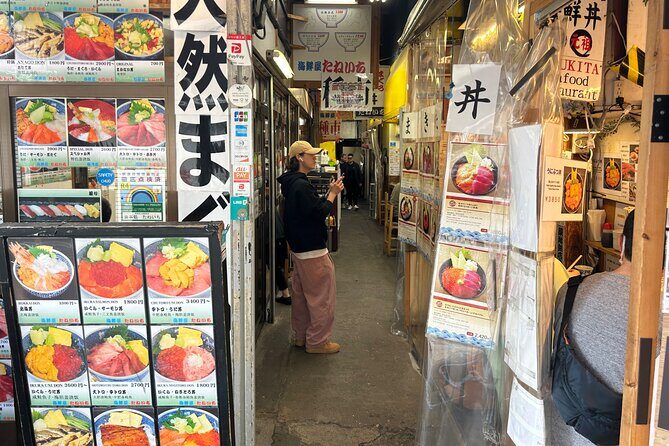
In a market tour, the guide is either a translator with a route—or a true market partner. This one tends to deliver the second option.
Across feedback, guides are praised for:
- making movement easy in a crowded space,
- being patient with questions and pacing,
- offering stall-level recommendations based on value (not just what’s most crowded),
- and helping you avoid overpriced tourist stops.
You’ll hear names like Rie, Haydn, Minori, Sayaka, Shino, Nicolas, and Jim tied to those qualities. The theme is consistent: guides help you choose well, and they help you try items you might skip on your own.
One extra benefit I like: some guides are noted for explaining which purchases to prioritize and even steering people toward the same products for less money. That can quietly save you a chunk of cash, especially if you’re tempted to grab the first thing you see.
Pace, crowds, and what you should physically expect
This is a short loop with structured time blocks: 30 minutes at the temple, 1 hour in the fish market area, and 30 minutes in Jogai Market. The tour also has a flexible pace that responds to what the group wants to see and try.
In real terms, expect:
- frequent standing at counters,
- short walks between dense areas,
- and a day that feels fast because Tsukiji runs on momentum.
But the good news: reviews mention it’s not an exhausting hike. It’s more like a concentrated food-and-sight sensory sprint. Dress for that. Wear shoes that can handle uneven floors and crowds, and bring a simple plan for your stomach—if you try too many rich things in a row, you’ll feel it.
Price and value: why $30 can make sense here
At $30, this isn’t a “cheap and cheerful” tour. It’s also not a full-food meal package. The value comes from the combination of:
- guided navigation through a confusing market environment,
- admission costs to key stops,
- and a no-set-menu setup where you control what you spend on food.
If you were doing Tsukiji on your own, you’d likely spend time figuring out where to go, which stalls are worth it, and what’s a fair price. A guide compresses that learning curve. And in this market, faster decisions can mean better food for the same yen.
The biggest value lever for you is control. Because you pick what you want, you can match your budget. If you want light sampling, you can do that. If you want to go for broke on seafood and snacks, the route is set up for it.
Should you book this Tsukiji Fish Market food and walking tour?
Book it if:
- you want an easy way to handle Tsukiji without getting lost,
- you like choosing your own food instead of being stuck with a set menu,
- you care about what you’re eating (guides explain ingredients and local dishes),
- and you want the market experience to feel organized instead of chaotic.
Skip it (or adjust expectations) if:
- you only want seafood and you dislike any “non-food” start (the temple comes first),
- you hate paying extra for food since foods and drinks are not included,
- or you want a tour where every tasting is pre-planned and fully covered.
If you’re on your first trip to Tokyo food, this is a solid way to “get your bearings fast” in one of the city’s most intense food neighborhoods—while still getting to eat the way you want.
FAQ
How long is the Tsukiji Fish Market Food and Walking tour?
The tour runs about 2 hours (approx.).
What does the $30 price include?
It includes a local English-speaking guide, entry/admission to Tsukiji Jogai Market, entry/admission to Tsukiji Fish Market, and entry/admission to Tsukiji Hongwanji Temple. Foods and drinks are not included.
Do I get a set menu on this tour?
No. There is no set menu. You choose and pay for the dishes you want to eat.
How many people are in the group?
The tour has a maximum of 10 travelers.
Where do I meet the tour?
You meet at Starbucks Coffee – Tsukiji Station, Tsukiji, Chuo City, Tokyo (address listed as 2-chōme 12-8 大広ビル 1F).
Does the tour end at the meeting point?
Yes. It ends back at the meeting point.
Is free cancellation available?
Yes. You can cancel for a full refund up to 24 hours in advance of the experience start time.
FAQ
Is the tour near public transportation?
Yes, it is near public transportation.
Are service animals allowed on this tour?
Yes, service animals are allowed.
Do I need to bring payment for food?
Yes. Foods and drinks are not included, and you choose what to buy and eat during the tour.
Will I be able to try a variety of foods?
You’ll have the chance to sample multiple items as you choose from stalls, with examples like fresh seafood, fruit, Japanese omelets, and fried fish cakes.
Do I need to get separate tickets for the market and temple?
No. Entry/admission for Tsukiji Hongwanji Temple, Tsukiji Fish Market, and Tsukiji Jogai Market are included.
More Tours in Tokyo




More Tour Reviews in Tokyo




Back to the Market: More Tsukiji Tours



Fresh reviews from around Tokyo






Tsukiji Fish Market Tours, compared.
 ★ 5.0Tokyo Tsukiji Fish Market Food and Culture Walking TourFrom $993,184 reviews
 ★ 4.9Tsukiji Fish Market Guided Walking TourFrom $221,397 reviews
 ★ 5.0Tokyo Sushi Making Class in Tsukiji with Professional ChefFrom $491,177 reviews
 ★ 5.0Tsukiji Fish Market Guided Tour and Sushi Making with Pro ChefFrom $104775 reviews
★ 4.7Tsukiji Fish Market Food and Culture Walking TourFrom $96757 reviews
★ 5.0Tsukiji Fish Market Guided Tour and Sushi Making with Pro ChefFrom $104775 reviews
★ 4.7Tsukiji Fish Market Food and Culture Walking TourFrom $96757 reviews
 ★ 5.0Tsukiji Fish Market: Street Food & Culture Walking TourFrom $33669 reviews
 ★ 5.0Tsukiji Fish Market Small-Group Food Walking TourFrom $87621 reviews
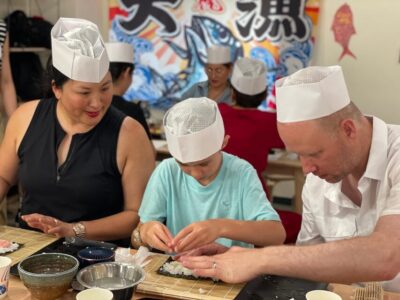 ★ 4.9Tsukiji Fish Market Sushi Making Class with Pro ChefFrom $63506 reviews
Browse the lists this tour appears in