
Reviewed · WALKING TOURS
Tokyo Castle & Imperial PalaceーShogun Walking Tour
Tokyo feels different here.
This small-group walk through the grounds of what used to be Edo Castle lets you connect samurai power, shogun rule, and Japan’s long imperial tradition in a way that actually clicks. You’ll trace how the defenses shaped daily life and then watch the same space become the Imperial Palace, with the 2,600-year imperial system as the through-line.
I especially like two things: the small group size (up to 10) makes it easier to ask questions, and the focus on visible structures—moats, gates, and preserved ruins—helps you picture Edo Castle’s scale without needing a museum ticket. If you’re into gardens, you’ll also get the seasonal highlights, including a Japanese garden setting that people associate with imperial taste.
One thing to factor in: this is an outdoor-heavy walk with a real security check at the Imperial Palace, so you’ll want to dress for the weather and follow the no-knives/no-alcohol rule.
In This Review
- Key highlights you’ll care about
- Start at Wadakura Fountain Park: the easiest meetup for Chiyoda
- Sakurada Tatsumi Yagura: early views that set up the Edo Castle scale
- Ote-Mon Gate and the Imperial Palace switch: from shogun power to emperor space
- Tokyo Imperial Palace grounds: what you’ll actually notice with a guide
- Ninomaru Garden: garden time with real historical framing
- Edo Castle Ruins: where the past reads like city planning
- Imperial Palace East Gardens: koi, trees from across Japan, and calmer Tokyo
- Pace and group size: why “up to 10” feels like the right number
- English-only tour: clarity for first-time visitors
- Price and value: why $23 for 2 hours can be fair
- Practical snags to plan for (so your day stays smooth)
- Who should book this Shogun Walking Tour
- Should you book this Tokyo Castle & Imperial Palace Shogun Walking Tour?
- FAQ
- How long is the Tokyo Castle & Imperial Palace Shogun Walking Tour?
- What is the group size?
- Is the tour available in English?
- Where do we meet the guide?
- What are the main stops on the walk?
- Do we see anything besides gardens and gates?
- Is photography allowed?
- Are there any rules for entering the Imperial Palace?
- Is wheelchair access available?
- Can I reserve without paying right away?
Key highlights you’ll care about
- Up to 10 people, so the guide can slow down when you want details
- Edo Castle’s layered defenses, explained as you see gates and ruins in front of you
- Imperial Palace grounds + East Gardens, tied to the 2,600-year imperial story
- Photo stops at major points, with plenty of time to look closely, not just pass through
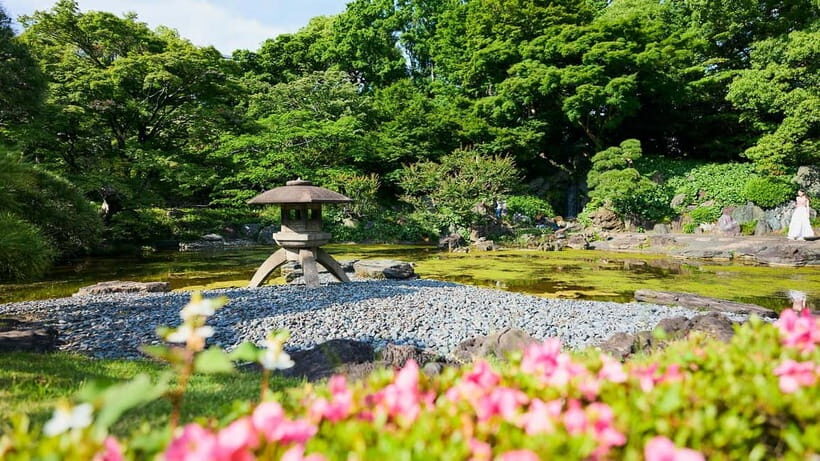
- Koi fish and trees from across Japan, which makes the garden time feel more than decorative
- English-only tour, which is great for clarity if you prefer one language in a group
Tokyo at walking pace, a few more ways
- Tokyo Tsukiji Fish Market Food and Culture Walking Tour★ 5.0 · 3,184 reviews
- Tokyo: Shinjuku Local Bar and Izakaya Guided Walking Tour★ 4.9 · 1,794 reviews
- Tokyo: Tsukiji Fish Market Food and Walking tour★ 5.0 · 1,724 reviews
Start at Wadakura Fountain Park: the easiest meetup for Chiyoda

You’ll meet in front of Starbucks Coffee Kōkyo Gaien Wadakura Fountain Park Store (3-1 Kōkyo Gaien, Chiyoda City). It’s a straightforward, recognizable landmark, which matters because Chiyoda can feel like a maze of streets the first time you’re there.
From that starting point, the tour flows into Imperial Palace territory on foot. That walking approach is part of the charm here: you’re not just looking at Tokyo from one spot—you’re moving through the same kind of spacing the old castle used to shape.
Sakurada Tatsumi Yagura: early views that set up the Edo Castle scale
The first main stop is Sakurada Tatsumi Yagura, with a short photo stop and a guided look (about 5 minutes). Even in a brief window, this moment helps you understand the “castle inside the city” idea. You’re seeing how Edo Castle didn’t live off somewhere far away—it was built into the Tokyo area people still navigate today.
This is also where a good guide matters. The best guides explain what you’re looking at in plain language: what a yagura was for, and why these structures weren’t random decoration. If your guide is someone like Anju, Yuuka, or Tomo (names that show up repeatedly), you can expect explanations that stay clear even when you have follow-up questions.
Quick practical note: it’s a photo stop, so keep your camera ready and don’t get stuck trying to line up the perfect shot. The tour moves, and that’s a plus.
Ote-Mon Gate and the Imperial Palace switch: from shogun power to emperor space
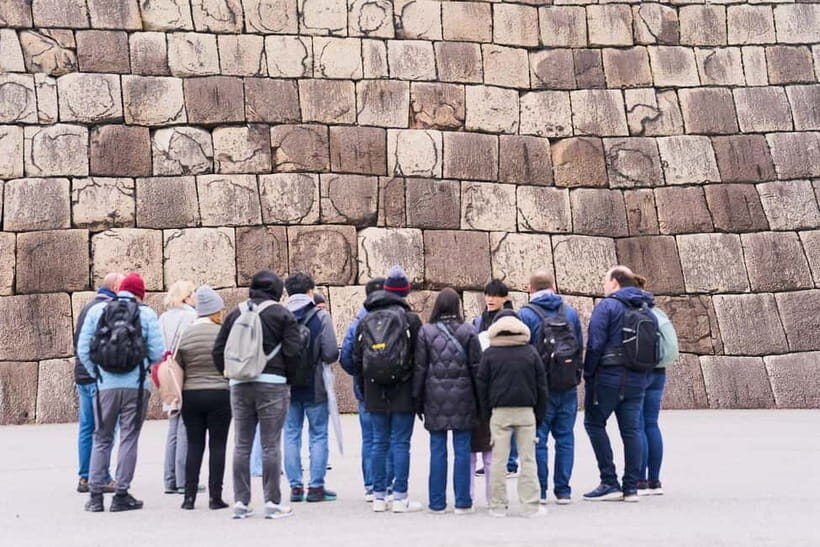
Next comes Ote-Mon Gate (about 15 minutes). This is one of the strongest “story turns” on the walk. You’ll pause, look closely, and get the guided context for how Edo Castle worked as a system—not just as one big building.
Then the tour heads into Tokyo Imperial Palace space for a longer guided segment (about 20 minutes). This is where you’ll connect two big timelines:
- the samurai and shogun era centered on Edo Castle
- the Imperial Palace’s role today, tied to Japan’s 2,600-year imperial system
What makes this valuable is the way the guide links function to design. You start to understand why gates and walls were built to control movement, and then you see how the same grounds became a symbolic seat of power.
One consideration: the Imperial Palace has a security check. Plan to leave your time-control stress at home. Don’t bring knives or alcohol, and expect that line-and-check rhythm.
Tokyo Imperial Palace grounds: what you’ll actually notice with a guide
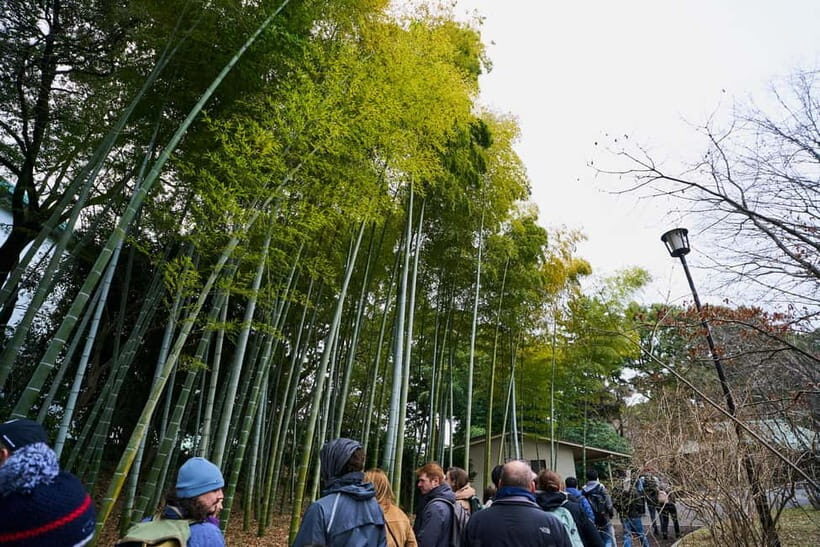
At this stage, the tour becomes less about ticking off famous names and more about noticing how the space is organized. You’ll walk among areas that help you imagine daily life for people tied to the castle: retainers, officials, and the shogun’s world of controlled access.
The guide also helps you avoid a common Tokyo problem: the city is visually intense, so it’s easy to glance at walls and gates and miss the logic behind them. With a guide, those same elements feel like parts of a defense plan.
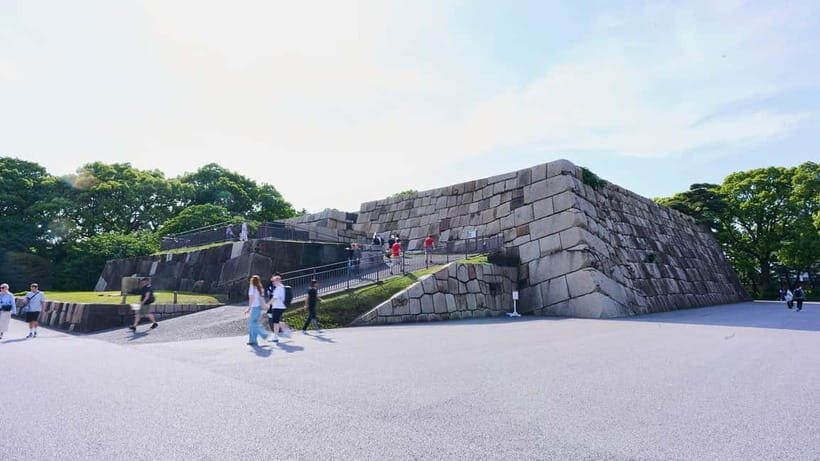
Expect plenty of “look here” moments, especially around gates, moats, and preserved boundaries. The tour description calls out meticulously preserved moats and gates, and that’s what you’ll feel on the ground—you’re not just reading history, you’re seeing why certain lines mattered.





Ninomaru Garden: garden time with real historical framing
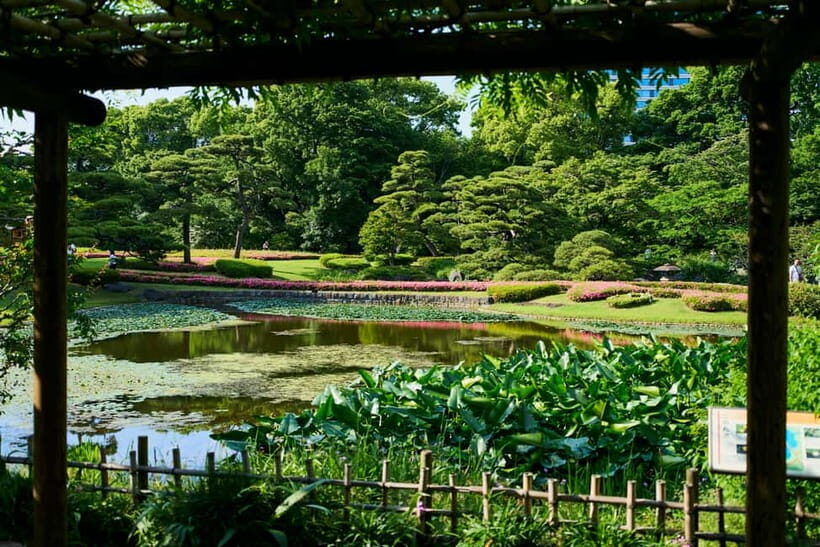
Ninomaru Garden is next (about 15 minutes). This stop is a nice shift in tempo. After walking through the heavy “defense and control” story, the garden brings in seasonal beauty—while still staying connected to power and taste.
This is also one of the most satisfying segments for anyone who’s tired of history tours that feel like lectures. A garden forces you to slow down. You’ll see carefully kept features, and you’ll likely get pointed attention to details you’d otherwise walk past.
Then there’s a specific treat: you’ll view a miniature structure of the former palace. That miniature is especially useful because it gives you context when you’re standing in a real space that’s spread out. Tokyo’s scale can trick your brain; miniatures correct that fast.
Edo Castle Ruins: where the past reads like city planning
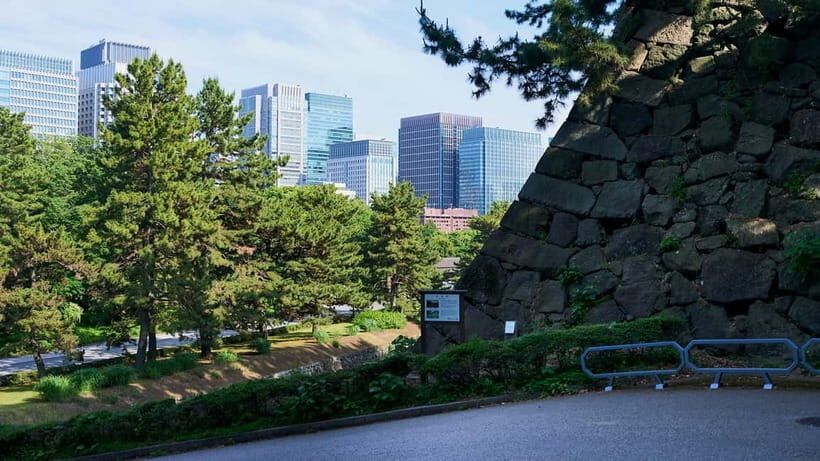
After Ninomaru Garden, you’ll reach Edo Castle Ruins (about 10 minutes). Short stop, but don’t let the time fool you. This is where the tour earns its name.
Edo Castle is described as the largest castle in Japan, and the key idea is that traces remain across Tokyo. In other words, you’re not looking at a single preserved relic that happened to survive. You’re looking at where something enormous used to be, and the shape of the old system still influences how you can imagine the area.
Guides tend to focus on layered defenses here—how multiple boundaries made attacks hard, and how movement through the grounds was controlled. If you like the tactical angle of samurai history, this is a strong moment.
Imperial Palace East Gardens: koi, trees from across Japan, and calmer Tokyo
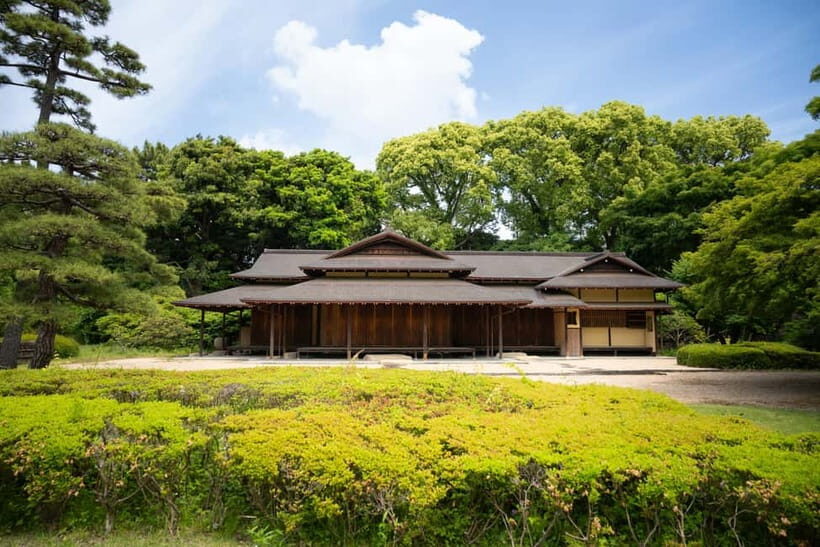
The East Gardens segment takes about 20 minutes. This is often the most relaxing part of the walk, and it’s also one of the most photo-friendly.
You’ll get to enjoy encounters with special koi fish and diverse trees from across Japan. That combination turns the East Gardens from a pretty walk into something with personality. You can feel the “this was meant to be admired” mood, not just toured.
The tour experience also emphasizes panoramic views. Even if you’re not chasing skyline shots, panoramic spots are helpful because they let you orient yourself. Tokyo is big and busy; this area gives you breathing space while your brain builds a mental map.
Pace and group size: why “up to 10” feels like the right number
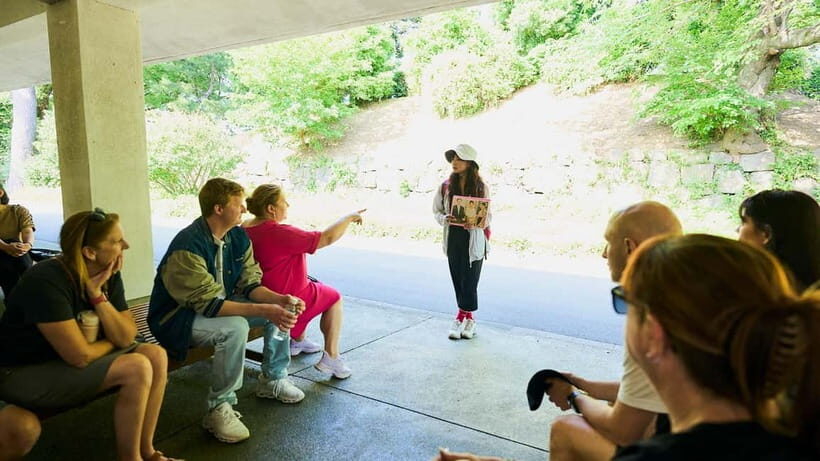
The whole tour runs about 2 hours, and the small-group format (up to 10) is one of the biggest practical wins. When the group is larger, guides rush. Here, the pacing stays human.
That matters for two reasons:
1) You’ll have time for photo stops without getting pulled along like a train car.
2) You can ask about the Edo period and the imperial system without feeling like you’re holding everyone up.
Based on the guides’ repeated styles you’ll encounter (names like Fuma, Keiko, Ai, and Koyo show up in past experiences), you can expect explanations that stay friendly and question-ready. It’s not just walking; it’s discussion in motion.
If you’re someone who likes history but hates long, indoor lectures, this pacing is a good match. Two hours is long enough to connect the dots, short enough that your feet don’t completely revolt.
English-only tour: clarity for first-time visitors
This tour is conducted in English only, with no Japanese language support. That’s a blessing if your comfort zone is English and you want to understand everything your guide is saying.
The downside is simple: if you’re hoping for a bilingual explanation or you want a Japanese-speaking support option, you won’t get it here. For most visitors, though, English-only is exactly what helps the story land quickly.
Price and value: why $23 for 2 hours can be fair
At about $23 per person for a 2-hour small-group walk, this tour hits a sweet spot. You’re not paying for a big museum visit with timed entry and complex logistics. You’re paying for the thing that’s hard to reproduce on your own: a guided narrative tied to specific structures—Sakurada Tatsumi Yagura, Ote-Mon Gate, the Imperial Palace grounds, Ninomaru Garden, Edo Castle Ruins, and the East Gardens.
Also, your value improves because the tour includes access to guided segments in Imperial Palace grounds and East Gardens, plus the extra interpretive stops like the miniature palace structure. If you’re the type who walks by walls and wishes someone would explain what you’re looking at, this is the exact kind of “turns the lights on” investment that usually pays off.
Practical snags to plan for (so your day stays smooth)
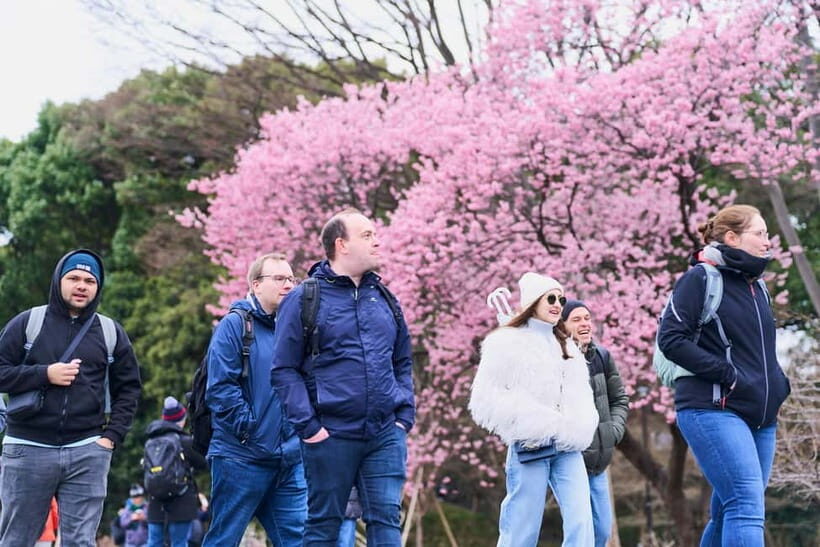
Most of the tour happens outdoors, so dress for weather. Even if the day looks mild, Tokyo can shift quickly, and you’ll spend time standing at photo stops and waiting for the group to gather.
Wear shoes you can trust. This is a walking tour with multiple stops spread over the Imperial Palace grounds and surrounding areas. You’re not in sneakers-only mode, but you’ll do better with supportive footwear.
Photography is encouraged, so bring your camera or phone and keep it handy. At the same time, don’t treat every stop like a scavenger hunt. The guide will point you toward the details that make the photos worth taking.
Wheelchairs are available for use within Imperial Palace grounds, but there are slopes and areas where guests will need to walk or go down on foot. If mobility is a concern, plan for some uneven movement.
Who should book this Shogun Walking Tour
I think this tour fits best if you:
- like samurai and Edo period history, especially the shogun angle
- want imperial context without reading a wall of text
- enjoy gardens and want them explained as part of the story, not as filler
- prefer small groups and a guided pace you can actually keep up with
It may be less satisfying if you want a lot of hands-on activity or indoor time, since much of the walk is outdoors. Also, if you only care about one tight theme—either samurai tactics or garden strolling—you might still enjoy it, but you’ll likely want to come with curiosity about how the eras connect.
Should you book this Tokyo Castle & Imperial Palace Shogun Walking Tour?
Yes—if you want a guided walk that turns Edo Castle and today’s Imperial Palace into one coherent picture. The combination of major gates and ruins, the garden breaks, and the miniature palace view is a strong mix for first-time visitors who want “I get it now” clarity in about two hours.
Book it if small-group attention matters to you. With up to 10 people and English-only guidance, you’ll spend more time looking, asking, and understanding—and less time guessing what you’re staring at.
FAQ
How long is the Tokyo Castle & Imperial Palace Shogun Walking Tour?
The tour lasts about 2 hours.
What is the group size?
It is a small group limited to up to 10 participants.
Is the tour available in English?
Yes. The tour is conducted in English only, with no Japanese language support available.
Where do we meet the guide?
Meet in front of Starbucks Coffee Kōkyo Gaien Wadakura Fountain Park Store, at 3-1 Kōkyo Gaien, Chiyoda City, Tokyo.
What are the main stops on the walk?
You’ll visit Sakurada Tatsumi Yagura, Ote-Mon Gate, Tokyo Imperial Palace, Ninomaru Garden, Edo Castle Ruins, and the Imperial Palace East Gardens.
Do we see anything besides gardens and gates?
Yes. You’ll also view a miniature structure of the former palace, and there are encounters with koi fish and trees from across Japan.
Is photography allowed?
Photography is encouraged throughout the tour.
Are there any rules for entering the Imperial Palace?
There is a security check. Please do not bring knives or alcohol.
Is wheelchair access available?
Wheelchairs are available and can be used within the Imperial Palace grounds, but there are some slopes and areas where guests may need to walk or go down on foot.
Can I reserve without paying right away?
Yes. There is a reserve now & pay later option.
Tokyo on Foot: More Walks




More Tours in Tokyo


More Tour Reviews in Tokyo



Fresh reviews from around Tokyo






Walking Tours, compared.
 ★ 5.0Tokyo Tsukiji Fish Market Food and Culture Walking TourFrom $993,184 reviews
 ★ 4.9Shinjuku Local Bar and Izakaya Guided Walking TourFrom $341,794 reviews
 ★ 5.0Tsukiji Fish Market Food and Walking tourFrom $301,724 reviews
 ★ 4.8Asakusa Walking Tour with Sensoji Temple VisitFrom $221,583 reviews
 ★ 4.9Tsukiji Fish Market Guided Walking TourFrom $221,397 reviews
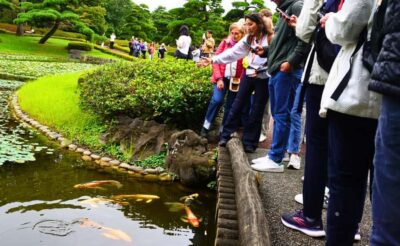 ★ 4.9Imperial Palace Japanese History Walking TourFrom $32987 reviews
 ★ 4.7Dark Side of Tokyo Shinjuku Red Light Walking TourFrom $29862 reviews
★ 4.7Tsukiji Fish Market Food and Culture Walking TourFrom $96757 reviews
★ 4.7Dark Side of Tokyo Shinjuku Red Light Walking TourFrom $29862 reviews
★ 4.7Tsukiji Fish Market Food and Culture Walking TourFrom $96757 reviews
Browse the lists this tour appears in