
Reviewed · TSUKIJI FISH MARKET TOURS
Tokyo Tsukiji Fish Market Food and Culture Walking Tour
Tsukiji feels like a food magic trick. You start at the gate of Tsukiji Hongan-ji Temple, then step into the outer market where seafood gets handled like it’s daily life, not a museum. I especially love the small tastings—dashi soup and green tea—because they help you read flavors before you even reach the lunch stop.
I also like the way the tour builds to the heavy hitters: Wagyu beef skewers and then either sushi or a seafood bowl when you finish. You’ll see vendors working on famous fish (think bluefin tuna) as you walk, so the food feels earned, not random.
One thing to plan for: this tour can’t accommodate vegetarian, halal, gluten-free, or allergy-related requests, and you need to be able to eat fish. If that’s not you, the market is still worth seeing, but this specific tour may not fit.
In This Review
- Key highlights worth planning around
- Tsukiji begins at Tsukiji Hongan-ji Temple gate
- Outer Tsukiji Jogai Market: the tastings teach your senses
- Old Tsukiji Market: more food stops, plus a kitchen-tool moment
- Tsukiji Uogashi pass: wholesale energy, with day-of-week changes
- Wrapping up at Tsukiji Fish Market: the sushi or seafood bowl finish
- What you’ll taste: from dashi basics to Wagyu skewers
- Group size and pace: how to have an easy walk in a tight market
- Price and value: is $99.49 really fair?
- How to make the most of the shopping side
- Should you book this Tsukiji Fish Market food tour?
- FAQ
- How long is the Tokyo Tsukiji Fish Market Food and Culture Walking Tour?
- Where do I meet my guide?
- What should I wear?
- What food is included?
- Do I get sushi on this tour?
- Is the Tsukiji Uogashi wholesale market always open?
- What happens on closure days like Wednesdays and Sundays?
- Can vegetarians, halal diners, or gluten-free diners join?
- Can I join if I have allergies?
- What’s the drink age rule?
Key highlights worth planning around
- Start at Tsukiji Hongan-ji Temple for a calmer, easy-to-find beginning before the crowds hit
- Dashi soup and green tea samples so you understand Japanese flavor basics on the spot
- Outer stall browsing plus an Old Tsukiji stop where you keep moving and keep tasting
- A pass by Tsukiji Uogashi (mini wholesaler market), with closures on key days
- End with sushi or a seafood bowl to turn walking into a real meal
- Max group size of 20 which usually keeps things easier to follow in tight aisles
Still hungry? More Tsukiji breakfasts and market walks
- Tokyo Tsukiji Fish Market Food and Culture Walking Tour★ 5.0 · 3,184 reviews
- Tokyo: Tsukiji Fish Market Food and Walking tour★ 5.0 · 1,724 reviews
- Tokyo: Tsukiji Fish Market Guided Walking Tour★ 4.9 · 1,397 reviews
Tsukiji begins at Tsukiji Hongan-ji Temple gate
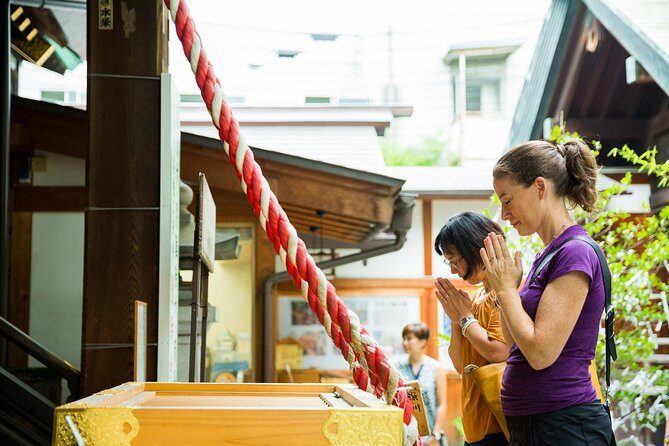
Your 3-hour walk starts outside the main gate of Tsukiji Hongan-ji Temple at Tsukiji Honganji-Temple, 3-chōme-15-1 Tsukiji. This matters because Tsukiji can be confusing on a first visit, and the tour leaves at the start time sharp. Do yourself a favor and arrive a little early—there’s no waiting.
One small but important detail: the meeting spot is the front side of the temple. Some maps send you to the back side, and that’s the kind of mistake that turns an exciting morning into a frantic jog.
Outer Tsukiji Jogai Market: the tastings teach your senses
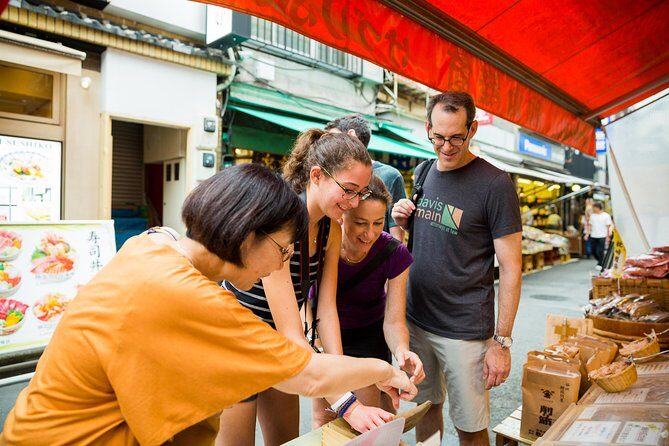
After you get going, you’ll spend time in the Tsukiji Jogai Market area, soaking up the sights, sounds, and smells while learning the market’s long-running role as a major seafood hub in Japan. Even without trying to memorize facts, you’ll start picking up how this place works: vendors deal in freshness, buyers move fast, and food quality is treated like it’s non-negotiable.
This is also where the tour usually gives you starter samples—things like dashi soup and green tea—from typical snack stalls. That’s a smart move for your taste buds. Instead of jumping straight into raw fish, you learn what savory stock tastes like and how light drinks reset your palate as you walk.
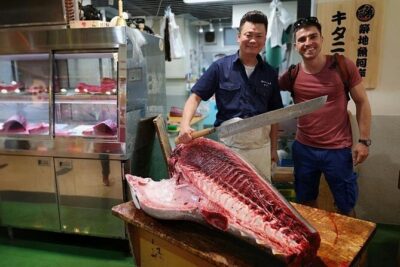
You’ll likely pass dramatic seafood displays too: boxes of sea urchin (uni), vendors carving large cuts like bluefin tuna, and fish shown in tanks (you might see pufferfish). It can be a lot, so wear shoes that won’t punish you by the second hour.
Old Tsukiji Market: more food stops, plus a kitchen-tool moment
Next you move into the Old Tsukiji Market area for a food-focused stretch. This part is shorter, but it keeps the rhythm going: walk, look, taste, then move on again. The tour doesn’t expect you to wander alone inside a maze of stalls, which is a big help if you don’t read Japanese well.
There’s also a practical add-on: if you need a kitchen tool, the tour makes time to stop by so you can check options. That’s useful because Tsukiji isn’t just about eating where you stand—it’s also where locals shop for ingredients and gear when they want to recreate something at home.
A note on expectations: you’re getting samples, not unlimited buffet service at every corner. Plan to feel good, not stuffed to the ceiling by the time you reach lunch.
Tsukiji Uogashi pass: wholesale energy, with day-of-week changes
You’ll then pass by Tsukiji Uogashi, a mini wholesale market where you can see hundreds of types of fish. This is one of the best places to understand that Japanese seafood culture is built on variety and specific cuts, not just one generic idea of fish.
But check your calendar mindset here. The Uogashi wholesaler market is closed on Wednesdays, Sundays, and other closed market days. On those days, some menu items can’t be served because the shops are closed—Japanese omelette and fish cake and fruits are specifically noted as unavailable when those closures happen.
That means your tour experience can shift depending on the day. If you’re scheduling this trip, try to pick a day when the wholesale area is open, especially if you’re excited about those particular tastings.
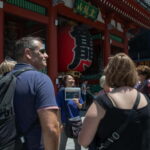
Tokyo at walking pace, a few more ways

Wrapping up at Tsukiji Fish Market: the sushi or seafood bowl finish
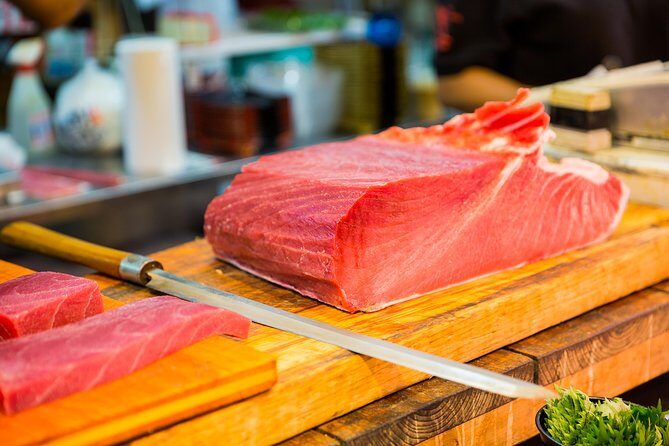
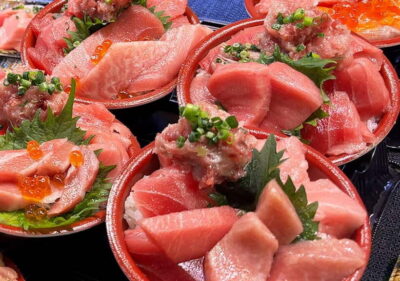
You end your walk with a meal-type stop at Tsukiji Fish Market, and you’ll get a serving of either fish bowl or sushi. Depending on the day and time, the tour serves one or the other, so don’t assume you’ll get both.
This finish is the payoff for all the walking. By the time you reach it, you’ve already tasted savory stock, sampled snacks along the way, and seen how vendors handle ingredients. That context makes a big difference when you’re eating. It’s also the moment where you’ll feel the tour is worth the price, since lunch is included.
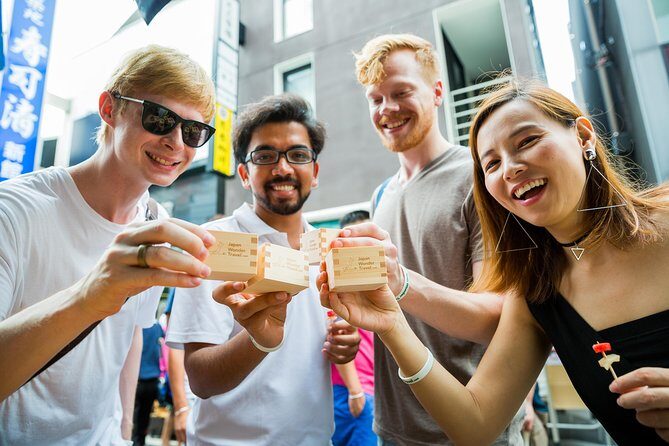
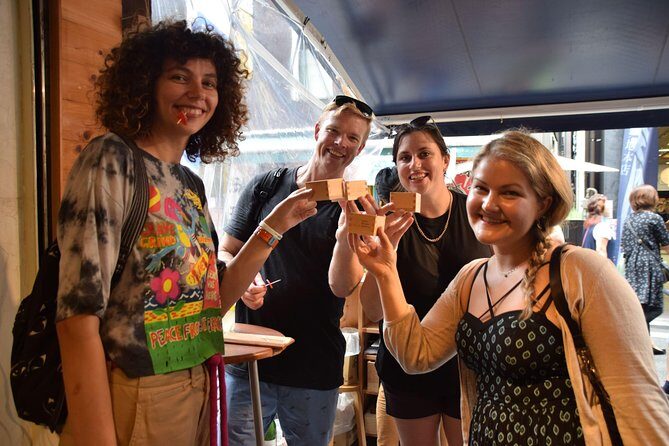
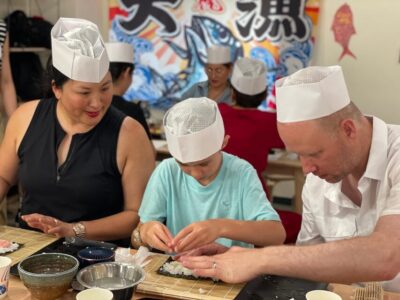
On some departures, you may also see extra on-the-spot food moments tied to the place you’re eating—some guides have been known to help coordinate things like a sake tasting if the group wants it, and some groups mention sushi preparation or making-your-own-style moments. Those aren’t something to bet your day on, but they show how much the guide role matters once you’re at the eating stop.
What you’ll taste: from dashi basics to Wagyu skewers
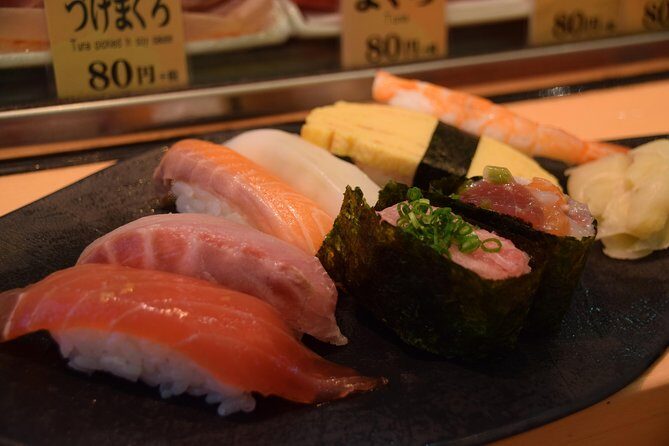
The food plan is built around a straightforward idea: you’ll try multiple items so you can learn what Japanese seafood flavors are about.
Here’s what’s specifically mentioned as part of the experience:
- Dashi soup and green tea early on
- Wagyu beef skewers as one of the standout savory bites
- Fish cakes (and sometimes Japanese omelette, depending on market-day operations)
- Sushi or a seafood bowl at the end
- Seasonal fruit at times when shops are open
A big theme across the best guide moments is pairing food with what you’re looking at. For example, guide names you may hear in guide stories include Kiyo, Naz, Miky, Kayoko, Masa, Hanako, Mari, Shoko, and Nick. People praise these guides for pointing out what ingredients are, why certain stalls matter, and how to eat things without overthinking it.
One more practical point: this is not the tour for picky eaters. If you can’t eat fish, you can’t join. And if you have dietary restrictions beyond what’s listed as impossible to accommodate (vegetarian/halal/gluten-free/allergies), you’ll need to skip this and find a different type of food experience.
Group size and pace: how to have an easy walk in a tight market
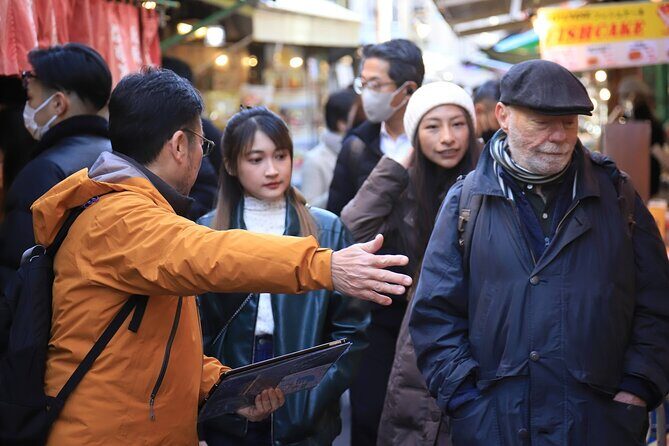
This tour runs about 3 hours and involves enough walking that walking shoes are strongly recommended. You should have a moderate physical fitness level, mostly because Tsukiji’s aisles are narrow, the ground can be busy underfoot, and the group moves as a unit.
The group size is capped at 20 travelers, which helps. In places like Tsukiji, that cap usually means you’re less likely to get separated, and the guide can keep explaining as you go.
The pace can vary by guide and by the day’s crowds. Most departures feel efficient because you’re not stopping to decide where to go next—you’re already guided stall to stall. Still, if you’re sensitive to waiting around at crowded counters, keep your expectations flexible.
Price and value: is $99.49 really fair?
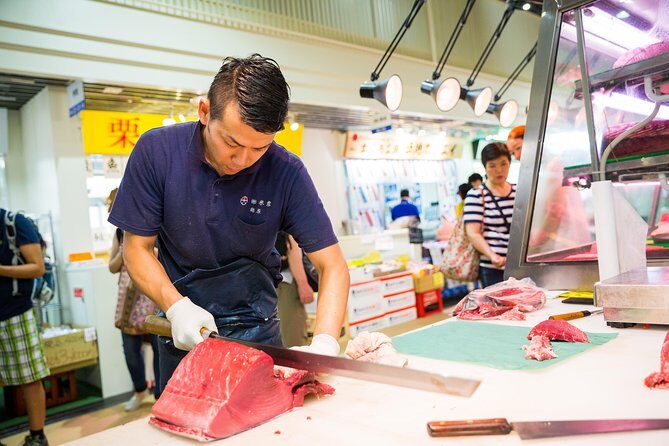
At $99.49 per person for a roughly 3-hour guided experience, the value comes from three places.
First, lunch and snack are included, not just a few samples. That’s important, because market tours can feel like you’re paying mostly for walking and talking. Here, you’re actually fed.
Second, you’re paying for translation plus navigation. Tsukiji can be overwhelming fast, even if you love food. The guide role helps you move through the market without losing time or guessing what to order.
Third, the tour gives you food context. You’re tasting dashi, green tea, fish cakes, Wagyu skewers, and then finishing with sushi or a seafood bowl. That’s a lot of flavor learning for one morning compared with buying food randomly on your own.
Now, the fair warning: if you expect a heavy, meal-style tasting at every stop, you might feel the servings are more “sample plus meal” than “eat everything nonstop.” For most food-focused people, that balance works. For very hungry types who want endless plates, you’ll want to arrive hungry and bring patience.
How to make the most of the shopping side
One of the sneaky benefits here is that you learn how ingredients and snacks connect. The tour includes time to see stalls selling fish, shellfish, and related items, plus that kitchen-tool stop if you need supplies.
If you plan to shop, go in with a simple game plan:
- Take note of anything you’d actually cook at home
- Ask what’s in the item, not just what it costs
- Don’t fill your suitcase too early—buy after you’ve eaten the meal so you’re not making choices while stuffed
Guides often help with practical picks for souvenirs too. Some groups specifically mention help choosing items to take home, and that’s a big quality-of-life improvement when you’re standing in a market full of choices.
Should you book this Tsukiji Fish Market food tour?
Book it if you want a structured, flavor-first walk that includes real eating: snacks plus lunch, and a guided path through iconic seafood areas like the outer market, Old Tsukiji stops, and a Uogashi pass. It’s also a great choice if you’d rather not figure out what to order and where to go while dodging crowds.
Skip or rethink it if any of these apply:
- You can’t eat fish, or you need vegetarian/halal/gluten-free/allergy accommodations (this tour can’t do those)
- You’re expecting a nonstop, big-portion tasting festival at every stop
- You’re sensitive to day-to-day menu changes due to market closures (especially Wednesdays and Sundays)
If you’re in the sweet spot—fish-friendly, curious, and ready to walk—this tour is a strong way to experience Tsukiji with less stress and more food in your day.
FAQ
How long is the Tokyo Tsukiji Fish Market Food and Culture Walking Tour?
The tour lasts about 3 hours.
Where do I meet my guide?
Meet at the main gate of Tsukiji Hongan-ji Temple (front side).
What should I wear?
Wear comfortable walking shoes, since the tour is mainly walking.
What food is included?
Lunch and snack are included.
Do I get sushi on this tour?
Depending on the day and time, you’ll be served either sushi or a seafood bowl.
Is the Tsukiji Uogashi wholesale market always open?
No. It is closed on Wednesdays, Sundays, and other closed market days.
What happens on closure days like Wednesdays and Sundays?
On those days, Japanese omelette, fish cake, and fruits cannot be served because shops are closed.
Can vegetarians, halal diners, or gluten-free diners join?
No. The tour does not accommodate vegetarian, halal, gluten-free requests.
Can I join if I have allergies?
Allergy-related requests are not accommodated.
What’s the drink age rule?
The minimum drinking age is 20. If you’re under 20, the tour offers another drink.
More Tours in Tokyo





More Tour Reviews in Tokyo




Back to the Market: More Tsukiji Tours



Fresh reviews from around Tokyo






Tsukiji Fish Market Tours, compared.
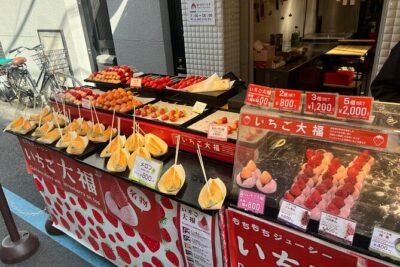 ★ 5.0Tsukiji Fish Market Food and Walking tourFrom $301,724 reviews
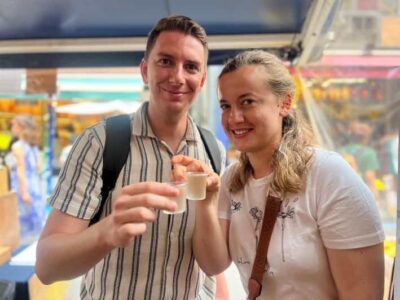 ★ 4.9Tsukiji Fish Market Guided Walking TourFrom $221,397 reviews
 ★ 5.0Tokyo Sushi Making Class in Tsukiji with Professional ChefFrom $491,177 reviews
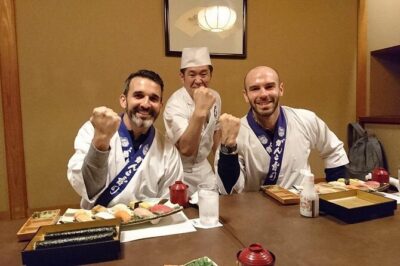 ★ 5.0Tsukiji Fish Market Guided Tour and Sushi Making with Pro ChefFrom $104775 reviews
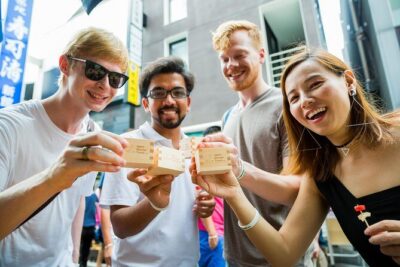 ★ 4.7Tsukiji Fish Market Food and Culture Walking TourFrom $96757 reviews
 ★ 5.0Tsukiji Fish Market: Street Food & Culture Walking TourFrom $33669 reviews
 ★ 5.0Tsukiji Fish Market Small-Group Food Walking TourFrom $87621 reviews
 ★ 4.9Tsukiji Fish Market Sushi Making Class with Pro ChefFrom $63506 reviews
Browse the lists this tour appears in