
Reviewed · FOOD
Shimbashi Tastes & Stories A Culinary Foodie Tour By Local Guide
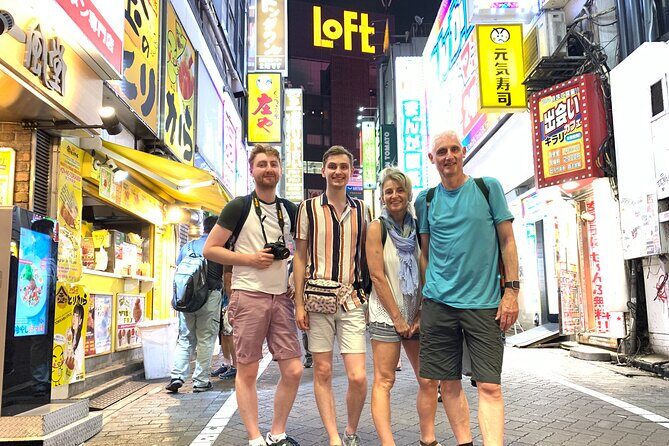
Tokyo has hidden snack routes.
This Shinbashi tour is interesting because it mixes food with very local stops you’d normally skip in a fast trip—old rail leftovers, a shrine locals actually use, and the station-town layers around Shiodome. I like that it’s built around real neighborhood wandering instead of a checklist of famous sights, and I also like that you get multiple food types (including seafood and Japanese beef wagyu) rather than just one heavy meal. One consideration: it’s a 4-hour walk with several short stops, so if you want long sit-down meals or minimal walking, this may not feel like the right fit.
In This Review
- Key Things To Know Before You Go
- Why Shinbashi Feels Like Real Tokyo After the Lights
- Meeting at SL Square and Getting Your Bearings Fast
- Stop One: Old Shimbashi Station for Context, Not Just Photos
- Stop Two: SL Square and the Rail-into-Food Connection
- Stop Three: Karasumori-jinja for a Local Shrine Moment
- Stop Four: New Shimbashi Building and the Urban Story
- Stop Five: Shiodome City Center and the NTV Tower Area
- Stop Six: Shinbashi Wrap-Up With a Station Overview
- What You Actually Eat: Sushi, Seafood, Wagyu, Desserts
- The Guide Experience: English-Friendly and Story-Driven
- How This Tour Fits Into Your Tokyo Itinerary
- Price and Value: Is $171 Worth It?
- Who Should Book This (and Who Might Skip It)
- Should You Book Shimbashi Tastes and Stories?
- FAQ
- What is the duration of the Shinbashi food tour?
- How much does the tour cost?
- Where does the tour start and end?
- What’s included in the food and drinks?
- Does the tour include a guide who speaks English?
- How big is the group?
- Is admission required for the stops?
- Is there a mobile ticket?
Key Things To Know Before You Go
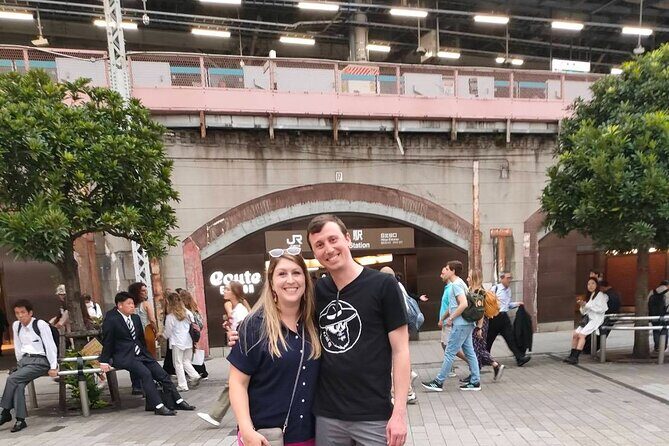
- A station-area Tokyo route, not a shopping-mall loop: You’ll center on Shinbashi and nearby landmarks tied to how Tokyo moves.
- Four food categories in one outing: Sushi, seafood, Japanese beef wagyu, plus desserts, with 2 soft drinks and water included.
- Local guide storytelling built in: The tour is designed as a culture + food walk, with a professional English-speaking guide.
- Small groups (max 15): It’s small enough to ask questions and keep the pace friendly.
- Free admission stops: Several stops are listed as admission-free, so you’re paying mainly for guide time and tastings.
Worth weighing up alongside this Tokyo pick:
- Tokyo: Shinjuku Food Tour (13 Dishes at 4 Local Eateries)★ 5.0 · 6,603 reviews
- Tokyo Tsukiji Fish Market Food and Culture Walking Tour★ 5.0 · 3,184 reviews
- Tokyo: Shinjuku Food Tour (15 Dishes and 4 Eateries)★ 4.9 · 2,033 reviews
Why Shinbashi Feels Like Real Tokyo After the Lights
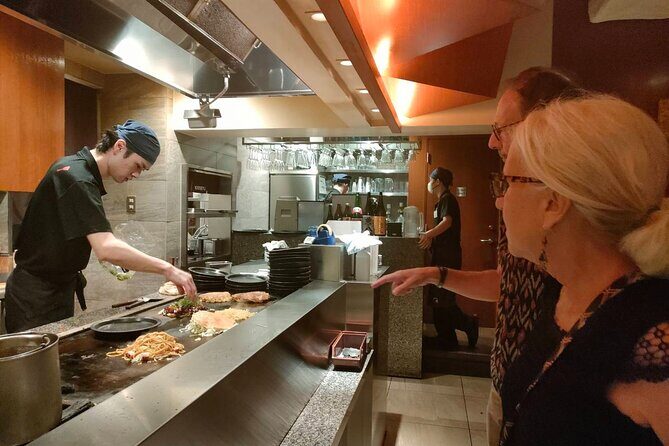
Shinbashi sits in that useful part of Tokyo where you’re close to big names, but the streets around you still feel like daily life. This tour leans into that. Instead of starting with the big postcard areas, you begin right in the railway world: Old Shimbashi Station and the surrounding station district. It’s a smart choice, because Shinbashi’s food scene is tied to people who commute, snack fast, and meet coworkers after work.
I also like the tone of the experience. It’s not trying to turn Tokyo into a theme park. The guide frames what you’re eating and what you’re seeing as part of a working-city rhythm—especially the salaryman culture that makes Shinbashi a natural place for informal meals, quick bites, and “one more stop” nights.
Group size is capped at 15, which matters more than you’d think in a food walk. Smaller groups mean less waiting around for the next bite and more time to ask what you’re tasting and why it matters locally.
Meeting at SL Square and Getting Your Bearings Fast
Your start point is SL Square (2-chōme-7-先 Shinbashi, Minato City). This matters because the square is designed for easy orientation, and it immediately sets the tone: old rail system symbolism plus Tokyo’s habit of layering the past into the everyday.
The tour includes a block of time here, about 45 minutes, and the stop is linked to Japan’s railway transport history—created in 1972 to mark the 100th anniversary of that era. Even if you’re not a rail nerd, it helps you understand why Shinbashi became such a strong food district. Commuters and travelers need places to eat, and station-adjacent neighborhoods naturally grow those businesses.
If you worry about finding the exact meeting spot, take it seriously. One review described a rocky first moment when the meeting point details didn’t match perfectly, and a local person helped get the guest to the guide. That’s a good reminder: arrive a few minutes early so you’re not rushing at the start.
Stop One: Old Shimbashi Station for Context, Not Just Photos
The first sightseeing block is Old Shimbashi Station, about 30 minutes and listed as free. I love this kind of start because it gives you a simple backdrop: this area didn’t become important overnight. It’s part of Tokyo’s long habit of reorganizing itself around transport.
The practical payoff is that once you understand the station area as a living hub, the food choices later feel logical. You’re not just hunting random shops. You’re learning how a neighborhood feeds people who spend their days moving.
Stop Two: SL Square and the Rail-into-Food Connection
After SL Square, the tour keeps you in the railway-adjacent zone long enough to connect the dots between the city’s transport identity and its snack culture. That’s part of why this isn’t a generic “walk and taste” tour. You’re getting context while still moving at a comfortable pace.
The time here is 45 minutes, and it’s a free admission stop. Think of it as a calm reset before you jump into the food-heavy rhythm.
More days made easy by a guide
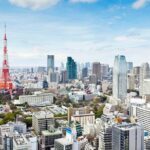
Stop Three: Karasumori-jinja for a Local Shrine Moment
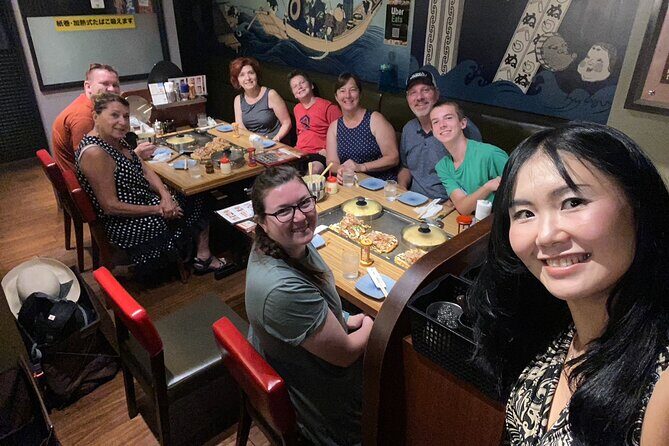
Then you shift from trains to something quieter: Karasumori-jinja. This is one of the older shrines on the route, and it’s scheduled for about 45 minutes. The key difference here is that the tour frames the shrine as something locals actually visit—not a performance stage.
I like having this cultural stop in the middle of a food tour. It keeps the experience from becoming only stomach-first. You get a sense of how everyday Tokyo includes spiritual spaces, even in places that look like they’re all commerce and convenience.
If you’re the kind of traveler who likes a quick breath between tastings, this stop will feel welcome.
Stop Four: New Shimbashi Building and the Urban Story
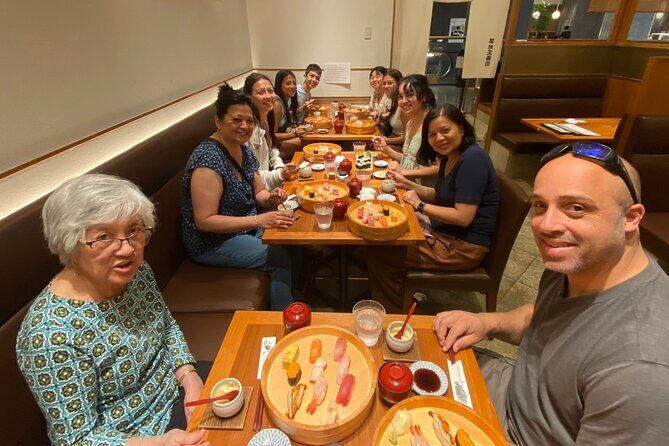
Next comes New Shimbashi Building, about 30 minutes and listed as free. The tour description ties it to a former bar district known as “Tanuki Alley,” and it connects the area’s redevelopment to the period after the 1964 Tokyo Olympics.
Even if you don’t know the details, you’ll feel what the tour is doing: it’s showing how districts change shape but keep their identity. Shinbashi’s food scene works the same way. You might see new structures, but the neighborhood still serves the people who built its habits.
Practical note: this stop is about orientation and context, not a long sit-down. So if you like your tours to keep moving, it fits well.
Stop Five: Shiodome City Center and the NTV Tower Area
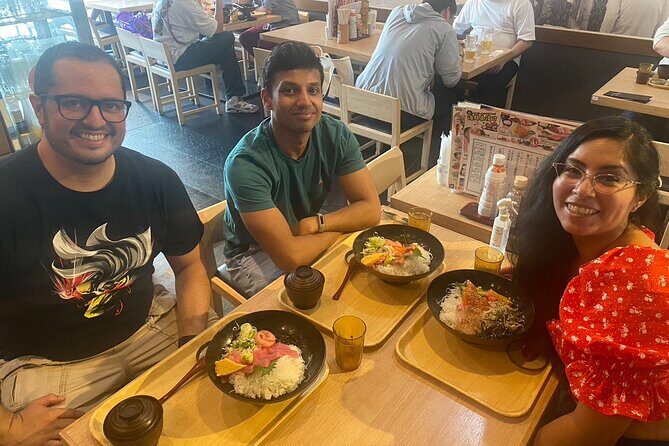
You’ll also stop around Shiodome City Center, specifically the NTV Plaza in front of the NTV Tower. Time here is about 30 minutes, and it’s another free admission segment.
This is your “Tokyo modern” contrast. You go from shrine and older rail identity into a media-and-office area. That contrast is useful: it shows you Shinbashi isn’t just one vibe. The district can be traditional-feeling in one step and corporate in the next.
If you’re used to Tokyo walking tours that only chase temples or only chase neon, this section offers a more realistic city mix.
Stop Six: Shinbashi Wrap-Up With a Station Overview
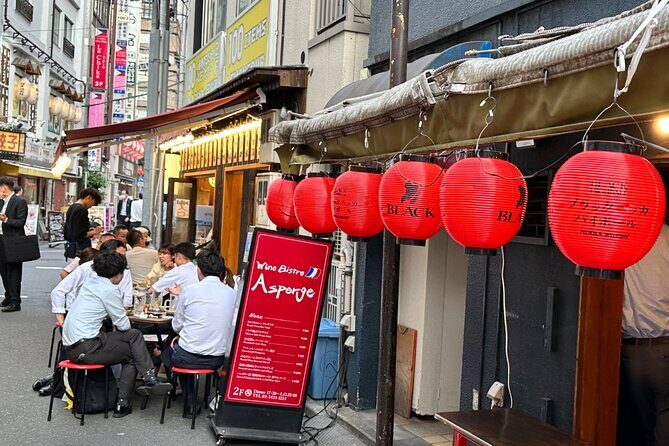
The final listed stop is simply Shimbashi, about 30 minutes, ending back where you started. The guide uses this time to give an overview of what makes Shinbashi work as a station neighborhood and how the food scene fits the area’s daily flow.
Ending back at the meeting point is a relief. Tokyo can be confusing when you’re hungry, and having the route close cleanly helps you keep your day on schedule.
What You Actually Eat: Sushi, Seafood, Wagyu, Desserts
The biggest question for any food tour is always the same: will I actually eat well?
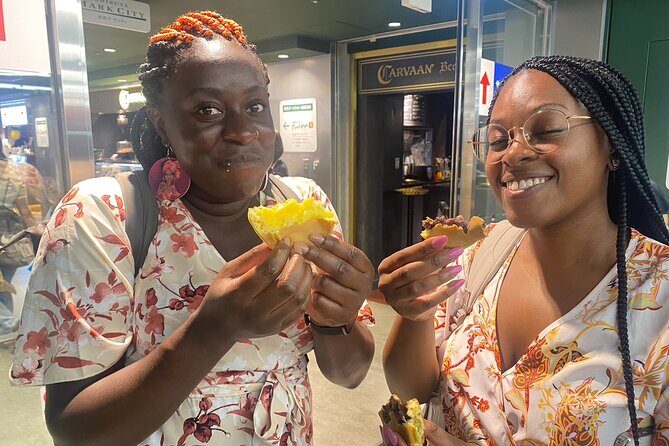
Here, you’re set up to. The tour includes tastings that cover sushi, seafood, and Japanese beef wagyu, plus desserts. You also get 2 soft drinks and water included. Alcohol is not included, though it’s available to purchase during the experience.
A 4-hour run with multiple food types is often the sweet spot for value. You’re not paying just for one restaurant bill; you’re spreading the budget across a few different styles and flavors, which makes the experience feel like learning, not just consuming.
Also, I like that dessert is explicitly part of the included package. In many tours, dessert feels optional or inconsistent. Here, you can plan your energy around it.
The Guide Experience: English-Friendly and Story-Driven
A big part of why this tour earns a high score is the guide quality. Two names show up clearly in feedback: Akira and Kaori. Both are praised for taking people to food places they wouldn’t find on their own, and both come across as helpful and easy to work with.
Akira gets called out for going the extra mile, like taking photos of a guest and their daughter while you’re out exploring. That might sound small, but in a walking tour it helps you feel cared for without stopping the flow.
Kaori is also highlighted for a comfy pace and for making the tastings feel like a guided lesson rather than random stops. If you like your food tours social but not chaotic, the guide approach here fits that.
How This Tour Fits Into Your Tokyo Itinerary
This is a good choice when you want a neighborhood-based Tokyo day that still feels focused. It works especially well if you’re already planning to see the big “usual suspects” later in your trip. Shinbashi gives you a different angle: less sightseeing pressure, more everyday-city flavor.
It’s also a nice “first Tokyo food” option for travelers who land with jet lag and want a guided path. Everything stays close to the rail-center area, and the tour is designed to move efficiently between stops.
If your trip is tightly scheduled and you don’t want to spend hours researching where to eat, this kind of guided structure saves time while still keeping things local.
Price and Value: Is $171 Worth It?
At $171 per person, you’re paying for several things at once: a professional English-speaking guide, multiple tastings (sushi, seafood, wagyu, desserts), and included non-alcoholic drinks. The time is also solid—about 4 hours—so you’re not buying a 90-minute snack crawl.
The value logic here is simple: you’d likely pay something like this on your own if you try to replicate the same mix across multiple places, especially when you include wagyu and sushi. The tour’s strength is that it bundles the planning and the local knowledge into one bill.
One caution: the tour doesn’t include alcohol. If you want sake or beer with the meal stops, you’ll need to budget extra.
Who Should Book This (and Who Might Skip It)
You’ll love this tour if you want:
- More than one food style in a single afternoon
- A smaller-group walk that feels personal
- The Shinbashi angle—salaryman-era Tokyo energy—without having to decode it yourself
You might choose something else if:
- You’re not comfortable with walking for about 4 hours
- You prefer long restaurant meals over quick, varied tastings
- You want alcohol included in the price (it isn’t)
Should You Book Shimbashi Tastes and Stories?
Book it if you want a Tokyo food experience that feels practical and local, not only famous-name sightseeing. The mix of free cultural stops plus multiple tastings (including wagyu) makes it a strong value play for people who enjoy food but also like understanding the neighborhood behind the flavors.
Skip it if you’re looking for a purely sightseeing tour or you hate walking between short stops. This one is built for eating, learning, and moving.
FAQ
What is the duration of the Shinbashi food tour?
The tour runs for about 4 hours.
How much does the tour cost?
The price is listed as $171.00 per person.
Where does the tour start and end?
It starts at SL Square in Shinbashi and ends back at the meeting point.
What’s included in the food and drinks?
You’ll have sushi, seafood, Japanese beef wagyu, desserts, and 2 soft drinks and water. Alcoholic drinks are not included.
Does the tour include a guide who speaks English?
Yes. It includes a professional Japanese-speaking English tour guide.
How big is the group?
The tour has a maximum of 15 travelers.
Is admission required for the stops?
Several stops are listed as admission-free in the schedule.
Is there a mobile ticket?
Yes, it includes a mobile ticket.
If you cancel up to 24 hours in advance, you can get a full refund. If you cancel within 24 hours of the start time, the amount paid is not refunded.
More Good Eating in Tokyo


More Tours in Tokyo



More Tour Reviews in Tokyo




Fresh reviews from around Tokyo






Food, compared.
 ★ 5.0Shinjuku Food Tour (13 Dishes at 4 Local Eateries)From $866,603 reviews
 ★ 5.0Tokyo Tsukiji Fish Market Food and Culture Walking TourFrom $993,184 reviews
 ★ 4.9Shinjuku Food Tour (15 Dishes and 4 Eateries)From $852,033 reviews
 ★ 5.0Tsukiji Fish Market Food and Walking tourFrom $301,724 reviews
 ★ 5.0Tokyo Night Foodie Tour in Shinjuku – Seasonal Sushi, Wagyu BeefFrom $1111,161 reviews
 ★ 5.0Eat and Drink Like a Local: Tokyo Ueno Food Tour-Taverns&RamenFrom $95957 reviews
 ★ 5.0Shibuya Food Tour (13 dishes and 4 Eateries)From $77770 reviews
★ 4.7Tsukiji Fish Market Food and Culture Walking TourFrom $96757 reviews
★ 5.0Shibuya Food Tour (13 dishes and 4 Eateries)From $77770 reviews
★ 4.7Tsukiji Fish Market Food and Culture Walking TourFrom $96757 reviews