
Reviewed · MT FUJI DAY TRIPS
Private Sightseeing to Mt Fuji and Hakone with English Driver
Mt Fuji views in one long, well-paced day. This private, customizable outing makes it easier to stack the best classic stops around Japan’s most famous volcano, with the freedom to linger or tweak the plan. I like the English-driving help (so you spend less time guessing) and the private car flexibility (so traffic and timing don’t fully control your day).
Here’s the trade-off: Mt Fuji is weather-dependent, and winter or peak climbing-season road rules can slow things down. Still, with good planning and an itinerary that adapts, it’s a very solid way to see Mt Fuji without turning the trip into a stressful transit scavenger hunt.
In This Review
- Key Highlights I’d Block Time For
- Mt Fuji and Hakone in One Private Day: What You’re Really Buying
- Private Car From Tokyo With an English Driver: How It Helps Your Day
- Chureito Pagoda: The WWII Peace Memorial Stair Stop With Big Views
- Oshino Hakkai Springs: Eight Pools, Fuji Aquifer Water, and Diamond Fuji Hints
- Kitaguchi Hongu Fuji Sengen Jinja: A Calm Shinto Pause at the Mountain’s Base
- Oishi Park on Lake Kawaguchiko: Flowers, 350m Walks, and Blueberry Comfort Food
- Mt Fuji 5th Station by Car: Toll Roads, Snow Risks, and Seasonal Shuttle Rules
- Lake Kawaguchiko Views: Ropeway Options, Hot Springs Recovery, and Easy Photoing
- Tickets, Tolls, Weather, and Crowds: The Stuff That Actually Makes or Breaks the Day
- Who This Private Mt Fuji and Hakone-Style Day Trip Fits Best
- Is This $60 Private Tour Worth It?
- Should You Book Bravo Japan Tours for Mt Fuji and Hakone?
- FAQ
- Is this tour private?
- How long is the tour?
- Does the tour include an English driver?
- Is pickup included?
- What is included in the price?
- Are tickets included for all stops?
- Will I be able to drive to Mt Fuji 5th Station?
- Is this tour affected by weather?
- What’s the cancellation policy?
Key Highlights I’d Block Time For
- Chureito Pagoda’s 400-plus stairs and photo views at multiple elevations, plus the WWI/WWII peace-memorial context
- Oshino Hakkai’s eight springs and the Mount Fuji aquifer story behind the water
- A shrine break at Kitaguchi Hongu Fuji Sengen Jinja before you head higher
- Oishi Park’s 350m flower path, with strong seasonal changes (moss phlox, lavender, kokia)
- Mt Fuji 5th Station access details, including toll-road cost and seasonal shuttle limits
- Lake Kawaguchiko viewpoints via the Kachi Kachi Ropeway area and nearby hot-spring recovery time
Other routes to the mountain, compared
- Mt Fuji & Hakone Cruise, Drum Show Bullet Train 1 Day from Tokyo★ 4.0 · 7,413 reviews
- Tokyo Mt Fuji 5th St & Hakone Cruise Bus Tour w/Bullet Train★ 4.4 · 5,024 reviews
- From Tokyo: Mount Fuji Full-Day Sightseeing Trip★ 4.5 · 4,970 reviews
Mt Fuji and Hakone in One Private Day: What You’re Really Buying
This tour is built around getting you from Tokyo into the Fuji area for a full day, with a private English-speaking driver and an itinerary that you can shape around your group. That matters because most day trips fail at one thing: they either move too fast to enjoy, or they get stuck in traffic and leave you short on the views that matter.
At $60 for about 10 hours, you’re mainly paying for private transportation in an air-conditioned vehicle, plus the convenience of a driver who can handle the route and timing. Entrance fees are a separate story (most stops are free, but not all), and the Mt Fuji 5th Station has its own cost. Think of it like: cheap enough for private comfort, but still worth budgeting for tolls and paid entry where relevant.
Also, the tour is advertised as Mt Fuji and Hakone. Since it’s private and customizable, you can usually adjust the mix depending on what you care about more—volcano views, lakes, shrines, or a more classic Hakone-style day. Your driver can help you keep that balance realistic.
Private Car From Tokyo With an English Driver: How It Helps Your Day
A private tour isn’t just “less crowded.” It’s about timing. In real-world service, drivers have even reached out the evening before to adjust your departure—one driver named Bajwa reportedly asked to shift a start from 8am to 7am to dodge traffic. That’s the kind of practical call that turns a good plan into a great day.
You also get more control over stop length. Some drivers have been reported as giving lots of information while still letting you decide how long you want at each point. That’s important on Mt Fuji days because conditions change fast: clouds, wind, snow, and crowd levels can swing your best viewing time.
One more point to keep in mind: this is described as a private sightseeing tour with an English driver, not a full-time museum-style guide with ticketed admissions and scripted commentary. If you want extra interpretation beyond basic driver talk, ask ahead and confirm what kind of added guiding—if any—can be arranged.
Chureito Pagoda: The WWII Peace Memorial Stair Stop With Big Views
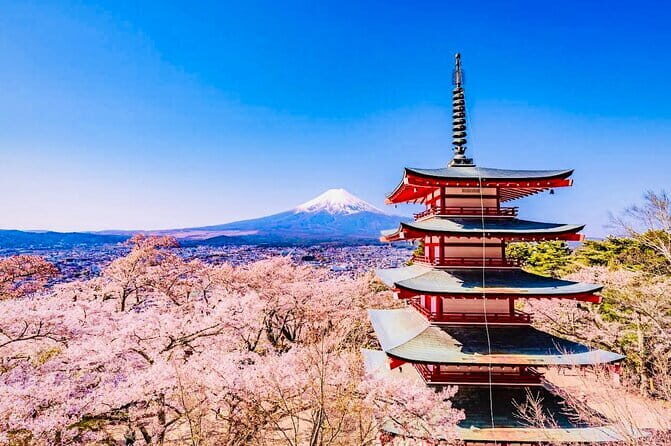
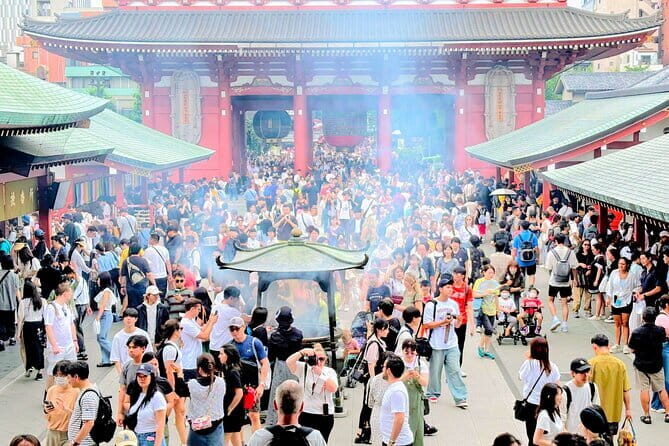
Chureito Pagoda is one of those places where the postcard shot makes sense because the setting actually holds up in person. The area is a peace memorial park with Shinto shrines and a climb of as many as 400 stairs, which is part of what makes the views feel like an ascent, not just a viewpoint.
What I like about this stop is the story layer. It’s not only about Mt Fuji photos; it’s also a memorial for soldiers and civilians who lost their lives during World War I and II. Even if you only spend around 50 minutes, that context helps the place feel more grounded and less like a random scenic stop.
Practical note: those stairs add up fast. If your group has anyone who struggles with steps, plan for slower pacing, more breaks, or a shorter climb. The reward is a view of Mt Fuji from different elevations around the pagoda area—great for photos and for spotting how the mountain changes as you move.
Admission here is listed as free, so you’re not paying extra to enjoy the climb and the views.
Oshino Hakkai Springs: Eight Pools, Fuji Aquifer Water, and Diamond Fuji Hints
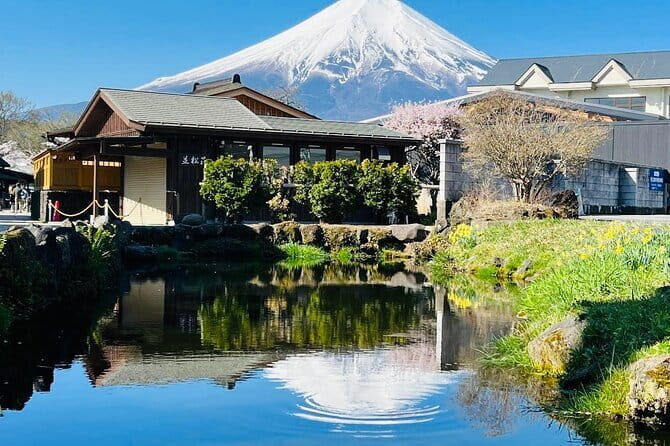
Oshino Hakkai is the clean-water face of Mt Fuji. You’re looking at eight springs in Oshino, fed by aquifer water connected to Mount Fuji. The springs are described as a Natural monument of Japan and part of the Mount Fuji World Heritage Site, which helps explain why this place is protected and why the water stays such a big deal.
This stop is also where you’ll get the most “nature + myth + science” vibe in one hour. If you’re visiting in winter, there’s the famous idea of Diamond Fuji—when the rising or setting sun lines up with the peak so the caldera seems to cup the light. The key detail is that you only see it from certain spots because it depends on the earth’s angle and the sun’s timing.
Even without chasing Diamond Fuji perfectly, Oshino Hakkai is worth it for the quiet water surfaces and the clear feeling of being close to the mountain’s natural system. The Hannoki Bayashi Shiryokan open-air museum is nearby, and the largest pond area has that small museum-admission component. The good news: your base walk is still easy to enjoy even if you skip the museum ticket.
If you’re sensitive to crowds, try to arrive with enough time to find a comfortable viewing spot. This area is popular, so your one-hour window matters.
More Hakone loops, ropeways and lake crossings
Kitaguchi Hongu Fuji Sengen Jinja: A Calm Shinto Pause at the Mountain’s Base
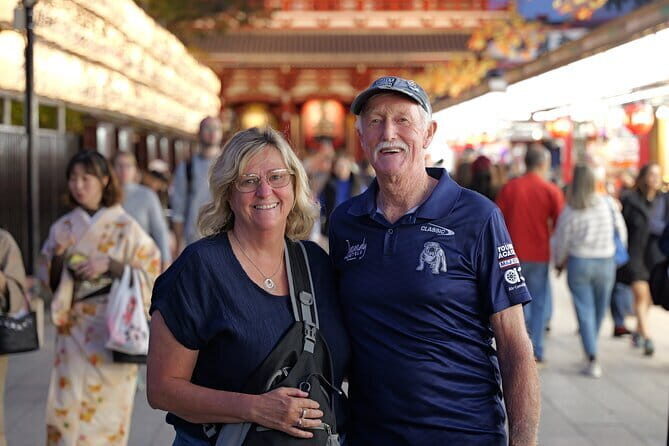
Before you go higher, Kitaguchi Hongu Fuji Sengen Jinja gives you a moment to slow down. It’s a Shinto shrine at the base of the mountain, and it’s scheduled for about 30 minutes. Admission is listed as free, so it’s a low-cost way to add culture without burning your day.
This kind of stop works well right before viewpoints because it changes the tone. You’re not just thinking about photos; you’re thinking about why people long ago tied worship to volcano rhythms, water sources, and seasons.
Practical mindset: treat this as a reset. Use the time to regroup your group, check your weather screen, and decide whether you want a more ambitious 5th Station plan or a calmer lakes-and-stroll day.
Oishi Park on Lake Kawaguchiko: Flowers, 350m Walks, and Blueberry Comfort Food
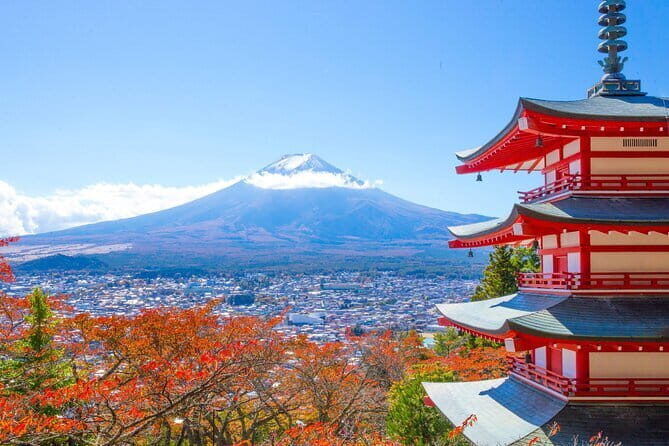
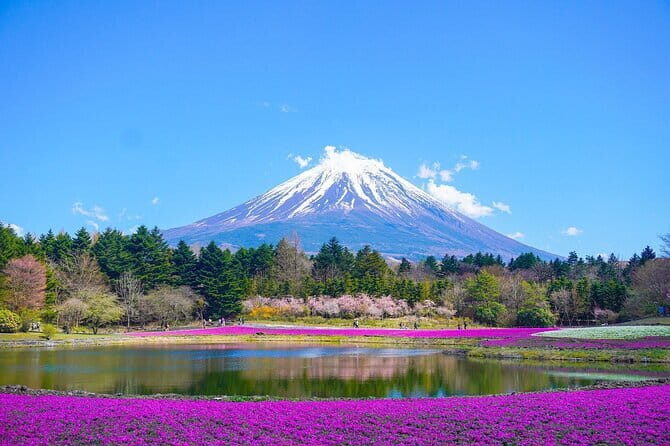
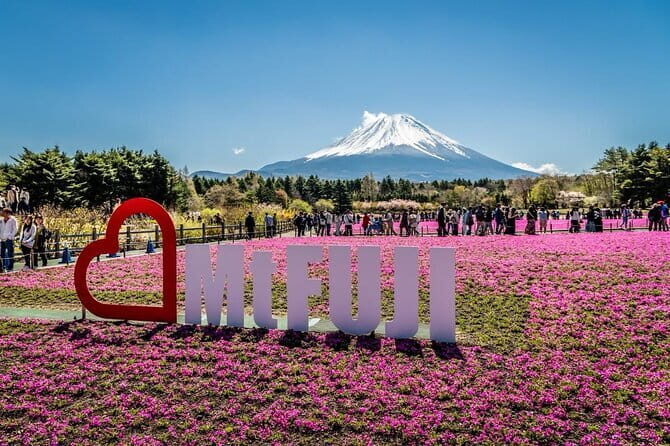
Oishi Park is a classic Mt Fuji-on-the-lake view point, and it earns its reputation with seasonal color. It’s on the north shore of Lake Kawaguchi, and you get a 350m walking path lined with flowers that change through the year.
If you’re here in:
- Early April to late May, expect moss phlox that spreads like a pink carpet.
- Late June into late July, look for lavender.
- Mid to late October, watch for kokia shrubs turning red.
Even if you don’t know the plant names, the effect is what you want: Mt Fuji + a color layer in the foreground. That contrast reads well in photos and helps you feel like you’re seeing the mountain through a living seasonal lens.
There’s also a food-and-activity angle. Oishi Park sits near the Kawaguchiko Natural Living Center, where you can do jam-making and an all-you-can-eat cherry and blueberry picking course. They also have a café option, including specialty blueberry ice cream.
Important realism: the park itself is listed as free, but the picking and workshop activities may cost extra. If your group loves hands-on food experiences, Oishi Park is the place to spend extra time (or at least to ask what’s available that day).
Mt Fuji 5th Station by Car: Toll Roads, Snow Risks, and Seasonal Shuttle Rules
This is the “higher altitude” payoff. The Mt Fuji 5th Station is the highest peak area accessible by car, around 2,200 meters. It’s ideal if you want a closer look at the top without committing to a full multi-day climb.
You’ll usually reach it via the Fuji Subaru Line, a scenic toll road starting from Fujikawaguchiko Town. The toll is listed as 2,100 yen. In winter, heavy snow can partially close the road, so your driver may need to adjust routing or stop plans based on conditions.
Here’s a big logistics detail that you should take seriously: during the main climbing season—July 5 to September 10, 2024—the road is listed as closed to private vehicles for most of that period, with shuttle buses running between designated parking lots and the 5th Station. In plain terms, your private-car plan can shift into a short shuttle transfer at peak times.
The 5th Station stop is listed as about one hour, and admission isn’t included. That means you’ll budget for the entry fee there. If your goal is “see as much as possible,” be flexible: clouds can form fast, and crowds can swell quickly. If the mountain is visible, don’t wait until the last five minutes.
Lake Kawaguchiko Views: Ropeway Options, Hot Springs Recovery, and Easy Photoing
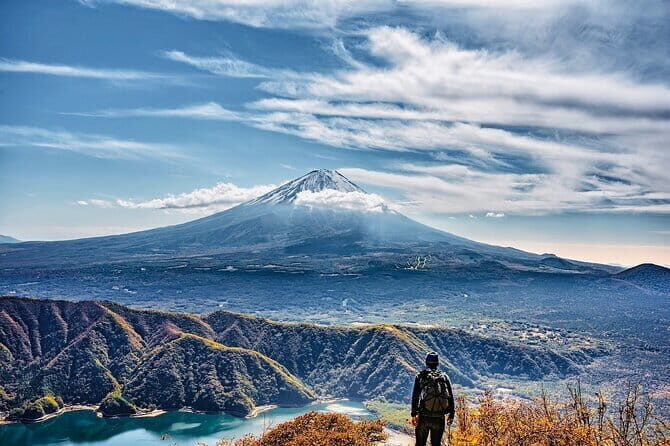
Lake Kawaguchiko rounds out the day with wide-open scenery and a calmer pace after the higher station. It’s the second largest lake of Japan’s Fuji Five Lakes, and it’s known for straightforward Mt Fuji views when visibility is good.
One option in the area is the Kachi Kachi Ropeway, which goes up to an observation point near Mt Tenjo. From there, you can see both the lake and Mount Fuji, which is great when you want a different angle than the shore-level viewpoints. Ropeway rides likely have their own ticket cost (the tour listing only says the lake-area stop admission is free), so treat that as an add-on if you want it.
Also, this area is associated with hot springs. If the weather is chilly—or if you’ve tackled those stairs earlier—this is the easiest way to “be a tourist” and still feel human.
The scheduled Lake Kawaguchiko stop is about one hour and is listed as free. That works well for a walking loop, a viewpoint check, and a reset before your drive back to Tokyo.
Tickets, Tolls, Weather, and Crowds: The Stuff That Actually Makes or Breaks the Day
This is where you protect your trip.
First, good weather matters. The experience is described as requiring good weather, and if it’s canceled due to poor weather, you’ll be offered a different date or a full refund. That’s the right kind of safety net for Mt Fuji days, because the mountain can go full ghost mode with clouds.
Second, plan for seasonal friction. The 5th Station access changes in peak season due to shuttle rules, and winter can add snow closures and partial road shutdowns. Your driver can’t control weather, but they can often control how smartly you move around it.
Third, budget for the “small extras.” Most stops in the plan are free (Chureito Pagoda, Oshino Hakkai, Kitaguchi Shrine, Oishi Park, and Lake Kawaguchiko). Still, you should expect separate costs for:
- Mt Fuji 5th Station admission (listed as not included)
- Fuji Subaru Line toll (listed as 2,100 yen)
- Optional paid add-ons like the Hannoki museum ticket and any ropeway or picking activities you choose
Finally, crowds are real. Even with a private car, you can hit congestion on the approach roads and at the most popular photo points. That’s why the private format helps: your driver can adjust routes and time your stops so you don’t lose everything to gridlock.
Who This Private Mt Fuji and Hakone-Style Day Trip Fits Best
This tour suits you if:
- You want a private, English-speaking driver instead of wrestling buses and train transfers.
- You like a “greatest hits” route around Mt Fuji: pagoda views, springs, shrines, lakes, and altitude.
- Your group includes different interests—culture at shrines, nature at springs, and viewpoints for photos.
It’s also smart if you don’t want to commit to a full climbing plan. The 5th Station gives you the high-altitude sense without the serious training, gear, and multi-day commitment.
It may be less ideal if you have mobility limits. The Chureito Pagoda area includes a climb of up to around 400 stairs, and even if you don’t do all of it, that area is still physically demanding.
Is This $60 Private Tour Worth It?
For what you get, it’s a strong value—mainly because transport is the big cost, and you’re buying a whole day of flexibility. A $60 price tag for private air-conditioned transportation is the hook, especially if you’d otherwise pay for multiple tickets and tours or spend hours piecing together a DIY route.
Just be realistic about the add-on costs: the 5th Station fee isn’t included, the Fuji Subaru Line toll is 2,100 yen, and some optional attractions (museum admission, ropeway rides, picking/food activities) may cost extra. Even with those add-ons, the total often still pencils out well if your priority is comfort and a smooth itinerary.
If you’re the type who likes to control your own timing—stop length, photo breaks, and what you skip—this private setup is where you get your money’s worth.
Should You Book Bravo Japan Tours for Mt Fuji and Hakone?
I’d book it if your priority is a one-day Mt Fuji hit list with minimal stress and a driver who can help you adapt when traffic and weather shift. The mix of classic views (Chureito Pagoda, Oshino Hakkai, Oishi Park), a shrine pause, and the 5th Station altitude experience is exactly the kind of itinerary that benefits from a private vehicle.
I’d think twice if you’re traveling during the kind of weather where visibility is likely to be poor, or if your group can’t handle stairs and cold conditions. Mt Fuji days are magical when the views cooperate, but the experience can feel less satisfying if clouds block the peak.
If you do book, set yourself up for success by being flexible with timing, bringing a warm layer for higher altitude, and keeping some room in your day for the inevitable changes that come with mountain driving.
FAQ
Is this tour private?
Yes. It’s a private tour, meaning only your group participates.
How long is the tour?
It runs for about 10 hours.
Does the tour include an English driver?
Yes. It’s a private sightseeing tour with an English driver.
Is pickup included?
Pickup is offered, and the tour is described as near public transportation.
What is included in the price?
Included features are private transportation and an air-conditioned vehicle.
Are tickets included for all stops?
Most listed stops have free admission, but Mt Fuji 5th Station admission is not included. The tour also notes that all fees and taxes are not included.
Will I be able to drive to Mt Fuji 5th Station?
You reach it by the Fuji Subaru Line toll road. In the main climbing season (July 5 to September 10, 2024), the road is closed to private vehicles for most of that period and shuttle buses operate instead.
Is this tour affected by weather?
Yes. The experience requires good weather. If it’s canceled due to poor weather, you’ll be offered a different date or a full refund.
What’s the cancellation policy?
Free cancellation is available up to 24 hours in advance for a full refund. If you cancel less than 24 hours before the start time, the amount paid is not refunded.
Your Own Wheels: More Private Driver Days

Hakone, Three More Ways


The Fuji Shortlist: Other Days Out to the Mountain

Fresh reviews from around Tokyo






Mt Fuji Day Trips, compared.
 ★ 4.0Mt Fuji & Hakone Cruise, Drum Show Bullet Train 1 Day from TokyoFrom $1497,413 reviews
 ★ 4.4Tokyo Mt Fuji 5th St & Hakone Cruise Bus Tour w/Bullet TrainFrom $1545,024 reviews
 ★ 4.5From Tokyo: Mount Fuji Full-Day Sightseeing TripFrom $684,970 reviews
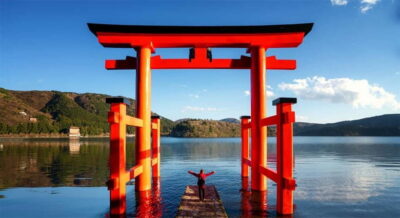 ★ 4.7Mt. Fuji Tour, Hakone Ropeway, Owakudani, Lake AshiFrom $544,002 reviews
 ★ 5.0Private Tour to Mt. Fuji and Hakone (Fully Licenced Operator)From $4971,910 reviews
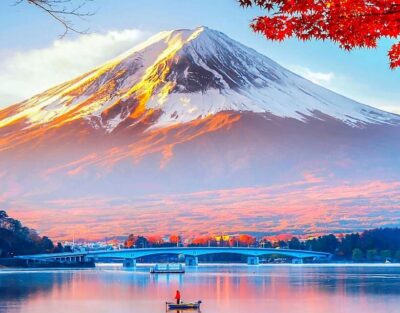 ★ 4.9Mount Fuji Full-Day Private Tour from Tokyo (Customizable)From $3931,470 reviews
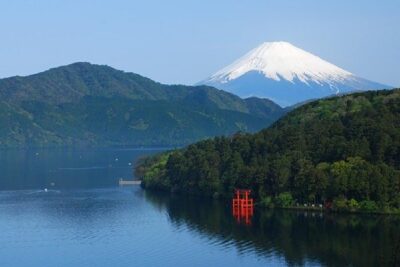 ★ 4.0Mt Fuji & Hakone Cruise, Drum Show Bus 1 Day from TokyoFrom $1221,287 reviews
 ★ 4.2From Tokyo: Mt. Fuji & Hakone Tour w/ Return by Bullet TrainFrom $1171,278 reviews
Browse the lists this tour appears in