
Reviewed · CYCLING TOURS
Tokyo: 2-Hour Night E-Bike Tour of the City’s Hidden Gems
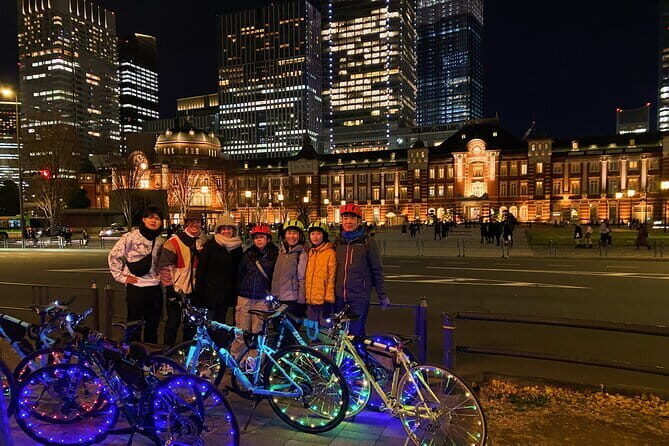
Tokyo at night feels electric fast. This 2-hour guided e-bike ride is a smart way to see a lot of the city without burning your legs. You get the classic showstoppers—Shibuya Crossing and Tokyo Tower—plus calmer, more atmosphere-heavy stops as you glide through streets that can be tough to cover on foot.
Two things I really like are the included bike rental (so you’re not hunting for gear) and the live guide commentary in English and Japanese. The best part is how the guide helps you keep moving at a comfortable pace while still getting stories behind what you’re seeing.
One consideration: this is still a bike tour, and the route assumes moderate physical fitness. If you’re expecting a totally effortless stroll, you may feel the effort after a couple of hours—even with electric assist.
In This Review
- Key points to know before you go
- Why a 2-Hour Night E-Bike Works So Well in Tokyo
- Meeting at Bell of Peace and Getting Set Up Fast
- Shibuya Crossing, Harajuku Streets, and Yoyogi Park After Dark
- Japan National Stadium, Aoyama Cemetery, and the Roppongi Contrast
- Tokyo Tower Close Up and Zojo-ji’s Historic Presence
- Cycling Along the Imperial Palace Area to Tokyo Station
- Price and Value: What $147.80 Gets You
- Pace, Comfort, and Who Should Choose This Tour
- Tips to Make Your Night Bike Ride Smoother
- Should You Book This Tokyo Night E-Bike Tour?
- FAQ
- How long is the Tokyo night e-bike tour?
- What’s included with the tour price?
- Where do I meet and where does the tour end?
- Does the tour include food or drinks?
- What stops are part of the ride?
- What happens if the weather isn’t good?
Key points to know before you go
- E-bike makes the big route doable: you cover multiple neighborhoods in about two hours.
- Bike rental and a mini pouch are included: phone, wallet, and keys stay with you on the bike.
- A guide rides with you and talks: you’ll get context, not just photos from the saddle.
- Night viewpoints are a real advantage: Tokyo Tower and Shibuya look especially strong after dark.
- Stops are mostly free to pass by: you won’t hit ticket hassles during the ride.
- You end at Tokyo Station: that’s convenient for getting back to your hotel.
More of Tokyo by bike
- Tokyo Guided Small-Group Biking Tour★ 5.0 · 1,250 reviews
- Tokyo Great Cycling Tour★ 5.0 · 811 reviews
- Tokyo Top Highlights 3h Guided E-bike Tour★ 5.0 · 714 reviews
Why a 2-Hour Night E-Bike Works So Well in Tokyo
Tokyo is massive, and nighttime adds another layer: more lights, more energy, and more crowds around the biggest attractions. This tour is built for that reality. In about two hours, you move through several iconic areas and a few more thoughtful stops, without the stop-start drag you get when you’re walking from one “must-see” to the next.
What makes it feel efficient is the e-bike. Even if you’re not an athlete, electric assist helps you keep momentum on city streets. That matters because your time is limited—6:00 pm starts, and the tour lasts roughly 2 hours including time spent traveling between stops. You’re not just getting a ride; you’re getting a planned route that keeps the evening flowing.
Also, the format is a private tour for your group. That’s a big deal in Tokyo, where even “guided” experiences can feel crowded. Here, the guide can adjust to your group’s comfort level, which helps if someone needs to slow down for traffic or wants more time at a specific viewpoint.
Meeting at Bell of Peace and Getting Set Up Fast
The tour starts at Bell of Peace on Udagawacho, Shibuya (near your evening plans, not in some remote corner). You’ll meet in the Shibuya area and finish at Tokyo Station at the end—so you can basically exit the experience and roll straight into transit without a long, awkward commute.
The logistics are also handled for you in a practical way:
- Bike rental is included, so you don’t waste time figuring out where to pick up an e-bike.
- A mini pouch rides with the bike for your phone, wallet, and keys.
- There’s bike insurance included.
- If the weather turns, you get a raincoat on rainy days.
That combo matters more than it sounds. Tokyo nights can change quickly, and the ability to keep your essentials with you means you’re free to enjoy the sights instead of juggling bags. Plus, having insurance baked in lowers the stress.
Your guide is in-person and speaks English and Japanese. In the reviews, people repeatedly praised the way the guide makes the ride feel fun and not like homework. They also mentioned history and practical city context—exactly what you want when you’re moving quickly and want meaning behind the scenery.
Shibuya Crossing, Harajuku Streets, and Yoyogi Park After Dark
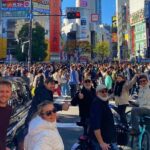
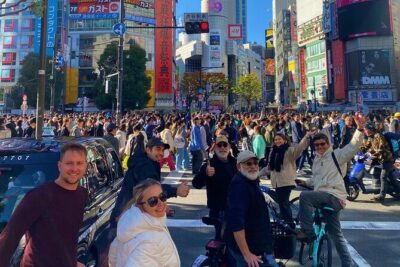
This is the part of the tour where Tokyo turns into a movie. You’ll cruise through the area around Shibuya Crossing, the famous crossing you’ve probably seen in photos and videos—but it hits differently at night, when the storefront lights and traffic movement create that constant glow.
Then it shifts toward Harajuku, famous for fashion in a way that’s both high-end and quirky. The ride there is short but memorable: you pass through a street full of boutique shopping and vintage-style options. You don’t need to shop to enjoy it. You get the vibe—how the streets look, how people move, and how Harajuku feels like its own little world within the city.
From there, you include Yoyogi Park, with the tour listed as ending near Yoyogi Park by Harajuku Station. Even if your exact moment at the park depends on pacing, you can expect a calmer break from the densest shopping blocks. Yoyogi is a good place to reset your senses after the intensity of Shibuya and Harajuku.
What I like about this section is the balance. You get spectacle (Shibuya), personality (Harajuku), and breathing room (Yoyogi). It’s a rare pairing in Tokyo: usually you either do only big landmarks or only neighborhood atmosphere.
Japan National Stadium, Aoyama Cemetery, and the Roppongi Contrast
Next comes a fascinating change of tone. You’ll pass by Japan National Stadium, known for its role in the 202 Tokyo games. The point here isn’t to do a formal tour inside. It’s more about seeing the setting—how major sports venues sit inside a living city, not isolated in some empty sports complex bubble.
Then you move toward Aoyama Cemetery, which is included for about 10 minutes. This is the stop that gives the ride depth. Cemeteries don’t sound like a “night tour” draw, but in Tokyo, they can be surprisingly striking: quiet grounds, older prestige, and the sense of place that you miss when you rush only for billboards and towers. It’s a meaningful contrast after the stadium and shopping-adjacent districts.
After that, the tour swings to Roppongi Hills Shops & Restaurants. This area leans upscale, with world-class art options and high-end dining and shopping. You get a clear feel for Tokyo’s other tempo: less street-level chaos, more polished city glamour. The stop is about 15 minutes, which is enough time to look around and notice the difference without turning it into a long detour.
If you’ve only ever done Tokyo as a highlight reel, this middle section is where you start to understand the city’s layers. Tokyo isn’t one mood—it’s several moods stacked together, and cycling between them makes that obvious.
Bigger sweeps: other Tokyo city tours

Tokyo Tower Close Up and Zojo-ji’s Historic Presence
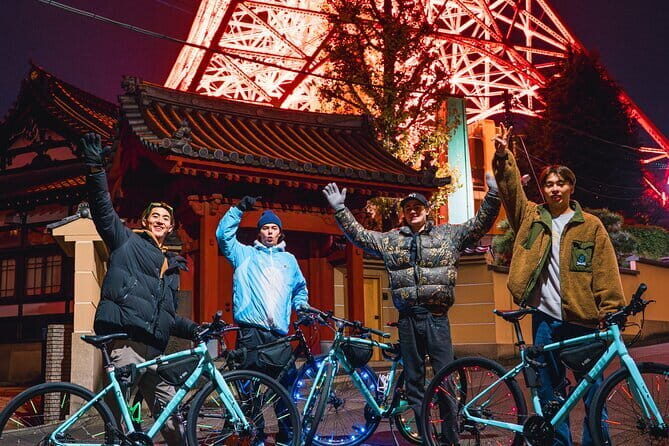
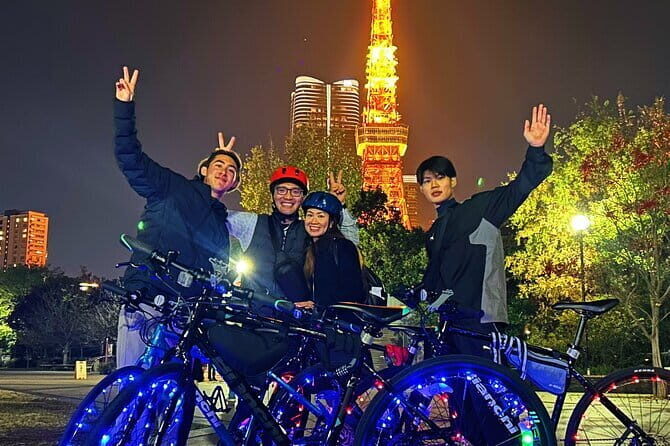
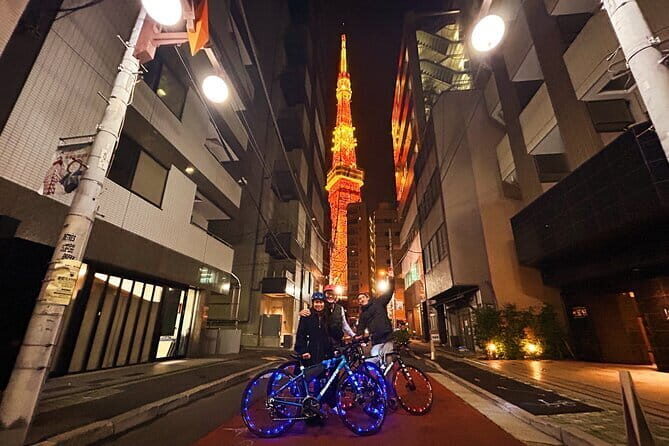
One of the most iconic highlights is your close view of Tokyo Tower. You’re specifically set up to see it as a major symbol of Japan’s post-war rebirth as a major economic power, and it’s described as a world-famous steel tower that’s self-supported, also noting its scale in comparison to the Eiffel Tower model.
At night, Tokyo Tower has a different personality than it does in daytime sightseeing. The lights make it feel more graphic, almost designed for evening. And because this tour is moving, you see it from the street angles that make it look larger and closer than it does when you’re just standing in one spot.
Then you reach Zojo-ji, a well-known temple near Tokyo Tower. The stop is short—around 5 minutes—but it’s placed perfectly. You get a religious site with historical significance, alongside the modern symbol of the city. Zojo-ji is described as a religious center and resting place of warlords, which gives your quick glance some real weight.
This part of the tour is also where the guide’s personality shows up. In the reviews, people praised guides like Kei and K for being accommodating and for sharing history and facts at a pace that doesn’t slow the ride. That’s the sweet spot on a bike tour: you want meaning, not a lecture.
Cycling Along the Imperial Palace Area to Tokyo Station
The tour includes the Imperial Palace, with cycling along the area where the Japanese emperor resides. This stop is listed for about 10 minutes. Whether you’re familiar with the palace grounds or not, you’ll notice how Tokyo treats this zone differently. It feels more formal, more controlled in space and movement compared with Shibuya’s intensity.
After the palace area, the ride ends at Tokyo Station. That ending is genuinely practical. Tokyo Station isn’t just iconic—it’s also one of the easiest transit hubs to connect from. You can finish your tour, hop on the train back to your hotel, and keep your evening from turning into a logistical headache.
You also get a sense of closure. The tour starts in Shibuya and ends in Marunouchi. That’s a satisfying loop across Tokyo’s energy spectrum: from fashion and crossings to ceremony-like calm, then back to a central transportation hub.
Price and Value: What $147.80 Gets You
$147.80 per person sounds steep at first glance—until you count what’s included and what you’re saving.
You’re paying for:
- An e-bike plus insurance
- A real guide who rides with you and talks in English and Japanese
- A route that covers multiple neighborhoods in about two hours
- Extra practical items like a raincoat on rainy days and the mini pouch for essentials
- A private tour where only your group participates
If you tried to recreate this on your own, you’d spend time sourcing bikes, figuring out where to ride safely, and losing efficiency between stops. Tokyo is walkable, but it’s also full of intersections, traffic patterns, and areas where timing matters—especially at night. This tour solves the “what now” problem. It hands you a plan, a pace, and a guide.
Also note the demand signal: the tour is booked on average about 43 days in advance. That usually means it’s popular and you should reserve early if your dates are fixed.
Finally, the quality signal looks strong. The overall rating is 4.9 out of 5, based on 17 reviews, with 100% recommended. The comments you’ll read emphasize two things over and over: guides who make the ride joyful rather than stressful, and guides who share history and context while staying accommodating.
Pace, Comfort, and Who Should Choose This Tour
This is a moderate physical fitness kind of activity. Because it’s an e-bike, it’s not like a hard cycling workout, but you still need to be comfortable balancing, pedaling, and riding in traffic-aware city conditions.
I think this tour fits best if:
- you want to see big highlights plus a few calmer stops without spending your whole day on transit
- you like night energy and photos that feel cinematic
- you want a guide’s perspective rather than reading everything yourself
- your group prefers a guided plan over constantly negotiating routes
It may be less ideal if:
- you’re looking for a totally sedentary experience
- you get uneasy around active streets even at low speeds
- you’re planning a very late, very rushed night with no time to reset after returning to Tokyo Station
The tour is short enough that it shouldn’t drain you. Two hours is a sweet spot for a first night in Tokyo, especially if you’re jet-lagged and want movement without overcommitting.
Tips to Make Your Night Bike Ride Smoother
A few practical moves can help you enjoy the evening more:
- Dress for night air. Tokyo can cool down after sunset, especially if you’re moving between areas.
- Bring essentials you can access quickly. The tour provides a mini pouch on the bike, but you still want your items ready.
- Plan for traffic flow and small stops. The experience includes time moving between sights, so the ride is designed to keep the rhythm.
- If rain looks likely, don’t panic. You’ll get a raincoat on rainy days, but slick roads can still affect comfort—use that guide to manage your pace.
One more tip: since food and drink aren’t included, you may want to eat beforehand or plan a post-tour snack near Tokyo Station. That way you’re not spending the ride thinking about where to grab dinner.
Should You Book This Tokyo Night E-Bike Tour?
I’d book it if your ideal Tokyo evening looks like this: meet up in Shibuya, cruise through Shibuya Crossing, get a fashion-scented pulse from Harajuku, see Tokyo Tower up close, and end at Tokyo Station with transit ready. You’ll also like it if you care about stories behind the landmarks—because the guide time is built for commentary, not just steering.
Skip it (or reconsider) if your top priority is a slow, detailed walking exploration where you can linger for long stretches. This tour is about covering ground in a short window, and it moves with a plan.
For me, the value comes from the mix: guided + e-bike + private group + practical inclusions. It’s an efficient way to get a meaningful first taste of Tokyo’s night feel without turning your evening into a logistics project.
FAQ
How long is the Tokyo night e-bike tour?
It runs for about 2 hours, and that duration includes travel time between the stops.
What’s included with the tour price?
You get the use of a bicycle, in-person guide with English and Japanese support, bike insurance, and a mini pouch for items like your phone and keys. On rainy days, a raincoat is also included.
Where do I meet and where does the tour end?
You meet at Bell of Peace in Udagawacho, Shibuya, and the tour ends at Tokyo Station in Marunouchi, Chiyoda.
Does the tour include food or drinks?
No. Food and drink are not included.
What stops are part of the ride?
The route includes stops connected to Yoyogi Park, Shibuya Crossing, Harajuku, Japan National Stadium, Aoyama Cemetery, Roppongi Hills, Tokyo Tower, Zojo-ji, the Imperial Palace area, and it ends at Tokyo Station.
What happens if the weather isn’t good?
The experience requires good weather. If it’s canceled due to poor weather, you’ll be offered a different date or a full refund. If you need to cancel, you can cancel up to 24 hours in advance for a full refund.
Tokyo on Two Wheels

More Tours in Tokyo




More Tour Reviews in Tokyo




Fresh reviews from around Tokyo






Cycling Tours, compared.
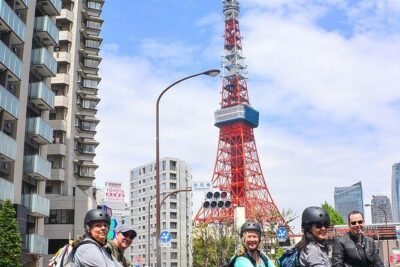 ★ 5.0Tokyo Guided Small-Group Biking TourFrom $1061,250 reviews
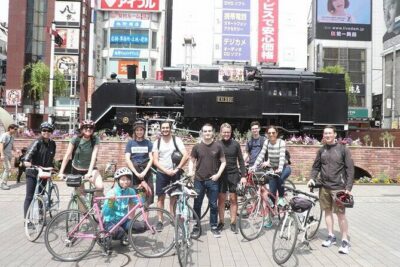 ★ 5.0Tokyo Great Cycling TourFrom $99811 reviews
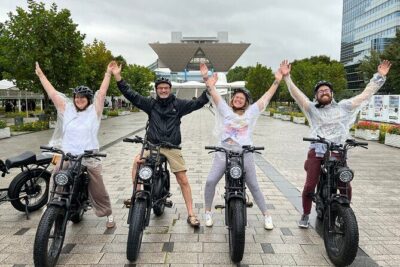 ★ 5.0Tokyo Top Highlights 3h Guided E-bike TourFrom $63714 reviews
3-Hour Bike or E-Bike City Highlights TourFrom $45435 reviews
★ 5.0Tokyo Top Highlights 3h Guided E-bike TourFrom $63714 reviews
3-Hour Bike or E-Bike City Highlights TourFrom $45435 reviews
 ★ 5.0Tokyo West-Side Cycling & Food TourFrom $99214 reviews
 ★ 5.03-Hour Bike/E-Bike Tour of the City’s HighlightsFrom $63209 reviews
 ★ 5.0Small Group Cycling Tour in TokyoFrom $66184 reviews
 ★ 5.0Tokyo downtown bicycle tour Tokyo Backstreets Bike TourFrom $65117 reviews
Browse the lists this tour appears in