
Reviewed · SUMO SHOWS
Tokyo: Sumo Morning Practice Viewing Tour at a Real Stable
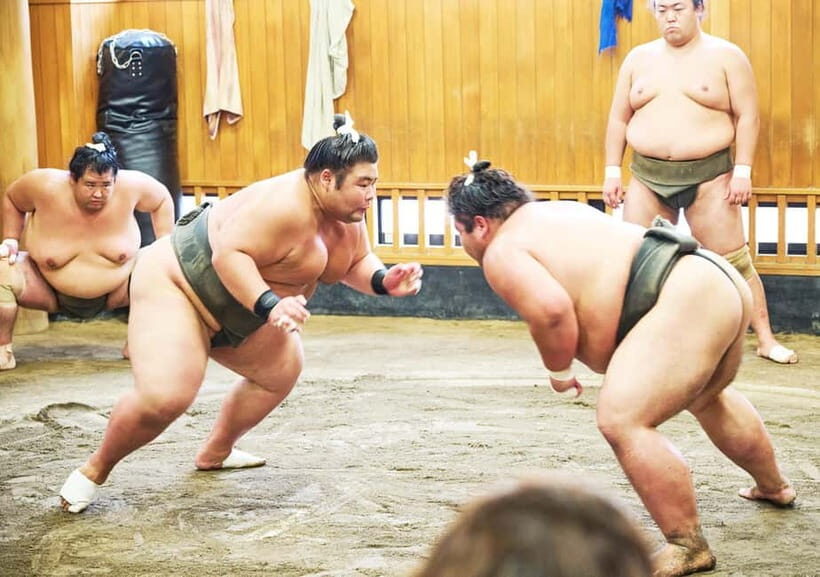
Morning sumo has a different pulse. This tour lets you watch real training at a stable where wrestlers live and work, not a performance staged for visitors. I love that it feels up close and serious, with the wrestlers running their session as if you are not even there.
Two things I also like a lot: you get an English-speaking guide who explains the sport’s rules and rituals before you sit ringside, and you have a rare chance to talk with wrestlers outside training hours. One drawback to weigh is that you have to follow strict stable rules, including staying seated and quiet, and you must remain until the practice ends.
In This Review
- Key highlights at a glance
- Why a real sumo stable in Tokyo beats a show
- Meeting at Kiyosumi-Shirakawa and the morning plan
- The 2-hour window: what the practice viewing really feels like
- Rules and rituals: how your guide helps you watch sumo correctly
- Sitting ringside: the training session etiquette you must follow
- Speaking with wrestlers outside training hours (and keeping it respectful)
- Train timing, late arrivals, and why your morning should be boring
- Price and value: what $98 buys you in the real world
- Who this tour suits best (and who should skip it)
- Things to pack and how to show up (simple, not fussy)
- Should you book this sumo morning practice tour?
- FAQ
- Where is the meeting point?
- How long is the tour?
- How do I get to the meeting station?
- Is an English guide included?
- Can I make noise or move around during practice?
- Can I leave the stable and re-enter later?
- Can I speak with wrestlers?
- What should I wear?
- Is it suitable for kids?
Key highlights at a glance
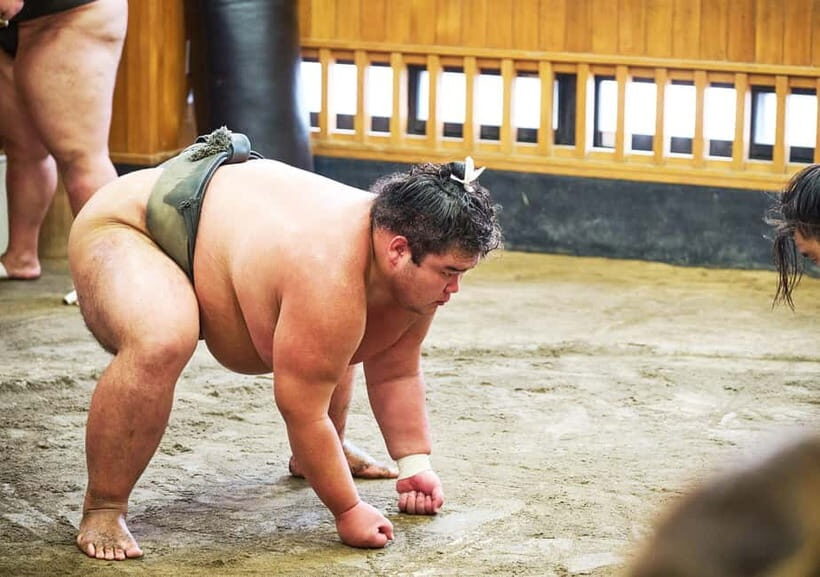
- Real stable access in Tokyo’s sumo district: this is the working environment, not a visitor theater
- English guide-led rules and ritual briefing: you’ll understand what you are watching before it starts
- Front-row viewing from the side of the ring: close enough to notice speed, balance, and intensity
- Wrestler conversation outside training hours: a human moment that goes beyond the ring
- Respect-first training atmosphere: silence, discipline, and modest conduct are part of the experience
More chances to sit ringside
- Tokyo: Sumo Show and Dining Experience★ 4.8 · 2,742 reviews
- the SUMO show★ 5.0 · 1,960 reviews
- Tokyo Shinjuku Sumo Show & Experience with Photo★ 5.0 · 1,750 reviews
Why a real sumo stable in Tokyo beats a show
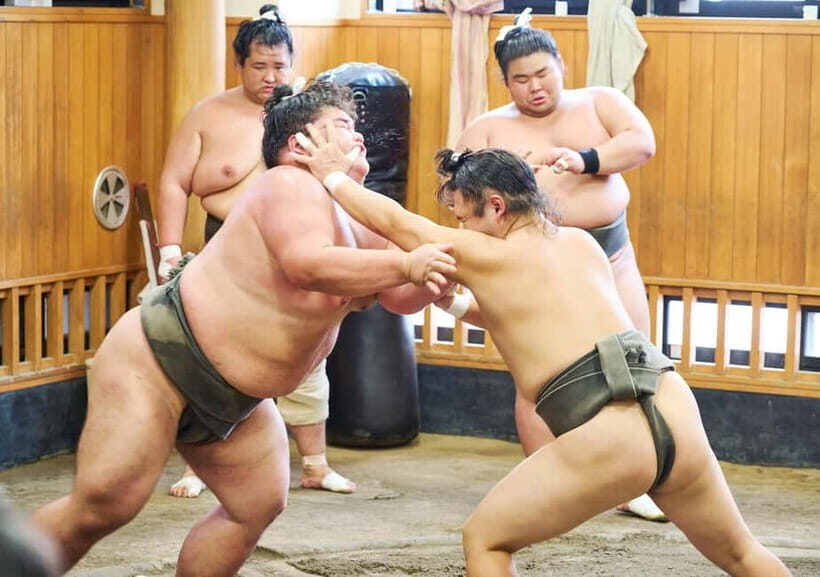
Sumo is not just matches. It is routine, hierarchy, and ritual baked into everyday training. Seeing a stable early in the morning gives you the sport’s real rhythm: purposeful movement, short bursts of power, and long stretches of focus.
What makes this experience special is the setting. You are visiting a place that is essentially a home and workplace for the wrestlers, with practice happening as normal. In the best moments, the session feels like you slipped into someone’s workplace, not a sightseeing stop.
I also like that you are not left guessing. Your English guide explains what the rules mean, why certain behaviors matter, and how the traditions connect to the bigger culture of sumo. Once you understand that, the sport becomes easier to watch and harder to forget.
One more reason I’d pick this over a generic activity: the wrestlers are there to train. That changes everything about the vibe. You’ll feel the athletic intensity more clearly because nobody is trying to entertain you.
Meeting at Kiyosumi-Shirakawa and the morning plan
Your tour starts at Kiyosumi-Shirakawa Station (Exit A1). You can reach the station via the Toei Oedo Line or the Hanzomon Line, then meet your guide in front of the exit where you’ll see a sign that says Local Guide Stars.
After you meet, you may take a train to the sumo stable. The exact flow can vary based on the schedule, so plan for some buffer time before the practice begins. If you arrive late, entry may not be possible, and once you leave the stable, there’s no re-entry.
The practical win here is simple: you are not spending your morning figuring everything out on your own. But you still need to treat this like an appointment. Go early, move calmly, and keep your schedule clean.
The 2-hour window: what the practice viewing really feels like
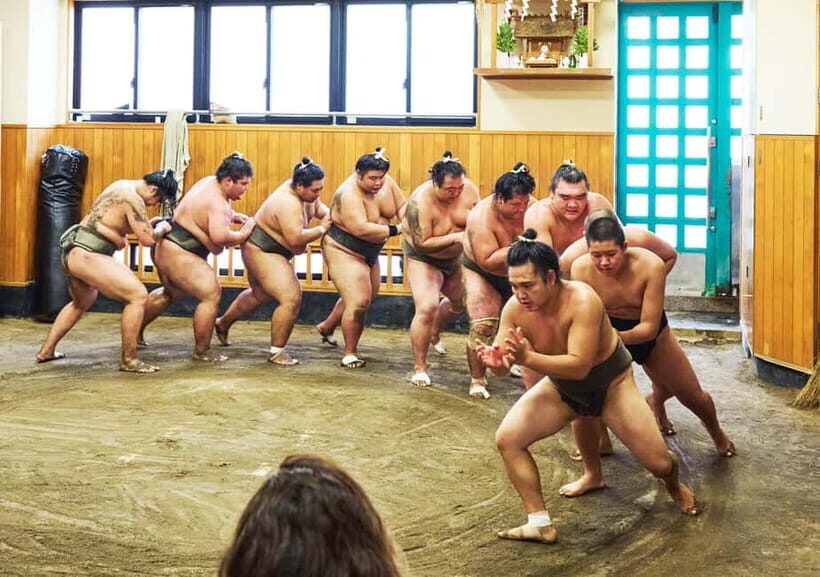
The tour is listed as 2 hours, but the important detail is that the viewing is built around a morning practice session that runs roughly 09:00 to 10:00. You must stay until the end of practice, and you should treat leaving early as a no-go because the tour ends with that session.
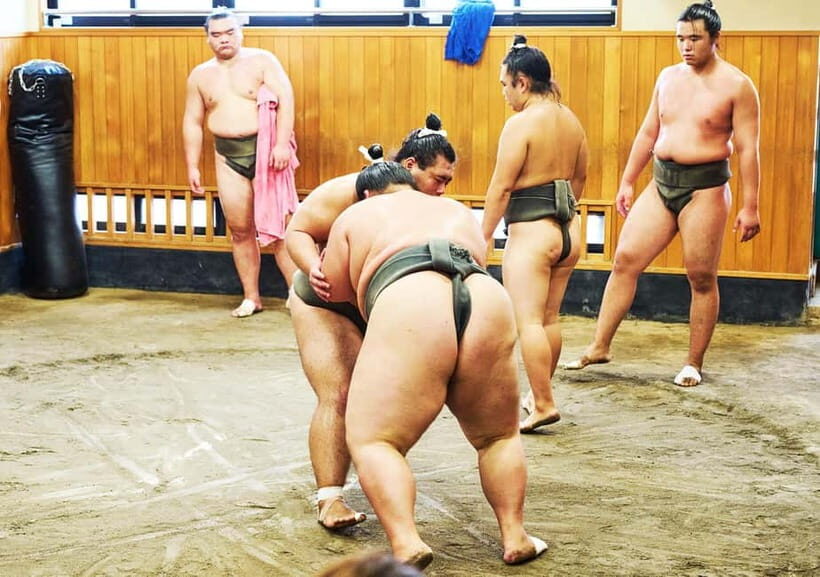
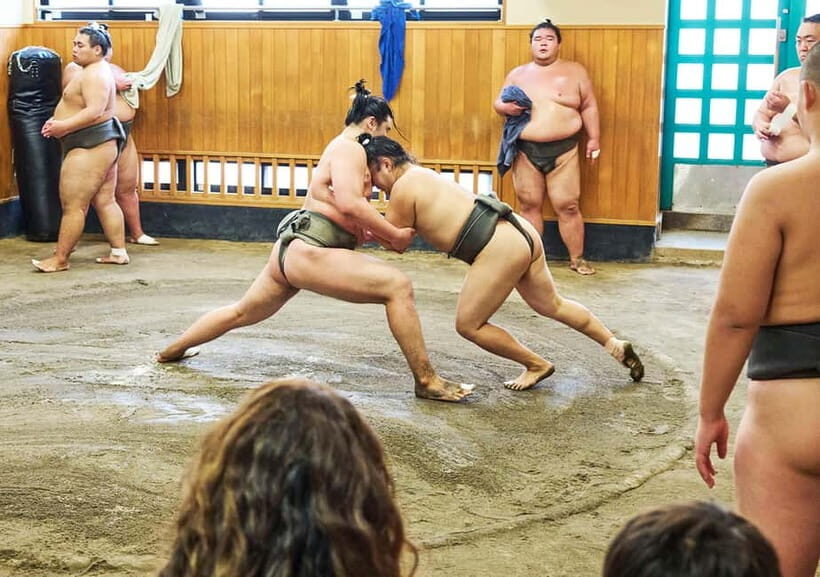
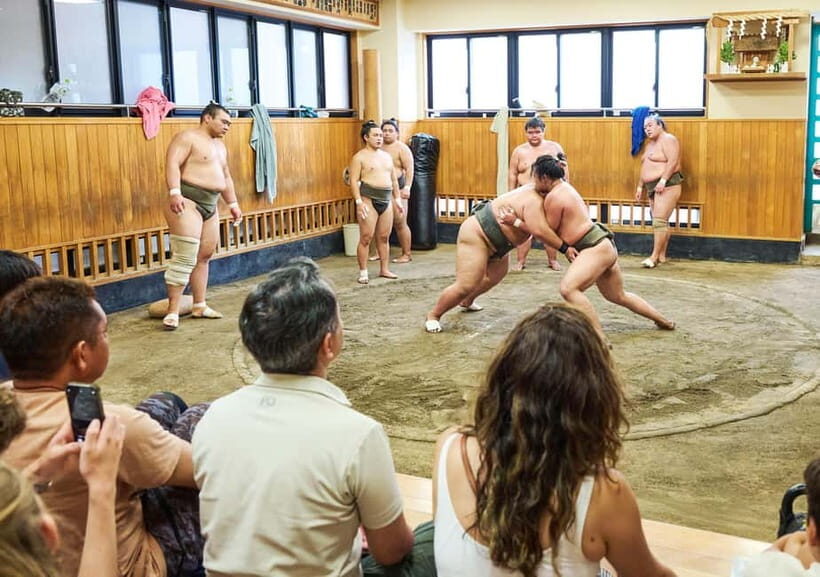
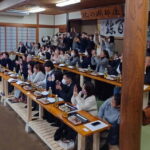
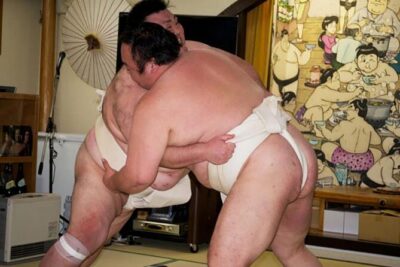
When you sit down, you’ll be positioned on the side of the ring. That angle matters. From there, you can see footwork, hand placement, and the way the wrestlers reset between attempts. Some people are surprised by how quickly things can change, because training is repetitive but not slow.
Also, this is not a noisy event. You’ll need to follow the stable rules: no making noise, don’t stand up or move around, and keep your phone silent. It sounds strict because it is strict, but it also makes the viewing feel more real. You’ll catch details you would miss if everyone was talking and fidgeting.
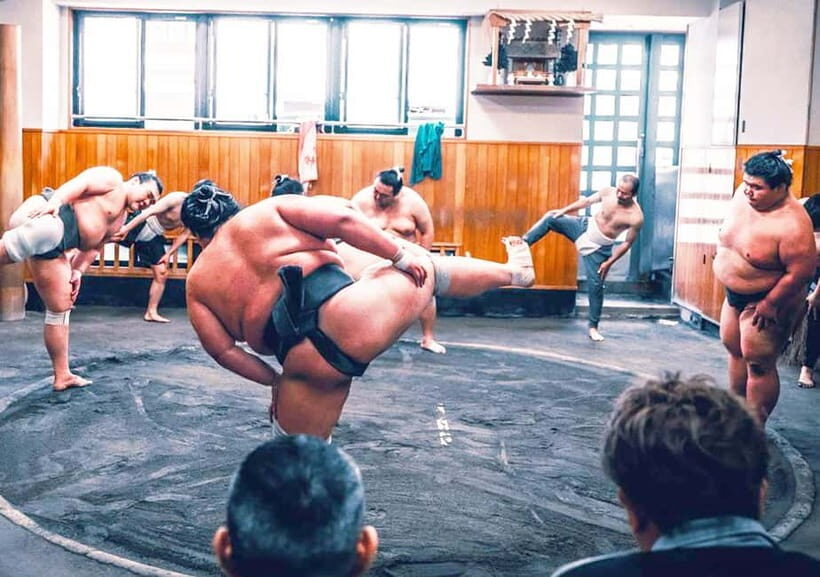
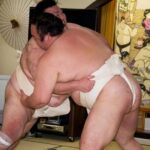
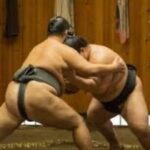
And yes, it can feel intense in a way that photos can’t capture. Reviews mention the up-close power and sweat level, plus the fast, athletic rhythm of training. If you like sports that feel disciplined rather than flashy, this will land with you.
Rules and rituals: how your guide helps you watch sumo correctly
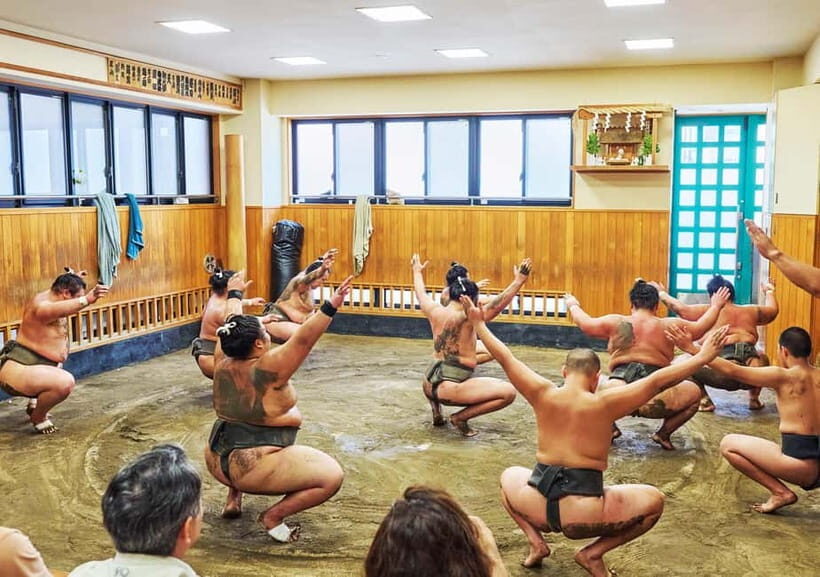
Sumo has layers. The stances, the timing, the repeated routines, and the ceremonial feel all have meaning. Without context, you might see motion. With context, you see structure.
An English-speaking guide explains the rules, rituals, and meaning behind sumo before and during the visit. This matters because sumo has its own logic. Even a casual glance becomes more informative once you understand what you are looking for and why certain actions happen.
Your guide may also connect the sport to its spiritual roots. Sumo is tied to ancient Shinto beliefs, and you can expect religious or ritual elements to show up alongside training. It’s not just about wrestling technique. It’s about tradition moving through daily practice.
I’m especially glad this tour builds context rather than assuming you already know the basics. That approach makes the experience usable even if you’re new to sumo, and it keeps you from turning your brain off during the early morning.
Worth weighing up alongside this Tokyo pick:
Sitting ringside: the training session etiquette you must follow
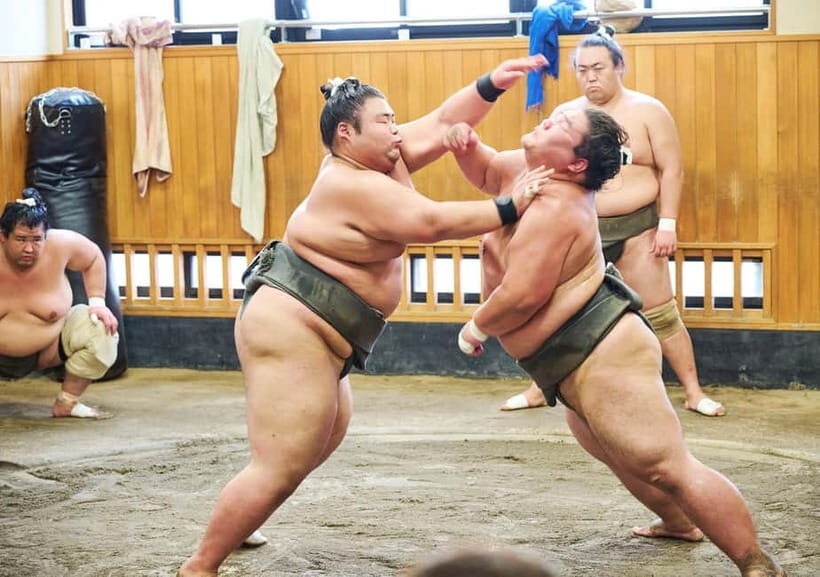
Stable etiquette is not optional here. It’s part of the experience, because a stable is a workplace and the wrestlers are focused.
Here are the key behavior rules you should plan for:
- Keep your phone on silent
- Don’t stand up or move around during practice
- No noise
- Wear modest clothing only
- Don’t eat or drink during the session, aside from water
Before you go, think through your restroom needs. Several reviews emphasize doing that first, because once practice begins you are expected to remain seated and quiet until it ends.
Also note that some details about timing can shift. The practice or the tour itself may be a bit shorter or longer than expected, so avoid booking an important commitment immediately after. If you have something time-sensitive later, tell the operator in advance so they can advise how to plan your day.
This is one of those tours where “respect the rules” is not a scolding. It’s how you earn a real experience.
Speaking with wrestlers outside training hours (and keeping it respectful)
One of the standout promises of this tour is the opportunity to speak with the wrestlers. That happens outside training hours, which is important. During practice, the athletes need space to work, and your role is to observe quietly.
If you get the chance to talk, you’ll likely come away with a more human understanding of what sumo life demands. Reviews highlight that the session is professional and the wrestlers often don’t treat spectators as a distraction. That professionalism is part of why the access feels meaningful.
From reviews, you might meet guides like Mao, Kawa, Tomo, or Yuki, all of whom are described as kind, patient, and clear with their explanations. The guide you get can shape your experience, but the core value stays the same: you’re learning in a real stable setting and getting at least a small chance to ask questions beyond the ring.
If you do speak with a wrestler, keep it calm and brief. Ask simple questions, listen more than you talk, and treat the moment like a real exchange, not a performance photo-op.
Train timing, late arrivals, and why your morning should be boring
This is an early-morning experience. In Tokyo, that usually means crowded trains and fast-moving schedules. The tour rules make punctuality matter even more, because entry may not be possible if you arrive late.
One review gives a clear practical lesson: allow plenty of travel time and aim to be early. The people who had the smoothest morning were the ones who arrived with a buffer, around 30 minutes before the meeting time when possible.
Another point that affects your day: the tour may end at a different location depending on the schedule. That means you should have a flexible plan for later, like staying near major transit lines rather than committing to a fixed appointment far away.
If you’re the type who loves a tight itinerary with back-to-back plans, this might require a mindset shift. Treat it like the anchor event of your morning, then build your schedule around it.
Price and value: what $98 buys you in the real world
At $98 per person for about 2 hours, this isn’t a bargain tour. But sumo stable access is not mass tourism, and the price reflects that reality.
Here’s what you get for your money:
- Rare access to a working training stable that’s typically closed to the public
- An English guide who explains rules and rituals so you can actually understand the session
- Ringside viewing with the wrestlers training seriously, not performing for you
- A chance to speak with wrestlers outside training hours
That combo is the value. You’re not just paying for a location. You’re paying for translation, timing, and respectful access that most visitors can’t arrange on their own.
Is it worth it if you just want to see big guys in a circle? Maybe not. But if you want the deeper cultural layer—why the rituals exist and what the discipline looks like in practice—this is strong value.
And because this is a short tour, you aren’t losing half a day. You get an intense experience that fits into a normal Tokyo morning.
Who this tour suits best (and who should skip it)
This works best for people who like authentic sports and culture. If you want a staged spectacle, this is not that. The stable atmosphere is quiet, serious, and rule-based.
You’ll also enjoy it if you care about understanding the sport. With the guide’s explanations and the ritual context, the experience becomes more than just watching movement.
It is not suitable for children under 11 years old. Beyond age, it also may not suit anyone who struggles with sitting quietly for the full practice window.
If you’re visiting Tokyo and you want one “morning memory” that feels genuinely local and real, this is the kind of experience that earns that spot.
Things to pack and how to show up (simple, not fussy)
Your biggest preparation items are behavior and clothing, not gear.
Plan for:
- Modest clothing only
- Phone on silent
- No eating or drinking beyond water
- Comfortable shoes to reach the stable and seat yourself calmly
- A mindset of quiet attention until practice ends
Because you cannot stand up or move around during practice, dress in layers if your morning is cool. Tokyo mornings can be unpredictable, and you’ll want to be comfortable enough to sit still.
Also, you may take a train after meeting. Bring the kind of calm you’d bring to a temple visit: slow steps, respectful volume, and no last-minute rushing.
Should you book this sumo morning practice tour?
Book this tour if you want the real thing: a working stable, clear English explanations, close viewing from the side of the ring, and a respectful chance to connect with wrestlers outside training hours. The strict rules might sound intimidating, but they’re exactly what makes the experience feel authentic.
Consider skipping if you hate structured rules, can’t sit still for about an hour, or want a casual, flexible sightseeing style. This is a focused morning event, and it asks for your attention.
If you’re willing to arrive early, stay through the full practice, and follow stable etiquette, this is one of the most meaningful sumo experiences you can fit into Tokyo.
FAQ
Where is the meeting point?
You meet at Kiyosumi-Shirakawa Station, Exit A1. The guide will be in front of the exit holding a sign that says Local Guide Stars.
How long is the tour?
The tour is 2 hours. The practice you’ll watch is roughly 09:00 to 10:00 AM.
How do I get to the meeting station?
You can reach Kiyosumi-Shirakawa Station via the Toei Oedo Line or the Hanzomon Line, then use Exit A1.
Is an English guide included?
Yes. The tour includes an English-speaking live guide.
Can I make noise or move around during practice?
No. You’re not allowed to make noise, and you should not stand up or move around during the practice. Your phone should also be on silent.
Can I leave the stable and re-enter later?
No. You must stay until the end of practice, and once you leave the stable there is no re-entry.
Can I speak with wrestlers?
You have an opportunity to speak with the wrestlers outside training hours.
What should I wear?
Wear modest clothing only. You also should plan not to eat or drink during the session (water is allowed).
Is it suitable for kids?
It is not suitable for children under 11 years old.
More Tours in Tokyo





More Tour Reviews in Tokyo




More Mornings with the Wrestlers
Fresh reviews from around Tokyo






Sumo Shows, compared.
 ★ 4.8Sumo Show Experience with Chicken Hot Pot and a PhotoFrom $1036,678 reviews
 ★ 4.8Sumo Show and Dining ExperienceFrom $792,742 reviews
 ★ 5.0the SUMO showFrom $891,960 reviews
 ★ 5.0Tokyo Shinjuku Sumo Show & Experience with PhotoFrom $791,750 reviews
 ★ 4.8Sumo Show and Experience in ShinjukuFrom $691,001 reviews
 ★ 5.0Authentic Sumo Experience in Tokyo: Enter the SanctuaryFrom $171603 reviews
 ★ 4.8Tokyo Sumo Experience: Chanko & Mochi with a Former ProFrom $103567 reviews
 ★ 5.0Ultimate Sumo Tournament: Tokyo, Osaka, Nagoya, FukuokaFrom $184468 reviews
Browse the lists this tour appears in