
Reviewed · WORKSHOPS
Tsumami Zaiku Japanese Fabric Flower Class
Pinching silk turns into a real flower.
This hands-on class puts tsumazaiku (Edo-period pinched fabric craft) into your hands in Nihonbashi, one of Tokyo’s easiest bases to reach. You start by dyeing tiny silk pieces using dyes from a store with 100-plus years of experience, then you finish by pinching and gluing those dyed fragments into a flower-shaped brooch.
I especially like two parts: the double workflow (dye first, then construct) and the steady teaching pace that keeps things calm even though you’re learning a craft technique, not following a simple script. The class format also stays small, so the instruction feels close-up rather than rushed.
One consideration: you’re working in about 2 hours, so you’ll make one finished piece rather than a large collection. You’ll also choose one color, so if you’re hoping for a rainbow project, this isn’t that kind of workshop.
In This Review
- Key things I’d put on your radar
- Tsumazaiku in Nihonbashi: small-group craft with real hands-on time
- What you’ll make: a flower-shaped brooch in kanzashi tradition
- Dyeing silk with your chosen color: speckled and dip-dye
- Speckled dyeing
- Dip-dyeing
- Why the dye store history matters
- Pinch and glue: assembling your flower brooch from dyed silk
- What you should expect mentally
- Why the teaching pace matters
- The bonus outcome: folding and dyeing Japanese washi paper
- Price and value: why $105.68 makes sense for a rare process
- Timing and logistics that actually matter for your day
- Who should book this (and who might skip it)
- Should you book the Tsumami Zaiku Japanese Fabric Flower Class?
- FAQ
- Where is the meeting point?
- How long is the class?
- What time does it start?
- Is a mobile ticket used?
- How many people are in the group?
- What do I make during the workshop?
- What dyeing methods are included?
- Is Japanese washi paper included?
- Can I cancel for a full refund?
Key things I’d put on your radar
- Dye + pinching in the same class: you do both, not just one step.
- Speckled dyeing and dip-dyeing using the color you choose.
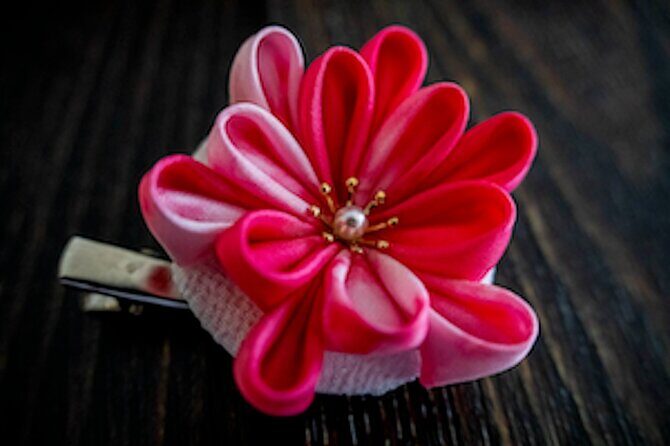
- Your finished item is a flower-shaped brooch, originally a kanzashi hair ornament.
- Small group size, capped at 4 travelers.
- Washi paper folding and dyeing is included, giving you a second craft outcome.
More things to make with your own hands
- Sushi Making Tokyo Roll and Authentic Japanese Sushi Class★ 5.0 · 3,971 reviews
- Tokyo Shinjuku Chopsticks Making Class★ 5.0 · 1,763 reviews
- Chopstick Making Workshop in Ginza★ 4.8 · 1,366 reviews
Tsumazaiku in Nihonbashi: small-group craft with real hands-on time
The class takes place in Nihonbashi, Tokyo, at somenova (染色体験スペース そめのば) on the 5th floor. That matters more than it sounds. Nihonbashi is central, so you can fit a focused 2-hour craft block into a sightseeing day without burning half your energy on transit.
This is also the kind of activity where the “small group” cap is a big deal. With a maximum of 4 people, you get the time you need to understand each step—especially the pinching and gluing part, which is where many crafts feel fussy if you don’t get clear guidance.
The vibe, based on the way the class is described and how it’s taught, is straightforward and practical. You choose your color, learn two dyeing styles, then assemble your flower. You’re not just watching a demonstration—you’re making decisions with your hands.
What you’ll make: a flower-shaped brooch in kanzashi tradition
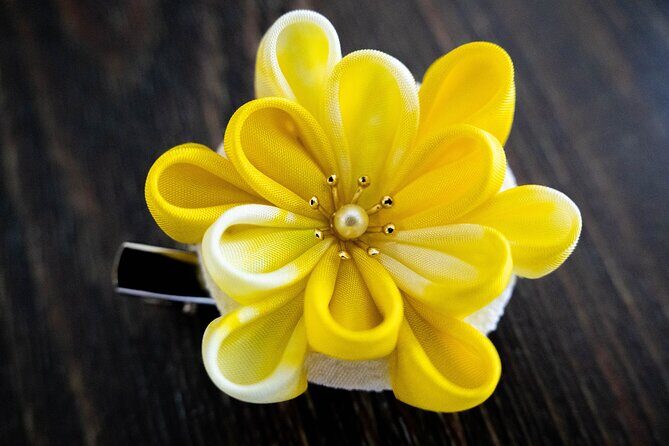
You’ll end up with a flower-shaped brooch made from small pieces of dyed silk. The craft’s original purpose is a kanzashi style ornament (traditionally worn in hair), but you’re essentially building a wearable piece of art.
This “brooch at the end” focus helps you stay motivated. Dyeing can sound technical or slow if you only think about color theory. Here, you’re given a clear goal: turn those dyed bits into a recognizable flower shape.
Also, you’re not working with a huge yard of fabric. The class splits the silk into small pieces and then pinches and glues them into structure. That makes the final item achievable in a short session—no multi-day drying schedules or complicated tools required beyond what the workshop provides.
Dyeing silk with your chosen color: speckled and dip-dye
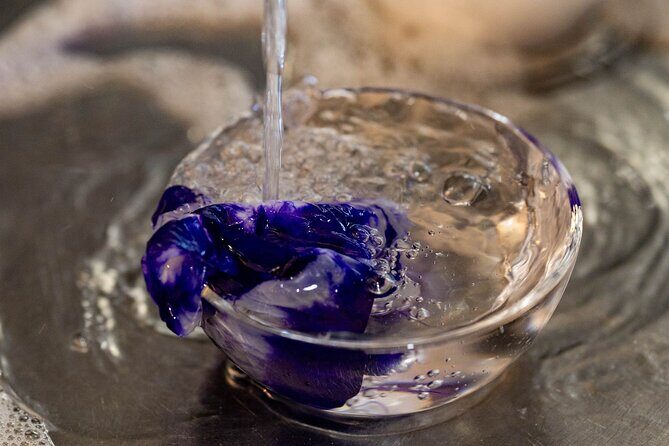
The first phase is dyeing. You pick one color, then learn two different dye methods on small silk pieces: speckled dyeing and dip-dyeing.
Speckled dyeing
Speckled dyeing is all about getting controlled randomness. Instead of a perfectly uniform look, you’re creating texture—tiny dots and mottled marks that can later add depth to your flower petals. In a craft like this, that texture becomes part of the design rather than an accident you should avoid.





Dip-dyeing
Dip-dyeing gives you a more gradient-style result. One part goes deeper, another stays lighter depending on how it’s handled during the dip. When you later pinch and glue, dip-dyed sections can form smoother “petal” areas, while speckled sections can read like highlights.
Why the dye store history matters
This workshop uses dyes from a shop with a history of over 100 years. You don’t need to be a textile expert to appreciate what that implies: the materials and process are likely tried, stable, and meant for consistent results. In practical terms, it’s a better situation for beginners than a vague craft using unfamiliar chemicals or unpredictable dye behavior.
Pinch and glue: assembling your flower brooch from dyed silk
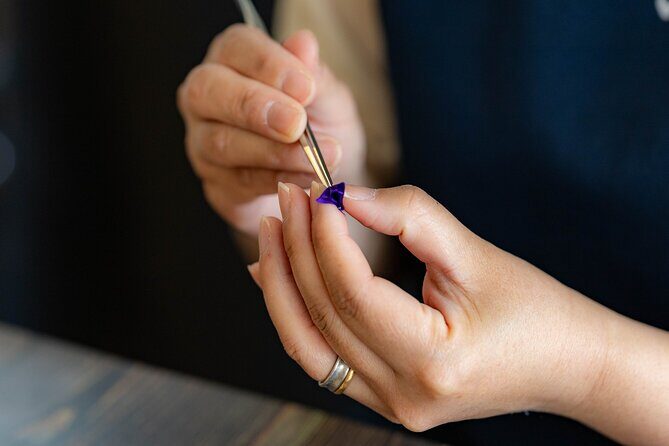
Once your silk pieces are dyed, you move into the main character of the craft: tsumazaiku pinching.
Here’s the gist of how it works:
- You separate the silk cloth into small pieces.
- You pinch those pieces (the technique is literally the point of tsumazaiku).
- You glue them together to create a flower-shaped brooch.
This part is where the class earns its “rare opportunity” description. Pinching sounds simple until you try it—small adjustments change the petal shape, and glue placement affects whether the flower holds cleanly.
What you should expect mentally
This is not like painting a picture. It’s more like building form. Think in fragments. You’re shaping your flower one pinched piece at a time, so it helps to stay flexible as your design emerges rather than insisting on a perfect pre-visualized result.
Why the teaching pace matters
The class is described as paced well, and that matches what you’d want from an expert instructor in a short session. If you rush through pinching, the final form can look messy. If you slow down too much, you won’t finish on time. The workshop is structured around the idea that most people can participate, which usually means the instructors watch the room and adjust their guidance as you work.
The bonus outcome: folding and dyeing Japanese washi paper
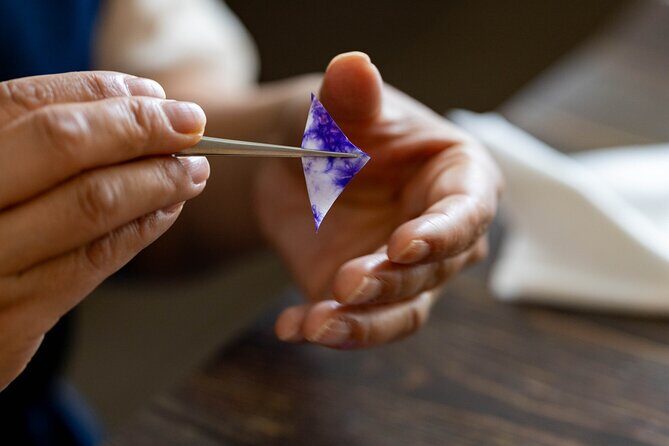
There’s an additional craft woven into the workshop: Japanese washi paper folding and dyeing. You get a second creative output, not just one finished brooch.
In practice, this gives you two benefits:
- You practice working with materials that take dye differently than silk.
- You create something quickly recognizable as a paper craft, which can be satisfying if you find silk assembly more challenging.
Because both dyeing and folding are included, you’ll get a sense of how texture shows up across different mediums. If you like crafts where color patterns matter, you’ll probably enjoy switching from pinching cloth to folding paper to control patterns.
Price and value: why $105.68 makes sense for a rare process
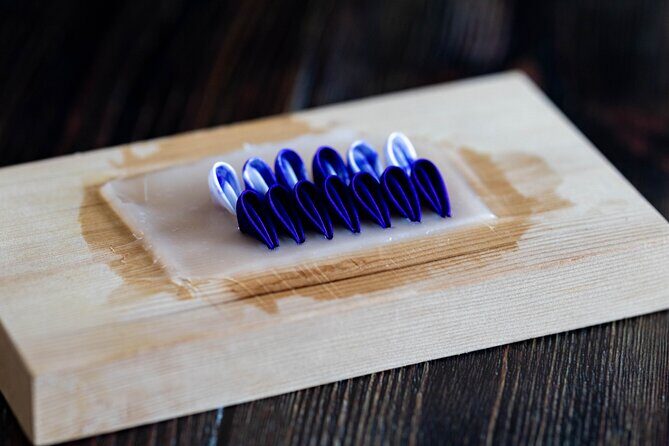
Let’s talk value directly. At $105.68 per person, this isn’t a bargain-basement craft. But for what you actually do, it’s easier to justify.
Here’s what you’re paying for:
- Two dye methods (speckled and dip-dyeing) using dyes tied to a dye store with 100-plus years of experience.
- The tsumazaiku transformation: pinching and gluing dyed silk into a finished flower brooch.
- A short, guided, beginner-friendly time window (about 2 hours).
- A small group size capped at 4 people, which usually means more attention per person.
- The extra washi paper folding and dyeing activity.
If you were to try to DIY a class like this on your own in Tokyo, you’d quickly run into the tricky parts: getting the right dyes, getting the right instructions, and understanding how the pinched fabric assembly is supposed to look. Paying for a guided workshop is what makes the process accessible in a single afternoon.
Also, booking is commonly done in advance (on average about 56 days). That’s a clue that people plan around it. If you wait until the last week, you may find fewer time slots, especially since the group size is kept very small.
Timing and logistics that actually matter for your day
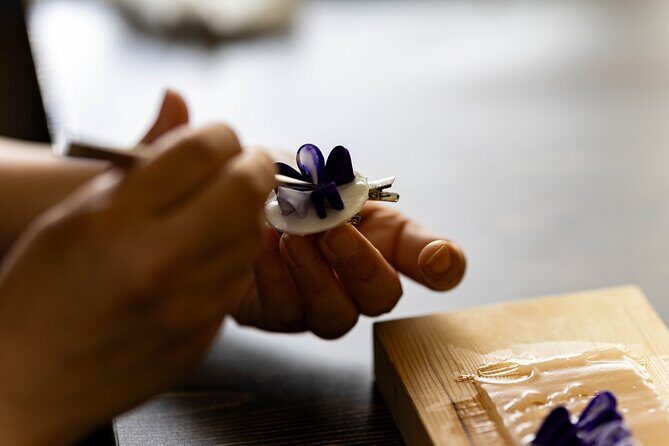
The start time is 1:00 pm, and it ends back at the meeting point. The duration is listed as about 2 hours, so you can treat it like a “single block” activity in the middle of your Tokyo day.
You’ll use a mobile ticket. That’s convenient, but it also means you should have your confirmation and ticket ready on your phone when you arrive.
The location is near public transportation, which is another practical win. When you’re working with dyes and materials, you don’t want a long, complicated walk back through crowded streets right after class. Ending at the starting point helps, because you can plan your next move without a scavenger hunt.
Who should book this (and who might skip it)
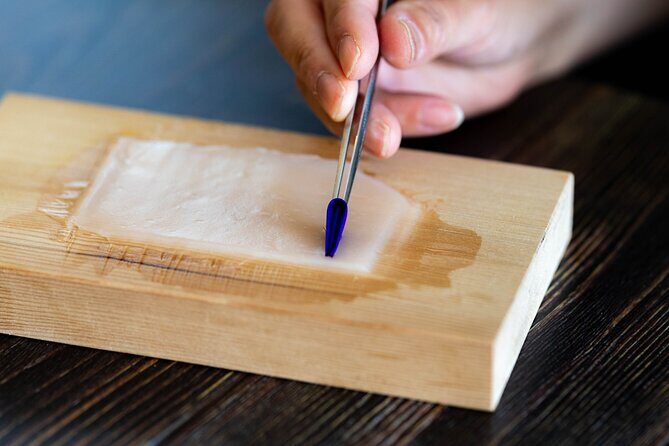
I think this class is a great match if you:
- Want a true hands-on textile experience in Tokyo, not just a craft demo.
- Like learning by doing, especially when there’s a clear final object: a flower-shaped brooch.
- Enjoy texture and pattern—speckled and dip-dyed silk can be very pretty once pinched into petals.
- Appreciate small-group instruction where you can ask questions.
You might consider skipping if:
- You’re hoping to create a big multi-item set in one session. The 2-hour format is designed around finishing one brooch.
- You want multiple colors. You choose one color for the dye part, so the palette is intentional and limited.
- You prefer highly structured step-by-step crafts with minimal variation. Pinching involves tactile decisions, and that’s part of the charm.
Should you book the Tsumami Zaiku Japanese Fabric Flower Class?
If you want a rare Tokyo craft that combines dyeing and tsumazaiku pinching into one 2-hour session, I’d book it. The value comes from doing both the color work and the shaping work yourself, guided carefully enough that the pace stays manageable. The small group limit makes the experience feel practical, not chaotic.
The main reason not to book is simple: you’re making one flower brooch in one color, plus a washi paper dyeing/folding piece. If that fits what you want from your afternoon, this is a strong choice.
FAQ
Where is the meeting point?
You’ll meet at somenova(染色体験スペース そめのば), 5F, Chuo City, Nihonbashikobunachō, 14−7, Tokyo 103-0024, Japan.
How long is the class?
The duration is about 2 hours.
What time does it start?
The start time is 1:00 pm.
Is a mobile ticket used?
Yes, the experience uses a mobile ticket.
How many people are in the group?
The class has a maximum of 4 travelers.
What do I make during the workshop?
You create a flower-shaped brooch (originally a kanzashi hair ornament) using dyed silk pieces.
What dyeing methods are included?
You do speckled dyeing and dip-dyeing with the one color you choose.
Is Japanese washi paper included?
Yes. The workshop also includes Japanese washi paper folding and dyeing.
Can I cancel for a full refund?
Free cancellation is available up to 24 hours in advance of the experience start time for a full refund.
Make Something to Take Home


More Tour Reviews in Tokyo



Fresh reviews from around Tokyo






Workshops, compared.
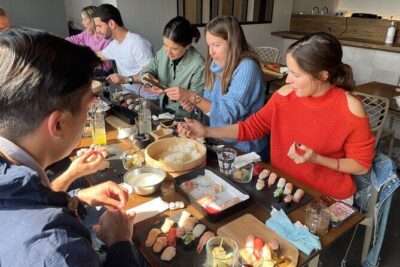 ★ 5.0Sushi Making Tokyo Roll and Authentic Japanese Sushi ClassFrom $593,971 reviews
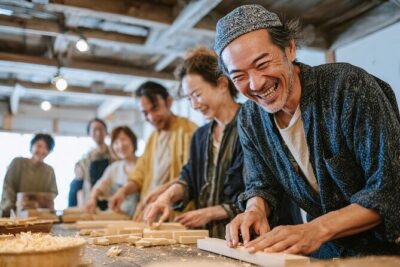 ★ 5.0Tokyo Shinjuku Chopsticks Making ClassFrom $201,763 reviews
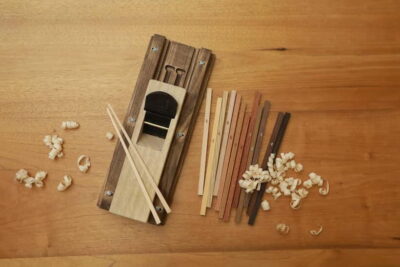 ★ 4.8Chopstick Making Workshop in GinzaFrom $251,366 reviews
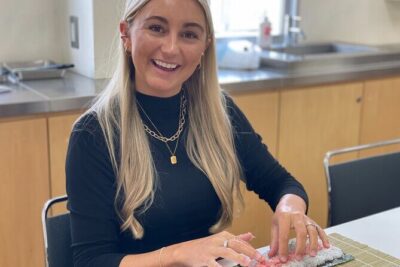 ★ 5.0Tokyo Sushi Making Class in Tsukiji with Professional ChefFrom $491,177 reviews
 ★ 5.0Ramen & Gyoza Cooking Class in Tokyo with Local Supermarket VisitFrom $122823 reviews
 ★ 5.0Matcha Making Class in Tokyo with Authentic Japanese Sweets SetFrom $21744 reviews
 ★ 5.0Samurai Sword & Archery Class from Samurai DescendantFrom $193603 reviews
 ★ 4.9Tsukiji Fish Market Sushi Making Class with Pro ChefFrom $63506 reviews
Browse the lists this tour appears in