
Reviewed · SUMO SHOWS
Authentic Sumo Experience in Tokyo: Enter the Sanctuary
Sumo practice has a different smell.
This is one of those Tokyo-area experiences that goes beyond watching. You start at Shin-Kawasaki, tour a real sumo stable space (the kind that was officially used until 2022), watch a morning practice session near the ring, and then get hands-on training with a sumo wrestler. Along the way, your certified MagicalTrip guide adds context on lifestyle and tradition, and the day’s tone tends to be friendly, with guides like Charlie, Jim, and Lily earning praise for clear, fun explanations.
I love the behind-the-scenes stable tour—you’ll see areas most people never get close to, including the dining room, bath space, and the practice area. I also love that lunch is not just a bonus; it’s chanko-nabe with the wrestlers, including chicken dumplings cooked together and eaten at a table used in the sumo room.
One drawback to plan around: you need to be on time. The tour starts promptly, and being more than 5 minutes late without contacting the team can count as a cancellation. Also, allergy-free meals can’t be guaranteed since the food is prepared in kitchens not controlled by MagicalTrip.
In This Review
- Key things I’d circle before you go
- Kawasaki’s sumo stable day: what you’re really signing up for
- From Shin-Kawasaki Station to the stable: how the day starts
- Walking the stable life: dining room, bath, and practice space
- Morning practice near the ring: watching (and trying) sumo movements
- Chanko-nabe lunch with sumo wrestlers: why it matters
- Price and value: is $171.12 a fair trade?
- What’s included (and what you should plan to pay for)
- Who this Kawasaki sumo experience suits best
- Practical tips: timing, heat, luggage, and dietary reality
- Should you book this sumo stable day?
- FAQ
- Where do I meet for this sumo experience?
- What time does the tour start, and how long is it?
- What do you do after meeting at the station?
- Is lunch included, and what is it?
- Can I learn or participate in sumo moves?
- What’s included in the ticket price?
- Do you accommodate dietary requests or allergies?
- Can I bring large suitcases or extra luggage?
- What happens if I’m late, or if the stable cancels?
Key things I’d circle before you go
- Real sumo stable areas: dining, bath, and practice spaces, tied to a facility officially used until 2022
- Morning practice at ring side: you watch training that usually runs 3 to 4 hours starting around 7:00 a.m.
- Hands-on sumo moves: you’ll practice the movements yourself, not just pose for photos
- Chanko-nabe lunch with the wrestlers: chicken dumplings and shared eating at a table from the sumo room
- Small group size (max 15): easier attention during the training and calmer conversations over lunch
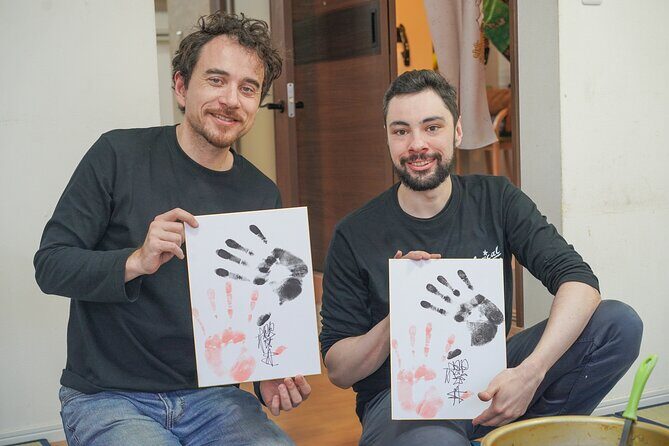
- Included extras: tour photos and an original designed t-shirt, plus a mobile ticket
Before you commit, see how this one stacks up against a few Kawasaki favourites:
- Tokyo: Authentic Sumo Wrestling Experience with Lunch★ 4.9 · 88 reviews
- Sencha-do the Japanese Tea Ceremony Workshop★ 5.0 · 21 reviews
Kawasaki’s sumo stable day: what you’re really signing up for
If your mental image of sumo is only the big tournament arena, this will reset it fast. Here, you’re learning how sumo training works as a daily routine—food, grooming life, practice space, and the rhythm of morning sessions. The “enter the sanctuary” part matters, because you’re being guided into areas that feel private and practical, not set up for tourists.
The pacing also feels honest. You begin with explanation and a stable walk-through, then you watch training, then you participate. Most people leave with two takeaways: (1) sumo is athletic and technical, and (2) the culture is built on routine and respect, not just strength.
You should be comfortable with the idea that this is interactive. There’s a chance you’ll do movement drills even if you’re not sporty. In a good way, it takes away the awkward “I’m just watching” feeling.
From Shin-Kawasaki Station to the stable: how the day starts
You meet near Shin-Kawasaki Station (the meeting address is listed in Saiwai Ward, Kawasaki: Kiyoken 1-chōme 2-1). The start time is 9:30 a.m., and the tour ends back near the meeting point.
From the station area, your guide leads the group to the stable. The ride may be short and simple, but the key idea is this: you’re not figuring anything out on your own once you meet the group. The guide runs the flow—intro, stable tour, then training.
One practical note: this tour is capped at 15 travelers. That small number changes the vibe. You get more time to ask questions, and the training section doesn’t feel like a crowded class.
Walking the stable life: dining room, bath, and practice space
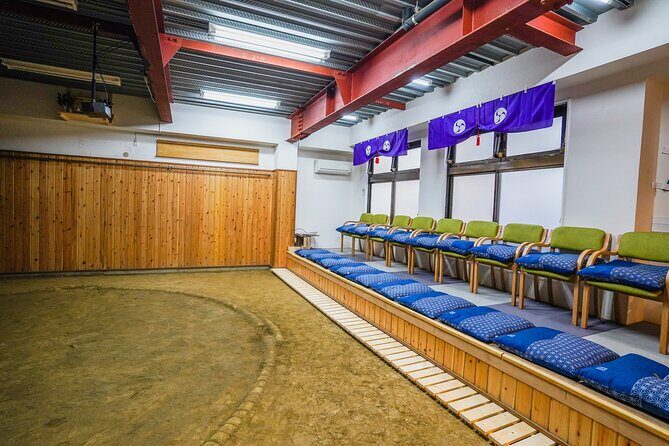
This part is the “wow” factor that makes the experience feel more authentic than a typical demo. Before you get to watch training, you tour the stable’s main spaces:
- the dining room, where shared eating supports daily routine
- the bath area, tied to the hygiene and recovery lifestyle
- the practice area, where drills and movement practice happen
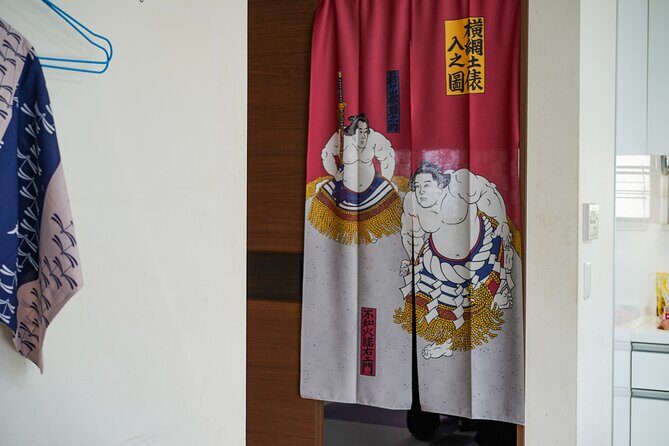
Your guide explains how wrestlers live and how tradition shapes everyday habits. Even if you’re new to sumo, you’ll get the big picture fast: the culture is structured, disciplined, and communal. And because you’re seeing the actual spaces, it’s easier to understand why training is so serious. The rooms aren’t themed. They look like workspaces for people with a job.
This is also where questions fit best. If you’ve ever wondered what the stable day feels like, this is your moment to ask—before the session turns athletic.
Morning practice near the ring: watching (and trying) sumo movements
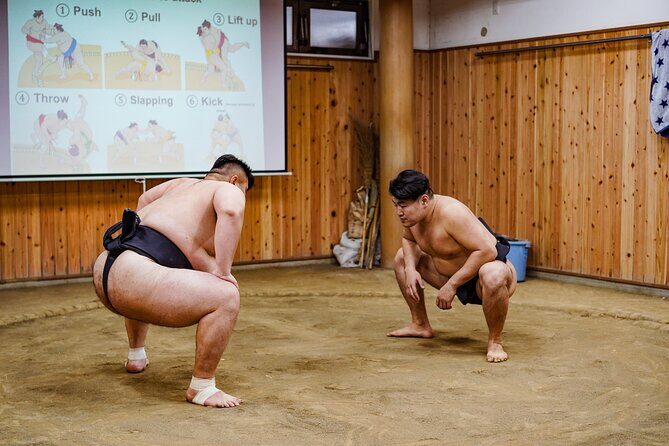
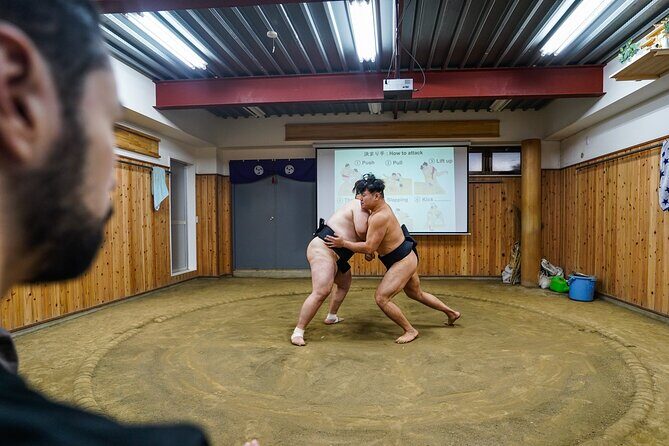
After the stable tour, you take your position to watch a morning sumo practice session right in front of the ring. Training often begins around 7:00 a.m. and typically lasts 3 to 4 hours, and you’re getting a chance to see how that flow looks up close.
Watching from this kind of angle is different. You’re not far away, so you can notice footwork, timing, and the way practice repeats to build muscle memory. You also start to understand that sumo training is not a single dramatic move. It’s work: pushing, shifting balance, resetting, and doing it again.
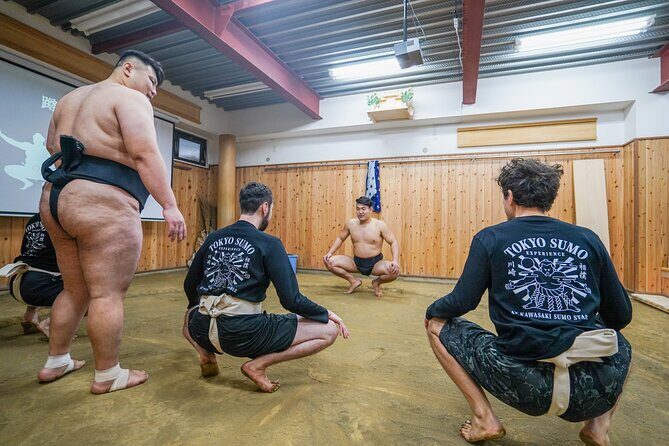
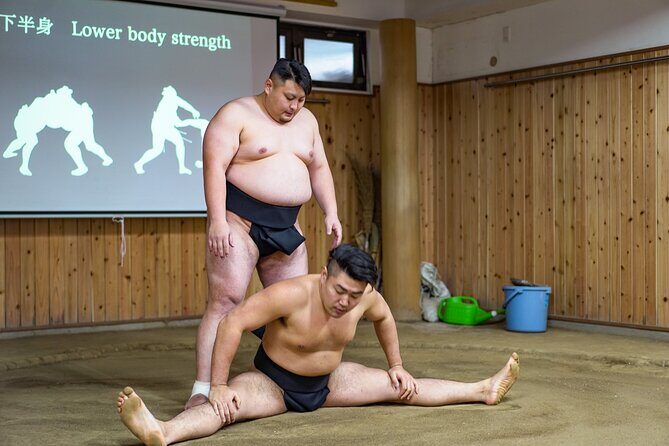
Then comes the best part for many people: you participate. Guests who want to join can experience movement drills with the support of a sumo wrestler instructor. In past groups, wrestlers like Fugi have been praised for teaching with humor and clear direction, so it doesn’t feel like you’re being judged. It’s more like being coached into a complicated skill set, one step at a time.
Keep expectations realistic. You’re not becoming a rikishi in a few hours. But you can learn how the movements connect, and you’ll understand what makes the sport so physically demanding.
Chanko-nabe lunch with sumo wrestlers: why it matters
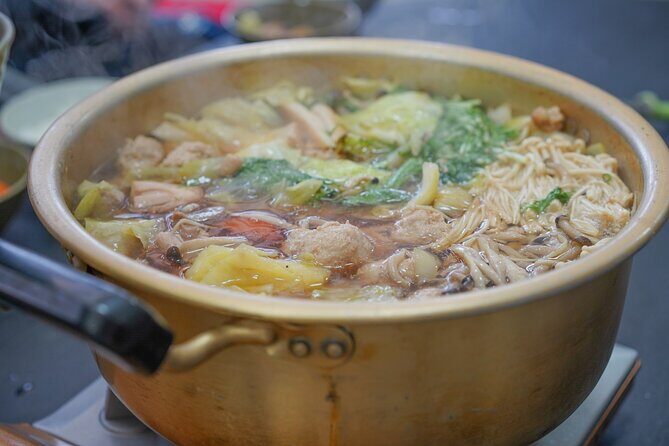
Lunch is not filler here. It’s part of the culture lesson.
You eat chanko-nabe, the hearty stew strongly associated with sumo training diets. The experience includes making chicken dumplings—described as the main ingredient—with the wrestlers. Then everyone eats together around a table that was actually used in the sumo room.
This is a big reason the day feels complete. You’re not only seeing training. You’re seeing how food supports the body and the routine. And because the meal is shared, the conversations tend to be more relaxed than the practice section.
In the feedback, people repeatedly call the lunch delicious, and even joke about appetite—one parent described their kid eating multiple bowls. That matches what you should expect: chanko-nabe is comforting, filling, and built for real hunger after movement drills.
Price and value: is $171.12 a fair trade?
At $171.12 per person for about 4 hours 10 minutes, this isn’t a cheap “tour-only” activity. But it’s also not trying to be. The value comes from three concrete things that are hard to replicate:
- Access to a real sumo stable space and ring-side viewing
- Hands-on instruction from a sumo wrestler (and a chance to participate in training movements)
- Included meal with chanko-nabe made as part of the experience, not just served to you
Add in the tour photos and an original designed t-shirt, and it starts to feel more like an experience day than a standard sightseeing ticket. Also, the group size stays small (max 15), which can matter when you want guidance during the practice.
The only time it feels overpriced is if you only want passive sightseeing and don’t care about interacting. If you’re the type who likes to try, ask questions, and learn by doing, the price starts to make sense fast.
What’s included (and what you should plan to pay for)
Included:
- Sumo experience with training and a stable tour
- A certified guide by MagicalTrip
- Sumo wrestler lunch (chanko-nabe with chicken dumplings)
- Tour photos
- Original designed t-shirt
- Mobile ticket
Not included:
- Additional food and drinks
So plan on covering water or any extra snacks yourself. If you’re a coffee or drink person, bring the habit in your own style. The lunch is filling, but you may still want water, especially if you’re going in warmer months.
Who this Kawasaki sumo experience suits best
This tour fits best if you want an authentic look at sumo as a lifestyle, not just a performance. I think it’s especially good for:
- first-timers to sumo who want context plus action
- families with kids or teens who can handle participation and want a memorable “try it” day
- couples and friends who like interactive classes with a cultural angle
- people who enjoy small-group tours where you can actually talk to the guide and instructors
It’s also a solid choice if you’re traveling with curiosity and you like your sightseeing with structure: meet, learn, practice, eat, and leave feeling like you understood something real.
If you’re someone who hates any kind of physical activity, you might still enjoy the viewing and stable tour, but you should check your comfort level with participating movements. Most people can participate, but the day is designed around doing more than watching.
Practical tips: timing, heat, luggage, and dietary reality
Japan’s summer can be brutally hot and humid. The tour specifically recommends you bring water and wear a hat to help prevent heat stroke. I’d treat that as mandatory thinking, not optional advice.
Other practical details to respect:
- Luggage: large luggage like suitcases are not permitted.
- Start on time: the tour begins promptly, and you won’t be able to join late and still get the same experience.
- Dietary requests/allergies: tell the team at least one day before. The food is prepared in kitchens not belonging to MagicalTrip, so an allergy-free guarantee isn’t provided.
If you have serious allergies, I’d take extra care in planning and contact the team early so you understand what can and can’t be handled.
Also, since this activity is limited to 15 travelers, it’s not a huge crowd event. Still, you’ll want to keep your schedule tight so you arrive early enough to check in comfortably.
Should you book this sumo stable day?
I’d book it if you want sumo in a way that’s practical and human. This is for people who like direct access: seeing real spaces in a stable, watching training near the ring, then trying the movements and eating chanko-nabe as part of the culture.
Skip it only if you’re strictly a passive spectator. If your idea of travel is “stand back, take photos, never participate,” you may find the training section less your style. Otherwise, the mix of stable tour, ring-side morning practice, hands-on coaching, and a shared lunch is exactly what makes the day feel worth it.
If you can handle being on time and you’re okay with the hot-weather guidance, this can be one of the most memorable cultural days you fit into a Tokyo-area itinerary.
FAQ
Where do I meet for this sumo experience?
You meet at Shin-Kawasaki Station. The listed start address is Kiyoken 1-chōme 2-1, Saiwai Ward, Kawasaki, Kanagawa 212-0058, Japan.
What time does the tour start, and how long is it?
The start time is 9:30 a.m. The duration is approximately 4 hours 10 minutes.
What do you do after meeting at the station?
You head to the real sumo stable and start with an explanation about sumo lifestyle and tradition, followed by a room tour of areas like the dining room, bath, and practice space.
Is lunch included, and what is it?
Yes. Lunch is included, and it’s chanko-nabe. The experience also includes making chicken dumplings, the main ingredient of the chanko-nabe, with the wrestlers.
Can I learn or participate in sumo moves?
Yes. After watching the morning practice session, guests who wish to participate can experience the movements and learn sumo moves from a sumo wrestler.
What’s included in the ticket price?
Included items are the sumo experience, a certified guide by MagicalTrip, sumo wrestler lunch, tour photos, and an original designed t-shirt. You also use a mobile ticket.
Do you accommodate dietary requests or allergies?
You should inform the team at least one day before if you have dietary requests or allergies. Allergy-free meals can’t be guaranteed, and substitutions may not be possible in every situation.
Can I bring large suitcases or extra luggage?
No. Large luggage such as suitcases are not permitted on this tour.
What happens if I’m late, or if the stable cancels?
If you’re late by more than 5 minutes without contacting the team, it will be treated as a cancellation with no refund. Also, unexpected cancellations from sumo stables can happen a few days to a couple of days before the tour.
More Tour Reviews in Kawasaki
Fresh reviews from around Kawasaki
Sumo Shows, compared.
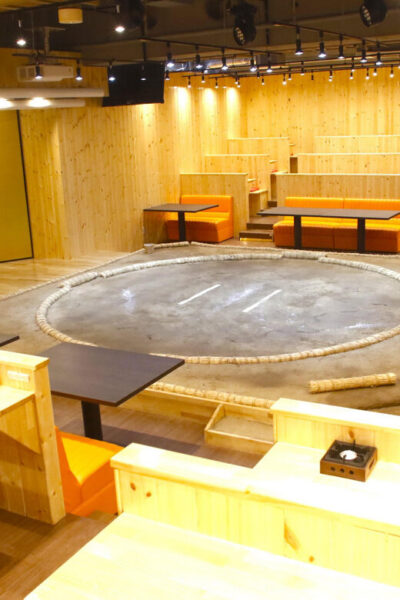 ★ 4.8Sumo Show Experience with Chicken Hot Pot and a PhotoFrom $1036,678 reviews
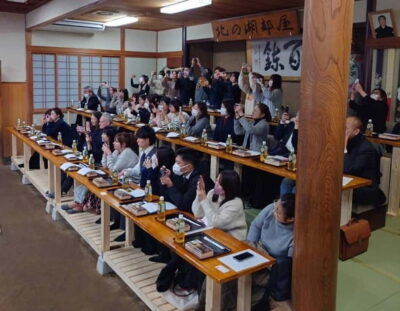 ★ 4.8Sumo Show and Dining ExperienceFrom $792,742 reviews
 ★ 5.0the SUMO showFrom $891,960 reviews
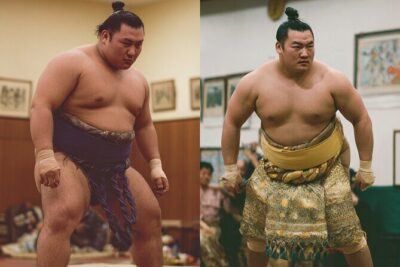 ★ 5.0Tokyo Shinjuku Sumo Show & Experience with PhotoFrom $791,750 reviews
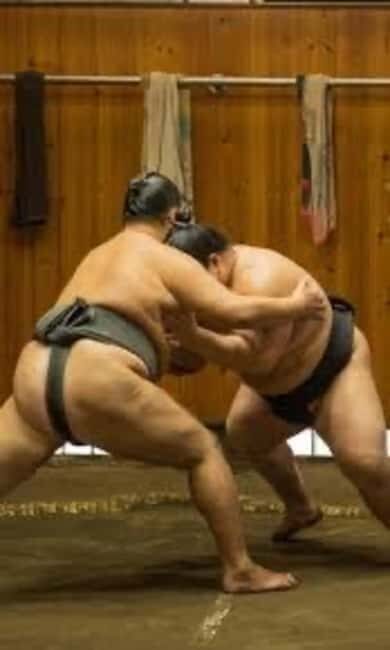 ★ 4.8Sumo Show and Experience in ShinjukuFrom $691,001 reviews
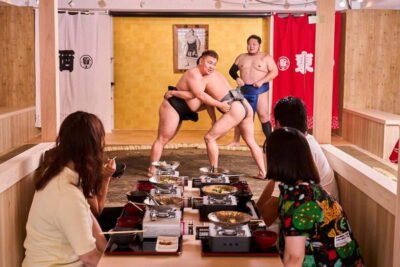 ★ 4.8Tokyo Sumo Experience: Chanko & Mochi with a Former ProFrom $103567 reviews
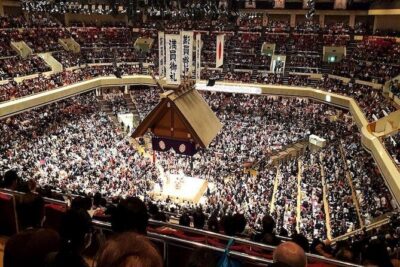 ★ 5.0Ultimate Sumo Tournament: Tokyo, Osaka, Nagoya, FukuokaFrom $184468 reviews
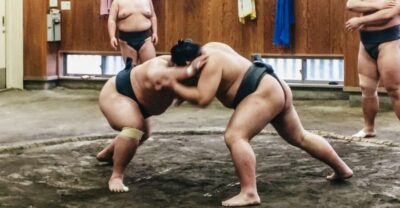 ★ 4.4Sumo Morning Training VisitFrom $77370 reviews
Browse the lists this tour appears in