
Reviewed · SUMO SHOWS
Ultimate Sumo Tournament: Tokyo, Osaka, Nagoya, Fukuoka
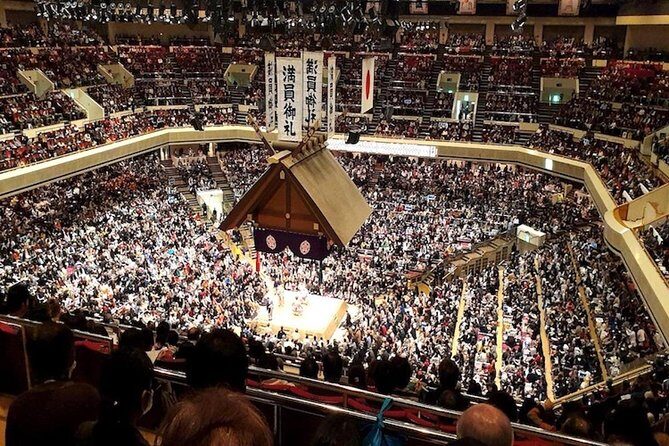
Sumo is one of Japan’s strangest, best shows. This tour turns that chaos into something you can actually follow, with reserved seats and a local sumo expert explaining what you’re seeing. I like that you’re not just watching wrestlers fight, you’re learning why the rituals matter and how the tournament works.
Two things I especially like: the audio headset style commentary (so you can hear over the arena noise), and the optional chanko nabe dinner if you want the full wrestlers’ food experience. Even if you only know a little about sumo, the explanations make it feel readable instead of random.
One consideration: seats for the standard option are B/C (2nd floor), so if you’re hoping for the most dramatic ring-level view, you’ll want to consider the private seating category closer to the ring.
In This Review
- Key highlights worth planning around
- Why a guided sumo tournament feels different from going on your own
- Price and what you’re really buying (especially with reserved seating)
- Your 4-hour tournament day: what the schedule actually feels like
- Tokyo’s Ryogoku Kokugikan: the sumo tournament home you’ll remember
- Osaka at EDION Arena: March tournament day with a guided edge
- Nagoya at IG Arena: July sumo when the city is in full swing
- Fukuoka at Fukuoka Kokusai Center: year-end sumo atmosphere with context
- The guide-led part that makes the bouts click: headsets and banzuke-hyo
- Sumo Museum and the reality of crowding
- Optional chanko nabe dinner: eat like a wrestler (and plan for dietary needs)
- Choosing standard seats vs private seats when view matters
- Practical tips that prevent small annoyances
- If you travel off-season: morning sumo stable practice near Warabi
- Who this tour is best for
- Should you book the Ultimate Sumo Tournament tour?
- FAQ
- What sumo tournaments does this tour cover?
- What time does the tournament tour start?
- Are reserved seats included, and where are they?
- Is there a dinner option?
- Can I bring my own food or drinks into the arena?
- What is included for the off-season stable practice tour?
- Where will I meet the guide?
- Does the tour work for people who don’t know sumo?
Key highlights worth planning around
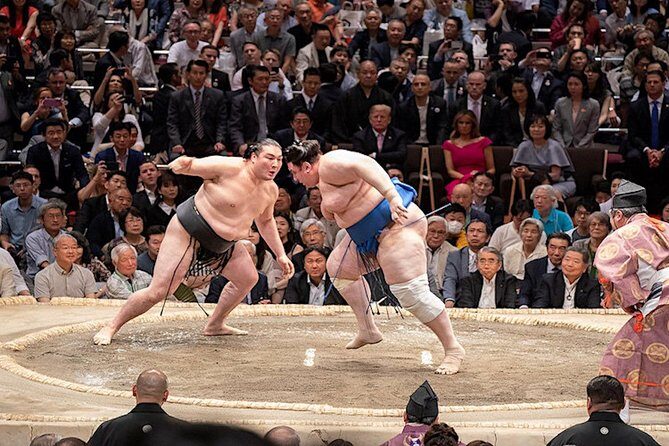
- Reserved seats that are hard to get yourself, handled in advance so you can focus on the day
- Local sumo expert guides who explain rules, rituals, and what each bout means
- Banzuke-hyo ranking chart and pamphlet, so names and ranks stop feeling like alphabet soup
- Optional chanko nabe dinner with a vegetarian option if you request it correctly
- Afternoon start (meeting at 2:00 pm) with a chance of waiting before seating due to arena flow
- Off-season morning sumo stable practice near Warabi Station (no tournament seat during off-season)
More chances to sit ringside
- Tokyo: Sumo Show and Dining Experience★ 4.8 · 2,742 reviews
- the SUMO show★ 5.0 · 1,960 reviews
- Tokyo Shinjuku Sumo Show & Experience with Photo★ 5.0 · 1,750 reviews
Why a guided sumo tournament feels different from going on your own
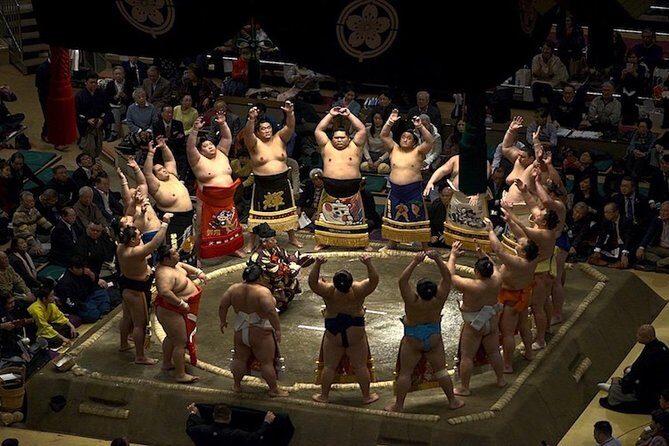
Sumo is not like most sports. The action is intense, but the bigger story happens in the pauses: the ceremonial steps, the rank system, the match rules that decide everything. Without context, it can feel like you’re watching a fast, noisy wrestling montage with no explanation for what you’re missing.
The big value here is the guide-led interpretation. You get a sumo info pamphlet and a banzuke-hyo ranking chart, plus an English-speaking local expert who explains traditions and culture. Then, once you’re seated, the headset approach helps you catch what matters as the bouts get going. If you want to understand why wrestlers do what they do, this setup saves you from spending your time Googling during the show.
I also like the human element from the guide selection. Names that show up in feedback include Miyko, Hiroshi, Seizo, Izumi, Yumi, Duke, and Taku. The point for you is simple: the guides are often praised for turning quick match changes into a clear play-by-play, not just a general history lecture.
Price and what you’re really buying (especially with reserved seating)
At $184.38 per person, you’re paying for three things: the reserved seat ticket, the local guide interpretation, and the time-saving ticket arrangement. The reserved-seat part matters because tickets for official tournaments can be extremely difficult for foreigners to secure on their own, and they can sell out fast.
Here’s how the seat categories typically work:
- Standard tour: B-class or C-class seats on the 2nd floor (rows 7–11 for B chair seats, or C chair seats depending on allocation)
- Private tour: S-class or A-class seats, usually closer to the ring
You’re also getting an audio headset in the experience. That’s not a small thing in an arena where noise and chanting can drown out casual explanations. In at least one set of feedback, people noted the volume can be very loud even on the lowest setting—so if you’re sensitive to sound, consider bringing earplugs.
One more value point: you’ll have reserved seating without having to figure out the whole system of entry, seat location, and tournament flow on your own.
Your 4-hour tournament day: what the schedule actually feels like
This is an afternoon start experience with a typical 4-hour guided visit at the official tournament venue. The meeting point details come by email (sent at least one week before), and the meeting point is near public transportation.
Inside the arena, expect a practical rhythm:
- You’ll get instructions and orientation first (helpful if this is your first tournament).
- You’ll then move into the seating area as guided coordination allows.
- There can be a wait prior to seating, because staff need to coordinate entry with the arena schedule.
- If there’s any congestion at nearby areas like the Sumo Museum, your guide may suggest you check it on your own rather than moving as a big group through crowds.
This setup is why guided tours feel smoother than DIY. You spend less time solving logistics and more time understanding what you’re seeing.
Tokyo’s Ryogoku Kokugikan: the sumo tournament home you’ll remember
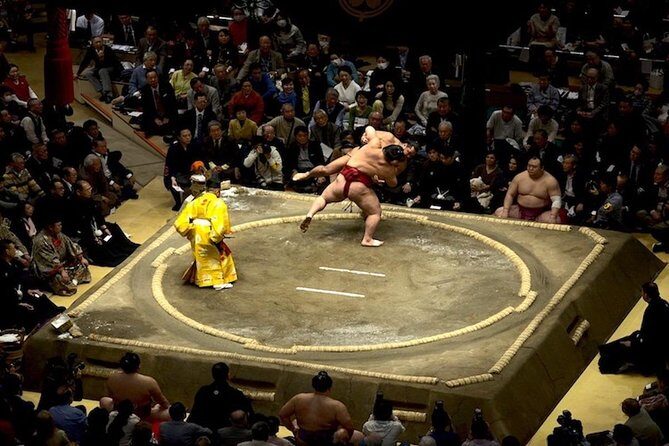
If you’re aiming for the most classic sumo atmosphere, Tokyo’s Ryogoku Kokugikan is the big target. This venue is described as Japan’s official sumo tournament setting, and the tour’s Tokyo option centers on this arena.
What makes Ryogoku special for your experience is the combination of:
- a guided orientation before the bouts
- reserved seating in a fixed area
- live match commentary through the headset
You’ll also likely get better enjoyment if you pay attention to what the guide is flagging right before key moments. Sumo changes fast: grips shift, posture changes, and a bout can end in seconds. The headset explanations aim to help you understand the “why” behind those quick turns.
One real-world tip from feedback: Tokyo arenas can run warm, so dress lighter than you expect for winter or spring travel. It’s an indoor building with an active crowd, and you’ll be there for a while.





Osaka at EDION Arena: March tournament day with a guided edge
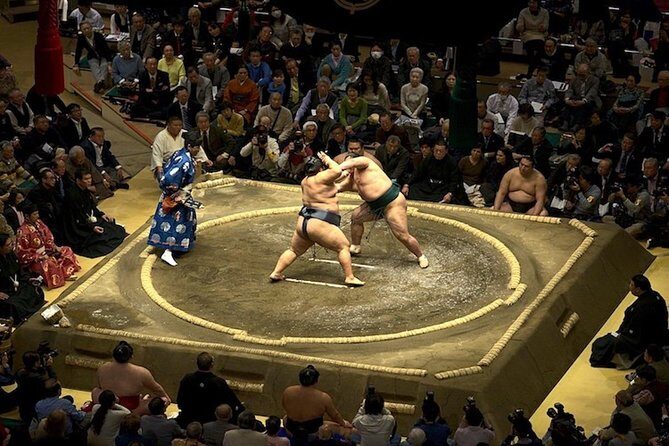
The Osaka option takes place at EDION Arena Osaka during the March tournament. The structure is similar to Tokyo: a guided visit of about 4 hours with reserved seating and expert explanation.
Osaka is a great fit for you if:
- you’re building a multi-city Japan trip, and
- you want sumo without forcing your schedule around Tokyo only
The draw here is consistency. The guide still helps you understand tournament structure and traditions, and you still get the ranking chart and headset support. The difference is mainly the venue vibe and the date/month.
Practical consideration: because your start time is fixed in the afternoon style, you’ll want to plan your other sightseeing earlier that day so you’re not rushing to the meeting point.
Nagoya at IG Arena: July sumo when the city is in full swing
Nagoya’s tournament is held at the IG Arena during the July tournament, with the same guided, headset-supported tournament experience approach.
If you’re traveling mid-year, this can be a smart choice. You get the sumo tournament structure plus expert commentary, and you avoid the “one city only” problem when your itinerary fits Nagoya better than Tokyo.
Also, this is a good option if you enjoy learning in a structured way. Sumo can be overwhelming on your first day because rules and rankings are not intuitive. The banzuke-hyo and pamphlet help you attach names and ranks to what you’re seeing in the ring.
Fukuoka at Fukuoka Kokusai Center: year-end sumo atmosphere with context
Fukuoka’s tournament is scheduled at the Fukuoka Kokusai Center during the November tournament. Like the other city options, your experience is built around a guided visit with reserved seats and expert commentary.
Why Fukuoka might be perfect for your trip:
- It gives you another regional Japan option beyond Tokyo/Osaka
- It places the tournament later in the year, which can align with holiday travel plans
The key takeaway is that the “how to watch” instruction doesn’t disappear just because the venue changes. The guide’s role is to explain what you’re seeing, so your enjoyment depends less on familiarity and more on how well the headset commentary is delivered.
The guide-led part that makes the bouts click: headsets and banzuke-hyo
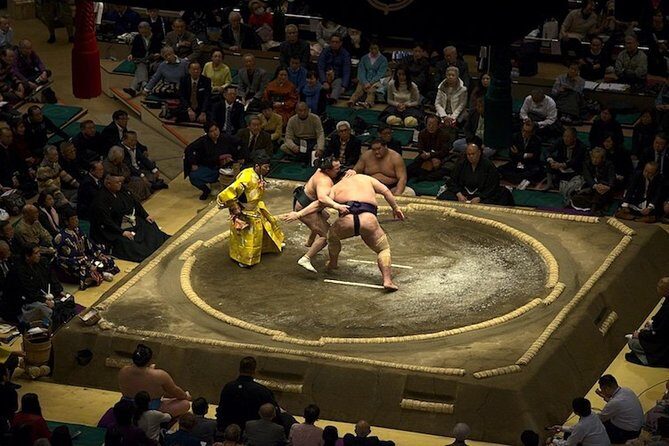
Here’s where the tour earns its keep for most first-timers: it teaches you how to watch.
You get:
- Audio headset so you can hear commentary clearly
- Banzuke-hyo ranking chart that helps you understand who matters and where people sit in the ranks
- A sumo information pamphlet you can refer to
Inside the arena, the guide is also there to interpret patterns in wrestlers’ styles and choices. One reviewer described how the guide provided background on the stadium and sumo wrestling, then gave additional commentary before each match. That rhythm is exactly what you want when bouts move quickly and you’re trying to follow shifts in position and strategy.
And yes, there’s variation. One negative comment complained that they learned very little, which is a reminder that a guide’s style affects your experience. The good news is that many guides are specifically praised for answering questions and keeping up with what’s happening.
Sumo Museum and the reality of crowding
Your tour experience may include a chance to visit the Sumo Museum, but crowd flow can affect how much time you get as a group. If the museum area is congested, the guide may ask you to visit it on your own rather than trying to walk through a tight cluster with the whole group.
So don’t assume you’ll have unlimited time there. Instead, treat it as a bonus if it works with the crowd situation and your group timing.
If you care about museum time, plan to prioritize it earlier in your day rather than waiting for it to be worked in.
Optional chanko nabe dinner: eat like a wrestler (and plan for dietary needs)
If you add the dinner option, you’ll have chanko hot pot at a local restaurant. Chanko nabe is commonly described as a chicken-stock-based stew with vegetables, and it has strong ties to the Ryogoku area where sumo traditions are rooted. Wrestlers are known for eating a lot of it because big batches can be cooked and shared.
Important for your planning: the default dinner is without drinks. Also, a vegetarian option is available if you request it at checkout.
There’s one more key detail you should not ignore. Traditional chanko broth is typically made with pork or chicken, but the restaurant may substitute the broth if you’re vegetarian. If you have dietary restrictions, send them clearly in the Special Requirements field at booking.
Choosing standard seats vs private seats when view matters
Seat choice is the clearest trade-off in this experience.
- Standard tour (B/C seats, 2nd floor): you’re in the arena, and with the headset commentary you can still understand the action. You may just have less ring-level drama than someone closer to the ring.
- Private tour (S/A seats closer to the ring): you get that tighter view and likely a better sense of power and technique.
If you’re the kind of traveler who loves photos and close visuals, private seating can be worth it. If you’re more focused on understanding sumo and getting the cultural context, standard seats plus great commentary can still be a satisfying combo.
Also note the standard tour group is described as up to 20 people sitting in the same location with the guide. That’s a manageable size for coordination.
Practical tips that prevent small annoyances
A few details can make your day much smoother:
- No outside food or drinks in the arena. You’ll need to use vendors inside.
- Dress for warmth. At least one Tokyo experience mentioned the arena runs warm, so lighter layers help.
- Ear protection can help. Some feedback said the headset volume can be very loud even at the lowest level. If you’re sound-sensitive, bring earplugs.
- Plan your timing. The meeting is 2:00 pm, and seating can involve waiting while staff coordinate entry after matches end.
- Use bathroom time strategically. Since you’ll be in crowds and moving around, try to handle quick needs during breaks rather than during the most intense moments.
- Don’t show up expecting a performance. This isn’t a staged show. It’s a strict sport with rituals, and that discipline is part of what makes it unforgettable.
If you travel off-season: morning sumo stable practice near Warabi
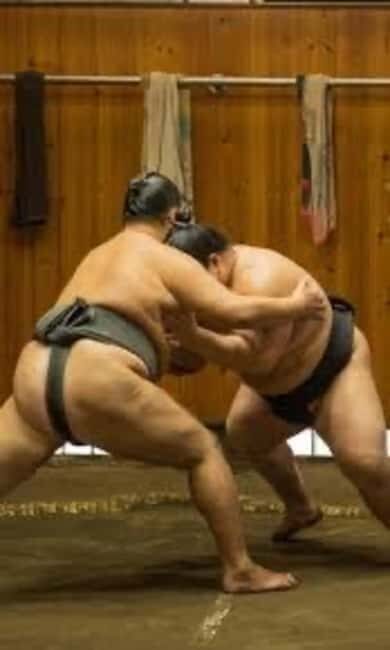
Not all tournament dates line up with your trip. If you’re traveling during off-season, the included option is a morning sumo stable practice tour instead of tournament seating.
This part is:
- Near Warabi Station (about 30 minutes from Tokyo Station)
- Scheduled 8:00 am to 12:00 pm
- A join-in group of 8–16 people
- Led by an expert guide with audio headsets
- Includes chanko lunch after the session
- But does not include tournament seat tickets, since there’s no basho happening
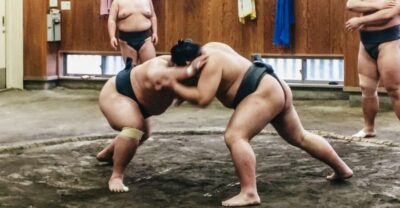
If you like watching discipline up close, stable practice can be a fascinating alternative. The trade-off is obvious: you won’t see the tournament bouts that day. Instead, you see training and get cultural context in a quieter setting.
Who this tour is best for
This experience is a strong fit if:
- You’re in Japan for a short trip and want high impact sumo without ticket headaches
- You care about understanding the sport’s rules and rituals, not just watching movement
- You want expert guidance that helps you follow what’s happening bout-to-bout
- You prefer a structured day with tickets sorted in advance
It may feel less ideal if you:
- strongly prefer ring-level viewing and don’t want to pay for private seats
- want a totally self-guided experience with no headset commentary
- are very sensitive to loud audio, unless you plan for ear protection
Should you book the Ultimate Sumo Tournament tour?
If your goal is to watch sumo and understand it in real time, I think this is an easy yes—especially because reserved seats and expert commentary handle the hardest part for first-timers: figuring out what to watch and why it matters.
I’d book it if you:
- can match one of the tournament months (Tokyo January/May/September, Osaka March, Nagoya July, Fukuoka November)
- want that afternoon tournament experience across Tokyo, Osaka, Nagoya, or Fukuoka
- are open to the idea that your view depends on seat category, but your understanding will depend on the guide and headset
I’d hesitate only if you’re expecting a guaranteed ring-perfect view in standard seating. In that case, upgrade to private seating if it fits your budget, and bring a sound solution if you’re sensitive to headset volume.
FAQ
What sumo tournaments does this tour cover?
You can attend the official tournaments in Tokyo, Osaka, Nagoya, and Fukuoka, each held in different months: January (Tokyo), March (Osaka), May (Tokyo), July (Nagoya), September (Tokyo), and November (Fukuoka).
What time does the tournament tour start?
The meeting time is 2:00 pm.
Are reserved seats included, and where are they?
Yes. Reserved seat tickets are included. Standard seats are B-class or C-class on the 2nd floor, while private seating is S-class or A-class closer to the ring.
Is there a dinner option?
Yes, there’s an optional chanko nabe dinner add-on. Vegetarian options are available if you request them at checkout.
Can I bring my own food or drinks into the arena?
No. Outside food or drinks are not allowed, but food is available for purchase from vendors inside the arena.
What is included for the off-season stable practice tour?
In off-season, the included activity is a morning sumo stable visit near Warabi Station (8:00 am to 12:00 pm). It includes the guided practice with audio headsets and chanko lunch, but it does not include tournament seat tickets.
Where will I meet the guide?
The tour says the meeting point is near public transportation, and the exact meeting point details are sent to your email at least one week before the tour date.
Does the tour work for people who don’t know sumo?
Yes. The tour is designed for most travelers, and the guide provides explanations of history, rules, and what you’re seeing, supported by the ranking chart and audio headsets.
More Tour Reviews in Tokyo



More Mornings with the Wrestlers
Fresh reviews from around Tokyo






Sumo Shows, compared.
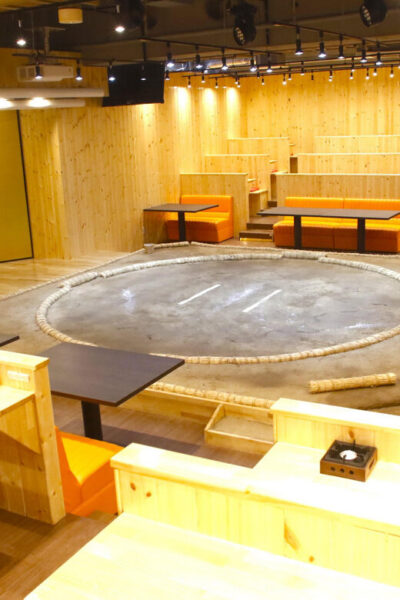 ★ 4.8Sumo Show Experience with Chicken Hot Pot and a PhotoFrom $1036,678 reviews
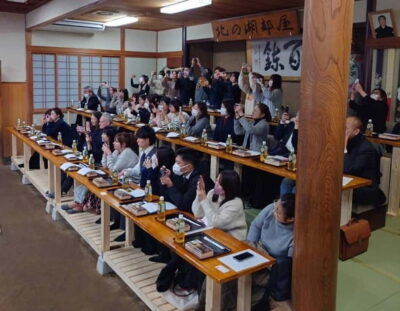 ★ 4.8Sumo Show and Dining ExperienceFrom $792,742 reviews
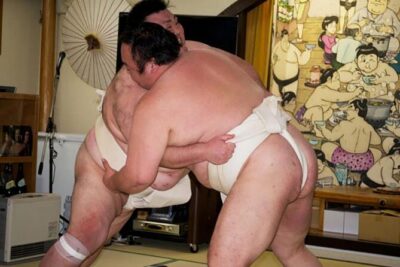 ★ 5.0the SUMO showFrom $891,960 reviews
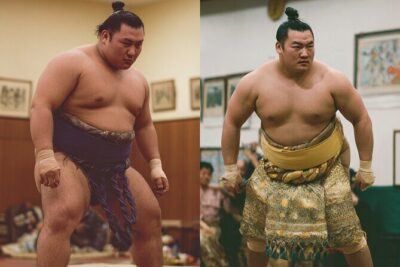 ★ 5.0Tokyo Shinjuku Sumo Show & Experience with PhotoFrom $791,750 reviews
 ★ 4.8Sumo Show and Experience in ShinjukuFrom $691,001 reviews
 ★ 5.0Authentic Sumo Experience in Tokyo: Enter the SanctuaryFrom $171603 reviews
 ★ 4.8Tokyo Sumo Experience: Chanko & Mochi with a Former ProFrom $103567 reviews
 ★ 4.4Sumo Morning Training VisitFrom $77370 reviews
Browse the lists this tour appears in