
Reviewed · SUMO SHOWS
Sumo Wrestlers Morning Practice Tour – Tokyo Sumida District
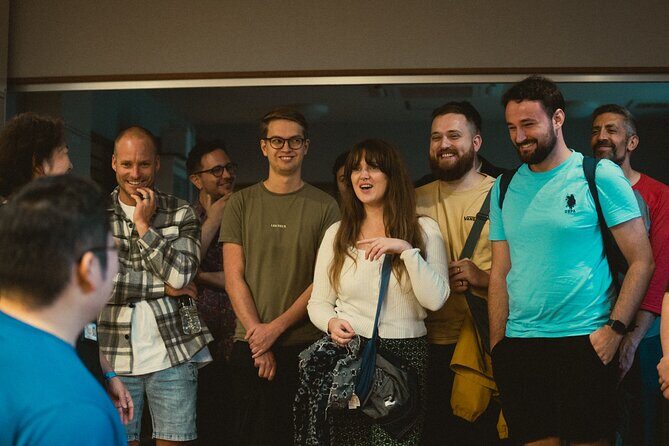
Waking up for sumo changes your whole Tokyo trip. This morning practice tour takes you to a real sumo stable in the Sumida area, so you can watch training up close and learn the sport’s rules and Shinto roots without guessing on your own. And yes, if practice runs on schedule, you may get a chance to take photos afterward.
I love two things about this experience: the guide translation and cultural help, and the way you see disciplined training instead of TV-style drama. One review even called out a guide who translated Japanese to English clearly, which makes the whole hour-and-a-half of practice much easier to follow.
One consideration before you book: there are no chairs. You sit cross-legged on the floor for about 1.5 hours, and if that’s not realistic for you, this isn’t the right fit.
In This Review
- Key things you’ll notice
- A morning-sumo wake-up call near Tokyo Skytree
- Price and timing: is it worth $83.23?
- Oshiage meeting: what to do at 7:10am for a 7:30am start
- Inside the stable: etiquette that matters (and the no-chair reality)
- Watching practice quietly in Sumida (the 90-minute routine)
- The photo moment and talking with the stable manager or owner
- Plan your rest of the day: use the tour to explore lightly
- Who should book this morning practice tour?
- Should you book this tour?
- FAQ
- What time do I need to arrive for the Sumo Wrestlers Morning Practice Tour?
- How long is the tour?
- Is there seating at the sumo stable?
- Can I take photos or videos during the tour?
- What should I do about shoes and clothing inside the stable?
- Can I get a full refund if I cancel?
Key things you’ll notice
- Tokyo Skytree area logistics: the tour starts near Skytree at the Oshiage meeting point and finishes back there.
- Real stable rules: no shoes on the raised floor, silent watching, and strict behavior around the ring.
- You learn sumo’s basics: history, rules, and why training looks the way it does.
- A respectful photo moment: photos with wrestlers after practice, with clear limits on phone use and flash.
- Small-group feel: maximum 25 people, so you’ll be close—but sightlines can vary depending on seating.
More chances to sit ringside
- Tokyo: Sumo Show and Dining Experience★ 4.8 · 2,742 reviews
- the SUMO show★ 5.0 · 1,960 reviews
- Tokyo Shinjuku Sumo Show & Experience with Photo★ 5.0 · 1,750 reviews
A morning-sumo wake-up call near Tokyo Skytree
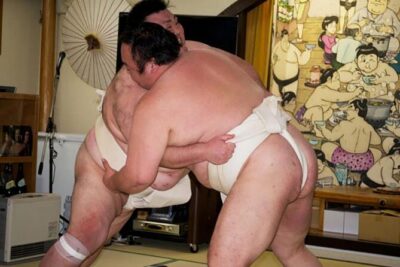
This tour is built around one smart idea: see sumo as training, not entertainment. Instead of showing up after everything is “performance-ready,” you watch the wrestlers go through their morning routine at their stable. It’s quiet work—serious, structured, and very different from how sumo looks on match day.
The setting also helps. You meet near Oshiage and the tour area stays anchored around the Tokyo Skytree neighborhood. That means you can still enjoy the rest of the day in Tokyo without feeling rushed to catch a train back at night.
Price and timing: is it worth $83.23?
At $83.23 per person, you’re paying for three practical things: early access to a stable, a guide to handle the language and etiquette, and a tour format that keeps you from wandering into the wrong place or doing the wrong thing at the wrong moment.
The tour runs about 2 hours, and it’s designed to be light on your afternoon plans. That’s value, because the time you save isn’t just “transport”—it’s time spent learning what to do and how to act. You’ll also get a quick walk component between the meeting point and the stable, so being on a guided schedule matters.
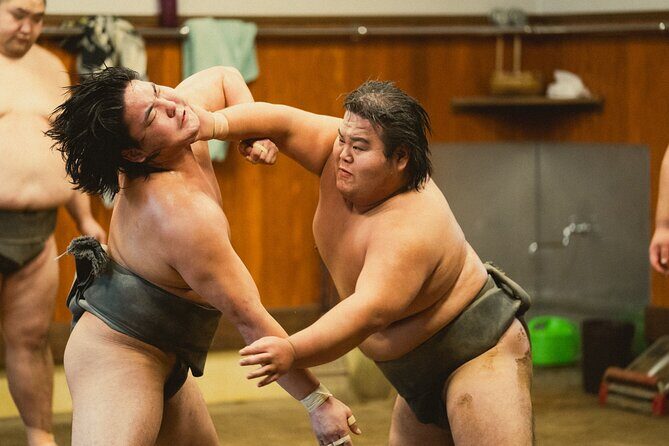
One honest note: practice isn’t the same as full-contact match chaos. If you’re picturing constant, high-impact bouts, you might feel a little let down on some days. The good news is that practice gives you a different kind of respect: you see technique, conditioning, and how disciplined daily work becomes championship-level skill.
Oshiage meeting: what to do at 7:10am for a 7:30am start
The day begins early. You’ll meet at 7:30am (but you’re expected to arrive at 7:10am). The start is sharp, so don’t treat that early time like a suggestion.
Your meeting point is:
1-chōme-8-21 Oshiage, Sumida City, Tokyo 131-0045, Japan
From there, you’ll head to the stable. The walk is about 15 minutes, so it’s smart to plan for weather. If rain is possible, bring a small towel to wipe your feet after the walk. That’s not just comfort—it helps you follow the stable rule about keeping things clean and respecting the space.
If you’re late, the tour guide says you may need to contact them first, and you might have trouble entering the stable without that. So if your train is delayed, message quickly and don’t just assume you’ll be waved in.
Inside the stable: etiquette that matters (and the no-chair reality)
This is where the tour earns its value. You’re not just watching; you’re being coached through how to behave in a place where small mistakes can matter.
Here are the key stable rules you need to take seriously:
Shoes off, always. There’s a raised wooden floor inside the stable area, and you remove your shoes as soon as you enter.
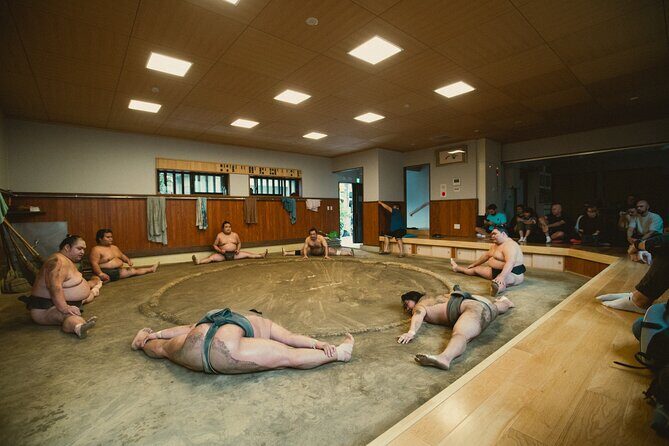
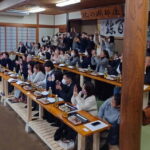
Sitting comes first. The experience has no chairs, and you’re expected to sit on the floor cross-legged for roughly 1.5 hours. Do not assume you can stand and “just stretch.” If cross-legged sitting isn’t doable for you, skip this tour.
Don’t use your feet like footlights. You’re asked not to stretch your legs toward the ring, because showing soles of your feet is considered impolite.
Silent watching only. You should watch respectfully and quietly. Cellphones must be on silent, and photos are allowed with restrictions.
No hats or sunglasses. Sunglasses and hats are not allowed inside the stable.
No food, no chewing, no smoking. You can bring and drink water, but leave snacks, gum, candies, and smoking outside.
The ring stays sacred. Do not step down onto the ring or into the sandy area. Think of it as a line you do not cross.
Photo and video limits are strict. Photos are okay but only without flash or shutter sounds. Videos are allowed, but you cannot upload photos/videos on social media platforms.
If all of that sounds intense, here’s the practical translation: the tour is designed to keep you from accidentally becoming the noisy tourist in the room. That’s exactly why the guide matters.
Worth weighing up alongside this Tokyo pick:


Watching practice quietly in Sumida (the 90-minute routine)
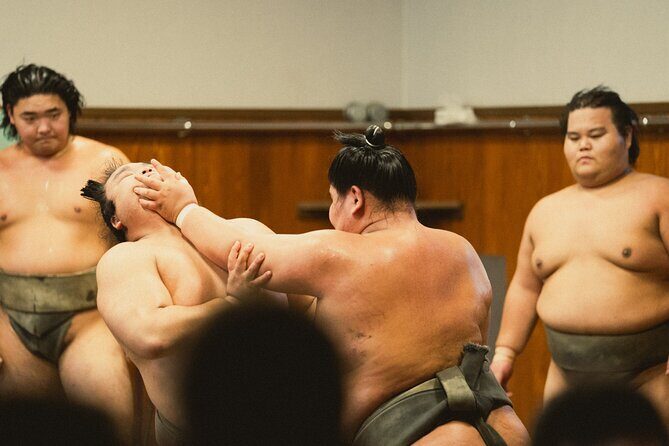
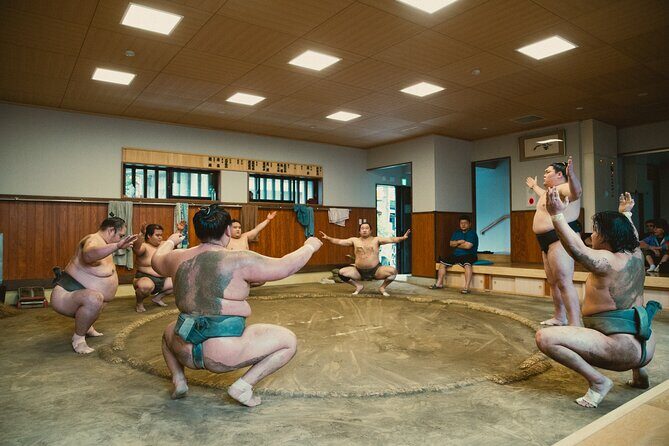
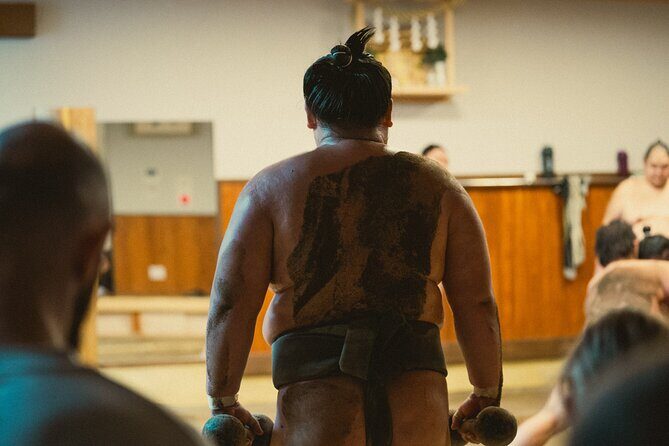
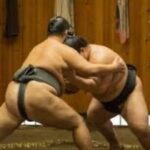
The heart of the tour is the training time. You’ll arrive and then watch respectfully as the wrestlers go through daily practice. The idea is simple: be still, observe, and let the guide’s explanations (and any brief guidance during the session) give you a deeper understanding of what you’re seeing.
The tour portion is about 1 hour 30 minutes at the stable. That’s long enough to notice patterns—warmups, drills, technique, and the steady rhythm of training. Reviews also highlight how fascinating it is to see how flexible and agile these athletes are, even though they’re obviously powerful.
You might also notice how many moments are about discipline rather than drama. That’s why this tour works as a culture experience, not just a sports experience. You learn more about sumo’s rules and regulations than you could from a single match broadcast.
One small reality check: with groups up to 25 people, seating can vary. If the group is large, you may not be perfectly front-row. Still, the stable setting keeps everyone close enough to feel like you’re part of the morning routine—without crowding the wrestlers.
The photo moment and talking with the stable manager or owner
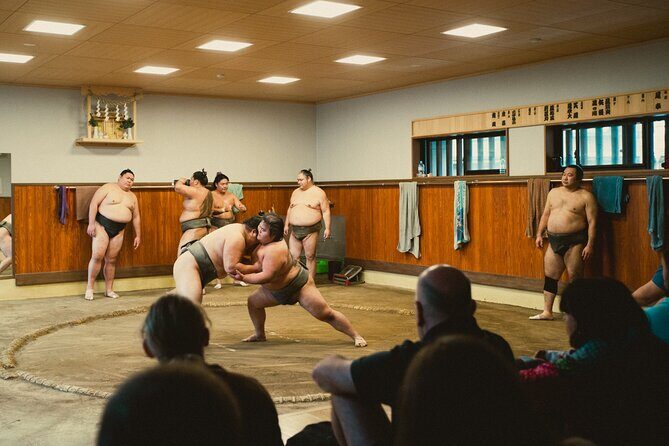
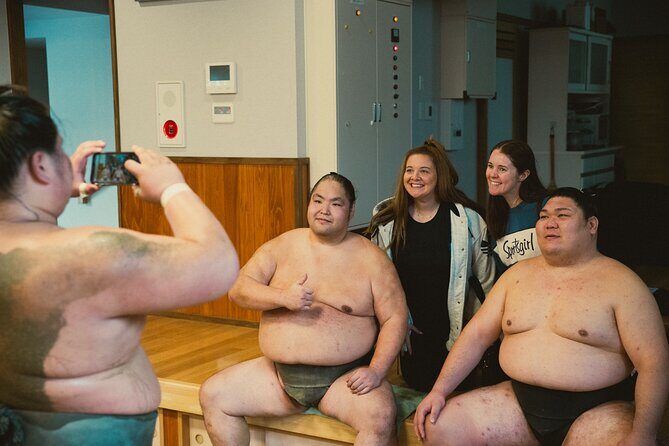
If you’re lucky (and practice ends on time), you’ll get a photo at the end. The tour schedule includes a final stop for photos, typically about 15 minutes after the practice segment.
The photo part is one of the most memorable pieces because it switches from respectful watching to a human interaction moment. Reviews mention that the wrestlers are friendly and that photos are possible when you follow the rules (and when the stable allows it that day).
You may also get time to ask questions after practice. Reviews mention a Q&A with the stable manager, and another mentions being able to speak with the stable owner afterward for insight—specifically around diet and how life inside the stable works. Even if you don’t get a long conversation, the chance to learn what’s behind the training makes the early start feel even smarter.
One schedule note: practice may end earlier than usual, which can shorten the tour. That’s not a problem—it’s just how a real training session runs.
Plan your rest of the day: use the tour to explore lightly
This tour is intentionally built so you’re done early enough to move on. After you finish back around the meeting point near Skytree, you’ll have the rest of the day to explore Tokyo.
That matters because sumo culture is only one piece of the Tokyo puzzle. By the time you’re finished here, you’re not stuck with a full-day commitment. You can choose a neighborhood walk, museum time, shopping, or even just slow sightseeing—without needing another “oh no, I missed my train” sprint.
If you want to stay in the same vibe, Sumida has an easy flow for a morning-to-afternoon plan. If you want variety, Skytree’s area is a convenient anchor for hopping to other parts of the city.
Who should book this morning practice tour?
Book this if you want:
- A close look at how sumo training actually works
- A guide-led explanation of rules and culture so you don’t have to figure everything out alone
- A morning start that leaves your afternoon free
- A chance for photos after practice (when timing allows)
This tour may not be your best match if:
- You need chairs or you can’t sit cross-legged for about 1.5 hours
- You’re expecting constant match-style action. Practice is practice—focused, technical, and often calmer than tournament wrestling.
Also, the tour sets a minimum age of 6 years old, and children are expected to stay quiet. If kids are noisy or can’t watch respectfully, the stable may ask them to leave. So if you’re traveling with younger kids, plan carefully.
Should you book this tour?
If you’re choosing between a general sumo attraction and this morning practice experience, I’d lean toward booking this one—especially if you care about understanding the sport. The best value here is not just proximity. It’s the combination of stable etiquette coaching, language support, and a real look at daily discipline.
Just be honest about the floor seating. If cross-legged sitting for about 90 minutes sounds miserable, save your energy and look for another sumo option.
If you can handle the stable rules and you want the culture side of sumo explained clearly, this is a strong Tokyo morning with real substance.
FAQ
What time do I need to arrive for the Sumo Wrestlers Morning Practice Tour?
You should be at the meeting point at 7:10am so you can be ready for a 7:30am departure. The tour ends back at the meeting point.
How long is the tour?
The duration is about 2 hours. Practice may end earlier than usual, so the tour can be shorter depending on the day.
Is there seating at the sumo stable?
No. There are no chairs, and you’ll be asked to sit cross-legged on the floor for approximately 1.5 hours.
Can I take photos or videos during the tour?
You can take photos, but you should avoid flash and any shutter sounds. Videos are allowed, but you cannot upload photos or videos on social media platforms.
What should I do about shoes and clothing inside the stable?
You must remove shoes on the raised wooden floor in the stable. Wear modest clothing only, and no hats or sunglasses are allowed inside.
Can I get a full refund if I cancel?
Yes. Cancellation is free up to 24 hours before the experience start time for a full refund. If you cancel less than 24 hours before, the amount paid is not refunded.
More Tours in Tokyo





More Tour Reviews in Tokyo




More Mornings with the Wrestlers

Fresh reviews from around Tokyo






Sumo Shows, compared.
 ★ 4.8Sumo Show Experience with Chicken Hot Pot and a PhotoFrom $1036,678 reviews
 ★ 4.8Sumo Show and Dining ExperienceFrom $792,742 reviews
 ★ 5.0the SUMO showFrom $891,960 reviews
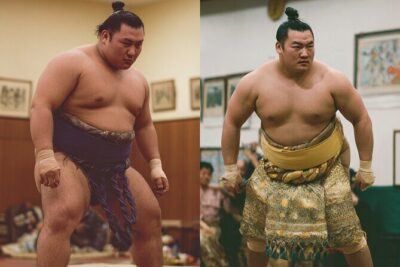 ★ 5.0Tokyo Shinjuku Sumo Show & Experience with PhotoFrom $791,750 reviews
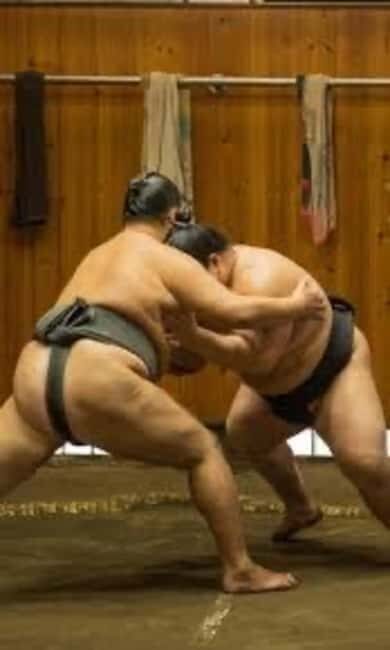 ★ 4.8Sumo Show and Experience in ShinjukuFrom $691,001 reviews
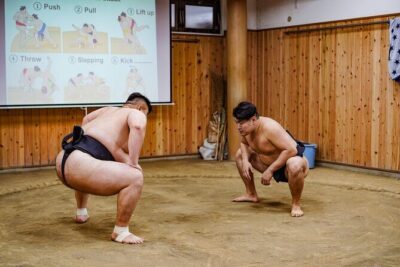 ★ 5.0Authentic Sumo Experience in Tokyo: Enter the SanctuaryFrom $171603 reviews
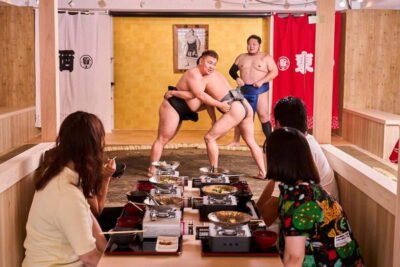 ★ 4.8Tokyo Sumo Experience: Chanko & Mochi with a Former ProFrom $103567 reviews
 ★ 5.0Ultimate Sumo Tournament: Tokyo, Osaka, Nagoya, FukuokaFrom $184468 reviews
Browse the lists this tour appears in