
Reviewed · KAMAKURA DAY TRIPS
Kamakura Private Tour Great Buddha & Enoshima with English guide
Kamakura feels calm when you skip the crowd. This private day trip turns Tokyo traffic into a relaxed coastal route, with a luxury air-conditioned vehicle and an English-speaking guide who sets the pace. Two big reasons I’d choose it: you get round-trip pickup, and you can spend real time at signature sights like the Great Buddha without herding.
One thing to plan for: most entrance fees and lunch are not included, and the itinerary works best in good weather since Enoshima views can improve on clear days. If you’re on a tight budget or hate ticket lines, you’ll want to factor that in early.
In This Review
- Key points worth knowing before you book
- Private Kamakura and Enoshima: why this format feels better than a big bus
- Kotoku-in Great Buddha: the 11-meter icon that anchors the day
- Hase-dera and Tsurugaoka Hachimangu: spiritual landmarks with different flavors
- Hase-dera Temple Kannondo: the eleven-headed Kannon
- Tsurugaoka Hachimangu: torii, koi ponds, and the shrine heart
- Hokoku-ji bamboo grove and matcha: a slower pause between big sights
- Enoshima Island: sea views, shrines, and Mt. Fuji when the sky cooperates
- Yokohama Chinatown and Sankeien Gardens: the perfect contrast after the coast
- Yokohama Chinatown: a long-established neighborhood
- Sankeien Gardens: traditional Japanese garden in Yokohama
- Price and value: is $650 per group a good deal?
- What a great guide does on a day like this: Mukarram Muhammad’s style
- Timing and practical tips for an 8–10 hour private day
- Should you book this Kamakura and Enoshima private tour?
- FAQ
- How long is the Kamakura and Enoshima private tour?
- What’s the price for this tour?
- Is the tour private or shared?
- Do you offer hotel pickup and tickets?
- Is the guide English-speaking?
- Are entrance fees included?
- Is lunch included?
- Is Wi-Fi available during the tour?
- Does the tour require good weather?
- What is the cancellation policy?
Key points worth knowing before you book
- Private group (up to 6): more control over timing and questions.
- English guide + driver combo: you don’t just “get dropped,” you get context.
- Great Buddha ticket included: Kotoku-in is built into the price.
- Enoshima and Chinatown stop are free: you focus on wandering, not paying.
- Mt. Fuji depends on the day: clear skies make the sea views extra.
- Rain-friendly execution in the real world: there’s evidence the route still runs when weather changes.
More escapes to the Great Buddha and the coast
- Kamakura 8 hr Private Walking Tour with Licensed Guide from Tokyo★ 5.0 · 80 reviews
- Tokyo: Kamakura & Enoshima Day Tour with Pickup & Train Ride★ 4.1 · 61 reviews
- Kamakura Private & Customizable Tour – All-in-One Experience★ 5.0 · 49 reviews
Private Kamakura and Enoshima: why this format feels better than a big bus
Kamakura and Enoshima are popular, which is great—until you’re stuck in a long line, staring at a schedule, and trying to hear your guide over someone else’s audio. With a private setup for up to six people, you’re not fighting the flow. The driver handles the road and the guide handles the meaning, so you can stay in “easy mode” for a full day.
I also like that the day is built around variety, not just a checklist. You get Buddhist iconography at Kotoku-in, shrine scenery at Tsurugaoka Hachimangu, a cool pause in the bamboo grove, sea air on Enoshima Island, then the contrast of Yokohama Chinatown and Sankeien Gardens. That mix is exactly what makes a coastal day trip satisfying instead of repetitive.
And because this is a mobile-ticket day with pickup offered, you’re not stuck playing transporter DJ with transit transfers. You go, you park, you walk what you want, and you keep the rest simple.
Kotoku-in Great Buddha: the 11-meter icon that anchors the day
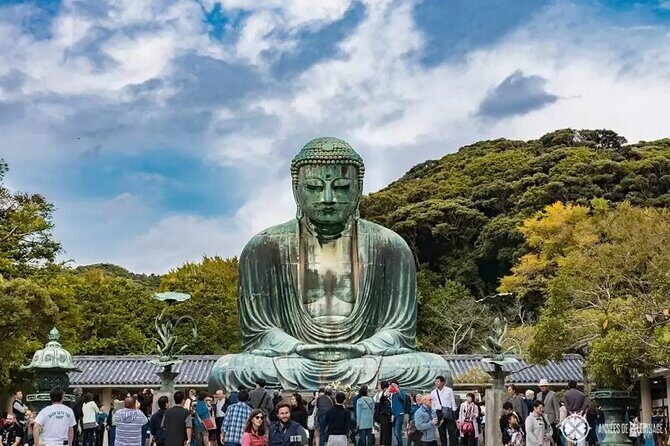
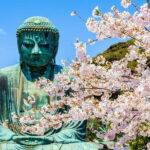
Stop one is Kotoku-in, home to the Great Buddha of Kamakura. This bronze statue is over 11 meters tall, and it’s one of those sights you understand instantly—even if you don’t read a single sign. It’s iconic for a reason: scale does half the explaining.
A practical win: the admission ticket for Kotoku-in is included. That means less budget math later and fewer “wait, what’s extra?” moments. It also helps you start the day with momentum, rather than spending your first hour on transactions.
What to expect from a time standpoint: about one hour at Kotoku-in. That’s enough to see the main view and take in the atmosphere without feeling rushed to “move along” every two minutes. If you like photos, this is also where the lighting and your best angles usually matter most—so it’s a smart early stop.
Hase-dera and Tsurugaoka Hachimangu: spiritual landmarks with different flavors
After the Great Buddha, the route moves into two classic Kamakura experiences that feel different even though they’re both rooted in devotion and tradition.
Hase-dera Temple Kannondo: the eleven-headed Kannon
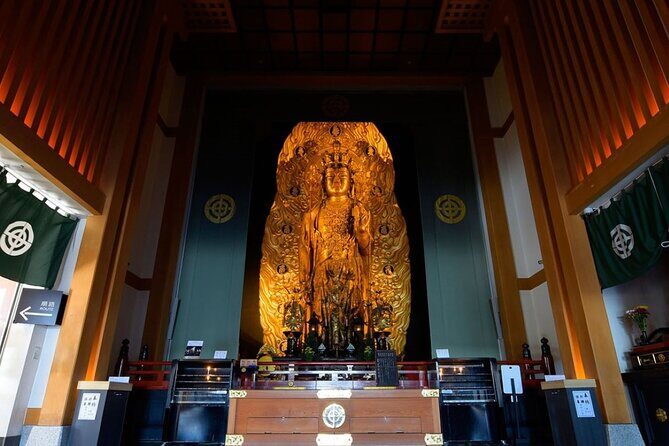
Hase-dera is known for its famous eleven-headed statue of Kannon, the Goddess of Mercy. It’s a standout in Japan and it’s tied to the temple’s identity, so it’s not a random “also nearby” stop. Your planned time here is about one hour.
One consideration: admission is not included for this stop, so budget for it. Also, because this is a religious site, it’s worth going in with calm energy. Think observation over speed.
More days made easy by a guide
Tsurugaoka Hachimangu: torii, koi ponds, and the shrine heart
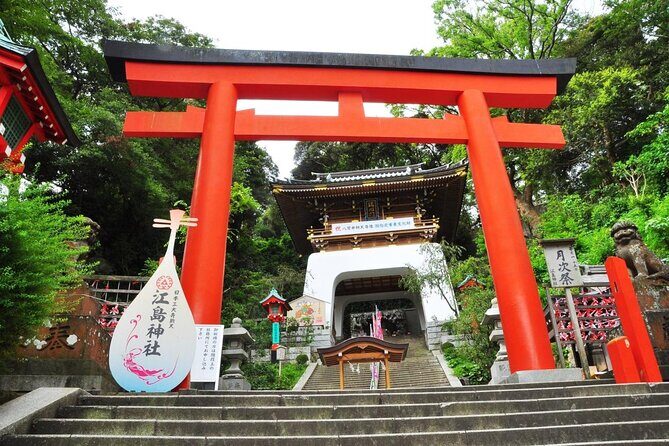
Next comes Tsurugaoka Hachimangu, Kamakura’s premier shrine and spiritual center. As you pass through the grand torii gate, you’ll find a serene setting with ponds that hold koi, plus bridges and landscaped views.
This stop also has about one hour allocated. That’s long enough to enjoy the scenery and settle in, but short enough that you still keep the day from dragging. Admission isn’t included here either, so again: factor entrance fees into your total spend.
One more smart move: with a private guide, ask about what you’re seeing as you walk in and out—how the pond area and bridges function within the shrine setting. The route works better when you understand why the garden-like layout is part of the experience.
Hokoku-ji bamboo grove and matcha: a slower pause between big sights
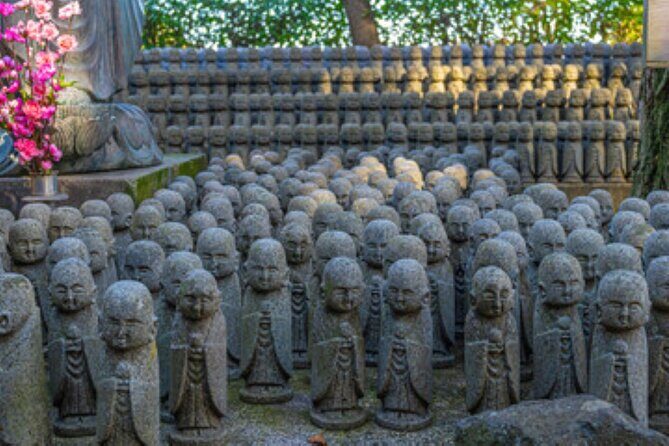
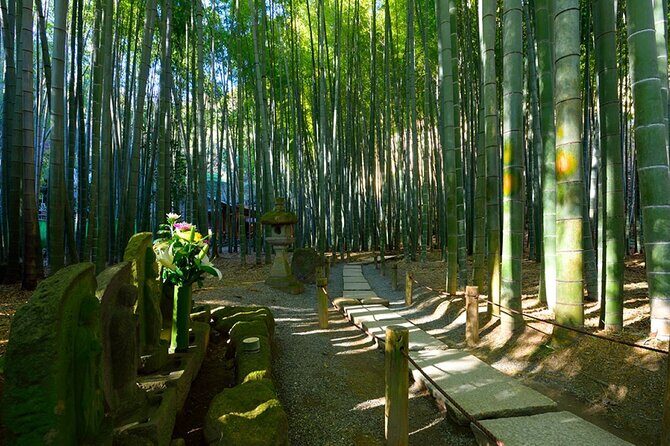
Not every temple stop in Japan feels like a full “serious tour.” Hokoku-ji breaks that pattern with a bamboo grove setting and a different kind of quiet. The grove traces back to a temple built in the 14th century, and the bamboo area makes the walk feel cooler and calmer almost instantly.
Then there’s the matcha angle: you’ll have the chance to drink the famous matcha green tea at this stop. That’s not just a snack—it’s a way to shift gears from walking and looking into a sensory reset. Even with a busy day, a tea pause helps you keep your attention instead of going numb from too many landmarks.
Admission is not included for this stop, and time is again about one hour. If you want extra tea time or want to linger for photos, a private tour helps—you can adjust slightly as long as your day stays on track.
Enoshima Island: sea views, shrines, and Mt. Fuji when the sky cooperates
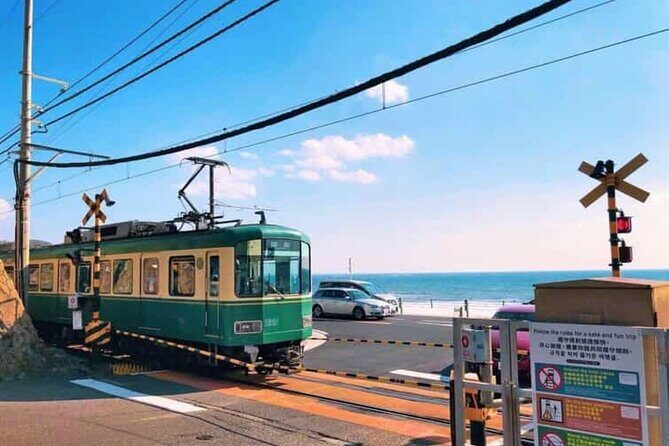
Enoshima Island is where the day turns coastal. From here, you’re dealing with seaside scenery and the kind of street energy that makes you want to wander without rushing. On clear days, you can even get breathtaking views of Mt. Fuji in the distance—one reason many people schedule Enoshima with hope in their heart and a weather app open.
Your time allocation is about one hour, and admission for the Enoshima Island stop is listed as free. That’s great value: the “entry fee” is basically your time and your walking shoes.
What I’d pay attention to here:
- If it’s clear, plan your viewing moments. Fuji views can be a quick window.
- If it’s cloudy, treat Enoshima as a place to enjoy sea air, shrines, and the lively streets anyway. The ocean doesn’t require a perfect postcard to be worth it.
Also, this is a day where good weather matters. If the conditions aren’t right, your comfort level changes fast—especially if you’re switching between sun and wind. This tour is marketed as requiring good weather, so if your calendar is flexible, you’re making a smart choice by choosing a date that looks promising.
Yokohama Chinatown and Sankeien Gardens: the perfect contrast after the coast
Once the coastal part of the day settles, the itinerary pivots to two very different Yokohama experiences. That contrast is the payoff: temples and ocean in the morning, then food-and-street culture plus curated gardens in the afternoon.
Yokohama Chinatown: a long-established neighborhood
Yokohama Chinatown is about 160 years old. Today, the population is roughly 3,000 to 4,000, with only a few Chinese residents still living there; many people living there are from Guangzhou.
Your stop here is about one hour, and it’s listed as free admission. Translation: you can focus on wandering, snacks, and atmosphere without paying for entry.
If you’re a person who likes eating on the move, this is where your day can turn practical. The tour doesn’t include lunch, so Chinatown can function as a natural place to grab something before you head to Sankeien Gardens—assuming the timing fits your group.
Sankeien Gardens: traditional Japanese garden in Yokohama
Sankeien Gardens (Sankeien) is a traditional Japanese-style garden that opened in 1906. It was designed and built by Tomitaro Hara, whose pseudonym was Sankei Hara, and he was a silk trader.
Your planned time is about one hour, and admission is not included for this stop. If you like gardens, this is a nice way to slow the day further. If you don’t, you still get a classic Japanese setting that’s easy to appreciate with a guide explaining what you’re seeing.
The best part: after temples and the coast, a garden stop helps you reset your senses before the ride back to Tokyo.
Price and value: is $650 per group a good deal?
At $650 per group for up to six people, you’re paying for private comfort plus a full-day route that hits multiple regions. Here’s how that price makes sense.
You’re not just buying a ride. You’re buying:
- a luxury air-conditioned vehicle
- an English-speaking guide and driver
- water bottles and free Wi-Fi
- the included Kotoku-in ticket
- round-trip pickup (where offered), which saves real time and stress
The trade-off is that you’ll pay extra for several things that are not included—especially entrance fees at Hase-dera, Tsurugaoka Hachimangu, Hokoku-ji, and Sankeien Gardens, plus lunch. So your true cost becomes: tour fee + site fees + meals.
When this becomes great value:
- You have a group of two to six and want the flexibility to slow down.
- You care about context (history, culture, what you’re looking at) and don’t want to figure it out alone.
- You want a smooth day with pickup and an English guide handling navigation.
When it might feel expensive:
- If you’re traveling solo or as a couple and don’t want to pay for private transport.
- If you’d rather go cheaper and control everything via public transit, where the route can be done independently.
The tour is often booked about 68 days in advance on average, which tells me demand is steady. If you have a specific week in mind, book earlier so you’re less likely to end up with a weaker date.
What a great guide does on a day like this: Mukarram Muhammad’s style
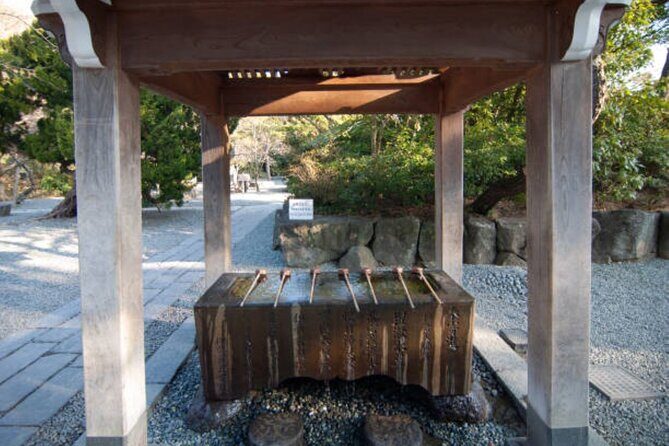
The strongest theme in feedback is how the guide works with the group. Mukarram Muhammad comes up repeatedly as professional, organized, and responsive during communication before the trip. On the day, the big practical difference is pacing: you’re not rushed. The guide also uses walking and guiding to keep the experience educational and fun, instead of just dropping you at gates.
Flexibility is another standout. One account describes the guide adjusting the visit to match how the group wanted the day to feel. That matters with an itinerary like this, because some people want longer at photos and views, while others want more time for the garden or a relaxed tea stop.
Weather handling shows up too. There’s evidence that even on a rainy day, the plan still hits the promised locations. Since Enoshima views can depend on the sky, this kind of on-the-ground adaptation is a real quality signal.
Timing and practical tips for an 8–10 hour private day
This is an 8–10 hour plan, so the “how” matters as much as the “where.” Even with private service, you’re still dealing with travel time plus about an hour at each major stop. The upside: the structure keeps you from losing the whole day to wandering.
Here’s how I’d prepare so you enjoy it instead of just getting through it:
- Wear comfortable shoes. You’re walking through multiple temple/shrine areas plus Enoshima streets.
- Bring small cash or a card for entrance fees and meals since lunch and many tickets aren’t included.
- If clear skies are forecast, aim to prioritize your Enoshima viewing moments for Fuji-style views.
- Use the included water bottles and free Wi-Fi to keep your phone charged and your group coordinated.
Also, plan your lunch approach. Lunch isn’t included, and the route includes free stops at Chinatown and Enoshima, which can make meal timing easier. If you’d rather have a sit-down meal, you can often build that with your guide’s help, but it’s outside the tour’s included items.
Should you book this Kamakura and Enoshima private tour?
Yes, if you want a calm, high-effort day without the stress of logistics. This works especially well for couples, small families, and small groups who want value in the form of private pickup, a luxury vehicle, and a guide who can explain what you’re seeing as you move through Kotoku-in, Hase-dera, Tsurugaoka Hachimangu, Hokoku-ji, Enoshima, Yokohama Chinatown, and Sankeien Gardens.
Hold off or rethink if you’re trying to keep costs ultra-low or if you dislike paying extra for entrance fees and meals. Also, if your travel dates are often rainy, you may want backup flexibility, since the tour requires good weather and may be rescheduled or refunded if conditions fail.
If you’re choosing just one day trip from Tokyo that mixes temples, sea views, and a Yokohama palate shift, this is a strong choice.
FAQ
How long is the Kamakura and Enoshima private tour?
It runs about 8 to 10 hours.
What’s the price for this tour?
The price is $650 per group for up to 6 people.
Is the tour private or shared?
It’s a private tour. Only your group participates.
Do you offer hotel pickup and tickets?
Pickup is offered, and the tour includes a mobile ticket.
Is the guide English-speaking?
Yes, there is an English-speaking pro guide and driver.
Are entrance fees included?
Entrance fees are not included in general. Kotoku-in (Great Buddha) admission is included, while Hase-dera and Sankeien Gardens are not included. Enoshima and Yokohama Chinatown stops are listed as free.
Is lunch included?
No, lunch is not included.
Is Wi-Fi available during the tour?
Yes, there is free Wi-Fi.
Does the tour require good weather?
Yes. If it’s canceled due to poor weather, you’ll be offered a different date or a full refund.
What is the cancellation policy?
Free cancellation is available up to 24 hours in advance for a full refund. If you cancel less than 24 hours before the start time, the amount paid is not refunded.
More Tours in Tokyo




More Tour Reviews in Tokyo




More Days by the Great Buddha
Fresh reviews from around Tokyo






Kamakura Day Trips, compared.
 ★ 4.5Kamakura & Enoshima Day Trip including Temple TicketsFrom $581,375 reviews
 ★ 4.5From Tokyo: Kamakura & Enoshima 1-Day Bus TourFrom $66189 reviews
 ★ 5.0Kamakura Historical Walking Tour with the Great BuddhaFrom $98129 reviews
Kamakura Private Tour: Temples, Nature, and the Great BuddhaFrom $98121 reviews
Kamakura Walking Tour – The City of ShogunFrom $35100 reviews
★ 5.0Kamakura Historical Walking Tour with the Great BuddhaFrom $98129 reviews
Kamakura Private Tour: Temples, Nature, and the Great BuddhaFrom $98121 reviews
Kamakura Walking Tour – The City of ShogunFrom $35100 reviews
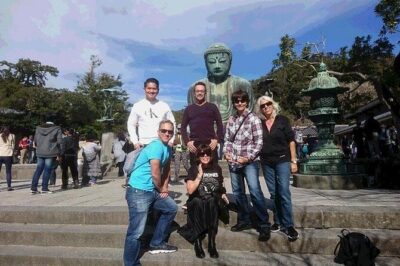 ★ 5.0Kamakura 8 hr Private Walking Tour with Licensed Guide from TokyoFrom $20180 reviews
 ★ 4.1Kamakura & Enoshima Day Tour with Pickup & Train RideFrom $1361 reviews
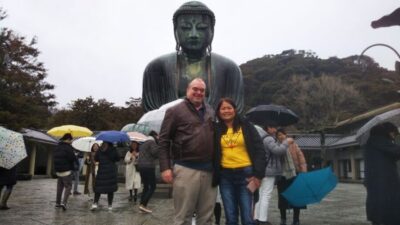 ★ 4.8Kamakura: Private Guided Walking Tour with Local GuideFrom $10660 reviews
Browse the lists this tour appears in