
Reviewed · KAMAKURA DAY TRIPS
From Tokyo Kamakura, Hachimangu Shrine and Enoshima Full Day Tour
Kamakura and Enoshima, neatly packed. This full-day tour strings together the big sights in Kamakura and Enoshima with transportation handled for you, plus commentary in multiple languages. I like that you get the classic temples and coastal views without spending the day tracing train routes on your phone.
My two favorite parts are practical and simple. I love that the Enoshima Electric Railway (Enoden) ticket is included, so you can ride the little coastal train as part of the plan, not as a separate chore. I also like how the guide keeps the day moving—guides such as Alex, Allan Tan, Peter, Leonard, Chow, and others are repeatedly praised for clear explanations and smooth timing, including help with photo angles at the most popular spots.
One drawback to consider: expect walking plus heat/crowds on peak days. The Enoden train and the shrine areas can feel packed, and shade can be limited, so bring water and plan for a steady pace. On weekends and holidays, traffic can delay the return past 8 p.m., and visit times may get shortened or adjusted—so don’t schedule anything tight afterward.
In This Review
- Key things that make this tour worth your time
- A day that links Tokyo convenience with coastal calm
- How the day flows: the itinerary in human terms
- Kotoku-in Great Buddha: a big first impression (but plan for the ticket)
- Hase Station and the Enoden train ride: the slow coastal break
- Enoshima Island: shrines, statues, and a lot of walking time
- Tsurugaoka Hachimangu: samurai-era spirit in the center of Kamakura
- Komachi Street: old-school browsing and easy people-watching
- Guides and pacing: why this tour feels easier than DIY
- Value for money: what you’re really paying for
- Who this tour fits best
- Quick packing tips that matter on this route
- Should you book this Kamakura and Enoshima full-day tour?
- FAQ
- What is the duration of the Tokyo Kamakura and Enoshima full-day tour?
- How much does the tour cost?
- Is lunch included?
- Which admission tickets are included or not included?
- Does the tour include the Enoden train ride?
- What languages will the tour guide speak?
- How big is the group?
- Where do you pick up and drop off?
- What happens if there’s weekend or holiday traffic?
Key things that make this tour worth your time
- Enoden is handled for you with a ticket included, turning the transit into part of the sightseeing
- Air-conditioned transport and multi-language guiding reduce the usual Tokyo logistics headache
- You hit major stops in one day: Great Buddha, Enoshima Island, Hachimangu Shrine, and Komachi Street
- Most major admission costs are controlled: Hachimangu is included, Enoshima island sites are free, while Kotoku-in is not
- Group size is capped at 40, which keeps the pacing more manageable than some mega-bus tours
More escapes to the Great Buddha and the coast
- Kamakura 8 hr Private Walking Tour with Licensed Guide from Tokyo★ 5.0 · 80 reviews
- Tokyo: Kamakura & Enoshima Day Tour with Pickup & Train Ride★ 4.1 · 61 reviews
- Kamakura Private & Customizable Tour – All-in-One Experience★ 5.0 · 49 reviews
A day that links Tokyo convenience with coastal calm
This is the kind of day trip that works because it matches how you actually travel. Tokyo is fast and dense, but once you get to Kamakura, the pace slows. You trade crowds-in-streets energy for temples, sea air, and old-town wandering on the coast.
The tour runs about 10 hours and uses an air-conditioned vehicle for the driving portions, which matters in summer or when the weather flips. You also get pickup and drop-off at designated points, which is huge if you’re trying to avoid the time sink of figuring out the exact train transfers yourself.
You’re not just riding around. You’re stopping at the main “I came here for this” sights: Kotoku-in’s Great Buddha, Enoshima Island’s shrine areas, Tsurugaoka Hachimangu Shrine, and Komachi Street’s shopping-and-snack stretch. Add the Enoden train ride, and you get both city-to-coast logistics and a slice of classic local travel.
How the day flows: the itinerary in human terms
This tour is built like a moving checklist—efficient, yes, but with enough time to actually enjoy each stop instead of just taking a quick photo and sprinting.
You’ll start in Kamakura with Kotoku-in and the Great Buddha, then continue toward the Hase Station area to take the Enoden train ride. After that, you spend time on Enoshima Island, walk around the shrine zone, and then head back for Tsurugaoka Hachimangu Shrine. The last part of the day is Komachi Street, a lively old street that makes a perfect “wrap-up stroll” before heading back to Tokyo.
It’s a shared group tour (maximum 40 people) with a guide in English, Mandarin, and Japanese. That matters because the best part of a day trip isn’t just seeing places—it’s understanding what you’re looking at while you’re there.
Kotoku-in Great Buddha: a big first impression (but plan for the ticket)
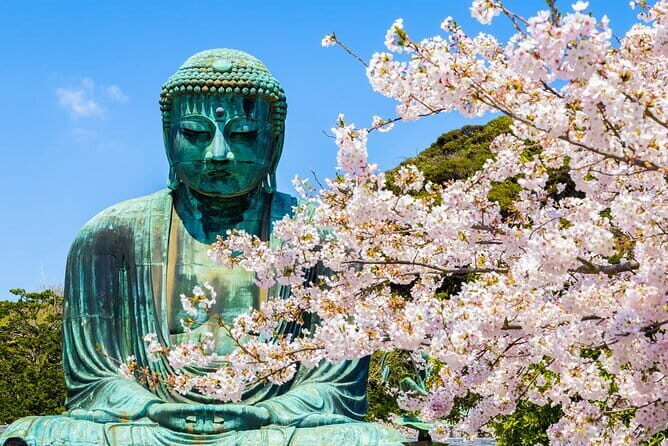
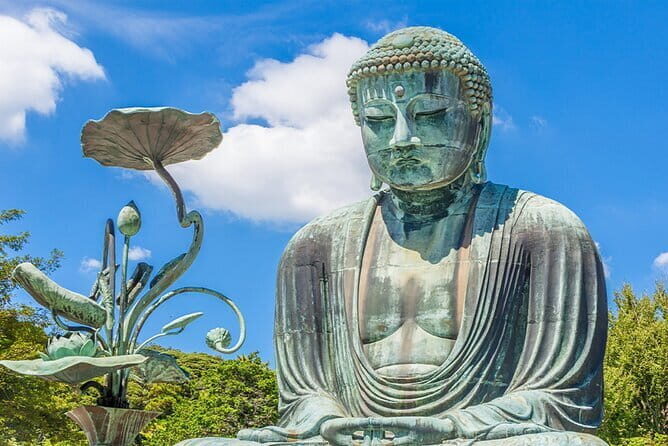
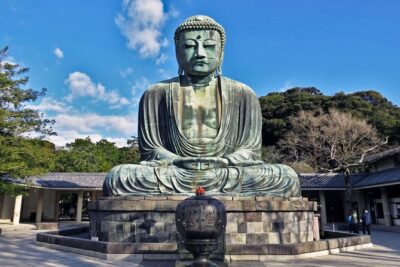
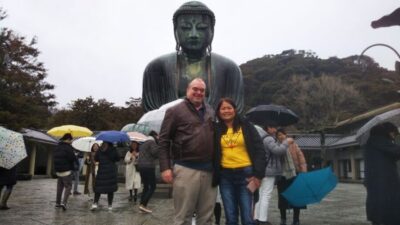
Kotoku-in is your opening hit. You’ll spend about 30 minutes here, starting with the Great Buddha statue. The statue is bronze and towering (13.35m tall), so even if you only have a short stop, the scale does the heavy lifting. This is one of those places where you feel like the photo is never truly big enough—up close it’s just… giant.
One practical note: the Kotoku-in admission ticket is not included. The tour is still good value overall, but it’s worth mentally budgeting for that one entry. Also, because your time is short, it’s smart to move with purpose—look at the main Buddha first, then take a slower lap if you have it in you.
If you hate rushing, you may wish you had more time here. But as a first stop on a packed day, it’s a strong opener.
Hase Station and the Enoden train ride: the slow coastal break
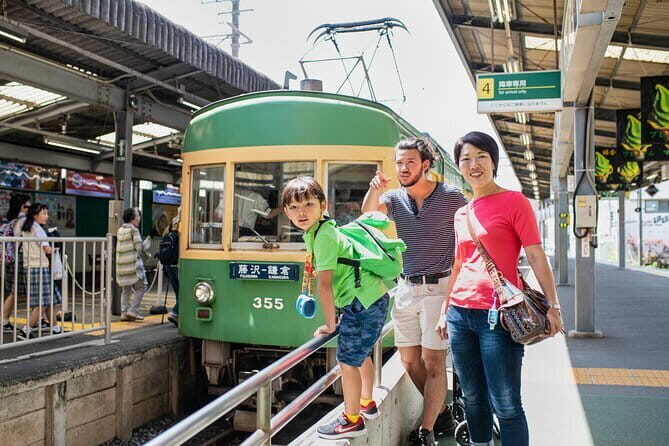
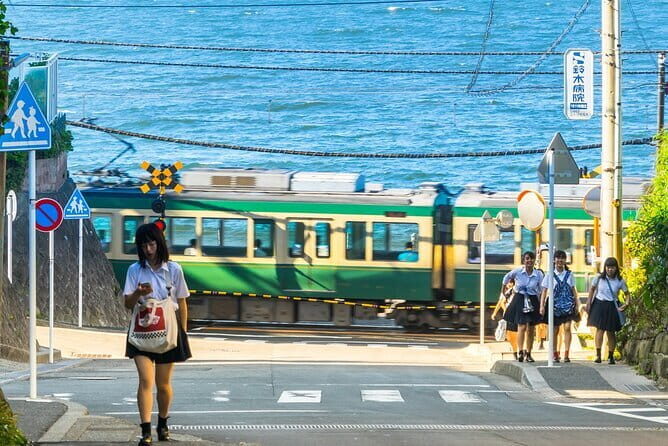
After Kotoku-in, you head to Hase Station for a ride on the Enoden train. This is one of the tour’s standout moments because it’s not just transport—it’s part of the experience. The Enoden has been running for more than 100 years, and the route cuts along the Shonan coast.
Your stop time here is about 40 minutes, and the admission ticket for the train is included. Translation: you don’t need to hunt for the right ticket, and you can relax into the ride.
Here’s the reality check: the train can get crowded, especially around peak periods. If you’re sensitive to crowds, treat this as your “endure calmly” moment. Bring water, keep your expectations flexible, and focus on the scenery outside the windows rather than squeezing for the perfect seat.
Worth weighing up alongside this Tokyo pick:


Enoshima Island: shrines, statues, and a lot of walking time
Enoshima Island is where the tour turns from “checklist sightseeing” into “exploration.” Your time here is about 1 hour 50 minutes, and the admission at this stop is listed as free. That’s a big deal for value: you’re paying for the tour day, not paying repeatedly once you’re on the island.
You’ll spend time around Enoshima’s shrine areas, including Enoshima Shrine, said to have been built in 552. You’ll also see the wooden colorful 8-armed seated Benzaiten statue. If you like details, this stop delivers—there are multiple points of interest, including items such as the Happo tortoise mentioned in the tour description and other shrine features.
The best way to enjoy Enoshima within a day is to go with the flow:
- Expect steps and short walks between spots
- Plan to pause for views when you can
- Use your time to enjoy the shrine atmosphere, not just the most famous postcard angles
Also, because shade can be limited (and this area involves walking), it’s wise to bring water and wear shoes you can trust. This isn’t the best tour if you want a mostly sit-and-watch day.
Tsurugaoka Hachimangu: samurai-era spirit in the center of Kamakura
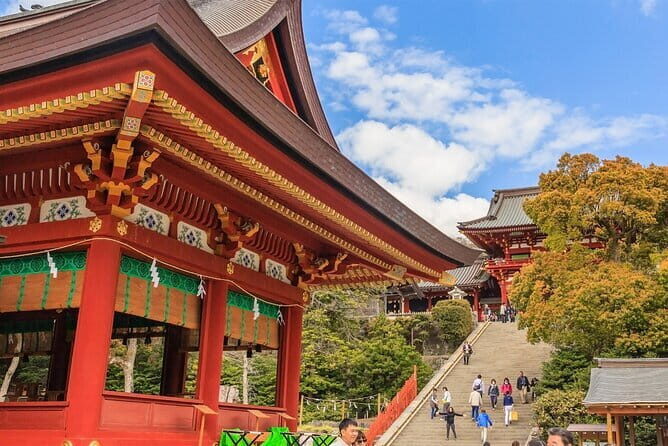
Then you shift into a different mood at Tsurugaoka Hachimangu Shrine. Your stop here is about 40 minutes, and the admission ticket is included.
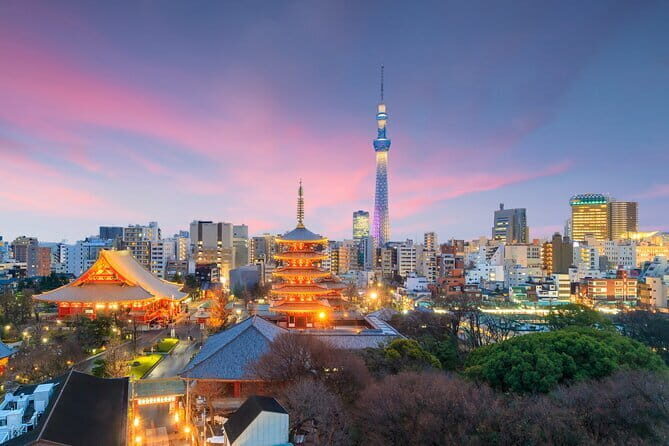
This is one of Kamakura’s key Shinto shrines, and the tour focuses on the big visual elements: majestic torii gates and beautiful gardens. It also frames the shrine as connected to samurai heritage and prosperity. Even if you’re not deeply religious, this is the kind of place where the architecture and layout help you understand why it’s a cultural cornerstone.
Because you only have 40 minutes, aim for the main path first, then do any extra wandering if time remains. The guide’s job here is to help you not miss the important parts. Many past guests have praised guides—like Leonard and Allan Tan—for keeping everyone oriented and making the stories click.
Komachi Street: old-school browsing and easy people-watching
The final sightseeing block is Komachi Street, about 30 minutes. This is a lively old street running from Tsurugaoka Hachimangu Shrine to Kamakura Station, and it’s a perfect place to slow down for snacks and browsing.
This stop is listed as free, so you can treat it like your budget-controlled finale: look around, pick up small souvenirs, and eat if you find something that sounds good to you. Lunch is not included on this tour, so Komachi Street is often where the day’s food part happens unless you grab something earlier.
If you have cash, this is a good place to spend it. The tour also suggests bringing cash because some scenic spots and restaurants may only accept cash. I’d follow that advice here rather than relying on cards for every purchase.
Guides and pacing: why this tour feels easier than DIY
A day trip like this lives or dies by pacing. What makes this one work is that you’re not guessing:
- pickup and drop-off are arranged
- a guide handles the order of stops
- you get multi-language explanations
- and you’re on a schedule that fits a 10-hour window
The guide presence is more than narration. In the feedback patterns, guides like Alex, Peter, Allan Tan, Carter, and Chow get singled out for being energetic, funny in a useful way, and attentive to the group’s questions. The best guides also help you take photos at the right angles—so you’re not just standing in the crowd trying to raise your phone over everyone’s heads.
One more timing reality: the tour notes that on weekends and holidays, traffic can delay the return past 8 p.m., and visit times may be adjusted. That’s not ideal, but it’s at least honest. Also, the company covers overtime fees for the guide and driver, which suggests the schedule isn’t just abandoned if delays happen.
Value for money: what you’re really paying for
At $60.62 per person, the big question is what’s included versus what you’ll spend anyway.
Here’s what the tour explicitly includes:
- air-conditioned vehicle
- Enoshima Electric Railway ticket
- tour guide and driver (English, Mandarin, Japanese)
- pickup and drop-off at designated points
- a mobile ticket
What’s not included:
- lunch
- Kotoku-in admission ticket
And what is effectively controlled by the tour:
- Enoshima Island sites are free
- Hachimangu Shrine admission is included
- Komachi Street is free
- Enoden train ticket is included at the Hase Station segment
So your main “extra” cost bucket is lunch and Kotoku-in. If you were to plan this yourself, you’d likely spend time coordinating trains and tickets across areas, and that time is the real currency on a day trip from Tokyo. For many people, paying for transport and routing is what makes the day feel relaxed instead of frantic.
Who this tour fits best
This is a strong fit if you:
- want a structured day trip with transport handled
- like religious/cultural sites and want context while you walk
- don’t want to spend half your day figuring out transit from Tokyo
- can handle crowds and some walking
It’s also good if you travel solo, since you’re not stuck doing every transfer alone. A shared group tour can also make the day feel safer and easier, especially if your Japanese is basic.
It may not be your best choice if you:
- want lots of free time at each stop
- hate walking in heat
- need the return to be perfectly punctual for a night plan (because weekends/holidays can run late)
Quick packing tips that matter on this route
Based on the tour info and what tends to show up on the ground:
- Wear comfortable shoes for shrine steps and island walking
- Bring water, especially if it’s hot
- Carry some cash for small purchases, since some places may be cash-only
- Have your mobile ticket ready on your phone
- Bring a light layer if you’re moving between sun and cooler vehicle air-conditioning
This isn’t a tour where you want to be hunting for an ATM while everyone else waits.
Should you book this Kamakura and Enoshima full-day tour?
I’d book it if you want the highlights of Kamakura and Enoshima in a single, guided day with transportation handled and one classic rail ride included. The value improves when you compare what’s included (vehicle, guide, Enoden ticket, key shrine admission) against what usually becomes an extra cost on your own.
Pass if you’re trying to keep the day extremely relaxed, or if you need an on-the-dot return time for evening plans. Also, if crowds and heat stress you out, choose a day with lower demand or be prepared with water and pacing.
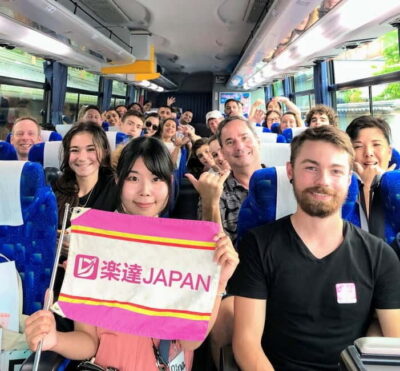
If you do book, aim to arrive early at your pickup and follow the guide’s lead—guides hold a yellow flag with the Gogoday logo at the meeting point, and being there 15 minutes early makes everything smoother.
FAQ
What is the duration of the Tokyo Kamakura and Enoshima full-day tour?
The tour runs for about 10 hours.
How much does the tour cost?
The price is $60.62 per person.
Is lunch included?
No, lunch is not included.
Which admission tickets are included or not included?
Kotoku-in admission ticket is not included. The Enoden train segment at Hase Station and Tsurugaoka Hachimangu Shrine are included. Enoshima Island is listed as free for admission.
Does the tour include the Enoden train ride?
Yes. The Enoshima Electric Railway (Enoden) ticket is included, and you ride during the Hase Station stop.
What languages will the tour guide speak?
The guide provides explanations in English, Mandarin, and Japanese.
How big is the group?
The tour has a maximum of 40 travelers.
Where do you pick up and drop off?
You can choose from designated pickup points, and pickup is available around Tokyo/Shinjuku. Drop-off is also provided at designated points.
What happens if there’s weekend or holiday traffic?
Return time may be delayed past 8 p.m., and visit times at attractions may be shortened, adjusted, or canceled. The company covers any overtime fees for the guide and driver.
More Tours in Tokyo






More Tour Reviews in Tokyo




More Days by the Great Buddha
Fresh reviews from around Tokyo






Kamakura Day Trips, compared.
 ★ 4.5Kamakura & Enoshima Day Trip including Temple TicketsFrom $581,375 reviews
 ★ 4.5From Tokyo: Kamakura & Enoshima 1-Day Bus TourFrom $66189 reviews
 ★ 5.0Kamakura Historical Walking Tour with the Great BuddhaFrom $98129 reviews
Kamakura Private Tour: Temples, Nature, and the Great BuddhaFrom $98121 reviews
Kamakura Walking Tour – The City of ShogunFrom $35100 reviews
★ 5.0Kamakura Historical Walking Tour with the Great BuddhaFrom $98129 reviews
Kamakura Private Tour: Temples, Nature, and the Great BuddhaFrom $98121 reviews
Kamakura Walking Tour – The City of ShogunFrom $35100 reviews
 ★ 5.0Kamakura 8 hr Private Walking Tour with Licensed Guide from TokyoFrom $20180 reviews
 ★ 4.1Kamakura & Enoshima Day Tour with Pickup & Train RideFrom $1361 reviews
 ★ 4.8Kamakura: Private Guided Walking Tour with Local GuideFrom $10660 reviews
Browse the lists this tour appears in