
Reviewed · KAMAKURA DAY TRIPS
From Tokyo: Kamakura & Enoshima 1-Day Bus Tour
Kamakura is the calm switch. You get air-conditioned bus time away from Tokyo, then a day built around classic temple-and-shrine stops and payoff Enoshima ocean views. I especially like the way the route keeps moving but still gives you enough room to wander on your own. The main drawback: it’s a long day, and Enoshima can mean serious stairs plus the risk of stress if instructions aren’t clear for your group.
The tour is at its best when the guide is on point. In this program, guides like Omar, Chen, Yuki, and Mitsi San have earned strong praise for friendly pacing and clear direction, plus real context at each stop. You’ll hear English commentary, and on some departures Chinese support may be available too.
One more thing to plan for: no lunch is included. That’s fine if you treat lunch as part of your strategy for timing and where you eat, but it can turn annoying if you arrive late to the places that are open.
In This Review
- Key things I’d focus on before you go
- Why Kamakura and Enoshima in one day makes sense
- Getting from Tokyo: Shinjuku meet-up and the bus mindset
- Tsurugaoka Hachimangu Shrine and Komachi Street: the easiest win
- Kotoku-in and the Great Buddha: short, powerful, and sometimes crowded
- Hase-dera Temple: eleven-headed Kannon and garden calm
- Enoshima Island: the best views, the most steps
- Pace, timing, and the lunch reality
- Guides make the difference: who you’re likely to follow
- Price and value: does $66.05 feel fair
- What to pack and how to avoid getting flustered
- Who this tour suits best (and who might want another option)
- Should you book this Kamakura & Enoshima bus tour?
- FAQ
- How long is the Kamakura & Enoshima 1-Day Bus Tour?
- Where does the tour start and end?
- Is lunch included?
- Which major places does the tour visit?
- Are entrance fees included?
- What languages does the guide provide?
- Do I get a mobile ticket?
- How many people are in the tour?
- Is there a luggage limit?
- What if the minimum group size isn’t reached?
Key things I’d focus on before you go
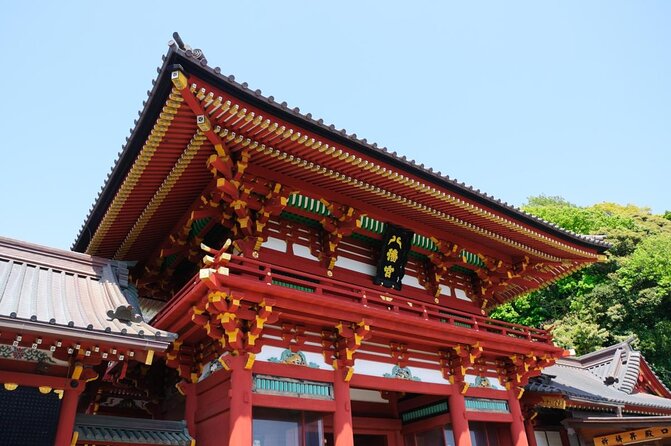
- Real stops, not just bus sightseeing: Tsurugaoka Hachimangu, Kotoku-in (Great Buddha), Hase-dera, and Enoshima are the core anchors.
- Guide commentary that can make or break the day: Multiple guides are praised for history and clarity, while a few experiences highlight how important the guide quality is.
- Free time is built in: You’ll have room to shop near Komachi Street and explore Enoshima on your own.
- Two paid entrances are included: Hase-dera and Kotoku-in entrance fees are covered, which helps the price feel fair.
- Enoshima is the physical part: Shrines, viewpoints, and a cave area can mean a lot of stair climbing and careful meeting-point awareness.
- On-time departure is non-negotiable: The bus leaves on schedule, so you’ll want to be back promptly after each free-walk segment.
Why Kamakura and Enoshima in one day makes sense
Kamakura has that rare feel of being close to Tokyo yet not trapped by it. The place is all about shrines, old temple grounds, and seaside energy—so you’re not just sightseeing buildings. You’re stepping into a different rhythm of Japan: early morning shrine atmosphere, street snacks, then a coastal island finish.
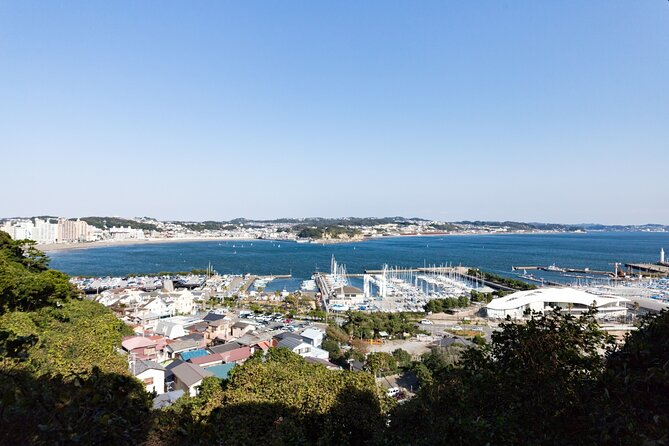
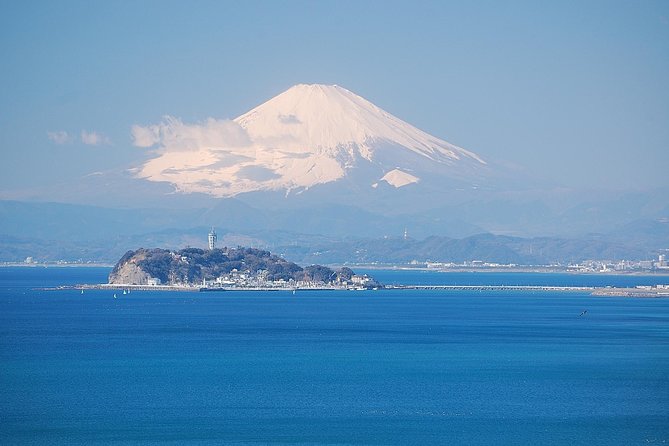
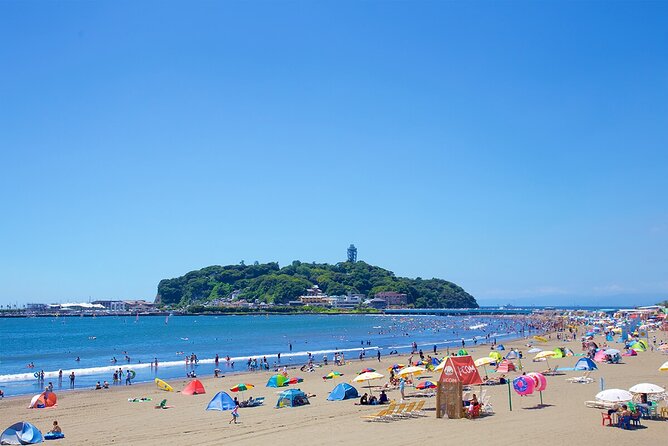
Enoshima is the payoff. It’s small, but it packs viewpoints and shrine stops, and on clear days you can even see Mt. Fuji in the distance. That matters because a day trip can easily become four short stops where you don’t actually get a sense of place. Here, the last portion gives you that “I get it now” feeling—especially if you’re the type who likes walking a bit and looking out over water.
Getting from Tokyo: Shinjuku meet-up and the bus mindset
Your start point is Shinjuku Post Office (Nishishinjuku). The tour uses centrally located pickup options for flexibility, but the end point is near Shinjuku Station (West Exit), and the bus won’t loop back to Ikebukuro.
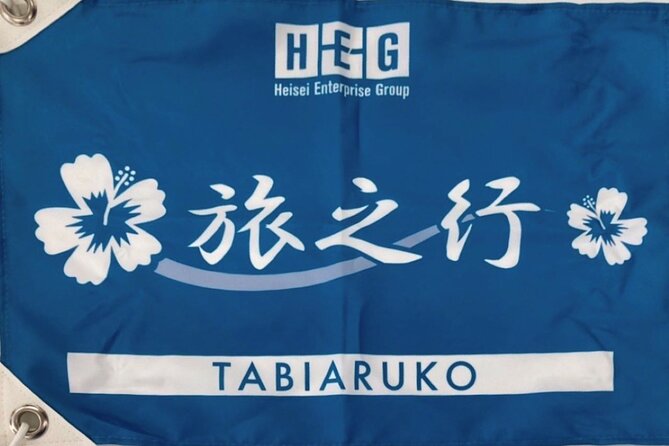
This matters because your whole day depends on being at the right spot early. The tour specifically asks you to arrive about 10 minutes before departure and look for the guide holding a pale blue flag. If you’re late or at the wrong meeting point, refunds may not be issued—so treat this like a train departure, not a casual pickup.
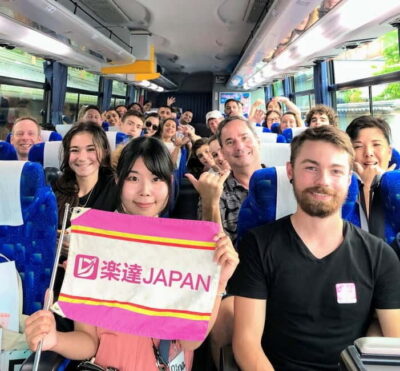
Once you’re on board, you’re riding in an air-conditioned vehicle, and the group size can be up to 90 travelers. That’s big enough that you should expect some crowd energy, but small enough that a guide can still manage the flow between stops. Some buses used in this type of departure have been described as modern with a USB charging port, which is a nice bonus if you’re relying on your phone for maps.
Tsurugaoka Hachimangu Shrine and Komachi Street: the easiest win
The first stop is Tsurugaoka Hachimangu Shrine, Kamakura’s main shrine and a spiritual center. The approach starts with the grand torii gate and opens into calm grounds with ponds—ideal for slowing down after the Tokyo start. Even if you’re not a shrine expert, this is a great place to get oriented to Kamakura’s vibe quickly.
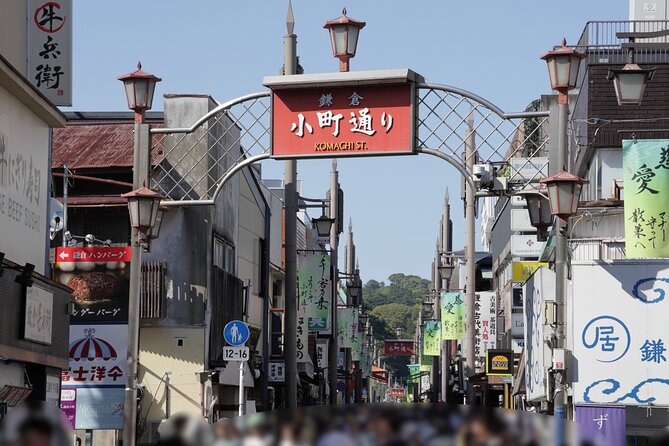
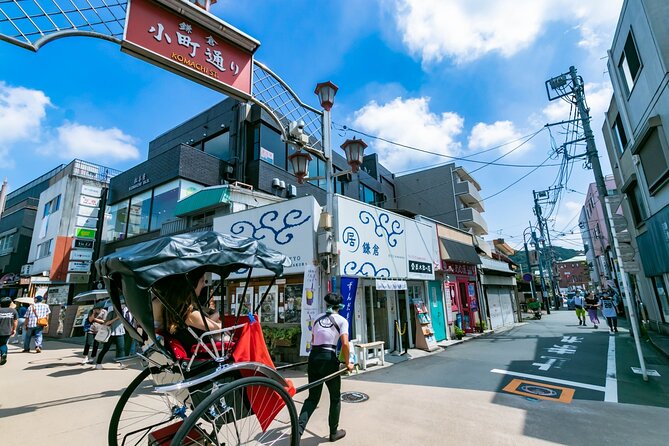
Then you get Komachi Street time. This is where the day becomes fun in a different way: snack hunting, Kamakura-only souvenirs, and handmade craft stalls. I like this segment because it isn’t just shopping—it’s a feel test for whether you enjoy local lanes and casual browsing. If you do, you’ll feel better about spending money here rather than chasing souvenirs later when you’re tired.
Possible consideration: this area can be busy, especially near the main shrine flow. Also, your free-walk habits matter. If you drift too far from the reunion point, you risk losing time later—so take a quick look at where the group will likely gather.
Kotoku-in and the Great Buddha: short, powerful, and sometimes crowded
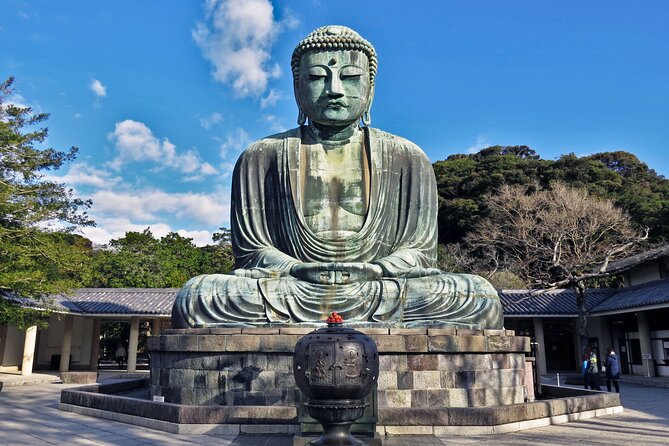
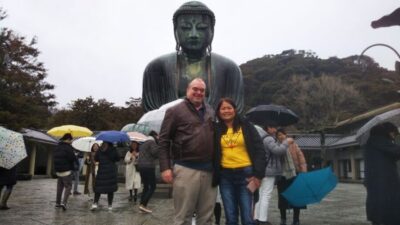
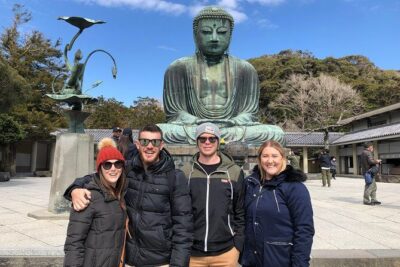
Next is Kotoku-in, home to the Great Buddha of Kamakura. The stop is about 30 minutes, and entrance is included. That’s brief, but it’s also realistic: you’ll get the main view and enough time to absorb the open-sky atmosphere without spending half your day in one spot.
What makes this stop worth it is the scale and setting. This isn’t a museum piece behind glass; it’s a bronze Amida Buddha in the open air, and it’s described as a national treasure. Standing back and looking up gives you that instant “this is why people come” reaction.
The drawback is timing and crowding. One reviewer mentioned that the Giant Buddha area was so busy they couldn’t complete a goishun due to wait time. So if you’re hoping to do anything that takes extra time at the Great Buddha, build in a little patience.
Hase-dera Temple: eleven-headed Kannon and garden calm
Hase-dera is where the tour shifts from bronze statue wow-factor to spiritual art and landscape-style temple scenery (not the city kind). The visit is about 50 minutes, and entrance is included.
The headline here is the eleven-headed statue of Kannon, the Goddess of Mercy. It’s one of the largest of its kind in Japan, and it’s presented as a major reason people come to Hase-dera. You’re also in a temple layout with landscaped grounds and an atmosphere that feels slower than the shopping streets.
Practical note: even when the time is generous, temple grounds often involve walking paths and some elevation. If you’re someone who needs frequent breaks, this is a stop to plan a steady pace. If you rush, you’ll miss the details that make it feel special.
Enoshima Island: the best views, the most steps
Enoshima is the final stop and the portion where the day often feels most rewarding. You get about 2 hours, and while it’s listed as admission-free, the island includes shrine complexes and viewpoint areas.
The big spiritual anchor is the shrine complex dedicated to Benzaiten, the goddess of music, wealth, and wisdom. The shrine setup is described as including multiple shrines, and one pavilion is said to date back to the Muromachi period. That adds a layer beyond just looking at scenery—you’re moving through a place with old roots.
You’ll also likely notice a mix of old and modern: a lighthouse observatory area in Samuel Cocking Garden, described as reopened after renovations on April 29, 2003. The lighthouse’s height is given as 59.8m (and a higher sea-level reference point), which hints at why the island has such strong panoramic views potential.
One reality check: Enoshima can be physically demanding. A few people noted stairs and navigation challenges, including a case where someone reported roughly 600 stairs up and down and stress finding the bus afterward in rain and darkness. Even if you don’t experience that exact level of walking, it’s smart to assume Enoshima is the part where you earn your ocean views.
And yes, there’s also shopping. A narrow souvenir street near a bronze torii gives you food and shop options, which is useful if you want to turn the island walk into a small tasting session.
Pace, timing, and the lunch reality
This tour is designed as a full-day loop: Tokyo departure, four major stops, then return to Shinjuku. Reviews show that the pacing is often described as well-paced and relaxing, with clear instructions and enough time to explore.
But the same reviews also highlight two timing problems you should anticipate:
- Lunch can be tricky on Enoshima. One experience described a route change due to a traffic accident, leading to lunch around 11am when many places were not open.
- Traffic can make the return long. Another common theme is that the drive back takes longer due to Tokyo-area traffic, meaning you’ll want to settle in for bus time.
My advice is simple: treat lunch as your own mini-plan. Pick a flexible attitude. If the first choices look closed, don’t panic. Have a backup in mind—especially on an island where opening hours can be uneven.
Guides make the difference: who you’re likely to follow
One of the most praised aspects of this day trip is guide quality. Names showing up in strong reviews include:
- Omar, praised as friendly and funny, with strong historical knowledge
- Chen, praised for being clear and friendly
- Yuki, praised for caring about the group and quick problem-solving
- Mitsi San, praised for a sweet, easy-going approach with good balance of stories and freedom
- Koji, Mitsuko, and others mentioned as informative and attentive
That means the same itinerary can feel very different depending on the guide and their communication clarity. If you’re choosing the tour for the history component, I’d put extra value on how the guide is described on your specific departure.
On the flip side, a couple of experiences criticized the tour as heavy on logistics with not enough site context. That doesn’t mean the places are wrong—it means your day improves when the guide is actively connecting the dots for you. If you’re someone who loves explanations, arrive ready with questions. If the guide is quieter, you can still enjoy the sites by focusing on what’s in front of you: materials, religious purpose, and the layout of each ground.
Price and value: does $66.05 feel fair
At $66.05 per person, the value depends on what you’d otherwise pay and what you value in a day trip.
Here’s the part that makes the price feel reasonable: the tour includes transport by air-conditioned bus, plus it includes all fees and taxes, and it covers entrance fees for Hase-dera and Kotoku-in. Those admissions alone can help offset the day-trip cost, especially if you’d have to pay them on your own anyway.
Also, the tour’s structure reduces stress. You’re not juggling multiple train transfers, parking, or route planning. If you’re short on time in Tokyo, or you don’t love hopping between stations, that “single organized day” element is worth paying for.
What isn’t included is important: lunch. So the true day cost is the tour price plus whatever you choose to eat. In a long day with shopping streets and island time, that’s normal. Just don’t assume lunch is handled for you.
What to pack and how to avoid getting flustered
Based on the way people describe the day, you’ll enjoy it most if you prep for discomfort points:
- Comfortable shoes. Enoshima is the likely stair-heavy section, and at multiple temple/sanctuary grounds you’ll be walking.
- A plan for meeting points. The bus leaves on time, and finding the bus again can be tricky in rain. So when free time begins, take 10 seconds to note where the gathering area likely is.
- Small bills and coins. Some participants talk about needing coin at the Great Buddha area. Carrying a few coins helps you avoid last-minute friction.
- Charge your phone. If your bus has USB charging, great; if not, you’ll still want battery for maps and photos.
If the day gets rainy, don’t assume the itinerary will slow down. The tour notes that it departs regardless of weather and traffic unless notified otherwise. That’s good for reliability, but it means you should be ready to move through wet conditions.
Who this tour suits best (and who might want another option)
This Kamakura and Enoshima day trip is a strong match if you want:
- a classic sampler of Kamakura shrines plus an ocean-island finish
- a guide to help connect the sites, especially if you like historical context
- a low-planning day from Tokyo, with bus transport doing the heavy lifting
It’s less perfect if you:
- hate long days in a bus
- expect a calm walk with minimal stairs
- need very detailed, step-by-step explanations at every stop and you don’t want any chance of a quieter guide day
Should you book this Kamakura & Enoshima bus tour?
I’d book this if you’re aiming for a first-time visit that hits the core essentials—main shrine, Great Buddha, a major temple, then Enoshima’s views. The price looks fair for the included transport and the two included admissions, and the best part is that you get structured time with free wandering in between.
I’d hesitate if your priority is a fully guided, lecture-style experience at every step, because a couple of experiences pointed out gaps in on-site context. I’d also be cautious if you’re not comfortable with stairs or if you tend to lose time when instructions aren’t crystal clear—Enoshima is the part where that can turn into stress fast.
If you book, do one smart thing: start the day early in your mind. Be on time, stay close to reunion points, and treat lunch and island walking as your own mini adventure. That’s the recipe for turning a long bus day into a memorable change of pace.
FAQ
How long is the Kamakura & Enoshima 1-Day Bus Tour?
It runs about 9 to 10 hours.
Where does the tour start and end?
It starts at Shinjuku Post Office (Nishishinjuku, Tokyo) and ends near Shinjuku Station (West Exit).
Is lunch included?
No, lunch is not included.
Which major places does the tour visit?
You’ll visit Tsurugaoka Hachimangu Shrine, Kotoku-in (Great Buddha of Kamakura), Hase-dera, and Enoshima Island.
Are entrance fees included?
Entrance fees are included for Hase-dera and Kotoku-in. Tsurugaoka Hachimangu Shrine and Enoshima Island are listed as free admission.
What languages does the guide provide?
The tour includes an English/Chinese-speaking guide, with commentary in both languages possibly provided on the same bus.
Do I get a mobile ticket?
Yes, the tour uses a mobile ticket.
How many people are in the tour?
The tour has a maximum of 90 travelers.
Is there a luggage limit?
Yes. You can bring one piece of luggage per person, and items stored in the trunk aren’t accessible between stops.
What if the minimum group size isn’t reached?
The tour may be canceled if the minimum group size of 10 people is not reached, and you’ll be notified about 3 to 4 days before departure.
More Tour Reviews in Kamakura
More Days by the Great Buddha
Kamakura Day Trips, compared.
 ★ 4.5Kamakura & Enoshima Day Trip including Temple TicketsFrom $581,375 reviews
 ★ 5.0Kamakura Historical Walking Tour with the Great BuddhaFrom $98129 reviews
Kamakura Private Tour: Temples, Nature, and the Great BuddhaFrom $98121 reviews
Kamakura Walking Tour – The City of ShogunFrom $35100 reviews
★ 5.0Kamakura Historical Walking Tour with the Great BuddhaFrom $98129 reviews
Kamakura Private Tour: Temples, Nature, and the Great BuddhaFrom $98121 reviews
Kamakura Walking Tour – The City of ShogunFrom $35100 reviews
 ★ 5.0Kamakura 8 hr Private Walking Tour with Licensed Guide from TokyoFrom $20180 reviews
 ★ 4.1Kamakura & Enoshima Day Tour with Pickup & Train RideFrom $1361 reviews
 ★ 4.8Kamakura: Private Guided Walking Tour with Local GuideFrom $10660 reviews
 ★ 5.0Kamakura 4hr Private Trip with Government-Licensed GuideFrom $10858 reviews
Browse the lists this tour appears in