
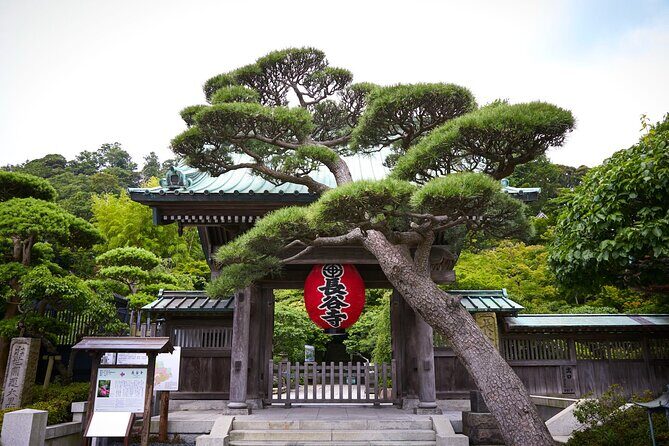
Reviewed · KAMAKURA DAY TRIPS
Private Car Tour to see Highlights of Kamakura, Enoshima, Yokohama from Tokyo
Kamakura, Enoshima, and Yokohama feel like three trips in one. This private day is built around samurai-era temples and real local rhythms, plus a smooth car ride that saves you the timing headache. I especially like the customizable flow and the chance to pause for matcha in bamboo country. One thing to factor in: several of the best sights have separate entrance fees, so your final spend can climb.
The best part of this kind of tour is how it handles the “Tokyo to west coast” problem: long transit + tight temple schedules. You get pickup and a driver you don’t have to negotiate with, and your day is paced to fit your interests rather than forcing a rigid checklist. Still, it’s a 10-hour day, so if you want a slow, low-walking day with lots of free time, you’ll want to request fewer stops upfront.
In This Review
- Key Highlights You’ll Care About
- How This Private Car Day Gets You From Tokyo to Three Different Vibes
- Price and Logistics: What You’re Paying For (Besides a Car)
- Kotoku-in Great Buddha: The Open-Air Statue That Anchors Kamakura
- Hokoku-ji Bamboo Grove: Matcha With a View
- Hasedera Temple: Flowers Through the Seasons Plus a Major Kannon Statue
- Tsurugaoka Hachimangu and Komachidori: Shrine Power and Snack-Souvenir Time
- The Zen Temple Trio: Kencho-ji, Engaku-ji, and the Chance to Pause
- Kencho-ji
- Engaku-ji
- Meigetsuin and Tokeiji: Hydrangeas, a Circular Window, and a Human Story
- The Money-Washing Shrine and a Slam Dunk Photo Moment
- Enoshima Island: Sea Air, Caves, and Fuji If You Get Lucky
- Yokohama Minato Mirai 21 and the Landmark Tower Sky Garden
- Bay Parks and Traditional Garden Contrast: Sankeien, Yamashita Park, and More
- Sankeien Gardens
- Yamashita Park and Osanbashi area views
- English Garden and a neighborhood history note
- Chinatown and the Food Museum Choices: Cup Noodles and Ramen
- Cup Noodles Museum Yokohama
- Shinyokohama Ramen Museum
- Customization That Actually Matters (and One Watch-Out)
- Seasonal Timing: Bamboo, Blossoms, Hydrangeas, and Weather Reality
- Who Should Book This Tour (and Who Might Prefer Something Else)
- Should You Book This Private Car Tour?
- FAQ
- How long is the Private Car Tour?
- How many people are in a group?
- What’s included in the tour price?
- What costs are not included?
- Can I customize which stops to prioritize?
- Is there a vegetarian option?
- What happens if weather or traffic affects the sites?
Key Highlights You’ll Care About
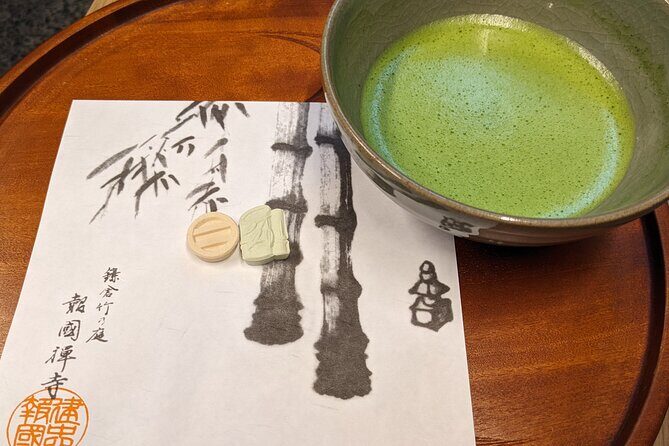
- Local Japanese guides and drivers who tailor the day and keep things moving smoothly
- Kamakura’s top temple-and-shrine cluster without the transit stress
- Seasonal flower targets like hydrangeas, bamboo, and autumn maple, depending on timing
- Enoshima’s mix of nature and attractions, with Mount Fuji possible if skies cooperate
- Yokohama views that change the mood fast, from Minato Mirai to bay parks
- Food-focused add-ons like the Cup Noodles Museum and ramen museum (ticketed)
More escapes to the Great Buddha and the coast
- Kamakura 8 hr Private Walking Tour with Licensed Guide from Tokyo★ 5.0 · 80 reviews
- Tokyo: Kamakura & Enoshima Day Tour with Pickup & Train Ride★ 4.1 · 61 reviews
- Kamakura Private & Customizable Tour – All-in-One Experience★ 5.0 · 49 reviews
How This Private Car Day Gets You From Tokyo to Three Different Vibes
This is a 10-hour private car tour that strings together Kamakura, Enoshima, and central Yokohama. If you’ve felt the frustration of planning a day like this on trains, you’ll appreciate the basic promise: you move when you need to move, and you’re not burning time transferring.
The route makes sense. Kamakura is a classic “temples up close” destination, Enoshima adds a seaside island feel, and Yokohama gives you modern waterfront energy. Review snippets also back up that the drive from Tokyo is usually manageable—think about 1 to 1.5 hours each way depending on traffic and where you’re starting.
Because the itinerary is customizable, you can steer the day. If your family wants more gardens, you can push that direction. If your crew is food-first, you can emphasize the ramen and Cup Noodles-style stops. You’ll see how quickly the day changes when the order shifts from bronze Buddha views to bamboo tea breaks to ocean-side photo moments.
Price and Logistics: What You’re Paying For (Besides a Car)
The price is $1,183.65 per group, up to 8 people. That sounds high until you split it the way this kind of trip usually is—families, friends, or small teams traveling together.
Here’s the value logic:
- If you travel with 2–3 people, you’re paying mostly for convenience and guide attention.
- If you can fill more seats, the cost per person drops sharply, and you’re effectively buying a guided day plus a driver who handles parking and timing.
- Entrance fees and lunch are separate, so the “all-in” spend is the tour price plus what you choose to pay at each site.
Included in the tour price are the practical road costs: air-conditioned private transportation, highway tolls, parking, gasoline, fuel surcharge, and bottled water. There’s also pickup offered, and you’ll get a mobile ticket.
If I had to offer one financial warning: plan for entrance fees at multiple temples/gardens and (if you want them) the Landmark Tower Sky Garden plus the food museums. Even if you skip some ticketed stops, most people end up paying for at least a few.
Kotoku-in Great Buddha: The Open-Air Statue That Anchors Kamakura
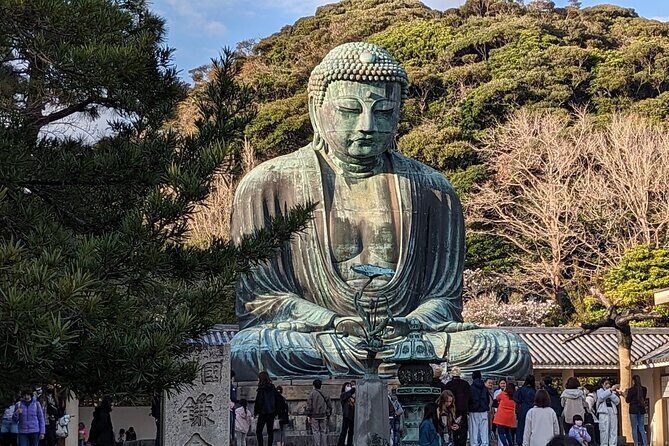
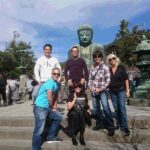
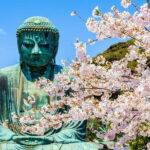
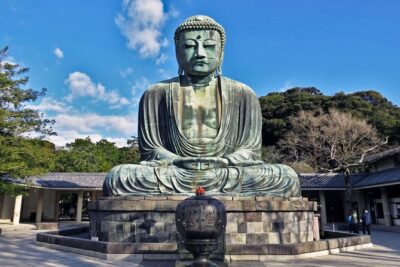
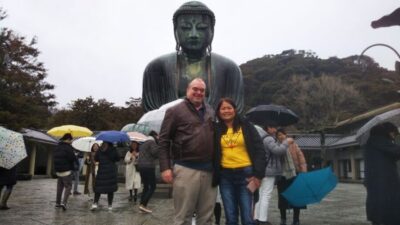
The day starts with Kotoku-in, home to the Great Buddha of Kamakura. This isn’t a museum piece behind glass. It’s an open-air bronze statue of Amida Buddha, measuring 13.5 meters (44 ft.), and it’s noted as the only national treasure in Kamakura.
You’ll get about 30 minutes here, and that time is perfect for photos plus a slow look around the courtyard. There’s also a rare extra: you can enter inside the body of the statue for a small fee (the tour notes 20 yen to enter, with an overall admission fee listed as 200 yen per person). If you like odd details and “only in this place” moments, this is one.
Possible drawback: this stop can be crowdier than the quieter garden-temples later in the day, so if you’re very photo-focused, ask your guide how they want to time it.
Hokoku-ji Bamboo Grove: Matcha With a View
Next up is Hokoku-ji, famous for its bamboo grove. The tour notes it’s rated 3 stars in a Michelin travel guide, which is a useful signal: this isn’t just pretty plants. It’s structured for visitors to slow down and look.
You’ll have around 20 to 60 minutes depending on the pace you set. The standout is the teahouse over the bamboo, where you can enjoy matcha green tea and a Japanese sweet. The admission fee is listed as 600 yen per person, and it’s described as including matcha and sweet.
If you’re traveling with kids or anyone who gets temple-fatigue, this tea break is the “breather” your group will thank you for. It turns a walking-only day into a sensory day—smell the greenery, sip matcha, and take a rest without feeling like you lost time.
One consideration: if you’re not into sweet treats, you might want to confirm what’s included in the tea-and-sweet package before you sit down.
More of the harbour city next door


Hasedera Temple: Flowers Through the Seasons Plus a Major Kannon Statue
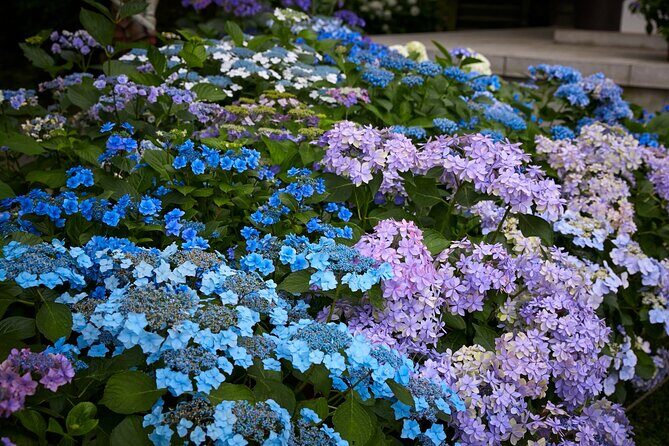
Hasedera is known as a flower temple, and it’s one of those places where the “best season” matters. The tour lists three big flower windows:
- cherry blossoms in spring
- hydrangeas from late May to late June
- maple leaves in autumn
Beyond flowers, the temple is famous for a 9.18-meter-tall gilded wooden eleven-headed statue of Kannon. That combination—big spiritual art plus seasonal plant drama—is why this stop works year-round.
You’ll get 30 to 60 minutes, with an admission fee listed at 400 yen per person. In spring and early summer, you’ll likely feel the crowds. In autumn, you’ll often get calmer, slower walking—if the weather behaves.
Tip: if you’re visiting outside those peak seasons, ask your guide what’s actually looking good that day so you don’t feel like you’re chasing a calendar.
Tsurugaoka Hachimangu and Komachidori: Shrine Power and Snack-Souvenir Time
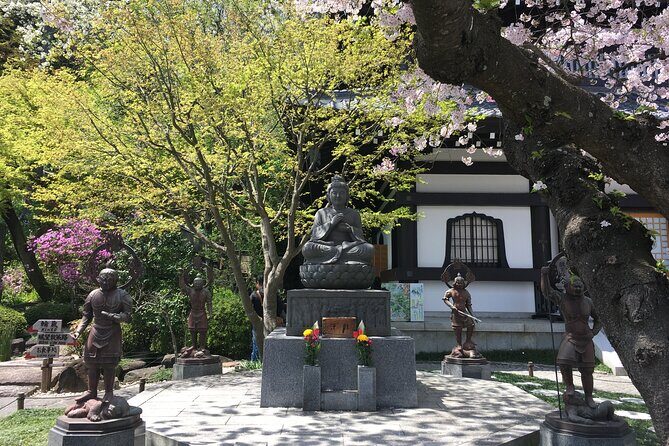
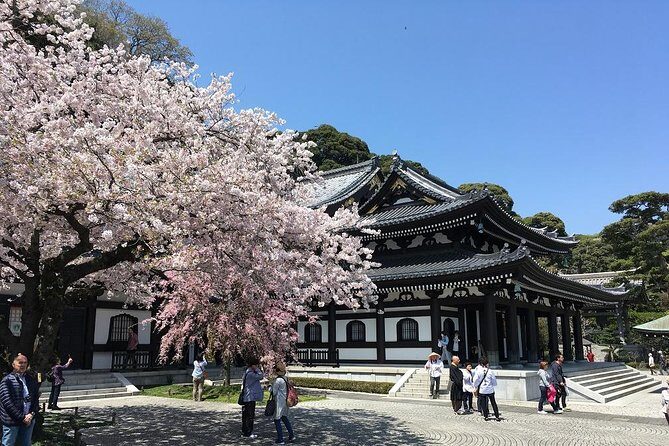
Tsurugaoka Hachimangu Shrine is a Shinto site dedicated to the god of war and samurai in general. The tour also points out it’s a wedding favorite, and it tends to be especially beautiful during cherry blossom or azalea season.
Admission here is free, and you’re typically there 30 to 60 minutes. It’s a good moment to switch from bronze Buddha scale and bamboo quiet into something more ceremonial and people-friendly.
Then you slide into Kamakura Komachidori, a long shopping street near the shrine. You’ll have about 20 to 80 minutes, with free access. This is where you can pick up the classic Kamakura souvenirs, including:
- Kamakura-bori lacquerware
- pigeon-shaped cookies such as those from Toshimaya Hato sable
- bean snacks like Kamakura mameya
If you want a practical strategy: decide first whether you’re buying souvenirs or just browsing. The street is fun, but it’s easy to spend 45 minutes deciding what to take home.
The Zen Temple Trio: Kencho-ji, Engaku-ji, and the Chance to Pause
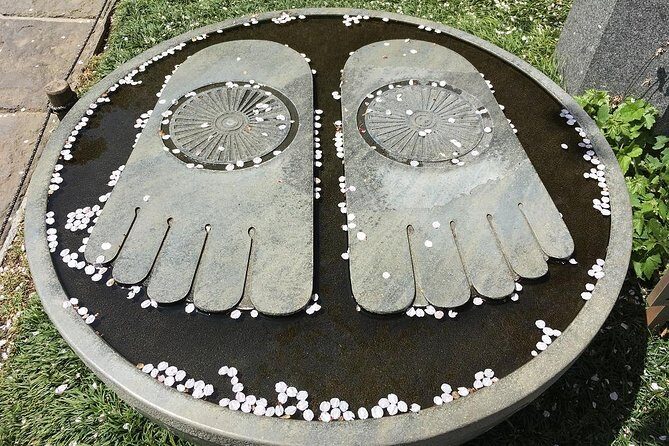
Kamakura’s Zen temples are a big part of what makes the area feel different from Tokyo—less rush, more stillness.
Kencho-ji
Kencho-ji is described as the oldest and highest ranking Zen temple in Kamakura. You can sometimes see meditation practice on certain dates, and there are zen t-shirts available on-site.
Admission is listed at 500 yen per person, with about 30 minutes planned.
Engaku-ji
Engaku-ji is the second important Zen temple mentioned here, known for a large temple gate and bell. It also includes the grave of film director Yasujiro Ozu, which is a nice crossover for cinema lovers.
Admission is listed as 300 yen per person, with 30 minutes planned. The tour also notes there’s a café within the temple compound on certain dates where you can enjoy lunch, sweets, and matcha drinks.
Practical note: if you care about that café option, ask your guide beforehand. It sounds seasonal or date-based.
Meigetsuin and Tokeiji: Hydrangeas, a Circular Window, and a Human Story
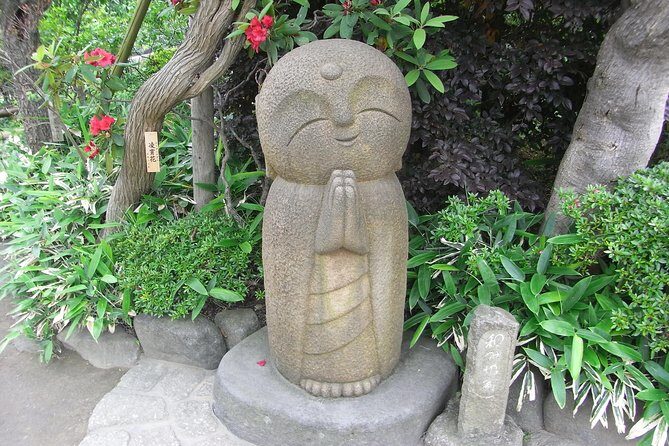
Meigetsuin is often the hydrangea star. The tour says it’s famous for blue hydrangeas from late May to late June. It also points out a very Instagram-friendly detail: people queue to photograph the circular window in the main hall framing the garden behind it.
Admission is listed as 500 yen per person, with 30 minutes planned.
Then comes Tokeiji, a quieter temple with an unexpectedly modern-feeling story. It served as a shelter for women who suffered abuse and sought a divorce at a time when only men could ask for divorce. It’s one of those places where you don’t just see gardens—you feel the weight of the reason the garden exists.
You can enjoy flowers year-round, including plums early spring, iris and climbing hydrangea in June, and gardens stretching back into wooded hills. Admission is listed at 200 yen per person, with about 30 minutes.
This is also where your group’s energy matters. If someone wants constant action, these calmer stops might feel slow. If your group likes meaning and scenery, this is one of the best parts of the whole day.
The Money-Washing Shrine and a Slam Dunk Photo Moment
Zeniarai Benten Shrine is a Shinto spot with a simple belief: washing coins in its holy water is thought to increase income. Admission is listed as free, with about 30 minutes.
Then there’s a fun add-on: a photogenic railroad crossing where the opening sequence of the anime Slam Dunk was used. The tour indicates a short photo stop is possible.
This is the kind of stop that can make a day memorable for families and anime fans. For everyone else, it’s still a nice break from temples—especially if the sea is visible behind the track.
Enoshima Island: Sea Air, Caves, and Fuji If You Get Lucky
After Kamakura, you move to Enoshima Island. The tour frames it as an island full of variety: a shrine, aquarium, botanical garden, observation tower, and caves. It also notes that Mount Fuji can be viewed from various places if the weather permits.
The time here is flexible: you’ll see a range of 30 to 150 minutes, depending on how you’re pacing and what you choose to do. The admission is listed as free.
Practical advice: bring comfortable shoes. Caves and observation areas can mean steps, uneven paths, and some waiting depending on crowd levels.
If the day is clear, Enoshima can feel like a reward after temple-heavy mornings. If it’s cloudy or windy, you’ll still get the seaside atmosphere, but Fuji views may not happen.
Yokohama Minato Mirai 21 and the Landmark Tower Sky Garden
Yokohama is a big mood shift: more city, more waterfront, more modern architecture.
In Minato Mirai 21, the tour highlights key spots like Landmark Tower, Cosmo World, and the Red Brick Warehouses shopping area. You’ll likely spend about 30 to 60 minutes.
Then the Sky Garden at Landmark Tower is the big view payoff. The tour lists it as 273 meters (900 ft.) high, offering panoramic views of the Yokohama bay area and the bay of Tokyo. On clear days, Mount Fuji can also be seen. Admission is listed at 1,000 yen per person, with about 30 minutes.
This is a “pay once, get the view” kind of stop. If the weather is iffy, ask your guide whether you want to prioritize it or swap the time for something lower-key.
Bay Parks and Traditional Garden Contrast: Sankeien, Yamashita Park, and More
Yokohama slows down in a few key places, and that helps the day feel balanced rather than rushed.
Sankeien Gardens
Sankeien is a traditional Japanese garden designed by a wealthy businessman. The tour notes 17 precious buildings transferred from Kyoto and other places, arranged to match the garden’s beauty. Admission is listed at 700 yen per person, with a broader time window of 30 to 90 minutes.
This stop gives you a quieter cultural angle in the middle of a modern city day.
Yamashita Park and Osanbashi area views
Yamashita Park is described as beloved by locals for strolling with coffee, and street performers can appear on weekends. You’ll have a short 10-minute window, with free access.
The Osanbashi Yokohama International Passenger Terminal stop is also about views—especially how it frames the Minato Mirai area. Admission is listed as free, with a 10-minute stop.
English Garden and a neighborhood history note
There’s also Minato-no-mieru Oka Park, described as the English garden and linked to Yokohama’s history as an important international port. The tour lists 10 minutes and free access.
These “small stops” are worth it because they punctuate the city with breathing room. Just don’t expect deep wandering at each one—you’re moving on.
Chinatown and the Food Museum Choices: Cup Noodles and Ramen
If you love Japan’s food culture in a hands-on way, Yokohama can deliver.
The tour indicates that Chinatown is the biggest in Japan, and that you can make a stop or have lunch there upon request.
Two ticketed food-focused museums can follow:
Cup Noodles Museum Yokohama
Run by Nisshin, this museum covers the story of instant noodles and topping ideas, including letting you make your own original noodle and try different worldwide flavors. The tour lists admission at 500 yen per person, with 45 to 90 minutes.
If you’re traveling with kids, this is the stop that turns “learning” into a souvenir you carry home.
Shinyokohama Ramen Museum
If ramen is your religion, this is a must. The tour describes 8 different types of ramen you can enjoy in one place. Admission is listed as 310 yen per person, with about 1 hour planned.
Cost note: both museums have separate admission fees, so treat them like optional upgrades that you choose based on your group.
Customization That Actually Matters (and One Watch-Out)
This tour is sold as fully customizable, and the plan explicitly encourages picking around 4 to 6 sites. That’s an important detail: it means the guide isn’t just shuttling you like cargo. You should use this to shape the day.
From the experience style described in reviews, the most praised parts tend to be:
- guides who adapt to what the group wants
- days that feel not rushed, even on busy holiday periods
- English that’s clear, plus real stories rather than just dates
- drivers who handle comfort and timing so you can focus on sights
Names that come up in feedback include guides like Ken, Kenji, Taisho, Yoshi, Hoshi, Yoshimi, Masae, Sumiko, and Matsashi, with drivers like Tak also mentioned. Multiple reviews also describe the car as comfortable and the team as prompt and friendly.
Here’s the watch-out from the less-perfect feedback: at least one experience involved a guide who felt less prepared for the area, and the day started to feel rushed due to constraints around lunch venue timing and facility reservation windows. The lesson for you is simple: be clear up front about your priorities and pacing. If you want a slower, deeper garden visit, say so before you’re on the road.
Seasonal Timing: Bamboo, Blossoms, Hydrangeas, and Weather Reality
A big reason people like Kamakura and Enoshima is the seasonal feel. This tour is structured to hit some top seasonal targets:
- bamboo calm at Hokoku-ji year-round, with matcha tea as the comfort layer
- cherry blossoms or azaleas at Tsurugaoka
- Hasedera flowers that can be cherry blossoms, hydrangeas, or maples
- Meigetsuin hydrangeas in late May through late June
- Tokeiji flowers from early spring through June
But Japan weather and crowds are real. The schedule can shift due to weather or traffic, and you shouldn’t plan on a single photo idea like it’s guaranteed. Still, it’s not a wasted day. Your guide can usually adjust pacing while keeping the overall spirit of the day intact.
Who Should Book This Tour (and Who Might Prefer Something Else)
This is a strong fit if you:
- want a private car day that covers three areas without transit stress
- care about a mix of temples, gardens, seaside views, and food stops
- are traveling with family members who want different things at different moments
- value a guide who can recommend what to do next rather than just escorting a group
It may not be ideal if you:
- want minimal walking and lots of free time at one location only
- dislike paying multiple separate entrance fees
- prefer a purely self-guided trip where you control every minute without a guide’s structure
Should You Book This Private Car Tour?
Yes, if your goal is efficiency with personality. The combination of Kamakura’s sacred sites, Enoshima’s island energy, and Yokohama’s bay views is exactly the sort of day that works better with a driver and guide than with public transit and a tight timetable.
I’d book this especially if you’re comfortable budgeting for extras: lunch isn’t included, and several highlights are ticketed. If you did every listed paid stop (Great Buddha, bamboo temple tea, major temples, Zen temples, hydrangea temple, Sankeien, Sky Garden, and the food museums), you’d be looking at entrance fees totaling about 5,200 yen per person based on the individual prices provided. You don’t need to do everything to get a great day—you can select the 4 to 6 sites that match your mood.
If you’re deciding right now, my advice is simple: message your top priorities before pickup. Tell the guide whether you want flowers, Zen calm, seaside time, or food-making. With that, this private car tour is a very smart way to see a lot of Japan while still letting the day feel human.
FAQ
How long is the Private Car Tour?
The tour runs for about 10 hours.
How many people are in a group?
It’s a private tour for your group, up to 8 people.
What’s included in the tour price?
The price includes private transportation (air-conditioned vehicle), pickup offered, highway tolls, parking, gasoline and fuel surcharge, and bottled water, plus a mobile ticket.
What costs are not included?
Lunch is not included. Entrance fees are also not included for multiple sites, including Kotoku-in (Great Buddha), Hokoku-ji, Hasedera Temple, Kencho-ji, Engaku-ji, Meigetsuin, Tokeiji, Sankeien Gardens, Yokohama Landmark Tower Sky Garden, Cup Noodles Museum Yokohama, and Shinyokohama Ramen Museum.
Can I customize which stops to prioritize?
Yes. The itinerary is fully customizable, and you can select around 4 to 6 sites. You can ask for advice after booking.
Is there a vegetarian option?
Yes. Vegetarian options are available if you advise your dietary needs at booking.
What happens if weather or traffic affects the sites?
The schedule is subject to change due to weather or traffic. The tour will not be cancelled or refunded even if some spots are not fully visible.
More Tour Reviews in Tokyo






Next Door in Yokohama
More Days by the Great Buddha
Fresh reviews from around Tokyo






Kamakura Day Trips, compared.
 ★ 4.5Kamakura & Enoshima Day Trip including Temple TicketsFrom $581,375 reviews
 ★ 4.5From Tokyo: Kamakura & Enoshima 1-Day Bus TourFrom $66189 reviews
 ★ 5.0Kamakura Historical Walking Tour with the Great BuddhaFrom $98129 reviews
Kamakura Private Tour: Temples, Nature, and the Great BuddhaFrom $98121 reviews
Kamakura Walking Tour – The City of ShogunFrom $35100 reviews
★ 5.0Kamakura Historical Walking Tour with the Great BuddhaFrom $98129 reviews
Kamakura Private Tour: Temples, Nature, and the Great BuddhaFrom $98121 reviews
Kamakura Walking Tour – The City of ShogunFrom $35100 reviews
 ★ 5.0Kamakura 8 hr Private Walking Tour with Licensed Guide from TokyoFrom $20180 reviews
 ★ 4.1Kamakura & Enoshima Day Tour with Pickup & Train RideFrom $1361 reviews
 ★ 4.8Kamakura: Private Guided Walking Tour with Local GuideFrom $10660 reviews
Browse the lists this tour appears in