
You can walk through Kamakura’s shogun-era past in a few hours. This tour links major shrines and temples with real street life, so you’re not stuck just hopping between landmarks. I like how it pairs big-ticket sights with the smaller details, like how today’s customs still show up in shrine and temple culture. I also like the guided pace, where you get to ask questions instead of reading signs like a stress hobby.
One thing to plan for: some places cost extra, and you may pay about 1,200 yen for transportation and admissions on the day. Since it’s a walking tour, good weather matters too. If rain is a big concern, bring a simple rain plan and accept that outdoor time is part of the deal.
In This Review
- Key things I’d circle before you go
- Kamakura’s Shogun-Era Vibe, On Foot
- Meeting Point and the Real Shape of the 3.5 Hours
- Tsurugaoka Hachimangu Shrine: Start With the Big Anchor
- Komachi Street: The Walk Between History and Snacks
- Kotoku-in (Kamakura Great Buddha): The Scale Moment
- Hasedera Temple: Gardens, Quiet, and a Towering Statue
- Price and Value: What You Get for $35 (Plus the Extra Yen)
- Guides Who Keep It Fun and Answerable (Miyu, Midori, Maki)
- Practical Tips So You Don’t Waste Energy
- Should You Book This Kamakura Walking Tour?
- FAQ
- Where does the tour start?
- What time does the tour begin?
- How long is the Kamakura Walking Tour?
- How much does it cost?
- What additional costs should I expect?
- Which admissions are free on the route?
- Are the Great Buddha and Hasedera included in the price?
- What’s included with the tour fee?
- Is there a weather requirement?
- Is free cancellation available?
Key things I’d circle before you go
- Small group size (max 10 travelers) keeps the questions coming and makes the walk feel personal
- Mobile ticket makes day-of logistics easy
- Two major stops are free (Tsurugaoka Hachimangu Shrine and Komachi Street) so you’re not paying at every turn
- Great Buddha (Kotoku-in) and Hasedera are major “wow” moments, but admission isn’t included
- Guide energy and clear explanations stand out in the reviews, especially with guides like Miyu, Midori, and Maki
- Plenty of time to keep exploring after means this is a smart half-day starter
Kamakura’s Shogun-Era Vibe, On Foot
Kamakura has that rare feel where ancient religion, coastal breezes, and everyday shopping all share the same streets. This tour gives you a clean route through the most important anchors—without making you feel like you’re sprinting between them. You walk, you pause, and you learn what each place is really for beyond the postcard.
What makes it work well is the way the guide connects three things:
1) shrine and temple traditions,
2) the art and objects you notice once someone explains what to look for, and
3) the way the city still runs on local rhythms.
Even if you’ve visited Japan before, Kamakura’s blend is its own thing, and getting your bearings fast helps a lot.
Meeting Point and the Real Shape of the 3.5 Hours
The tour starts at 10:00 am at the Kamakura City Tourist Information Center (1-chōme-1-1 Komachi, Kamakura). It ends at Hase Station (2 Chome-14 Hase, Kamakura). That end point is convenient because it’s a natural jump-off for the rest of your day.
The total duration is listed as about 3 hours 30 minutes, and that time feels intentional: enough to hit the headline sights, but not so long that you lose the afternoon. One of the best practical benefits—based on how guides pace the route—is that you finish with suggestions for what to do next, rather than feeling like your day ends the moment the tour ends.
Also, with a maximum of 10 travelers, it’s easier for your guide to keep everyone moving at a comfortable pace and respond when a question pops up (and questions do pop up).
Tsurugaoka Hachimangu Shrine: Start With the Big Anchor
You begin at Tsurugaoka Hachimangu Shrine, and it’s a strong choice to open with. The shrine is historically significant and was founded in the 12th century by Minamoto no Yoritomo. That one detail gives the whole area context—Kamakura wasn’t just a scenic day trip; it was a power center.
What I like about starting here is that it frames how to read the rest of the city. Once you understand that the shrine honors Hachiman (a Shinto god), you start noticing how the shrine setting shapes everything around it: the layout, the reverence, and the reason people slow down.
At this stop, you’ll also see that the tour includes some cultural interpretation, not just sightseeing. The time for this segment is listed at about 30 minutes, and it’s enough to take in the atmosphere without turning it into a lecture marathon.
Practical note: admission is free here, so you can relax and focus on learning and photos.
Komachi Street: The Walk Between History and Snacks
After the shrine, you move into Komachi Street, a pedestrian shopping street in the heart of Kamakura. It’s named after the poet Ono no Komachi, and the naming matters because it hints at the city’s layered history—poetry and culture show up in everyday places too.
This stop is only about 20 minutes, which is perfect for a quick reset. You’re not stuck wandering for an hour. Instead, it’s more like a guided “breather” where you can absorb the energy of the street, grab a small bite if you want, and get a sense of what Kamakura feels like when you’re not in a temple courtyard.
If you’re the type who likes to know what to snack on before you guess, this is where a guide’s suggestions help. The tour overview also emphasizes local cuisine and small food finds, so think of Komachi Street as your first taste of that approach.
Admission is free here, so you’re just paying (or not) for whatever you choose to buy.
Kotoku-in (Kamakura Great Buddha): The Scale Moment
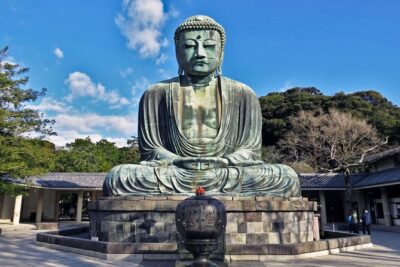
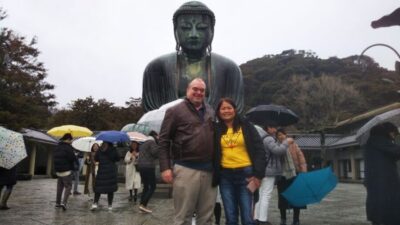
Then comes the main spectacle: Kotoku-in, home to the Kamakura Great Buddha. This is a colossal bronze statue, about 13.35 meters (44 feet) tall. Seeing it in person is the kind of moment where your brain automatically switches from reading to reacting. It’s not subtle, and that’s exactly why it works on a half-day tour.
Admission for this stop is not included, so you’ll want to expect extra cost here. But even with that, it’s good value because this is one of those sights where a guide helps you notice details you’d likely miss on your own—like what the site is communicating through scale and placement.
You’ll have about 30 minutes at this stop, which I find ideal. You get time to view from different angles and still move on while you’re not tired of crowds. And because it’s such a famous image, it’s also easier to compare what you see now with what you thought you understood from photos.
Hasedera Temple: Gardens, Quiet, and a Towering Statue
The tour ends at Hasedera Temple (also known as Hase Kannon Temple). This is one of those places where your pace naturally slows. It’s known for a serene atmosphere, beautiful gardens, and a towering wooden statue of Kannon.
The allotted time is about 40 minutes, and that matters. Gardens need a little breathing room. If you rush through, you miss the calm effect that makes Hasedera feel different from the larger, louder stops.
Admission is not included for this stop either, so again, plan for extra day-of fees. Still, this temple is a great match for a guided walk because the guide can point out what to look for and how the temple’s cultural role connects to the shrine-and-temple themes you heard earlier.
Also, the tour wraps at Hase Station, so you’re not stuck figuring out transportation at the end of your sightseeing. You can head out or keep exploring in the direction that fits your energy level.
Price and Value: What You Get for $35 (Plus the Extra Yen)
The tour costs $35.00 per person, and it includes the guide fee. What’s not included is transportation and admission, listed as 1,200 yen total.
Here’s how I think about the value:
- You’re paying for a structured route through the key sights rather than piecing it together with random timing.
- You’re paying for a guide who can explain what you’re seeing, not just escort you between stops.
- You get a small-group experience (max 10), which reduces waiting and makes it easier to ask questions.
Then there’s the added cost reality:
- Tsurugaoka Hachimangu Shrine and Komachi Street are free.
- Kotoku-in (Great Buddha) and Hasedera are not included in admission.
So the $35 works out best if you want the “I can actually understand this place” part of the day. If you’re the kind of solo traveler who already knows exactly what you want to see and you’re comfortable reading independently, you might feel the yen extras less. But if you want guidance to make your time click, this price is reasonable for what you get.
Guides Who Keep It Fun and Answerable (Miyu, Midori, Maki)
The reviews put a bright spotlight on the guides’ style, and that matters more than people think. This tour doesn’t just promise history; it shows up in how the guides communicate.
I’m especially drawn to patterns like these:
- Miyu is mentioned as engaging and knowledgeable in a way that made the history of the area click, plus she offered extra ideas for the afternoon.
- Midori gets praise for being energetic and personable, sharing clear explanations about both Buddha temples and Shinto shrines, and pointing out fun spots along the way with excellent photo viewing angles.
- Maki is described as pleasant and energetic, with history of Buddha temples and shrine customs explained clearly, and a focus on how modern people carry those traditions forward.
You can tell the guides aim for pacing that keeps families comfortable too—one review calls out that kids enjoyed the whole experience.
And one small but important detail: at least one review highlights riding the Enoden train as part of the day. That’s not a random add-on. It’s a great way to feel like you’re moving through Kamakura with local rhythm rather than just using taxis and walking loops.
Practical Tips So You Don’t Waste Energy
A few things will make your day smoother:
- Wear comfortable shoes. You’ll be walking between shrine/temple areas and street sections, and the weather can change your pace fast.
- Bring a small umbrella or rain layer if forecasts look iffy. The experience notes it requires good weather, and that’s smart for outdoor walking days.
- Budget the extra 1,200 yen for transport and admissions so the day stays calm and predictable.
- Arrive a few minutes early at the Kamakura City Tourist Information Center so you can start on time.
- Since you end at Hase Station, plan your afternoon direction around that. It’s a convenient exit point.
If you’re visiting Kamakura as a day trip from Tokyo, I’d treat this tour as your “first read” of the city. Get the structure now, then you’ll enjoy wandering later instead of constantly checking where to go next.
Should You Book This Kamakura Walking Tour?
Book it if:
- you want a small-group, guided route through Kamakura’s core shrine-and-temple sights,
- you prefer having a guide explain what you’re looking at (instead of guessing from signs),
- you like the idea of finishing with time to explore on your own,
- you’d enjoy a day led by guides like Miyu, Midori, or Maki who are repeatedly praised for clarity and energy.
Consider skipping (or weighing alternatives) if:
- you hate paying extra admissions and transport costs after the headline price,
- you’re traveling when weather looks unreliable,
- you want total freedom with no scheduled stops.
For most people trying to “do Kamakura right” in one half-day block, this tour is a solid fit. It gives you the landmarks, the context, and that helpful sense of what to do after you walk out of the final temple gate.
FAQ
Where does the tour start?
It starts at Kamakura City Tourist Information Center at 1-chōme-1-1 Komachi, Kamakura, Kanagawa 248-0006, Japan.
What time does the tour begin?
The start time is 10:00 am.
How long is the Kamakura Walking Tour?
The duration is about 3 hours 30 minutes.
How much does it cost?
The price is $35.00 per person.
What additional costs should I expect?
Transportation & admission fees are not included and total 1,200 Yen.
Which admissions are free on the route?
Tsurugaoka Hachimangu Shrine and Komachi Street list free admission.
Are the Great Buddha and Hasedera included in the price?
Admission for Kotoku-in (Kamakura Great Buddha) and Hasedera Temple is listed as not included.
What’s included with the tour fee?
The tour includes the tour guide fee.
Is there a weather requirement?
Yes. The experience requires good weather and may be rescheduled or refunded if canceled due to poor weather.
Is free cancellation available?
Yes. You can cancel for a full refund up to 24 hours before the experience’s start time.
Kamakura Day Trips, compared.
 ★ 4.5Kamakura & Enoshima Day Trip including Temple TicketsFrom $581,375 reviews
 ★ 4.5From Tokyo: Kamakura & Enoshima 1-Day Bus TourFrom $66189 reviews
 ★ 5.0Kamakura Historical Walking Tour with the Great BuddhaFrom $98129 reviews
Kamakura Private Tour: Temples, Nature, and the Great BuddhaFrom $98121 reviews
★ 5.0Kamakura Historical Walking Tour with the Great BuddhaFrom $98129 reviews
Kamakura Private Tour: Temples, Nature, and the Great BuddhaFrom $98121 reviews
 ★ 5.0Kamakura 8 hr Private Walking Tour with Licensed Guide from TokyoFrom $20180 reviews
 ★ 4.1Kamakura & Enoshima Day Tour with Pickup & Train RideFrom $1361 reviews
 ★ 4.8Kamakura: Private Guided Walking Tour with Local GuideFrom $10660 reviews
 ★ 5.0Kamakura 4hr Private Trip with Government-Licensed GuideFrom $10858 reviews
Browse the lists this tour appears in