
Kamakura by foot feels like a secret route. This private 5-hour walk trades train-station sightseeing for temples plus nature, starting in the quieter north at Kita-Kamakura and working your way down toward Hase. You’ll hit forest Zen at Jochiji, mountain paths on the Daibutsu hiking lines, shrines tucked into the hills, and end with the Great Buddha and ocean views.
I especially like two things. First, admission is included for three big stops: Jochiji, Kotoku-in (Great Buddha), and Hasedera. Second, your guide turns sites into stories, and I like that because Kamakura is full of overlapping Buddhism and Shinto you can easily miss on your own. Guides like Teiko, Yu, Yumi, Noriko, and Naho come through in the details, with practical etiquette tips and calm pacing when the weather is rough.
One consideration: this is not a flat stroll. You’ll walk at least 5 km, including a mountain pass, so moderate fitness helps, and heat or rain can make it tougher.
In This Review
- Key Highlights You’ll Actually Feel During the Walk
- Why This Kamakura Tour Works in 5 Hours
- Jochiji Temple: Zen in a Forest You Hear Before You See
- The Mountain Pass and Kamakura Hiking Trails: Where the Views Earn You
- Zeniarai Benten Ugafuku Shrine and Sasuke Inari: Legends You Walk Through
- Kotoku-in Great Buddha: The Shock of Scale
- Hasedera Temple and Yuigahama Beach: Ocean Views as Your Reward
- Guide Quality: The Real Value Is How They Shape Your Day
- Price and What’s Included vs. What Costs Extra
- Getting There and Where You End Up: Start North, Finish at Hase
- How Hard Is It Really: Shoes, Heat, and Rain Changes
- Should You Book This Kamakura Private Tour?
- FAQ
- How long is the Kamakura private tour?
- Is this a private tour or a shared group tour?
- What does the tour price include?
- Do I need to buy tickets for the temples?
- Where does the tour start and end?
- How much walking is involved?
- Can I extend the tour if I want more time?
- Is hotel pickup included?
- What if the weather is poor?
- Can the tour be canceled for a full refund?
Key Highlights You’ll Actually Feel During the Walk
- Included temple entry at Jochiji, Kotoku-in, and Hasedera saves time and decision-making.
- Mountain pass hiking connects multiple sites in a way buses can’t mimic.
- Zeniarai Benten Ugafuku Shrine includes a torii-framed hole in the hillside, which makes the route memorable.
- Kotoku-in Great Buddha is massive: about 13.35m tall and around 121 tonnes.
- Hasedera’s ocean views over Yuigahama Beach feel like a payoff after the uphill sections.
- Guides handle the flow in real life, adjusting with rain or crowd levels while keeping the route coherent.
Why This Kamakura Tour Works in 5 Hours
Kamakura can look simple on a map, but the reality is spread out. This tour keeps everything close enough that you don’t waste half your day switching trains and taxis. The route is built like a downhill story: forest temple, hillside trail, shrines with legends, the Great Buddha, then a scenic finish toward the beach.
I also like the private format because it changes how you experience the hills. Your pace matters. Several guides in this program are known for making the day feel like you are being shown local places rather than following a rigid checklist. When conditions shift, like steady rain, the guide can adjust how you move so you still get the core sights.
The price, $98.44 per person for about 5 hours, makes sense when you consider what is included. Three major temples charge admission, and you’re also paying for an English-speaking guide who helps you make sense of the mix of history, rituals, and landscape.
Jochiji Temple: Zen in a Forest You Hear Before You See
Jochiji Temple is a calm start. You’re walking into a quieter pocket surrounded by forest, and that matters because Kamakura’s famous landmarks can be louder later. The temple was built in 1281 by Hojo Tokoyori, a leader of the Kamakura Shogunate, to honor his son who died young. That single detail gives the place an emotional center, not just a pretty setting.
What I like about starting here is how it sets your mindset. Jochiji works best when you slow down for a minute and notice how the grounds guide you. If you’ve been running through Tokyo temples on autopilot, this is the point where the day starts to feel more personal.
Practical tip: wear shoes with real grip. Even when the path is not steep, temple grounds and nearby routes can get slick in humidity or rain.
The Mountain Pass and Kamakura Hiking Trails: Where the Views Earn You
Midway through the tour, you get Kamakura hiking trails around the pass. The time on paper is about 40 minutes, but what you should think about is effort level. This walk is listed for moderate physical fitness, and you’re told you’ll cover at least 5 km total including the pass.
In the reviews, one recurring theme shows up: it’s worth it, but you need to treat it like a hike, not a casual walk. One guest described it as a bit strenuous even in heat around 95°F / 35°C. Another pointed out that on a rainy day, the walking plan may be shortened or rerouted using transit.
So here’s the honest way to plan: bring water, take breaks without guilt, and don’t try to “win” the itinerary. The point is to reach the quieter, more remote shrines and keep the day from feeling like a photo sprint.
Zeniarai Benten Ugafuku Shrine and Sasuke Inari: Legends You Walk Through
After the pass, the route turns into characters and symbols.
At Zeniarai Benten Ugafuku Shrine, the experience becomes cinematic. You walk along the Daibutsu Hiking Course through the mountains until you reach a mysterious hole in the hillside, framed by a torii gate. Going through that space makes the shrine feel less like a distant attraction and more like a ritual you can physically participate in.
Next is Sasuke Inari Shrine, tied to a story about Minamoto Yoritomo, the first shogun of Kamakura. The legend says a white fox associated with Inari appeared to him in a dream and advised him how to win a battle. When you see shrines like this in sequence, the guide’s explanations start to click: you understand why certain directions, gates, and offerings matter.
What I like here is that these stops are short, but they add variety. You’re not only seeing “big famous stuff.” You’re picking up the smaller threads that make Kamakura feel like a lived-in spiritual town.
Kotoku-in Great Buddha: The Shock of Scale
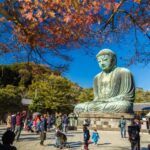
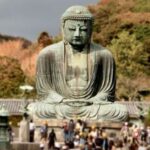
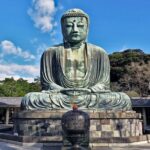
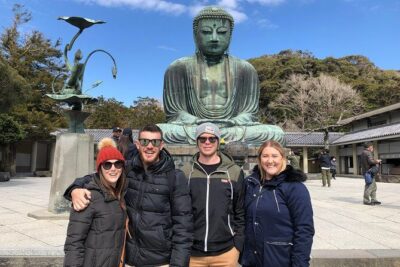
Then you get to Kotoku-in and the Great Buddha of Kamakura, one of the best-known sights in the region for a reason. The statue is about 13.35m tall and weighs roughly 121 tonnes. The bronze statue as it appears today dates to 1252, which helps you feel the long arc of this place.
You’ll spend time at Kotoku-in, and the day is structured so you reach it after hiking. That timing matters. After moving through the hills and smaller shrines, the Great Buddha feels like a release: you can stop, look, and let the scale do the work.
Practical note: this is a popular site. Even when the rest of the day feels calm, plan to share space here. If it’s hot, build in extra time for breaks.
Hasedera Temple and Yuigahama Beach: Ocean Views as Your Reward
Finishing strong is Hasedera Temple, located about halfway up Mount Kamakura. The payoff is the view south over the ocean and the picturesque Yuigahama Beach. In early summer, guests mention hydrangeas, and it’s easy to see why this temple is a favorite when the weather supports slow wandering.
Hasedera is also a great example of why a guide is useful. These hills are full of small sightlines and meaning, and without context it’s easy to only notice what’s obvious. With a good guide, you start seeing why certain spots are arranged the way they are.
Then you end with Yuigahama Beach, which faces south, so you get the sun over the ocean from this point. There can also be an open-air market in summer called Umi-no-ie, which adds a local flavor if you are lucky with the season.
This final stretch is where the day turns from exertion to decompression. Take your time. Don’t rush your last 15 minutes just because you’re heading back.
Guide Quality: The Real Value Is How They Shape Your Day
The biggest difference between doing Kamakura on your own and doing it with a private guide is interpretation. A map shows locations. A guide shows why those locations mattered and how to behave in each space.
In this tour, the guide experience has a clear pattern in the feedback:
- Teiko and Yumi are praised for being friendly and thoughtful, with explanations that make the shrines and temples feel understandable fast.
- Yu stands out for pacing and clear communication, and one group appreciated that their guide helped them navigate back to stations confidently.
- Noriko is mentioned for adapting when weather interferes, even arranging alternatives like a tea ceremony when it made sense.
- Naho is highlighted for temple etiquette instructions and for answering questions patiently rather than rushing people along.
- Yoko is noted for taking photos during the tour and making sure people got onto the right trains afterward.
- In more complex group needs, one guest described how Takeshi and the guides (including Shijuko and Yu) adjusted the itinerary to minimize walking on slippery rainy roads, even lending extra umbrellas.
Even the small details show up. One guide reserved a restaurant for lunch, and another found a lunch place reached by about 165 steps. That’s not “tour provided food,” but it tells you something important: the guide is solving practical problems so you’re not stuck improvising.
Price and What’s Included vs. What Costs Extra
At $98.44 per person, you are paying for:
- English-speaking guide
- All fees and taxes tied to the included sites
- Photos of tour participants
- Admission for Jochiji, Kotoku-in, and Hasedera
What’s not included:
- Food and drink
- Hotel pickup and drop-off (available for an extra 8000 yen per person)
- Private transportation (taxi/private car/bus)
There’s also a realistic budgeting note: if you need extra trains or buses due to weather or route changes, you might pay small amounts based on what the guide decides. That’s normal for a walking tour that sometimes shifts to transit.
Value check: if you were to pay admission on your own, plus figure out where hiking routes connect, you’d spend time (and sometimes get lost or miss the best small shrines). Here, the guide handles the chain.
Getting There and Where You End Up: Start North, Finish at Hase
You meet at Kita-Kamakura Station (Yamanouchi, Kamakura). That’s a big deal because it places you closer to Jochiji and the quieter trail sections rather than starting right in the busiest tourist core.
The tour ends at Hase Station. The guide usually accompanies you through to Kamakura Station as well, so you’re not left to solve the last train alone.
If you’re staying in Tokyo, you’ll likely take the train to Kamakura. The tour doesn’t include hotel pickup by default, but the optional 8000 yen per person can help if your hotel location makes train access annoying.
How Hard Is It Really: Shoes, Heat, and Rain Changes
Let’s be direct. You will walk at least 5 km, including a mountain pass. Moderate physical fitness is recommended. That’s not an excuse to cancel. It is a reason to prepare.
Use shoes that are easy to walk in, with grip. In rainy conditions, mountain roads can be slippery. One guest specifically mentioned slipperiness and that the guides suggested skipping certain shrines when rain made the route less safe.
Heat also matters. One review described the day as extremely hot and noted needing more breaks. Another described constant rain but still enjoying the route by relying more on train and bus for portions.
So what should you do?
- Plan to move slower than your ego wants to move.
- Bring water and something to protect from sun or rain.
- Expect the guide to adjust the exact walking amount if the weather changes.
Should You Book This Kamakura Private Tour?
I’d book it if you want Kamakura to feel like a real day outdoors, not just a checklist of temples. It’s a smart mix: forest Zen at Jochiji, hillside shrine stops like Zeniarai Benten and Sasuke Inari, the scale shock of the Great Buddha, and the payoff views from Hasedera and Yuigahama Beach.
I’d skip it (or pick another style of tour) if you want mostly flat walking, or if your schedule needs zero hiking and zero uncertainty with weather. Even though the guide adapts, this is built around a mountain pass.
If you can handle moderate hiking and you like history explained in plain language, this tour is strong value. The admission included for major sites plus a guide who knows how to keep the day moving without rushing is the combo that makes it work.
FAQ
How long is the Kamakura private tour?
It runs for about 5 hours.
Is this a private tour or a shared group tour?
It is a private tour/activity, so only your group participates.
What does the tour price include?
The price includes an English-speaking guide, all fees and taxes, photos of tour participants, and entrance fees for Jochiji, Kotoku-in (Great Buddha), and Hasedera.
Do I need to buy tickets for the temples?
Entrance fees for Jochiji, Kotoku-in, and Hasedera are included. Food and drink are not included.
Where does the tour start and end?
It starts at Kita-Kamakura Station and ends at Hase Station.
How much walking is involved?
You will walk at least 5 km, including a mountain pass, so moderate physical fitness is recommended. Wear comfortable, easy-walking shoes.
Can I extend the tour if I want more time?
Yes. You can extend it at a rate of 1,000 yen per person per half hour, paid in cash.
Is hotel pickup included?
Hotel pickup and drop-off are not included by default. You can add it for 8,000 yen per person.
What if the weather is poor?
This experience requires good weather. If it is canceled due to poor weather, you’ll be offered a different date or a full refund.
Can the tour be canceled for a full refund?
Free cancellation is available. You must cancel at least 24 hours before the experience’s start time for a full refund.
More Tours in Kamakura
More Tour Reviews in Kamakura
More Days by the Great Buddha
Kamakura Day Trips, compared.
 ★ 4.5Kamakura & Enoshima Day Trip including Temple TicketsFrom $581,375 reviews
 ★ 4.5From Tokyo: Kamakura & Enoshima 1-Day Bus TourFrom $66189 reviews
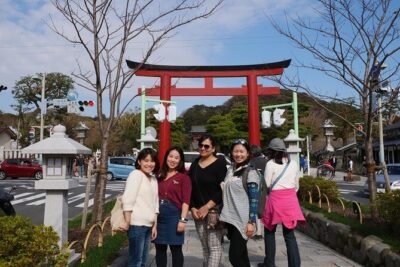 ★ 5.0Kamakura Historical Walking Tour with the Great BuddhaFrom $98129 reviews
Kamakura Walking Tour – The City of ShogunFrom $35100 reviews
★ 5.0Kamakura Historical Walking Tour with the Great BuddhaFrom $98129 reviews
Kamakura Walking Tour – The City of ShogunFrom $35100 reviews
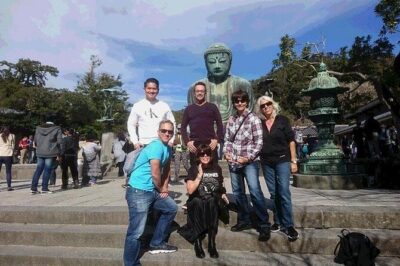 ★ 5.0Kamakura 8 hr Private Walking Tour with Licensed Guide from TokyoFrom $20180 reviews
 ★ 4.1Kamakura & Enoshima Day Tour with Pickup & Train RideFrom $1361 reviews
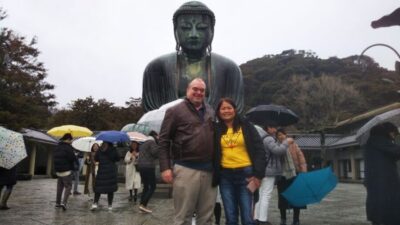 ★ 4.8Kamakura: Private Guided Walking Tour with Local GuideFrom $10660 reviews
 ★ 5.0Kamakura 4hr Private Trip with Government-Licensed GuideFrom $10858 reviews
Browse the lists this tour appears in