
Reviewed · KAMAKURA DAY TRIPS
Private Kamakura plus Yokohama Tour – English Speaking Driver
Kamakura plus Yokohama in one day.
What makes this tour interesting is the mix: you get ancient Kamakura temples in the morning, then Yokohama in the afternoon, without spending your energy on train changes. I love that it’s a true private setup with a comfortable car and English-speaking driver attention, and that the plan can be tailored to your pace. One possible drawback: it is not a guided tour by default, so if you want deeper narration, you may need to arrange a guide for an extra cost.
The day runs about 10 hours including commuting, starting at 8:00am. That means you’ll be moving, but it’s also the kind of itinerary that pays off fast when you’re short on time in Tokyo. I’d consider it best if you feel comfortable traveling in Japan and you want a smooth, low-stress route more than a lecture.
In This Review
- Key highlights you’ll actually feel during the day
- A smooth day outside Tokyo: Kamakura first, Yokohama second
- Price and value for a group of up to 5
- How the English-speaking private driver changes everything
- Stop-by-stop: Hokoku-ji and the bamboo temple experience
- Hase-dera’s big wooden Kannon: what to focus on
- Kōtoku-in Great Buddha, then Tsurugaoka Hachimangu’s festival grounds
- Komachidori shopping time without losing the day
- Yokohama Chinatown: a food-and-street culture stop
- Sankeien Gardens: traditional Japanese garden in a compact hour
- Minatomirai time: the waterfront finale if schedule allows
- What to bring (and how to pace your group)
- Should you book this Kamakura plus Yokohama private tour?
- FAQ
- Is this a guided tour?
- How long is the tour, and when does it start?
- What is the maximum group size?
- Are entrance fees included for the temples and gardens?
- Do I get hotel pickup and transfers?
- What if the weather is poor?
Key highlights you’ll actually feel during the day
- Hotel transfers that save time so you can start sightseeing right away
- A private vehicle that helps you dodge the harder driving and transit logistics
- Temple stops with famous targets like Hokoku-ji’s bamboo garden and Kamakura’s Great Buddha
- Flexible sightseeing moments such as the chance to fit in Minatomirai if timing works
- Driver support that goes beyond directions (some drivers have shared helpful links before stops)
- Yokohama mix in one sweep: Chinatown, then Sankeien Gardens
More escapes to the Great Buddha and the coast
- Kamakura 8 hr Private Walking Tour with Licensed Guide from Tokyo★ 5.0 · 80 reviews
- Tokyo: Kamakura & Enoshima Day Tour with Pickup & Train Ride★ 4.1 · 61 reviews
- Kamakura Private & Customizable Tour – All-in-One Experience★ 5.0 · 49 reviews
A smooth day outside Tokyo: Kamakura first, Yokohama second
This is a classic south-and-slightly-west day trip that starts in Kamakura and ends in Yokohama. Kamakura is temple country, where walking and stepping into quiet courtyards feels like a reset. Yokohama brings contrast: waterfront views, the old-meets-new feel of Minatomirai, and a big dose of food and atmosphere in Chinatown.
The structure matters. If you tried this on your own, you’d likely spend time figuring out trains, transfers, and the order of sights. Here, you get a direct path between the two cities, and you’re free to focus on what you came for.
Price and value for a group of up to 5
The price is $650.00 per group (up to 5). For solo travelers, that can feel steep, but for a small group it starts to look more reasonable—especially when you factor in hotel pickup and a private car for a long day.
What you’re really buying is time and simplicity. You’re paying to avoid the friction of transit planning, and to spend your energy on the sights rather than schedules. If you’re traveling with kids or older family members who don’t want to hop on and off trains, the value often clicks quickly.
Also keep in mind: some stops have admission tickets not included (so plan for entrance fees where applicable). Your driver can help you manage timing, but you’ll still want a bit of cash or card for those sites.
How the English-speaking private driver changes everything
This is listed as a private tour with an English-speaking driver who handles transportation and keeps the day moving. You’re not just getting a ride; the better part is having a person in the car who can answer questions and help you shift timing when the day gets crowded.
One thing I like: some drivers have sent prep links before each site, which helps you know what you’re looking at once you arrive. It also helps you ask better questions on the spot, instead of guessing what the most important details are.
Quick practical consideration: it’s not automatically a guided tour with a historian. A guide can be arranged on request for an additional cost, so if your goal is lots of formal context and guided commentary, plan for that cost ahead of time.
Finally, be careful with add-on services. There is at least one unhappy example tied to extra services offered with cash payment. My advice: if anything extra comes up, agree on price and payment method clearly with the provider before you say yes.
Stop-by-stop: Hokoku-ji and the bamboo temple experience
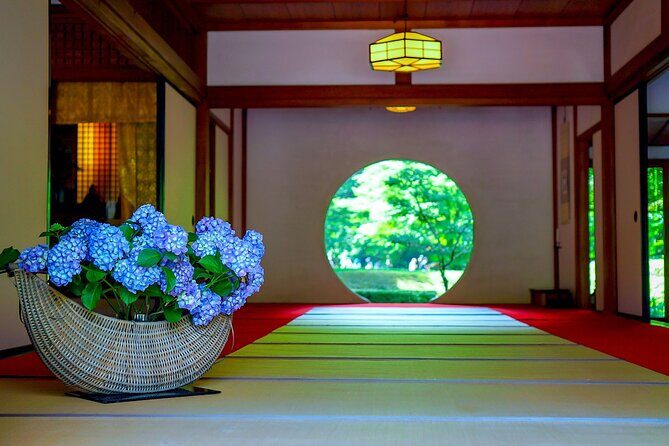
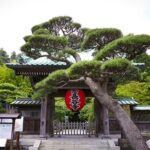
Your first stop is Hōkoku-ji, known for its bamboo garden, often called the Bamboo Temple. This is the kind of place where the atmosphere does some of the work for you. When you step into a garden designed for walking and quiet viewing, it’s hard to rush it.
You’ll have about 1 hour. That’s enough time to see the main areas without feeling like you’re sprinting. Admission is not included, so expect a ticket cost on arrival.
If you like gardens that feel intentional rather than just pretty, you’ll appreciate Hokoku-ji’s reputation. It’s also a good early stop because the day is still fresh and the crowds usually haven’t peaked.
More of the harbour city next door


Hase-dera’s big wooden Kannon: what to focus on
Next is Hase-dera (Hase-dera Temple), sometimes associated with the name Hase-kannon. The standout here is the massive wooden statue of Kannon, a major figure in Buddhist tradition.
Plan for about 45 minutes. This stop tends to reward slower attention: take your time with the approach, notice how viewpoints frame the temple spaces, and don’t treat it like a quick photo stop only.
As with Hokoku-ji, admission isn’t included, so budget for the entry fee. If you’re the type who likes to understand one key object well, this is a strong choice because the big statue gives the visit a clear focal point.
Kōtoku-in Great Buddha, then Tsurugaoka Hachimangu’s festival grounds
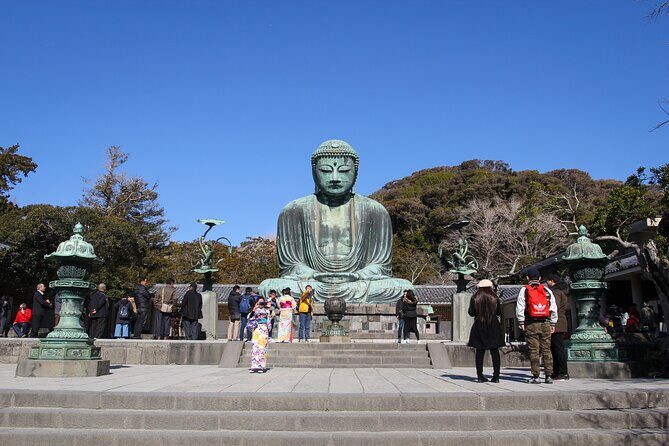
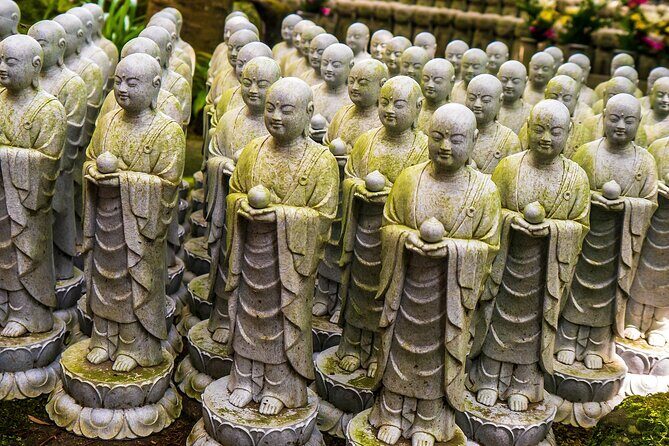
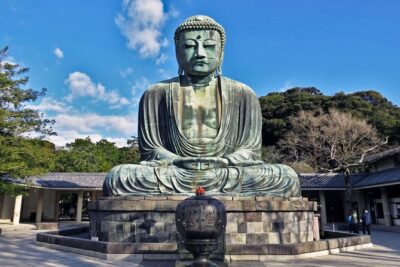
After Hase-dera, you’ll head to Kotoku-in (the Great Buddha of Kamakura) for about 30 minutes. It’s short, but that’s part of the appeal. The Great Buddha is instantly recognizable, and even a compact visit can feel complete if you pace yourself and watch how the space feels around the statue.
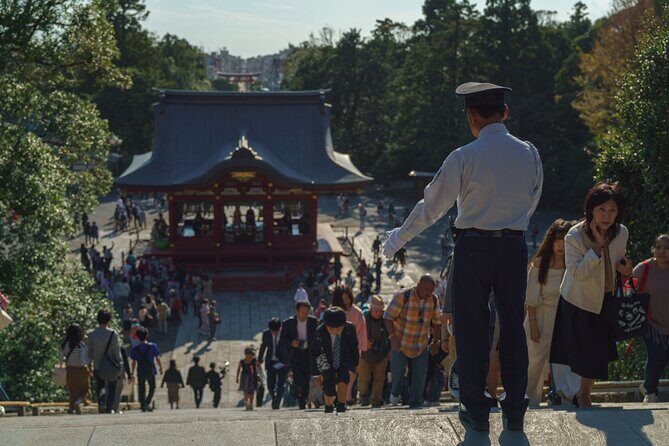
Then comes Tsurugaoka Hachimangu Shrine for about 1 hour. This isn’t just a single shrine photo op. The area is described as a cultural center for Kamakura and a festival venue, with two museums. There are also two ponds that represent the Taira and Minamoto clans, which is a neat way to connect the site to Japanese history and power shifts.
Admission is not included here, so you may see fees tied to museum areas. If you’re someone who likes mixing a spiritual site with a place that offers broader context, this stop gives you both.
Komachidori shopping time without losing the day
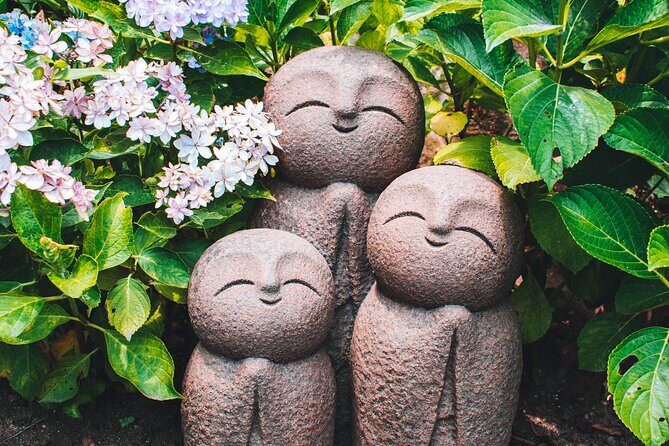
You’ll then get time at Kamakura Komachidori, a busy pedestrian street with apparel, souvenirs, and snacky stops. You’re scheduled for about 1 hour 30 minutes, and admission is free since it’s essentially a shopping and eating walkway.
This is a good buffer in the day. You’ll be able to slow down, browse, and grab lunch or treats without needing to coordinate a separate plan. If your group includes people who don’t want temples all day, Komachidori is a satisfying middle ground.
One practical tip: decide early if you’re using Komachidori for lunch. If you leave it for later, you can end up hungry and rushed when the crowds rise.
Yokohama Chinatown: a food-and-street culture stop
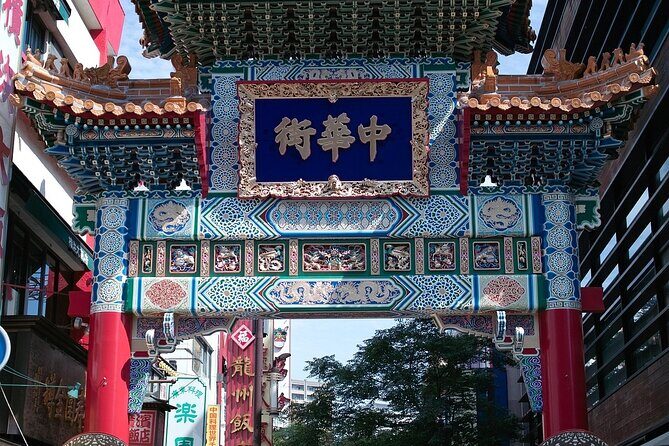
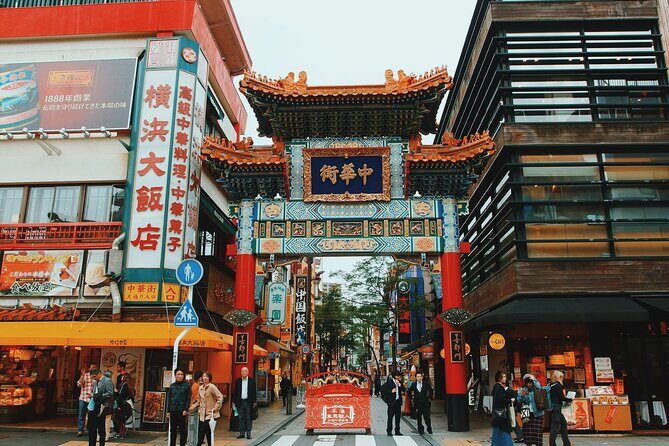
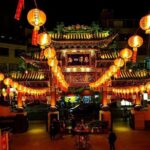
From Kamakura you’ll travel to Yokohama Chinatown, with about 1 hour on the schedule. It’s described as about 160 years old, with a historical population of around 3,000 to 4,000, and today most residents trace ties to Guangzhou.
This is a place you can treat in two ways: as a stroll with quick bites, or as a slower exploration where you stop for specific foods. Since it’s free and timed, you can match your energy level to your group.
If you want to maximize value, I’d plan to eat here rather than chasing a restaurant reservation somewhere else. The mix of shops and street atmosphere makes it easy to pick something you can actually enjoy on the move.
Sankeien Gardens: traditional Japanese garden in a compact hour
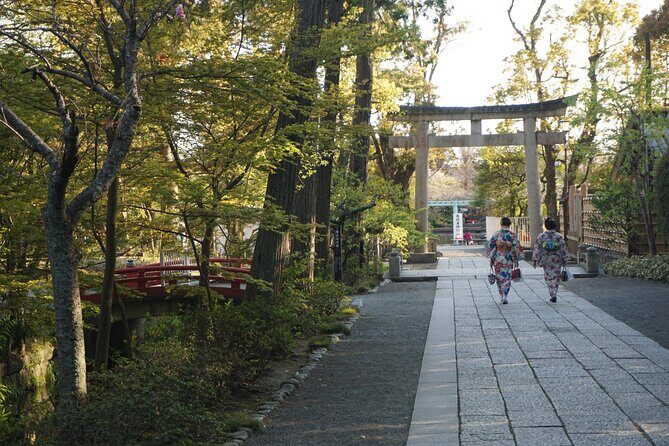
Next up is Sankeien Gardens for about 1 hour. The garden opened in 1906 and was designed and built by Tomitaro Hara, known by the pseudonym Sankei Hara, a silk trader.
This stop is not just scenic; it gives you a different kind of cultural “read” than temples. Gardens like this often work best when you walk slowly and let sightlines guide you—like shifting frames rather than chasing one perfect view.
Admission is not included, so plan for entrance fees. If your group loves nature-style design and quiet pacing, this is where the day gains breathing room.
Minatomirai time: the waterfront finale if schedule allows
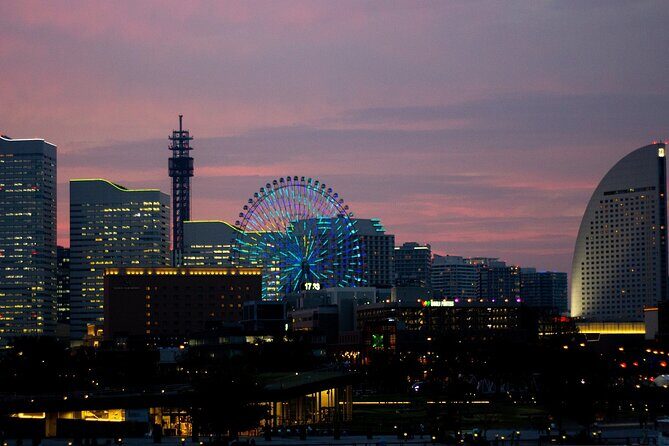
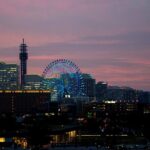
Your final planned area is Minatomirai, roughly 30 minutes if time permits. This is Yokohama’s futuristic waterfront zone, with high-rise observation views and shopping near landmarks like Yokohama Landmark Tower and Plaza.
Because it’s conditional, treat Minatomirai as a bonus rather than a guarantee. If you make it, it’s a great way to end with modern Yokohama energy after Kamakura’s old-world sites.
If you’re not able to visit, you won’t feel like you missed the core of the itinerary. Chinatown and Sankeien are the deeper cultural anchors, while Minatomirai is more of a skyline-and-street vibe closer to home base.
What to bring (and how to pace your group)
A day like this moves fast in time, even if the sights feel slow. Wear shoes you can walk in for Komachidori and Chinatown, and bring layers. Temples and gardens can feel cooler or more shaded than you expect, while Chinatown can be warm and active.
Since admission is not included for several stops, bring a payment method that’s easy to use quickly. If you plan to buy snacks along Komachidori or Chinatown, you’ll also want small bills and coins.
Most importantly, give your driver one clear instruction: tell them what your group cares about most—Great Buddha photos, garden calm, museum time, or eating stops. A private day works best when you let the driver help shape the order of what matters to you.
Should you book this Kamakura plus Yokohama private tour?
I’d book this if you want a stress-free full day that hits major sights in Kamakura and Yokohama without wrangling transit. It’s especially smart for families, mixed-age groups, or anyone who would rather spend their Tokyo time sightseeing instead of planning.
Skip it if you’re chasing a formal, guided history lesson. Since it’s not automatically a guided tour, you may need to add a guide request (at extra cost) to get the kind of storytelling you might be expecting. Also be mindful about add-ons: if anything “extra” is suggested, confirm details and how payment works before committing.
If your goal is simple: temples in the morning, Chinatown and gardens in the afternoon, with comfortable pickup and transport, this tour is built for that day.
FAQ
Is this a guided tour?
It is described as a private tour with an English-speaking driver. It is not a guided tour by default, but a guide can be arranged on request for an additional cost.
How long is the tour, and when does it start?
The duration is about 10 hours including commuting time. The start time is 8:00am.
What is the maximum group size?
The price is per group up to 5 people.
Are entrance fees included for the temples and gardens?
Admission tickets are listed as not included for some stops such as Hōkoku-ji, Hase-dera, Kōtoku-in, and Sankeien Gardens. Other stops like Komachidori and Yokohama Chinatown are free based on the listing.
Do I get hotel pickup and transfers?
Yes. The tour includes handy transfers from your Tokyo hotel or other location, and pickup is offered.
What if the weather is poor?
This experience requires good weather. If it’s canceled due to poor weather, you’ll be offered a different date or a full refund.
Your Own Wheels: More Private Driver Days

Next Door in Yokohama
More Days by the Great Buddha
Fresh reviews from around Tokyo






Kamakura Day Trips, compared.
 ★ 4.5Kamakura & Enoshima Day Trip including Temple TicketsFrom $581,375 reviews
 ★ 4.5From Tokyo: Kamakura & Enoshima 1-Day Bus TourFrom $66189 reviews
 ★ 5.0Kamakura Historical Walking Tour with the Great BuddhaFrom $98129 reviews
Kamakura Private Tour: Temples, Nature, and the Great BuddhaFrom $98121 reviews
Kamakura Walking Tour – The City of ShogunFrom $35100 reviews
★ 5.0Kamakura Historical Walking Tour with the Great BuddhaFrom $98129 reviews
Kamakura Private Tour: Temples, Nature, and the Great BuddhaFrom $98121 reviews
Kamakura Walking Tour – The City of ShogunFrom $35100 reviews
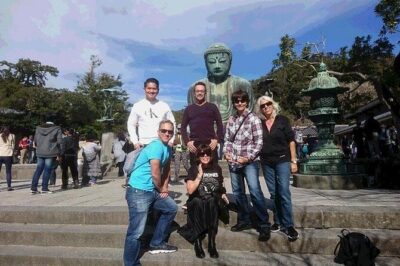 ★ 5.0Kamakura 8 hr Private Walking Tour with Licensed Guide from TokyoFrom $20180 reviews
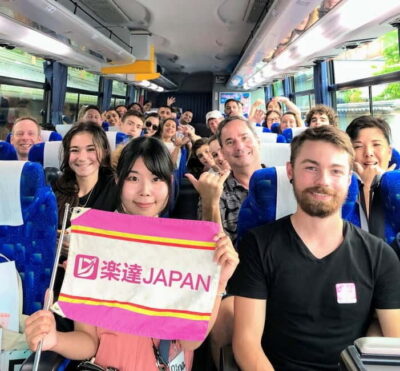 ★ 4.1Kamakura & Enoshima Day Tour with Pickup & Train RideFrom $1361 reviews
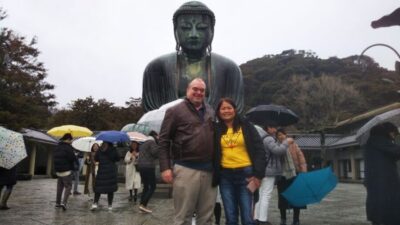 ★ 4.8Kamakura: Private Guided Walking Tour with Local GuideFrom $10660 reviews
Browse the lists this tour appears in