
Reviewed · KAMAKURA DAY TRIPS
Kamakura Full Day Tour with Licensed Guide and Vehicle from Tokyo
Kamakura is a great day-tripper from Tokyo. This private tour is interesting because you’re not just sightseeing on a tight route—you get a licensed guide to connect the dots between temples, gardens, and samurai-era faith. I love how the private vehicle keeps your day efficient, and I love the focus on places with real atmosphere like bamboo groves and ocean-view temple grounds. One possible drawback: entrance fees and lunch are not included, so plan for extra spending once you’re on-site.
If you choose the right mix of stops, the timing works well: you’ll spend your limited time on the highlights while still getting breathing room to enjoy gardens, statues, and slow streets like Komachi-dori. I’d go in expecting a structured day (the tour is about 8 hours including travel), plus some flexibility based on traffic.
In This Review
- Key things to know before you go
- Why a private Kamakura car beats the usual chaos
- The real decision: choosing your 3–4 stops wisely
- Hasedera Temple: eleven-headed Kannon and garden calm
- Kotoku-in and the Great Buddha: the icon that earns its hype
- Kencho-ji: Zen temple depth without feeling overwhelming
- Tsurugaoka Hachimangu: samurai patron shrine energy
- Hokoku-ji bamboo grove: matcha tea under 2000+ stalks
- Yuigahama Beach and Komachi-dori: coastal reset plus snack street
- Eishoji Temple: the short 10 minutes of peace
- Price and value: what $1,026.90 per group actually covers
- Comfort, car seats, and the stuff that affects your day
- When English clarity matters
- Who this Kamakura tour is best for
- Should you book this Kamakura Full Day Tour?
- FAQ
- How long is the Kamakura tour?
- Is pickup from Tokyo included?
- How many sites will we visit?
- Are entrance fees included?
- What’s free during the tour?
- Can I bring a car seat or booster seat?
- Is the tour affected by weather?
Key things to know before you go
- A licensed, multilingual local guide helps you move through Kamakura’s highlights with fewer head-scratches.
- Pick 3–4 sites from the main Kamakura list, so you can tailor the day to your style.
- Bamboo + sea air combo: Hokoku-ji’s bamboo grove and coastal views are a big part of the magic.
- Some stops are free, including Tsurugaoka Hachimangu, Yuigahama Beach, and Komachi-dori.
- Car time is the advantage: Tokyo to Kamakura takes about an hour, and you’re not wrestling transfers.
More escapes to the Great Buddha and the coast
- Kamakura 8 hr Private Walking Tour with Licensed Guide from Tokyo★ 5.0 · 80 reviews
- Tokyo: Kamakura & Enoshima Day Tour with Pickup & Train Ride★ 4.1 · 61 reviews
- Kamakura Private & Customizable Tour – All-in-One Experience★ 5.0 · 49 reviews
Why a private Kamakura car beats the usual chaos
Kamakura can feel oddly far from Tokyo until you realize how compact it becomes once you’re moving by car. With this tour, you’re starting with about an hour each way, then spending your energy on the sights instead of station logistics.
You’re also buying peace of mind. A government-licensed guide means you’ll get real context, not just a location name. That matters in Kamakura because the city reads like a layered museum: Zen temples tucked into valleys, shrines with samurai symbolism, and gardens designed for wandering, not rushing.
The real decision: choosing your 3–4 stops wisely
This is a private tour where you customize your day with 3–4 stops from the main set of options. That structure is helpful, but it also means you should choose with intent. If you pick too many similar stops, you’ll feel temple fatigue. If you mix styles, the day feels balanced.
Here’s a practical approach I like for a first visit:
- Pair one big icon (either Hasedera or Kotoku-in).
- Add one Zen/garden stop (Kencho-ji or Hokoku-ji).
- Include one shrine or cultural anchor (Tsurugaoka Hachimangu).
- Finish with one casual slot (Yuigahama Beach or Komachi-dori).
Also, not every stop charges an entrance fee. Tsurugaoka Hachimangu, Yuigahama Beach, and Komachi-dori are listed as free, while several other temples are not.
Hasedera Temple: eleven-headed Kannon and garden calm
Hasedera is the kind of temple that makes you slow down. It’s famous for a 9.18-meter gilded wooden statue of Kannon, the goddess of mercy. The statue is housed in the Kannon-do Hall, where the scale and craftsmanship do a lot of the talking for you.
I like Hasedera for two reasons. First, it’s one of the best places in the area for that “temple grounds plus sea air” feeling—Kamakura’s coastal mood shows up here. Second, it pairs art with gardens, so you don’t just look at one thing and leave.
You’re looking at about an hour here, and the experience benefits from that full chunk of time. If you rush, you’ll miss the way the grounds are designed to guide your pacing.
Kotoku-in and the Great Buddha: the icon that earns its hype
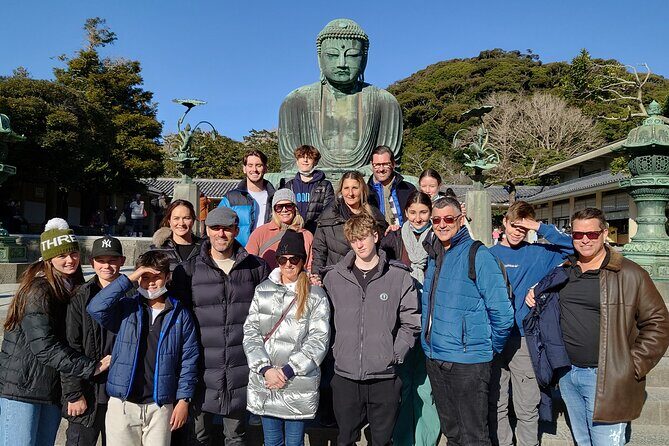
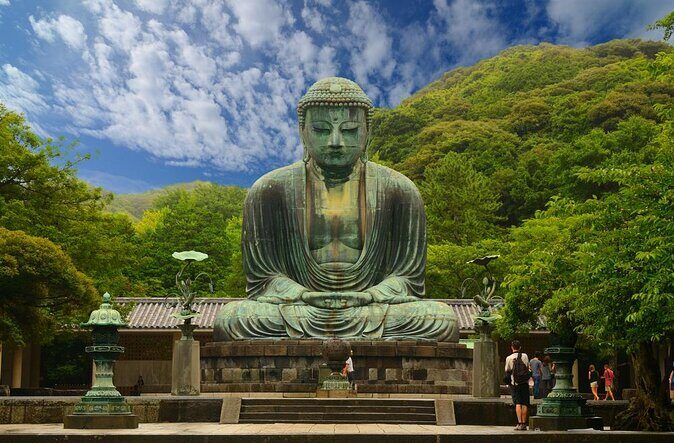
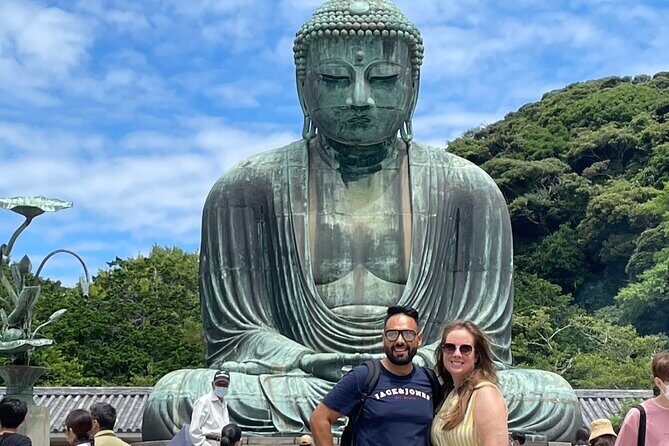
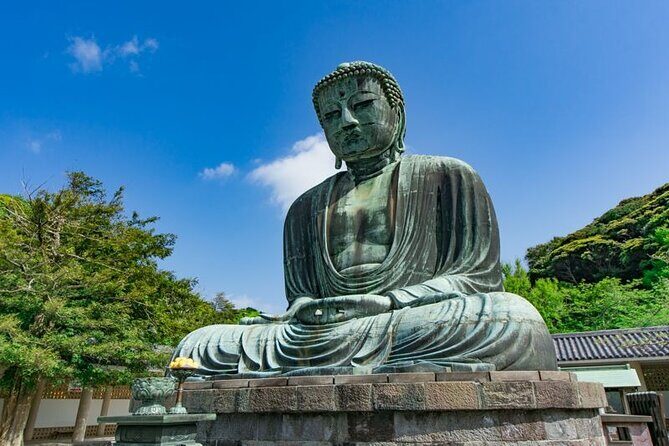
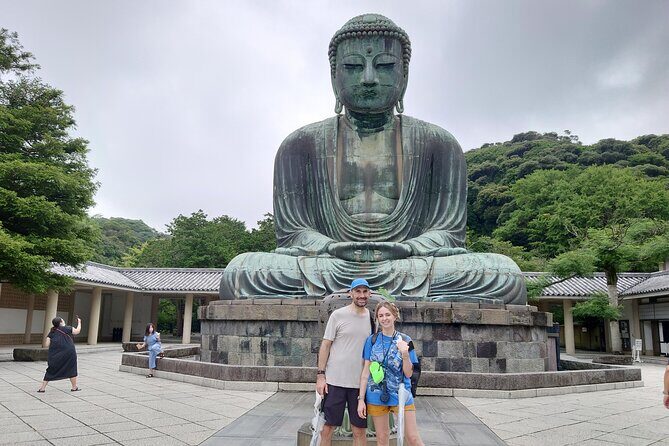
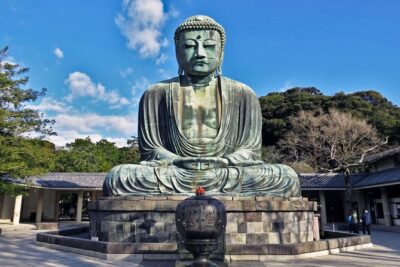
Kotoku-in is where the famous Great Buddha takes center stage. This isn’t just a big statue. It’s a bronze Amida Buddha that stands 11.4 meters tall on the temple grounds, and it’s long been recognized as one of Japan’s tallest bronze Buddha images.
If you only have energy for one “wow” moment, this is the one I’d point you to. The sheer mass of the figure gives you that instant sense of scale, and Kamakura’s ocean-side setting makes it feel less like a museum piece and more like a living landmark.
Plan around the 1-hour mark. You’ll want time not only to see it, but also to step back and take in the surrounding area from different angles.
More days made easy by a guide


Kencho-ji: Zen temple depth without feeling overwhelming
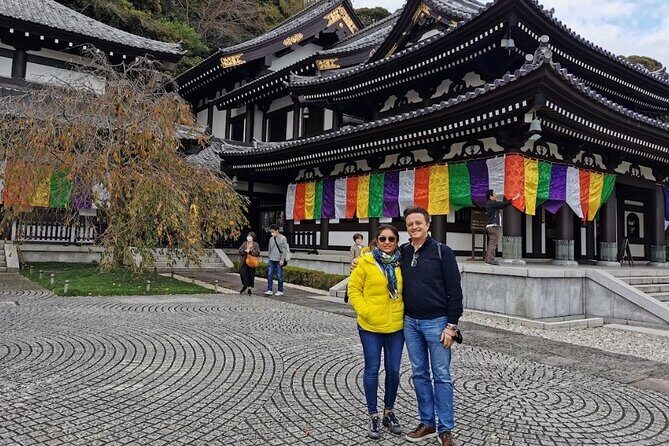
Kencho-ji is described as the top of Kamakura’s five great Zen temples, and it has age behind it. It was founded in 1253 by Hojo Tokiyori, and its first head priest was Rankei Doryu from China. That background helps you understand why the complex feels so intentional.
What makes Kencho-ji practical for a day tour is its layout. Even if some buildings are smaller than their peak days, the temple still stretches from the entrance through a valley toward the forested hills behind. After you pass through the Sanmon main gate, you’ll find Kencho-ji’s bell (Bonsho) on your right, and it’s designated as a national treasure.
You’re scheduled for about 30 minutes, which is short. If you enjoy Zen gardens and architectural details, make sure you spend at least a few minutes just standing, looking, and letting your guide explain what you’re actually seeing.
Tsurugaoka Hachimangu: samurai patron shrine energy
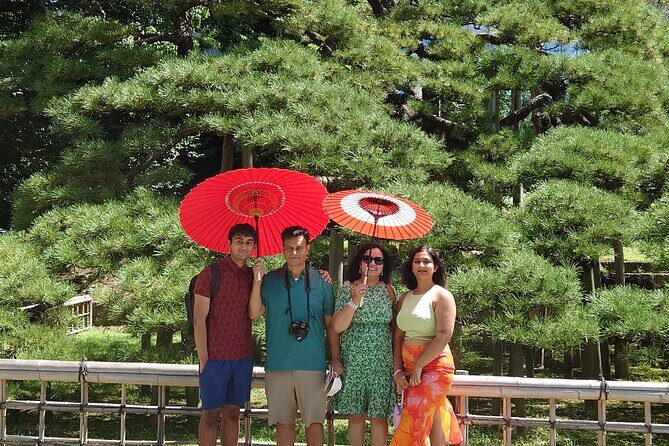
Tsurugaoka Hachimangu is a must if you want Kamakura to feel connected to its history. It’s dedicated to Hachiman, known as the patron god of the Minamoto family and samurai in general.
Even the enshrinement story gives you a sense of how power and belief mix here. The shrine includes deified spirits associated with Emperor Ojin (identified with Hachiman), plus Hime-gami and Empress Jingu.
This stop is listed as 1 hour and admission is free. That combination is useful: you can spend real time here without worrying about ticket logistics, and then roll naturally into shopping and street atmosphere afterward.
Hokoku-ji bamboo grove: matcha tea under 2000+ stalks
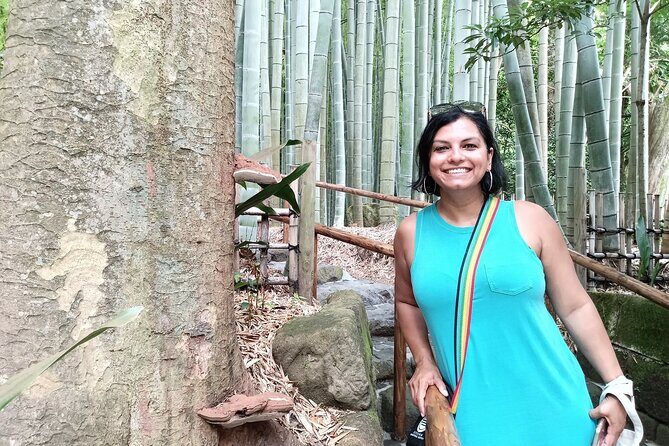
Hokoku-ji is best known for the bamboo grove behind its main hall, with over 2,000 bamboo stalks. The pathways through the grove are narrow, which changes the feel right away. You walk into a corridor of green where sound softens and your brain switches from city mode to slow mode.
Behind the bamboo, there’s also a tea house. For a small fee, you can sit and enjoy matcha while looking into the grove. Even if you don’t order tea, the grove itself is the payoff.
There’s another interesting layer too: shallow caves carved into the hillsides, believed to hold the ashes of later Ashikaga lords. That adds weight to what could otherwise be just a pretty photo stop.
This stop is listed for 1 hour and admission is not included, so it’s smart to budget a bit ahead.
Yuigahama Beach and Komachi-dori: coastal reset plus snack street
After temples and shrine paths, Yuigahama Beach is your reset button. It’s one of Kamakura’s main beaches—big, flat, and often crowded—and it’s just a short walk from Kamakura Station. Admission is listed as free, and the tour gives you about 30 minutes.
Don’t expect quiet seclusion. Think more like: fresh air, waves, and a quick change of scene.
Then comes Komachi Street (Komachi-dori), which runs from Kamakura Station East Exit toward Tsurugaoka Hachimangu along Wakamiya Oji. You get about 1 hour here for browsing and eating. Komachi-dori is packed with a mix of traditional souvenir shops and more modern stores.
One snack that’s specifically called out is hatosabure, dove-shaped biscuits. If you want a small, easy souvenir that feels local, this is the kind of pick I’d prioritize.
Eishoji Temple: the short 10 minutes of peace
Eishoji is listed as only about 10 minutes, so treat it like a calm intermission. It’s described as the only surviving nunnery in Kamakura, located near Tsurugaoka Hachimangu.
It’s also known as a flower temple for seasonal blooms. If you’re visiting during the right time of year, this stop can feel especially meaningful. Even without perfect timing, it’s still praised for its tranquil atmosphere, plus a peaceful bamboo grove.
There’s also a mention of an Amida Buddha statue said to be by Unkei. That’s the kind of detail your guide can help you connect to what you’re seeing on the ground.
Price and value: what $1,026.90 per group actually covers
The price is $1,026.90 per group (up to 4), and that’s the key to understanding value. You’re not paying per person for the car and licensed guide; you’re splitting the cost across your group size.
What you’re getting:
- A licensed local English-speaking guide
- A private vehicle
- A customizable plan for 3–4 sites
What you’re not getting:
- Entrance fees (except where explicitly listed as free)
- Lunch and personal expenses
This pricing can feel steep if you’re traveling solo. It makes more sense when you have up to four people because the guide and vehicle cost get distributed across the group. It’s also a good fit for travelers who want a low-stress day rather than navigating transfers and timing windows yourself.
One more cost you should expect in practice: the temples that are not marked as free will add up. Since the tour is structured around a handful of key stops, you can estimate your entrance spending more easily than if you were hopping around on your own.
Comfort, car seats, and the stuff that affects your day
The tour offers pickup, and you’ll get a mobile ticket. Vehicle types aren’t available for request, and car seats are limited. If you need a booster or car seat, you’ll want to contact the provider directly since rear-facing car seats are not available.
This kind of info matters because it changes how smoothly your departure and transitions work. A private car is great, but only if the seating needs are handled ahead of time.
Also note: travel time includes the commute. Plan for a day that starts with movement and ends with movement, and then fit your energy around that.
When English clarity matters
Most of the value here depends on your guide explaining what you’re seeing. The tour description calls the guide licensed and English-speaking. Still, real-world language experience can vary by individual guide and conditions.
If clear communication is a top priority for you, it’s smart to come with a few focused questions. Ask about symbols at shrines, why a temple is famous, or what you should notice first when you arrive. In a private format, a good guide will steer the conversation to what you care about.
Who this Kamakura tour is best for
I’d steer you toward this tour if you:
- Want a first-rate Kamakura day without juggling train transfers
- Prefer temples, gardens, and historic sites with interpretation
- Are traveling with family or a small group and want comfort
I’d reconsider if you:
- Want to spend most of the day wandering freely with no structure
- Are on a tight budget where entrance fees and a private guide don’t fit
- Need a very specific vehicle setup and the limited car seats are a concern
Should you book this Kamakura Full Day Tour?
I think you should book it if you want Kamakura highlights with less stress and more meaning. The private vehicle saves time, and the licensed guide turns famous names like Hasedera and the Great Buddha into an experience you’ll actually remember.
Book it especially if your group can split the cost, and you’re the type who likes gardens, statues, bamboo, and shrine atmosphere more than just checking boxes. If entrance fees and lunch aren’t part of your plan yet, budget for them up front so there are no surprises.
If you care a lot about language precision, do your homework on the guide’s communication style and plan your questions. With the right fit, this is exactly the kind of day trip that feels efficient and genuinely enjoyable.
FAQ
How long is the Kamakura tour?
The tour duration is about 8 hours, and that total includes travel time between Tokyo and Kamakura.
Is pickup from Tokyo included?
Yes, pickup is offered.
How many sites will we visit?
You customize the tour with 3–4 sites from the listed options.
Are entrance fees included?
No. Entrance fees are not included, except for places that are explicitly listed as admission free.
What’s free during the tour?
Tsurugaoka Hachimangu Shrine, Yuigahama Beach, and Komachi Street are listed as free.
Can I bring a car seat or booster seat?
There are limited car seats and booster seats available. Rear-facing car seats are not available, so you need to contact the provider directly if you require them.
Is the tour affected by weather?
Yes. The experience requires good weather, and if it’s canceled due to poor weather, you’ll be offered a different date or a full refund.
More Tours in Tokyo




More Tour Reviews in Tokyo




More Days by the Great Buddha

Fresh reviews from around Tokyo






Kamakura Day Trips, compared.
 ★ 4.5Kamakura & Enoshima Day Trip including Temple TicketsFrom $581,375 reviews
 ★ 4.5From Tokyo: Kamakura & Enoshima 1-Day Bus TourFrom $66189 reviews
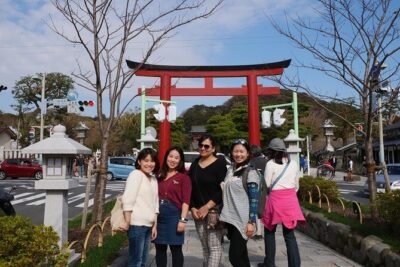 ★ 5.0Kamakura Historical Walking Tour with the Great BuddhaFrom $98129 reviews
Kamakura Private Tour: Temples, Nature, and the Great BuddhaFrom $98121 reviews
Kamakura Walking Tour – The City of ShogunFrom $35100 reviews
★ 5.0Kamakura Historical Walking Tour with the Great BuddhaFrom $98129 reviews
Kamakura Private Tour: Temples, Nature, and the Great BuddhaFrom $98121 reviews
Kamakura Walking Tour – The City of ShogunFrom $35100 reviews
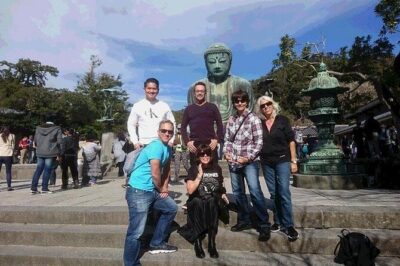 ★ 5.0Kamakura 8 hr Private Walking Tour with Licensed Guide from TokyoFrom $20180 reviews
 ★ 4.1Kamakura & Enoshima Day Tour with Pickup & Train RideFrom $1361 reviews
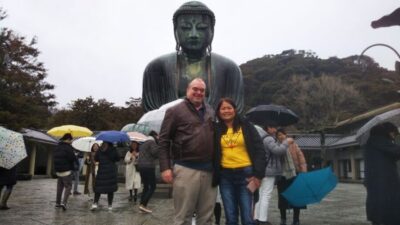 ★ 4.8Kamakura: Private Guided Walking Tour with Local GuideFrom $10660 reviews
Browse the lists this tour appears in