
Reviewed · MARKETS
Half-Day Local Tokyo Tour in Adachi Market and Shibamata
Tokyo has a famous fish-market story. This tour gives you the quieter version at Adachi Fish Market, then pairs it with the slower, old-street feel of Shibamata Taishakuten. I love that it trades Tsukiji-style crowds for an area where you can actually look closely at seafood and how locals buy it. I also like the mix of food culture and temple details in one tight 4.5-hour loop. One thing to plan around: it is a walking tour with food not included, so you’ll want to bring or buy your own snacks and water when you need them.
You start early and keep moving. The tour runs about 4 hours 30 minutes, in a small group of up to eight people. That pace is great if you like seeing a lot without committing a whole day.
Guides are a big part of the value. Names like Kaori, Mutsuko, Megumi, Masayo, Yumi, Mana, Yoshimi, and Fumiko show up in the guide praise, often for clear explanations and friendly attention. With a group this size, you’ll get time for questions instead of shouting over a crowd.
In This Review
- Key points that matter
- Why Adachi Fish Market and Shibamata Beat the Usual Tokyo Route
- Price and value: What $91.96 buys you (and what it doesn’t)
- Getting there smoothly: the 8:00 start and the local train segment
- Stop 1: Adachi Shijo Central Market and the seafood focus
- Stop 2 and beyond: Shibamata’s old-street rhythm by the Edogawa River
- Taishakuten-Sando: the 200-meter shopping street you’ll actually enjoy
- Taishakuten Daikyoji Temple: wood carvings, Lotus Sutra scenes, and ikebana garden
- Yamamototei: a Japanese-Western architectural surprise inside the shrine setting
- What to bring so the 4.5 hours feel easy
- Who this tour suits best
- Should you book this Adachi and Shibamata tour?
- FAQ
- What is the duration of the tour?
- Where does the tour start and end?
- What time does the tour begin?
- How big is the group?
- Is the tour suitable for most people?
- What’s included in the price?
- What is not included?
- How and when will I receive confirmation?
- Can I cancel for a full refund?
- Is there a minimum number of people per booking?
Key points that matter
- Adachi Shijo market is Tokyo’s specialized marine products market, so the focus stays on seafood, not souvenir chaos
- Small group limit of eight keeps the walk comfortable and the guide interaction real
- Taishakuten Daikyoji Temple features wood-carved sculptures tied to the Lotus Sutra story plus a garden setting for ikebana
- Shibamata’s shopping street (Taishakuten-Sando) is about 200 meters from the station, perfect for a short snack-and-stroll
- A short train ride included from Senjuohashi to Shibamata station reduces logistics stress
- Yamamototei adds a distinctive Japanese-Western architectural look inside the shrine context
More shopping runs through Tokyo
- Tokyo Tsukiji Fish Market Food and Culture Walking Tour★ 5.0 · 3,184 reviews
- Tokyo: Tsukiji Fish Market Food and Walking tour★ 5.0 · 1,724 reviews
- Tokyo: Tsukiji Fish Market Guided Walking Tour★ 4.9 · 1,397 reviews
Why Adachi Fish Market and Shibamata Beat the Usual Tokyo Route
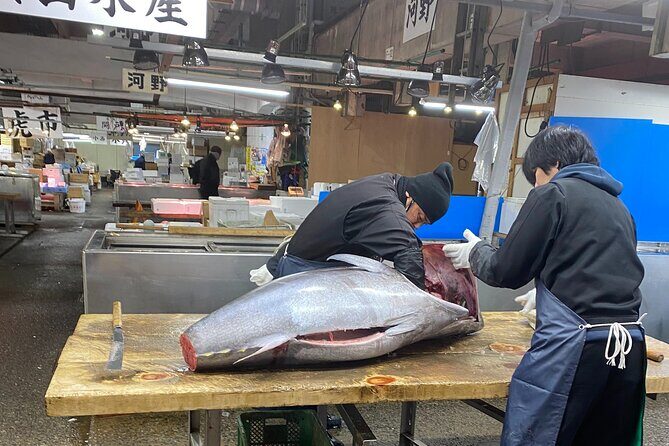
If you want Tokyo without the loudest tourist treadmill, this half-day route makes sense. You skip the well-known mega markets and go straight to Adachi’s seafood scene, where the point is the product: fresh fish and marine goods, sold in an active local market setting.
Then you switch gears. Shibamata is the kind of place where the streets feel designed for slow walking. You’ll be by the Edogawa River area, then gradually step into temple grounds and old-street textures. It’s not just sightseeing. It’s a chance to read Tokyo as a working city first, and a visitor city second.
What I like most is how the tour balances two very different Tokyo moods without feeling rushed. The market portion focuses on what you’re seeing, and the Shibamata portion focuses on what you’re noticing: carvings, street rhythm, and the architecture mix at Yamamototei. It’s a straightforward plan that works well if this is your first trip to Tokyo, or if you’ve already done the big-name highlights.
Price and value: What $91.96 buys you (and what it doesn’t)
At $91.96 per person, you’re paying for a guided, small-group half-day with included admissions and one-way local train fare. That matters because a lot of Tokyo day tours quietly charge extra for entry tickets, transport, and guide time. Here, multiple admissions are marked free, and the one-way rail from Senjuohashi to Shibamata is included.
You’re also getting a guide and a capped group size. That combination is where the money usually goes on tours like this. Less crowd time means more time to ask, compare what you see at the market, and understand what’s worth your attention at the temple sites.
What isn’t included is important: food and drinks are not part of the price, and there’s no hotel pickup/drop-off. So you’ll want to plan your own water, and either eat before you start or grab a bite during the Shibamata street time. The tour gives you stops and context, not a built-in lunch.
Getting there smoothly: the 8:00 start and the local train segment
This tour starts at Senjuhashidocho Station area in Adachi City, at 8:00 am. The meeting point is listed at 千住大橋駅 (Senjuhashidocho), and the tour ends at Shibamata Station.
You’ll also ride a one-way train segment from Senjuohashi station to Shibamata station, and that fare is included. That’s a real convenience. Local trains can be easy, but they also eat time when you’re juggling station names, exits, and transfer logic. By baking it in, the tour keeps you from losing the morning momentum.
The overall duration is about 4 hours 30 minutes. That’s long enough to feel like you had a real experience, but short enough to still enjoy the rest of your day in Tokyo without planning a nap schedule.
Stop 1: Adachi Shijo Central Market and the seafood focus
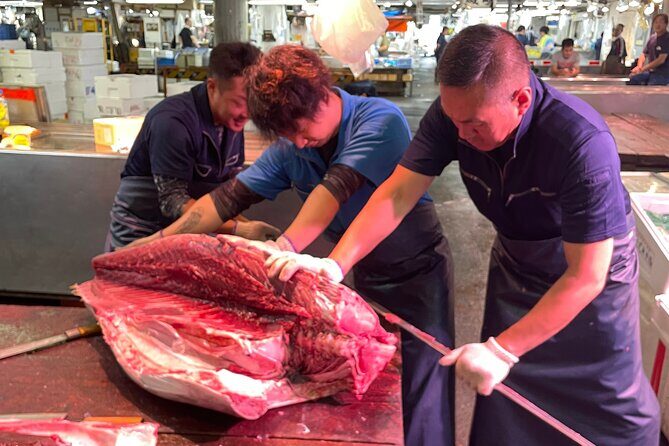
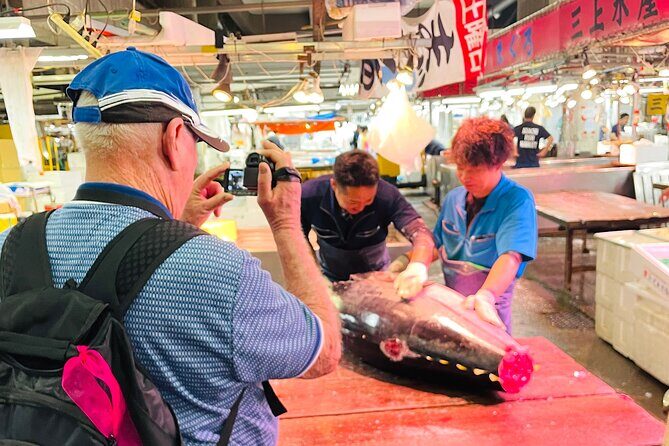
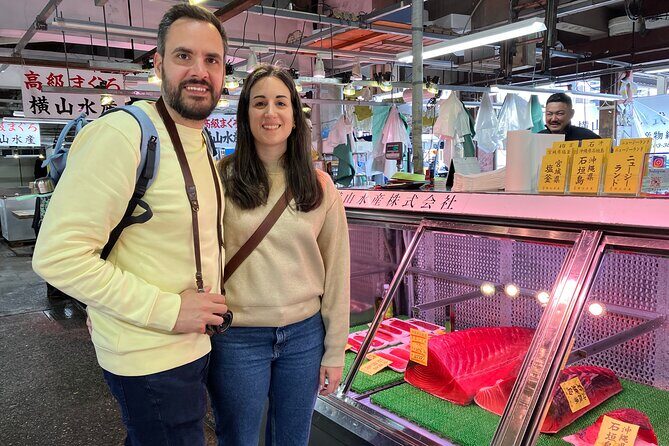
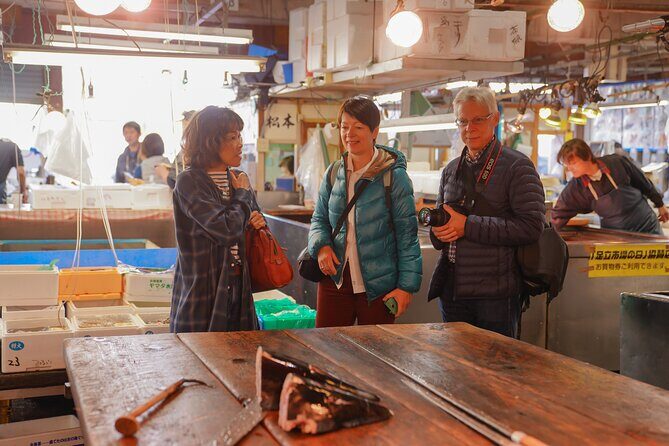
The morning begins at Adachi Shijo, a central market area where the seafood focus is the whole point. Tsukiji is famous, but this market is a specialized marine products market in Tokyo, and the big payoff is that you’re not surrounded by the same tourist crowd. The result is that you can look at stalls longer and notice the details of fish and marine goods in a working environment.
Plan to spend about an hour here. That hour is enough to:
- see how stalls are set up and what gets attention
- watch what shoppers care about
- ask the guide what to look for when seafood is the main language
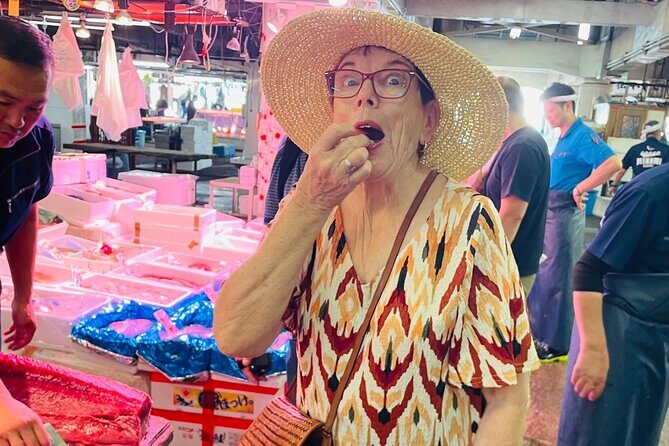
If you enjoy food photography, this is also the part where you’ll feel your camera working harder. You’ll see piles, labels, and people buying fish with purpose. And if you’re the type who likes to understand what you’re eating later, this is a good way to build that mental map before you order sushi or sashimi again that night.
One practical note: the tour includes entrance details for the market stop, but it does not include meals. So if you’re hoping to snack inside the market area, have a little cash plan or be ready to eat later in Shibamata.
More market mornings in Tokyo





Stop 2 and beyond: Shibamata’s old-street rhythm by the Edogawa River
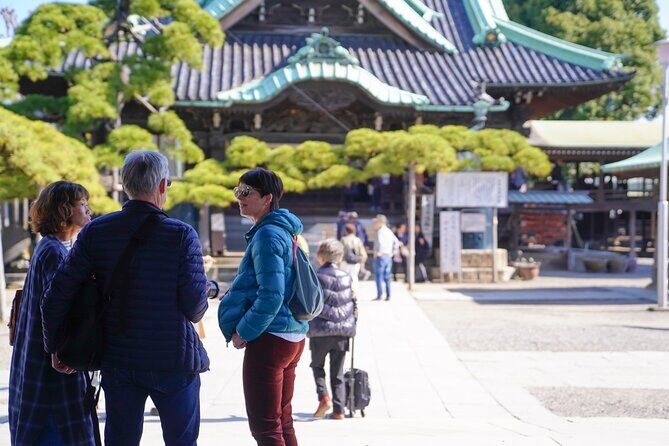
After the market, you head into Shibamata, a classic old-style town on the banks of the Edogawa River area. You’ll get around 30 minutes in town, which is short on paper, but realistic for a guided walk where the goal is to give you the feel of a neighborhood, not to tour every alley.
This is also where the tour starts to feel like a movie set, but in a good way. There’s a stop for the Statue of Futen No Tora, a bronze figure tied to the Otoko wa Tsuraiyo film series. If you recognize the reference, it adds a fun layer. If you don’t, it still works as a readable landmark right outside Shibamata Station area.
Then you move toward the temple approach street. In Shibamata, the walk itself is part of the experience. You’ll notice how the street layout shapes the pace, and how shops and small food places cluster along the way.
Taishakuten-Sando: the 200-meter shopping street you’ll actually enjoy
The next segment is Taishakuten-Sando, the main street along the roughly 200 meters from Shibamata Station to Shibamata Taishakuten. This is the kind of stretch that’s perfect for a short snack hunt. Expect traditional shop fronts and food stops, including Japanese sweets and buckwheat noodle shops mentioned as part of the street mix.
You only have about 20 minutes here, so the trick is to keep it focused. Pick one thing to try, not five. Use the guide time to ask what’s worth pausing for, and save your appetite for later if you want to keep the market seafood flavors in your head.
This is also a good moment for quick photos. Street scenes often look better when you’re not standing still with tourists and thinking. Walk a little, turn a corner, and let the street architecture do the work.
Taishakuten Daikyoji Temple: wood carvings, Lotus Sutra scenes, and ikebana garden
The main temple stop is Taishakuten-Sando to Taishakuten Daikyoji Temple area, with about 40 minutes on site. This is the part you’ll remember because of the details you can’t fake with a quick glance.
Inside and around the main hall, you’ll see wood-carved sculptures closely installed, and they cover scenes connected to the Lotus Sutra story. The effect is visual density. You’re not just seeing a building; you’re seeing a narrative laid out through carvings.
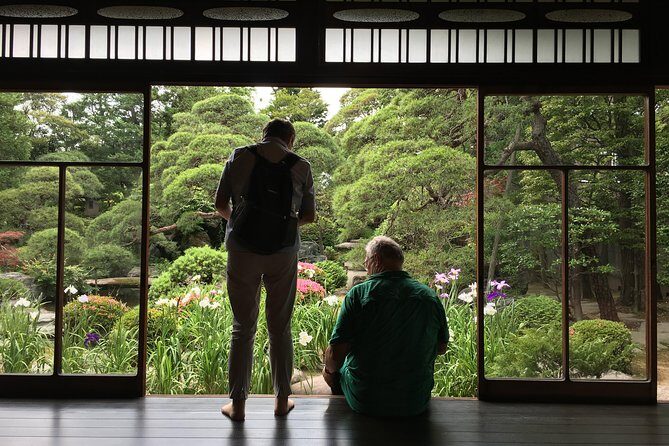
There’s also an ikebana garden setting. Ikebana is flower arranging with discipline and structure, and in a temple context it changes how you look at space. Even if you’re not an ikebana fan, this part helps you slow down.
One drawback to consider: 40 minutes can feel quick if you’re the type who wants to read every plaque closely or sketch the architecture. But that’s also the advantage of a half-day tour. You get a strong hit of the place without losing your whole day to one location.
Yamamototei: a Japanese-Western architectural surprise inside the shrine setting
The final listed stop is Yamamototei, about 30 minutes, and entrance is included. What makes this stop interesting is the building’s style: it blends Japanese and Western architectural elements in a shrine-related context.
You’ll see that mix in the overall structure, and the description highlights the Nagayamon part as having especially distinct Western-style features. This is a nice reminder that Tokyo’s older neighborhoods aren’t frozen in time. They changed, and architecture can show those changes without a big speech about it.
If you like architecture or you’re tired of the same temple-photo angles, Yamamototei is a good way to end. It’s also a calmer finish compared to the market intensity earlier in the morning.
What to bring so the 4.5 hours feel easy
This is a walking tour with market time and temple/street time. You’ll enjoy it more if you plan like a local for small comforts.
- Wear comfortable walking shoes. Side streets and market floors are not made for stiff dress shoes.
- Bring water since food and drinks aren’t included.
- If you want snacks, plan for Shibamata-Sando where sweets and buckwheat noodles are around.
- A phone camera is enough, but bring a fully charged battery. Market morning lighting can be variable.
If you have dietary restrictions, don’t assume you can easily customize food on the fly during the short street window. The tour doesn’t promise a meal stop, so you may prefer grabbing something simple.
Who this tour suits best
This works best for:
- people who want local Tokyo without the big-name crowd pressure
- food lovers who want a real seafood market experience, not just a quick look from behind a rope
- first-time visitors who want history and culture, but in a less predictable neighborhood than the usual circuits
- anyone who likes small groups and having time for questions
If you’re only interested in one type of attraction, like temples only or markets only, you might find the mix a little distracting. But if your goal is to see how Tokyo works across different neighborhood vibes, the pairing is spot on.
Should you book this Adachi and Shibamata tour?
Book it if you like the idea of starting with a specialized seafood market and ending with a temple complex that rewards attention to detail. The included admissions and one-way train fare improve value, and the small group size helps you experience it instead of just moving past it.
Skip it if you hate early mornings, want a full lunch included, or need lots of time in one place. This tour is built for a tight, efficient half-day. If that style fits you, you’ll leave with a stronger sense of Tokyo neighborhoods that most visitors miss.
FAQ
What is the duration of the tour?
The tour runs about 4 hours 30 minutes.
Where does the tour start and end?
It starts at 千住大橋駅 (Senjuhashidocho), Adachi City, Tokyo 120-0038, Japan, and ends at Shibamata Station in Katsushika City, Tokyo.
What time does the tour begin?
The start time listed is 8:00 am.
How big is the group?
The tour is limited to a maximum of eight people per booking.
Is the tour suitable for most people?
Most travelers can participate, based on the provided information.
What’s included in the price?
Included items are a professional guide, a small-group walking tour, local taxes, one-way train fare from Senjuohashi station to Shibamata station, and entrance fees at the listed stops (with Yamamototei marked as included).
What is not included?
Food and drinks are not included, and there is no hotel pickup or drop-off. Private transportation by taxi/private car/bus is also not included (available for an extra fee).
How and when will I receive confirmation?
Confirmation will be received within 48 hours of booking, subject to availability.
Can I cancel for a full refund?
Yes. You can cancel up to 24 hours in advance of the experience for a full refund. If you cancel less than 24 hours before the start time, the amount paid will not be refunded.
Is there a minimum number of people per booking?
Yes. A minimum of 2 people per booking is required.
Bring an Empty Suitcase

More Tours in Tokyo





More Tour Reviews in Tokyo




Fresh reviews from around Tokyo






Markets, compared.
 ★ 5.0Tokyo Tsukiji Fish Market Food and Culture Walking TourFrom $993,184 reviews
 ★ 5.0Tsukiji Fish Market Food and Walking tourFrom $301,724 reviews
 ★ 4.9Tsukiji Fish Market Guided Walking TourFrom $221,397 reviews
 ★ 5.0Tsukiji Fish Market Guided Tour and Sushi Making with Pro ChefFrom $104775 reviews
★ 4.7Tsukiji Fish Market Food and Culture Walking TourFrom $96757 reviews
★ 5.0Tsukiji Fish Market Guided Tour and Sushi Making with Pro ChefFrom $104775 reviews
★ 4.7Tsukiji Fish Market Food and Culture Walking TourFrom $96757 reviews
 ★ 5.0Tsukiji Fish Market: Street Food & Culture Walking TourFrom $33669 reviews
 ★ 5.0Tsukiji Fish Market Small-Group Food Walking TourFrom $87621 reviews
 ★ 4.9Tsukiji Fish Market Sushi Making Class with Pro ChefFrom $63506 reviews
Browse the lists this tour appears in