
Reviewed · TSUKIJI FISH MARKET TOURS
Tokyo: Tsukiji Fish Market Sushi Making Class with Pro Chef
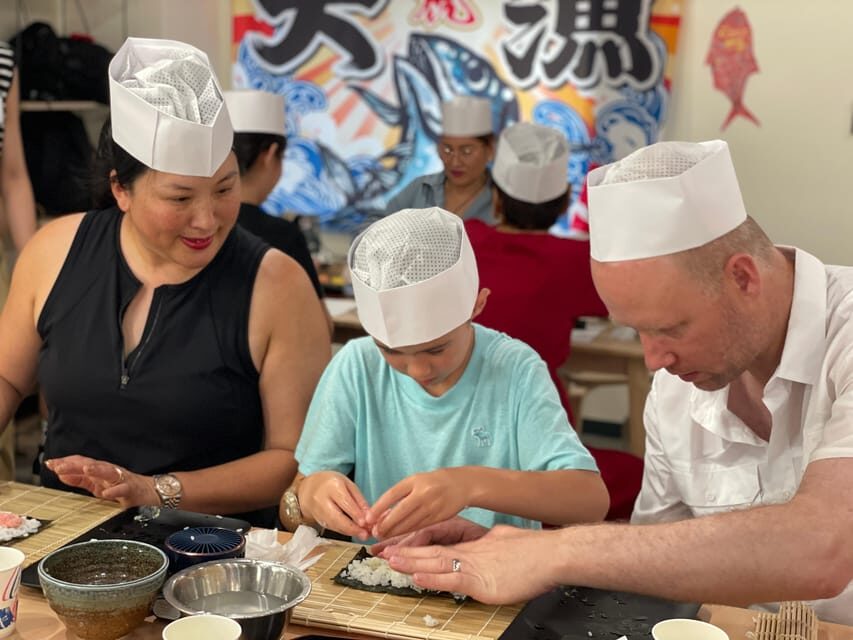
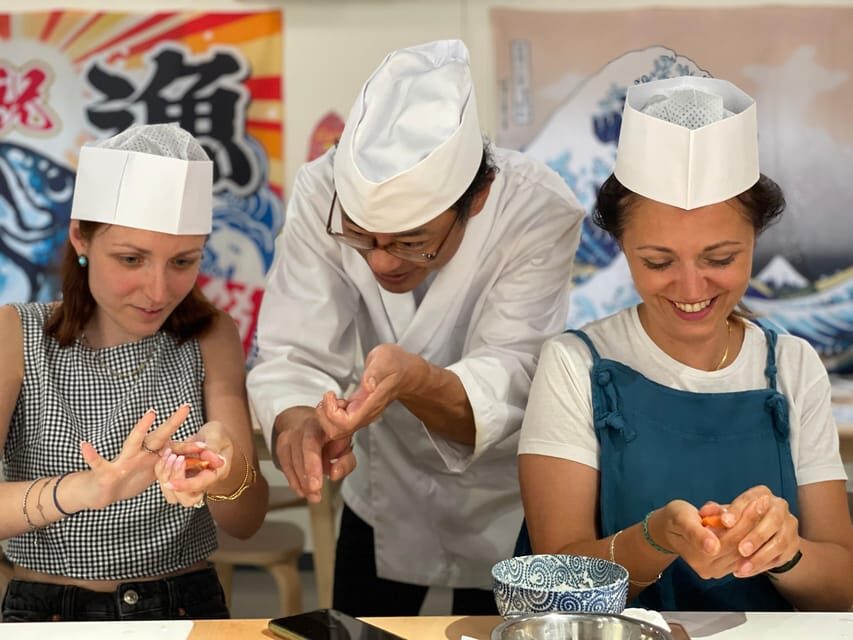
If you love food, this one hits different. This Tsukiji class puts you right in a real sushi-making workspace with fresh Tsukiji ingredients, proper tools, and a pro sushi master teaching you hands-on nigiri and maki step by step. I like that it feels less like a lecture and more like watching craft become muscle memory, with an English-speaking host guiding you the whole way.
One thing to consider: the classroom is on the third floor and it uses stairs only, so plan around that if mobility is an issue. Also, you are making sushi with fish/seafood, so it is not set up for vegans or vegetarians.
You’ll also get more than the recipe. The pace is intentionally practical: you’ll see fish disassembly, learn how sushi is actually assembled, and then eat what you made while the chef demonstrates speed and precision. In the experience format, you may work with an English host like Satoko and a chef like Tanaka, depending on the session, but the structure stays the same.
In This Review
- Key Things That Make This Class Worth Your Time
- Tsukiji’s Sushi Class Setup: Fish Market Location, Hidden Building, Real Craft
- Fish Disassembly and Knife Basics: Why This Isn’t Just a Recipe Class
- Nigiri and Maki Workshop: Making Sushi Like a Sushi Master Would
- What You Actually Eat: 4 Nigiri, 1 Maki, Tea, Dashi, and Chef-Made Extras
- The English Host’s Role: Clear Guidance and a Friendly Flow
- Price and Value at $63: What You’re Paying For in Tsukiji
- Timing, Meeting Point, and Exploring the Outer Market
- Who This Tsukiji Sushi Class Fits Best
- Should You Book This Tsukiji Sushi Making Class?
- FAQ
- How long is the sushi making class?
- What sushi do I make during the workshop?
- Do I get to eat what I make?
- Is the class suitable for vegetarians or vegans?
- Is halal or Kosher gluten-free available?
- Is there an English-speaking instructor?
- Is the classroom accessible for wheelchair users or limited mobility?
Key Things That Make This Class Worth Your Time
- A pro sushi master runs the main instruction, not a generic cooking guide
- Tsukiji-sourced ingredients and correct utensils for a real sushi workflow
- Fish prep and knife talk up front, so nigiri isn’t just assembly
- You make and eat: 4 nigiri and 1 maki, plus extra sushi prepared by the chef
- Tea and dashi soup pairings that actually fit what you’re eating
- An English-speaking host keeps things clear, with time for questions and feedback
Still hungry? More Tsukiji breakfasts and market walks
- Tokyo Tsukiji Fish Market Food and Culture Walking Tour★ 5.0 · 3,184 reviews
- Tokyo: Tsukiji Fish Market Food and Walking tour★ 5.0 · 1,724 reviews
- Tokyo: Tsukiji Fish Market Guided Walking Tour★ 4.9 · 1,397 reviews
Tsukiji’s Sushi Class Setup: Fish Market Location, Hidden Building, Real Craft
Tsukiji’s magic is that you’re not only looking at seafood. You’re learning how it becomes sushi. This class is set in the heart of the Tsukiji outer fish market area, so you can usually pop around before or after while things are still happening.
The classroom itself is in a Japanese-style building that can feel a bit tucked away, which is part of the charm. What matters for your planning is the vertical part: it’s on the third floor with stairs only. If your legs are fine and you don’t mind hauling your curiosity upward, you’re good. If not, you’ll want to think twice and maybe pick a different experience.
Inside, you’re not watching someone else do the work. You’re getting positioned with proper tools and tableware, which is a big deal for sushi. Many beginner classes hand you odd substitutions. Here, the setup is meant to train the exact motions you’ll need later—rice handling, topping placement, and rolling basics for maki.
Fish Disassembly and Knife Basics: Why This Isn’t Just a Recipe Class
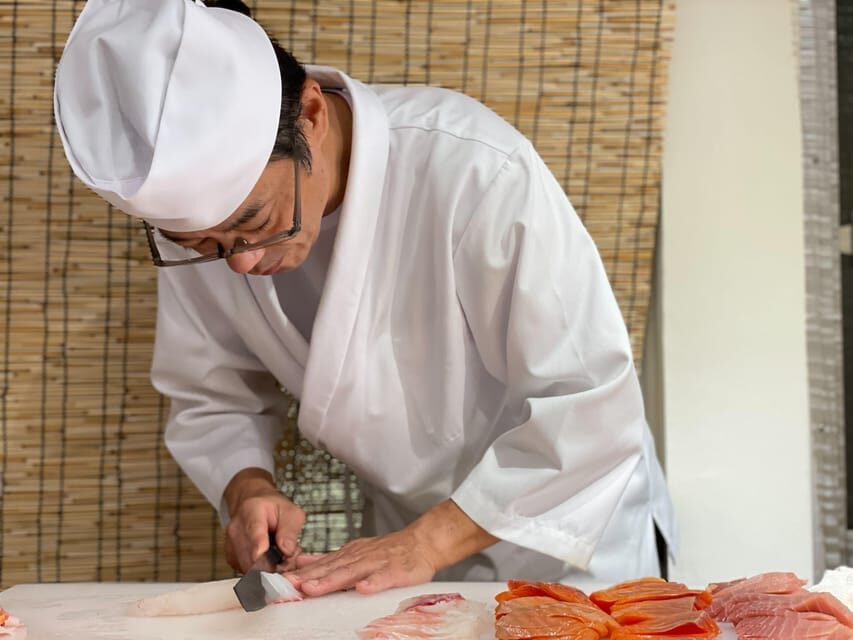
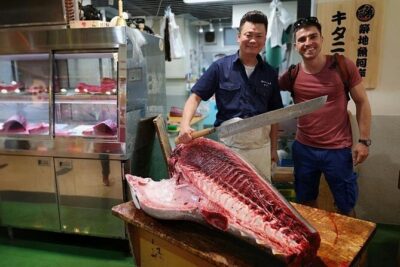
The first part is the practical foundation. You’ll watch a fish disassembly show led by the pro sushi chef. This is where the class quietly separates itself from the usual cooking-tour pattern. Sushi is presentation, yes—but it starts with preparation.
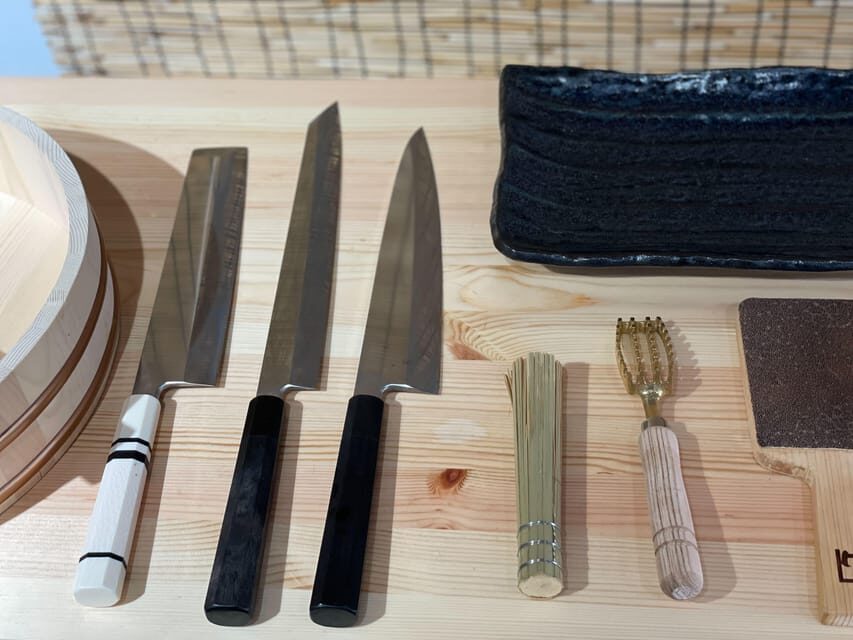
Expect the chef to walk through steps for preparing fish for sushi. You’ll also get an explanation of Japanese knives. Even if you never plan to buy a santoku or gyuto, it helps to understand why sushi shops treat knives like precision instruments. The angle, the control, and the speed matter because the goal isn’t only cutting. The goal is clean texture and correct portioning.
This part also changes how you eat afterward. Instead of thinking of sushi as a cute meal, you’ll start noticing details: how fish is portioned, how toppings sit, and how rice is shaped to hold everything in balance.
One more useful point from the way the class is described: the instruction is step by step, with the chef helping as you go. That means if your first nigiri looks like it wandered off into a different universe, the staff can correct your technique before you lock in bad habits.
Nigiri and Maki Workshop: Making Sushi Like a Sushi Master Would
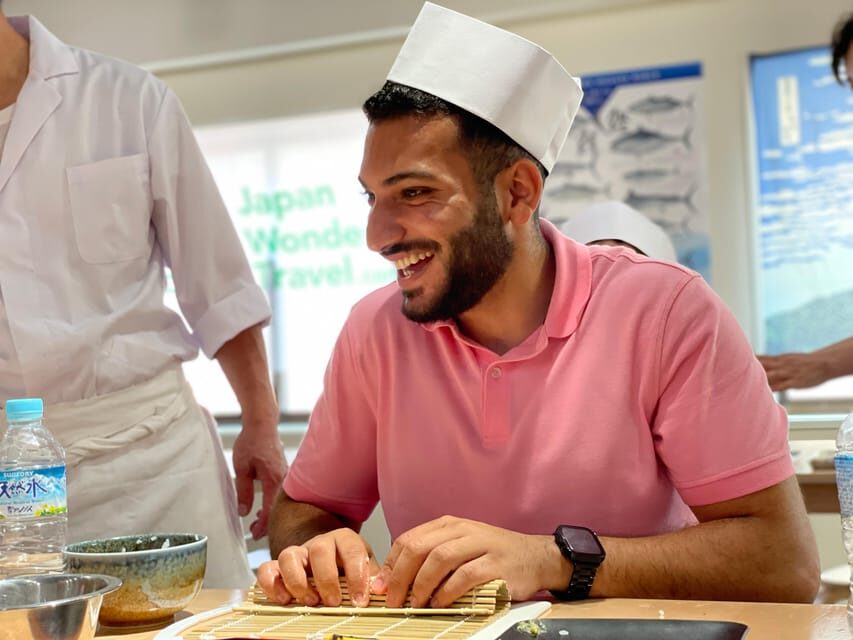
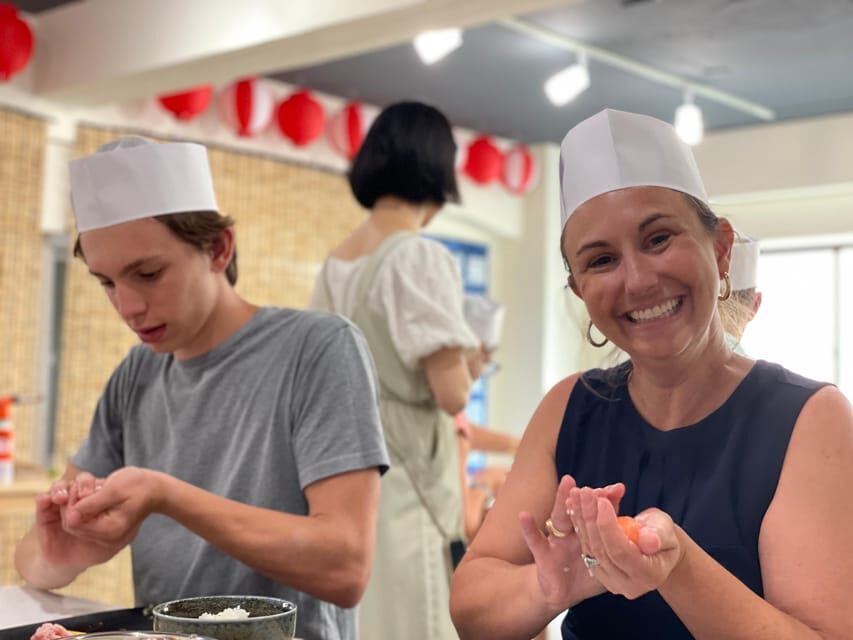
Now you get to the main event: learning what sushi really is and how to make nigiri sushi and rolled type (maki). You’ll work through proper steps, with the sushi master teaching you while you’re in the middle of it.
Here’s what makes this practical for beginners. You’re not just assembling ingredients. You’re learning the logic behind each step: how sushi rice should feel and hold, how portions should be shaped, and how toppings should sit so the sushi stays stable when you eat it.
For nigiri, the lesson usually revolves around getting a consistent rice base, then placing fish correctly. For maki, you’ll learn the basics of rolling technique. That includes how to handle fillings without overstuffing and how to roll tight enough to slice cleanly. Even if you only do one roll pattern, the process teaches you what good maki should feel like in your hands.
And yes—you’ll be able to taste your work immediately. The class is designed so you don’t finish with theory and a dry goodbye. You make, then you eat.
What You Actually Eat: 4 Nigiri, 1 Maki, Tea, Dashi, and Chef-Made Extras
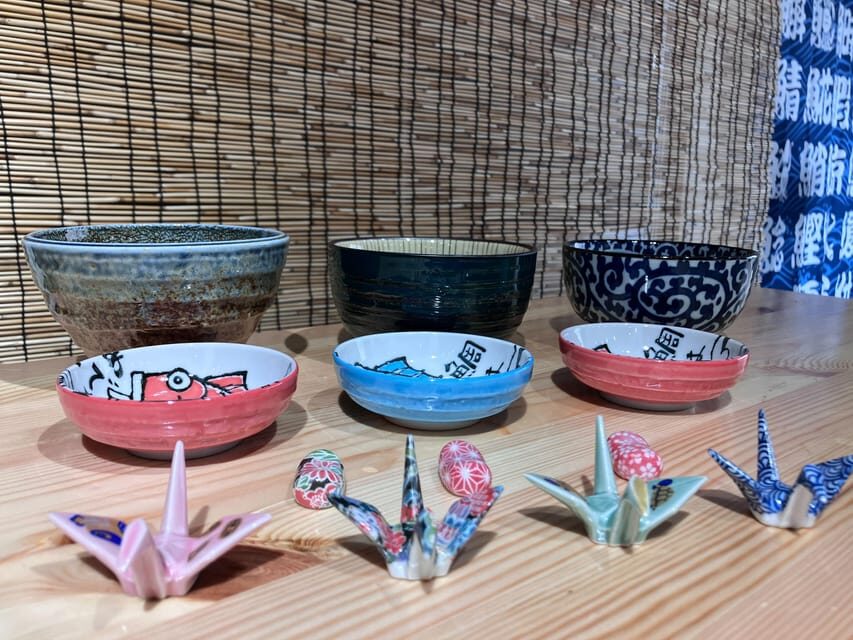
Let’s talk food, because that’s why you’re here.
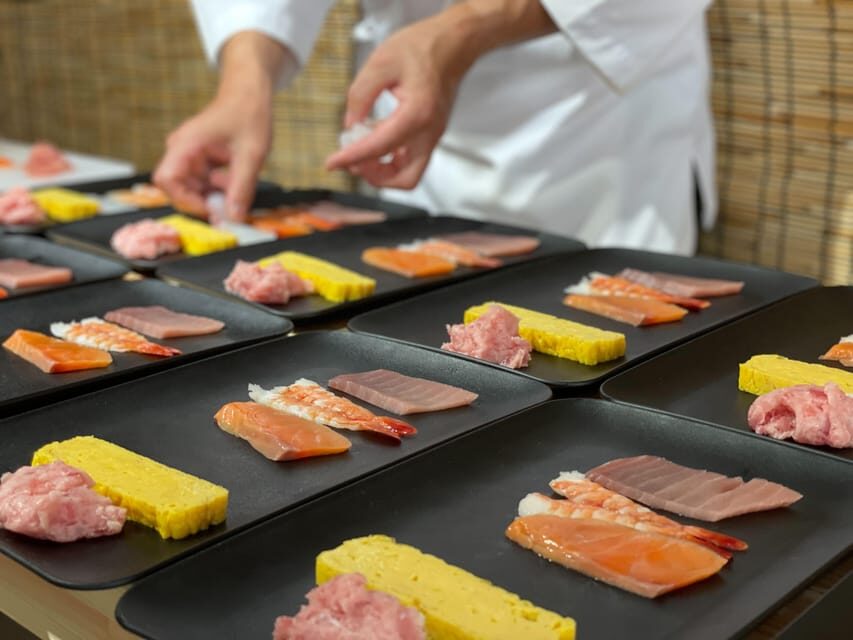
The class includes the sushi you make: 4 different nigiri sushi and 1 maki sushi. On top of that, the chef also prepares additional sushi for you. So even if your first attempt at a perfect nigiri is more art project than sushi badge, you’ll still leave full.
Pairings matter too. You’re served traditional dashi soup and green tea, and those choices are not random. Dashi is light, salty, and warm—exactly the kind of thing that resets your palate between bites. Green tea cuts through richness and helps you keep tasting rather than just surviving the flavor.
Also, the chef prepares wasabi with real care. In sushi culture, wasabi is not only heat. It’s a balancing tool that supports fish flavor. You’ll see how it’s handled and applied.
The experience also has a calm ritual vibe. Some sessions include learning about how to eat sushi and a blessing before eating. Even if the exact wording varies by group, the overall tone is respectful and focused—less party, more craft.
More shopping runs through Tokyo


The English Host’s Role: Clear Guidance and a Friendly Flow
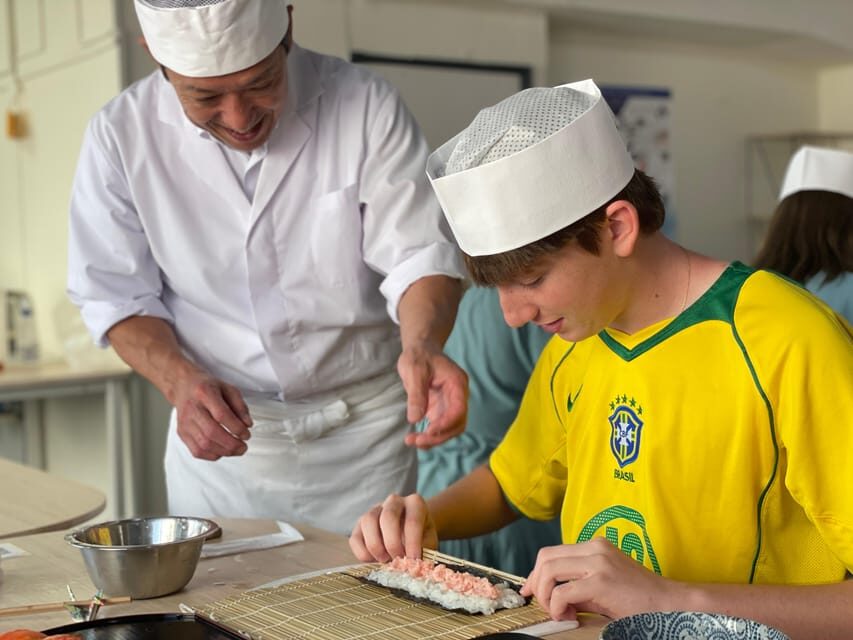
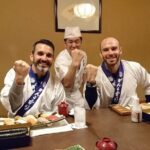
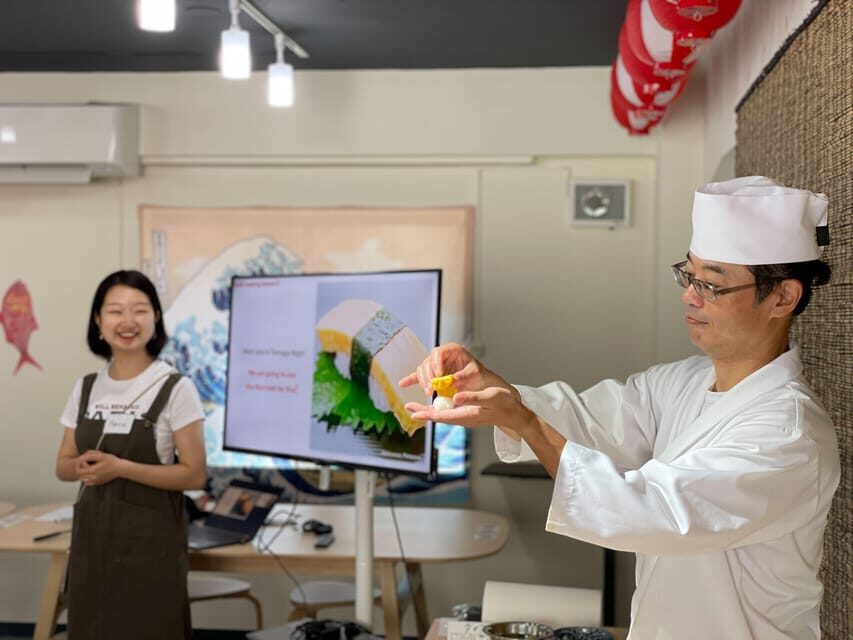
You’re not on your own with chopsticks and hope. An English-speaking host is part of the class, and that matters because sushi has small technical details that are easy to miss.
This host typically does two things well:
- Translates the lesson into plain language
- Keeps the class moving so you’re not stuck waiting, confused, or falling behind
From the way the class is described and the feedback patterns you provided, hosts are also doing historical and cultural framing. The result is that the sushi lesson doesn’t float in a bubble. You get context about sushi culture, and it helps you understand why techniques exist in the first place.
You may also notice the class structure supports questions. Many of the accounts emphasize patience and feedback, especially when people are new to raw fish. That’s important because sushi can feel intimidating at first, and a good teacher removes fear by making technique feel achievable.
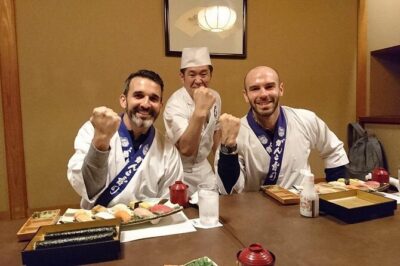
One more human detail: the class includes a hat. It sounds small, but in Japan it often signals that you’re joining a real workshop, not just attending a demo.
Price and Value at $63: What You’re Paying For in Tsukiji
$63 per person is not cheap, but it can be a solid value if you compare it to what you’re receiving.
You’re paying for:
- A professional sushi master teaching you step by step
- Fresh Tsukiji-sourced ingredients
- Correct utensils and tableware, not flimsy replacements
- A meal built into the experience: 4 nigiri + 1 maki, plus additional chef-made sushi
- Tea and dashi soup included
- English support through the process
Cooking classes often charge for entertainment and eat time. This one charges for instruction quality and ingredients quality. And since the class is tied to the Tsukiji market area, it doesn’t feel like you’re driving out to a random kitchen studio far from the source.
If you’re the type who likes learning a technique you can actually repeat at home, this is the kind of class where the price starts to make sense. You’ll leave with a clearer mental map of sushi-making, not only a souvenir photo.
If you’re mostly hungry and want a quick bite, you might find the cost higher than a regular meal. But if sushi craft is the point, the pricing feels more reasonable.
Timing, Meeting Point, and Exploring the Outer Market
The duration is listed as 90 minutes to 4 hours, depending on the option and starting times. That range matters for your schedule. If you’re planning an appointment right after, I’d give yourself buffer time. The class may run beyond the scheduled ending point, so don’t stack your day too tightly.
The meeting point may vary depending on the option you book, so don’t wing it. Get the exact location details when you confirm. The good news is that the class is centered in the Tsukiji outer market area, so you can usually extend your visit without a big transit plan.
What to do with the time: go for a slow walk around the outer market area before class so you recognize what you’re about to use. After class, it’s satisfying to see the market again with new context. You’ll spot fish and understand how preparation turns into sushi structure.
Also, note what is not included: there is no hotel pickup/drop-off, and the class does not include guidance through the market. That’s fine—you can explore on your own before or after—but it means you should plan to navigate your market walk without relying on a guide for every step.
Who This Tsukiji Sushi Class Fits Best
This experience is a strong match if you:
- Want real instruction from a pro sushi chef
- Learn best by doing, not only watching
- Like food experiences that teach technique you can repeat
- Are comfortable eating fresh sushi, even if you don’t usually eat raw fish
It’s family-friendly in the sense that it’s labeled suitable for families, but there’s a clear age cutoff: not suitable for children under 4. It’s also not designed for mobility impairments or wheelchair users because the classroom is on the third floor with stairs only.
Diet-wise, this one has limits. It does not accommodate vegetarian, vegan, halal, or Kosher gluten-free requests. The class may be able to handle allergy-related requests case by case, but you should inform them during reservation if you have allergies.
If your group includes someone who wants vegan food or avoids seafood, you might need to plan separately.
Should You Book This Tsukiji Sushi Making Class?
I’d book it if you want more than a sushi tasting and you like learning how food is made at the source. The combination of Tsukiji ingredients, a sushi master teacher, and a meal that includes what you actually create makes it a useful, memorable day.
Skip it if stairs are a dealbreaker for your body, or if your dietary needs don’t match the class format. Also skip it if you want a low-cost, casual snack-only experience.
For most sushi lovers, this is the kind of activity that turns a Tokyo highlight into a skill you can carry home. And even if your first nigiri doesn’t win a competition, you’ll still eat great sushi and understand why it tastes the way it does.
FAQ
How long is the sushi making class?
It runs between 90 minutes and 4 hours, depending on the starting time and option you choose.
What sushi do I make during the workshop?
You make 4 different nigiri sushi and 1 maki sushi, and you also get additional sushi made by the sushi master.
Do I get to eat what I make?
Yes. Your class portion includes eating the sushi you make, plus tea and soup, along with extra sushi prepared by the chef.
Is the class suitable for vegetarians or vegans?
No. The experience does not accommodate vegetarian or vegan requests.
Is halal or Kosher gluten-free available?
No. The experience does not accommodate halal or Kosher gluten-free requests.
Is there an English-speaking instructor?
Yes. The class includes an English-speaking host, and the instruction is led by a professional sushi master.
Is the classroom accessible for wheelchair users or limited mobility?
No. The classroom is on the third floor and uses stairs only, and it is not suitable for wheelchair users or people with mobility impairments.
Bring an Empty Suitcase
More Tour Reviews in Tokyo






Back to the Market: More Tsukiji Tours

Fresh reviews from around Tokyo






Tsukiji Fish Market Tours, compared.
 ★ 5.0Tokyo Tsukiji Fish Market Food and Culture Walking TourFrom $993,184 reviews
 ★ 5.0Tsukiji Fish Market Food and Walking tourFrom $301,724 reviews
 ★ 4.9Tsukiji Fish Market Guided Walking TourFrom $221,397 reviews
 ★ 5.0Tokyo Sushi Making Class in Tsukiji with Professional ChefFrom $491,177 reviews
 ★ 5.0Tsukiji Fish Market Guided Tour and Sushi Making with Pro ChefFrom $104775 reviews
★ 4.7Tsukiji Fish Market Food and Culture Walking TourFrom $96757 reviews
★ 5.0Tsukiji Fish Market Guided Tour and Sushi Making with Pro ChefFrom $104775 reviews
★ 4.7Tsukiji Fish Market Food and Culture Walking TourFrom $96757 reviews
 ★ 5.0Tsukiji Fish Market: Street Food & Culture Walking TourFrom $33669 reviews
 ★ 5.0Tsukiji Fish Market Small-Group Food Walking TourFrom $87621 reviews
Browse the lists this tour appears in