
Reviewed · TSUKIJI FISH MARKET TOURS
Tsukiji Fish Market Guided Tour and Sushi Making with Pro Chef
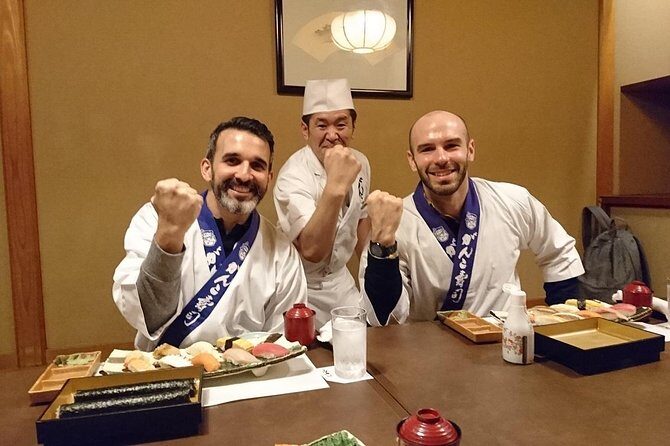
Fish markets are the best kind of classroom. This 4-hour Tsukiji experience mixes an outer Tsukiji market walk with an intro sushi-making class led by a professional sushi chef. You’ll see how seafood moves from catches and wholesale into everyday food, then you’ll make your own nigiri and a rolled sushi piece to eat for lunch.
I like that the day is built around Tsukiji outer market culture, not just sightseeing. I also love the hands-on part: you learn to form 5 types of nigiri plus one rolled item, with expert guidance step by step. One drawback to plan around: this isn’t marketed as an all-you-can-sample tasting tour, so you may want to bring cash if you like buying street snacks along the way.
In This Review
- A smooth start matters here
- Stairs, venues, and timing to watch
- Key highlights worth your attention
- Tsukiji Outer Market: Why this feels like Tokyo, not a museum
- Tsukiji Hongan-ji Temple: the meeting point that can trip up your GPS
- Stop-by-stop: the outer market areas and what you’ll learn
- Tsukiji Hongwanji Temple: customs before seafood
- Tsukiji Fish Market: getting your bearings in minutes
- Tsukiji Jogai Market: where shopping culture shows up
- Tsukiji Nippon Fish Port Market: seeing the wholesale mindset
- Sushi-making with a pro: how the class actually teaches you
- Lunch included: what you’ll eat (and why it pairs well)
- Price and value: what $104.13 really buys you
- Who this tour fits best (and who might feel cramped)
- My booking checklist before you commit
- Should you book this Tsukiji Fish Market and sushi-making tour?
- FAQ
- What areas of Tsukiji will this tour visit?
- Where do I meet the guide?
- How long is the tour?
- What will I learn to make in the sushi class?
- Is lunch included?
- What should I wear?
- Can the tour accommodate vegetarian, halal, gluten-free, or kosher requests?
- FAQ
- Which days is the fish market closed?
- Where is the sushi class held?
- Is the tour only at Tsukiji?
A smooth start matters here
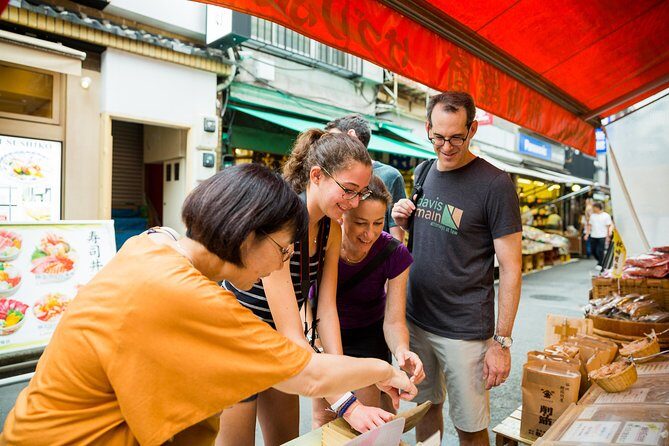
The day begins at Tsukiji Hongan-ji Temple, at the main gate (the front side). Your guide will be holding a board that says Japan Wonder Travel, and they will leave at the start time sharp. This matters because the tour is fast-paced walking, and your market window is short.
Also, the inner Tsukiji market business area moved to Toyosu after Oct 2018, so you’ll be focusing on the outer market and mini-wholesale areas instead. In practice, that’s often what makes the tour feel more local.
Still hungry? More Tsukiji breakfasts and market walks
- Tokyo Tsukiji Fish Market Food and Culture Walking Tour★ 5.0 · 3,184 reviews
- Tokyo: Tsukiji Fish Market Food and Walking tour★ 5.0 · 1,724 reviews
- Tokyo: Tsukiji Fish Market Guided Walking Tour★ 4.9 · 1,397 reviews
Stairs, venues, and timing to watch
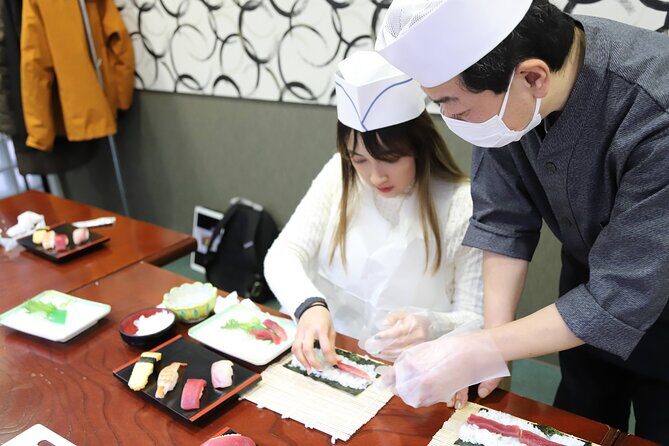
The sushi classroom is in a Japanese-style building and you go up to the third floor, so expect stairs. And depending on venue availability, the sushi-making portion may be held in Asakusa or Yotsuya, meaning the day’s end point can shift (you won’t know the exact end point in advance).
Key highlights worth your attention
- Outer Tsukiji focus instead of the Toyosu inner market shuffle
- Pro chef instruction to make 5 nigiri styles plus a roll
- Lunch included: what you make, plus sushi prepared by the chef with wasabi
- Temple-to-market flow that adds culture before the seafood
- Small groups (max 22) for a calmer class experience
Tsukiji Outer Market: Why this feels like Tokyo, not a museum
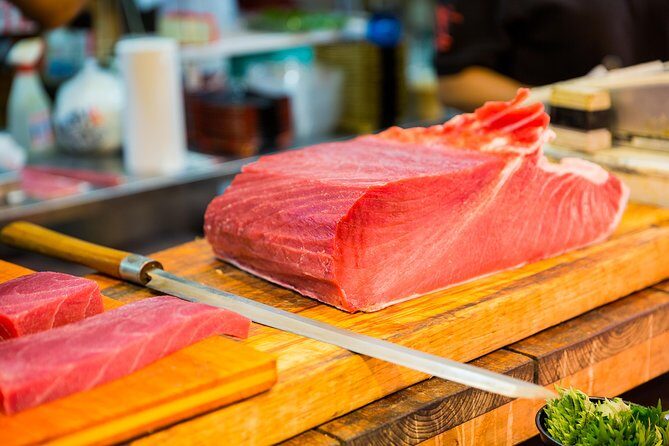
When you picture Tsukiji, you probably imagine the old inner-market scene. But the inner market moved to Toyosu in 2018, so a lot of what you see online is out of date. This tour keeps you in the outer Tsukiji area, where you can still feel the market’s role in daily food life—shopping, quick bites, and the smaller wholesaler vibe.
That matters because outer Tsukiji is where you’ll notice how Japanese seafood culture shows up in real routines. The guide points out different types of foods and ingredients (and the tools people use), so you aren’t just looking at fish—you’re learning what the whole system is for.
And yes, Tokyo is big, so context helps. The temple visit early on gives your brain a landing spot before you hit seafood overload.
Tsukiji Hongan-ji Temple: the meeting point that can trip up your GPS
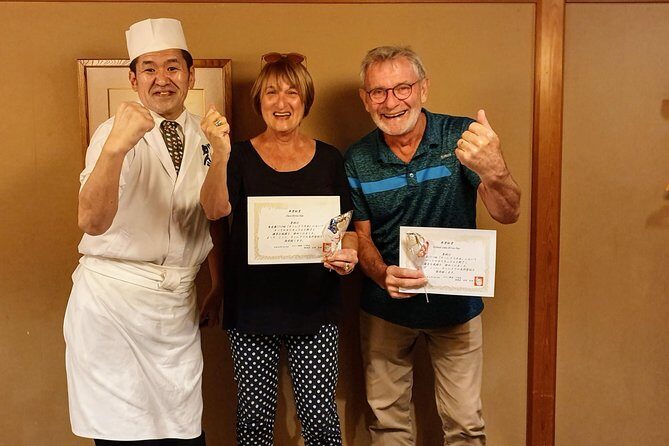
Meet at the main gate of Tsukiji Hongan-ji Temple: 3-chōme-15-1 Tsukiji, Chuo City. This tour leaves on time, and they won’t wait for late arrivals. You’ll also want to use the right side of the temple for directions because Google Maps can route you to the back side.
In past groups, guides have included people like Monami, Ko, and Sachi-san—names that show up repeatedly in feedback. No matter who leads your group, the first stop sets the tone: how people behave at temples, why this area matters historically, and how local customs link back to food culture.
Practical note: bring comfortable walking shoes. This is mostly walking, and Tsukiji sidewalks can be uneven.
More days made easy by a guide



Stop-by-stop: the outer market areas and what you’ll learn
This tour is designed around a sequence that moves from spiritual and historical context into marketplace details. You’ll cover four main stops.
Tsukiji Hongwanji Temple: customs before seafood
You start at Tsukiji Hongan-ji Temple. Expect cultural background and guidance on respectful temple etiquette. One review mentioned learning how to properly pray in a Buddhist temple, which is exactly the kind of small skill that makes the visit feel more than a photo stop.
The upside here is mental. You’re not just rushing from one crowded place to another. You’re given a framework for what you’re seeing—Tokyo’s layered past and present.
Tsukiji Fish Market: getting your bearings in minutes
Once you move into the outer market area, a good guide helps you find what you’d miss if you wandered on your own. The tour highlights key spots and explains how seafood is caught, distributed, and sold.
This is the part where a guided flow can be worth paying for. Tsukiji can be confusing fast: stalls, competing scents, and products that look similar until you know the difference. A guide’s job is to translate the chaos into a map in your head.
Tsukiji Jogai Market: where shopping culture shows up
Jogai Market is one of those places that feels like it lives for the day-to-day. You’ll get oriented to different kinds of foods and ingredients and why people buy them in person.
If you’re the type who likes to understand what you’re looking at—fish types, preparation styles, utensils—this stop is useful. If you’re hoping for a slow stroll with lots of time to snack, keep in mind the day has a set pace.
Tsukiji Nippon Fish Port Market: seeing the wholesale mindset
This stop adds another layer: the wholesale and market-port perspective. You’ll learn about the seafood supply chain in a way that makes sushi ingredients feel more specific, not generic.
Also, there’s a practical reality to know: the fish market (Uogashi wholesaler market) is closed on Wednesdays, Sundays, and other closed market days. The tour still runs as scheduled by the provider, but if your travel dates land on a closed day, you’ll want to keep expectations flexible about what you can see in the market action.
Sushi-making with a pro: how the class actually teaches you
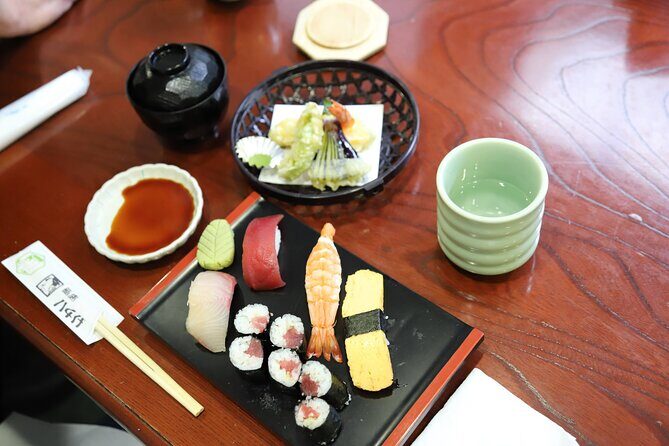
After the walk, you shift into the sushi-making classroom. It’s often described as a hidden local building in the center of the market area, and it’s upstairs. Plan your body for stairs—you’ll likely be climbing to the third floor.
The structure is designed for beginners, but it’s real sushi work. You’ll make:
- 5 types of nigiri
- 1 rolled type
Your sushi chef teaches step by step, and the class includes a wasabi moment too. Reviews specifically mention fresh, expertly prepared wasabi, and some mention the chef demonstrating skill like deboning fish in front of the class.
That’s a big reason this works: you get instruction plus a craft-show component. Sushi isn’t just assembly. It’s texture, timing, and technique.
One review even wished the class included more guidance on slicing the fish for nigiri. That’s a helpful detail to know if you’re the type who wants to replicate sushi at home: you’ll learn a lot, but you may still want practice after you return.
Lunch included: what you’ll eat (and why it pairs well)
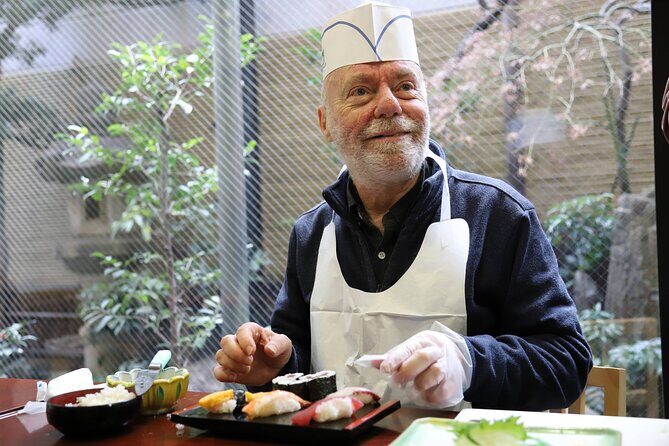
You eat the sushi you make, plus additional sushi prepared by the sushi master. On top of that, the class provides:
- traditional dashi soup
- green tea
- wasabi served with the sushi
This pairing is practical. Dashi helps reset your palate between bites, and the green tea works like a gentle closer at the end of the meal. It’s also useful because it anchors the flavor profile in a Japanese context, not just raw fish.
And this is another value point: you’re not paying only for the lesson. You’re paying for an actual lunch you helped create.
Price and value: what $104.13 really buys you
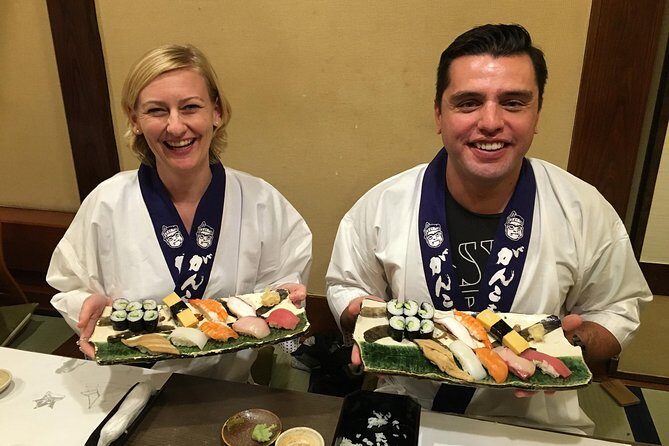
At about $104.13 per person, this isn’t the cheapest way to spend a morning in Tokyo. But the value is in the mix.
You’re paying for:
- a guided walk through outer Tsukiji market areas (not just wandering)
- temple/culture context that makes the seafood feel less random
- a professional sushi chef teaching hands-on technique
- lunch included (your sushi plus chef-prepped pieces, with dashi and green tea)
If you’ve ever taken a market tour where you pay for the privilege of seeing stalls and then buy food separately, this generally feels more structured than that. A few reviews also mention that you might spend as much on snack purchases as you do on the class, so budget a little extra if you want to taste more than what’s included.
Where you should be cautious on value is dietary fit and expectations. The tour does not accommodate vegetarian, halal, gluten-free requests, or allergy-related requests. They say they’ll try to accommodate allergies, but it may not be possible. So if you have strict food limits, you may want to choose a different experience.
Who this tour fits best (and who might feel cramped)
This tour is a strong match if you:
- want an organized way to understand Tsukiji without getting lost
- enjoy hands-on cooking classes more than passive food tasting
- want to learn sushi basics you can try later
- like a culture-to-food sequence (temple first, then market)
It may feel less ideal if you:
- expect lots of included tastings in the market (the day includes your sushi lunch, but market sampling isn’t described as fully covered)
- hate stairs (the classroom is on the third floor with only stairs)
- need strict dietary accommodations (vegetarian/halal/gluten-free and kosher are not accommodated, and allergies may not be possible)
Also remember: group size is capped at 22, which helps keep things smooth, but it’s still a group setting. If you prefer total free time to roam Tsukiji at your own pace, you might want a different plan.
My booking checklist before you commit
Use this to decide fast, so you don’t regret it later.
- Check your travel day
The fish market (Uogashi wholesaler market) is closed on Wednesdays, Sundays, and other closed market days. If your date lands there, adjust expectations.
- Plan for stairs and small timing windows
The tour has a set schedule. If you have an appointment right after, tell the provider in advance. The end time can run late, and they won’t extend the tour for late arrival.
- Bring comfortable shoes
You’ll be walking most of the way.
- If you want snacks, budget for them
Some reviews suggest bringing cash for extra street food purchases.
- Be honest about dietary needs
If you have restrictions, put them in the booking details. Don’t wait until you arrive.
Should you book this Tsukiji Fish Market and sushi-making tour?
If your goal is to learn sushi technique while getting a guided understanding of outer Tsukiji’s food culture, I think this is a smart booking. The combination of a market walk plus a chef-led class—and then eating what you made—adds up better than most “see the market, eat later” plans.
Skip it or look for an alternative if stairs are a problem, if you need vegetarian/halal/gluten-free support, or if you expected a market tour packed with included tastings. In those cases, the format won’t match your needs.
FAQ
What areas of Tsukiji will this tour visit?
It focuses on the Tsukiji outer market and mini wholesale areas. The inner business market moved to Toyosu after Oct 2018, so this tour does not cover the inner market area.
Where do I meet the guide?
You meet at the main gate of Tsukiji Honganji-Temple. The guide will be waiting with a board that says Japan Wonder Travel.
How long is the tour?
The duration is about 4 hours (approx.).
What will I learn to make in the sushi class?
You’ll learn to make 5 types of nigiri sushi and a rolled type, with a professional sushi chef.
Is lunch included?
Yes. You enjoy your own sushi creations for lunch, plus sushi prepared by the sushi master. Traditional dashi soup and green tea are also offered.
What should I wear?
Wear comfortable walking shoes. The tour involves a lot of walking, and the sushi classroom is reached by stairs.
Can the tour accommodate vegetarian, halal, gluten-free, or kosher requests?
No. The tour does not accommodate vegetarian, halal, gluten-free requests, or kosher. For allergy-related requests, they say they will try, but it may not be possible.
FAQ
Which days is the fish market closed?
The fish market (Uogashi wholesaler market) is closed on Wednesdays, Sundays, and other closed market days.
Where is the sushi class held?
It’s described as a hidden local classroom in the center of the market area, but the sushi-making experience may be held in Asakusa or Yotsuya depending on venue availability.
Is the tour only at Tsukiji?
The tour starts at Tsukiji Hongan-ji Temple. The end point is Tsukiji or Shinjuku depending on the date, and the provider says they can’t inform you in advance.
More Tours in Tokyo




More Tour Reviews in Tokyo




Back to the Market: More Tsukiji Tours


Fresh reviews from around Tokyo






Tsukiji Fish Market Tours, compared.
 ★ 5.0Tokyo Tsukiji Fish Market Food and Culture Walking TourFrom $993,184 reviews
 ★ 5.0Tsukiji Fish Market Food and Walking tourFrom $301,724 reviews
 ★ 4.9Tsukiji Fish Market Guided Walking TourFrom $221,397 reviews
 ★ 5.0Tokyo Sushi Making Class in Tsukiji with Professional ChefFrom $491,177 reviews
★ 4.7Tsukiji Fish Market Food and Culture Walking TourFrom $96757 reviews
★ 5.0Tokyo Sushi Making Class in Tsukiji with Professional ChefFrom $491,177 reviews
★ 4.7Tsukiji Fish Market Food and Culture Walking TourFrom $96757 reviews
 ★ 5.0Tsukiji Fish Market: Street Food & Culture Walking TourFrom $33669 reviews
 ★ 5.0Tsukiji Fish Market Small-Group Food Walking TourFrom $87621 reviews
 ★ 4.9Tsukiji Fish Market Sushi Making Class with Pro ChefFrom $63506 reviews
Browse the lists this tour appears in