
Reviewed · COOKING CLASSES
Tokyo: Sushi and Ramen Cooking Class with Sake Pairing Set
Two classics, one calm kitchen.
This Tokyo cooking class blends sushi and ramen-making in one 3-hour session, complete with a structured sake tasting. You learn by doing, not by watching from the sidelines.
I love the hands-on mix of skills: you’ll work on ramen broth and nigiri sushi using the ingredients and tools provided. I also like how the class stays small, so explanations don’t blur together when you’re trying to form sushi rice or nail timing.
One consideration: it’s not for vegans or vegetarians, and you should wear clothes you don’t mind getting a little dirty.
In This Review
- Key highlights worth planning around
- Tokyo’s Tsukishima Kitchen: getting there and knowing the vibe
- Ramen from scratch: broth building and melt-in-your-mouth chashu
- Nigiri sushi: origins, then hand-formed pieces you can repeat
- The 3-sake pairing set: how the lesson ties into flavor
- Your take-home recipe booklet and chopsticks souvenir
- Small-group size: why you get help at the exact moment you need it
- Price and value: what $129 actually buys in Tokyo
- Who should book this sushi and ramen class in Tsukishima
- Should you book it? A quick decision guide
- FAQ
- How long is the cooking class?
- How many people are in the small group?
- What dishes will I learn to make?
- Is sake tasting included?
- Where is the meeting point?
- Is the class suitable for vegans or vegetarians?
- What are the cancellation and payment options?
Key highlights worth planning around
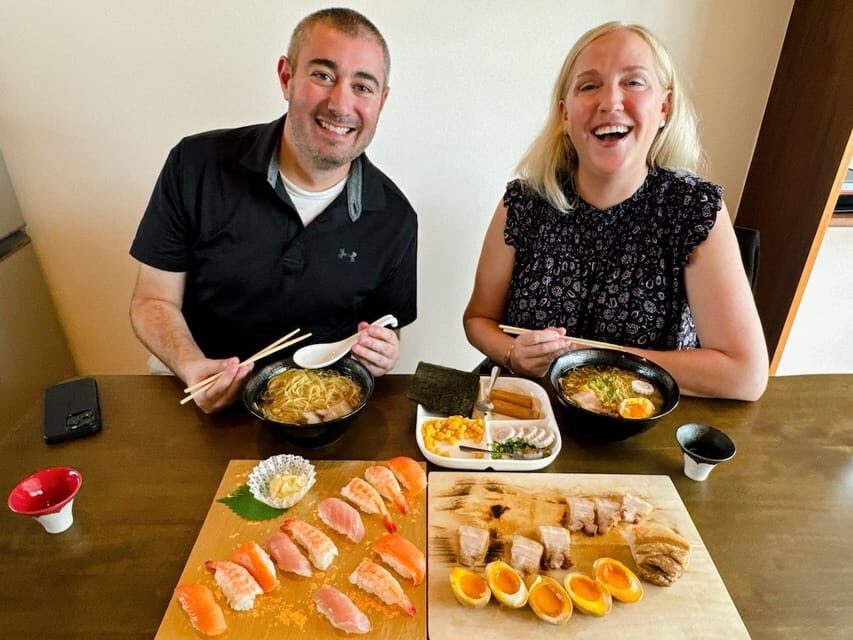
- Small group setting (about 4–8 people) for real interaction with the instructors
- Ramen from scratch, including the broth and chashu pork belly
- Nigiri practice, paired with talk about sushi origins and technique
- 3 premium sake tasting set, guided by a certified sake sommelier
- Take-home recipe booklet plus a souvenir chopsticks pair
Another round: more sake tastings
- Ramen and Sushi Cooking Class with Sake Pairing Set in Tokyo★ 5.0 · 291 reviews
- Sake Tasting Masterclass in Shinjuku (8+ Varieties with a Pro)★ 5.0 · 271 reviews
- Wagyu & Sake Pairing in Shinjuku – Steak, Shabu-Shabu & More★ 5.0 · 112 reviews
Tokyo’s Tsukishima Kitchen: getting there and knowing the vibe
This class starts in Tsukishima, in the 2nd floor of HAUS Tsukishima (2-13-5 Tsukuda, Chuo-ku, Tokyo). It’s a 5-minute walk from Exit 4 of Tsukishima Station (Y21), which is perfect when you want something local without a long commute.
Plan to arrive about 5 minutes early. The setup is designed so you can start on time and get hands-on right away. Also, come in comfortable clothes. You are cooking. You’ll probably get splashes, rice, or sauce on you at some point.
One small practical note: there’s no hotel pickup or drop-off. If your hotel is outside the central train radius, you’ll want to budget a bit of time for getting to Tsukishima. For me, that’s the trade-off you accept when you’re choosing a venue with a true neighborhood feel and a compact group size.
Ramen from scratch: broth building and melt-in-your-mouth chashu
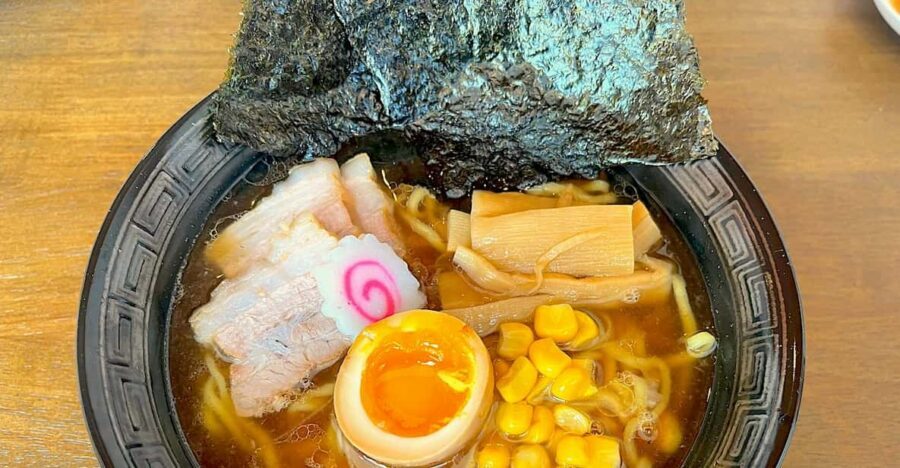
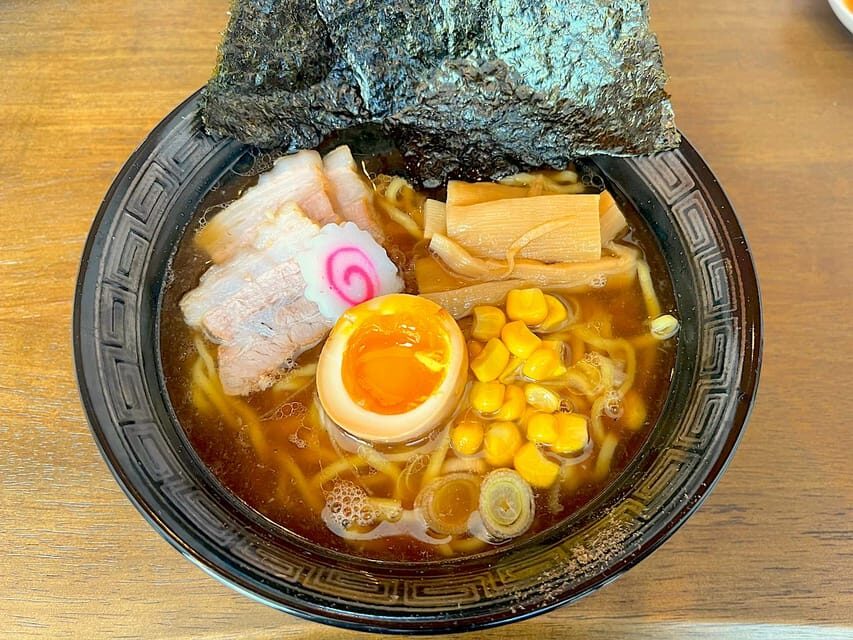
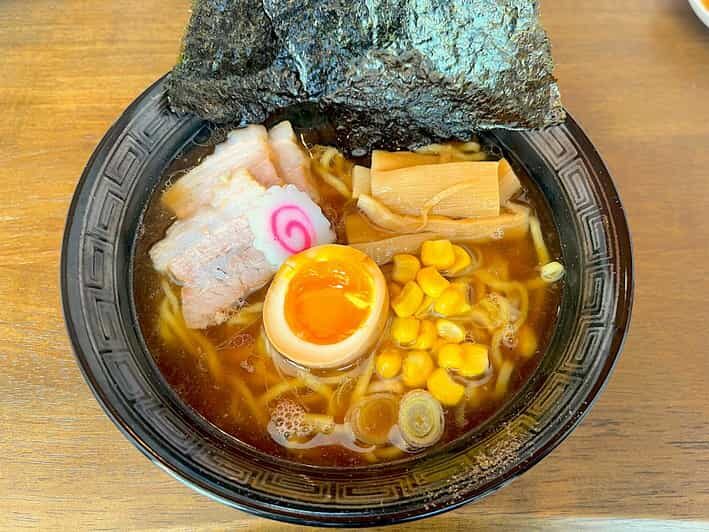
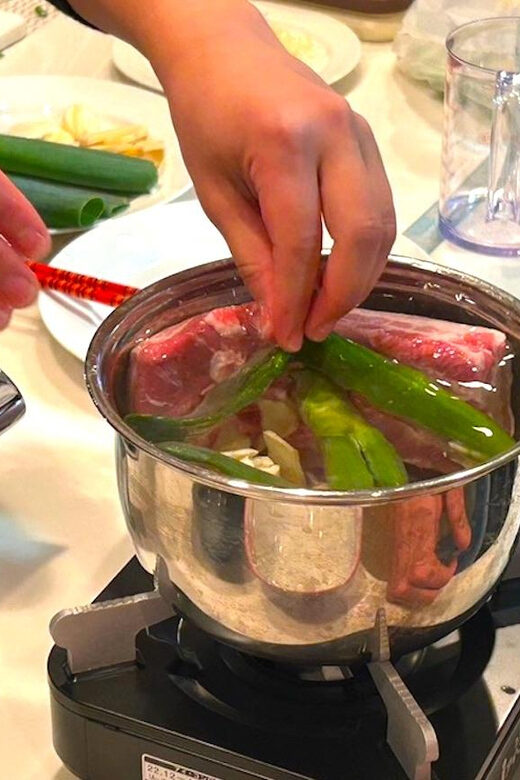
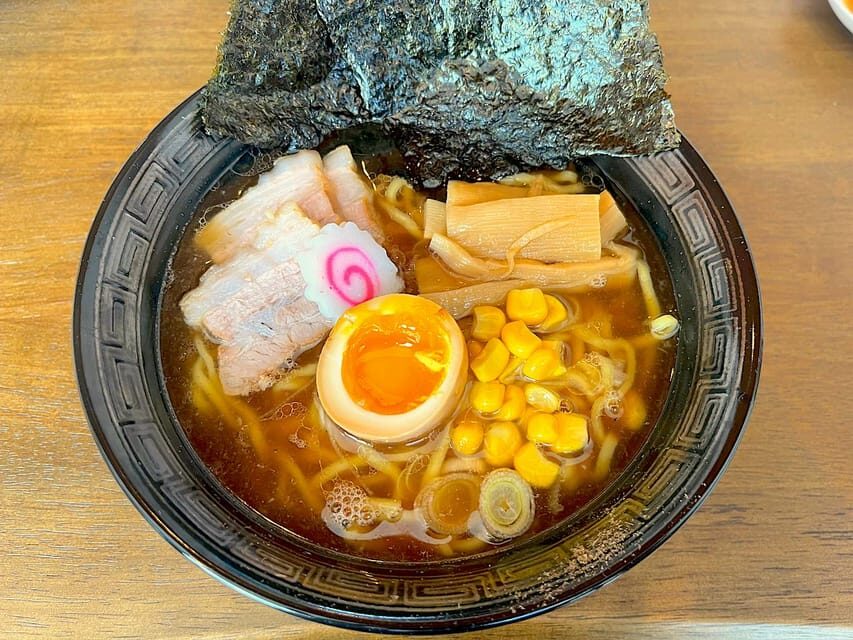
Ramen isn’t just a dish here. It’s the core project. You’ll learn how to make flavorful ramen soup from scratch, including how to build the broth and how to make chashu pork belly.
Why that matters: in Japan, ramen tastes like a system. The broth base, the protein, and the final finishing all affect the result. A cooking class is one of the fastest ways to understand that logic, because you control the steps instead of guessing. You also get the chance to ask questions while you’re still holding the spoon, which is when technique actually sticks.
From the class format, you can expect a clear flow:
- you prep and work on key ramen components during the class window
- you learn timing so everything fits into the 3-hour schedule
- then you sit down and eat what you made, which is the moment the skills click
A few reviews mention that some prep may already be done to keep things on schedule. That’s normal for a 3-hour class, and it’s not a bad thing. It keeps the focus on what you should be practicing: the steps that create flavor and texture.
Nigiri sushi: origins, then hand-formed pieces you can repeat
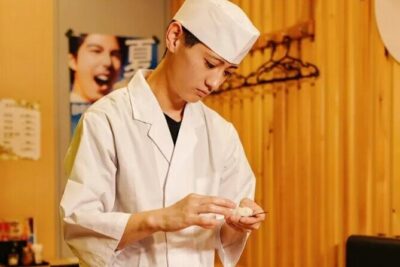
After ramen work, you shift gears to sushi, specifically nigiri. The class doesn’t treat sushi as a mystery. You’ll learn about the origins of sushi, then move into making nigiri with provided ingredients and tools.
Nigiri has one job: the balance of rice texture and the right shape so the topping sits correctly. When you learn to hand-form it yourself, you stop thinking of sushi as something only professionals can do. You start thinking in small, controllable details.
Expect technique coaching on:
- how to shape and handle the rice
- how to portion and form nigiri properly
- how to work at a pace that still gives you clean results
One review also mentions a fun teaching moment where the instructors used a pop quiz to get people collaborating. That’s a good sign. It suggests the lesson isn’t just a script. It’s interactive, and it helps you pay attention to the basics that matter most.
The 3-sake pairing set: how the lesson ties into flavor
Yes, you get sake. You get a 3-sake tasting set, with three premium Japanese sakes selected by a certified sake sommelier.
This is more useful than people think. When you taste multiple sakes side by side, you notice how acidity, sweetness level, and aroma change your perception of food. That makes the cooking lesson stick better, because you start thinking about flavor balance, not just steps.
Some reviews also mention an assortment of beer along with the sake. Even when beer isn’t the star of the pairing, having options can make the meal feel more relaxed and social while you’re eating the ramen and sushi you made.
For practical planning: treat the tasting as part of the food experience. If you plan to walk back afterward, decide in advance how you want to handle alcohol. The class itself is hands-on and active, so pace yourself.
Other plates worth crossing Tokyo for


Your take-home recipe booklet and chopsticks souvenir
This class includes a professionally designed recipe booklet with instructions you can use later. It covers recreating ramen and also mentions gyoza and sushi.
That’s a big value point for $129. You aren’t just paying for an afternoon and a nice meal. You’re buying a reference you can use when you’re back home and trying to remember what worked. If you cook from it, you’ll also get a better feel for which parts are easiest to replicate and which parts may take adjustments.
You also receive souvenir chopsticks, which may sound small, but it’s a nice keepsake from a practical experience. In classes like this, the memory you want isn’t a photo. It’s the method you can repeat.
Small-group size: why you get help at the exact moment you need it
The class is set up for intimacy. It’s listed as a small group limited to 8 participants, and several descriptions and reviews point to an even tighter feel sometimes.
Here’s what that does for you:
- You get more chances to ask questions mid-step.
- Instructors can correct small issues before they become big problems.
- You’re less likely to feel rushed while trying to follow technique instructions in English.
Reviews name specific instructors such as Sato, Haruko, Risa, Alex, Alisa, Misa, and Luna. You may not always get the exact same team, but the consistent theme is warm, patient instruction and a sense of cultural exchange.
If you’re a first-time cook, this is where the class earns its reputation. If you’re already comfortable in the kitchen, the small-group format still helps, because you can focus on refinement instead of vague, general tips.
Price and value: what $129 actually buys in Tokyo
At $129 per person, this class is not a “grab-and-go” activity. It’s a structured 3-hour lesson with multiple outputs: ramen soup, chashu, and nigiri sushi, plus a 3-sake tasting set. You also get all necessary ingredients, an English-speaking instructor, and a recipe booklet to take home.
So the value question is simple: are you getting enough learning and enough food to justify the price?
From the class format and feedback, the answer is often yes, mainly because:
- you practice multiple techniques in one session
- you eat what you make, instead of just tasting a small sample
- you leave with tools for repeating the recipes at home
If you compare it to doing a sushi dinner plus a separate ramen class, you’re essentially bundling the skills. That can save time and reduce the “I forgot what I learned” problem that happens when lessons are separated by days.
Who should book this sushi and ramen class in Tsukishima

Book it if you want a Tokyo experience that’s hands-on, structured, and social without being chaotic. It works especially well if:
- you want to learn both ramen and sushi, not just one
- you like small-group instruction and clear step-by-step teaching
- you want to pair food with a guided sake tasting set
- you enjoy cooking as a way to understand Japanese food culture
Skip it if you’re vegan or vegetarian, since the class includes ramen components and chashu pork belly.
It’s also a decent choice for couples or families who want one shared activity. Some reviews mention family connections and private-feeling small groups. That’s exactly what you should look for if you don’t want a loud, impersonal crowd situation.
Should you book it? A quick decision guide
I’d book this class if your goal is skill plus meal, not just a nice afternoon. The strongest reasons to choose it are the combination of ramen broth + chashu and nigiri sushi, plus the 3-sake pairing set and the take-home recipe booklet.
The only hard caution is diet: it’s not designed for vegans or vegetarians. And remember the practical side too: no hotel pickup, so plan your route to Tsukishima Station (Exit 4) and show up a few minutes early.
If that fits your trip, this is the kind of experience that keeps paying off long after you leave the kitchen—because you can recreate it.
FAQ
How long is the cooking class?
The class runs for 3 hours.
How many people are in the small group?
The class is small group and is listed as limited to 8 participants.
What dishes will I learn to make?
You’ll make ramen (including broth and chashu pork belly) and nigiri sushi.
Is sake tasting included?
Yes. The experience includes a 3-sake tasting set selected by a certified sake sommelier.
Where is the meeting point?
Meet at 2nd Floor, HAUS Tsukishima, 2-13-5 Tsukuda, Chuo-ku, Tokyo 104-0051, a 5-minute walk from Exit 4 of Tsukishima Station (Y21).
Is the class suitable for vegans or vegetarians?
No. It is listed as not suitable for vegans or vegetarians.
What are the cancellation and payment options?
You can cancel up to 24 hours in advance for a full refund, and there is reserve now & pay later availability.
Eat Your Way Round Tokyo

More Tour Reviews in Tokyo





Tokyo by the Cup: More Sake Tastings

Fresh reviews from around Tokyo






Cooking Classes, compared.
 ★ 5.0Ramen & Gyoza Cooking Class in Tokyo with Local Supermarket VisitFrom $122823 reviews
 ★ 4.6Easy Ramen Cooking Experience in Kabukicho, ShinjukuFrom $29321 reviews
 ★ 5.0Ramen and Sushi Cooking Class with Sake Pairing Set in TokyoFrom $79291 reviews
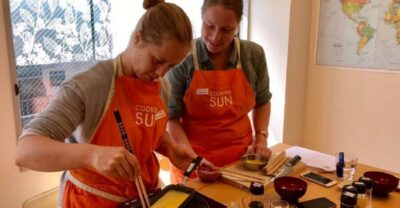 ★ 4.9Wagyu and 7 Japanese Dishes Cooking ClassFrom $67273 reviews
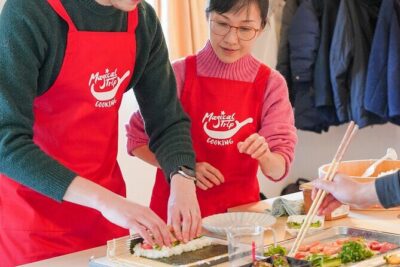 ★ 5.0Tokyo Washoku 4-hour Cooking Class: From Market to TableFrom $79253 reviews
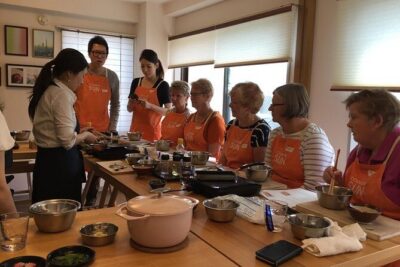 ★ 5.0Small-Group Wagyu Beef and 7 Japanese Dishes Tokyo Cooking ClassFrom $72190 reviews
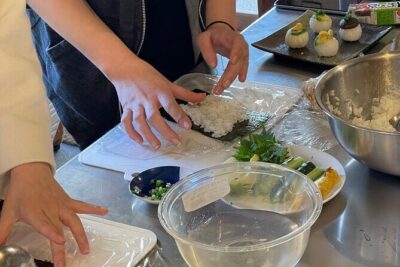 ★ 5.0Private Home Cooking in Yanaka – Local Flavors in a Warm SettingFrom $122173 reviews
 ★ 5.0Tokyo Sushi Making Experience & Japanese Cooking ClassFrom $59150 reviews
Browse the lists this tour appears in