
Reviewed · SHINJUKU BAR HOPPING
Cherry blossom & Japanese Sake Tasting in Shinjuku
Eight sips can teach a lot.
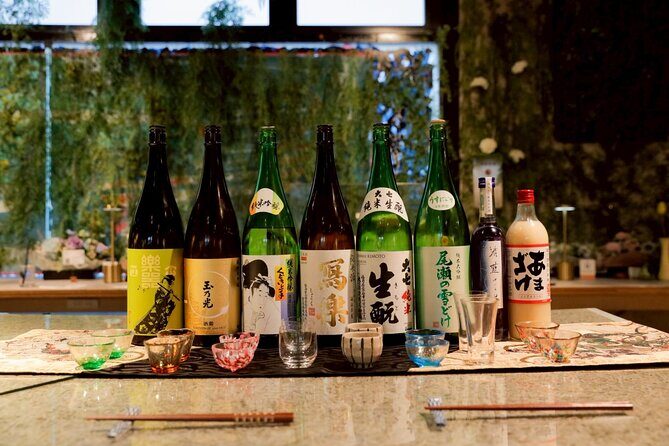
This Shinjuku experience blends the seasonal mood of cherry blossom season with a very practical sake lesson: you try eight carefully chosen Japanese sakes, see how aroma and flavor shift, and learn how temperature and food change the glass. I especially like the way it starts gentle and walks you forward step-by-step instead of tossing strong flavors at you right away.
My second favorite part is the pacing of the pairing: snacks show you how sake behaves with real food, then the session ends with amazake, a sweet rice-koji drink that works like dessert. One thing to keep in mind: this is a serving-sake experience, so you must be 20+ to participate, and good weather is required.
In This Review
- Key highlights at a glance
- Eight Sakes in One Hour: The tasting flow you can actually enjoy
- Starting with lower-alcohol sake around 15–16% for an easy on-ramp
- How temperature and dish pairings change what you taste
- Traditional snacks included: learning sake with bite-sized reality
- A sweet amazake finish: rice-koji as dessert-like relief
- Meeting point in Shinjuku: find the house with flowers, go to the 4th floor
- Host and vibe: where Shuma’s touch really matters
- Price and value: why $39.02 can work well for an eight-sake flight
- Who this tour fits best (and who should skip it)
- Cherry blossom connection: a seasonal bonus, not a guaranteed sightseeing plan
- Should you book this Shinjuku sake tasting?
- FAQ
- How long is the sake tasting in Shinjuku?
- What’s included in the price?
- How many sakes will I taste?
- Is there an age limit?
- Where do I meet for the tour?
- Is the meeting point near public transportation?
- Do I need a paper ticket?
- What happens if the weather is bad or I need to cancel?
Key highlights at a glance
- Eight-sake flight that moves from simpler, lower-alcohol sips toward more distinctive aromas and flavors
- Real food pairings with traditional Japanese snacks so you taste sake with context
- Amazake dessert finish using rice koji, served as a sweet finale
- Shuma as host with praised ambiance, music, and overall good vibes
- Small group size (max 20) for a more relaxed pace
Different nights, same neon: more Shinjuku crawls
- Tokyo: Shinjuku Food Tour (13 Dishes at 4 Local Eateries)★ 5.0 · 6,603 reviews
- Tokyo Bar Hopping Tour in Shinjuku (All-You-Can-Drink + Dinner)★ 5.0 · 3,587 reviews
- Tokyo: Shinjuku Food Tour (15 Dishes and 4 Eateries)★ 4.9 · 2,033 reviews
Eight Sakes in One Hour: The tasting flow you can actually enjoy
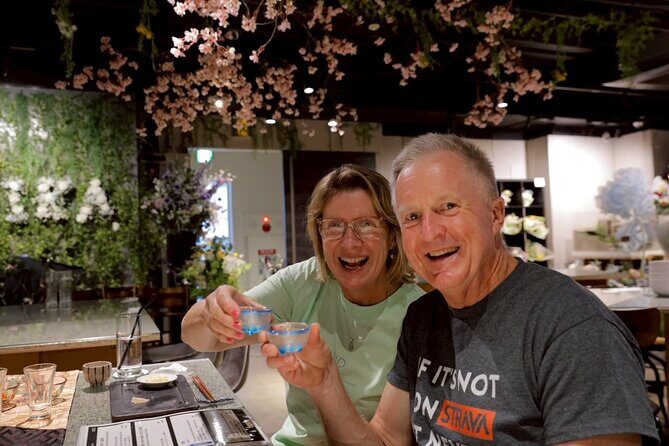
This is the kind of tasting that makes sense even if sake is new to you. The format is built around learning without the pressure of a classroom. You get a short, guided sequence of sips, with enough structure to help you remember what you liked and why.
The best part is the order. Instead of starting with the most intense options, the tasting begins with simpler sakes and gradually shifts toward more expressive aromas and flavor profiles. That matters because sake can be nuanced. Your nose and palate need a warm-up, and this session gives you one.
And yes, it’s in Shinjuku, so the setting is part of the fun. One review specifically highlighted the host and the overall ambiance, including music and a welcoming mood. In a place known for speed and noise, this kind of slow, guided hour feels like a reset.
Starting with lower-alcohol sake around 15–16% for an easy on-ramp
A smart way to learn sake is to control the starting point. This experience begins with lower alcohol sakes, typically around 15–16%. That range tends to feel approachable and lets you notice differences in aroma and texture without your taste buds getting steamrolled.
There are also options with even lower or higher alcohol levels, but the key idea is the progression. You start with something more straightforward, then move toward sakes with stronger identity. If you’ve ever tried sake in a bar and felt overwhelmed, this “walk forward” approach should feel calmer.
Here’s why that pacing helps you as a traveler: you’re not guessing what’s happening. If a later pour tastes more fragrant or more complex, you can connect it to the sequence you just experienced, rather than treating each glass like a random coin toss.
How temperature and dish pairings change what you taste
Sake isn’t just about brand and sweetness. The experience also points you toward temperature and pairing choices. The overview notes that sake can be enjoyed at various temperatures depending on the season and the dish, and that idea is a big part of why sake tastes different from place to place.
Even without getting technical, you can learn the basics fast:
- Temperature can shift aroma and smoothness. Warmer styles often feel more rounded, while cooler servings can come off crisp and clean.
- Food pairings help you notice whether the sake supports the dish or contrasts it.
During the tasting, traditional Japanese snacks are included, and the idea is simple: taste sake alongside foods instead of treating the flight like a drink-only challenge. A well-matched pairing can make a sake feel more fragrant, or make flavors pop without harshness. That’s also why the order of the flight matters. You’re practicing how to taste with context.
Traditional snacks included: learning sake with bite-sized reality
Some tastings hand you a drink and hope you’ll figure it out. This one includes snacks specifically so you can explore how sake complements different foods.
The practical value here is huge if you plan to eat in Japan after this. You’ll start noticing patterns: lighter sakes often feel friendly with savory bites, and more characterful sakes can handle richer flavors. You don’t need a cheat sheet. You just need a few good pairings in the right order, and that’s what this format is designed to deliver.
Also, the experience is only about one hour, so those snacks are important. They keep you engaged and let you connect flavor changes without waiting around.
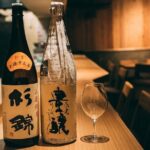
Another round: more sake tastings
A sweet amazake finish: rice-koji as dessert-like relief
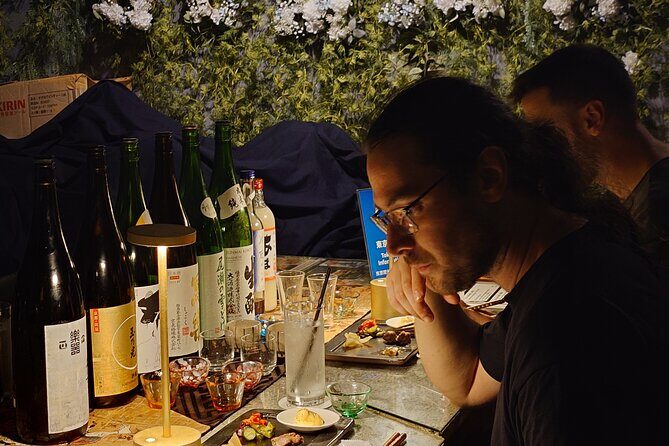
Every good tasting needs an ending that feels complete. This one finishes with amazake, a sweet fermented drink made from rice koji. It’s also described as a dessert-style treat in Japan.
That matters because it gives you a contrast to the rest of the flight. After trying multiple sakes, a sweet, comforting finale helps you reset your palate and walk away with a memorable last flavor, not just the final sip of alcohol.
If you’re a sake beginner, amazake is also a smart bridge. You get a taste of fermentation and rice-koji character in a more forgiving, dessert-like form. If you’re a sake enthusiast, it still feels useful because it highlights how rice koji can show up in different styles beyond standard sake.
Meeting point in Shinjuku: find the house with flowers, go to the 4th floor
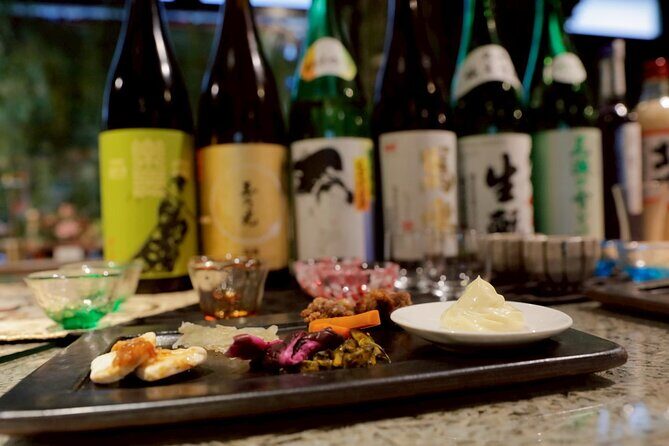
You’ll meet at a specific address in Shinjuku: a house with flowers, Japan, 160-0022 Tokyo, Shinjuku City, Shinjuku, 3-chōme 67 第6三和ビル 4階. The activity ends back at the meeting point, so you’re not left navigating alone afterward.
The address being on a building with a clear floor number is helpful. Still, Tokyo is full of similar-looking streets and building fronts. I recommend you arrive a little early and double-check the exact location on your phone. Since this is near public transportation, you should be able to get there smoothly without long detours.
One other perk: you’ll receive confirmation at booking time, and you’ll have a mobile ticket, which keeps things simple at the start.
Host and vibe: where Shuma’s touch really matters

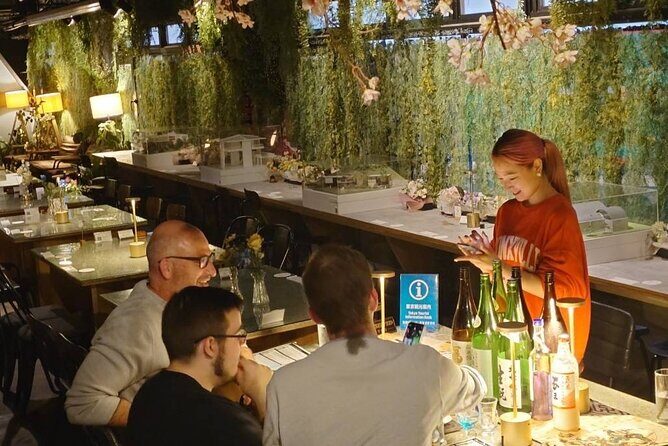
A sake flight can be informative and still feel stiff. This one aims for relaxed and friendly. One of the standout comments praised the host, Shuma, for excellent vibes, ambiance, and music, and also mentioned that the sake arrangement and food pairing felt skillfully done with dessert at the end.
That kind of hosting quality matters more than you might think. When a group is small (max 20 people), the host can keep the pace comfortable and make sure you’re not sitting in silence between pours. And because the session is only about an hour, good guidance helps everything flow.
Think of it like this: you’re not just tasting drinks. You’re tasting a guided experience designed to stay pleasant and easy to follow.
Price and value: why $39.02 can work well for an eight-sake flight
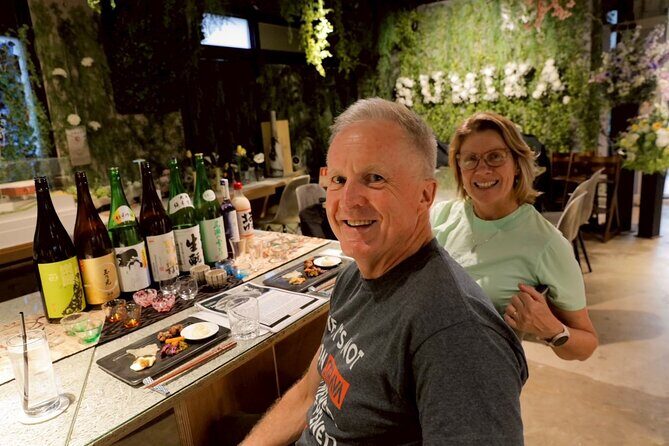
At $39.02 per person, you’re paying for a lot of “travel-level” convenience packed into a short time. You’re not organizing anything yourself: the sakes are sourced and selected, the pairings are planned, snacks are included, and there’s a host guiding the progression.
It also includes all fees and taxes. That’s a small detail, but it affects your final budgeting. And because it’s about one hour, you’re buying efficiency. In Tokyo, where time and logistics can cost you, a focused activity that doesn’t swallow your day can be genuinely good value.
What’s not included is also clear: additional meals and drinks, transportation to the meeting point, and hotel pick-up/drop-off. If you’re already exploring Shinjuku that day, you likely won’t miss those. But if you’re farther out or relying on hotel pickup, plan on getting yourself to the meeting area.
Who this tour fits best (and who should skip it)
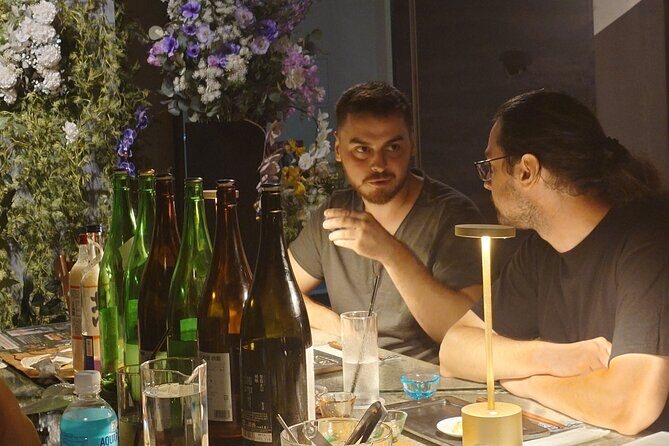
This is well suited for:
- First-timers who want a structured way to learn sake without getting overwhelmed
- People who like food pairing experiences more than formal tastings
- Travelers who want a relaxed hour with music and a friendly host
It might be less ideal if:
- You’re under 20 (participation is not allowed for those under the age of 20 under Japan’s minors alcohol rules)
- You’re hoping for a long sightseeing walk. This is primarily a guided tasting experience, not a full daytime tour
The max group size of 20 also makes it feel manageable. You’ll get interaction without the chaos that can happen in bigger groups.
Cherry blossom connection: a seasonal bonus, not a guaranteed sightseeing plan
The experience name includes cherry blossom, which suggests it’s tied to that season’s mood in Tokyo. What’s not specified here is a guaranteed stop at particular blossom spots.
So treat it as a seasonal vibe add-on. If you catch cherry blossoms while you’re in Shinjuku, the atmosphere will likely feel extra special. If blossoms are past peak, you can still enjoy the core experience: eight sakes, snacks, and amazake.
That’s actually a good setup for travelers. You’re not relying on perfect flower timing to get value from the tasting.
Should you book this Shinjuku sake tasting?
If you want an easy, friendly introduction to sake in a short, high-impact hour, I’d lean yes. The biggest reasons are the step-by-step flight, the included snacks that teach you how sake behaves with food, and the thoughtful finish with amazake.
Book it if you’re:
- 20+ and excited to taste multiple sakes in a structured way
- Staying in or near Shinjuku and want a low-drama plan
- The type of traveler who learns best by tasting, not just reading
I’d pass or postpone if:
- Weather is a big concern for your trip dates. This experience requires good weather, and if it’s canceled due to poor weather you’ll be offered another date or a full refund.
- You want something longer or heavily sightseeing-focused.
FAQ
How long is the sake tasting in Shinjuku?
It’s about 1 hour (approx.).
What’s included in the price?
The experience includes all fees and taxes, plus the sake tasting and traditional Japanese snacks (and a sweet amazake finish).
How many sakes will I taste?
You’ll enjoy a tasting featuring eight carefully selected sakes.
Is there an age limit?
Yes. Under the Minors’ Alcoholic Beverage Law, those under 20 are not allowed to participate because the experience involves serving Japanese sake.
Where do I meet for the tour?
The start point is a house with flowers at 160-0022 Tokyo, Shinjuku City, Shinjuku, 3-chōme 67 第6三和ビル 4階. The tour ends back at the same meeting point.
Is the meeting point near public transportation?
Yes, it’s near public transportation.
Do I need a paper ticket?
No. You’ll use a mobile ticket.
What happens if the weather is bad or I need to cancel?
You can cancel for free up to 24 hours before the experience starts for a full refund. If it’s canceled due to poor weather, you’ll be offered a different date or a full refund.
More Tour Reviews in Tokyo






Tokyo by the Cup: More Sake Tastings
Shinjuku After Hours: The Other Crawls

Fresh reviews from around Tokyo






Shinjuku Bar Hopping, compared.
 ★ 5.0Shinjuku Food Tour (13 Dishes at 4 Local Eateries)From $866,603 reviews
 ★ 5.0Tokyo Bar Hopping Tour in Shinjuku (All-You-Can-Drink + Dinner)From $1063,587 reviews
 ★ 4.9Shinjuku Food Tour (15 Dishes and 4 Eateries)From $852,033 reviews
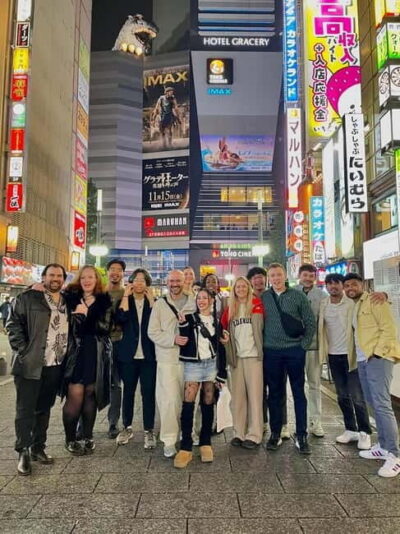 ★ 4.9Shinjuku Local Bar and Izakaya Guided Walking TourFrom $341,794 reviews
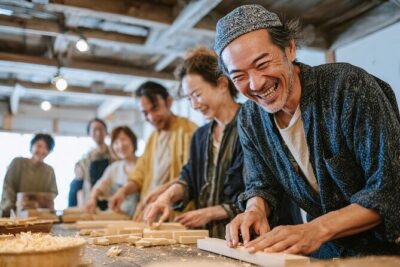 ★ 5.0Tokyo Shinjuku Chopsticks Making ClassFrom $201,763 reviews
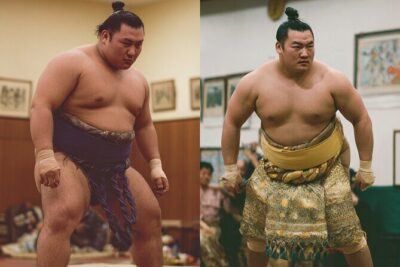 ★ 5.0Tokyo Shinjuku Sumo Show & Experience with PhotoFrom $791,750 reviews
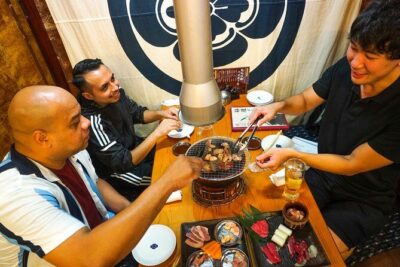 ★ 5.0Tokyo Night Foodie Tour in Shinjuku – Seasonal Sushi, Wagyu BeefFrom $1111,161 reviews
 ★ 4.8Sumo Show and Experience in ShinjukuFrom $691,001 reviews
Browse the lists this tour appears in