
Reviewed · CRUISES & BOAT TOURS
Tokyo Limited-Date Cherry Blossom Route Cruise & Show & Meal
That springtime river view is hard to top. This Tokyo cherry blossom yakatabune cruise pairs classic Edo-style entertainment with real scenery from the water, so you get a different angle than the usual riverside stroll.
I love the combination of live shamisen music and the old-school boat vibe. You also get the practical bonus of unlimited soft drinks onboard, which keeps the whole experience relaxed and easy.
One possible drawback: the cherry blossoms are weather-dependent, so full bloom is never guaranteed even when the schedule aims for peak season.
In This Review
- Key things that make this cruise worth your time
- Step aboard a traditional yakatabune on the Sumida River
- Etchūjima start: music, timing, and what happens before the river
- Live shamisen: the Edo vibe you can hear in the air
- Cherry blossom views: spring peaks, weather rules
- The Sumida River route: bridges you’ll actually recognize
- Your seat, shoes off: comfort and the small frictions
- Included meal options: sukiyaki, tea ceremony, or sushi and sake
- Beef sukiyaki option
- Tea ceremony and sweets option
- Sushi and sake lunch option
- Unlimited soft drinks: a small detail that helps a lot
- Day vs night cruises: how the timing changes the feel
- Photo reality: when the boat gives you angles, and when it blocks them
- Logistics that can trip you up (and how to handle them)
- Price and value: is $64.01 a good deal?
- Who this is perfect for, and who should skip it
- FAQ
- FAQ
- How long is the Tokyo Limited-Date Cherry Blossom Route cruise?
- What meal is included on the cruise?
- Are drinks included?
- Will I definitely see full cherry blossom bloom?
- Do I have to remove my shoes?
- What happens if the tour can’t run due to weather or minimum numbers?
- Should you book this yakatabune cherry blossom cruise?
Key things that make this cruise worth your time
- Yakatabune wooden boat feel: you’re seated up close, like you’re part of the scene, not just passing by it
- Live shamisen performance: Edo-era style music sets the mood the whole time
- A real meal included (option-based): sukiyaki, tea and sweets, or sushi and sake
- Cherry blossom timing is uncertain: the cruise runs around peak, but mother nature decides the results
- Sumida River landmark route: you pass major bridges like Ryogoku and Sakura Bridge
- Easy onboard perks: unlimited soft drinks and assigned seating in tatami or Western styles
More time on the water around Tokyo
- Mt Fuji & Hakone Cruise, Drum Show Bullet Train 1 Day from Tokyo★ 4.0 · 7,413 reviews
- Tokyo Mt Fuji 5th St & Hakone Cruise Bus Tour w/Bullet Train★ 4.4 · 5,024 reviews
- Mt Fuji & Hakone Cruise, Drum Show Bus 1 Day from Tokyo★ 4.0 · 1,287 reviews
Step aboard a traditional yakatabune on the Sumida River
This is the kind of Tokyo activity that feels simple until you’re actually on the water. A traditional yakatabune is a wooden boat built for river cruising, with seating that brings you closer to the view than you’d get from a bus tour or a quick photo stop.
The cruise runs about 1 hour 40 minutes total, which is a nice sweet spot. Long enough to slow down, eat, and enjoy music, but not so long that it turns into a time sink during a crowded Tokyo day.
Before you settle in, you’ll be guided to the meeting point at 1-chōme-3-23 Etchūjima, Koto City. The area is described as near public transportation, which matters because you don’t want a complicated scramble on arrival when the boat schedule is the real clock.
Etchūjima start: music, timing, and what happens before the river
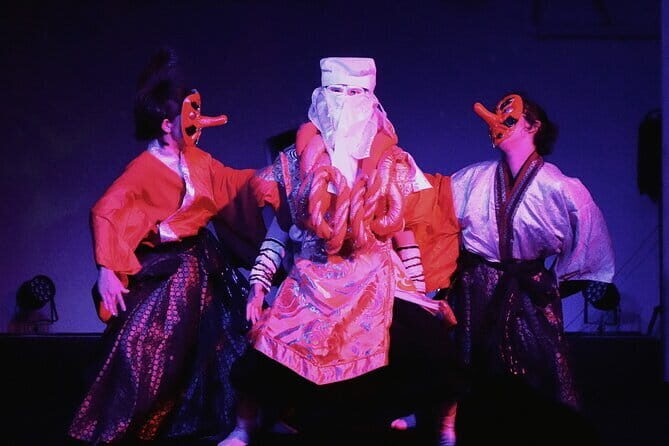
The experience begins around Etchūjima, where you’ll enjoy professional Japanese instrument performances. This is more than background noise. The whole point is to set the Edo-style tone early so the cruise feels like part of the culture, not just a moving restaurant.
Then the boat route starts moving along the Sumida River, putting you in a rhythm: music indoors, river views outside when the boat angle allows, and breaks in the action that keep it from feeling like one long sit.
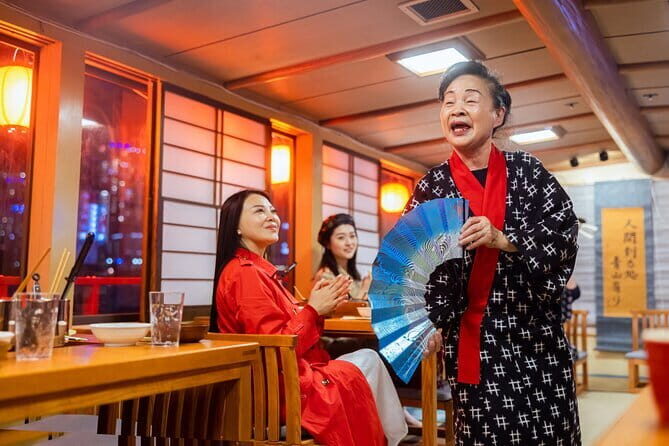
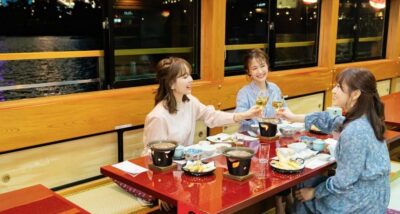
One small but useful reality check: seating is assigned randomly, and you might get tatami-style seating or Western-style chairs. Either way, you’re on a shared space boat, so plan to be comfortable with close quarters.
Live shamisen: the Edo vibe you can hear in the air
A big reason people pick this cruise is the live shamisen performance. Shamisen is one of those sounds that instantly tells you you’re not in a generic dinner show. Even if you don’t know the music, you’ll feel the tempo and attention from the performers.
The performances are designed to fit the setting: you’re on a wooden boat, surrounded by water on multiple sides, and the sound carries differently than it would in a theater. That makes it easier to stay present, even when you’re also eating.
Also, it’s not treated like a hard sell. The tone you’re aiming for is relaxed entertainment, where the music and the river complement each other.
Cherry blossom views: spring peaks, weather rules
This cruise is built around cherry blossoms along the riverbanks. The schedule is set for approximate peak season, and you’ll be on the water during the spring bloom window.
Here’s the truth you should plan around: blooming is highly weather-dependent. That means full bloom isn’t guaranteed. If you’ve timed your whole Tokyo trip around the blossoms, you’ll want a backup mindset. Think of the cruise as a cherry blossom experience with good odds, not a guaranteed full-petal finale.
A smart strategy is to treat the blossoms as part of the setting, not the single make-or-break moment. Even if the trees aren’t at peak, the bridges, the river light, and the boat-at-night mood can still make the trip feel very “Tokyo in spring.”
Worth weighing up alongside this Tokyo pick:
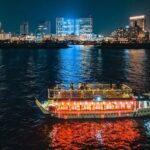
The Sumida River route: bridges you’ll actually recognize
One of the best things about this cruise is that it’s not aimless sightseeing. You’ll travel a Sumida River route that passes by well-known landmarks, including:
- Sumida River Bridge
- Ryogoku Bridge
- Komagata Bridge
- Azuma Bridge
- Sakura Bridge
Seeing bridges from the water does something subtle to your sense of scale. On land, Tokyo feels huge and vertical. From the river, it becomes more human, more horizontal, and it’s easier to frame photos that show both water and architecture.
One note from the experience style: depending on your exact departure and where the seating sits relative to the windows/open deck areas, you may not get a perfect view the whole time. Some parts of the trip can mean more “river and bridge rhythm” than “wall-to-wall outside pictures.”
Your seat, shoes off: comfort and the small frictions
This is where the yakatabune reality check matters.
You’ll need to remove your shoes, and seating is handled in a random allocation process. That means:
- you could be on tatami (more traditional, lower seating)
- or you could be on Western-style chairs
- and you may be put at a shared table because the boat’s seating is limited
None of this is a deal-breaker, but it affects how you prep your body for the ride. Wear socks you’re comfortable with, and keep valuables simple and secure. If you’re someone who hates close dining arrangements, consider that shared tables are part of the experience on a boat.
Included meal options: sukiyaki, tea ceremony, or sushi and sake
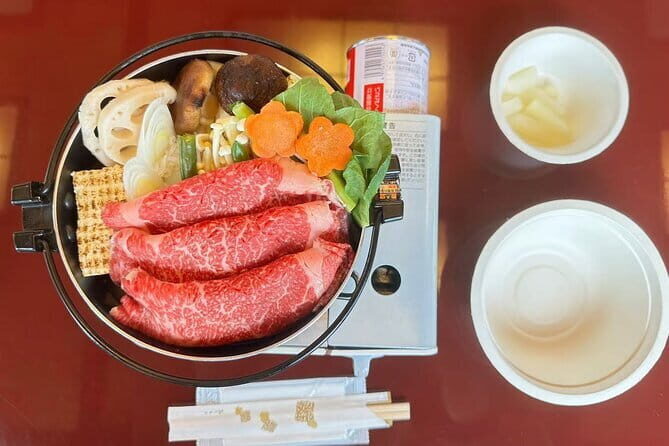
This cruise is not just “snacks and a story.” The included meal option is a real part of the experience, and what you get depends on the ticket type.
Beef sukiyaki option
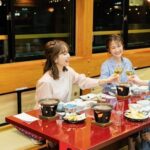
If you book the beef sukiyaki ticket, you’ll get a dinner format that feels interactive. One detailed account notes that you cook your own food at the table, using a small stove. That’s a big part of why the meal doesn’t feel like a rushed add-on.
Sukiyaki is also an ideal boat food: it’s warm, filling, and designed for sharing. The cooking aspect keeps you focused on what’s happening right in front of you instead of only on the view outside.
Tea ceremony and sweets option
If you choose the tea ceremony with traditional sweets option, you’ll shift from cooking to a more still, ritual-style pacing. Tea ceremonies create a different kind of calm: fewer moving parts, more attention on the moment.
This option is best if you want your cruise to feel more like cultural time than a dinner night out.
Sushi and sake lunch option
There’s also a sushi and sake lunch option depending on what’s offered with your ticket. If you’re planning a more daytime-focused itinerary, this can be a good way to build in a Japanese-food highlight without evening crowds.
Unlimited soft drinks: a small detail that helps a lot
Soft drinks might sound like a minor line item, but on a river cruise it matters. You don’t need to track refills or make choices while you’re also trying to enjoy music and food.
Having unlimited soft drinks on board makes the whole experience smoother, especially if you’re traveling with kids or you simply don’t want to think about ordering.
Day vs night cruises: how the timing changes the feel
The cruise is offered on a day or night basis, so you can match the experience to your Tokyo schedule.
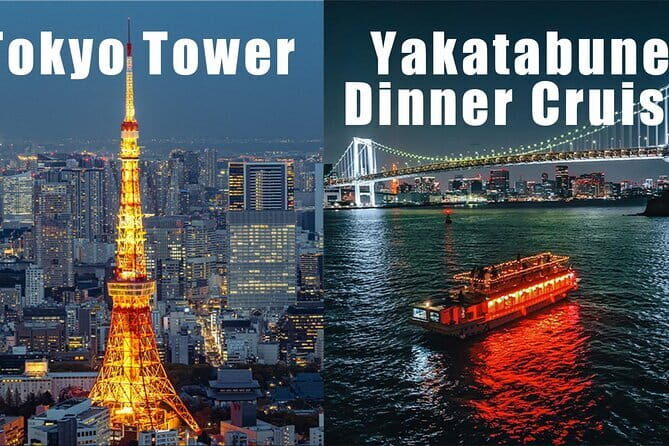
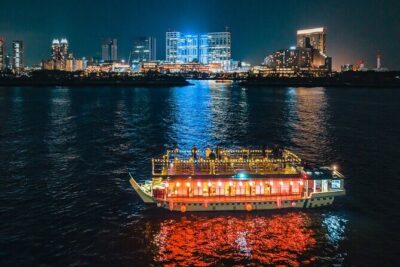
At night, you’re more likely to feel the “Tokyo lights reflected on water” mood. Some accounts also highlight that the cruise ties into the Tokyo Tower area lighting at night, making it more than just a river ride.
During daytime, you’ll typically get brighter bridge and blossom viewing, with the river looking more crisp and readable. If your goal is blossoms first, day departures can be the better bet. If your goal is atmosphere and photos with light, night departures tend to deliver.
If you’re choosing between the two, ask yourself what you want most: more visible spring color or more city-night drama.
Photo reality: when the boat gives you angles, and when it blocks them
This is a practical one. Boats can be great for photos, but they also come with limitations like window placement and open-deck access.
One account notes you get about 15 minutes up top when the boat is in the harbor, which is a helpful window for photos. That kind of brief open-deck time is worth planning for. Keep your camera or phone ready, and don’t waste it searching for the perfect angle.
Also, some descriptions point to photo-friendly landmarks along the route, including views around the Odaiba/Daibo area such as a Statue of Liberty replica facing land. If photos are a top goal, night cruises can be especially rewarding because lighting makes landmark silhouettes easier to frame.
Logistics that can trip you up (and how to handle them)
This tour is straightforward, but it still has a couple quirks.
First: don’t assume there’s a big office where everyone checks in. One account warns there may not be a traditional office, with a staff member waiting on the river pier. So the best move is to arrive close to your scheduled time and follow the meeting instructions closely.
Second: seating assignment and shoe rules mean you’ll want to move calmly and efficiently. Leave yourself a few minutes buffer so you’re not rushing at the last second.
Price and value: is $64.01 a good deal?
At $64.01 per person, you’re paying for three things at once: a traditional yakatabune ride, live shamisen entertainment, and a full included meal (based on your selected option), plus unlimited soft drinks.
Is that expensive? It can be, if you think of it as just a ride. But if you break it down like a local would, it’s more reasonable:
- The boat experience plus entertainment often costs more than a simple transit-style activity.
- The meal isn’t just a snack. You’re getting a major food option tied to the ticket type.
- Soft drinks reduce the add-on spending.
So for a short, high-effort-in-the-best-way evening or daytime experience, the price tends to feel fair—especially in a spring season when “special Tokyo moments” are in demand.
Who this is perfect for, and who should skip it
This cruise makes the most sense if you want:
- a Tokyo cultural vibe without complicated planning
- a food experience that feels part of the event (not bolted on)
- cherry blossom scenery from the water
- live music that matches the setting
It might not be the best fit if:
- you need constant open-air viewing (boat window angles can limit sightlines)
- you strongly dislike shared seating
- you’re chasing guaranteed cherry blossom full bloom outcomes
The best match is someone who can appreciate the experience as a whole: boat + music + meal + seasonal scenery, even if the blossoms aren’t at peak.
FAQ
FAQ
How long is the Tokyo Limited-Date Cherry Blossom Route cruise?
It runs for about 1 hour 40 minutes (approx.).
What meal is included on the cruise?
Your included meal depends on your ticket option: beef sukiyaki, a tea ceremony with traditional sweets, or a sushi and sake lunch.
Are drinks included?
Yes. You get unlimited soft drinks on board.
Will I definitely see full cherry blossom bloom?
No. Cherry blossoms are highly weather-dependent, and full bloom cannot be guaranteed even though the cruise is scheduled for approximate peak season.
Do I have to remove my shoes?
Yes. You’ll need to remove your shoes for the experience.
What happens if the tour can’t run due to weather or minimum numbers?
If it’s canceled due to poor weather or if the minimum number of travelers isn’t met, you’ll be offered a different date or a full refund.
Should you book this yakatabune cherry blossom cruise?
If you want a Tokyo experience that feels more like an evening ritual than a typical tourist activity, I’d book it. Live shamisen, a real included meal, and the Sumida River route with landmark bridges make it a strong value for the time you spend.
Just go in with one mindset: treat the cherry blossoms as a bonus, not a promise. If you’re flexible about the bloom level and you’re comfortable with shoes off and assigned shared seating, this cruise is the kind of simple, memorable Tokyo moment that’s easy to feel good about.
A Night at a Tokyo Show

Out on the Water Around Tokyo

More Tour Reviews in Tokyo




Fresh reviews from around Tokyo






Cruises & Boat Tours, compared.
 ★ 4.0Mt Fuji & Hakone Cruise, Drum Show Bullet Train 1 Day from TokyoFrom $1497,413 reviews
 ★ 4.4Tokyo Mt Fuji 5th St & Hakone Cruise Bus Tour w/Bullet TrainFrom $1545,024 reviews
 ★ 4.7Meiji Shrine, Asakusa, Skytree Bus Tour and CruiseFrom $1221,986 reviews
 ★ 4.0Mt Fuji & Hakone Cruise, Drum Show Bus 1 Day from TokyoFrom $1221,287 reviews
 ★ 4.6Sumida River: Japanese Traditional Yakatabune Dinner CruiseFrom $103779 reviews
 ★ 4.2Hakone Fuji Day Tour w/ Cruise, Cable Car, VolcanoFrom $98724 reviews
 ★ 4.5Dynamic Tokyo: Tokyo Tower, Tea Experience, Bay Cruise Day TourFrom $99521 reviews
 ★ 4.5Tokyo Bay Yakatabune Dinner/Day Cruise with Japan Show and DrinksFrom $65473 reviews
Browse the lists this tour appears in