
Reviewed · CRUISES & BOAT TOURS
Sumida River: Japanese Traditional Yakatabune Dinner Cruise
Tokyo at night looks different from water.
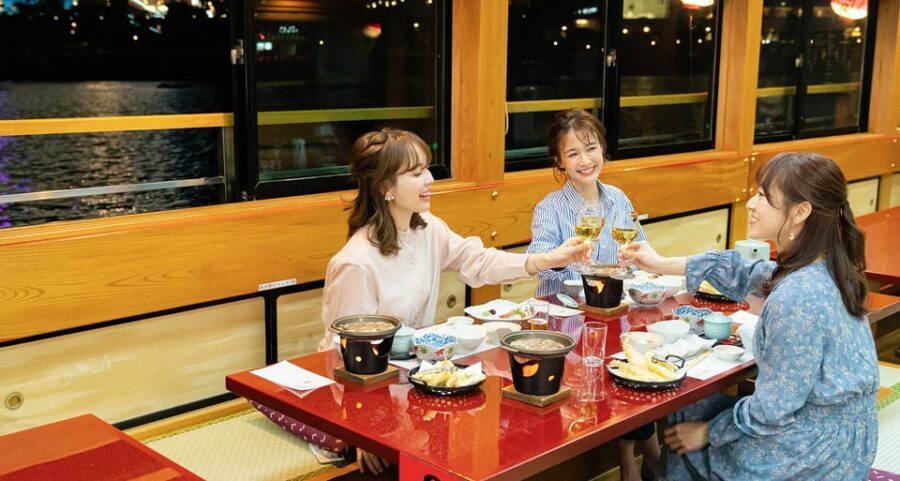
This Sumida River yakatabune dinner cruise is interesting because you’re not just sightseeing—you’re eating a full Japanese meal while the city glides past. I love the full course dinner (around 14 dishes) paired with free-flow drinks, and I also really like the photo timing: you get proper chances to see Tokyo Skytree and the illuminated bay lights. One drawback to keep in mind: interior lighting can be bright enough that it’s not ideal if you’re hoping for a moody, starry night-sky feel from inside.
You’ll start around Asakusa at Azumabashi, then ride the river down toward Tokyo Bay as the skyline turns on for the evening. I like that the boat builds in short view stops, including a moment when you can go up top for panoramic shots. The biggest practical consideration is seating: you’ll be on the floor in a traditional setup, and that can feel tight—especially if you’re not comfortable with close quarters.
In This Review
- Key highlights to notice before you go
- From Asakusa to Tokyo Bay: what the night feels like
- The 14-dish Japanese dinner and the free-flow drink setup
- Dietary restrictions: possible, but act early
- The skyline stops: Tokyo Bay, Rainbow Bridge vibes, and Skytree photo time
- Lighting inside can affect night-sky photos
- How the 150 minutes play out in real life
- Onboard comfort: tatami seating, shoes off, and shared table reality
- Service style and the language gap (and how to deal with it)
- Price and value: is $103 per person worth it?
- Who should book this yakatabune dinner cruise—and who might not
- Should you book the Sumida River Yakatabune dinner cruise?
- FAQ
- How long is the Sumida River yakatabune dinner cruise?
- Where does the cruise depart?
- What’s included in the ticket price?
- Are alcoholic drinks included?
- Is there time for photos on deck?
- Is an English guide included?
- Can they accommodate dietary restrictions?
- Is hotel pickup and drop-off included?
- What happens if the weather is bad?
- What should I do about the meeting point?
Key highlights to notice before you go
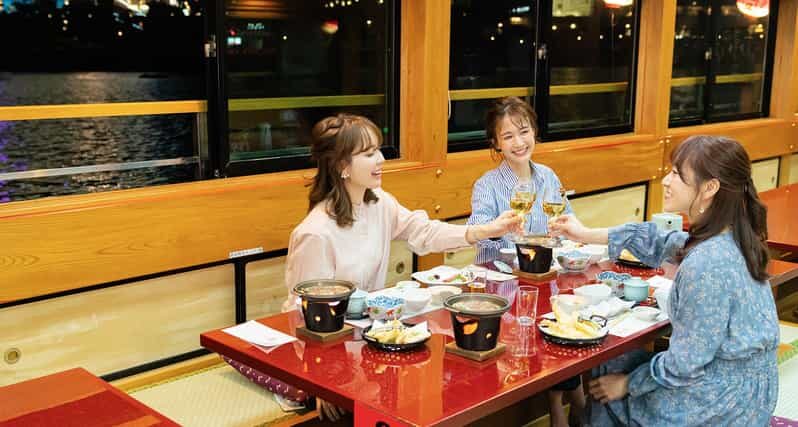
- Asakusa departure on a traditional yakatabune: the whole night feels like a real local-style dinner cruise.
- Around 14-dish Japanese course meal with plenty of variety
- Free-flow drinks including beer, sake, whiskey, wine, plum wine, tea, and soft drinks
- Photo stops with big skyline views at Tokyo Bay and again tied to Tokyo Skytree
- Go on deck when you want windows-free views of the river and bridges
- Staff are attentive and service moves fast to keep food and drinks coming
More time on the water around Tokyo
- Mt Fuji & Hakone Cruise, Drum Show Bullet Train 1 Day from Tokyo★ 4.0 · 7,413 reviews
- Tokyo Mt Fuji 5th St & Hakone Cruise Bus Tour w/Bullet Train★ 4.4 · 5,024 reviews
- Mt Fuji & Hakone Cruise, Drum Show Bus 1 Day from Tokyo★ 4.0 · 1,287 reviews
From Asakusa to Tokyo Bay: what the night feels like
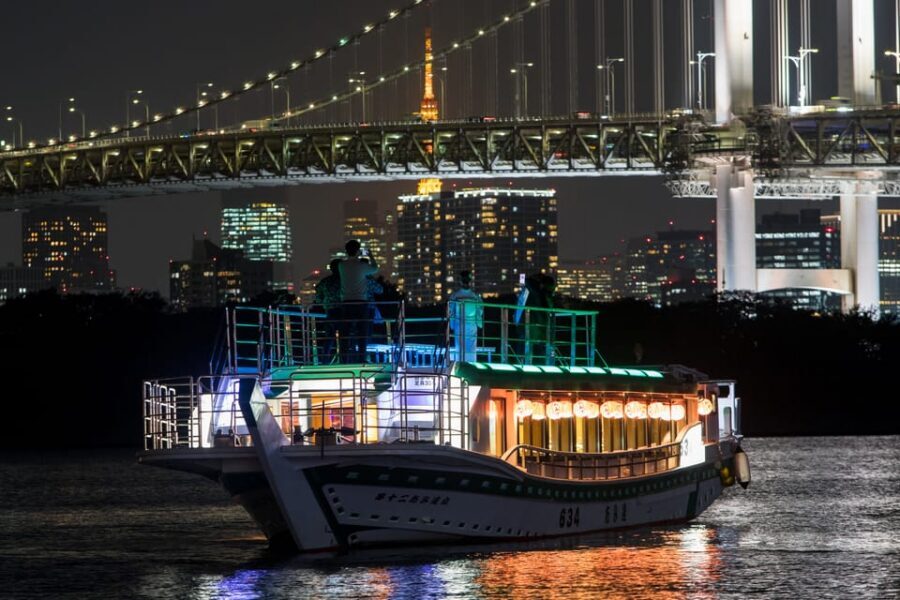
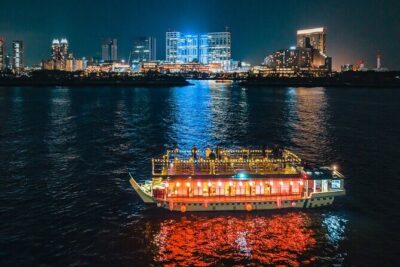
This cruise is built around one simple idea: see Tokyo like it’s a moving postcard, then eat like you mean it. You board near Azumabashi in Asakusa, and the boat takes you down the Sumida River toward Tokyo Bay after dark. The timing matters. Once the city lights switch on, reflections start showing up on the water, and that’s when the views get really photogenic.
The yakatabune experience also has a different pace than most Tokyo tours. You’re seated and eating, but the scenery keeps changing outside. Even if you know Tokyo already, this is a different angle—less “look at landmarks from a street,” more “watch the city unfold behind you.”
If you’re trying to plan a one-night “Tokyo night” moment, this one is a strong contender because it covers both sides: river scenes and bay skyline. You also get multiple chances to get out for photos, so you’re not stuck only seeing everything through dark windows.
The 14-dish Japanese dinner and the free-flow drink setup
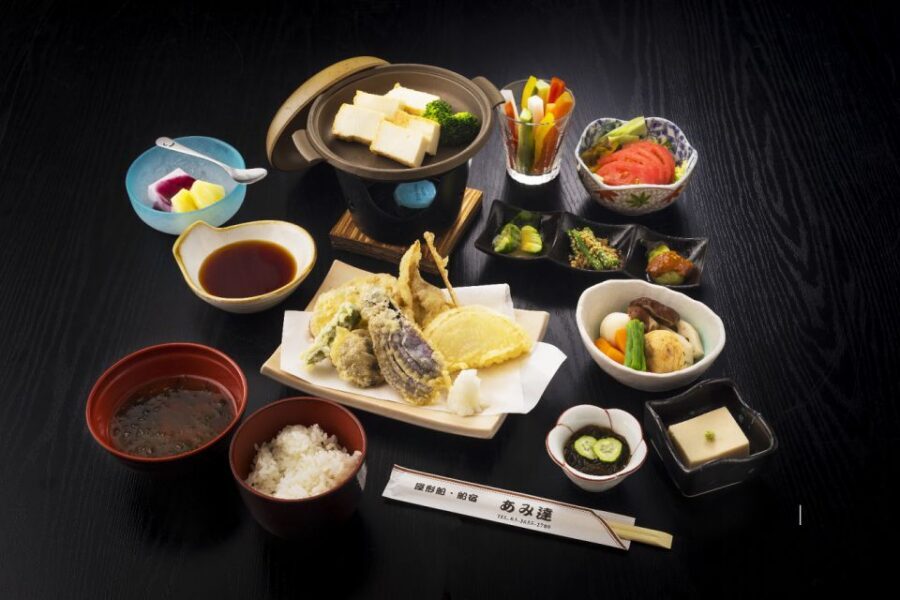
The food is the headline here, and the structure is what makes it work. You get a full Japanese-style course meal—about 14 dishes—served throughout the ride. In practice, this means you don’t just get one plated meal; you get a sequence of tastes, with both cold and hot bites showing up during the evening.
The other big factor is the drinks. The package includes a free-flow selection: beer, sake, whiskey, wine, plum wine, tea, and soft drinks. Many people like these cruises best when drinks are truly easy to keep coming. Here, you can order continuously (people have described ordering via a QR code at the table), and service aims to keep tables stocked without you chasing anyone.
A practical tip: go with an empty stomach, because the course is substantial. A few dishes can be unfamiliar if you haven’t eaten much Japanese food beyond basics like sushi, so think of the dinner as a guided “try it” night. Also, if you want alcohol, you don’t need to plan your timing around the bar line.
Dietary restrictions: possible, but act early
You can request dietary restrictions or meal changes, but you must submit them at least two days prior. There’s also a handling fee of ¥1,000 per guest for changes related to dietary restrictions or meal selection. If you care about getting exactly what you need, message ahead and don’t count on last-minute fixes on the day.
The skyline stops: Tokyo Bay, Rainbow Bridge vibes, and Skytree photo time
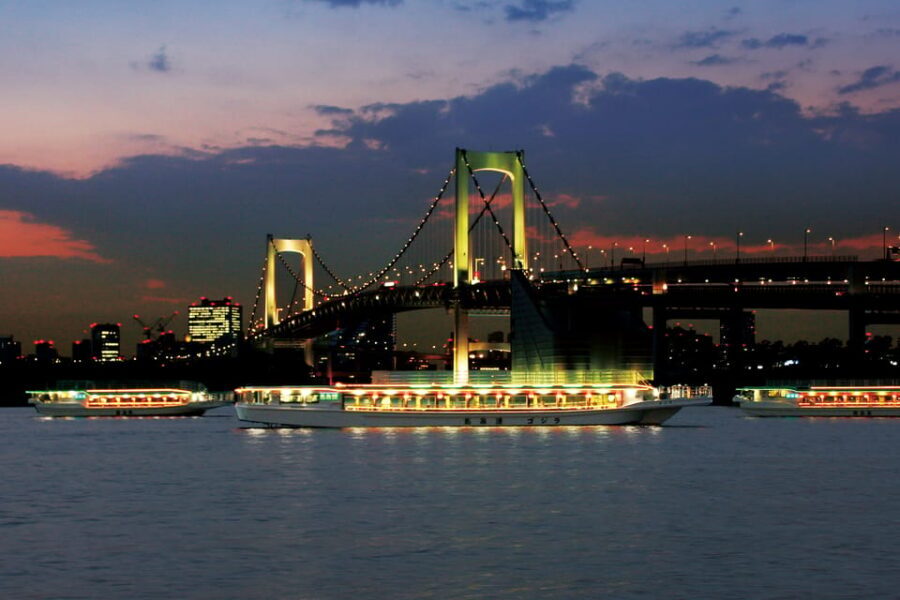
The route isn’t random. It’s centered on Tokyo’s nighttime highlights you can recognize quickly, even without reading any history plaques.
First, as you head into the Tokyo Bay area, you’ll see the illuminated bay skyline, including the area around Rainbow Bridge and Odaiba. Then the cruise builds in a photo break where you can climb up to the roof of the boat for panoramic views. That deck time is a big deal because your best photos usually come from higher ground and fewer obstructions than seated window views.
Then you get another stop tied to Tokyo Skytree, with time to view and take pictures again. This second photo moment helps because it gives you a comparison: Skytree’s lighting and the surrounding city look different once you’ve already seen the bay segment.
One honest note: if you’re seated where you can’t see much out the windows, the roof stops matter even more. Several people have pointed out that interior seating can make “pure river watching” harder from inside, but the deck solves that.
Worth weighing up alongside this Tokyo pick:
Lighting inside can affect night-sky photos
If you’re the type who wants dark, moody, night-sky shots from inside the boat, pay attention to this. Some people have said the interior lighting can be too bright to fully enjoy the night sky while cruising. The fix is simple: do your “wow photos” on deck during the roof stops, then enjoy the dinner inside.
How the 150 minutes play out in real life
The cruise runs about 150 minutes. That’s long enough to feel like an evening event, but short enough that you’re not losing the rest of your Tokyo night.
A typical flow looks like this:
- You board near Azumabashi in Asakusa.
- Dinner starts as the boat cruises down the Sumida River.
- You reach Tokyo Bay, where you’ll have a photo-oriented break and time to go up for panoramic views.
- After that, the cruise continues while the meal keeps coming, with another view stop connected to Tokyo Skytree.
- Then you head back toward Azumabashi Bridge, and the experience ends.
The value here is pacing. You’re not rushed off a boat the moment food arrives, and you’re not waiting endlessly for photos either. You get “in-between moments” built into the schedule—enough to relax with your meal while still getting skyline time when it counts.
Also, because the cruise is at night, it’s a great slot for people who want an activity that doesn’t require extra planning like separate museum tickets or a long train hop across town.
Onboard comfort: tatami seating, shoes off, and shared table reality
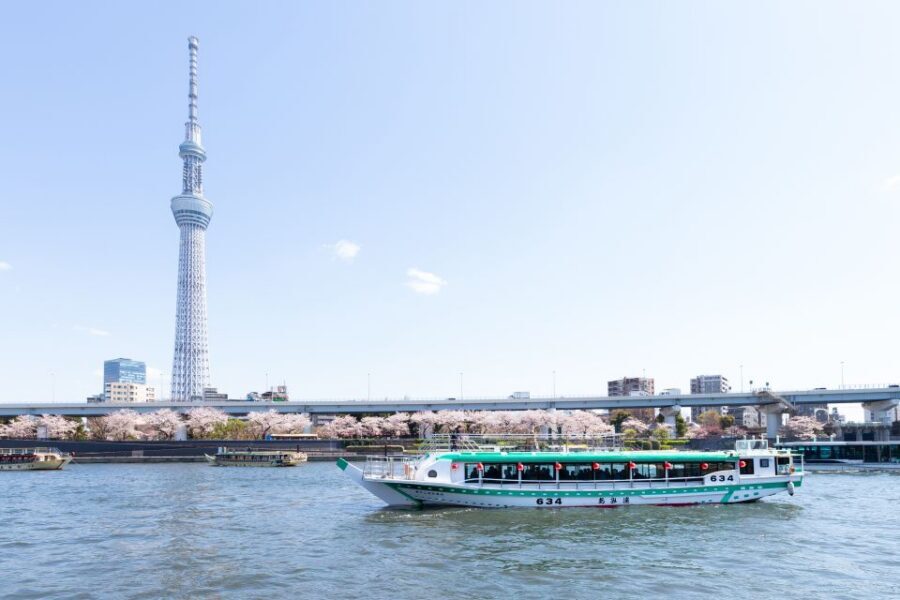
The yakatabune setup is part of the charm, but it comes with real-world logistics.
You can expect a traditional dining area where people often sit on a floor-level setup (some descriptions note tatami), and shoes are typically removed. Many diners end up with legs tucked and seated comfortably for a while, and the atmosphere feels intimate in a good way—like a small restaurant that happens to float.
The trade-off is that seating can be close. Some descriptions mention tables set for six, so if you’re not traveling in a matching group size, you’ll likely sit near strangers. That’s not automatically a problem—food keeps coming and the conversation level can be friendly—but it’s worth knowing so it doesn’t surprise you.
Restroom access also depends on how you’re seated. When you’re on a floor-level layout, standing up takes a bit more effort, and bathroom breaks can feel less “grab-and-go” than in a normal restaurant. It helps to plan your drinks accordingly and take advantage of deck time if you need a quick break from the dining area.
Comfort note: people have mentioned AC being helpful in hot weather, and toilets being kept clean. So yes, it’s traditional—but not “hard travel camping mode.”
Service style and the language gap (and how to deal with it)
This cruise runs on coordinated service: food comes in waves, and drinks keep moving. Multiple people have praised staff for being attentive and professional, with quick responses to requests and consistent refills.
What about English? You should know the cruise doesn’t include an English guide. Staff use a translator approach. In practice, the system still works fine if you can handle basic directions and use the drink ordering method at the table.
Announcements on boats can be bilingual (some people have described English and Japanese being used), but not every detail is guaranteed to be fully translated. If you’re the type who likes to understand every bridge name, just treat it as part of the experience: you’ll still see the landmarks clearly through the night scenery and photo stops.
A smart move: before you board, think about what you want to photograph—Skytree first, then the bay lights. That way, even if you don’t catch every spoken detail, you still get your main goals.
Price and value: is $103 per person worth it?
At about $103 per person, this isn’t a cheap “do something random” Tokyo night. It’s a splurge. But the price makes more sense when you break it down:
- You’re paying for the boat experience and the time on the water
- You’re getting a full multi-course dinner (around 14 dishes)
- You’re getting free-flow drinks across a range of alcoholic and non-alcoholic options
In other words, you’re bundling three costs that often add up separately in Tokyo: a sit-down meal, drinks, and an evening activity with skyline views.
People repeatedly highlight that the food quality and drink service feel worth it, and that staff keep the experience flowing. When the course is plentiful and the drink package is genuinely easy to use, the “value” shifts from price sticker shock to simple math: you’re buying a complete evening in one ticket.
One thing to consider: if your priority is pure sightseeing, the boat ride isn’t necessarily designed for long stretches of uninterrupted window views. The best views usually happen during the roof photo stops. If you love photos, that’s great—just plan to spend deck time at those moments.
Who should book this yakatabune dinner cruise—and who might not
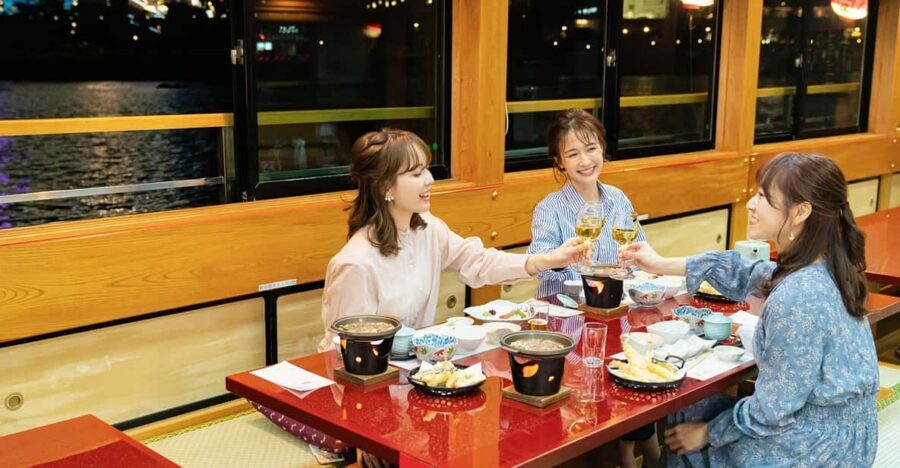
This cruise fits best if you want:
- A Tokyo night with a built-in meal (not just a quick snack stop)
- A serious taste of Japanese multi-course dining
- A fun, social atmosphere where service keeps things moving
- Great photo chances tied to Tokyo Bay and Skytree
It can also be a nice pick for:
- Couples looking for a romantic-feeling night out
- Small groups who want an easy plan without juggling multiple train rides
- First-timers who want one activity that hits several famous night views
It might feel less ideal if:
- You strongly prefer staying inside with windows the whole time (the deck stops matter)
- You’re sensitive to bright interior lighting for night-sky photos
- You’re uncomfortable with traditional seating and the possibility of sharing a table with six-person setups
Should you book the Sumida River Yakatabune dinner cruise?
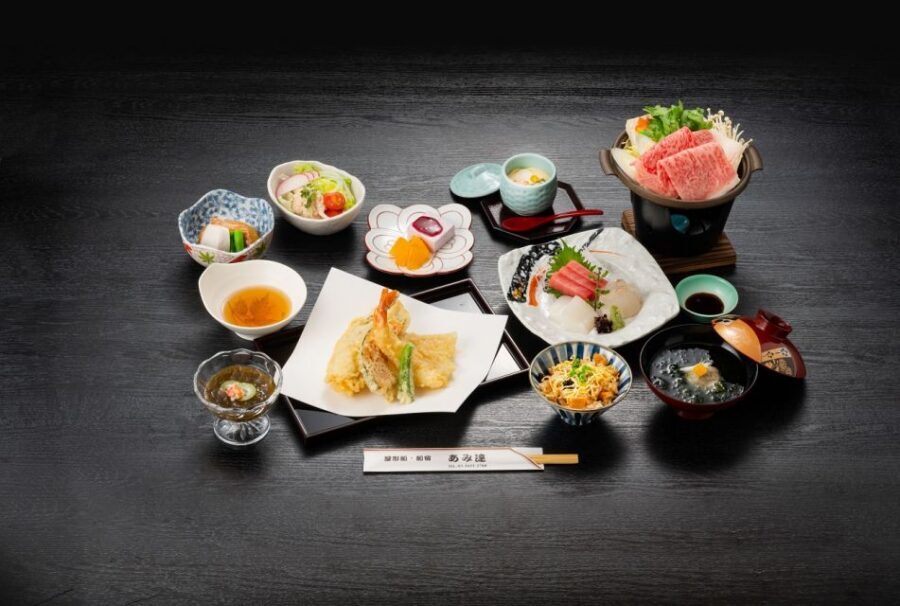
If you want an evening that combines a real Japanese dinner course with night skyline views—and you’re happy to trade some indoor-window watching for deck photo time—this is an excellent booking. The high satisfaction comes from the same places that matter: the food shows up as a full experience, drinks are genuinely included, and the timing gives you photo moments at Tokyo Bay and Tokyo Skytree.
Book it if you’re craving a night activity that feels different from “walk around and hope you find dinner.” Pass if you only want sightseeing with minimal fuss or if you need a lot of English-led narration.
FAQ
How long is the Sumida River yakatabune dinner cruise?
The duration is about 150 minutes.
Where does the cruise depart?
The boat departs from Azumabashi, located in the heart of Asakusa.
What’s included in the ticket price?
You get a full course Japanese-style dinner (about 14 dishes), free-flow drinks, and the cruise boat fare.
Are alcoholic drinks included?
Yes. Free-flow drinks include beer, sake, whiskey, and wine, as well as plum wine, tea, and soft drinks.
Is there time for photos on deck?
Yes. At Tokyo Bay, you can climb up to the roof of the boat for panoramic views and photos, and there is also a stop connected to Tokyo Skytree for viewing and photos.
Is an English guide included?
No. The activity does not include an English guide, and staff use a translator.
Can they accommodate dietary restrictions?
They ask that requests for dietary restrictions or meal changes be submitted at least two days before your reservation date.
Is hotel pickup and drop-off included?
No. Hotel pickup and drop-off are not included.
What happens if the weather is bad?
The cruise may be canceled in case of severe weather such as typhoons.
What should I do about the meeting point?
The meeting point may vary depending on the option booked, so confirm the exact location for your specific reservation.
More Dining Experiences in Tokyo

Out on the Water Around Tokyo


More Tour Reviews in Tokyo




Fresh reviews from around Tokyo






Cruises & Boat Tours, compared.
 ★ 4.0Mt Fuji & Hakone Cruise, Drum Show Bullet Train 1 Day from TokyoFrom $1497,413 reviews
 ★ 4.4Tokyo Mt Fuji 5th St & Hakone Cruise Bus Tour w/Bullet TrainFrom $1545,024 reviews
 ★ 4.7Meiji Shrine, Asakusa, Skytree Bus Tour and CruiseFrom $1221,986 reviews
 ★ 4.0Mt Fuji & Hakone Cruise, Drum Show Bus 1 Day from TokyoFrom $1221,287 reviews
 ★ 4.2Hakone Fuji Day Tour w/ Cruise, Cable Car, VolcanoFrom $98724 reviews
 ★ 4.5Dynamic Tokyo: Tokyo Tower, Tea Experience, Bay Cruise Day TourFrom $99521 reviews
 ★ 4.5Tokyo Bay Yakatabune Dinner/Day Cruise with Japan Show and DrinksFrom $65473 reviews
Tokyo Dinner Cruise & Tradition Show & Drinks & Tokyo TowerFrom $95315 reviews
★ 4.5Tokyo Bay Yakatabune Dinner/Day Cruise with Japan Show and DrinksFrom $65473 reviews
Tokyo Dinner Cruise & Tradition Show & Drinks & Tokyo TowerFrom $95315 reviews
Browse the lists this tour appears in