
Nikko is the kind of place that makes you slow down. This full-day private walking tour in the Nikko area is built around your pace and choices, with a guide who handles navigation and timing so you can focus on what you came to see. Two things I really like: you get a government-licensed English-speaking guide, and the itinerary is flexible (you choose 3–4 sights from a menu like Toshogu, Kegon Falls, Lake Chuzenji, and more). One possible drawback: with only 3–4 stops in a 9-hour day, you may have to let something go (I’d do it on purpose, but it still happens).
The best part is how smoothly the day is set up. You meet in Tokyo around Asakusa Station, and pickup is offered; then the guide drops you back at your hotel or anywhere else you want in the end. In real-world terms, that means less stress about trains, station exits, and confusing walking routes—something guides like Seizo Kamiuto and Yoshii Kenichi were praised for in their reviews.
You’ll also want to plan around what’s included. Entrance fees and lunch aren’t included, and transportation costs aren’t included—so you’re paying for the guide, the route-making brain, and the time-saver of not getting lost, not for every ticket in Nikko. If you’re the type who likes to check everything off, this tour might feel a little too selective. If you want a focused day with a good plan, it’s a sweet setup.
In This Review
- Key Things That Make This Nikko Tour Worth Your Time
- A Private Nikko Day From Tokyo, Without the Getting Lost Headache
- How the Bespoke Itinerary Works When You Can Choose 3 to 4 Sights
- Toshogu, Futarasan, and Shinkyō: The Sacred Cluster You Can Build a Route Around
- Waterfalls and Lake Chuzenji: Kegon Falls Plus the Best-Value Pairings
- Senjogahara and Rinnōji: The Myth and the Temple-Breath
- Taiyū-in Mausoleum and Tamozawa Imperial Villa: Power Meets Rest
- Kanmangafuchi Abyss, Botanical Garden, and Kanaya Hotel History House: Variety That Doesn’t Waste Time
- Kirifuri Waterfall and Akechidaira Views: Nature Options With a Ropeway Heads-Up
- Price, Tickets, and What You’re Really Paying For
- Who This Tour Fits Best (And Who Should DIY)
- Should You Book This Nikko Private Walking Tour?
- FAQ
- How long is the Nikko private walking tour?
- What does the tour cost?
- How many sights will we see in Nikko?
- Is hotel pickup included?
- Is transportation to and from Nikko included in the price?
- Are entrance fees included?
- Is the tour mostly walking?
- Is the Akechidaira ropeway available?
- Is free cancellation available?
Key Things That Make This Nikko Tour Worth Your Time
- Government-licensed guides with strong English; guides such as Seizo Kamiuto, Yoshii Kenichi, Kazu, Yusuke, Nobu, and Mari Noda were specifically praised for organization and communication.
- A bespoke itinerary where you choose 3–4 sights from a structured list (shrines, waterfalls, lakes, gardens).
- Convenient Tokyo start and drop-off: meet around Asakusa Station area, with pickup offered and a drop-off at your hotel or your chosen spot.
- Nature and culture together: Kegon Falls and Lake Chuzenji options sit right next to Toshogu and Rinnōji options.
- Real planning flexibility so you can match the day to weather and energy, not just a fixed route.
- A heads-up on closures: the Akechidaira ropeway is scheduled closed from Jan 16, 2026 to Aug 31, 2027.
A Private Nikko Day From Tokyo, Without the Getting Lost Headache
This is a full-day Nikko outing, but it doesn’t feel like a stressful bus tour. It’s private, so it’s just your group. The guide’s job is to handle navigation between stops and keep the day moving. That matters because Nikko can look simple on a map, then turn into a maze of paths, shrine precincts, and last-mile walking.
What you get is a day built around your choices, not a one-size route. You pick the sights, and the guide builds the order and timing. That flexibility is especially valuable in Nikko, where crowds and walking lengths can change how much you actually enjoy each place.
I also like that this tour is clearly a walking tour. You’re not paying to sit. You’re paying to see. And you’ll get a licensed guide whose main focus is local context, timing, and getting you to the next spot without drama.
One extra practical note: end-to-end logistics are part of the experience. Your guide drops you off at your hotel or anywhere else you want, which is a big deal when you’re tired at the end of a long day and just want to go. Reviews repeatedly highlighted guides being punctual, organized, and attentive to preferences.
How the Bespoke Itinerary Works When You Can Choose 3 to 4 Sights
The tour menu gives you a lot of options, but the day is intentionally limited to 3–4 sites. That’s both the charm and the compromise.
Here’s how I’d think about it: Nikko has several “must-see clusters,” and trying to force all of them into one day can turn into standing in line, walking fast, and feeling like you saw things but didn’t experience them. A smaller selection lets you slow down at each stop and actually absorb what makes each one different.
Your options include:
- Shrine and temple complex time: Nikko Tōshō-gū, Rin’nōji (including Taiyū-in), Rinno-ji, Futarasan Shrine, and Shinkyō Bridge.
- Water and dramatic nature: Kegon Falls, Kirifuri Waterfall, and Kanmangafuchi Abyss.
- Big scenic breaks: Lake Chuzenji and Senjogahara Field.
- Calmer variety stops: Nikko Botanical Garden, Kanmaya Hotel History House, and Nikko Tamozawa Imperial Villa Memorial Park.
In the reviews, the best outcomes often came from matching the day to energy level and interests. A guide like Kazu or Nobu was praised for building a practical itinerary ahead of time and then adjusting as the day moved on. If you want a day that feels planned but not rigid, this format fits.
Toshogu, Futarasan, and Shinkyō: The Sacred Cluster You Can Build a Route Around
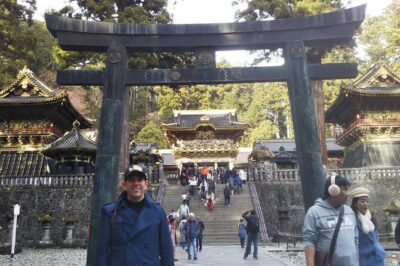
If you want one anchor stop, start with Nikko Tōshō-gū. It’s the final resting place of Tokugawa Ieyasu, the founder of the Tokugawa Shogunate. The complex also connects with nearby shrines and temples, so it’s not a quick photo stop. Plan on reading details, wandering, and taking your time with the layout.
Next door in spirit (and literally close by) is Nikkō Futarasan Shrine, founded in 782 by Shōdō Shonin, the monk who introduced Buddhism to Nikko in the 8th century. If you do Tōshō-gū today, pairing it with Futarasan helps you understand how Nikko layers religious sites across time.
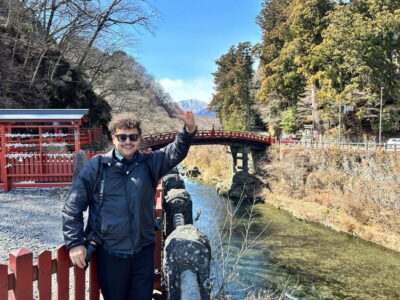
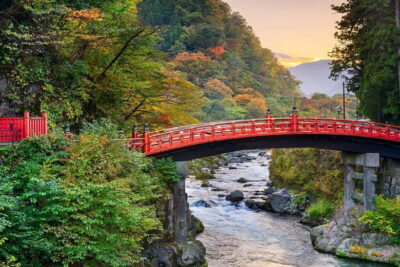
Then there’s Shinkyō Bridge, which stands at the entrance to Nikko’s shrines and temples and belongs to Futarasan Shrine. The tour info also notes it’s ranked as one of Japan’s three finest bridges. Even if you’re not a bridge enthusiast, it’s a useful waypoint: a natural “reset moment” that marks you arriving in the shrine and temple area.
A practical way to group these: choose one “big shrine day” option (Tōshō-gū), add one older-site option (Futarasan), and include Shinkyō if you want an iconic start or end to your shrine loop. This gives you variety without shredding your schedule.
Waterfalls and Lake Chuzenji: Kegon Falls Plus the Best-Value Pairings
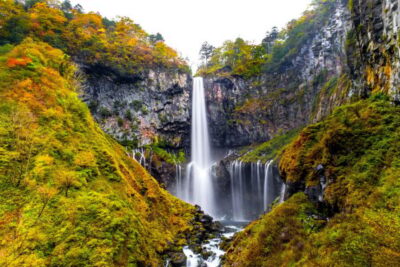
Nikko’s waterfalls are not background scenery—they’re the headline. The most famous is Kegon Falls. The tour notes water from Lake Chuzenji drops 97 meters straight down. It’s also described as one of Nikko’s 48 waterfalls, so you’re seeing the place where that whole system comes into view.
One detail you’ll appreciate: the tour info mentions a special lift for visitors. That’s huge for time and comfort if your legs are already tired from train time or if you’d rather not fight steep walking just to reach the viewpoint.
Pair Kegon with Lake Chuzenji, which the tour info describes as the largest lake in Tochigi, framed by 25 kilometers of nature. It also mentions the area was a popular summer resort for foreigners in the late 19th and early 20th centuries, including villas of French and others. That angle is what makes this combo work: you go from dramatic water action to the calm scale of a large lake and its resort-era background.
If your goal is maximum “wow per hour,” this is a strong pairing. It’s also a common place where the 3–4 stop limit can hurt—you might want Kegon plus another waterfall plus something else. A guide can only do so much in a day, and one review outcome pointed out not having enough time to see Kegon, Lake Chuzenji, and several falls. So pick the one waterfall moment that matters most to you.
Senjogahara and Rinnōji: The Myth and the Temple-Breath
For a break from the big shrine-adjacent flow, I like Senjogahara Field. The name “Senjogahara” translates to battlefield, and the tour description adds a legend: the gods of Mount Nantai and Mount Akagi fought to claim the neighboring lakes. It’s a myth you can walk through, and it gives your day a story thread that isn’t just architecture and artifacts.
Then there’s Rin’nōji and its section Taiyū-in (the mausoleum of Iemitsu, the third Tokugawa shogun and grandson of Ieyasu). The tour info says Taiyū-in’s complex resembles Tōshō-gū in layout and architectual approach. That’s a valuable detail for planning because it sets expectations: if you do Tōshō-gū, you’ll likely want to compare how Taiyū-in handles ceremony and design.
If you want the “temple side” of Rin’nōji too, the tour also includes Rinno-ji Temple, described as Nikko’s most important temple. It was founded by Shōdō Shonin, linked to the introduction of Buddhism to Nikko in the 8th century. The main building is listed as Sanbutsudō. That combination is good when you’re interested in how Nikko’s religious world developed and how different sites relate.
A smart planning move: if your head is full of shrine details, add Senjogahara to change the tone. If your body is tired, Rin’nōji and Rinno-ji can still be satisfying without sprinting between distant spots, as long as your guide builds the day realistically.
Taiyū-in Mausoleum and Tamozawa Imperial Villa: Power Meets Rest
Nikko is often presented as temples and waterfalls, but the Nikko Tamozawa Imperial Villa Memorial Park option shows another side. The tour info says it blends traditional Edo architecture with early modern Meiji Period architecture across 106 rooms. It was built in Nikko in 1899 and created using parts of a residence from elsewhere (the description cuts off, but the point is clear: it’s an architectural bridge between eras).
Why this matters for your day: after heavy shrine symbolism and waterfall drama, an imperial villa setting tends to feel like a breather. It also gives you a different kind of “museum feeling” without being a stuffy indoor stop. If your group is split—some want temples, some want scenic and architectural—this is one of the best compromises from the tour menu.
If you include Taiyū-in (Iemitsu’s mausoleum), do it when you can still focus. The mausoleum is described as lavish, and you’ll likely notice similarities to Tōshō-gū. That means it works best as a deliberate second shrine anchor, not a rushed add-on when you’re already tired.
Kanmangafuchi Abyss, Botanical Garden, and Kanaya Hotel History House: Variety That Doesn’t Waste Time
Not every great stop needs to be big-ticket. Kanmangafuchi Abyss is short and dramatic. The tour info says it was formed by an eruption of nearby Mount Nantai and that the gorge is only a few hundred meters long. You enjoy it from a riverside walking trail. That “few hundred meters” detail is exactly why it fits into a day with limited stops: you get a strong scene without eating half the day.
If your timing works, Nikko Botanical Garden is a nice contrast to stone and water. The tour description says it’s owned and maintained by the prestigious University of Tokyo, and it’s described as a branch of the university’s main research garden at Koishikawa Botanical Gardens. That gives you a credible angle: you’re not only visiting plants for looks; you’re seeing a garden connected to research and stewardship.
Then there’s the more everyday-story option: Kanaya Hotel History House. The tour info calls it a historical building and says it served as the predecessor of the celebrated Kanaya Hotel. If you like how tourism history leaves physical traces, this can be a fun change of pace from shrines.
These three aren’t “must” for everyone, but they’re great when you want the day to feel well-rounded: one nature spectacle, one calm learning stop, and one cultural-story setting.
Kirifuri Waterfall and Akechidaira Views: Nature Options With a Ropeway Heads-Up
For another waterfall option, choose Kirifuri Waterfall. The tour info describes it as a two-tiered waterfall, 75 meters high, located below the Kirifuri Highlands a few kilometers northeast of the temples and shrines of Nikko. If Kegon is the big famous drop, Kirifuri can be the second-chance moment—especially if you want variety in where the falls sit in relation to the broader Nikko area.
For viewpoints, Akechidaira Observation Area is a strong option—at least on paper. The tour info includes a major practical heads-up: the ropeway is closed for maintenance from January 16, 2026 until August 31, 2027. It also says it’s near the top of Irohazaka Slope and offers sweeping views over a winding road and dramatic mountain scenery.
So here’s the real planning advice: if you’re booking during that closure window, don’t count on ropeway access. Your guide can help you choose whether the observation area is still worth it for your group based on your walking tolerance and how the day is going.
Price, Tickets, and What You’re Really Paying For
At $224.02 per person for an approximately 9-hour private tour, you’re paying for a government-licensed guide and a day plan that you don’t have to invent. This is not cheap, but it’s not random-expensive either.
Here’s what matters for value:
- You’re paying for custom sequencing of 3–4 chosen sites so you don’t waste time figuring out where to go next.
- Pickup and drop-off help reduce logistics friction in Tokyo and at the end of the day.
- It’s a private format, so your group’s pace controls the day.
Here’s what is not included:
- Transportation fees (and private transportation)
- Entrance fees for many stops
- Lunch
- The NIKKO PASS all area ticket (listed as 4,520 JPY per person), which is not included
That last item is key: you may or may not want a pass depending on which sites you choose. Because entrance fees are not included for many of the stops, it can make sense to ask your guide how your 3–4 selections impact ticket costs versus using a pass.
Also, remember the 3–4 stop limit. One review noted not having enough time for Kegon Falls, Lake Chuzenji, and several falls. That’s not a bad sign; it’s just the math of a full day with meaningful stops.
Who This Tour Fits Best (And Who Should DIY)
This tour fits best if you:
- Want a private Tokyo-to-Nikko day with a guide managing the flow
- Prefer choosing a few sights and spending real time at them
- Like having someone help with navigation and local context
- Travel in a group that doesn’t want to split up to “figure it out”
You might consider DIY instead if:
- You already know the routes well and you’re comfortable in Japanese
- You want to stop at random extras without a plan
- You’re trying to maximize total sites at all costs (because the tour is intentionally capped at 3–4 choices)
One more thing I’d call out from the feedback patterns: guide quality was a big deal. Many reviews praised specific guides (like Seizo Kamiuto, Yoshii Kenichi, Kazu, and Mari Noda) for being organized, friendly, and tuned in to preferences. That’s where the extra cost usually shows up—less stress, fewer mistakes, and a day that feels like it has a brain behind it.
Should You Book This Nikko Private Walking Tour?
I’d book it if your priority is a well-managed day in Nikko with flexible sightseeing and a guide who can help you make smart trade-offs. The structure—3–4 chosen sights, a licensed English-speaking guide, Tokyo pickup help, and hotel drop-off—works well for first-timers who want the best experience without playing transport roulette.
Skip it (or think twice) if you want a packed checklist of everything Nikko offers. This format is designed for depth, not maximum quantity. And because entrance fees, lunch, and transportation are not included, you’ll want to budget a little extra on top of the tour price.
If you’re traveling soon, book early. Reviews also mentioned using the tour during busy times like autumn leaves season, and you’ll likely be happier with better choice of guide timing when you plan ahead.
FAQ
How long is the Nikko private walking tour?
It runs for about 9 hours.
What does the tour cost?
The price is listed as $224.02 per person.
How many sights will we see in Nikko?
The tour is designed as a customizable day where you choose 3–4 sites from the listed options.
Is hotel pickup included?
Pickup is offered, and your guide will drop you off at your hotel or anywhere else you want after the tour.
Is transportation to and from Nikko included in the price?
Transportation fees are not included, and private transportation is not included.
Are entrance fees included?
Entrance fees are not included. Some stops are marked free, while others show admission tickets not included.
Is the tour mostly walking?
Yes. It’s a walking tour, and the meet-up is on foot.
Is the Akechidaira ropeway available?
No. The ropeway is listed as closed for maintenance from January 16, 2026 until August 31, 2027.
Is free cancellation available?
Yes. You can cancel up to 24 hours in advance for a full refund.
Nikko Day Trips, compared.
 ★ 4.6Nikko: Kegon Falls, Lake Chuzenji & Toshogu TempleFrom $891,577 reviews
 ★ 4.5Nikko Toshogu Shrine and Kegon Waterfall TourFrom $841,266 reviews
 ★ 5.0Nikko Full-Day Private Tour with Government-Licensed GuideFrom $155259 reviews
 ★ 4.9From Tokyo: Nikko World Heritage Site Private Full-Day TripFrom $483243 reviews
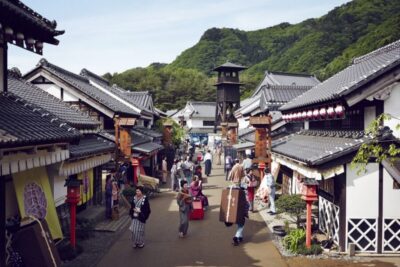 ★ 4.3Nikko: Edo Wonderland Edomura Cultural Theme Park TicketFrom $35205 reviews
From Tokyo: Nikko World Heritage Sight Full Day Private TourFrom $362127 reviews
★ 4.3Nikko: Edo Wonderland Edomura Cultural Theme Park TicketFrom $35205 reviews
From Tokyo: Nikko World Heritage Sight Full Day Private TourFrom $362127 reviews
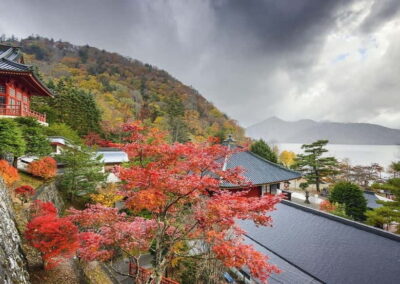 ★ 4.9Nikko – Beautiful Full-Day Personal and Private TourFrom $364119 reviews
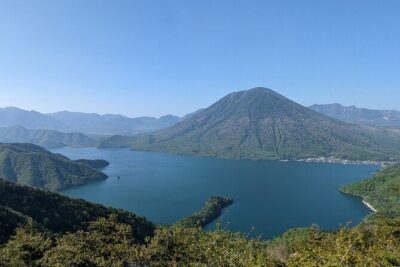 ★ 5.0Chartered Private Tour – Tokyo to Nikko, Toshogu, Edo WonderlandFrom $1,286105 reviews
Browse the lists this tour appears in