
Reviewed · ASAKUSA TOURS
Tokyo : Hand-Roll Sushi Class, Skytree view & Asakusa Tour
Two tastes, one perfect Tokyo afternoon. This 3.5-hour combo strings together Tokyo Skytree views, classic Asakusa sights, and then hands you a mat and ingredients for hand-roll sushi you’ll actually make. It’s a smart way to cover a lot without feeling rushed, especially because you get a guide’s undivided attention the whole time.
I especially love the pacing: Skytree first for a big visual payoff, then temple and shopping streets on foot, and finally the sushi workshop as the more relaxed finale. I also like the mix of stops—Senso-ji for the old-school Tokyo feel and Kappabashi for food-industry shopping that chefs themselves use.
One consideration: the experience depends on good weather for the walking parts and the day’s flow. If the weather’s poor, the operator may switch dates or offer a full refund—so plan with a little flexibility.
In This Review
- Key points you’ll care about
- Why This Asakusa + Skytree Combo Works
- Skytree Start: Fast Pass Views Without the Hassle
- Senso-ji Temple: Classic Landmarks Done at Human Speed
- Nakamise Street: Snacks, Souvenirs, and Edo-Era Vibes
- Kappabashi Kitchen Town: Where Food Tools Become the Attraction
- Hand-Roll Sushi Class at Hand Roll Tokyo Asakusa
- How the 3.5-Hour Schedule Fits Real Life
- Price and Value: What You’re Really Paying For
- Who Should Book This Tour (and Who Might Skip It)
- Should You Book This Tokyo Hand-Roll Sushi Class and Asakusa Tour?
- FAQ
- What’s the duration of the Tokyo Skytree and Asakusa tour with a sushi class?
- Is this tour private or shared?
- Where does the tour start and end?
- What time does the tour begin?
- Is Skytree admission included?
- Is the Senso-ji temple admission included?
- What shopping streets are included?
- What happens in the hand-roll sushi class?
- What ingredient options can you choose?
- What if the weather is poor?
- FAQ
- What’s the cancellation policy?
- Is there a mobile ticket?
- Is public transportation nearby?
- Most people can participate—who might this not suit?
Key points you’ll care about
- Private guide time: Only your group, so you can ask questions and move at a pace that fits you
- Skytree fast entry: You use a fast pass to smoothly get into the observation deck
- Asakusa essentials in a tight route: Senso-ji, Nakamise shopping street, and a kitchenware stop
- Kappabashi Kitchen Town: Real cookware and tool shopping, popular with professional chefs
- Hands-on sushi class: You choose ingredients and roll your own hand-rolls
- Photo-friendly stops: Skytree and Asakusa landmarks make it easy to get great shots
More mornings around Senso-ji and the old town
- Tokyo: Japanese Dance Cabaret Theater Asakusa-Kaguwa Ticket★ 4.8 · 2,270 reviews
- Tokyo: Asakusa Walking Tour with Sensoji Temple Visit★ 4.8 · 1,583 reviews
- Tokyo Asakusa Rickshaw Tour★ 5.0 · 1,375 reviews
Why This Asakusa + Skytree Combo Works
This tour feels built for people who want “Tokyo highlights,” but not the usual crowd-control slog. You start with a landmark view that instantly gives you orientation—then you move into Asakusa, where the streets and temple area create that classic old-meets-modern Tokyo atmosphere. By the end, you’re doing something practical and fun: making hand-roll sushi.
You also get a useful balance of big and small. Skytree is about height and scale. Asakusa is about details—gates, pagoda silhouettes, shop signs, snacks, and the tools people use to make food. Then the sushi class ties it all together by turning “watching food culture” into hands-on experience.
This is also the kind of private tour that changes how you experience shopping streets. With a guide, you’re not stuck guessing what’s worth your time on Kappabashi, and you’re not turning every stop into a scramble. It’s a smoother route through a neighborhood that can otherwise feel a little chaotic.
Skytree Start: Fast Pass Views Without the Hassle
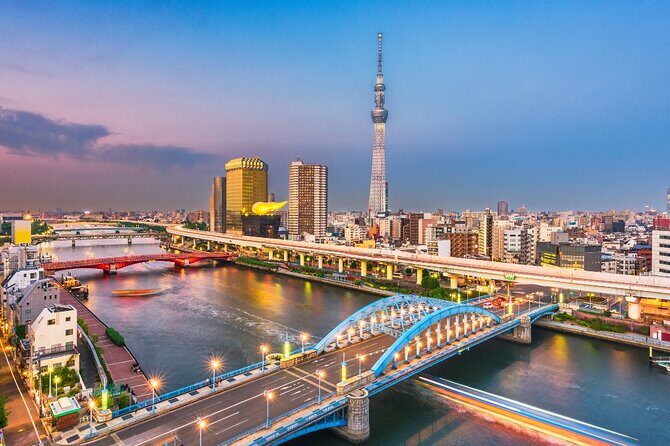
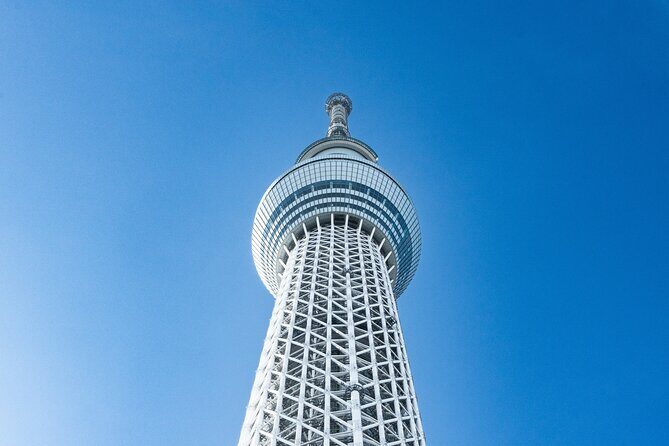
The meeting point is at Tokyo Skytree (Oshiage area), and you head there by train or taxi depending on what your group needs. Approaching Skytree is a whole mood shift—suddenly the city feels designed around this one giant vertical landmark. Then you use your fast pass to get into the observation deck more smoothly, which matters when you don’t want your “best view time” eaten by lines.
From the deck, you get the kind of sightline that helps the rest of your day make sense. Asakusa sits low by comparison, so you get scale, then you go walk those older streets with a better sense of where you are. It’s a great sequence because the view is a mental anchor.
One practical note: Skytree is included with admission. That’s a nice value piece because observation decks are often where you end up paying separately if you do everything on your own.
Senso-ji Temple: Classic Landmarks Done at Human Speed
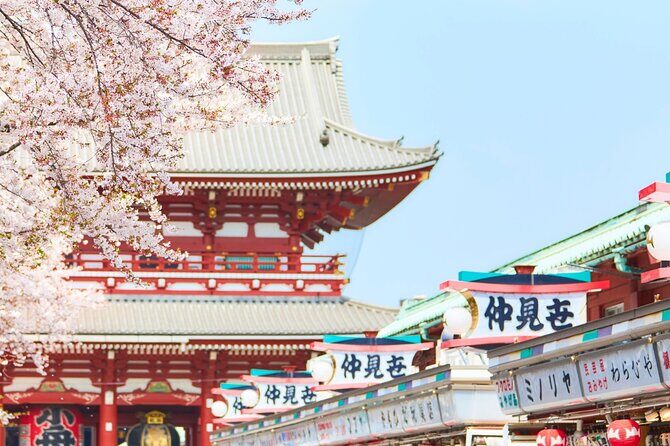
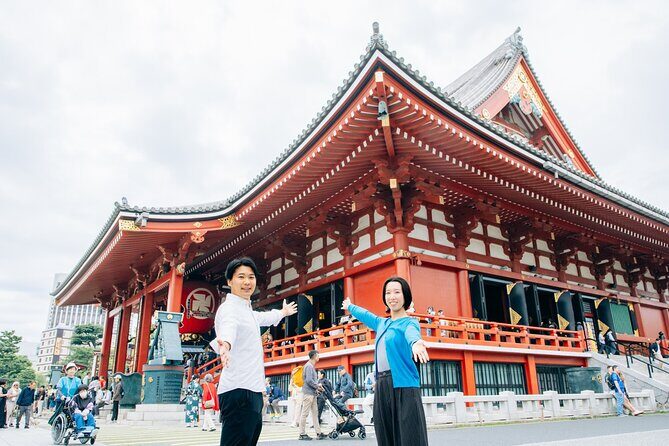
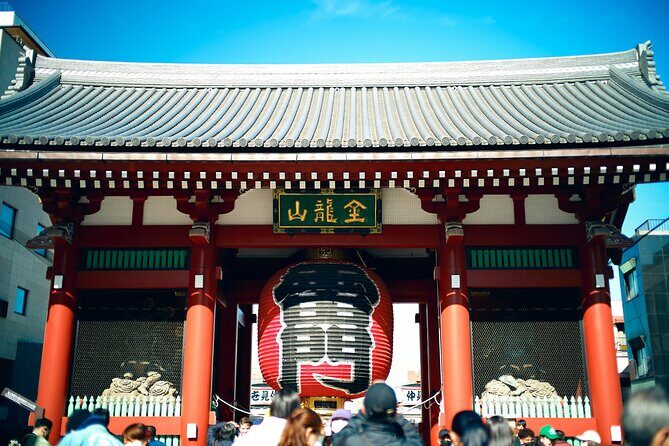
After Skytree, you head to Senso-ji, one of Tokyo’s oldest Buddhist temples, founded in 645 AD. You go to the main hall area and you’ll see key features like the five-story pagoda and the Hozomon Gate. These are the images people associate with Asakusa, but seeing them in person hits different once you’re standing where the crowds form around the same structures.
The time here is short—about 30 minutes—so you’re not doing a long, slow temple tour. Instead, it’s designed to get you the big “this is what Asakusa is” moments without burning your whole schedule. If you’re picky about photos, this part is very workable because the architecture frames well.
You’ll also benefit from having a guide with you in a temple area. Even if you only catch a few of the explanations, it helps you look at details instead of just walking past them. That’s the real win with a private format: less guessing, more meaning per minute.
Nakamise Street: Snacks, Souvenirs, and Edo-Era Vibes
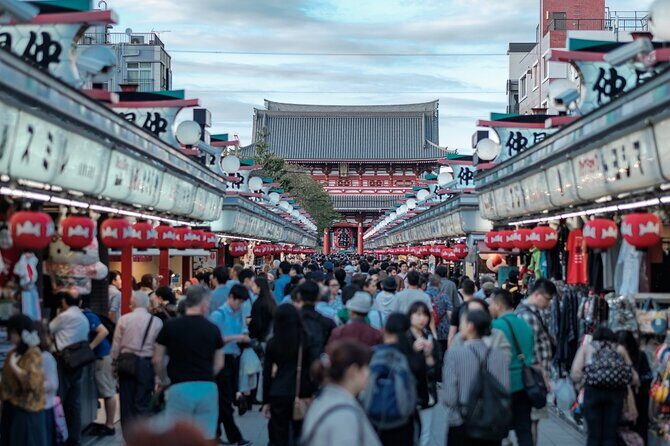
Next you stroll down Shin Nakamise Shopping Street, a roughly 250-meter stretch lined with shops and snack stalls. The shop style here is deeply tied to the past—your guide will point out that many of the stalls have existed since the Edo period.
This stop works best if you go in with a simple plan: pick one or two items you actually want to try, then choose souvenirs you’ll genuinely use or enjoy. With a guide, you’re not stuck trying to read every menu and price tag on the fly. Instead, you can ask what’s popular, what’s locally tied, and what tends to be a safe bet if you’re not sure.
A possible drawback is also simple: Nakamise is a shopping street. If you don’t enjoy browsing food and trinkets, this can feel like “more walking.” But if you like snacks, it’s a classic Asakusa experience and a good contrast to the temple architecture before you jump to kitchen-tool shopping.
More things to make with your own hands

Kappabashi Kitchen Town: Where Food Tools Become the Attraction
Then comes Kappabashi Street, also known as Kappabashi Dogugai or Kitchen Town. This is the stop that makes the tour feel more specialized and less like a generic sightseeing loop. The street is known for kitchenware shops and is frequented by professionals—so you’re looking at real tools, not just tourist-only souvenirs.
You’ll spend about 30 minutes here, which is just enough time to get the idea and spot a few items worth considering. If you love cooking, it’s fun to see how serious Tokyo shoppers can be about utensils. If you don’t cook much, you can still enjoy it because it’s visually interesting: specialized items, shop layouts, and the practical vibe of a place built around everyday cooking.
The guide’s role matters here. Without help, it’s easy to wander and still leave wondering what you actually should look for. With a guide, you can focus on categories that make sense—like knife-related items, cookware, chopsticks, and food prep tools—then decide what fits your budget and packing reality.
Hand-Roll Sushi Class at Hand Roll Tokyo Asakusa
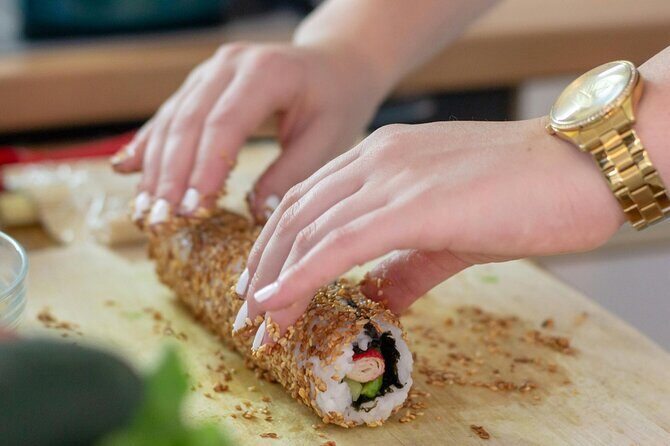
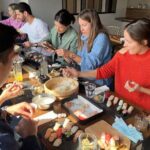
The tour ends with a hands-on sushi workshop at Hand Roll Tokyo Asakusa. This is where the experience turns from sightseeing into skill-building. You choose your ingredients—examples include salmon and avocado or tuna and cucumber—and then you roll your own hand-roll sushi.
This part is also where the best personal payoff shows up. The sushi workshop feels designed to be fun, not intimidating. One of the standout themes from the experience feedback is that people enjoy the variety of options for what to make, and that the rolling process is enjoyable enough to create great photo moments. That makes sense: it’s interactive, it’s visual, and it gives you something you can eat at the end of your day.
A practical way to get the most out of the class: pay attention to the technique the instructor uses when you’re rolling. Hand-roll sushi is simple in concept, but small details can change the result—tightness, ingredient balance, and how it comes together.
And yes, you’re finishing on a “you did it” note, which is a lot more satisfying than tours that end after you just watch someone else do the cooking.
How the 3.5-Hour Schedule Fits Real Life
This is about 3 hours 30 minutes total. That’s a sweet spot: long enough to cover Skytree + temple + two shopping streets + sushi, but not so long that you lose the energy to enjoy each stop.
Because your tour starts at 3:00 pm, you also get a timing advantage. Late afternoon is often more forgiving for walking—temperatures may be less intense than mid-day, and the light can be better for photos. You might find the view portion feels extra rewarding as daylight fades, depending on weather and sky conditions.
What keeps it from feeling like a checklist is the private guide. Your guide can help you move through the streets in a way that reduces backtracking and helps you avoid time-wasting tangents. That’s especially useful in Asakusa, where it’s easy to wander into “where did our time go?” territory.
Price and Value: What You’re Really Paying For
The price is $123.56 per person, which sounds specific because you’re paying for a package: admissions (Skytree included), private guiding, and a hands-on sushi class.
Here’s the value logic I’d use: if you did this on your own, you’d still likely pay for Skytree admission, spend time arranging transportation, and then pay separately for a sushi workshop. The tour bundles those pieces with a guide so you spend less time planning and more time doing.
You also get the kind of experience that improves outcomes. With sushi classes, instruction time matters. With Asakusa sights, knowing what to prioritize matters. That’s what you’re paying for—time, coordination, and the private attention.
There’s also a small but meaningful bonus: the tour offers mobile tickets and mentions group discounts. If you’re traveling with friends or family, you’ll likely feel like the value gets even better compared to booking everything individually.
Who Should Book This Tour (and Who Might Skip It)
This one fits best if you want:
- A private route through Asakusa highlights without crowd anxiety
- A real sushi-making moment instead of only eating out
- A mix of landmark views (Skytree) and street-level Tokyo (Nakamise + Kappabashi)
- A day plan that’s easy to follow, with your guide handling the flow
You might consider skipping if you mainly want long temple wandering or deep museum time, because the schedule is tight and focused. If your goal is purely “slow travel,” a shorter, more flexible walk might suit better.
But if you like structure—just enough structure to keep you moving, and then a fun payoff at the end—this works well.
Should You Book This Tokyo Hand-Roll Sushi Class and Asakusa Tour?
I’d book this if you’re excited by two things: Asakusa landmarks plus kitchen culture, and a hands-on sushi class that actually lets you choose ingredients and roll your own. The private format makes the shopping streets feel purposeful, and the ending at Hand Roll Tokyo Asakusa gives the day a satisfying, memorable close.
Book sooner rather than later, too. It’s commonly reserved about 50 days in advance, and private experiences can disappear as calendars fill.
If you’re traveling during a period where weather is uncertain, keep that flexibility in mind. The tour requires good weather, and if it’s canceled for weather reasons, you’ll be offered a different date or a full refund. If your schedule has some wiggle room, that’s manageable.
FAQ
What’s the duration of the Tokyo Skytree and Asakusa tour with a sushi class?
It’s approximately 3 hours 30 minutes.
Is this tour private or shared?
This is a private tour/activity, so only your group participates.
Where does the tour start and end?
It starts at Tokyo Skytree in Oshiage (Sumida City) and ends at Hand Roll Tokyo Asakusa in Asakusa (Taito City).
What time does the tour begin?
The start time is 3:00 pm.
Is Skytree admission included?
Yes, admission to Tokyo Skytree is included.
Is the Senso-ji temple admission included?
Senso-ji temple admission is free.
What shopping streets are included?
You visit Shin Nakamise Shopping Street and Kappabashi Kitchen Town (Kappabashi Dogugai).
What happens in the hand-roll sushi class?
You make hand-roll sushi by choosing ingredients and rolling your sushi as part of the workshop.
What ingredient options can you choose?
Examples include salmon and avocado or tuna and cucumber.
What if the weather is poor?
The experience requires good weather. If it’s canceled due to poor weather, you’ll be offered a different date or a full refund.
FAQ
What’s the cancellation policy?
You can cancel for free up to 24 hours in advance for a full refund. If you cancel less than 24 hours before the start time, you won’t receive a refund.
Is there a mobile ticket?
Yes, the tour includes a mobile ticket.
Is public transportation nearby?
Yes, the meeting point is near public transportation.
Most people can participate—who might this not suit?
The info says most travelers can participate, but if you have concerns about walking or timing, you should check with the provider before booking.
If you want, tell me your travel month and whether you prefer more shopping or more food, and I’ll suggest how to use the 3:00 pm start to your advantage.
More Tours in Tokyo





More Tour Reviews in Tokyo




Around Senso-ji: More Asakusa Picks
Fresh reviews from around Tokyo






Asakusa Tours, compared.
 ★ 4.8Japanese Dance Cabaret Theater Asakusa-Kaguwa TicketFrom $492,270 reviews
 ★ 4.7Meiji Shrine, Asakusa, Skytree Bus Tour and CruiseFrom $1221,986 reviews
 ★ 4.8Asakusa Walking Tour with Sensoji Temple VisitFrom $221,583 reviews
 ★ 5.0Tokyo Asakusa Rickshaw TourFrom $421,375 reviews
 ★ 4.5Tokyo Panoramic 1 Day: Meiji Shrine, Asakusa, Odaiba and SKYTREE®From $851,222 reviews
 ★ 4.8Samurai Ninja Museum Asakusa: Samurai Sword Lesson & TourFrom $63306 reviews
Asakusa Sightseeing Tour by RickshawFrom $35195 reviews
Asakusa Kimono Dressing and Matcha ExperienceFrom $56173 reviews
★ 4.8Samurai Ninja Museum Asakusa: Samurai Sword Lesson & TourFrom $63306 reviews
Asakusa Sightseeing Tour by RickshawFrom $35195 reviews
Asakusa Kimono Dressing and Matcha ExperienceFrom $56173 reviews
Browse the lists this tour appears in