
Paper lantern magic, slow and close.
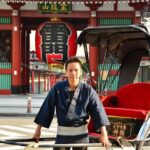
This Asakusa rickshaw tour turns Tokyo into something you can actually absorb, with a private seat and a guide calling out what you’re seeing as you roll through the older parts of the neighborhood. I especially like the way you pass iconic temples and shrines without the tiring stop-and-go of walking, and I like that the guides often handle photos for you so you don’t spend the whole time wrestling a phone on a busy street. One thing to consider: rickshaws are small (about 74 cm wide), so if you’re tall, prefer extra elbow room, or have a lot of gear, you may find it more comfortable to book separate rickshaws.
You’ll get a nice mix of sacred sites and everyday street Tokyo, from the Asakusa Shrine area to Sumida Park by the river. In spring, that river park can be spectacular with lots of cherry trees, and the stops around places like Rokku Ward, Tanuki-doori, and Denpoin Street help the tour feel like more than just postcard photo ops. A possible drawback: it’s not a good fit if you’re in the first 16 weeks of pregnancy, and selfie sticks aren’t allowed.
In This Review
- Key things worth knowing before you book
- Asakusa by rickshaw: why this format works
- Meeting point: don’t get tricked by Asakusa Station exits
- The route you’ll experience: temples, river park, and old Tokyo streets
- Asakusa Shrine and the temple-zone start
- Bentendo Hall: a recognizable stop with real meaning
- Hanakawado shoe shopping and everyday Tokyo life
- Sumida Park: the spring cherry-tree stretch by the river
- Tanuki-doori: quirky street energy
- Rokku Ward and its adult theaters
- Hanayashiki: Japan’s oldest amusement park
- Denpoin Street: where the past still shows
- The guide factor: why it often feels like the best part of Tokyo
- Price and time options: is $35 a good deal
- Comfort, rules, and what to pack
- Should you book this Asakusa rickshaw tour?
- FAQ
- How long is the Asakusa rickshaw tour?
- Where is the meeting point for the tour?
- How much does the tour cost?
- What’s included in the price?
- Are snacks and drinks included?
- How many people can ride in one rickshaw, and how do kids work?
- Are selfie sticks allowed?
- Is the tour wheelchair and stroller friendly?
- Is the tour suitable during pregnancy?
- Can the tour route be customized?
Key things worth knowing before you book
- Private rickshaw pace: You control the mood with a guide who keeps things moving at a comfortable speed.
- Temple-and-shrine highlights: You’ll see spots tied to Asakusa’s oldest traditions, including Bentendo Hall.
- Quirky local streets: Tanuki-doori, Rokku Ward, and Denpoin Street add personality beyond the main sights.
- Sumida River park views: Sumida Park is especially memorable in spring when cherry trees are in bloom.
- Guide energy and photo help: Names like Tashi, Taisei, Shima, Masa, Matcha, and Kazu come up often for friendly storytelling and great photos.
- Small-vehicle comfort rules: Max 2 adults per rickshaw; the rickshaw is narrow, and selfie sticks are not allowed.
More mornings around Senso-ji and the old town
- Tokyo: Japanese Dance Cabaret Theater Asakusa-Kaguwa Ticket★ 4.8 · 2,270 reviews
- Tokyo: Asakusa Walking Tour with Sensoji Temple Visit★ 4.8 · 1,583 reviews
- Tokyo Asakusa Rickshaw Tour★ 5.0 · 1,375 reviews
Asakusa by rickshaw: why this format works
Asakusa is one of those Tokyo areas where you can walk for hours and still not feel like you “got” the place. The rickshaw changes the math. You move through lanes that feel local, not tour-bus generic, and you get explanations as you pass things in context. It’s a handy way to build a mental map fast.
The tour’s value is also in how varied it is for one ride. You’re not just doing temples. You’ll also pass through shopping streets and neighborhoods like Hanakawado (the shoe shopping area) and Hanayashiki (Japan’s oldest amusement park). Even if you’re only in Tokyo for a short time, this kind of route helps you understand why Asakusa has such a strong identity.
Meeting point: don’t get tricked by Asakusa Station exits
Meet at the rickshaw stand just outside exit #1 of Asakusa Station on the Tokyo Metro GINZA line. Important detail: there are two stations with the same name connected to different subway lines, so you need the Ginza line one.
Even when you’re at the correct exit, plan to walk a few meters to reach the stand along the street. This is the kind of small logistical detail that can make or break your morning. Arrive a few minutes early, especially if your phone struggles with directions underground.
The route you’ll experience: temples, river park, and old Tokyo streets
This is a flexible ride with a private group, and the length can be 30 minutes up to 190 minutes, depending on the option you choose. In practice, shorter rides feel like a highlights loop; longer rides give time for more side streets, slower storytelling, and extra photo stops.
Here’s what you can expect across the common areas the tour covers:
Asakusa Shrine and the temple-zone start
Your tour typically begins in the Asakusa Shrine area next to the city’s oldest temple zone. This is where the vibe shifts from everyday Tokyo to something ritual-centered. As you glide past, you’ll get context for what you’re seeing—like how the spaces are arranged and why people follow certain customs.
In one of the most memorable moments shared in feedback, a guide explained ritual steps at a smaller temple, including details like hand and mouth washing and why incense is gathered and applied during the ceremony. If you like understanding the meaning behind what you’re seeing, these explanations are the whole point.





Bentendo Hall: a recognizable stop with real meaning
Bentendo Hall is specifically called out, and for good reason. It’s one of those Asakusa sights that looks familiar in photos, but hits differently in person when you can hear what’s going on around you. Expect the guide to point out what makes this hall important and how it fits into the broader temple landscape.
Hanakawado shoe shopping and everyday Tokyo life
One of the smartest parts of the route is how it blends sightseeing with everyday shopping. The Hanakawado shoe shopping district is a fun change of pace. You’re not just seeing historical buildings—you’re watching local commerce happen in real time.
If you’re the type who likes to buy one practical souvenir (something you can actually use), this is where you might spot items you didn’t expect to find in Asakusa.
Sumida Park: the spring cherry-tree stretch by the river
The Sumida Park segment is a strong reason to pick a longer option, especially if you’re traveling in spring. The park is described as most resplendent in spring, when thousands of cherry trees bloom. Even if you’re not going in peak bloom, the river setting gives your ride a calmer rhythm and better breathing room from street crowds.
Tanuki-doori: quirky street energy
Tanuki-doori is one of those Asakusa street names that sounds like a character from a story, and the feeling matches. Expect “fun Tokyo” details and a guide who can connect the street’s quirks to the neighborhood’s personality.
This is also a good spot for photos, since the street layout tends to look more atmospheric from the rickshaw seat than it does at sidewalk level.
Rokku Ward and its adult theaters
The tour also includes the Rokku Ward area, with a stop to see the historic adult theaters. I’m mentioning this plainly because it’s part of the character of the neighborhood. If you prefer your sightseeing strictly family-friendly, you might want to tell the guide early on. The good news: the ride is private, and the tour can be customized, so you can steer toward what you feel comfortable seeing.
Hanayashiki: Japan’s oldest amusement park
Hanayashiki is another highlight, and it’s delightfully unexpected in a temple-focused neighborhood. It’s famous as the oldest amusement park in Japan, and it works well as a photo stop because it’s both old and unmistakably playful.
This is the kind of contrast that makes the whole tour feel like Asakusa, not like a checklist.
Denpoin Street: where the past still shows
Denpoin Street is described as a place where little has changed since World War II as you make your way back toward the starting area. That kind of continuity is why this section matters. You’re not only seeing historic monuments; you’re seeing an old street pattern still shaping daily life.
A rickshaw seat helps here because you glide through the scene without stopping constantly, so the street feels like a corridor you’re traveling through—less like you’re interrupting it.
The guide factor: why it often feels like the best part of Tokyo
The strongest theme in the feedback is how much personality the guides bring. Names like Tashi and Taisei show up for being informative and fun, while Shima is described as professional, funny, and highly skilled at navigating through traffic and people. Taku earns praise for kindness and a strong tour through the historic parts. Masa appears again and again as a top pick—often for photo skills and humor.
Some of the best moments sound like what you’d hope for but can’t guarantee: a guide explaining temple rituals clearly, making time for extra photo stops, and adjusting pace for comfort. One guide even combined music references into the ride, with feedback describing singing and pop-culture nods that worked well for families.
The takeaway for you: if you want more than sightseeing, you’re in the right place. Ask your guide what you should notice next. If you care about anime or specific pop culture angles, say so early; some guides add those references as an extra layer.
Price and time options: is $35 a good deal
The stated price is $35 per person, with duration options ranging from 30 to 190 minutes. In value terms, here’s what you should think about:
- If you’re doing the shortest option, you’re mostly paying for the experience of seeing the highlights with minimal walking and getting guided context. That’s often worth it when you’re tight on time.
- If you pick a longer duration, you’re paying for more route coverage, extra photo stops, and time to include quieter or more specific areas like a smaller temple or side streets. That’s where the price tends to feel most justified.
Also, remember the rickshaw is private group with a maximum of 2 adults per rickshaw. If you’re traveling as a family or with friends and you want comfort, you might prefer individual rickshaws for each passenger. The ride is narrow (29.1 inches / 74 cm wide), so comfort can change quickly with how many people share one seat.
One more value detail: the 3-hour option includes a memorial gift choice of a special Hello Kitty doll or an original T-shirt. If that matters to you, the value jumps for families and souvenir collectors.
Comfort, rules, and what to pack
A few practical details can save you stress:
- Selfie sticks are not allowed. Bring a normal camera setup and keep it simple.
- Max 2 adults per rickshaw is enforced. Children 5 and under can ride free if they sit on an adult’s lap (one child per adult; up to 2 children per rickshaw). If a child 5 years old wants their own seat, it must be booked as an adult.
- The rickshaw is wheelchair accessible and the tour is also described as stroller friendly. Each rickshaw is narrow, so your exact setup matters, but the experience is designed to work for mobility needs.
- It’s not recommended for people in their first 16 weeks of pregnancy, and pregnant women are listed as not suitable.
What to bring: comfortable shoes (even if you’re riding, you’ll still walk to and from the stand), a light layer for weather changes, and a flexible attitude. On hot or windy days, the ride can feel like a moving break from street heat. On cooler days, you may want warmth; some feedback describes blankets and heated seat pads keeping riders comfortable.
Finally, the tour can be customized. If you want more temple time, more shopping time, or more river/park time, say it before you start.
Should you book this Asakusa rickshaw tour?
I’d book it if you want three things at once: an easy way to get oriented in Asakusa, guided context for what you’re seeing, and a fun change from walking and transit. It’s especially appealing for first-timers who want the area’s mix—shrines, riverside scenery, quirky streets, and old-shop energy—without rushing.
I’d skip or choose a different style of tour if you strongly prefer longer, uninterrupted sightseeing on foot, because the rickshaw is a short-seat experience. If you’re in the pregnancy timeline listed as not recommended, this one is not a fit. And if you’re traveling with equipment like selfie sticks, plan to travel light.
If you want Tokyo to feel more personal—like you’re being shown Asakusa by someone who cares—this rickshaw tour is one of the most straightforward ways to make that happen.
FAQ
How long is the Asakusa rickshaw tour?
The duration ranges from 30 minutes up to 190 minutes, depending on the option you choose and the starting times available.
Where is the meeting point for the tour?
You meet at the rickshaw stand just outside exit #1 of Asakusa Station on the Tokyo Metro GINZA line. You’ll still need to walk a few meters from the exit to reach the stand.
How much does the tour cost?
The tour price is $35 per person.
What’s included in the price?
The included items are the rickshaw ride and a local guide.
Are snacks and drinks included?
No. Snacks and drinks are not included.
How many people can ride in one rickshaw, and how do kids work?
A maximum of 2 adults is permitted per rickshaw. Children 5 and under can ride for free if they sit on an adult’s lap (one child per adult, up to 2 adults and 2 children per rickshaw). If a child 5 years old needs their own seat, they must book as an adult.
Are selfie sticks allowed?
No, selfie sticks are not allowed.
Is the tour wheelchair and stroller friendly?
Yes. The tour is described as wheelchair accessible and stroller friendly.
Is the tour suitable during pregnancy?
It is not recommended for people in their first 16 weeks of pregnancy, and it lists pregnant women as not suitable.
Can the tour route be customized?
Yes, the tour can be customized according to your interests.
More Tours in Tokyo

More Tour Reviews in Tokyo



Around Senso-ji: More Asakusa Picks
Fresh reviews from around Tokyo






Asakusa Tours, compared.
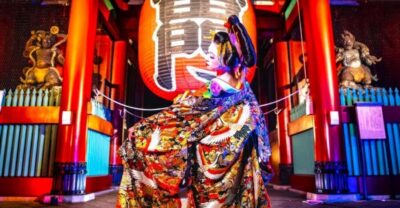 ★ 4.8Japanese Dance Cabaret Theater Asakusa-Kaguwa TicketFrom $492,270 reviews
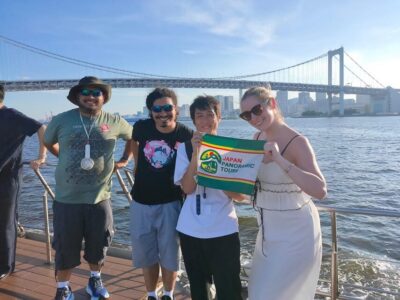 ★ 4.7Meiji Shrine, Asakusa, Skytree Bus Tour and CruiseFrom $1221,986 reviews
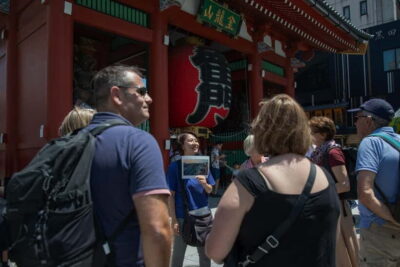 ★ 4.8Asakusa Walking Tour with Sensoji Temple VisitFrom $221,583 reviews
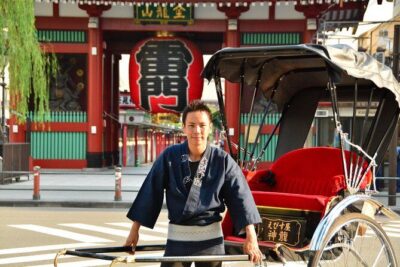 ★ 5.0Tokyo Asakusa Rickshaw TourFrom $421,375 reviews
 ★ 4.5Tokyo Panoramic 1 Day: Meiji Shrine, Asakusa, Odaiba and SKYTREE®From $851,222 reviews
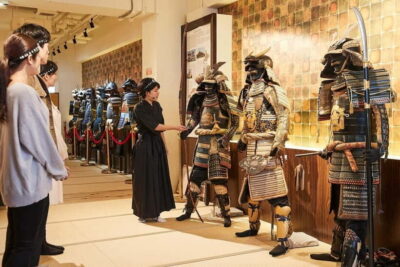 ★ 4.8Samurai Ninja Museum Asakusa: Samurai Sword Lesson & TourFrom $63306 reviews
Asakusa Kimono Dressing and Matcha ExperienceFrom $56173 reviews
Asakusa Temple & Shrine Walking Tour with Local GuideFrom $30105 reviews
★ 4.8Samurai Ninja Museum Asakusa: Samurai Sword Lesson & TourFrom $63306 reviews
Asakusa Kimono Dressing and Matcha ExperienceFrom $56173 reviews
Asakusa Temple & Shrine Walking Tour with Local GuideFrom $30105 reviews
Browse the lists this tour appears in