
Reviewed · TSUKIJI FISH MARKET TOURS
Tokyo: Guided Walking Tour of Tsukiji Market with Lunch
Tsukiji has a smell you won’t forget. This guided walk through Tsukiji Outer Market pairs real food stops with context, starting at the Tsukiji Hongwanji Temple gate. You’re not just grazing snacks. You’re learning how Japan’s food culture connects to everyday religion and local habits while you watch wholesalers at work.
I especially like the tour’s 9 tastings, which feel like a guided path through the flavors of the market instead of a random grab bag. I also like the small size (limited to 10), because it keeps the line-management sane when you’re stopping for bites. One consideration: if you expect a long, heavy food crawl where you’re doing nonstop eating, the format is a set set of tastings across about 165 minutes, and some dishes may not hit the same notes for everyone.
In This Review
- Key moments worth planning for
- Tsukiji Hongwanji Temple Gate: the calm start before the food chaos
- Finding the meeting point near Tsukiji Station Exit A1
- Tsukiji Outer Market: how the lanes, workers, and stalls make sense
- The tour’s structure: 165 minutes of guided sampling
- The nine tastings: what’s included and how to approach each bite
- What you learn about Japanese culture and cuisine
- The temple exterior detail: why it’s more than a photo stop
- Price and value: what you’re paying for at $113 per person
- Who should book this Tsukiji Outer Market tasting walk
- Practical tips to make your tour day smoother
- Should you book this Tsukiji Outer Market tour with lunch?
- FAQ
- Where does the tour start?
- How do I get to the meeting point from Tsukiji Station?
- What’s included in the tour price?
- What foods are included in the tastings?
- Is the tour wheelchair accessible?
- How long is the tour?
- What should I bring?
Key moments worth planning for
- Tsukiji Hongwanji Temple exterior: Start with a calm cultural contrast before the market noise.
- Outer Market focus: You’ll walk past restaurants, shops, stalls, and wholesalers in the same lanes locals use.
- 9 scheduled tastings: Skewers, sushi, omelette, rice balls, dessert, and drinks come in a steady rhythm.
- Dashi + tea sampling: You taste the building blocks behind many savory Japanese flavors.
- Expert queue help: Guides may help with ordering and waiting at food stalls so you don’t waste time guessing.
- Small-group pacing: Limited to 10 people keeps the experience easier to follow, especially in crowds.
Still hungry? More Tsukiji breakfasts and market walks
- Tokyo Tsukiji Fish Market Food and Culture Walking Tour★ 5.0 · 3,184 reviews
- Tokyo: Tsukiji Fish Market Food and Walking tour★ 5.0 · 1,724 reviews
- Tokyo: Tsukiji Fish Market Guided Walking Tour★ 4.9 · 1,397 reviews
Tsukiji Hongwanji Temple Gate: the calm start before the food chaos
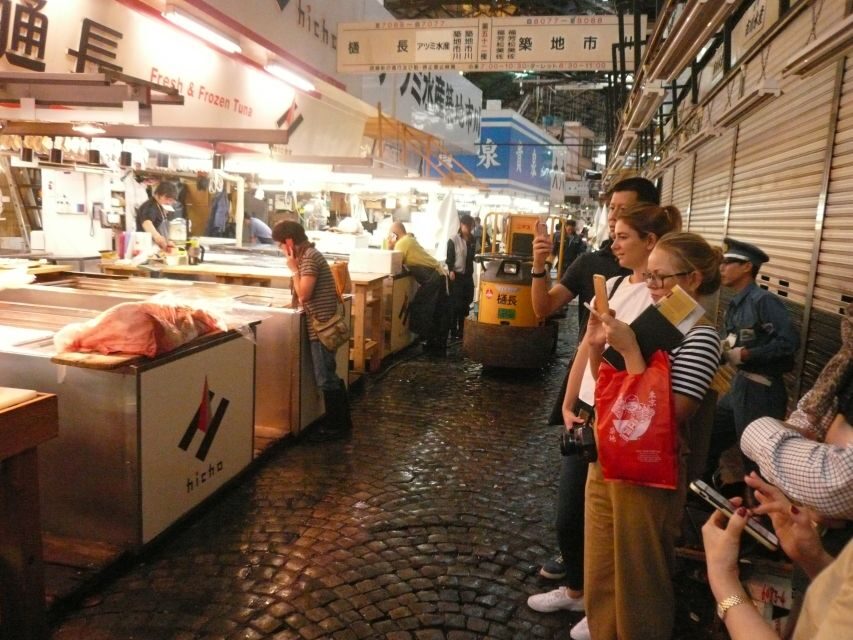
The tour meets at the main gate of Tsukiji Hongwanji Temple, and I like that choice. It gives you a quick cultural anchor before you step into the market world that’s all energy, smells, and constant movement. From there, you start seeing the neighborhood as more than a food photo spot.
The temple’s exterior is described as ancient Buddhist-inspired architecture with Indian-inspired elements, and even from the outside you can sense the point: this area isn’t just about commerce. Food and daily life in Japan often sit close to religion, ritual, and community spaces. That matters because later, when you’re tasting market specialties, the explanations make more sense. You’re learning why people eat the way they do, not just what they eat.
If you’re the kind of person who gets overwhelmed in crowds, the temple stop is a nice palate of sanity. You get a baseline, then the tour guide helps you turn that baseline into street-level understanding.
Finding the meeting point near Tsukiji Station Exit A1
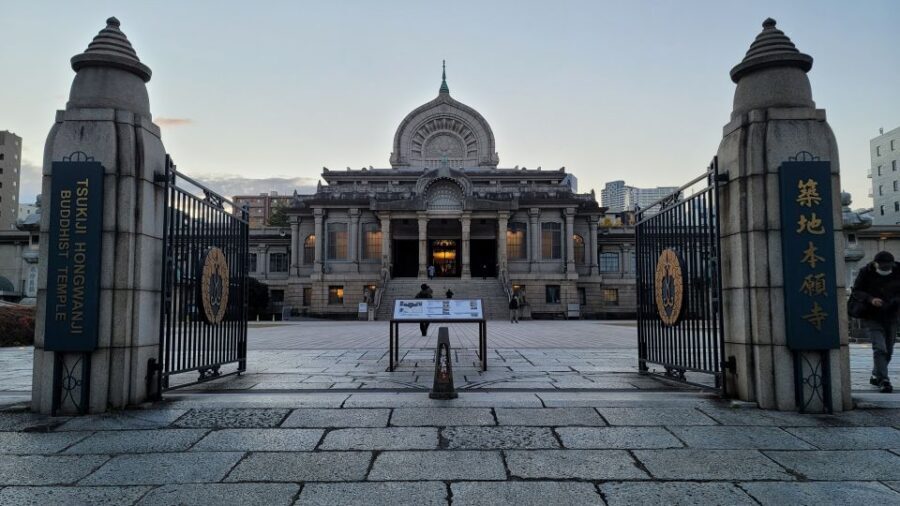
Logistics can make or break a walking tour, and this one is refreshingly straightforward. You meet in front of Tsukiji Hongwanji Temple. If you’re coming from Tsukiji Station on the Hibiya Line, take Exit A1, turn left, and the entrance is about 50 meters (55 yards) away.
That short walk is a big deal on a market day. It reduces stress. And you can arrive with fewer nerves about timing and wandering. Bring comfortable shoes, because after the temple you’ll be moving through market aisles for the full tour length.
Tsukiji Outer Market: how the lanes, workers, and stalls make sense
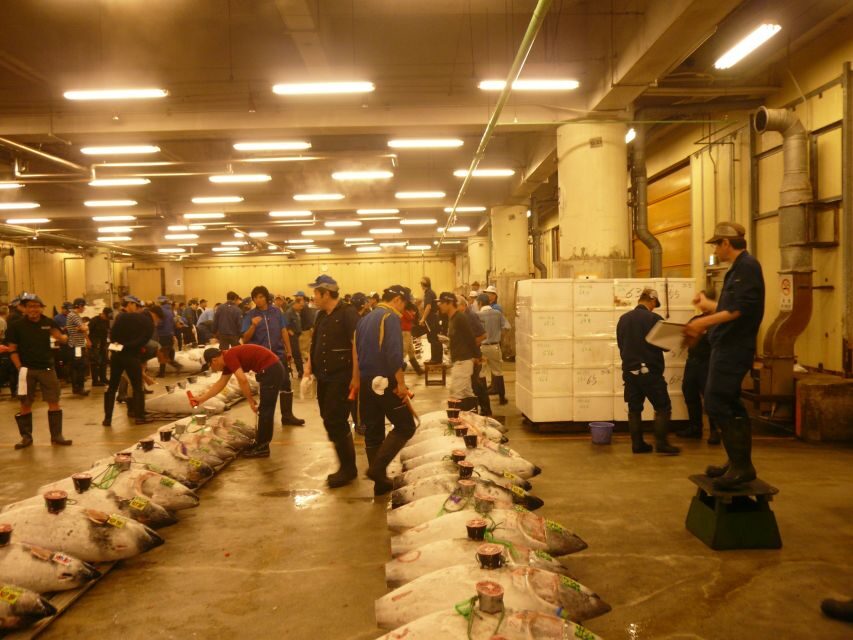
Once you’re in the market area, the tour shifts from scenery to watching how the place works. Tsukiji Outer Market is known as one of the largest wholesale fish markets in the world, and it’s also a popular destination for food lovers. Your guide keeps you focused on what to look for as you pass:
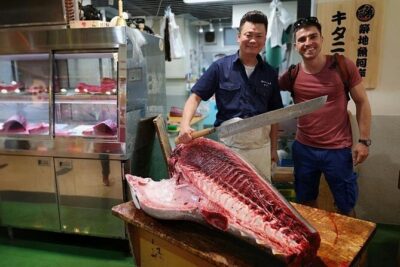
You’ll notice the flow of workers, the rhythm of stalls, and the way shops are set up around quick service. Instead of treating it like a theme park, you start reading it like a working neighborhood. That’s the heart of the experience: you’re observing expert wholesalers busy at work while you walk through a maze of restaurants, shops, and other businesses.
One practical tip: go in with a flexible attitude. Market streets aren’t designed for slow wandering. If you try to break free from the group to browse too hard, you’ll likely lose your timing for tastings. The guide’s job is to keep the stops efficient, and the best moments happen when you trust that flow.
The tour’s structure: 165 minutes of guided sampling

The total duration is 165 minutes, and that time is used intentionally. The pacing is designed to get you to multiple tasting spots while still giving you context as you walk. This isn’t a one-stop snack situation; it’s planned to feel like you’re moving through a mini food curriculum.
You should also expect a live English-speaking guide, and the tour is a small group limited to 10. That small cap makes it easier for your guide to manage queueing and keep everyone together, especially around popular food counters.
If you’re traveling with kids or a multi-generational group, the small size helps a lot. Crowds can be loud and confusing, but a smaller group makes it more likely you’ll stay oriented instead of just following the person in front of you.
Tokyo at walking pace, a few more ways

The nine tastings: what’s included and how to approach each bite
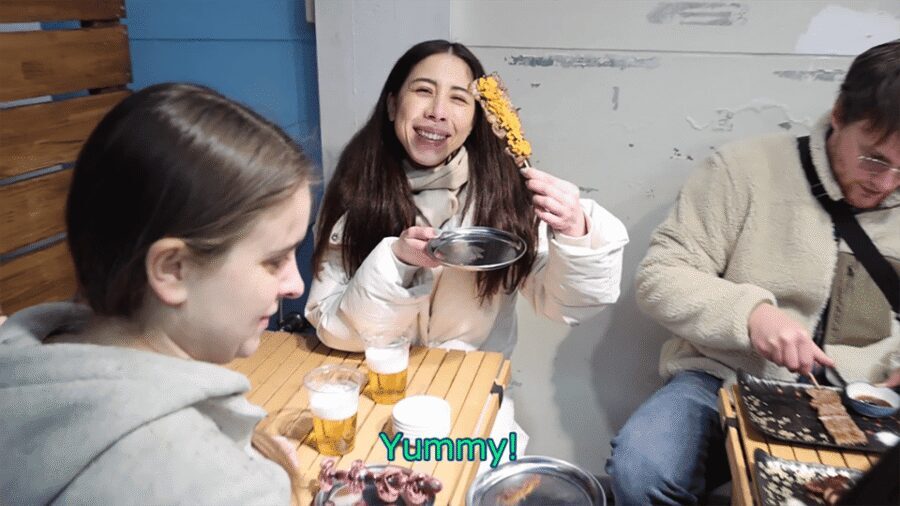
This tour includes tasting of 9 local specialties, and I like that the list isn’t vague. You’re told you’ll try a mix of grilled, fried, and savory items plus drinks and samples.
Here’s what’s part of the tasting set:
- Grilled seafood or beef skewers
- A Japanese-style omelette
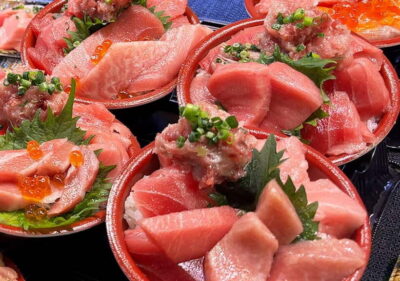
- Tuna sushi
- Fried fish paste skewers
- Filled rice balls
- Dessert
- A drink
- Japanese tea
- A sample of dashi soup stock
- Plus the experience highlights include yakitori skewers and wagyu beef, so at least one stop is meant to connect you to those richer, grill-forward flavors.
The smartest way to get value from tastings like these is to treat them like “samples with learning goals.” For example:
- When you try the dashi sample, pay attention to how the umami shows up before you judge later savory items.
- When you try the tuna sushi, notice how simple it can be when ingredients are fresh and seasoned lightly.
- With rice balls, don’t expect the same flavor pattern as Western sandwiches. The filling style is its own world.
And yes, you’ll likely feel full after nine tastings, even with street-food sized portions. That’s a good sign. It means you’re not leaving hungry, but you also shouldn’t plan a heavy separate meal right after unless you’re truly an eater.
What you learn about Japanese culture and cuisine
One of the stand-out parts of this tour is the way the guide connects cuisine to culture and religion. It’s not just “this dish exists.” You get explanations about why certain foods belong in this space and how daily Japanese life and belief can overlap.
That connection matters because Tsukiji can be confusing for first-timers. You’ll see items, containers, and rituals that seem random if you don’t have a thread. The guide’s job is to give you that thread, starting with the temple context and carrying it into how people buy, prepare, and taste.
From the guide-style mentioned by past participants, you can also expect practical street wisdom. For example, guides such as Tomoko have been described as helpful with queueing at stalls while others explore the market, and guides like Yumiko have been described with strong knowledge of the history and area. When an assistant is involved, like Sachiko, that can translate into smoother navigation and better timing at food counters.
I can’t promise the same exact team will lead your day, but the pattern is clear: the best tours here use the guide’s explanations plus hands-on coordination, not just a list of dishes.
The temple exterior detail: why it’s more than a photo stop
It’s easy to treat Tsukiji Hongwanji Temple as a quick beginning landmark. But the tour frames the ancient Buddhist-inspired exterior with Indian-inspired influence as a meaningful start. Even if you only see it from outside, it sets a tone.
Japan often blends aesthetics, belief, and daily routine. When you later taste fish and savory specialties in a market setting, you’re seeing how food culture can sit near spiritual and communal spaces. It adds depth, and it makes the walk feel guided rather than hurried.
Also, the temple stop gives you a moment to reset your brain. When you’re about to enter a high-sensory environment, that little breathing space helps you absorb what’s coming next.
Price and value: what you’re paying for at $113 per person
At $113 per person, this tour isn’t the cheapest way to eat in Tokyo. So I look at value the way I’d look at any guided food experience: time, structure, and how much you actually eat and learn.
Here’s what you get for the money:
- A live English guide
- A small group (max 10), which is usually more time-efficient than big crowds
- 9 tastings that include savory bites, sushi, skewers, tea, and dashi
- A guided walk through a high-interest area, with explanations tied to culture and context
If you’re the type who wants to wander Tsukiji on your own, you can probably buy food cheaper. But you’ll also spend extra time figuring out what to order, where to stand, and how to interpret what you’re seeing. The cost starts to make sense when you value those planning-free decisions.
That said, one key drawback shows up in the feedback: some people felt the experience didn’t match their expectations for a purely food-heavy tour, and a couple thought the tastings were average compared to the price. My practical takeaway is this: if you want only maximum quantity of food, this may not be the best fit. If you want a guided, structured sampling with context, it can be a strong deal for your time.
Who should book this Tsukiji Outer Market tasting walk
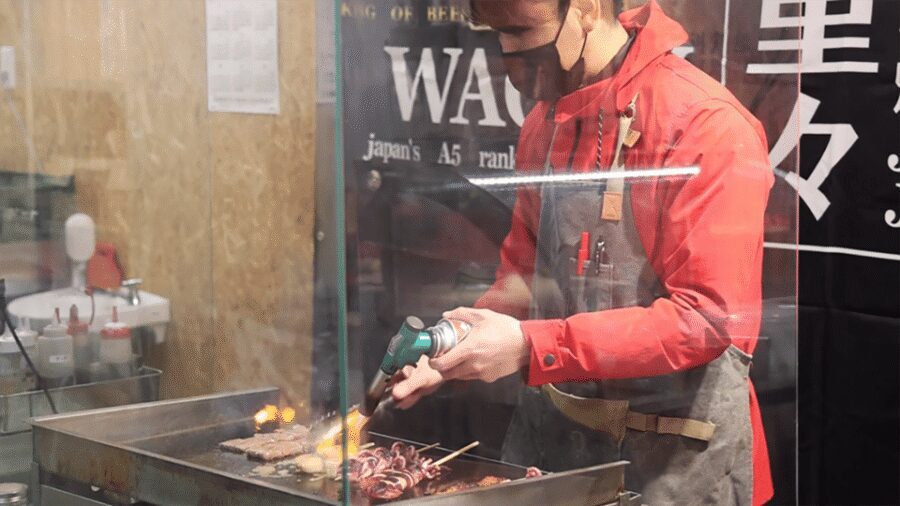
This tour is a great match if you:
- Want a guided Tsukiji experience without the stress of ordering in a crowded market
- Like street food and savory tastings, especially yakitori-style skewers, tuna sushi, and savory stock flavors like dashi
- Prefer a small group format that helps you keep pace and stay oriented
- Enjoy learning how markets connect to local culture and religion, not just collecting snacks
It may be less ideal if you:
- Want nonstop eating for hours. You get nine tastings, then the walking and explanations continue.
- Are chasing a specific kind of food experience and worry that some items won’t match your preferences.
Practical tips to make your tour day smoother
Markets can be busy in more ways than one. To get the best experience:
- Wear comfortable shoes. You’ll be standing and walking for about 165 minutes.
- Have your appetite ready but don’t plan a huge meal immediately after. Nine tastings add up.
- Keep your expectations aligned with the structure: it’s not an all-day food festival; it’s a planned sampling route.
- Expect queues at certain stalls. A good guide helps with that part, including knowing what to order and how to wait efficiently.
If language is a concern, the tour is English, which helps you ask follow-up questions on the spot. Even if you can’t read everything on menus, you’ll be guided through tastings.
Should you book this Tsukiji Outer Market tour with lunch?
I’d book it if you want a guided, structured introduction to Tsukiji that combines food tastings with cultural context, and you care about convenience more than bargain-hunting. The small group limit of 10, the set of nine tastings, and the temple start make it feel intentional rather than random.
I wouldn’t book it if your main goal is maximum volume or you’re very picky about every single bite. The tour is designed around a fixed set menu and a set walking path, and a couple of people felt the food quality didn’t justify the price.
If you fit the first group, this is a solid way to taste Tsukiji like a local for a few hours without getting lost in the crowd.
FAQ
Where does the tour start?
Meet in front of Tsukiji Hongwanji Temple.
How do I get to the meeting point from Tsukiji Station?
From Tsukiji Station on the Hibiya Line, take Exit A1 and turn left. The temple entrance is about 50 meters from the station.
What’s included in the tour price?
The price includes a guide and tastings of 9 local specialties.
What foods are included in the tastings?
The tastings include a mix of items such as grilled seafood or beef skewers, a Japanese-style omelette, tuna sushi, fried fish paste skewers, filled rice balls, dessert, a drink, Japanese tea, and a sample of dashi soup stock.
Is the tour wheelchair accessible?
Yes, the tour is wheelchair accessible.
How long is the tour?
The duration is 165 minutes.
What should I bring?
Wear comfortable shoes for walking through the market.
More Tours in Tokyo





More Tour Reviews in Tokyo




Back to the Market: More Tsukiji Tours



Fresh reviews from around Tokyo






Tsukiji Fish Market Tours, compared.
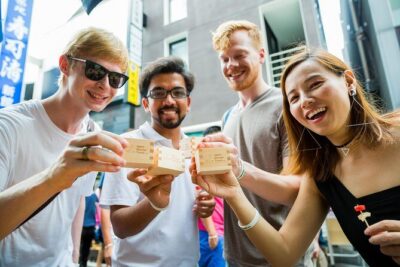 ★ 5.0Tokyo Tsukiji Fish Market Food and Culture Walking TourFrom $993,184 reviews
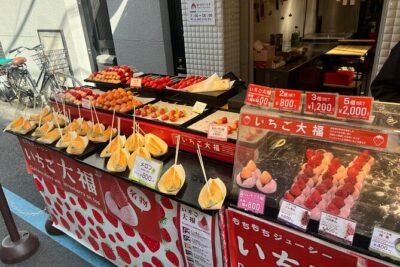 ★ 5.0Tsukiji Fish Market Food and Walking tourFrom $301,724 reviews
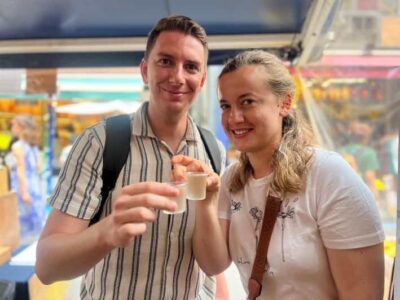 ★ 4.9Tsukiji Fish Market Guided Walking TourFrom $221,397 reviews
 ★ 5.0Tokyo Sushi Making Class in Tsukiji with Professional ChefFrom $491,177 reviews
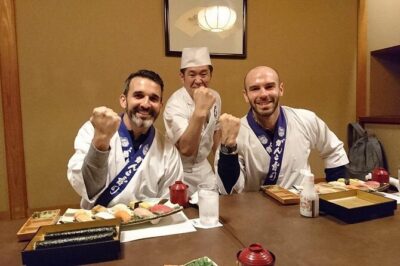 ★ 5.0Tsukiji Fish Market Guided Tour and Sushi Making with Pro ChefFrom $104775 reviews
★ 4.7Tsukiji Fish Market Food and Culture Walking TourFrom $96757 reviews
★ 5.0Tsukiji Fish Market Guided Tour and Sushi Making with Pro ChefFrom $104775 reviews
★ 4.7Tsukiji Fish Market Food and Culture Walking TourFrom $96757 reviews
 ★ 5.0Tsukiji Fish Market: Street Food & Culture Walking TourFrom $33669 reviews
 ★ 5.0Tsukiji Fish Market Small-Group Food Walking TourFrom $87621 reviews
Browse the lists this tour appears in