
Reviewed · IMPERIAL PALACE TOURS
Tokyo: Edo Castle Ruins & Imperial Palace East Garden Tour
Tokyo gives you layers. This tour helps you read them.
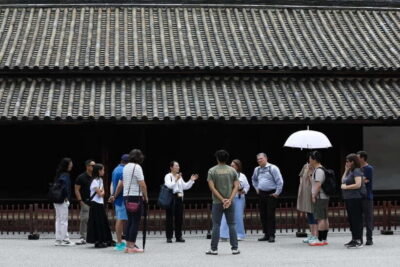
A walk here turns into a story about shoguns and emperors, with castle gates, defensive layouts, and palace grounds explained by a live English guide. I like that you’re not stuck with only photos or only plaques—you get clear talking points as you move, so the history of Edo Castle starts making practical sense.
Two things I really like: the route hits major spots (Otemon Gate, gate ruins, and the Honmaru area) without feeling rushed, and the guide’s explanations can be sharply focused on what mattered on the ground. One consideration: you can’t enter the Imperial Palace’s palace buildings, so if you’re expecting the kind of interior-palace access you see in movies, this is more about gardens and ruins than rooms and ceremonies.
In This Review
- Key highlights to look for
- Tokyo in miniature: Edo Castle ruins plus Imperial East Gardens
- Meeting at Wadakura Free Rest Area with a yellow sign
- Wadakura Fountain and the moat: a wedding memorial with real context
- Otemon Gate and the gate ruins: learning how entrances controlled power
- Honmaru main hall site, keep model, and Tenshu-dai panoramas
- Imperial Palace East Gardens: Suwa tea-house vibes and the Ninomaru koi moment
- Price and what you truly get for around $37
- Guide quality: when names like Mari and Isao matter
- Who should book this Edo Castle and East Gardens tour?
- Should you book this tour?
- FAQ
- FAQ
- Where is the meeting point?
- How long is the tour?
- What language is the guide?
- Is the tour inside the Imperial Palace palace buildings?
- What stops will we see during the walk?
- Is there a photo opportunity?
- What should I bring?
- Are there any restrictions on photos or smoking?
- Who is this tour not suitable for?
Key highlights to look for
- Wadakura Fountain’s wedding backstory that ties a specific memorial to the palace-city world
- Otemon Gate and the gate ruins explained through the logic of defense and movement
- Tenshu-dai viewpoints where you see how the layout connects to surrounding Tokyo
- Honmaru stops plus the keep restoration model so you can picture what once stood here
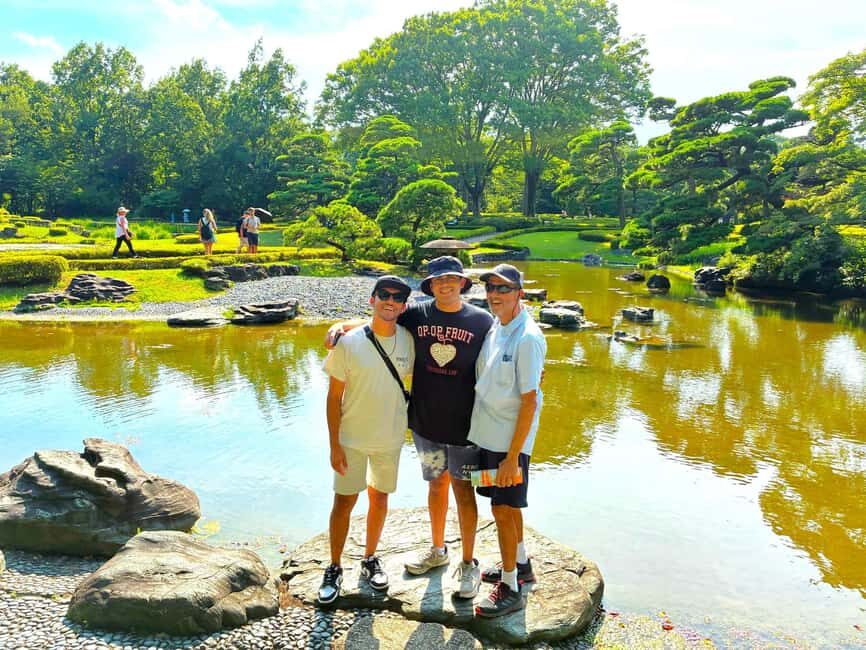
- Ninomaru Garden pause with a koi pond moment that slows the pace for good
- A guide-led pace (short stops, frequent context) that works well for a 2-hour hit
Before you commit, see how this one stacks up against a few Tokyo favourites:
- Mt Fuji and Hakone 1-Day Bus Tour Return by Bullet Train★ 5.0 · 26,383 reviews
- 1-Day Tokyo Bus Tour★ 5.0 · 14,250 reviews
- Tokyo: teamLab Planets TOKYO Digital Art Museum Entry Ticket★ 4.6 · 9,779 reviews
Tokyo in miniature: Edo Castle ruins plus Imperial East Gardens
You’re in central Tokyo, but this tour feels like a history map you can walk through. You start in the Wadakura area, move through meaningful Edo Castle remnants, then transition into the Imperial Palace East Gardens. That flow matters. It keeps the story from turning into a list of landmarks.
The big idea is that Edo Castle and the Imperial Palace aren’t just “old stuff.” They’re parts of the same long-running political center, so the route naturally connects power, protection, and ceremony. The guide’s job is to translate that connection into what you can actually see: gates, moats, guardhouses, and garden design.
And because it’s only about 2 hours, you get the benefit of a guided route without losing half a day. This is ideal when you’re already planning to see Tokyo attractions and you want something that feels local and grounded, not staged.
Meeting at Wadakura Free Rest Area with a yellow sign
The meeting point is outside the Wadakura Free Rest Area, in front of the entrance. The guide waits there holding a yellow sign. This is one of those small details that makes a difference. Tokyo signage can be confusing when you’re tired, and having an easy-to-spot meeting spot lowers the stress.
You’ll want comfortable shoes—the tour is not described as a full-on hike, but it’s a walking experience across historical grounds. Bring your camera and water. Flash photography is not allowed, so plan for normal lighting and keep your photos realistic.
Also, keep expectations aligned with the tour’s focus. The Imperial Palace buildings themselves aren’t open to the public, and this tour is designed around gardens and the former Edo Castle remains, not inside access.
Wadakura Fountain and the moat: a wedding memorial with real context
The tour opens at the Wadakura Free Rest Area, then quickly moves to the Wadakura Fountain National Park area for a short guided explanation. The fountain is built to commemorate a royal wedding, and the guide’s commentary helps you understand why a memorial like this belongs in the palace-city setting.
Next comes the Wadakura moat. Even if the visible remains are not huge, moats are one of the smartest “defense” clues you can see in person. The guide’s explanation helps you shift from sightseeing to understanding movement: where people could enter, where they could be slowed, and why boundaries mattered.
This part is short by design. You get just enough background to make later gates and guard structures click.
Otemon Gate and the gate ruins: learning how entrances controlled power
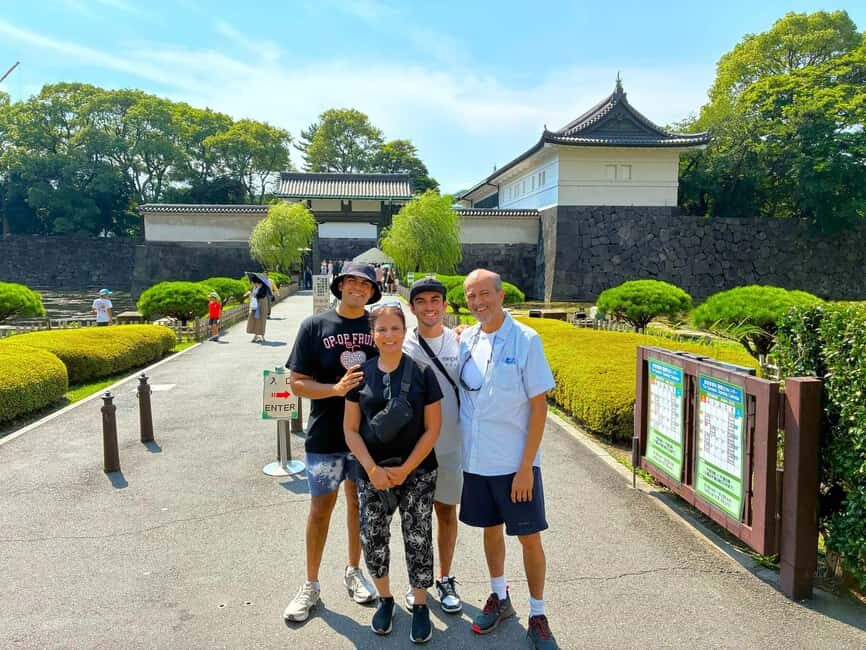
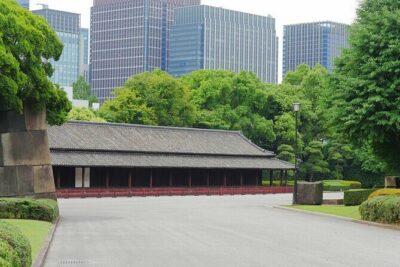
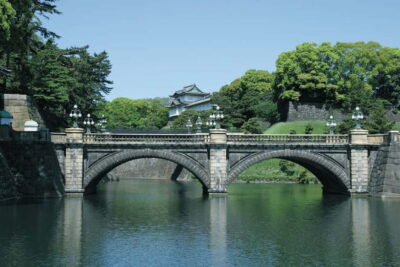
Then you reach the Ote-Mon Gate, followed by the Ote-San’no Gate Ruins, plus stops like the Hyakunin Bansho Guardhouse. These are the moments where a guided tour pays off most.
Gates in Edo Castle weren’t just decorative. They were checkpoints. The guide’s focus on castle defense and samurai heritage helps you look at what’s left and imagine what the whole system was doing—channeling people, controlling access, and reinforcing hierarchy. When you see gate ruins without commentary, it’s easy to shrug. With commentary, you start to see patterns.
Two examples that help you understand the logic:
- Ote-San’no Gate Ruins give you a sense of how entrances were structured and guarded.
- The Hyakunin Bansho area (a guardhouse context) connects the physical space to the people responsible for controlling it.
If you enjoy “how did it work?” history, this section is where you’ll feel the most engaged.





Honmaru main hall site, keep model, and Tenshu-dai panoramas
After the gate sequence, you head into the Honmaru area: the Site of Edo Castle Honmaru (Main Hall), then the Edo Castle keep restoration model, and finally the Tenshu-dai viewpoint.
The best value here is that you’re not only looking at remnants—you’re also being shown a reconstruction model. That helps you build the mental picture of scale. A model can’t replace the real thing, but it’s often the difference between staring at stones and actually understanding what once dominated the site.
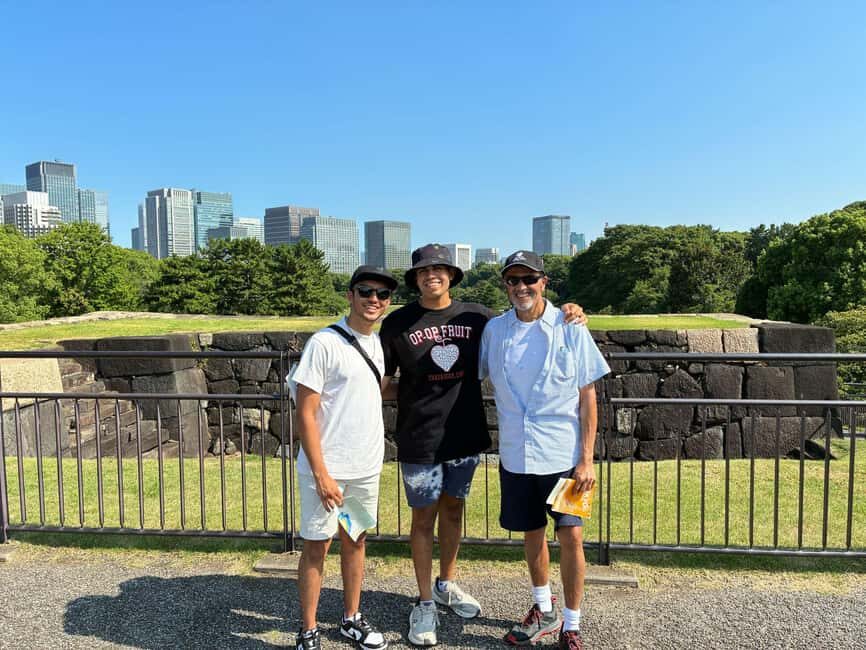
Then comes the Tenshu-dai views. Panoramic views are more than a photo stop on this tour. They help you understand why a castle keep (and the area around it) mattered: height changes what you can see, and seeing the surrounding area helps you grasp how control and communication worked.
This is also a good time to take it slowly. The tour keeps a steady pace, but if you like views and you want time for photos, you can usually slow down without derailing the flow—just don’t lag far behind the group.
Imperial Palace East Gardens: Suwa tea-house vibes and the Ninomaru koi moment
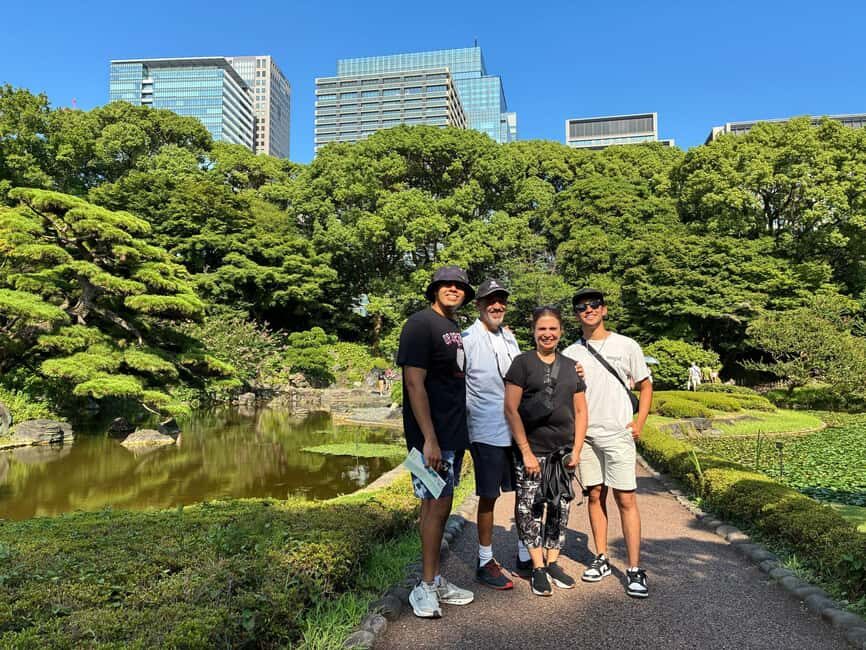
After the castle-core portion, the tour shifts into the Imperial Palace East Gardens. Along the way you’ll stop at things like the prefecture-tree area (都道府県の木) and Suwa no Chaya. These aren’t always the biggest-ticket items, but they add a “lived-in” feeling to the history.
The gardens section is guided too, including a stop at Ninomaru Garden. This is where the tour takes its foot off the gas.
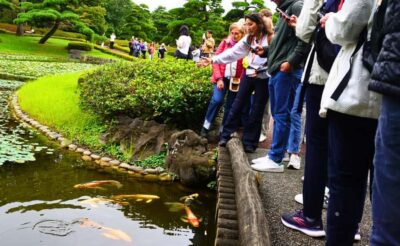
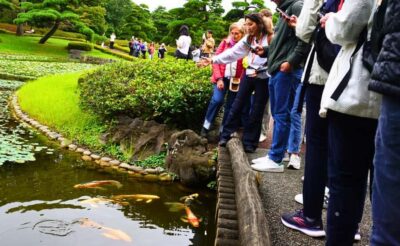
You’ll get a calm moment to enjoy the garden layout and—handy detail—a koi pond where you can see the fish. That koi pond pause matters. It gives your brain time to process the earlier defense-and-gates content, and it turns the experience from history lecture into a place you actually want to linger.
If you like gardens for the details (not just the scenery), you’ll appreciate how the tour slows down right when you might otherwise feel rushed.
Price and what you truly get for around $37
At $37 per person, the real question is value: does this price buy you more than a simple stroll?
Here’s what you get that justifies the cost:
- Live English guide for the full route
- Admission to Edo Castle and the Imperial Palace areas covered by the tour
- A commemorative photo opportunity
The guide element is the swing factor. The tour is built around interpretation: shoguns and emperors, castle defense, and the meaning of specific places like Wadakura Fountain. If you go without a guide, you can still enjoy the grounds. But you’ll miss the “why this spot” explanations that connect each location into one story.
One note for your expectations: the price includes access to the areas described, but it does not include entry to the Imperial Palace palace buildings (those are not open to the public). So you’re paying for guided access to ruins and gardens—not for interior palace viewing.
Guide quality: when names like Mari and Isao matter
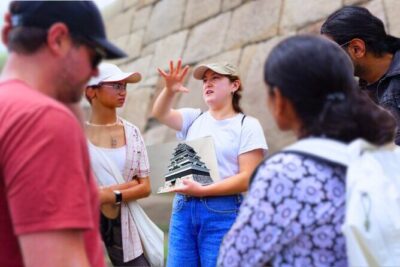
A tour lives or dies by the guide, and this one can be very strong. Some guides—people like Mari—are described as enthusiastic and able to answer lots of questions. Others—like Isao—are noted for being patient and for answering in a way that keeps the group engaged.
That said, not every experience will feel the same for every person. If you’re hoping for heavy, dense palace-history talk nonstop, you might find the pacing more like structured walking with commentary rather than nonstop lecture. The good news: the route is designed so the places themselves still do plenty of work, even when you’re not glued to every sentence.
Who should book this Edo Castle and East Gardens tour?
This is a smart fit if you:
- Want a guided overview of the Edo Castle ruins plus Imperial Palace East Gardens without spending a whole day
- Like practical explanations of how places functioned (gates, defense, movement)
- Enjoy finishing with garden time and a koi pond break
- Prefer English commentary and smaller group vibes (private or small groups are available)
It’s probably not the right fit if you:
- Need wheelchair access or have mobility limitations. This experience is specifically not suitable for wheelchair users, and it’s also listed as not suitable for people with mobility impairments.
- Have kids under 6. It’s not designed for children under that age.
Also remember the photo/behavior rules: no smoking, and no flash photography. Bring water and plan for a steady walking pace.
Should you book this tour?
If you want a guided way to connect Edo Castle remnants with the Imperial Palace East Gardens, this is a strong choice. The route is compact, the guide-led context is built into each stop, and you get the blend of gates + views + a calm garden ending.
I’d book it if your ideal Tokyo day includes history that you can see and understand with your feet. Skip it only if you’re primarily chasing interior palace access, or if you need an experience designed for wheelchair users or very limited mobility.
If flexibility matters, you can keep plans loose since free cancellation up to 24 hours in advance and a reserve-and-pay-later option are available.
FAQ
FAQ
Where is the meeting point?
Please meet outside the Wadakura Free Rest Area, in front of the entrance. The guide will be waiting there holding a yellow sign.
How long is the tour?
The tour is about 2 hours.
What language is the guide?
The live tour guide is available in English.
Is the tour inside the Imperial Palace palace buildings?
No. The Imperial Palace palace buildings are not open to the public, and the tour focuses on the East Gardens and the former Edo Castle ruins instead.
What stops will we see during the walk?
You’ll visit areas including the Wadakura Fountain area, Wadakura Moat, Otemon Gate, Ote-San’no Gate Ruins, Hyakunin Bansho Guardhouse, Edo Castle ruins and Honmaru site, the keep restoration model, Suwa no Chaya, Imperial Palace East Gardens, and Ninomaru Garden.
Is there a photo opportunity?
Yes. A commemorative photo opportunity is included.
What should I bring?
Bring comfortable shoes, a camera, and water.
Are there any restrictions on photos or smoking?
Smoking is not allowed. Flash photography is not allowed.
Who is this tour not suitable for?
It’s listed as not suitable for children under 6 years old, people with mobility impairments, and wheelchair users.
More Tours in Tokyo


More Tour Reviews in Tokyo



Fresh reviews from around Tokyo






Imperial Palace Tours, compared.
 ★ 4.9Imperial Palace Japanese History Walking TourFrom $32987 reviews
 ★ 5.0Imperial Palace East Garden and Edo Castle Walking Tour in TokyoFrom $25510 reviews
 ★ 4.8Imperial Palace East Gardens Walking TourFrom $19353 reviews
 ★ 4.5Imperial Palace, Sensō-ji Temple, & Tokyo Tower TourFrom $40339 reviews
 ★ 5.0Tokyo Castle, Imperial Palace, Shogun & Garden Walking TourFrom $31211 reviews
 ★ 4.7Edo Castle & East Garden of the Imperial Palace TourFrom $42112 reviews
 ★ 5.0Tokyo Private Tour! Edo Castle & Imperial Palace East GardensFrom $65105 reviews
 ★ 5.0Imperial Palace, the history of Japan (ENGLISH GUIDE)From $4077 reviews
Browse the lists this tour appears in