
Reviewed · TOKYO
Mt. Fuji, Hakone Private Tour from Tokyo – Onsen, Arts and Nature
Hakone gives Mt Fuji space.
This private day trip pairs pickup from Tokyo with a guided route through the Fuji/Hakone area, built around scenic drives, shrine stops, and well-timed breaks. I especially like two things here: the private guide who can adjust the pace and priorities, and the onsen stop that turns the day from sightseeing into real relaxation. One consideration: this is a long, full day, and weather can make Mt Fuji a partial show instead of a clear grand reveal.
You will spend time on the road, even with smart planning. That is normal for Hakone, but if you expect a tight, walk-everywhere itinerary, you may feel the travel hours more than you hoped. Also, the onsen and museum tickets are extra, so your final total depends on which option you choose—public onsen with ticket, and whether you add the open-air museum or switch to an indoor museum when conditions are rough.
In This Review
- Key moments I’d center in your plans
- Private Tokyo to Hakone: why this plan feels easier
- Timing and the rhythm of a 9–10 hour day
- Mt Fuji viewpoints: the day’s main question mark
- Hakone Shrine and Lake Ashinoko torii: classic Shinto on the water
- Amasake tea house: a 400-year pause that feels like the real route
- Onsen at Tenzan Tohji-kyo: the relaxation payoff (and the extra cost)
- Open-Air Museum and Pola Museum: art time with two weather paths
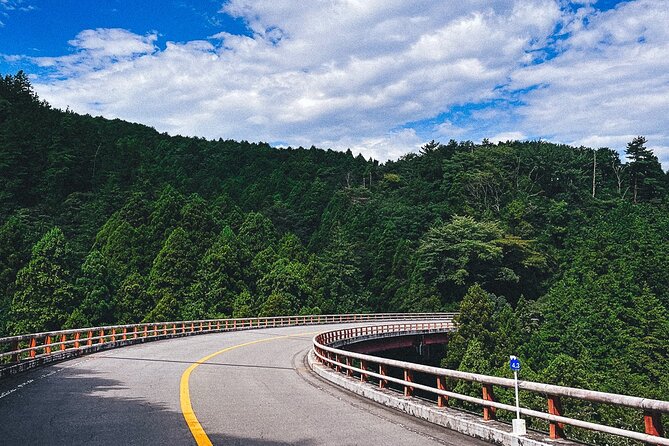
- Lake Ashinoko Sky Line: the road moment that ties it all together
- Price and logistics: is $852.28 per group good value?
- Should you book this Mt Fuji and Hakone private tour?
- FAQ
- What time does the tour start?
- How long is the Mt. Fuji, Hakone Private Tour from Tokyo?
- How many people are in a group?
- What is included in the price?
- What costs extra during the day?
- Is there an indoor option if the weather is bad?
- What happens if poor weather affects the experience?
Key moments I’d center in your plans
- Hotel pickup + private car so you can skip transfers and ride the scenic roads in comfort
- Multiple Mt Fuji viewpoints across the day, including a big stretch from the Hakone Turnpike area
- Hakone Shrine and Lake Ashi torii for classic Shinto scenery on the water
- Amazake Chaya tea house stop with a 400+ year-old feel along the old Tōkaidō route
- Onsen time (with ticket extra) for a true Hakone reset after the driving
- Hakone Open-Air Museum or Pola Museum depending on weather and timing
Before you commit, see how this one stacks up against a few Tokyo favourites:
- Mt Fuji and Hakone 1-Day Bus Tour Return by Bullet Train★ 5.0 · 26,383 reviews
- 1-Day Tokyo Bus Tour★ 5.0 · 14,250 reviews
- Tokyo: teamLab Planets TOKYO Digital Art Museum Entry Ticket★ 4.6 · 9,779 reviews
Private Tokyo to Hakone: why this plan feels easier
Hakone is one of those places where getting there is half the challenge. Trains and buses can work, but you still end up juggling schedules and transfers while you’re trying to catch views. This tour simplifies the whole thing with round-trip hotel pickup and a private vehicle, so you start the day seated and ready.
The private guide is the other big advantage. You are not stuck with a rigid checklist. If your group wants more time at a viewpoint, less time at a stop, or a more relaxed rhythm after lunch, your guide can tune the day. In real life, that flexibility matters—especially because Mt Fuji tends to be weather-sensitive.
This also keeps you closer to how people actually move through the region: by car, with breaks built in, rather than a sprint from station to station. One guide approach you’ll notice is that the best days feel calm, not hectic. Routes like this are designed so you can breathe between sights.
Timing and the rhythm of a 9–10 hour day
The tour starts at 8:30 am, and you’re out for about 9 to 10 hours. That means you should treat it like a full-day outing, not a quick taste of Hakone. Expect a lot of driving, but the plan spaces stops so you get meaningful time at each place rather than a constant churn.
A practical way to enjoy a day like this: wear layers. Hakone and viewpoints can shift from cool to chilly fast. Also, bring patience for traffic—Tokyo traffic is a fact of life, and the route includes highway segments plus scenic stretches.
One more timing note: the itinerary includes museum time after onsen. That can be perfect if you love art and architecture, but if your main goal is relaxation, plan to use the guide’s flexibility to prioritize onsen time and keep the museum part right-sized.
Mt Fuji viewpoints: the day’s main question mark
Mt Fuji is the headline, but it is also the biggest uncertainty. The plan tackles that by aiming for multiple chances rather than one single viewpoint.
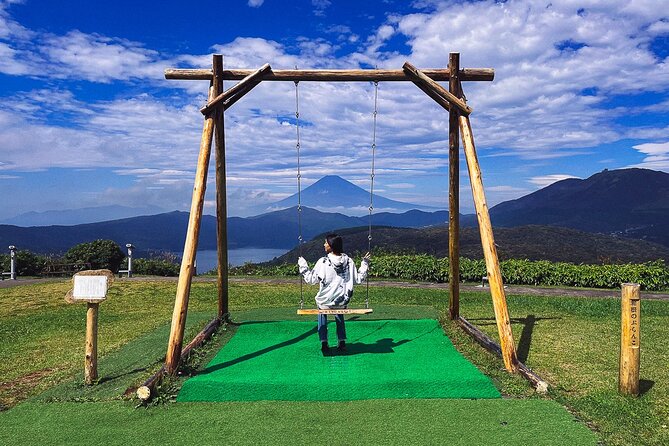
You start with Mount Fuji panoramic views at several spots (a 20-minute stop block). Then later you ride some of the most scenic roads around the Fuji/Hakone area, including Hakone Turnpike Daikanyama Parking lot (about 1 hour). The idea is simple: you get different angles, different elevations, and more than one moment when the mountain might decide to show itself.
There’s a second Fuji shot later too, with Lake Ashinoko Sky Line (about 1 hour) where you can look for Mt Fuji closer and also catch wide views over Lake Ashi and even toward the sea on clear days.
Even when Fuji is hidden by clouds or fog, the route still has value. The lakes, shrines, and ridge roads are still beautiful. The key is to go in with the right mindset: Mt Fuji is a weather-dependent guest star.
Hakone Shrine and Lake Ashinoko torii: classic Shinto on the water
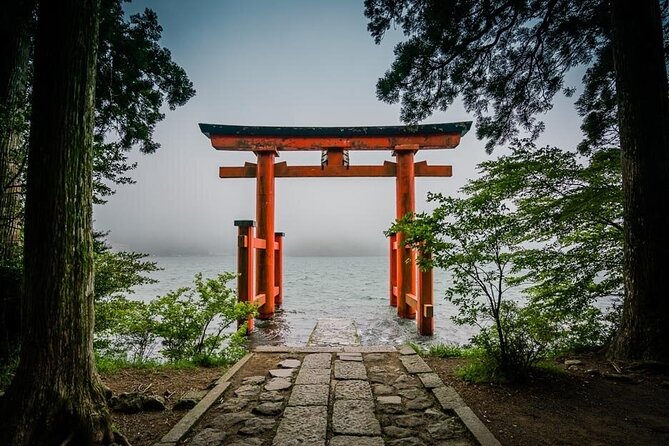
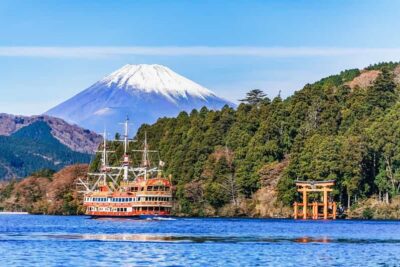
If you like your Japan visuals with meaning, this section is a strong pick. You’ll visit Hakone Shrine on the shores of Lake Ashi (about 1 hour). The shrine is tied to a long history, founded in 757, and the setting makes the red gate feeling instantly recognizable.
Then you continue to Lake Ashinoko, with time focused on famous torii gates and shrine views by the water (about 1 hour). These torii gates are the kind of scene that looks different in fog, in sun, and at dusk. If your skies are partly cloudy, you might even find the atmosphere more dramatic than a crisp, postcard day.
One practical consideration: some shrines and temple approaches involve stairs and steep paths. If you have mobility limits, it’s worth asking your guide ahead of time which routes are the easiest, and whether there are gentler ways to reach the key spots.





Amasake tea house: a 400-year pause that feels like the real route
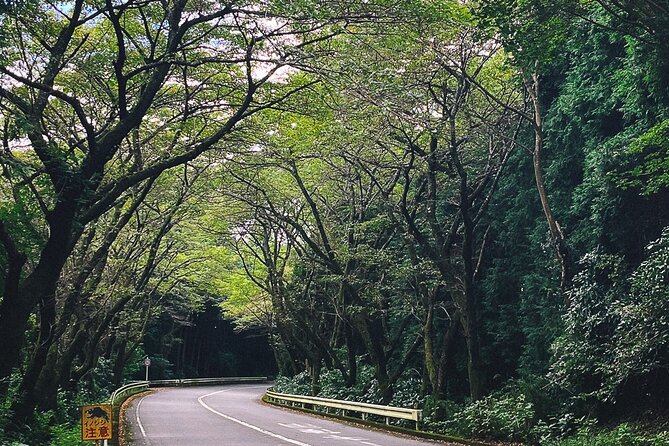
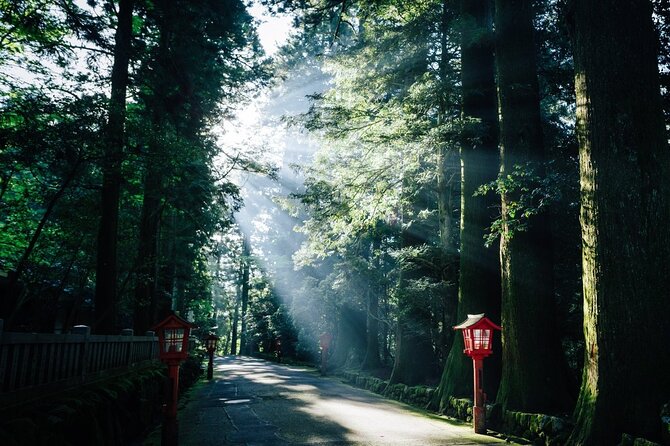
The Amazake Chaya stop is short—about 30 minutes—but it can be the most memorable break of the day. It sits along the old Tōkaidō road in the cedar forests of Hakone, and it has welcomed travelers for more than 400 years.
This is not a quick photo trap. It’s a chance to slow down between sightseeing. You can treat it like a cultural intermission: warm drink, light snack, a quiet moment before onsen.
Also, your day includes time for an authentic Japanese meal (lunch is not included in the tour price). The tone here is important: this is not built around a bento-on-a-plastic-table style experience unless you ask for that kind of simplicity. If you’re the type who wants one genuinely local meal, budget for it rather than assuming lunch is handled.
Onsen at Tenzan Tohji-kyo: the relaxation payoff (and the extra cost)
This is where the trip stops being just sightseeing. The itinerary builds in about 2 hours for onsen time at Tenzan Tohji-kyo, with onsen admission not included and priced at ¥1,500 per person.
What I like about putting onsen in the middle of the day: you have energy before it, and you’re rested enough after it to enjoy the museum stop. It also changes the whole pace. You go from moving your feet and scanning viewpoints to letting your body recover.
Your onsen option depends on the selection made for your day, and the tour notes that you’ll have choices. If you care about specific comforts—like whether staff can handle requests in English or whether you want extra services such as massage—tell your guide clearly before you arrive. Language barriers can be the difference between a smooth experience and a stressful one, even when the place itself has a good reputation.
Open-Air Museum and Pola Museum: art time with two weather paths
After lunch and onsen, you have museum time. This tour gives you two paths, and how that plays out depends on rain, timing, and your mood.
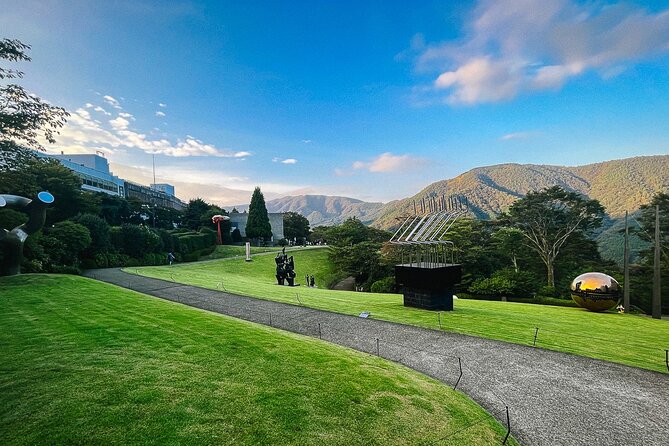
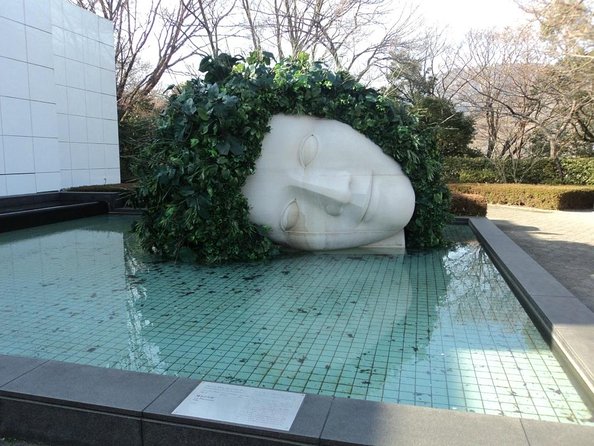
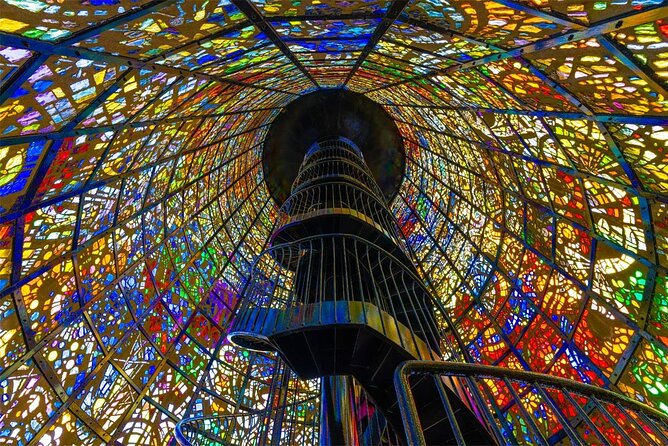
First, there’s the Hakone Open-Air Museum (about 2 hours). It features major international names, including Picasso, Henry Moore, Taro Okamoto, Yasuo Mizui, and others. Admission is not included, with a ticket cost of ¥1,900 per person. The open-air setting is usually best when weather cooperates, because the museum experience includes its outdoor garden feel.
If the weather isn’t kind, you may switch to the Pola Museum of Art instead (about 1 hour). That one is indoor and located in a forest setting with beech trees, so it’s designed to be enjoyable even when conditions outside are gloomy.
A real practical tip: since museum tickets are extra, ask your guide early in the day whether you should commit to open-air or choose the indoor backup. That way you don’t end up paying for two options because the day felt too long.
Lake Ashinoko Sky Line: the road moment that ties it all together
Near the end, you get one more iconic road stop: Lake Ashinoko Sky Line (about 1 hour). It is designed for close-up Fuji views when skies allow, plus broad panoramas over the lake and directions toward the sea.
This stop is part scenic drive, part viewpoint time. It also acts like a graceful ramp-down before you head back to Tokyo. If your group likes photography, treat this as your capture session. If you don’t, it still offers a sense of the region’s scale—mountain ridges, water, and big-distance views all in one go.
Price and logistics: is $852.28 per group good value?
The listed price is $852.28 per group (up to 5), with round-trip hotel pickup, private transportation in a modern car, parking fees, and highway tolls included. Guides cover English/Japanese/French.
To judge value, split the cost into what you’re buying:
- You’re paying for transportation and a private guide for a full day, including highway driving and the flexibility to adjust the schedule.
- You’re also buying time. From Tokyo, that time saved often matters more than people expect.
- What you do not get in the base price: lunch, onsen ticket (¥1,500 per person), and museum ticket (¥1,900 per person).
Is it overpriced? For a big, non-stop day with minimal transfers, it can feel fair. For someone who wants lots of walking, tons of stops, and zero driving, the value question flips, because this is still a car-based day that prioritizes viewpoints and relaxation.
One thing to watch: this trip tries to cover many top areas efficiently. If you end up with fog and limited Fuji visibility, you’ll lean more on the onsen, shrines, lake scenery, and museum portion for satisfaction.
Should you book this Mt Fuji and Hakone private tour?
Book it if:
- you want a stress-free day from Tokyo with pickup and a private guide
- you care about onsen time as a real highlight, not an optional extra
- your group is up to 5 people, making the per-person cost feel more reasonable
- you like a mix of nature, Shinto sites, and art (open-air museum if skies allow)
Skip it or choose a different style if:
- you dislike long car days and prefer slower, more walk-focused itineraries
- you need guaranteed Mt Fuji views (this is weather-dependent by design)
- your budget is tight after you factor in ¥1,500 onsen and ¥1,900 open-air museum tickets, plus lunch
FAQ
What time does the tour start?
The tour start time is 8:30 am.
How long is the Mt. Fuji, Hakone Private Tour from Tokyo?
The duration is about 9 to 10 hours.
How many people are in a group?
The tour is priced per group for up to 5 people, and it’s a private tour for your group only.
What is included in the price?
Round-trip hotel pickup and drop-off, private transportation in a modern vehicle, parking fees, highway tolls, and guides who speak English/Japanese/French.
What costs extra during the day?
Lunch is not included. Onsen tickets cost ¥1,500 per person, and the Hakone Open-Air Museum ticket costs ¥1,900 per person. (The Pola Museum ticket is also not included.)
Is there an indoor option if the weather is bad?
Yes. If the weather is poor or timing works better, the plan may shift to the Pola Museum of Art, which is indoor.
What happens if poor weather affects the experience?
The experience requires good weather. If it’s canceled due to poor weather, you’ll be offered a different date or a full refund.
More Tour Reviews in Tokyo



Fresh reviews from around Tokyo






Tokyo, compared.
 ★ 5.0Mt Fuji and Hakone 1-Day Bus Tour Return by Bullet TrainFrom $16326,383 reviews
 ★ 5.01-Day Tokyo Bus TourFrom $12914,250 reviews
 ★ 4.6teamLab Planets TOKYO Digital Art Museum Entry TicketFrom $259,779 reviews
 ★ 4.0Mt Fuji & Hakone Cruise, Drum Show Bullet Train 1 Day from TokyoFrom $1497,413 reviews
 ★ 5.0Shinjuku Food Tour (13 Dishes at 4 Local Eateries)From $866,603 reviews
 ★ 4.4Tokyo Mt Fuji 5th St & Hakone Cruise Bus Tour w/Bullet TrainFrom $1545,024 reviews
 ★ 5.0Flagship 2-Hours Official Street Go-Kart Tour – Tokyo Bay ShopFrom $644,974 reviews
 ★ 4.5From Tokyo: Mount Fuji Full-Day Sightseeing TripFrom $684,970 reviews